
Austria: We Were Headed to Vienna and Woke Up in Baden
May 2–4, 2014
The Road to Vienna
We went to Vienna via Kraków. Before leaving Kyiv, we stopped by Maidan. There were still plenty of traces of what had happened there so recently, and events in Crimea and the Donbas were already unfolding. A day later I’m in another country, looking out the car window as a castle suddenly rises out of a field.
We got to Kraków on BlaBlaCar. As far as I remember, we spent the night there and caught another ride to Vienna the next day. The border between Ukraine and Poland took a good while. Back then you still had to apply for a Schengen visa. I can’t remember exactly which one we had, but if you got a multiple-entry visa, you wanted to get a few trips out of it. Who wants to go through all that paperwork again every time?
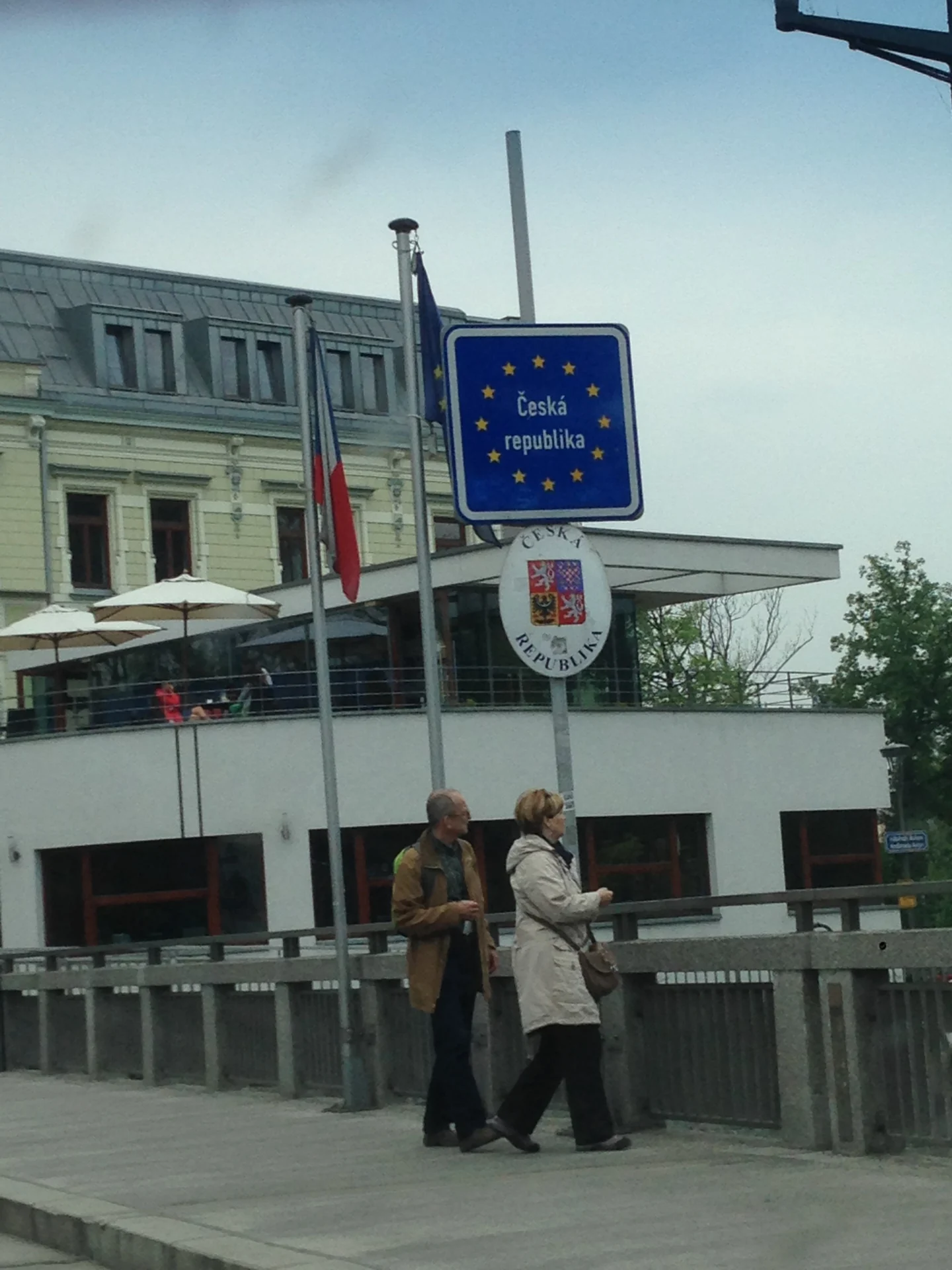
The Ukrainian-Polish border reminded me of the Wall in Game of Thrones. First there’s a checkpoint, then one set of border guards, then another, and more questions for some people. Then it’s like you’ve made it past Winterfell and everything changes. Between Poland and Czechia, we crossed the bridge at Cieszyn, saw a sign that said “Czech Republic,” and kept going. That was the whole border, as far as I could tell.
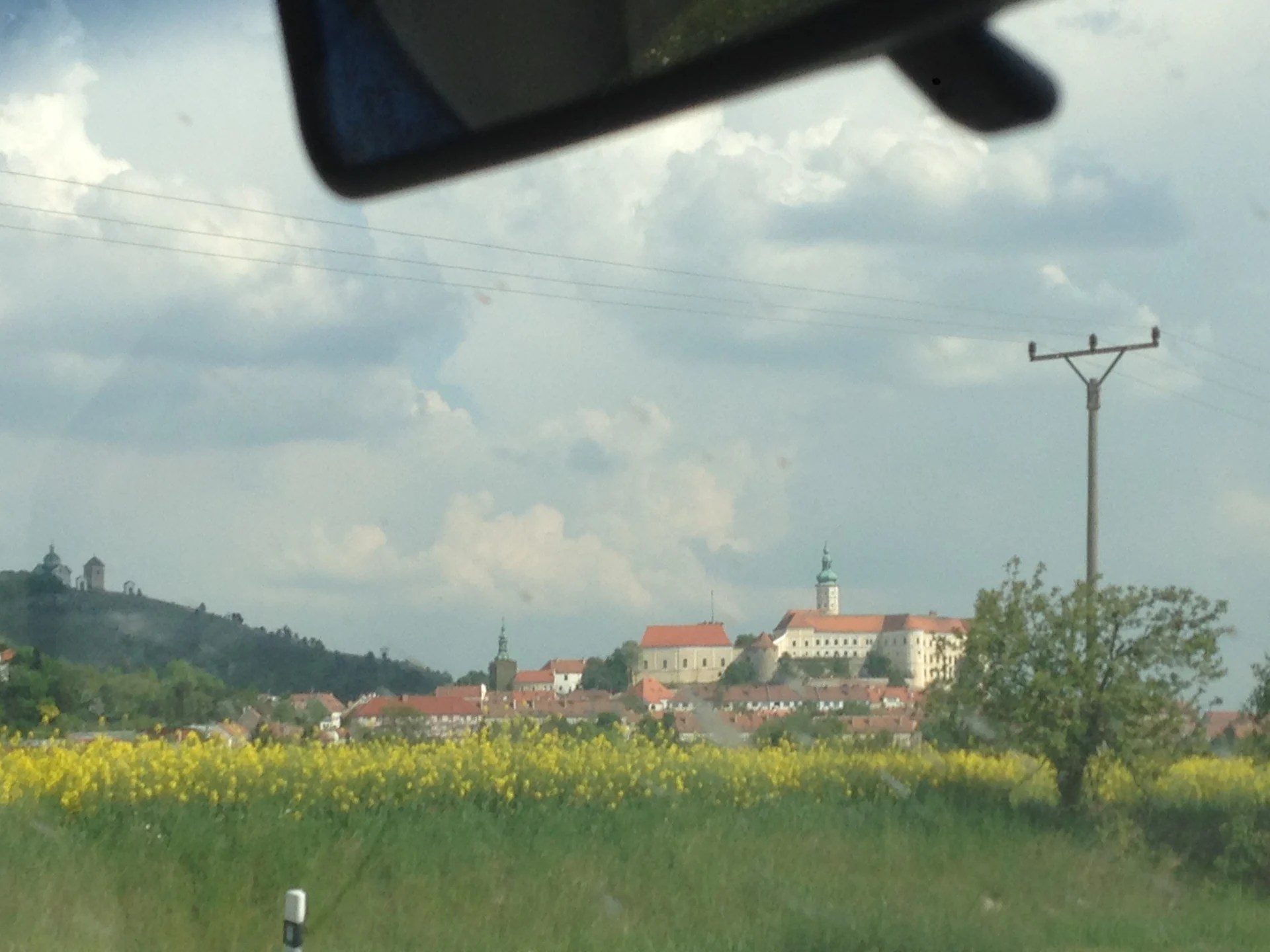
A few hours later, we could see Mikulov from the car. A chapel on one hill, a big castle with red roofs on the other. There was a fortress on that rock as far back as the thirteenth century, on the border between Moravia and Lower Austria. The castle belonged to the Liechtensteins, then the Dietrichsteins, and it was rebuilt after a fire in 1945. I only saw it from the road. That was part of what I liked: you’re just driving along and you get to see something like that out the window.
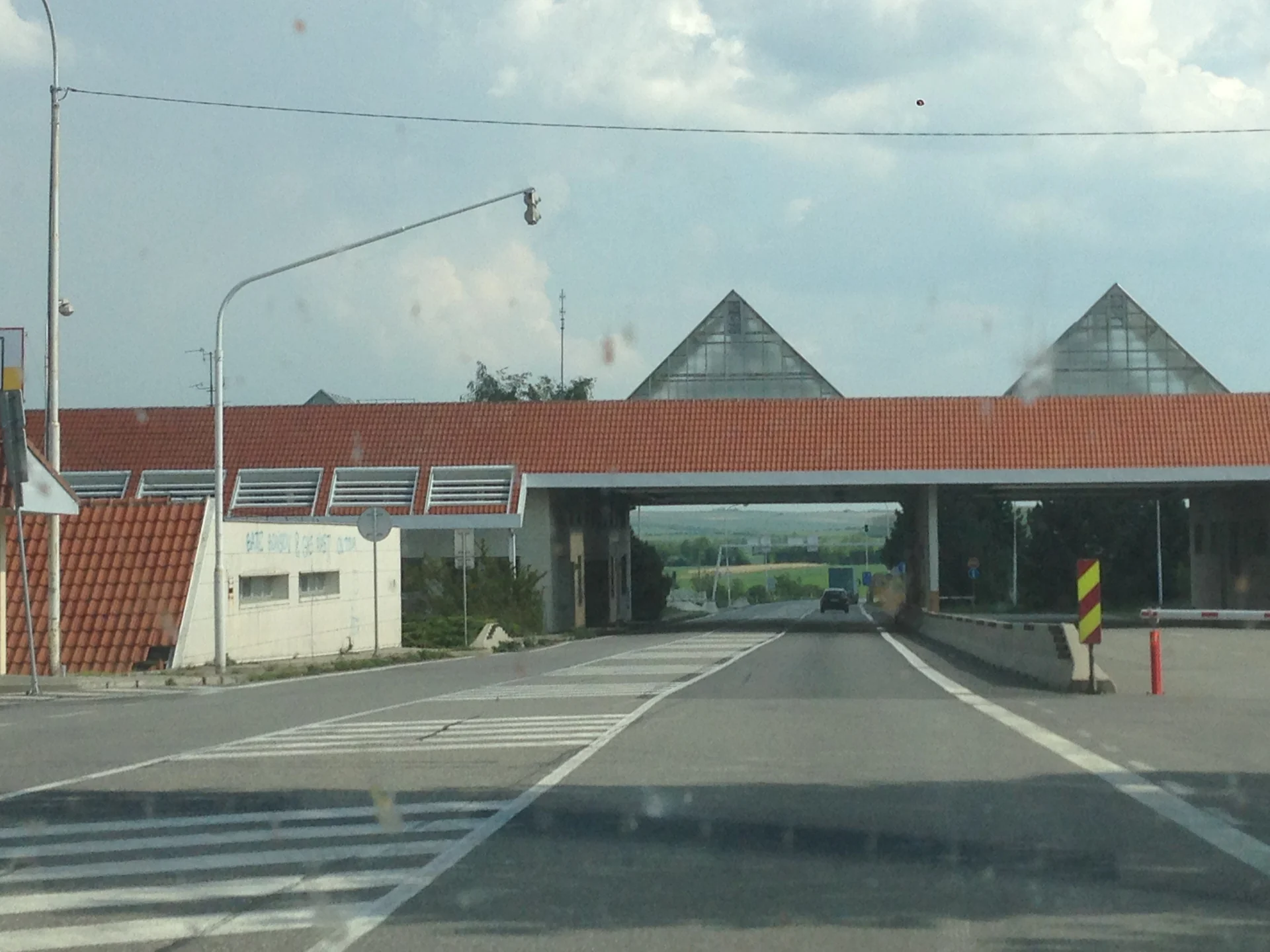
A few more minutes and we’re coming up to the Austrian border. Again, I’m distracted by what’s out the window. First an old roadside canopy, then, once we’re in Austria, fields full of wind turbines.
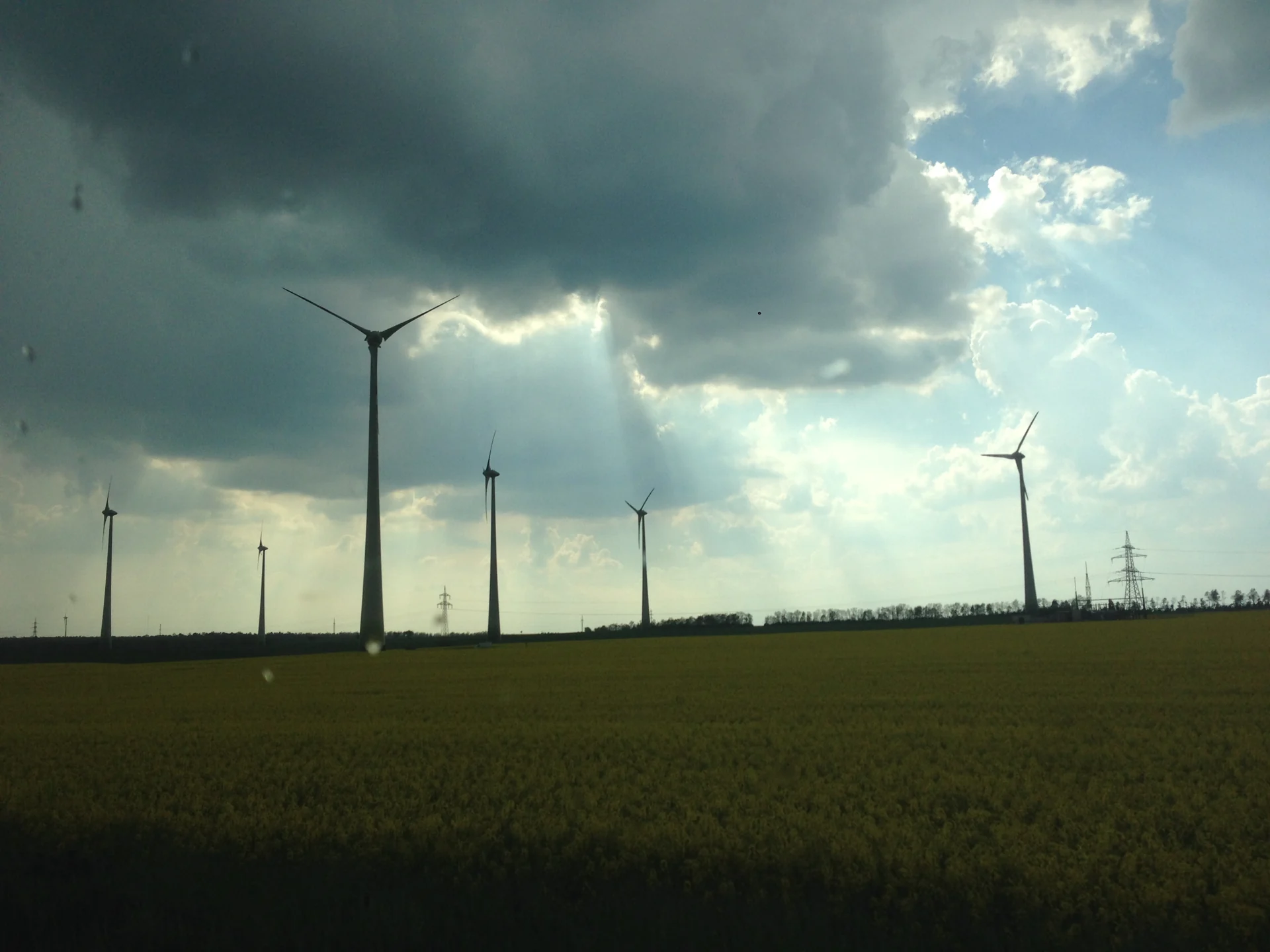
Near Wilfersdorf, wind turbines stood over a dark field and the sun was breaking through the clouds. That really did look like innovation to me back then. I captioned the photo that day: “Austria’s Windy Fields.” In Vienna, I was about to be surprised by something much simpler: how hard it could be to find somewhere to sleep.
Vienna, Rain and an Air Mattress
We hadn’t booked a place to stay. We figured we’d get there and sort it out. One Airbnb host replied that the room was already taken, and another was fully booked. As I remember it, the rooms we did find were two hundred euros, sometimes two hundred and fifty. That was too much for our budget. I remember wondering if there was a big event in town. I don’t know what it might have been. Either way, it didn’t get us any closer to a room.
From about seven or eight that evening, we walked around Vienna with our big bags. We’d try a hotel, then ask someone on the street where else we could look. We couldn’t count on having decent internet while roaming, and we didn’t have a map handy either. About three hours went by like that. Some locals told us about Wimdu, and we even borrowed someone’s phone to call a host in the suburbs. A room with an air mattress and a big dog? At that point, it sounded just fine.
The host told us over the phone to come on over. We took a taxi that cost fifty or sixty euros, if I remember right. The booking was for sixty dollars and sixteen cents. But apparently the host changed his mind while we were on our way. Without internet, we didn’t see the cancellation message.
The taxi pulls away and there we are at the house, ringing the bell. Nobody opens the door. We ring again. I decided to climb over the fence and knock on the window. Given what I knew about the dog, I could have come up with something smarter. The host finally came out, furious. What were we doing there? He’d cancelled the whole thing. I brought up the room we’d paid for. He brought up the police. We got nowhere. He shut himself inside, and by then his big Great Dane was running around the yard. It turned out the booking service was still holding the money, and a few days later PayPal refunded all sixty dollars and sixteen cents. That information wouldn’t have done much for us that night.
It was around midnight, we were standing there with our suitcases, and now it was really pouring. We figured that if Vienna wasn’t working out, we could get to the station and take the next train to Bratislava. We’d see one more country. We walked toward the road and started flagging down cars. A few drivers heard us out, but nobody was going our way.
One driver said he was headed in the opposite direction, to Baden, and could give us a free ride. We were thrilled. He took us into town and drove us from hotel to hotel. The first had no rooms. The second had rooms, but they were something like three hundred euros, as I recall. By the time we reached the third, at two or three in the morning, we weren’t expecting much. And then they told us they had a room.
There was one little thing left to sort out: I had dollars in cash, and the hotel took cards or euros. After all that, being turned away over the currency would’ve been a bit much. We persuaded the person at the desk to let us check in and promised to find somewhere to change the money and pay the next day. That’s how we ended up in Baden. Bratislava didn’t happen that time.
Baden: A Castle View and Cash at the Casino
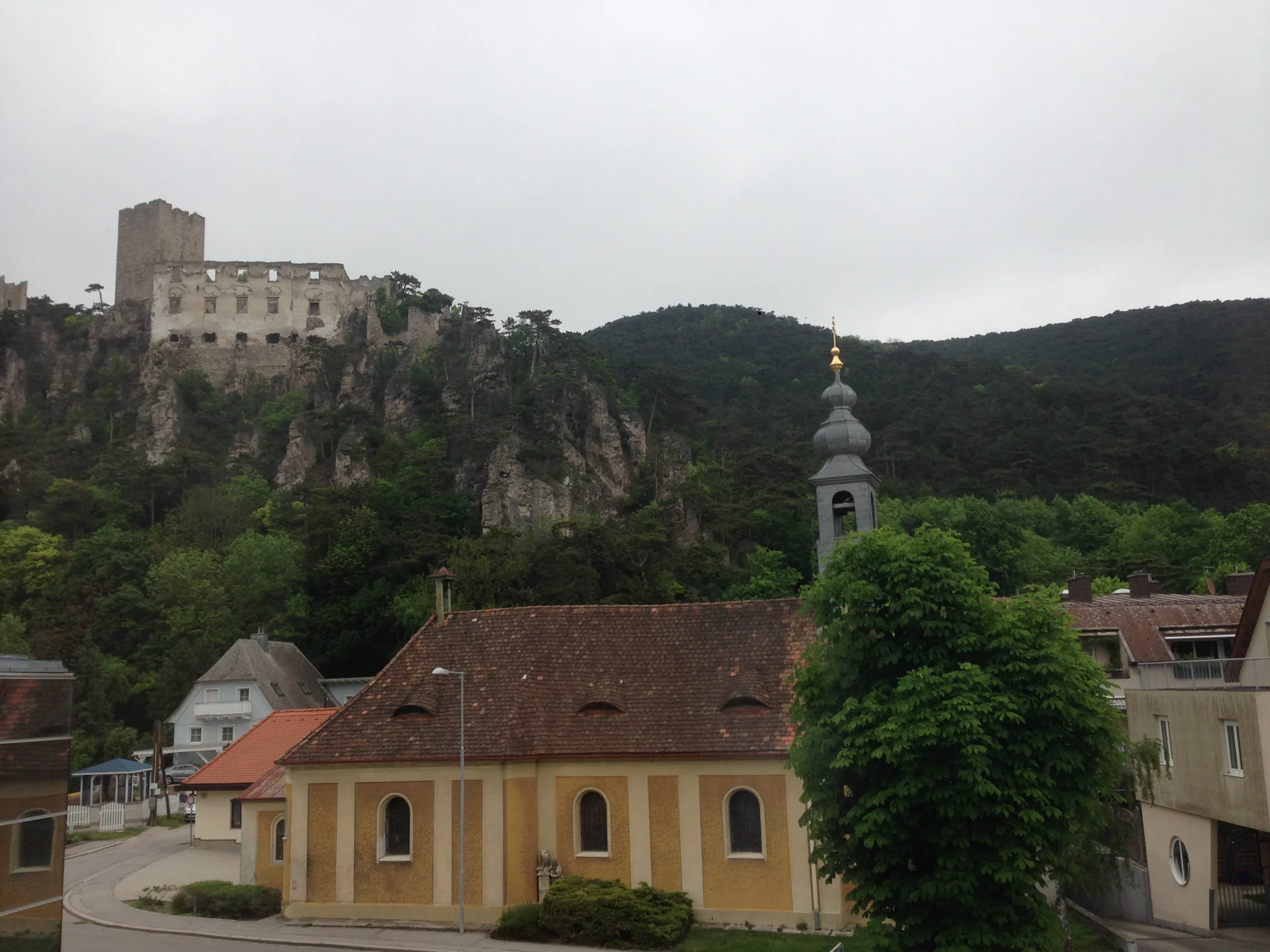
We slept until almost noon. The night before, we’d just dropped into bed. Now I look out the window and there’s a castle on a cliff. Those were the ruins of Rauhenstein Castle, above St. Helena’s Church. The photo is pretty close to the view from our hotel. If we’d found that air mattress outside Vienna, Baden wouldn’t have been part of this trip at all.
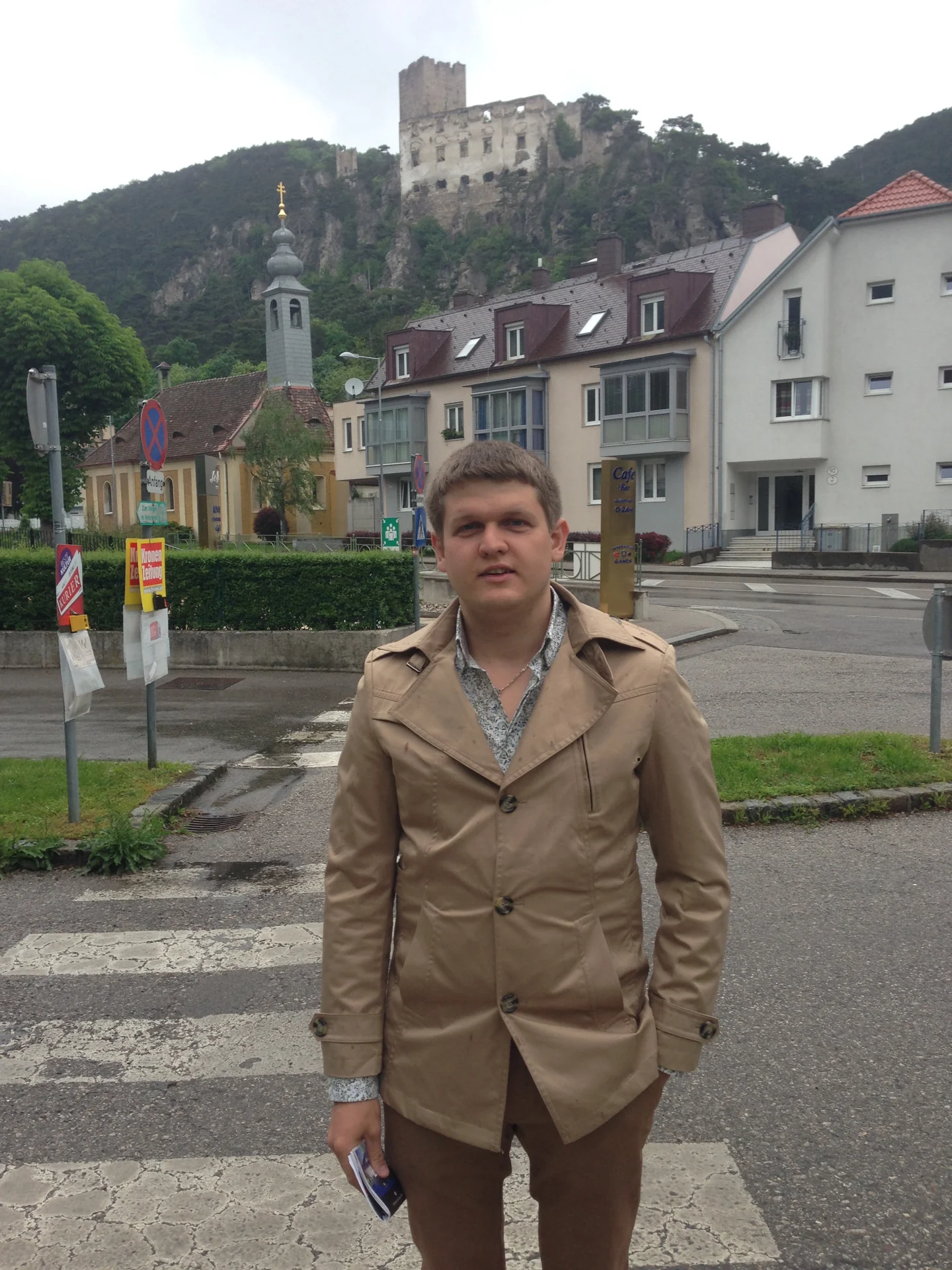
After a bite to eat, we went to change our money, as promised. It was the weekend. One bank closed, a second one closed, a third one too. We asked around, and the locals sent us to the casino. At last, somewhere in Baden that could do something with my dollars.
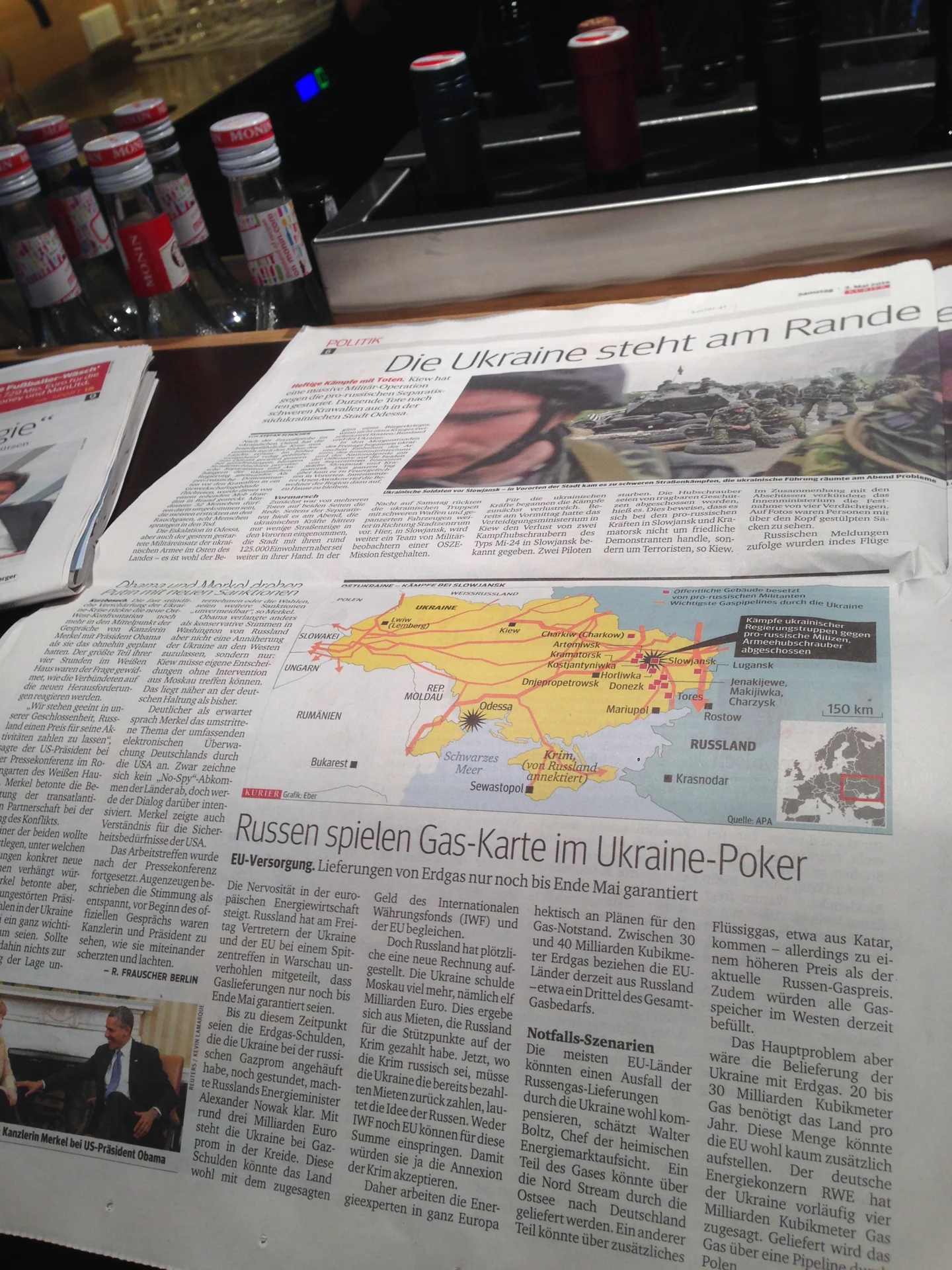
At some little restaurant, we came across a newspaper with an article about Ukraine. We’d just been on Maidan in Kyiv, and now, in a small Austrian town, here we were reading about what was happening back home. I didn’t remember the name of the paper, but I did take a photo.
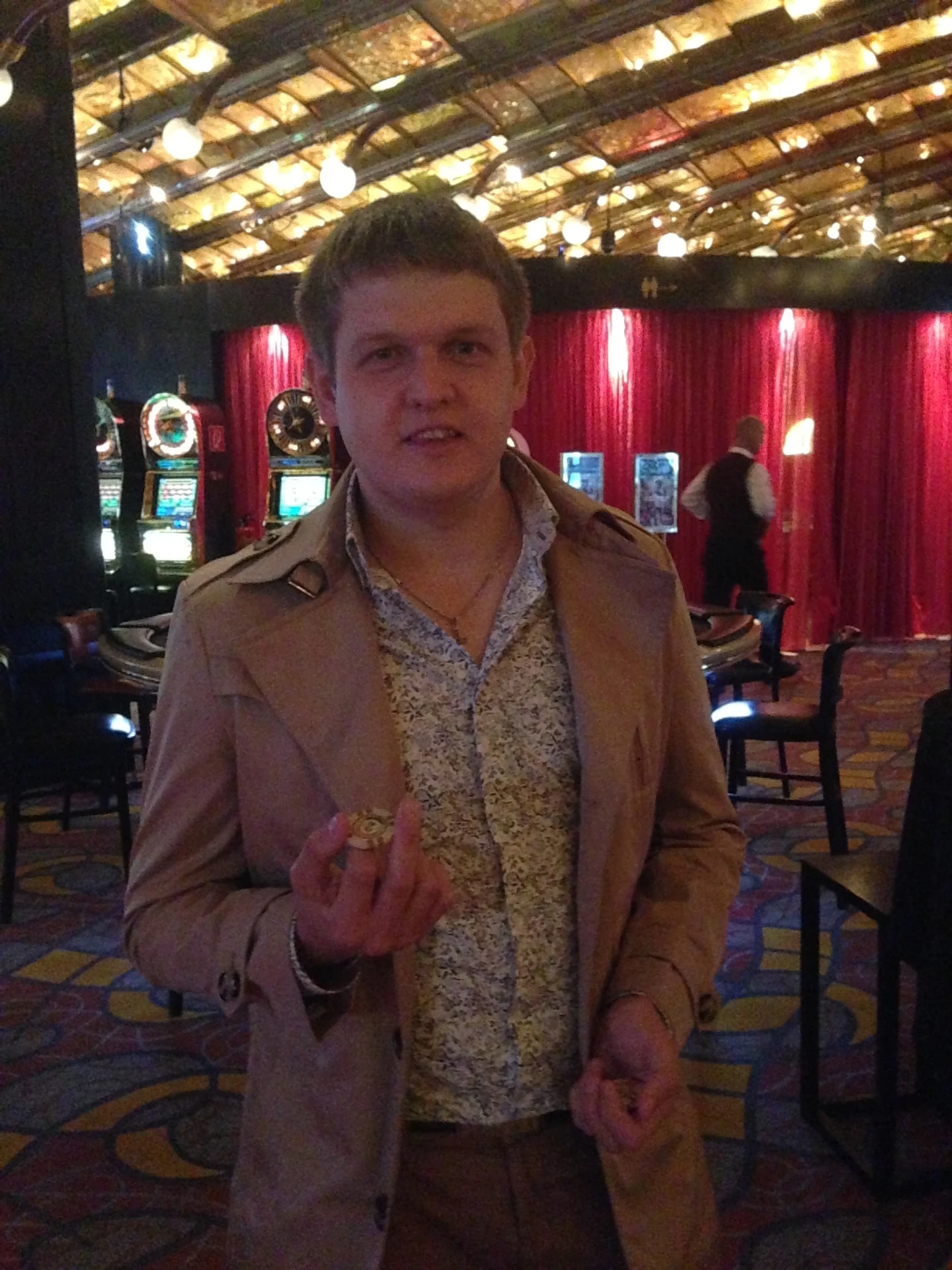
At the casino we changed the money for the hotel. Then we figured, since we were already there, we might as well play. We each set aside a hundred euros with what seemed like a clear objective: to lose it successfully. In the end, we managed that just fine.
We started with roulette. The first bet was about forty euros, I think, and it paid roughly three times that straight away. We thought, hey, that’s the hotel covered. And then, of course, we wanted another go. We made smaller bets, one loss after another, and most of what we’d won was gone.
We moved on to the slots.
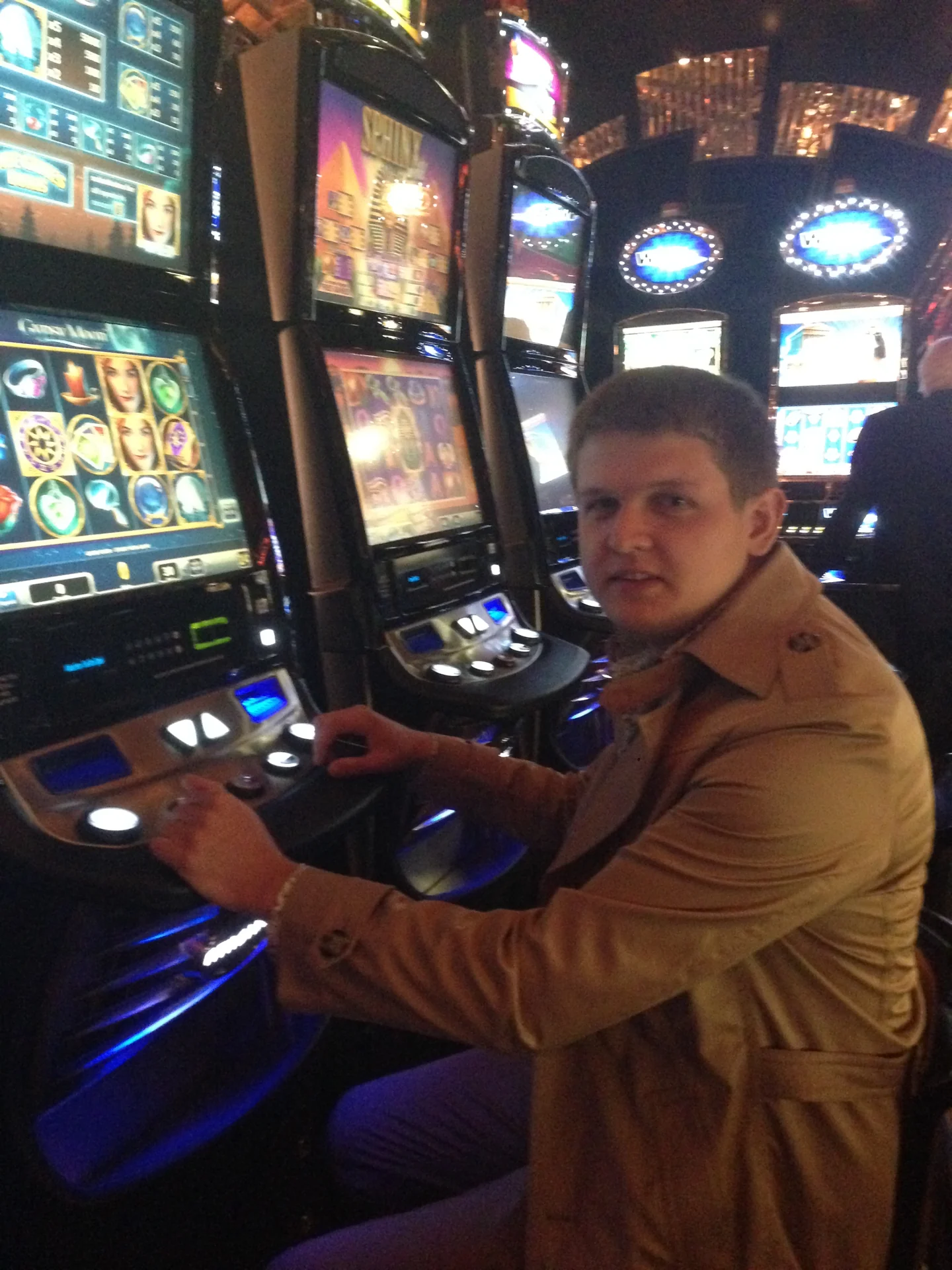
For a while there I even tried to play strategically: first I won, then I lost, then I won a little less. By the end, as far as I remember, I had about fifty euros of gambling money left. I quit while I still had that much and took the remaining chips as souvenirs. I tossed one in the air for a photo.
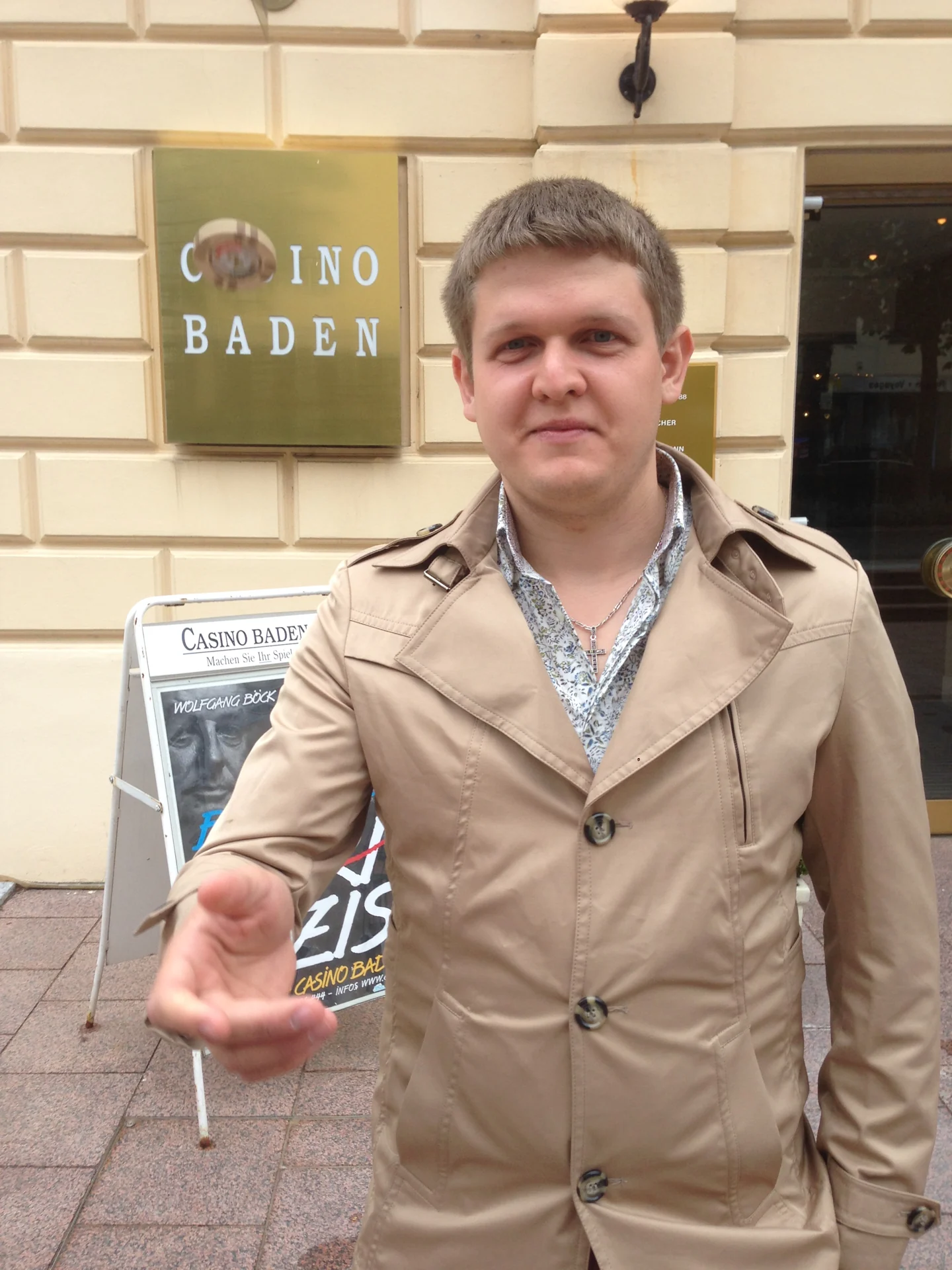
Baden made me think of Dostoevsky. After a trip to the casino, The Gambler reads a little differently. His stakes were higher: he wrote in his letters about losing money at roulette in Wiesbaden. That’s a different town from Baden in Austria. He dictated the novel to Anna Snitkina in St. Petersburg in 1866, racing to meet his publisher’s deadline. The main character keeps going back to the roulette table. Once you win, it feels like once isn’t enough. One trip to a casino was enough for me to get acquainted with that idea.
We hung around outside the casino for a bit and walked over to the fountain.
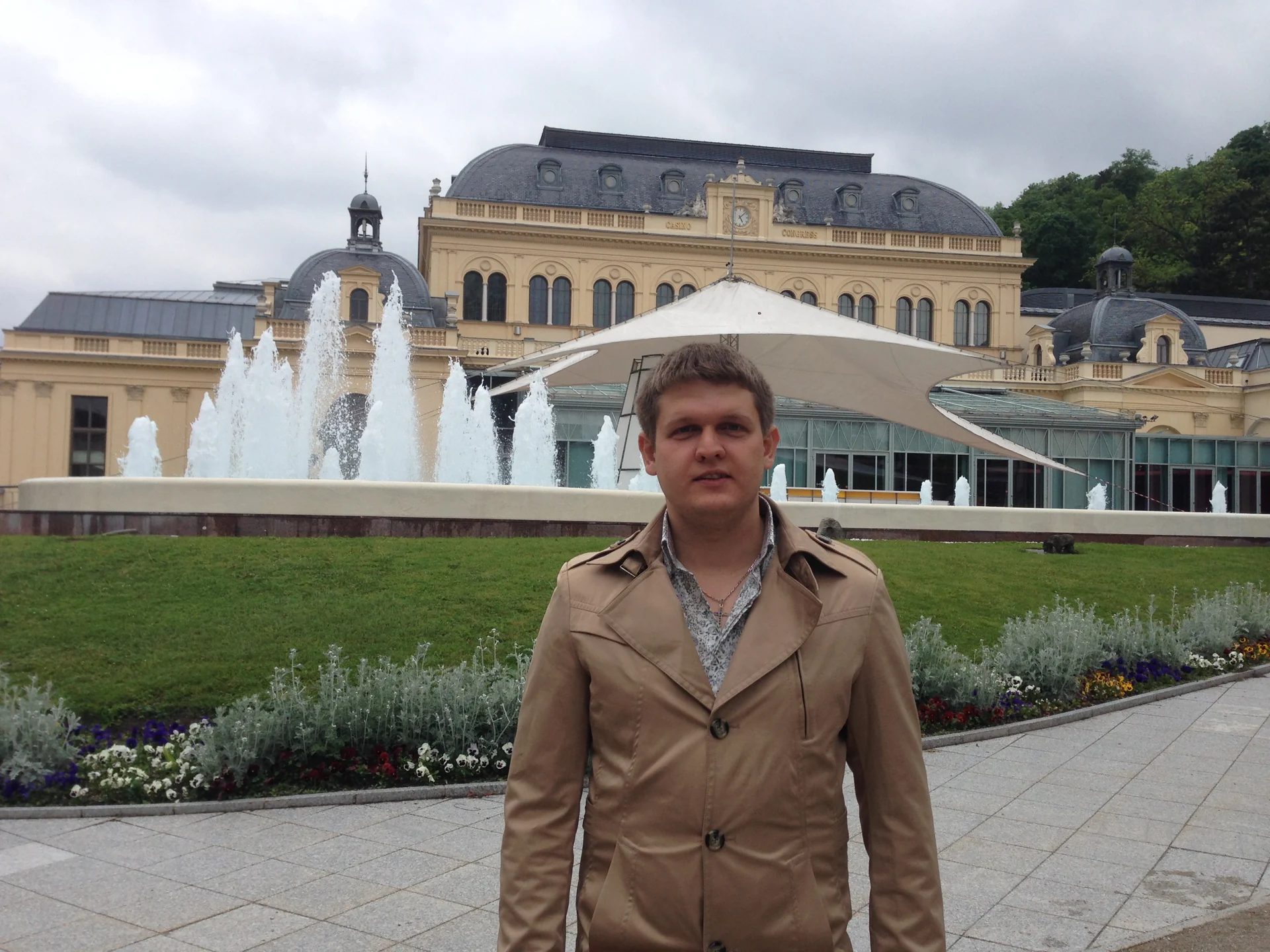
Then we walked through the park and headed back to the hotel.
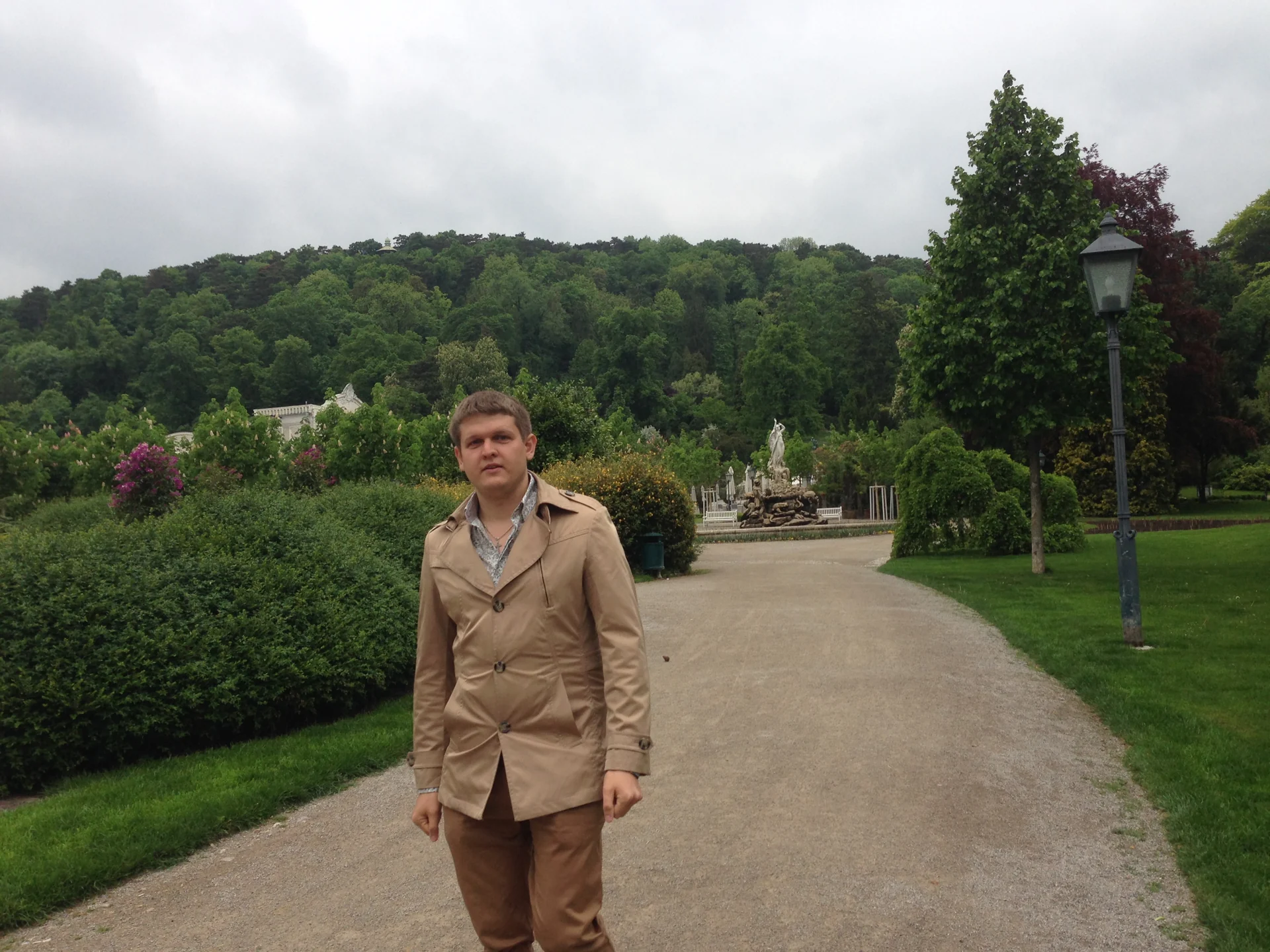
The same ruins I’d seen through the window that morning are behind me in the photo now. Not a bad view for a town we weren’t planning to visit at all.
We also had time to go to the baths in Baden. There was an outdoor section, and inside, where we went for a sauna, men and women walked around naked. That was new to us. But we decided that since we’d come all that way, we might as well try everything on offer. Then we went back to the hotel, finally paid up and went to get some proper sleep. Vienna could wait until tomorrow. After the previous night, that suited me just fine.
In Freud’s Waiting Room
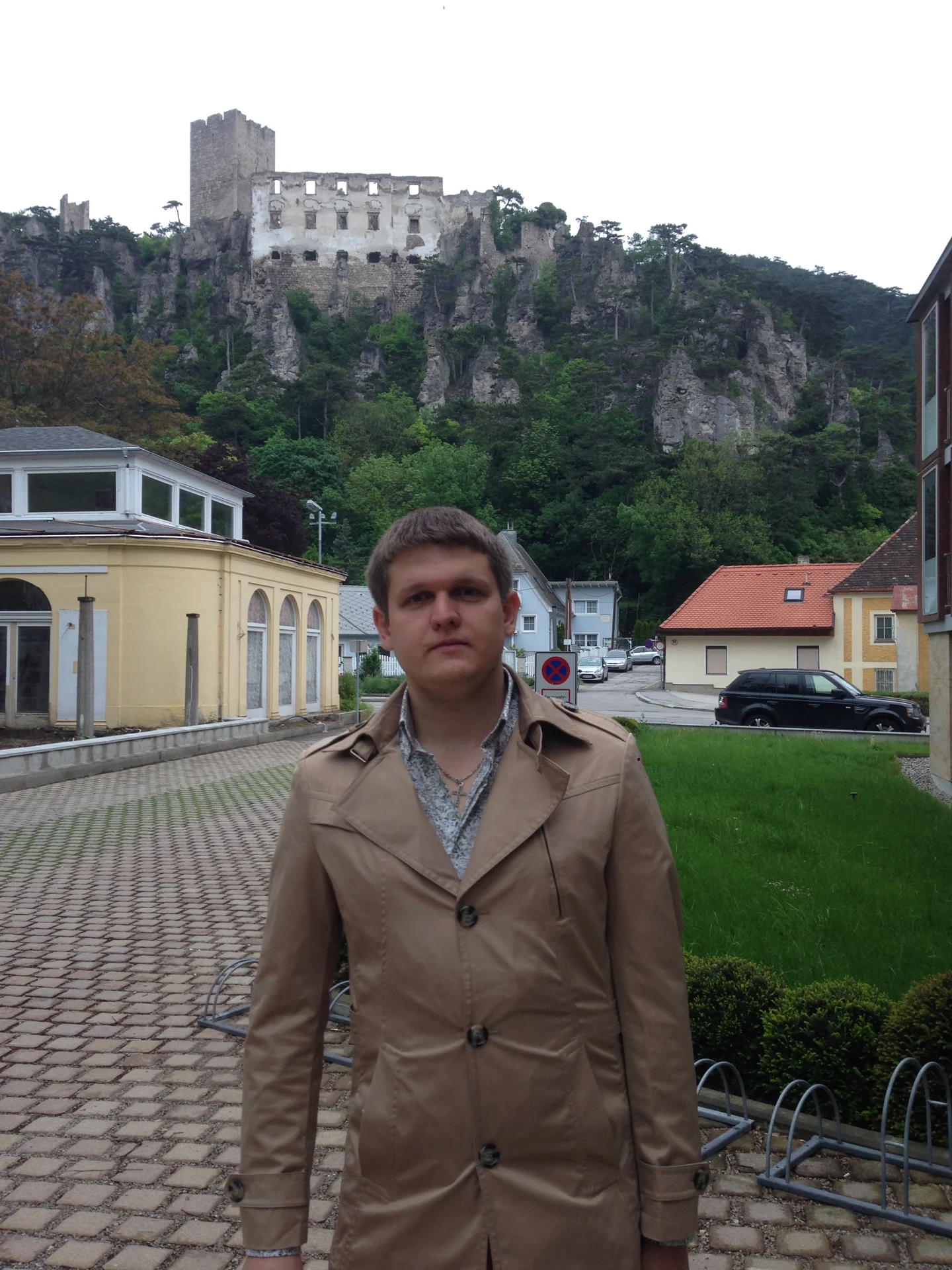
The next day we finally got back to Vienna and went straight to the Sigmund Freud Museum. The sign on the door reads “PROF. Dr. FREUD 3–4.” An ordinary-looking door, and behind it, in the apartment at Berggasse 19, a man spent decades seeing patients and changing the way people talked about the human mind. I was already curious about how the brain works, and I wanted to see where one of the early answers to that question took shape.
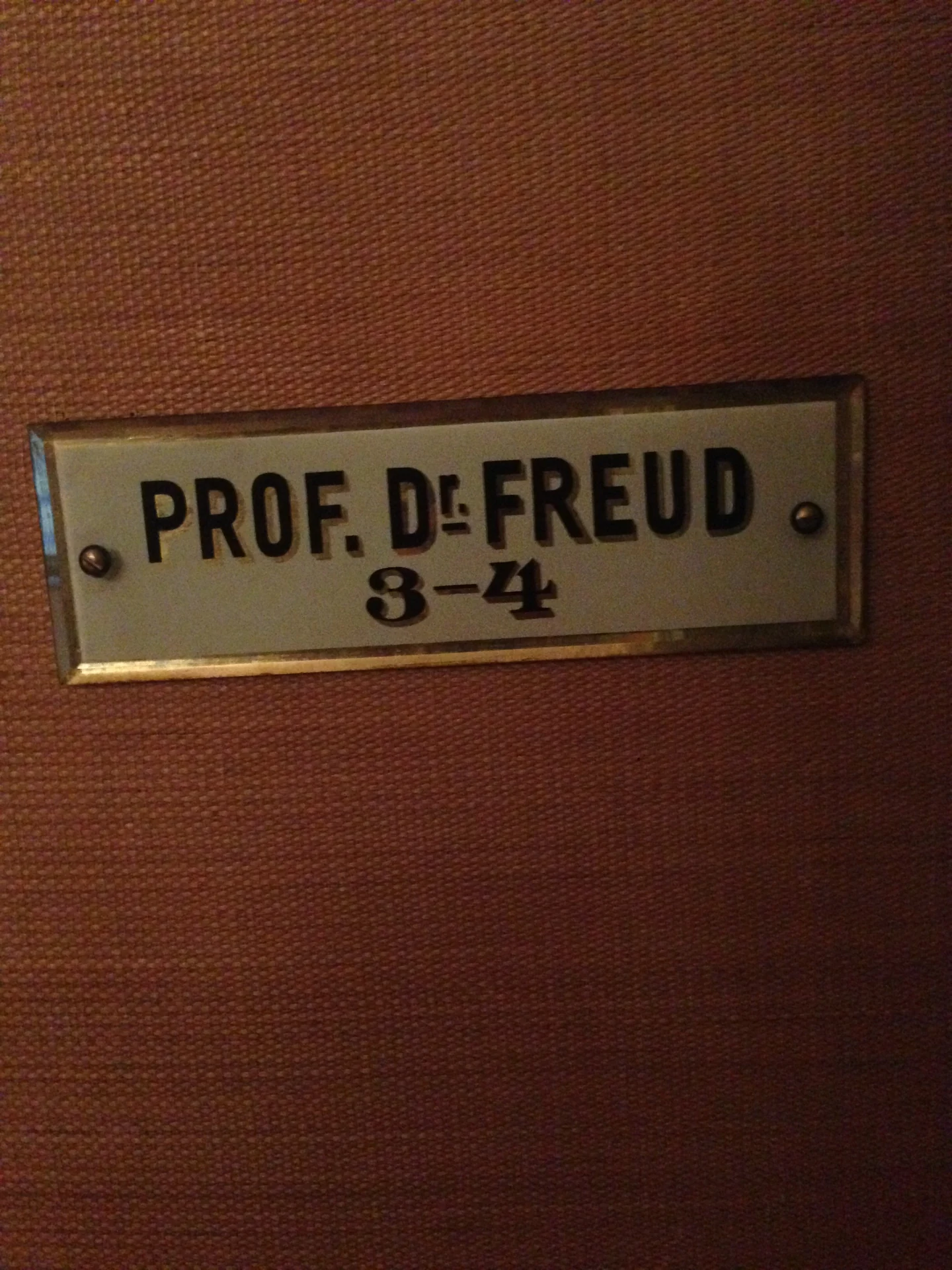
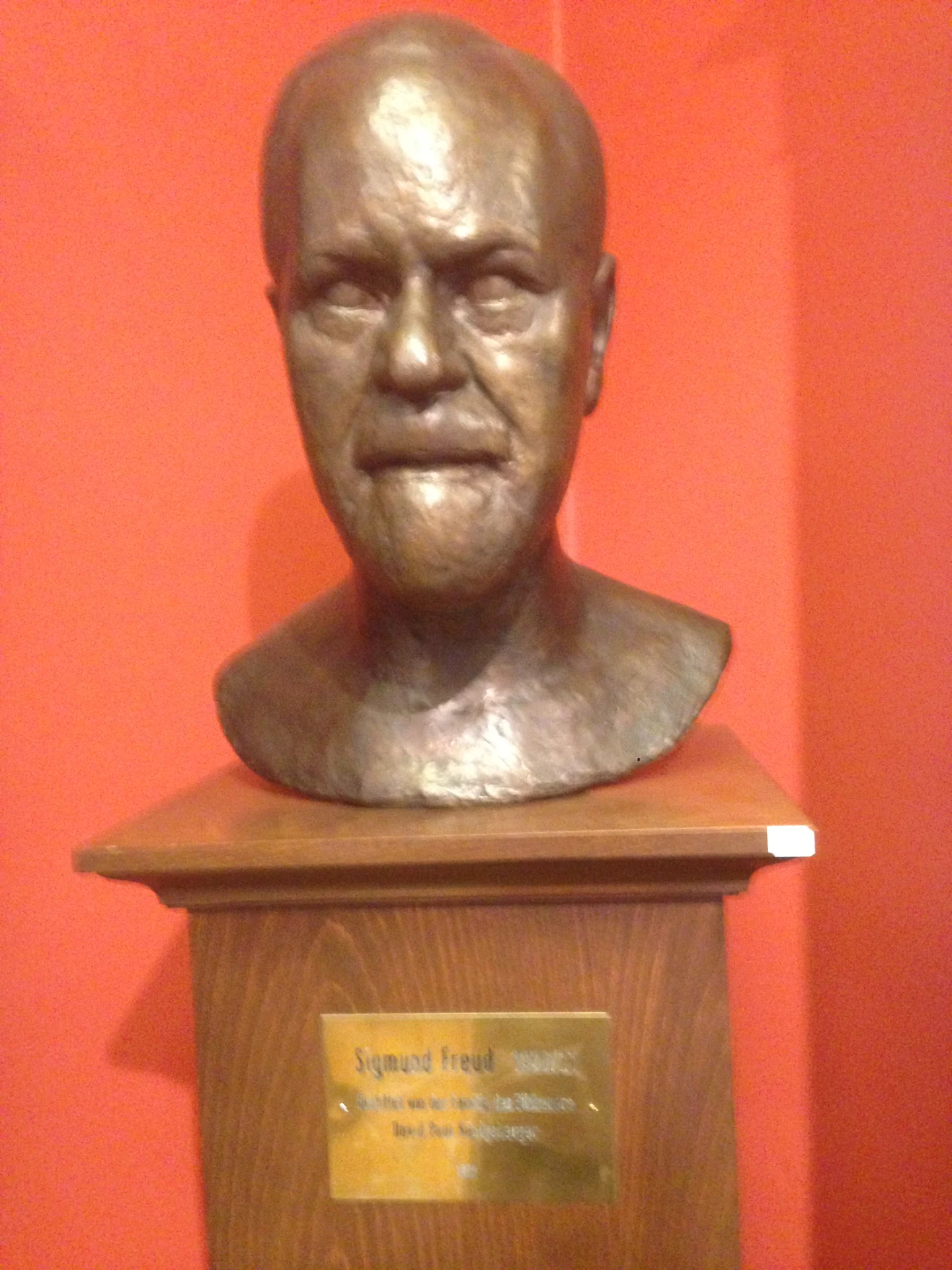
Freud was born in Moravia and moved to Vienna with his family as a child. He studied medicine here and did research on the nervous system. After studying with the neurologist Charcot in Paris, he came back to Vienna and opened a private practice. A group began meeting in this same apartment and went on to become the Vienna Psychoanalytic Society. After the Anschluss in 1938, Freud and his family fled the Nazis for London, where he died the following year.
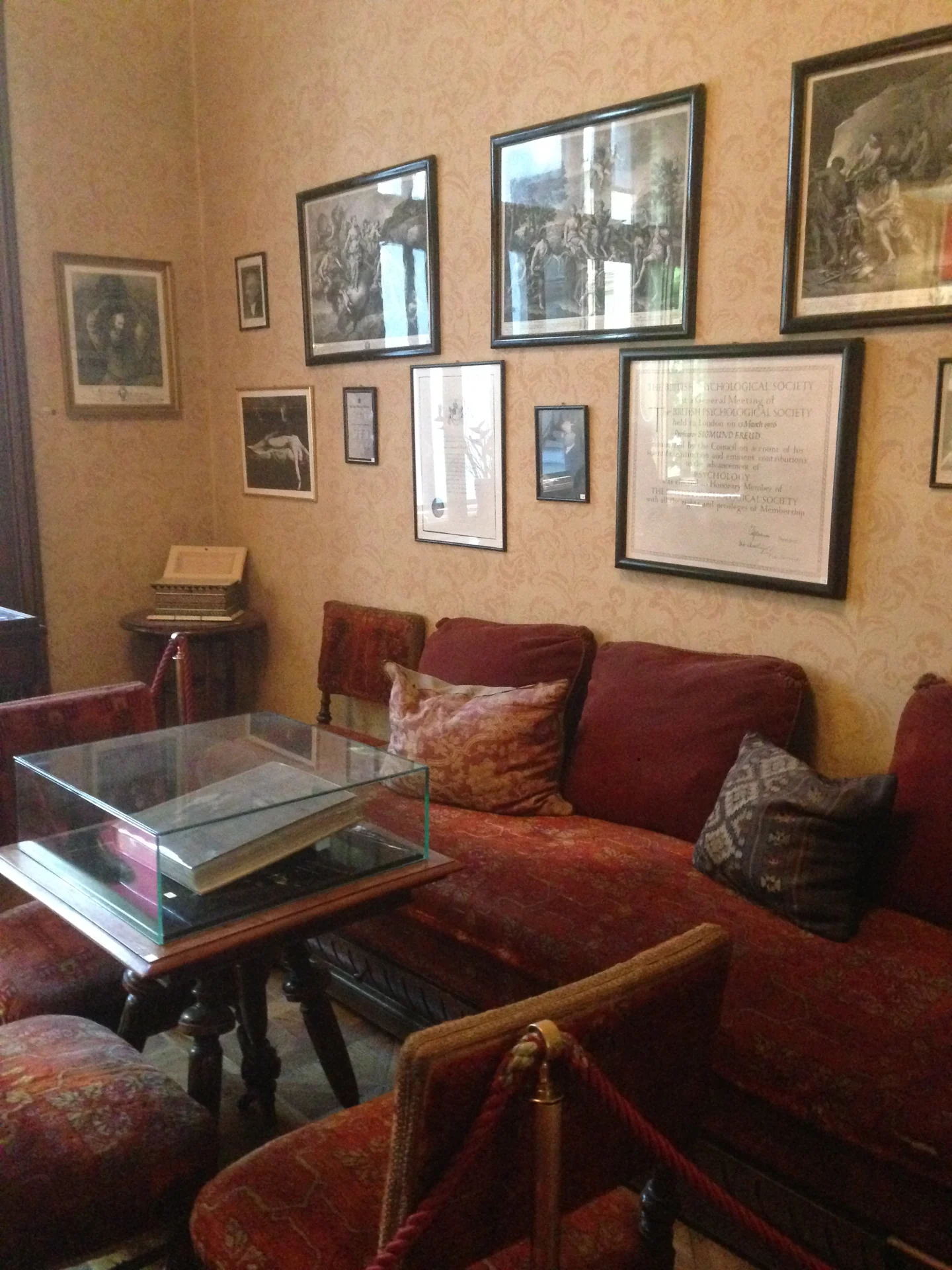
I photographed the red sofa in the waiting room. The museum has original furniture from the room, donated by his daughter Anna. The famous couch from his consulting room, the one his patients lay on, went to London with Freud and is still there. What I wanted to picture in this room was something simpler: someone sitting here before an appointment, wondering whether, once they went through that door, they’d actually say the thing they’d come to say.
In a display case farther on were his glasses, their case and a fountain pen. Something about those ordinary things makes it easier to see the man behind the famous name, sitting down every day, listening to people and trying to make sense of what he heard. Psychoanalysis grew out of conversations like that. Behind the explanations we give ourselves for our own behaviour, Freud looked for motives we might not even be aware of.
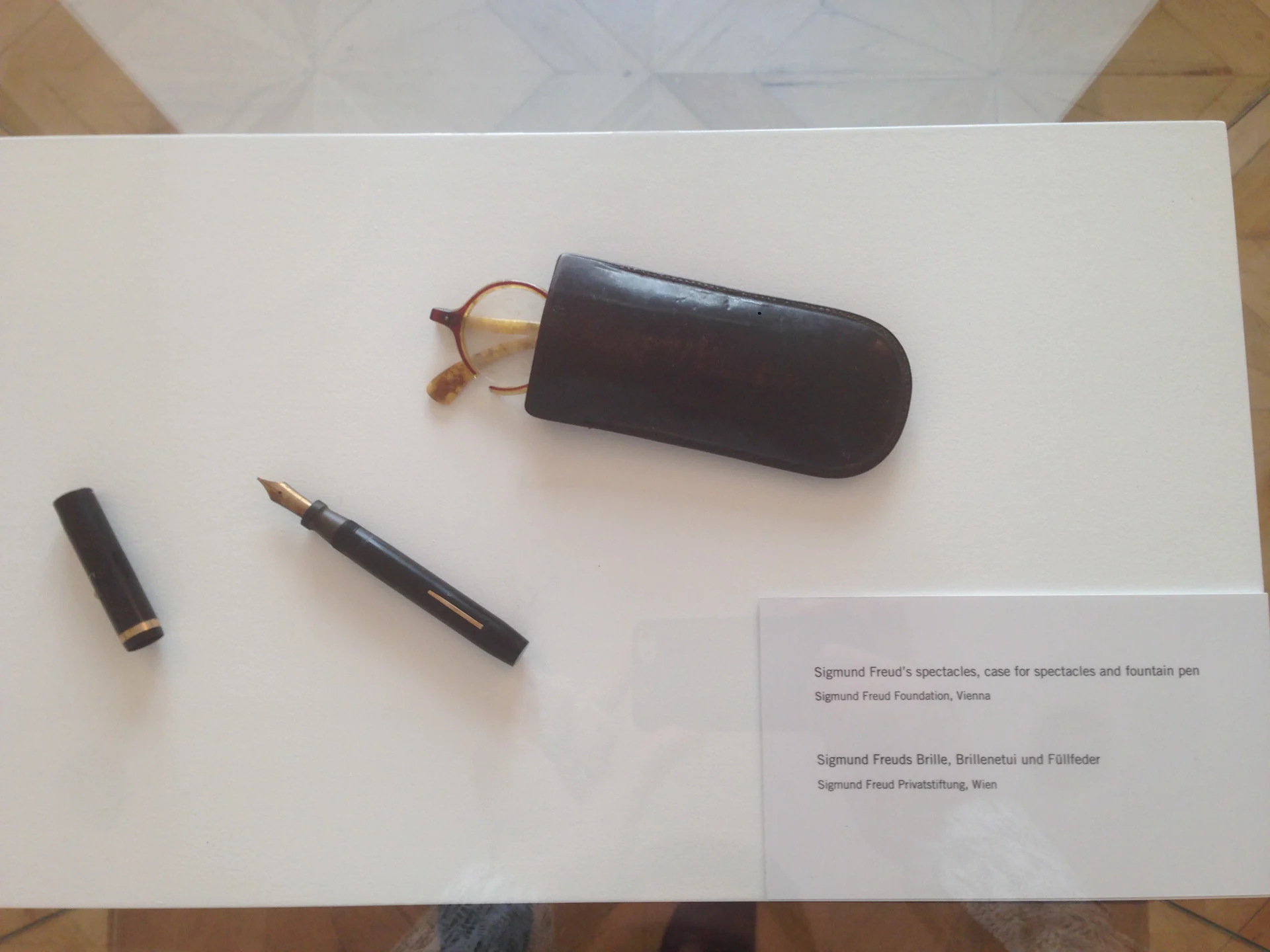
There are a few practical questions in this that interest me. If I react just as strongly in completely different situations, is it really all about what happened today? If I spend a few minutes writing down my thoughts without editing them, where do they keep going back to? And if I already expect someone I’ve just met to judge me in a familiar way, did they actually give me a reason to expect it, or am I just used to that reaction from other relationships? That last one is close to what therapists call transference. Writing down whatever comes to mind isn’t psychoanalysis, but it helps me see why free association mattered to Freud.
Freud also talked about sexuality as something much broader than the act of sex. Desire, pleasure, shame, intimacy: all of it could be talked about in that room. There’s a simple question I can take from that, too. When I find it hard to tell a partner what I want, am I more afraid of being rejected, being judged or being misunderstood altogether? Not all of Freud’s theories have stood up to scrutiny, but I think being able to talk about these things out loud matters.
The Cathedral and the Song About Augustin
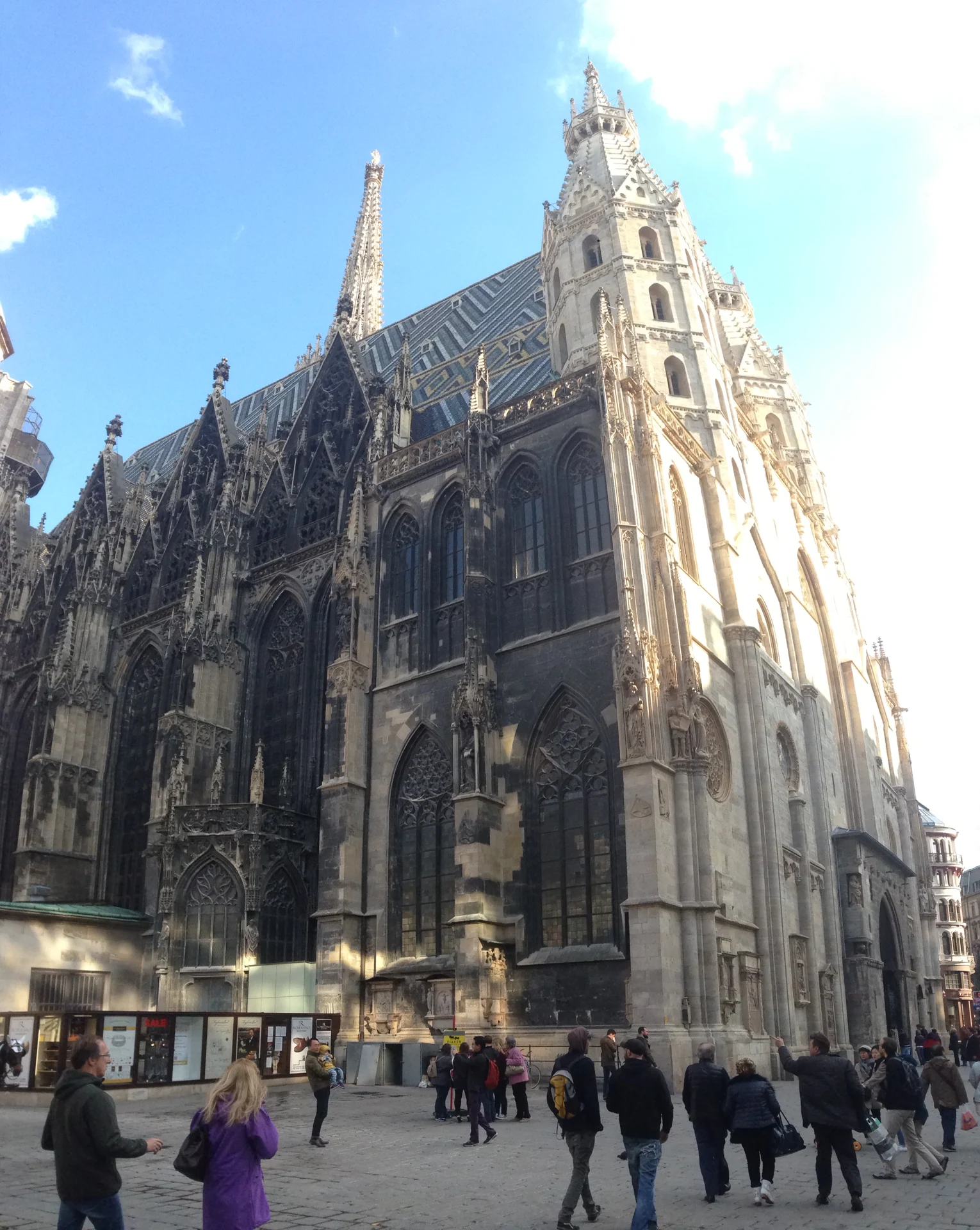
From Freud’s apartment, we went to St. Stephen’s Cathedral. Inside you can see Gothic vaults, altars and a chequerboard floor. The first church on this site was consecrated back in 1147. Duke Rudolf the Fourth began the Gothic rebuilding in the fourteenth century, and the famous south tower was completed after his time. The cathedral is still in use. From the outside, I’d recognise it now just by the colourful pattern on the roof.
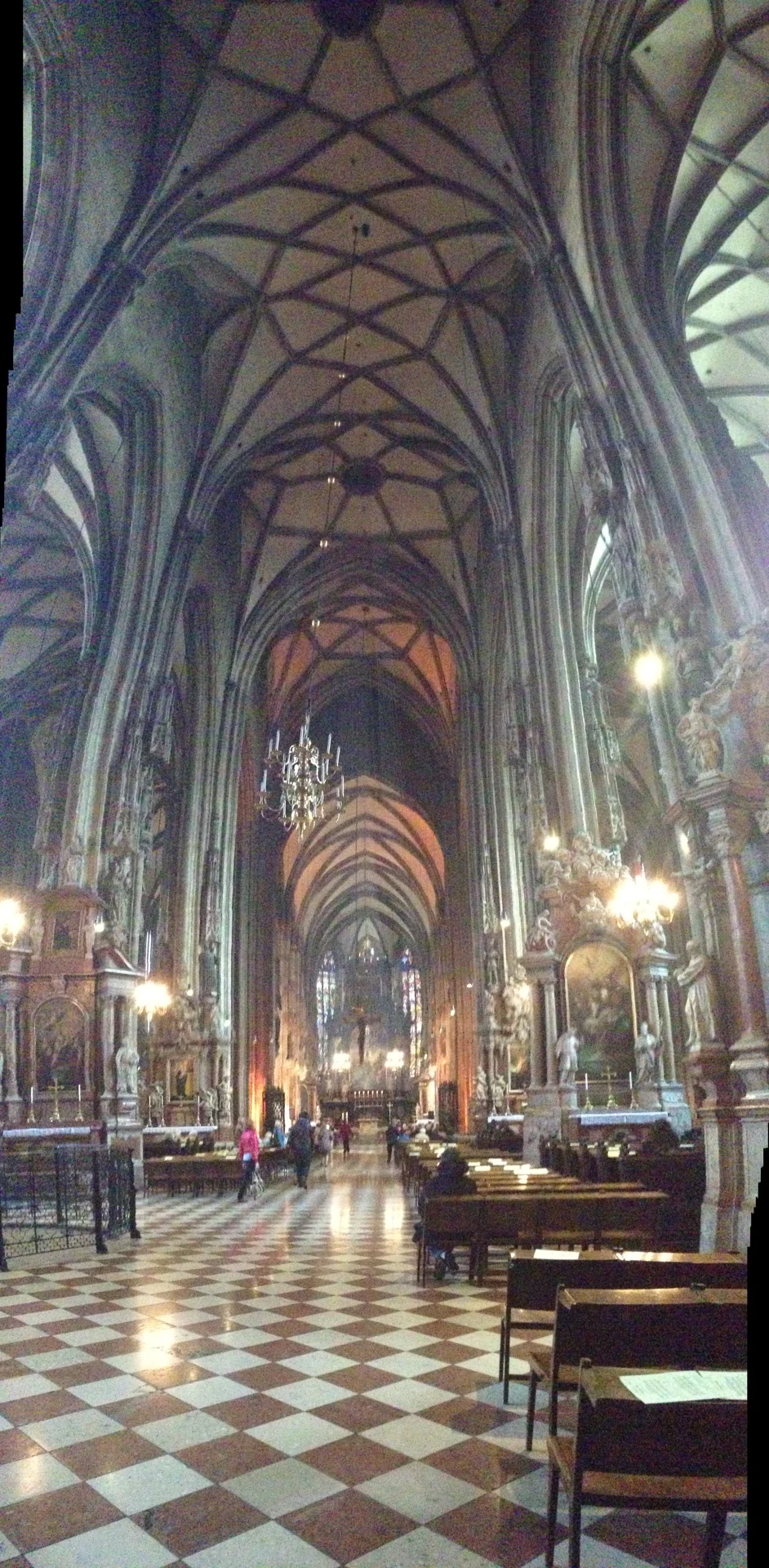
Standing in the square, you get a sense of how much we’d seen in one day. One minute you’re in an apartment where someone used to see patients. A little while later you’re craning your neck at a tower that took generations to build.
Then we stopped for a bite at Griechenbeisl, an old Viennese tavern. At the entrance, alongside the name, you can see “Gelber Adler,” meaning “Yellow Eagle,” and “Der liebe Augustin.” The name it goes by today recalls the Greek merchants who settled nearby. The place is still known for traditional Viennese cooking, the autographs in its Mark Twain Room and live zither music. I don’t remember what we ate or whether anyone was playing that day. But there’s a story behind that sign about Augustin.
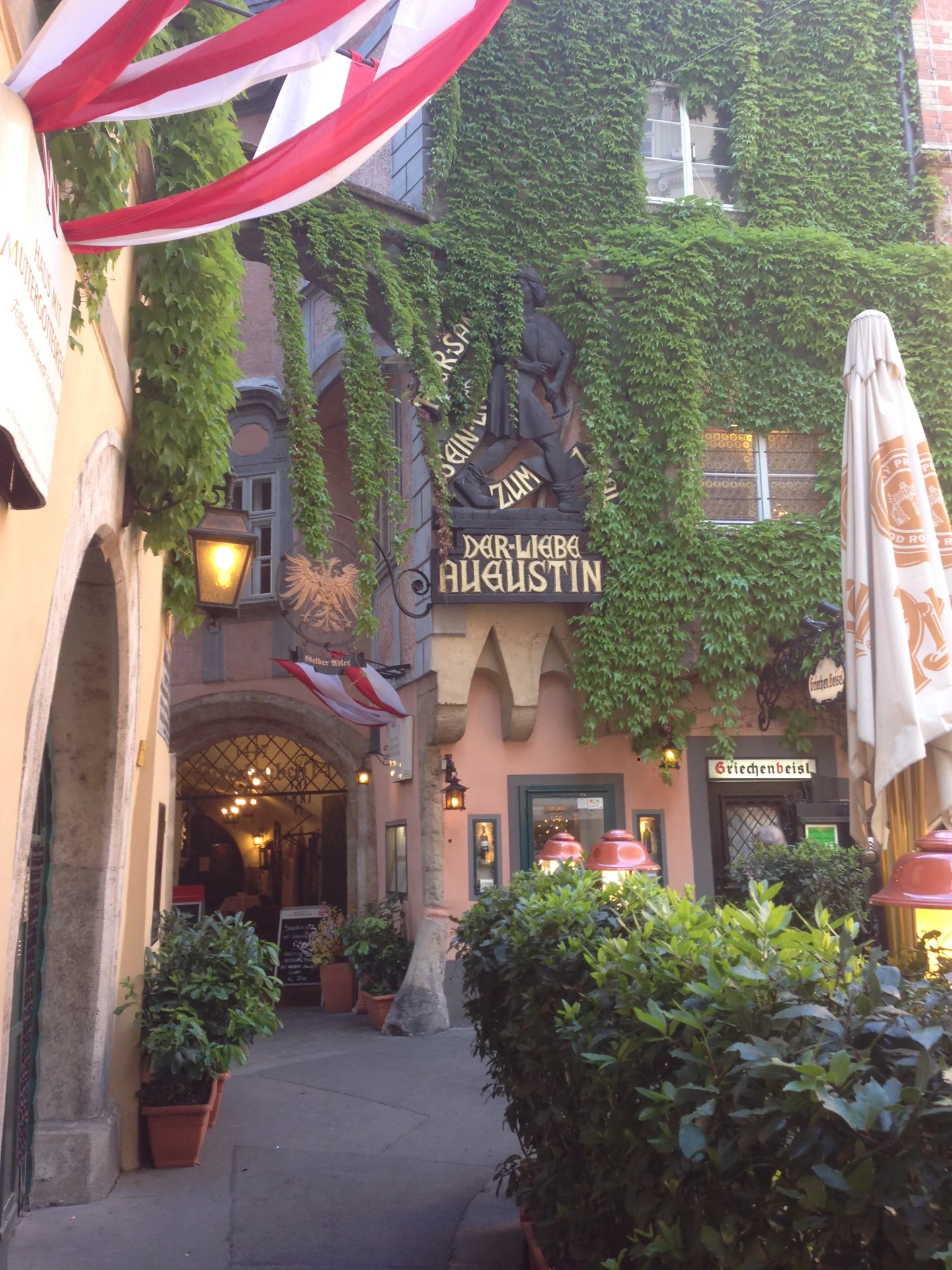
According to Viennese legend, during the plague of 1679, a street musician named Augustin got drunk and fell asleep. People took him for dead and carried him off to a plague pit. He came round, started playing his bagpipes, and that’s how someone heard him. The tune of “O du lieber Augustin” is so cheerful that it takes a moment to register what the chorus is saying: everything’s gone. Whether any of that happened, or whether Augustin ever sang the song, nobody knows. The song was already circulating on its own before Moritz Bermann’s nineteenth-century Viennese collection linked it to the legend. Vienna eventually even unveiled an Augustin fountain. Quite a career for a man who, if you believe the story, had already been buried.
Listen to “O du lieber Augustin”
The Hofburg and What a Price Can Tell You
By evening we’d reached the Hofburg. I photographed the lit-up parliament building later, too, but the palace shows up most in my photos from that walk. In front of me, on Heldenplatz, is the equestrian statue of Prince Eugene of Savoy, with the curved wing of the Neue Burg behind it. This used to be a Habsburg residence. What’s interesting is that the Habsburgs themselves weren’t from Vienna. The dynasty took its name from its ancestral castle in Aargau, in present-day Switzerland, and established itself in Austria in the late thirteenth century.
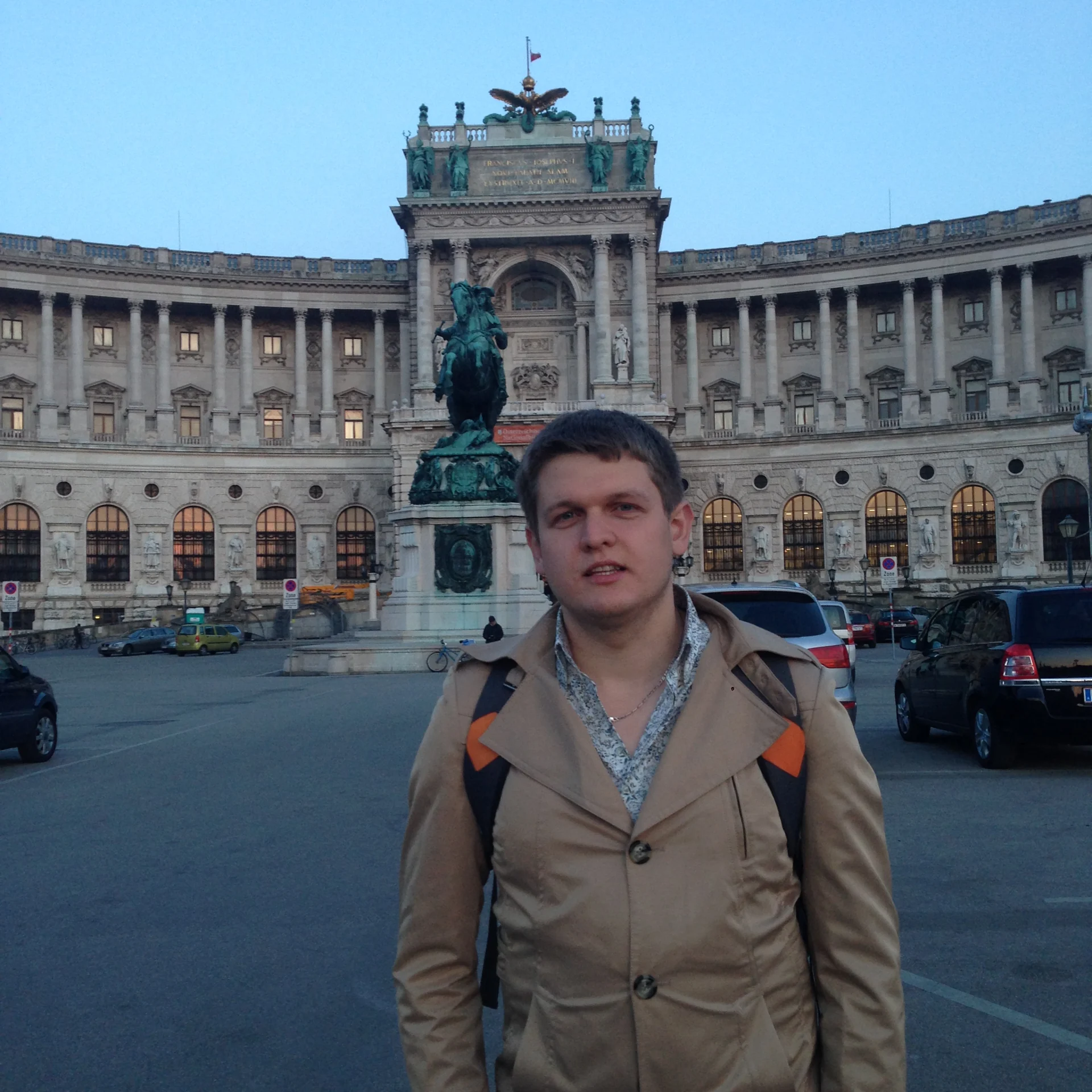
Vienna was the capital of the Austrian half of Austria-Hungary, and Budapest was the capital of the Hungarian half. At the beginning of the twentieth century, more than fifty million people lived in the monarchy, and Lviv was one of its major cities. Vienna was good at drawing people in. Mozart came from Salzburg and wrote The Marriage of Figaro here. Beethoven came from Bonn, and his Ninth Symphony had its premiere here. Many decades later, Klimt painted his golden Kiss, and Freud saw patients in the apartment we’d just visited.
There’s another Viennese story I like, and it has a connection to this palace, too. Carl Menger, who published Principles of Economics in 1871, taught in Vienna and later became one of Crown Prince Rudolf’s tutors. After our first night here, his idea about value is easy to explain. The very same dry hotel room at the very same price: in the daytime, when I still have a few options, I might walk right past it. At three in the morning, after hours in the rain, it’s worth a whole lot more to me. The room hasn’t changed. What’s changed is what I need and what I can choose from.
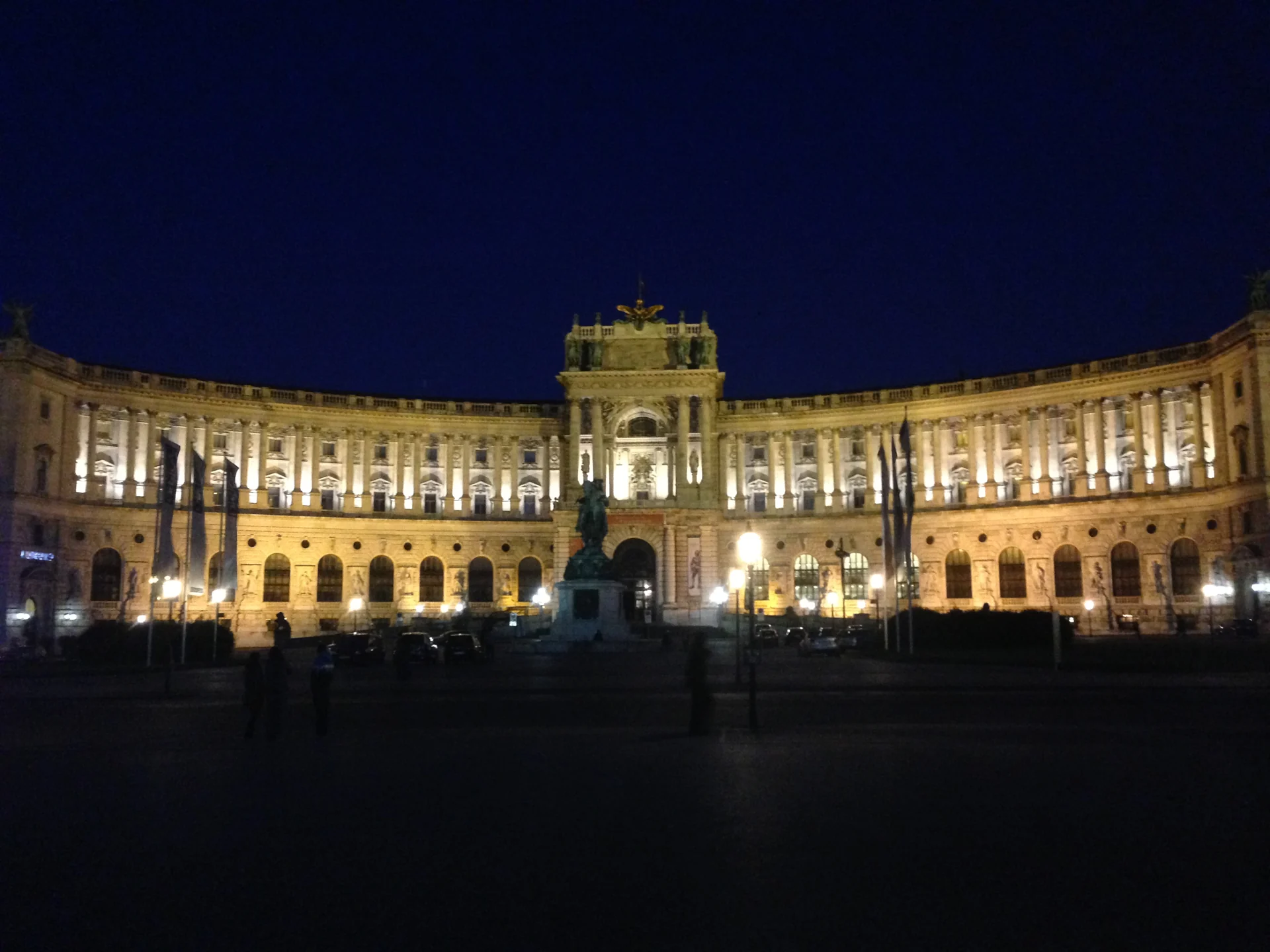
Ludwig von Mises, who was born in Lviv when it was known as Lemberg, became one of the school’s best-known followers. He asked how a planner could compare different ways to use the same resource if prices don’t show what the alternatives cost. Friedrich Hayek, who attended Mises’s private seminar in Vienna, looked at prices from another angle. When the price of a material goes up, some people start using less of it or look for a substitute. They don’t all need to know what happened on the other side of the world or why there’s less of it to go around. In 1974, Hayek shared the prize in economic sciences with Gunnar Myrdal.
Looking at it now, I’m interested in how that connects with Bitcoin. In The Denationalisation of Money, Hayek imagined people choosing between currencies issued by private entities that would compete, among other things, on the stability of their purchasing power. Bitcoin has no such issuer. Issuance is set by the protocol, and the price can swing quite a bit. The shared question is who gets to make money and why people choose one kind over another. There’s a similar question with DeFi: some transactions can run through an open protocol, but that still doesn’t tell you who actually makes decisions or who can change the rules.
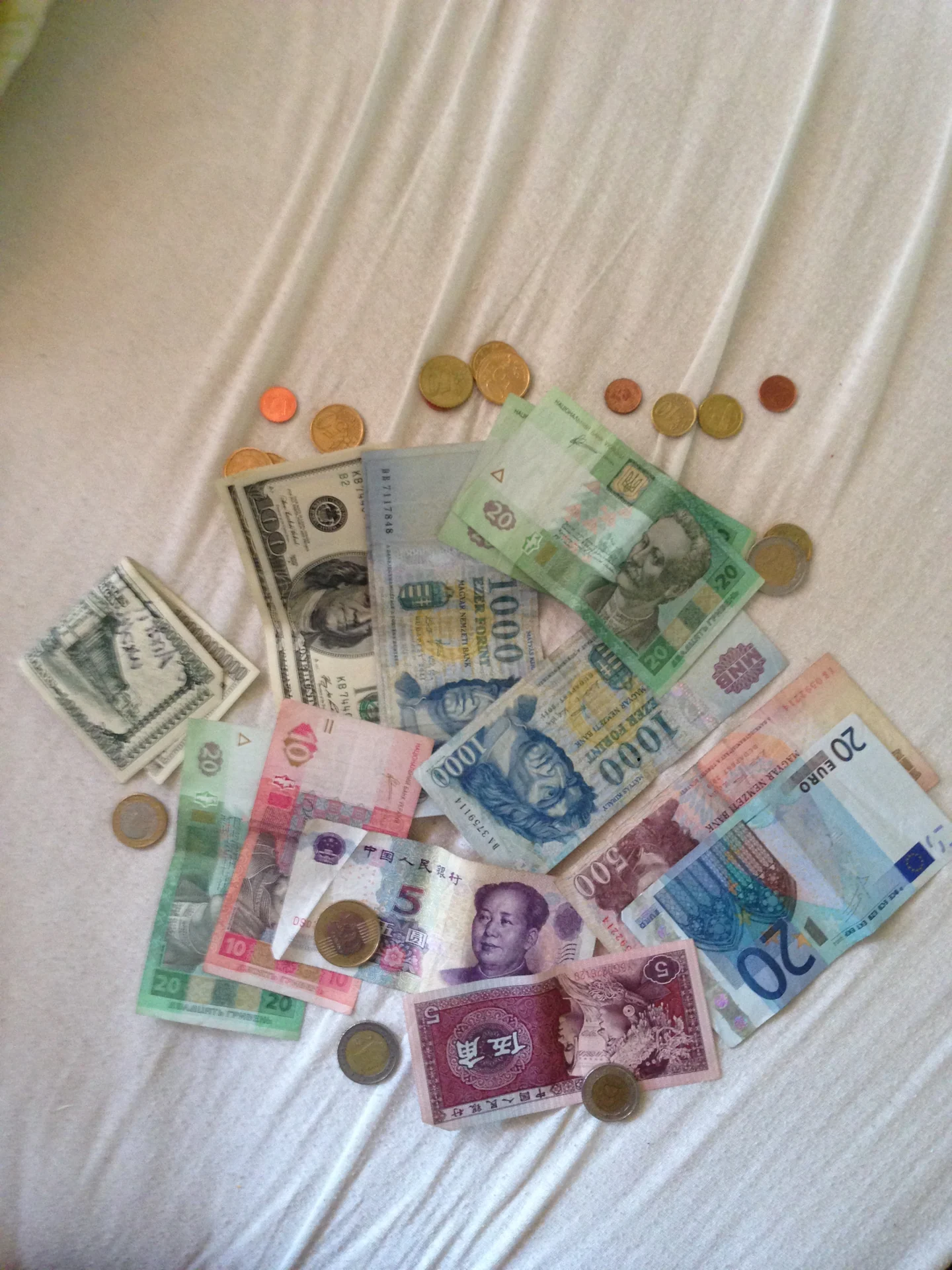
The next day, already in Budapest, I opened my bag and found dollars, euros, forints, hryvnias, Chinese money and another handful of coins. Five currencies in my bag, but a simpler question at the checkout: which one can I actually pay with here? I like putting that photo alongside Hayek for exactly that small difference between having money and being able to use it.
As for how we got to Budapest and what happened next, that’s another story.