
Budapest: We Were Just Supposed to Get Home
May 5–6, 2014
We're in a taxi somewhere in the mountains of Zakarpattia, in western Ukraine. I look down: fir trees, one ridge behind another, and a train rolling through the valley. The carriages look like toys from up here. For a second I'm just staring. Damn, that's beautiful. Then it hits me: that's our train. We were supposed to be on it. Now we're trying to beat it.
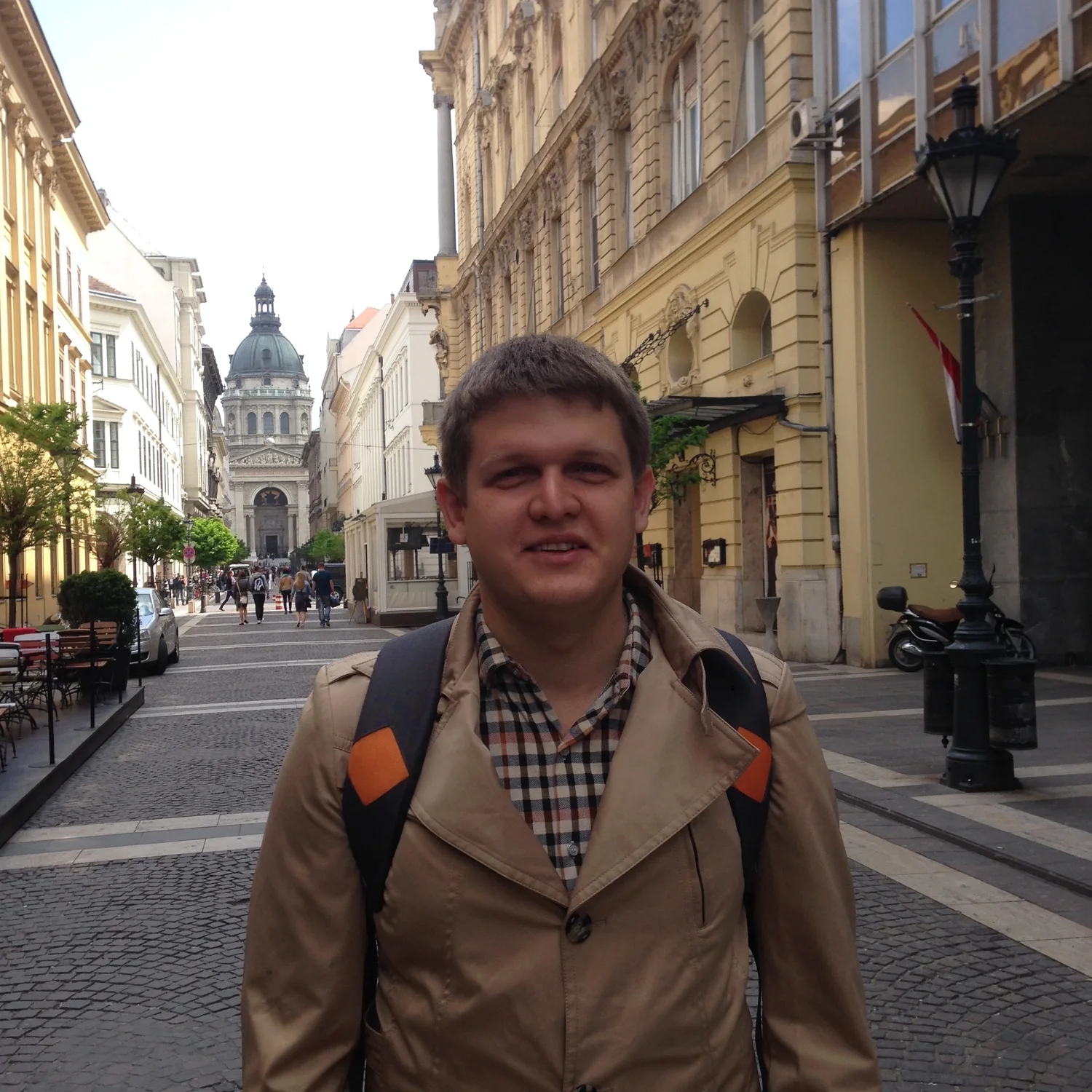
The day before, we're in Budapest. The only reason to hurry is that the goulash might get cold. I figure I'll try it once, just to see what the fuss is about. I go back for seconds. Then we're back out on the street. The basilica is already visible between the buildings, and from there we'll head down to the Danube. Not a bad plan for our last day, as long as you don't count the part where we still have to get home.
For Now, There's No Rush
We walk down Zrínyi Street, straight toward St. Stephen's Basilica. I'd always figured Budapest was two cities, Buda and Pest. Turns out that when they merged in 1873, there was a third: Óbuda. Three cities, two in the name. For now we're in Pest, where it's flat. We'll find out what “hilly Buda” means when we have to climb it.
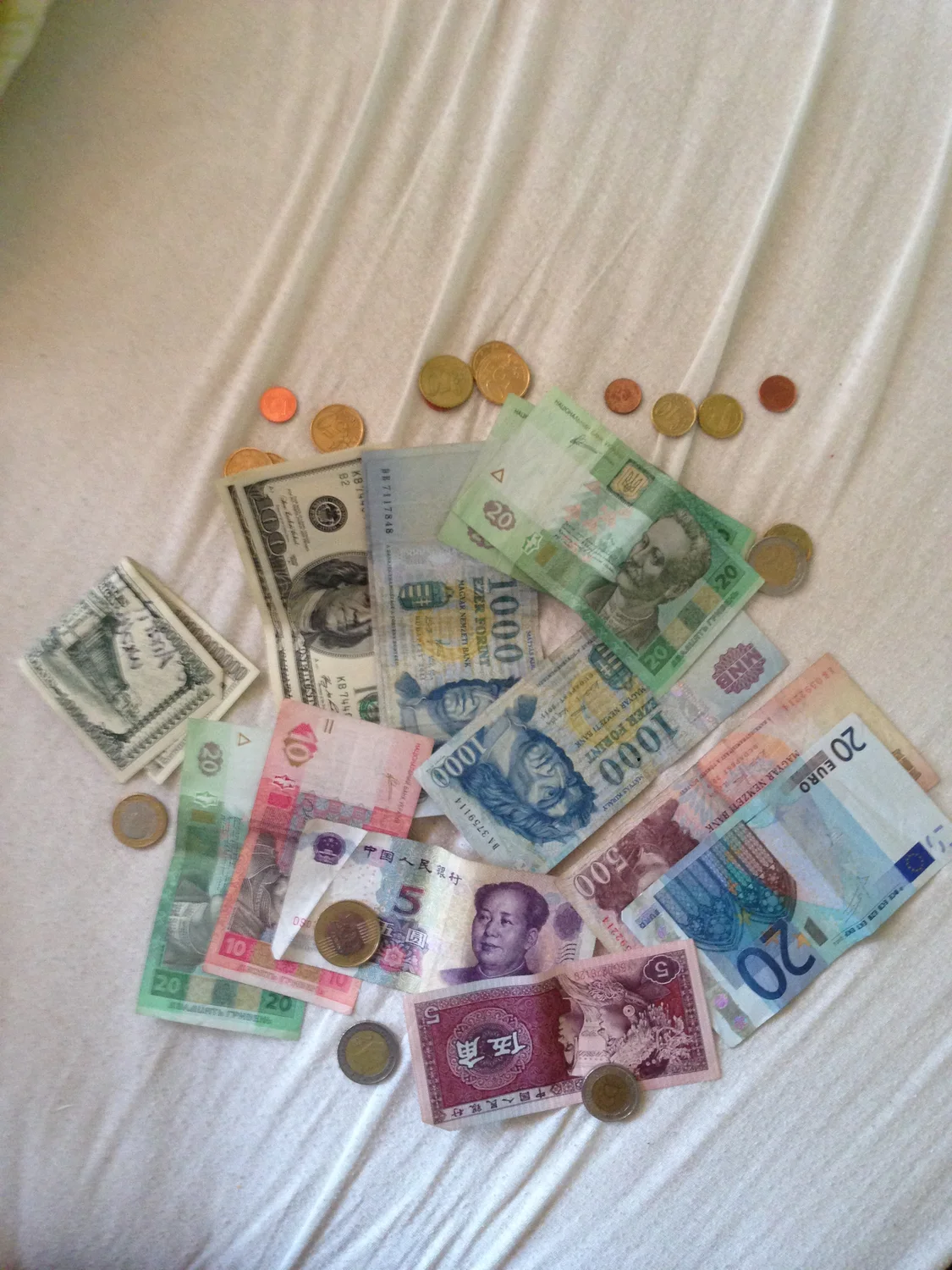
After Baden, just sitting down to eat feels like a luxury. There I was looking for someone to change my dollars so I could pay for the hotel. I open my bag and there's money from half the world in there: euros, hryvnias, Chinese currency. And now forints, too.
From the basilica we make our way to Liberty Square. I can already see the dome of Parliament above the buildings, but an obelisk stops me. The Russian inscription says, “Glory to the Soviet hero-liberators.” Liberators, okay. From whom? For whom? And for how long?
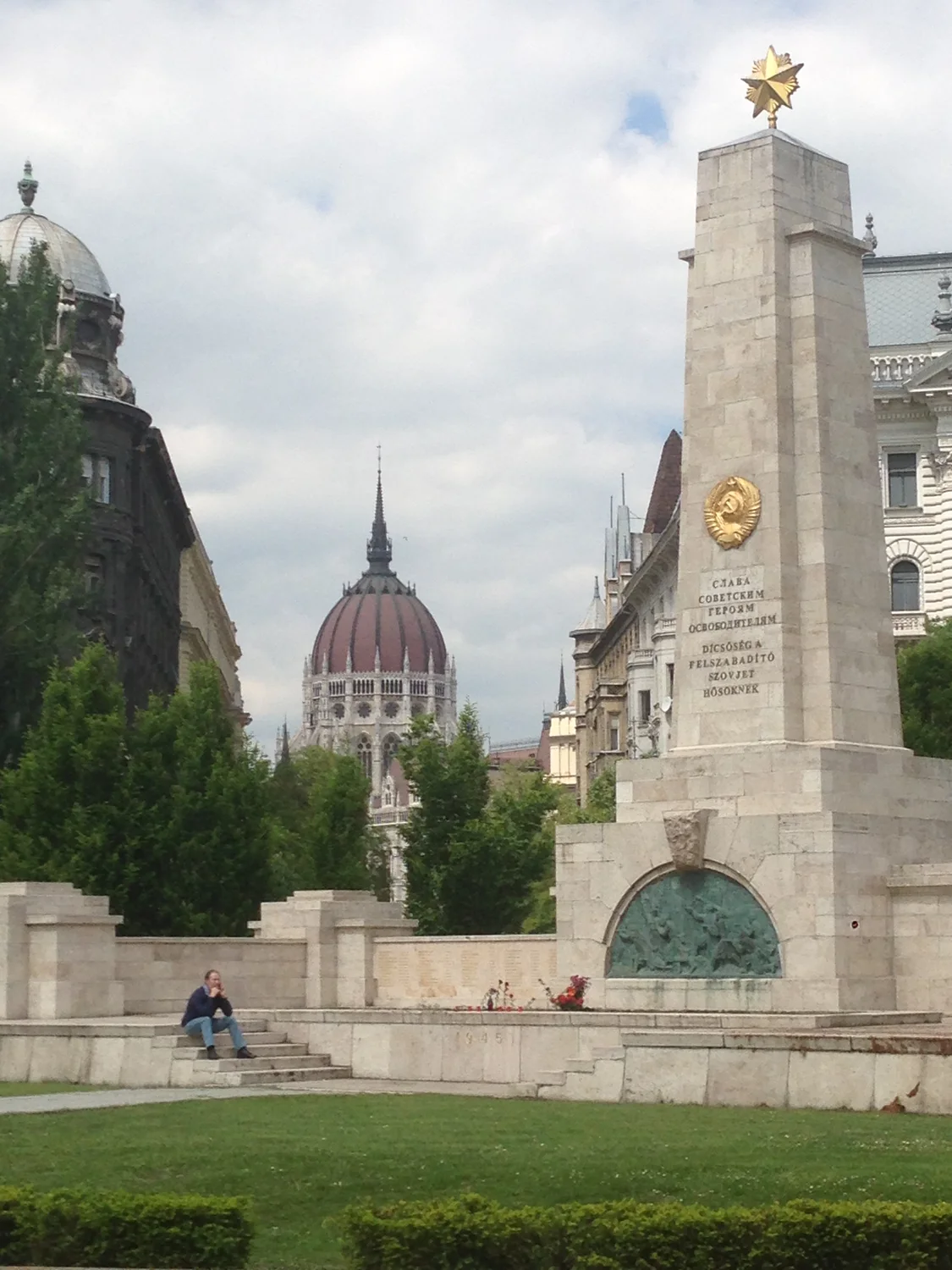
In 1944, Germany occupied Hungary, even though the two had been allies. Hungarian officials and gendarmes helped deport Jews, and that autumn the local fascists of the Arrow Cross came to power. In January 1945, the Red Army liberated Budapest's ghettos. In February, the last troops in the besieged city surrendered. If you walk out of a ghetto alive, you've been liberated. I have no problem with the word in that sentence.
My questions start with what comes next. There are other memories of the Soviet troops arriving, including those of local women who suffered violence at the hands of soldiers. After the war, a government dependent on Moscow took hold in Hungary. And when the whole story gets boiled down to one noble “Russian soldier,” it even leaves out who fought: the army was made up of many nationalities, Ukrainians among them. I look at the inscription again. One word on a stone, and look how much you have to know just to read it.
A Couple of Blocks to Parliament
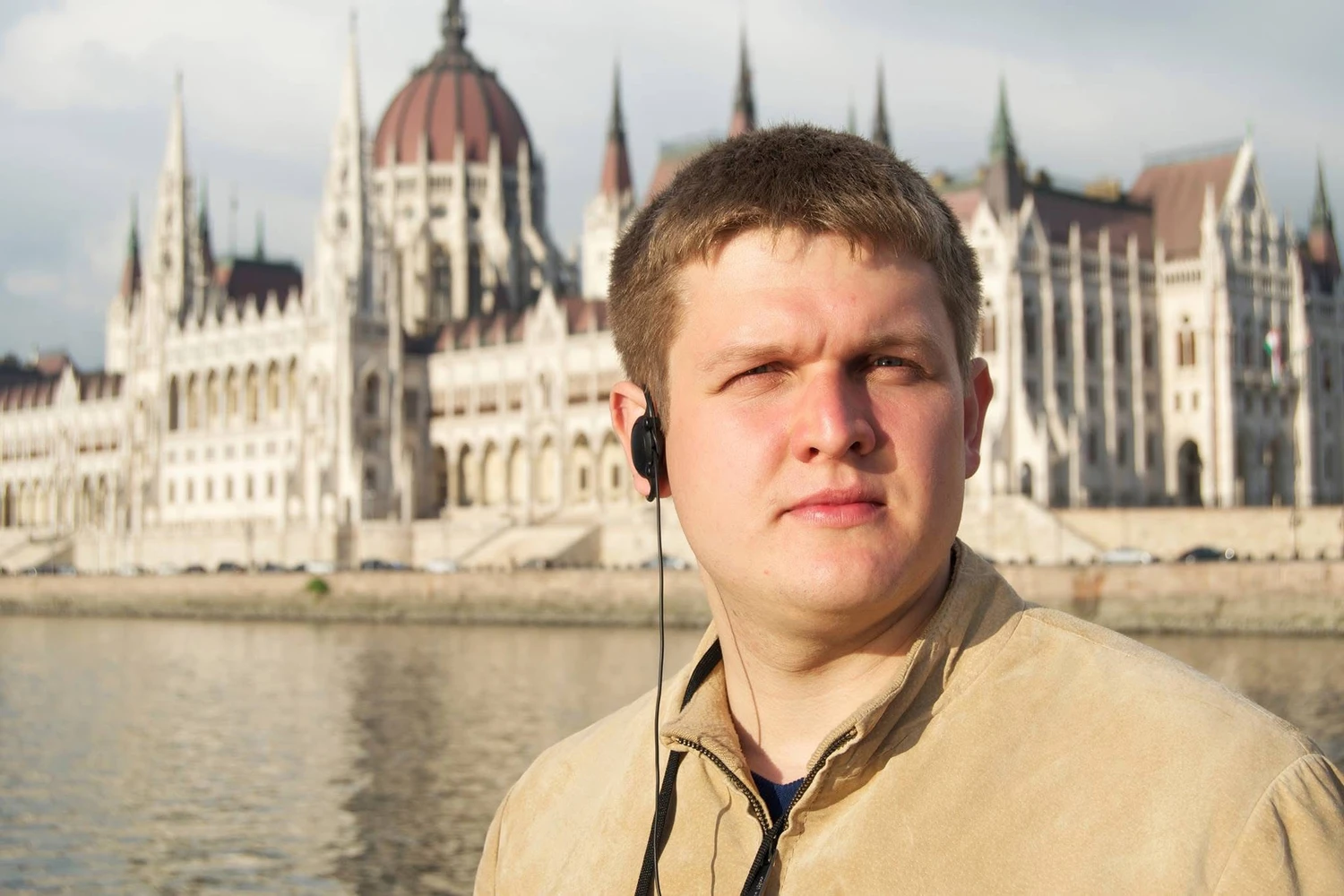
We head toward the dome we can see from the obelisk. I probably would have taken a few pictures of Parliament and kept walking. But now I want to know where the story from Liberty Square ends. Turns out it picks up right here, in front of Parliament.
On October 25, 1956, people come out onto this square. The uprising is in its third day. Demonstrators talk with the crews of Soviet tanks. Some even climb onto the vehicles. Then someone opens fire on the crowd. Who fired first is still disputed. In early November, Soviet forces crush the uprising. The last Soviet troops don't leave Hungary until 1991. I walk a couple of blocks, and eleven years fit between the two squares: from the liberation of the ghettos to Bloody Thursday.
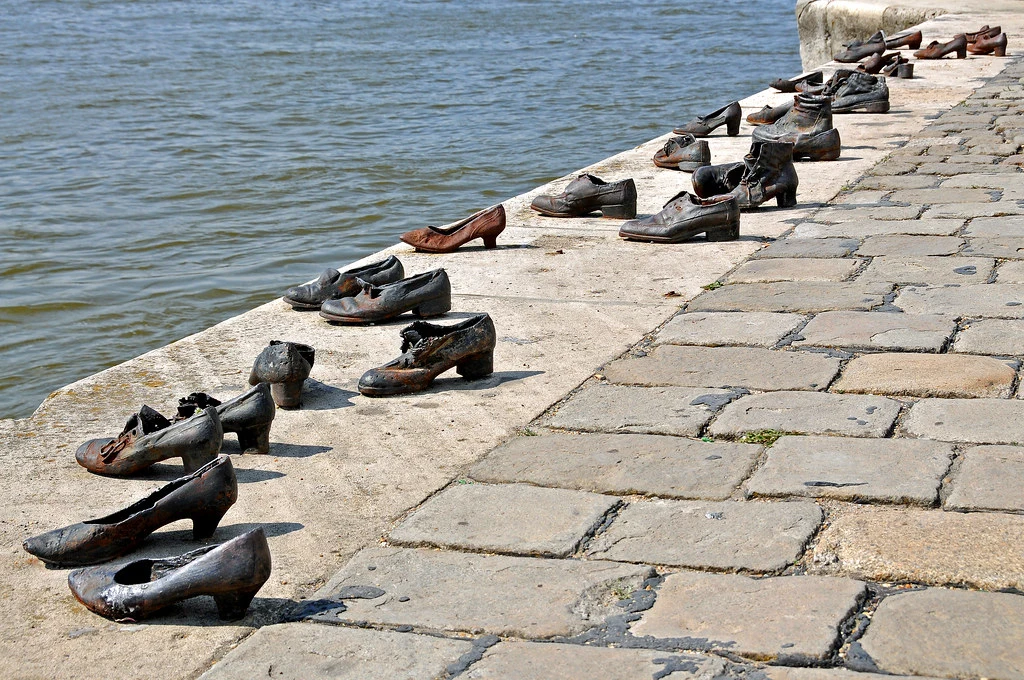
From the square we go down to the water. If you only have eyes for Parliament, you could walk right past the memorial. There are cast-iron shoes at the very edge of the embankment. Dress shoes. Little shoes. In 1944 and 1945, members of the Arrow Cross brought people, mostly Jews, to the banks of the Danube. They made them take off their shoes and shot them. At the obelisk I can read who gets the glory. Here I look at these little shoes and don't even know whose they were.

On the Other Bank
We get on a boat. Once we're away from the embankment, I can finally see all of Parliament. I look one way: flat Pest, buildings right up against the water. The other way: Buda climbs up from the river, with a castle on top. We approach a bridge, see it from underneath, and another stretch of the bank opens up beyond it. On the way back I think, well, I've seen this already. Then we turn, and there I am, swiveling my head again.
Looking at the hill from the boat is the easy part. Now let's try it on foot. We head up from the embankment. Steep steps, one flight, then another. When we finally reach a lookout, I can stop swiveling: the Danube, the bridges and Pest are all in front of me. I just stand there and take it in. That's my favorite thing about today's big plan to “go for a walk.” You can stand there as long as you like.
Seven Guys on Horses
By evening we're back in Pest, in Heroes' Square. I see seven guys on horseback. An angel above them is holding a crown. By now I've got some idea who fought whom here in the twentieth century, but where the Hungarians themselves came from? No idea.
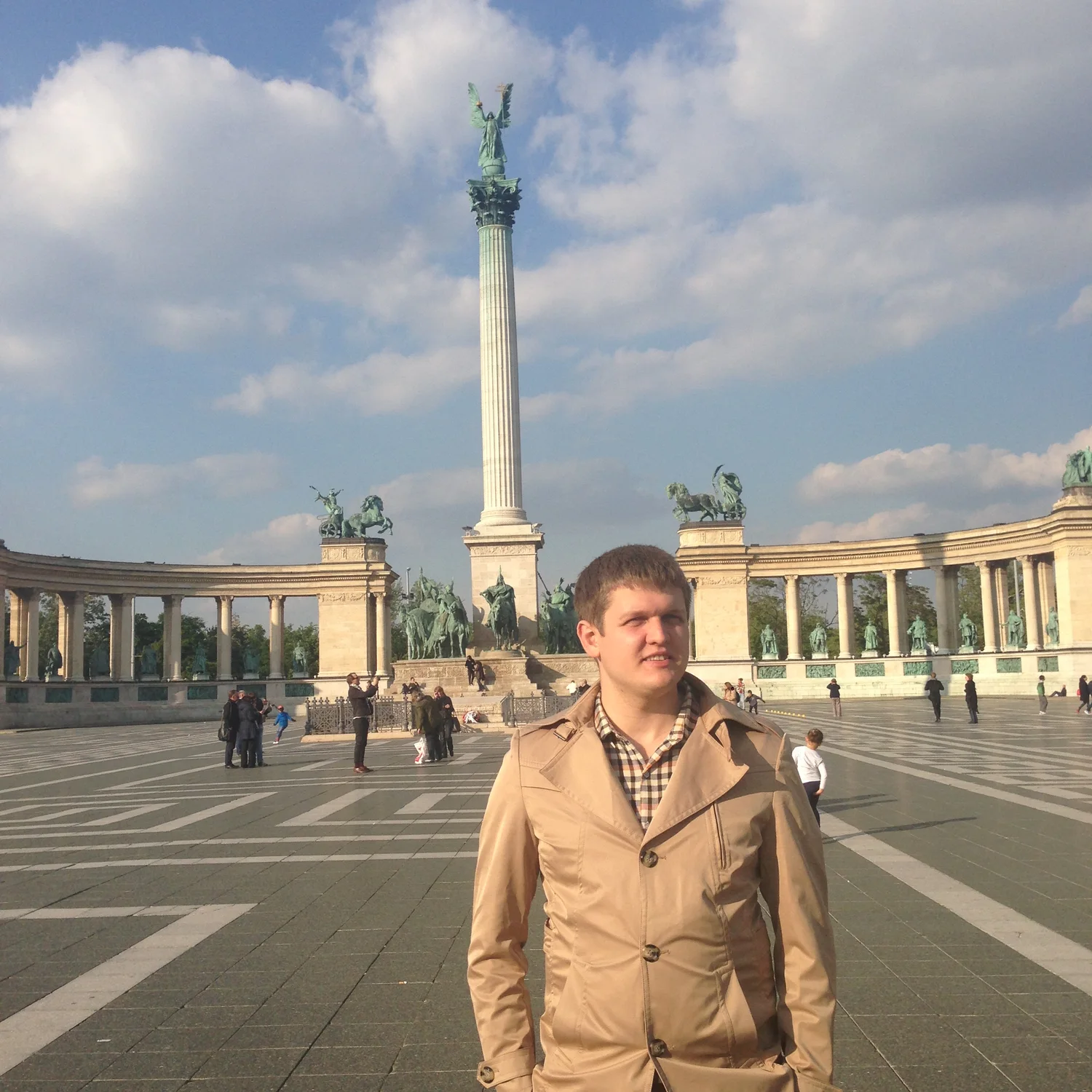
They call themselves Magyars. The guys on horseback are the leaders of an alliance of tribes that came into the Carpathian Basin from the east at the end of the ninth century. That's Árpád in the middle. Where their journey started is still debated; one of the later stretches took them through the steppes between the Dnipro and the lower Danube. The crown up top is for István, the first king of Christian Hungary. Right, that's whose basilica we walked past this morning. Legend has it the archangel Gabriel appeared to the pope in a dream and told him to give István the crown.
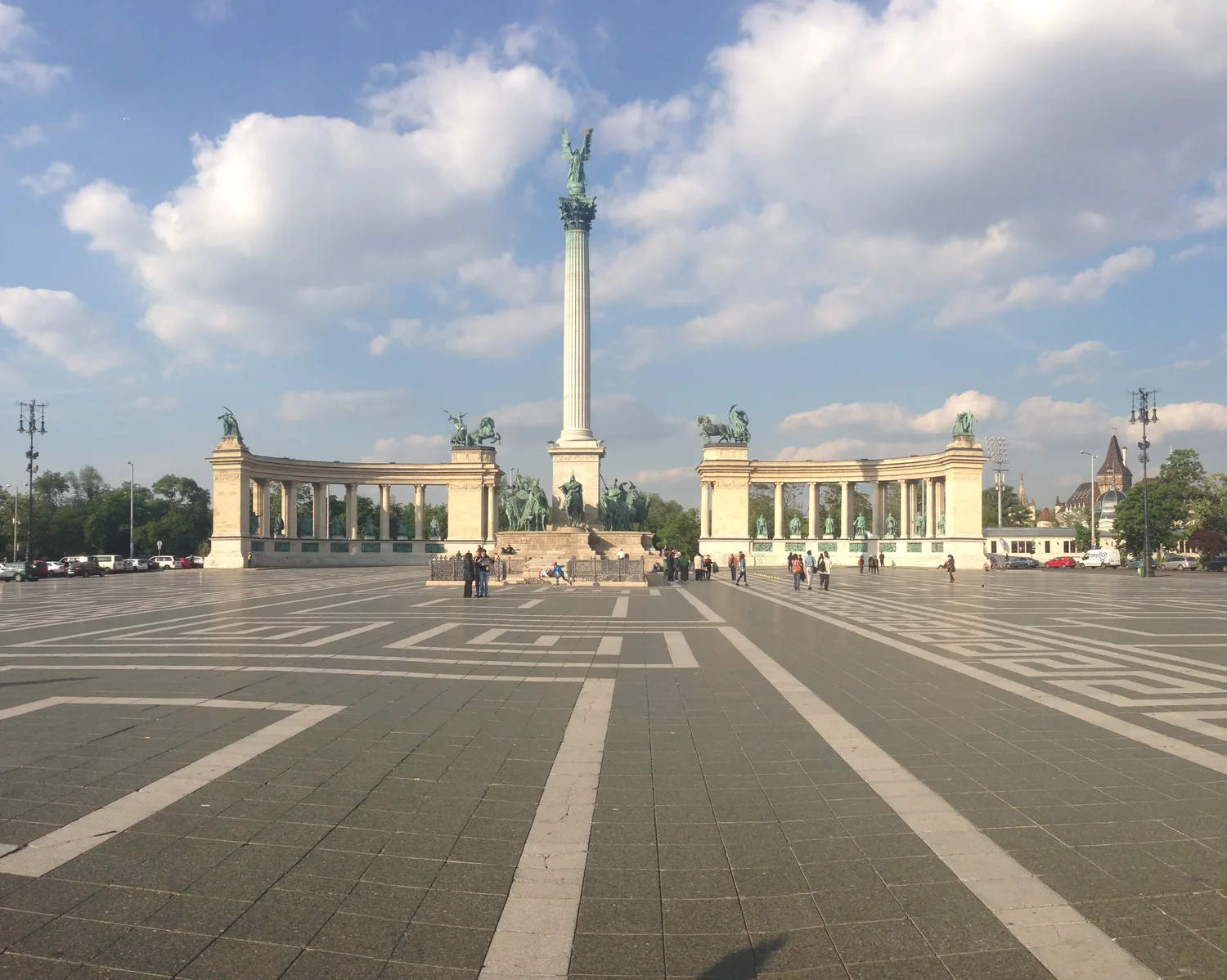
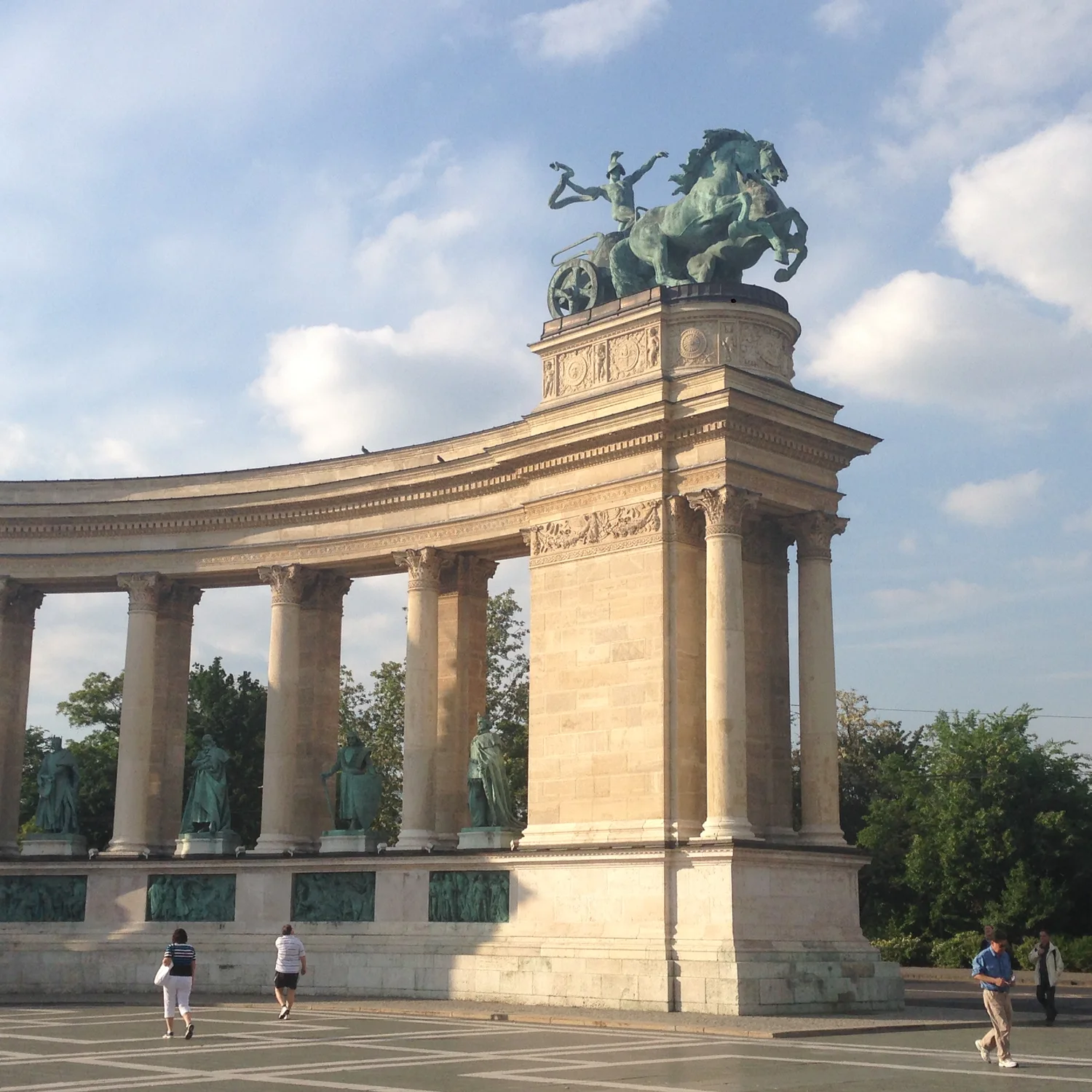
The monument was planned for the millennium celebrated in 1896. I walk over to the curved colonnades and look at the figures from other centuries. And here's that story from Parliament again. In 1989, people came to this square to say goodbye to Imre Nagy and others executed after the uprising. I come here to see how Hungarians mark the beginning of their history, and I find the place where, decades later, they could finally say goodbye to their own in public.
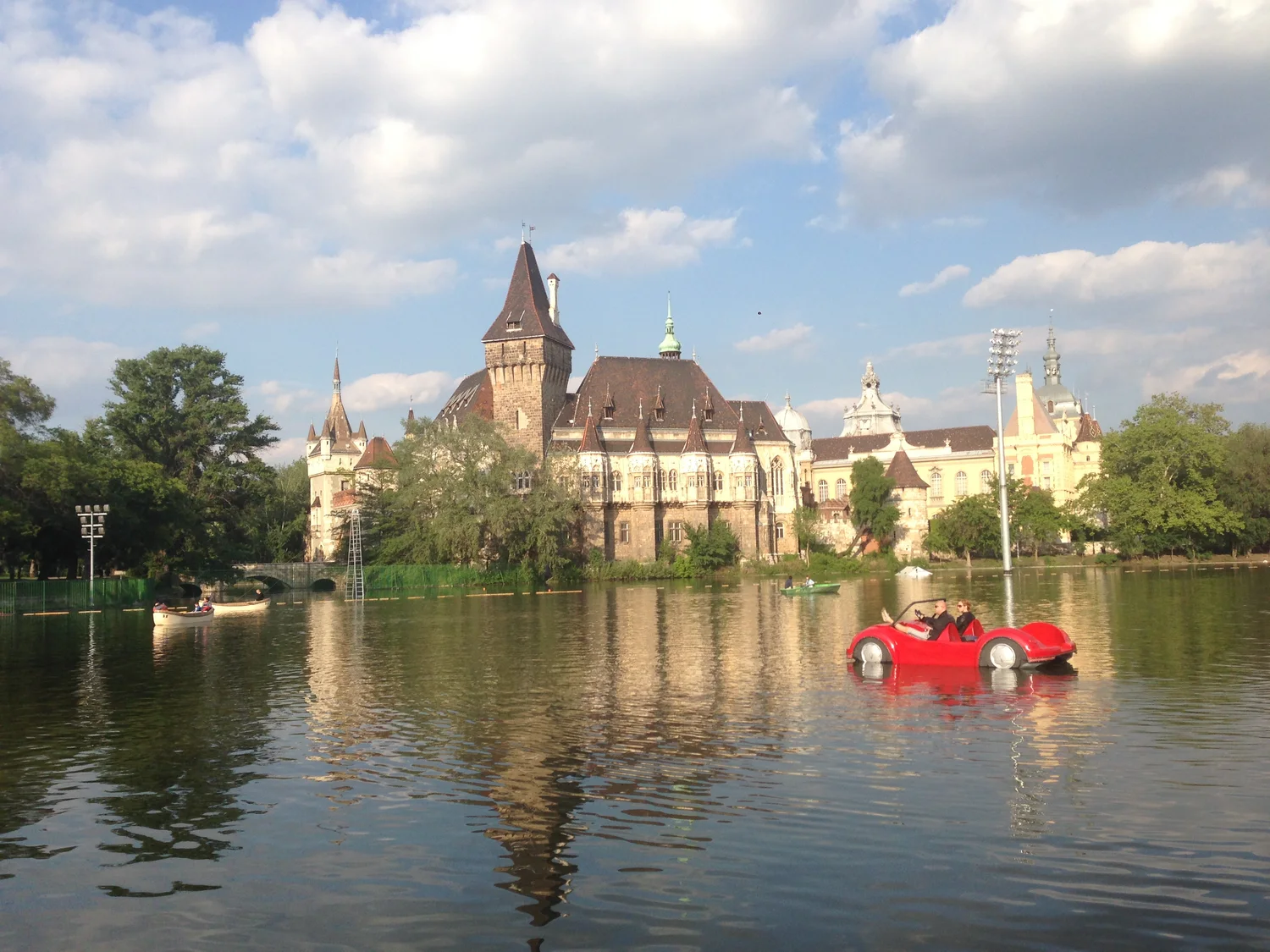
Beyond the square is Városliget, the city park. Next to the lake is a castle with towers that look borrowed from different buildings. Which is pretty much what happened. For that same anniversary, Ignác Alpár put together an exhibition complex in different styles, including elements inspired by a castle in Transylvania. It was temporary at first. Then they rebuilt it to last.
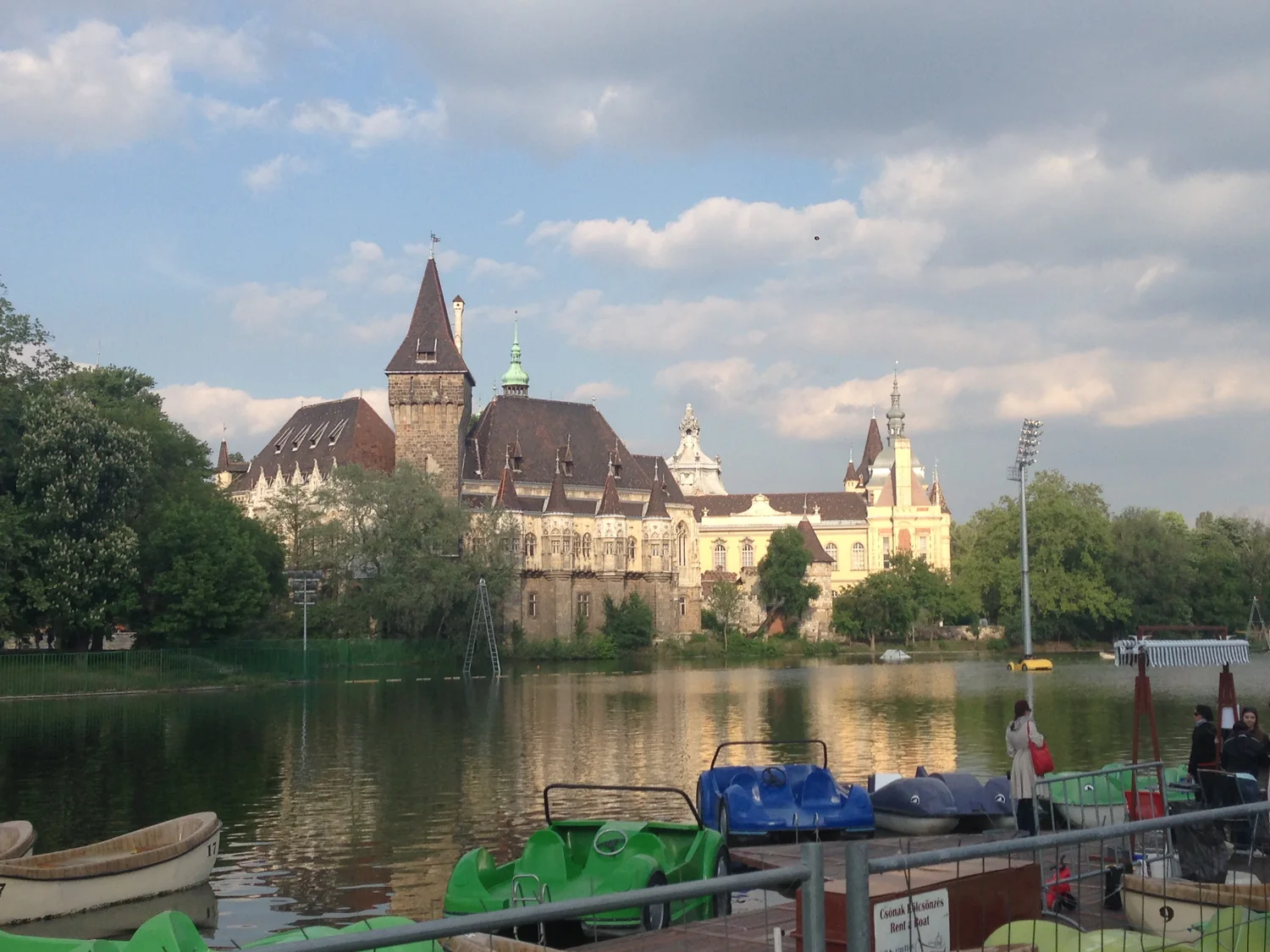
And right in front of the castle, a little red car is going across the water. Steering wheel, wheels, the works. Except it's a pedal boat. So much for the Middle Ages.
Now We're in a Hurry
From Budapest we take the train toward Chop. Hungarian towns and flat country are still passing by outside, but I look around the carriage and think, ours are just like this. All we have to do is change trains for Kyiv. I mean, what could possibly go wrong?
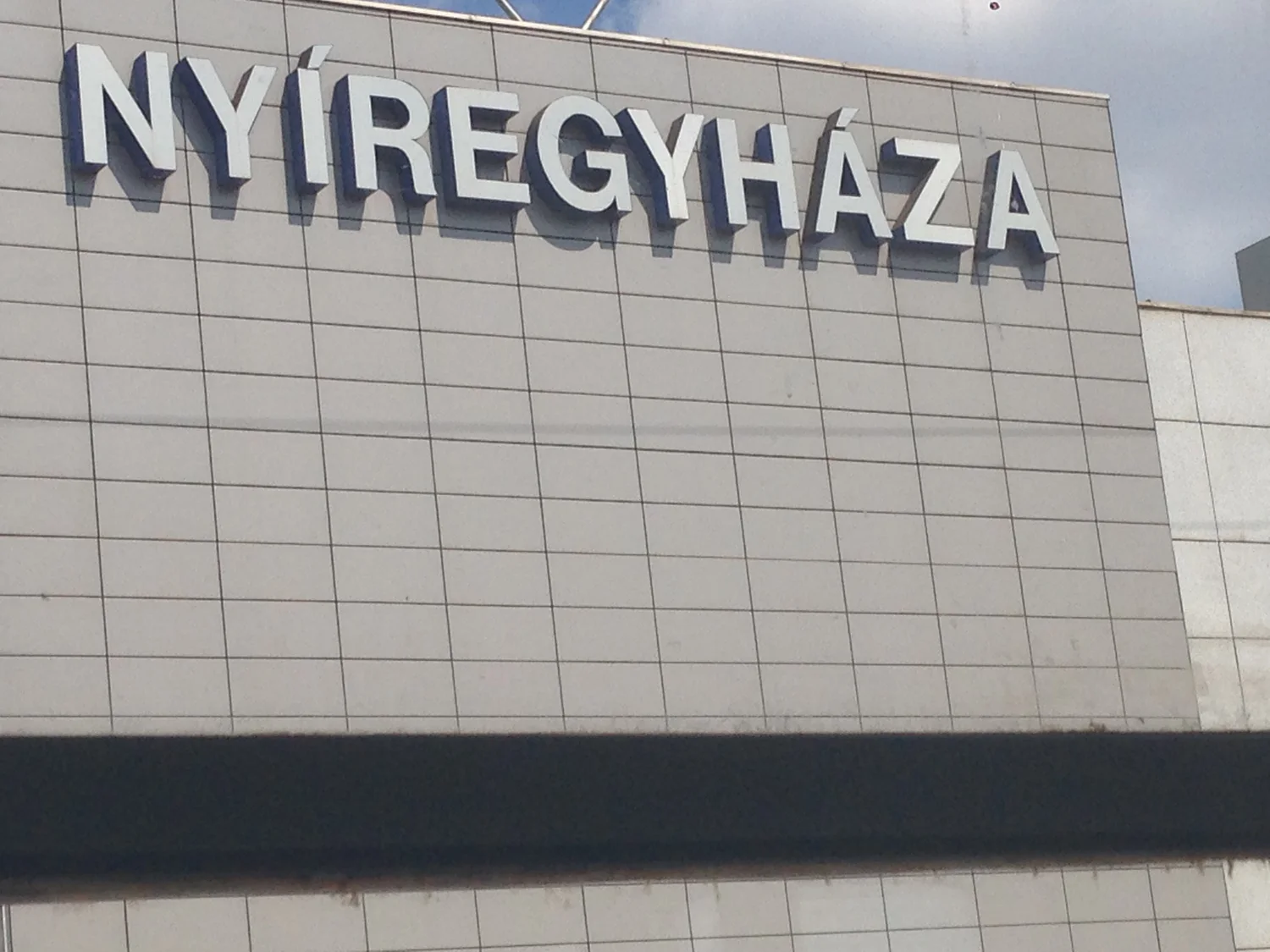
We're in Ukraine when we miss the connection. We're tired and we want to get home. We can wait for the next train, or we can try to catch this one. We get in a taxi.
And here I am, looking down at that same train between the mountains. Yesterday on the hill in Buda I could stand there as long as I wanted. Here, asking the driver to stop for a picture might be the worst idea I could have. The damn thing is moving fast. And we still have to get ahead of it.
We do make it to Kyiv. This little European road trip starts with rides through Poland and Czechia to Austria and ends in a taxi racing a train. I do get to take that picture of the carriages passing between the fir trees home with me. Just not on my phone.