
Cannes: A Five-Star View
France · August 9–10, 2014
If you make it all the way to Nice and don’t go to Cannes, I’d say you haven’t quite pulled off a French Riviera trip. At least that’s how my brain works. We’ve done our share of walking by the sea in Nice and staring at yachts in Monaco. Now I want to see Cannes. I’m already picturing movies, red carpets and guys in tuxedos. But the first thing I really want to know when I get here is where this guy is aiming his metal ball.
The Guys from the Courtyard
We’re staying up in the hills in Le Cannet, in a little house away from the seafront. You can see the Mediterranean from here. At first we just stand and look. I love that moment on a trip. A few hours ago you were figuring out where to go and where to stay. Now this view is yours, at least for a little while. You don’t have to go anywhere to see it. You just step outside.
We go for a walk and find a group of guys on a dirt court not far from the house. They’re standing around, talking, laughing. There are metal balls scattered across the ground. One guy throws his. It might stop close to another ball or hit it straight on. At first I can’t tell what they’re aiming at. Are they trying to hit each other’s balls, or is there something else I’m missing?
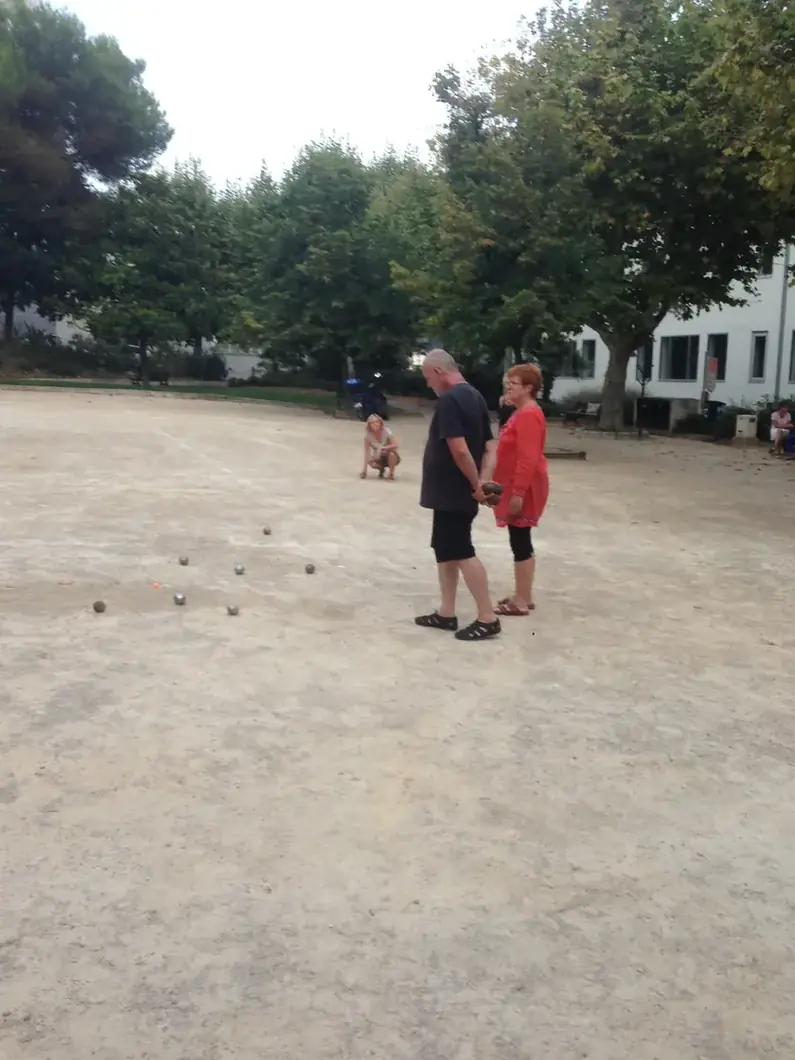
Turns out there’s a little target ball the French call a cochonnet. Just a tiny orange dot surrounded by all these heavy metal balls. Whichever team is closest is ahead. If the other team has already thrown a near-perfect shot, you can knock their ball out of the way. At the end of the round, you get a point for every ball you have closer to the target than the other team’s nearest one. Usually you play to thirteen. Sounds easy enough. Then I watch them for a while and realize getting the ball to land where you want it is probably another matter.
They remind me of the guys I used to see hanging around the courtyard back home. Only these guys look about forty or fifty. And it’s not just the game I like. They can get together and spend an evening like this without making a whole thing of it. Say something, throw a ball, have another laugh with your friends. Nobody’s putting on a show for people who’ve come to see France. They’d be playing here whether we turned up or not.
For some reason it gets me thinking about retirement. Not theirs. I don’t know who they are or how old they really are. It’s just that back home in Ukraine, when you picture getting old, you often picture someone out in the vegetable patch, working as long as they can still stand. Here I get a different picture. You walk out of the house, your buddies are already at the court, and there’s time to play and time to talk. If I can spend my evenings like that at fifty or seventy, honestly, that sounds pretty good to me.
I have to ask about the rules, but I don’t need anyone to translate the scene. Back in our courtyard we might be playing something completely different. I’d still recognize a bunch of friends who got together for no occasion at all. It’s evening, and everybody’s here. That’s where Cannes starts for me, and we haven’t even gone down into Cannes yet.
Two Hotels Nobody Sleeps In Anymore
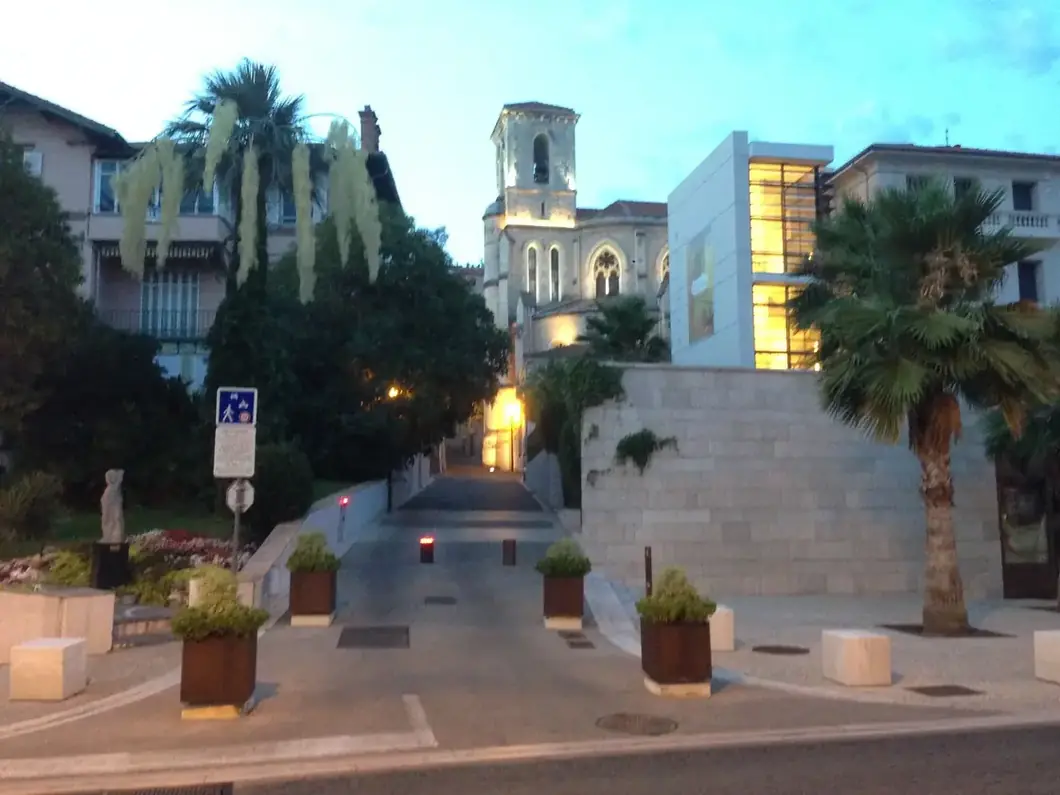
It gets dark while we’re walking around Le Cannet. Down one narrow street, the square bell tower of Sainte-Philomène Church is lit up ahead. Just to the right, the glass part of the Pierre Bonnard Museum is glowing too. The church was consecrated in 1907. The museum only opened three years ago, in 2011. A guidebook doesn’t have to put them side by side to make a point. They already fit in the same photo.
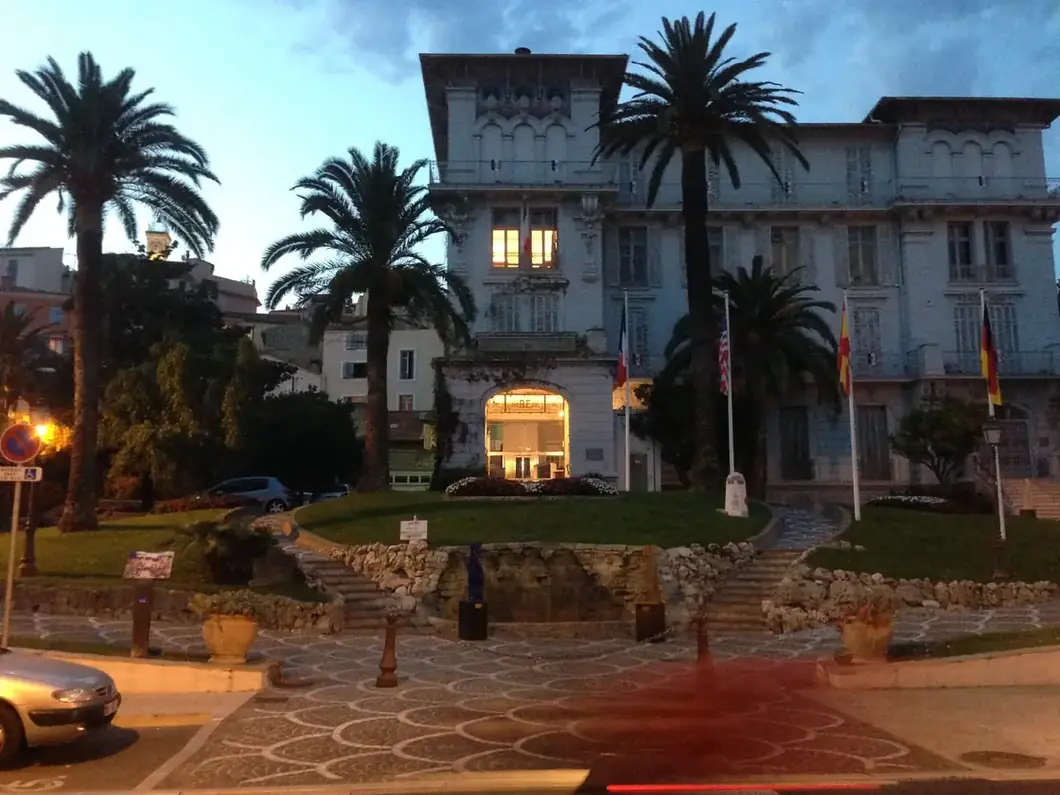
A few minutes later, there’s another façade. Palm trees out front, flags, stone steps and lights on in the windows. If you showed me this building without a caption, I’d guess it was a hotel before I guessed it was where you went to see the local authorities. And I wouldn’t be entirely wrong. It’s Le Cannet’s town hall now, but it was built in 1902 as the Hôtel des Anges, the Hotel of Angels. The town bought it in 1933. The museum by the church opened in a former hotel too, the Saint-Vianney. One now has paintings, the other has town business. From the street, either one would still look right at home in a Riviera hotel listing.
Even without knowing any of that, I feel good here. I’m walking along looking at the buildings and the greenery and how much sky you can still see between them, thinking, you know, I could probably live here. Nobody had to explain the climate or the architecture to me. It’s warm, it’s evening, and there are people playing their game a little way from the house. People say the Mediterranean is one of the best places to live. Today I’m not about to argue.
A Baguette and Three Ways to See the Sea
We wake up in the same little house. In the morning it’s easy to see how this coast fits together. From the water, looking back at the land, the mountains seem to come right down to the sea. From the shore, the first thing you notice is the color of the water. And from the hill, there’s a whole layer of life between you and the sea. Green slopes, trees, bushes in bloom, and then that thin strip of blue in the distance. Same coastline. Move a little and you notice something completely different first.
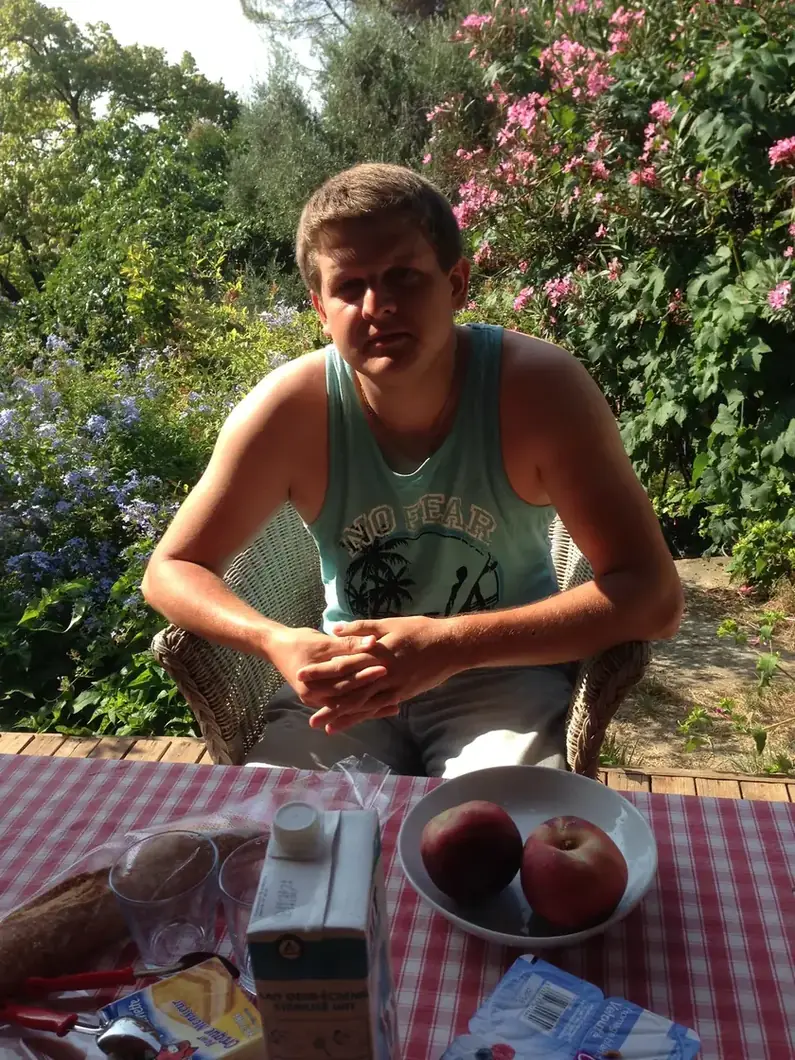
There’s an apple, milk, a baguette and coffee on the table. A French breakfast because there’s a baguette. Well, and because we’re in France. In the photo I’m sitting at a table with a checked tablecloth, with pink and blue flowers behind me. The apple itself doesn’t have much going for it, honestly. It’s an apple. But here it tastes ten times better. I’m not even talking about the taste. I’m eating it somewhere I like everything I lay eyes on. Put that breakfast in a room somewhere and I probably won’t remember a single thing that was on the table.
I also like that with a view like this, you don’t have to figure out what to do with the morning. Down on the promenade I’m always looking at something. There’s a hotel, there’s a yacht, there’s the next building. Up here I can just sit. Beyond the trees I’ve already got the thing I thought I needed to go down to town for. We’ll go anyway. I just don’t want to skip this part of the day to get to the more famous one.
Past the Red Carpet
Once we’re down in Cannes, of course we go to the Palais des Festivals. I’m standing by the entrance to the Claude Debussy auditorium with a camera around my neck, waving. It’s August. There’s no festival on. The carpet in the photo is red, and my entire role on it is to wave at the camera and move on.
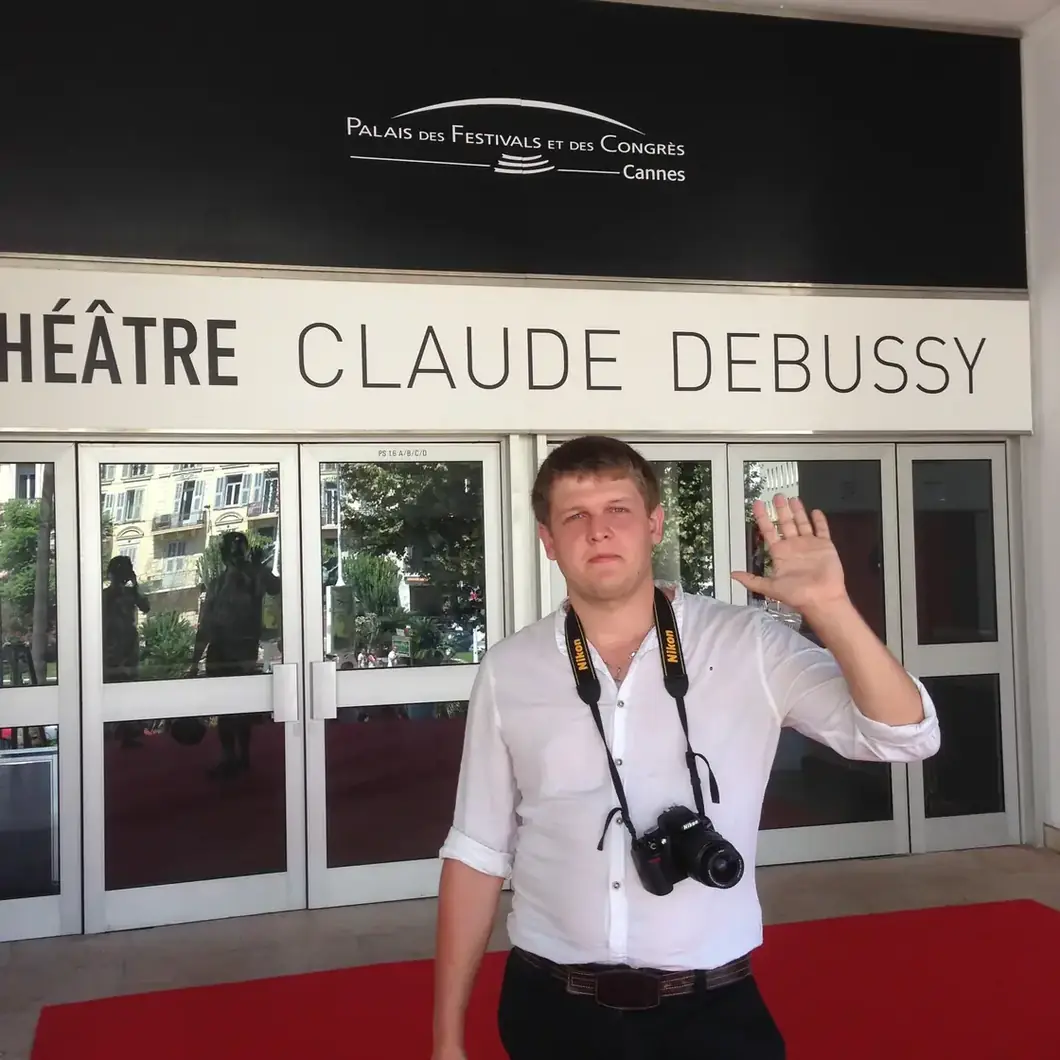
There’s a date attached to this place that’s hard to forget. The first Cannes Film Festival was supposed to open on September first, 1939. That was the day Germany invaded Poland. Instead of a festival, there was a war. Cannes didn’t get to hold its first competition until September twentieth, 1946, in the old Municipal Casino. The building I’m standing in front of now is on the same site.
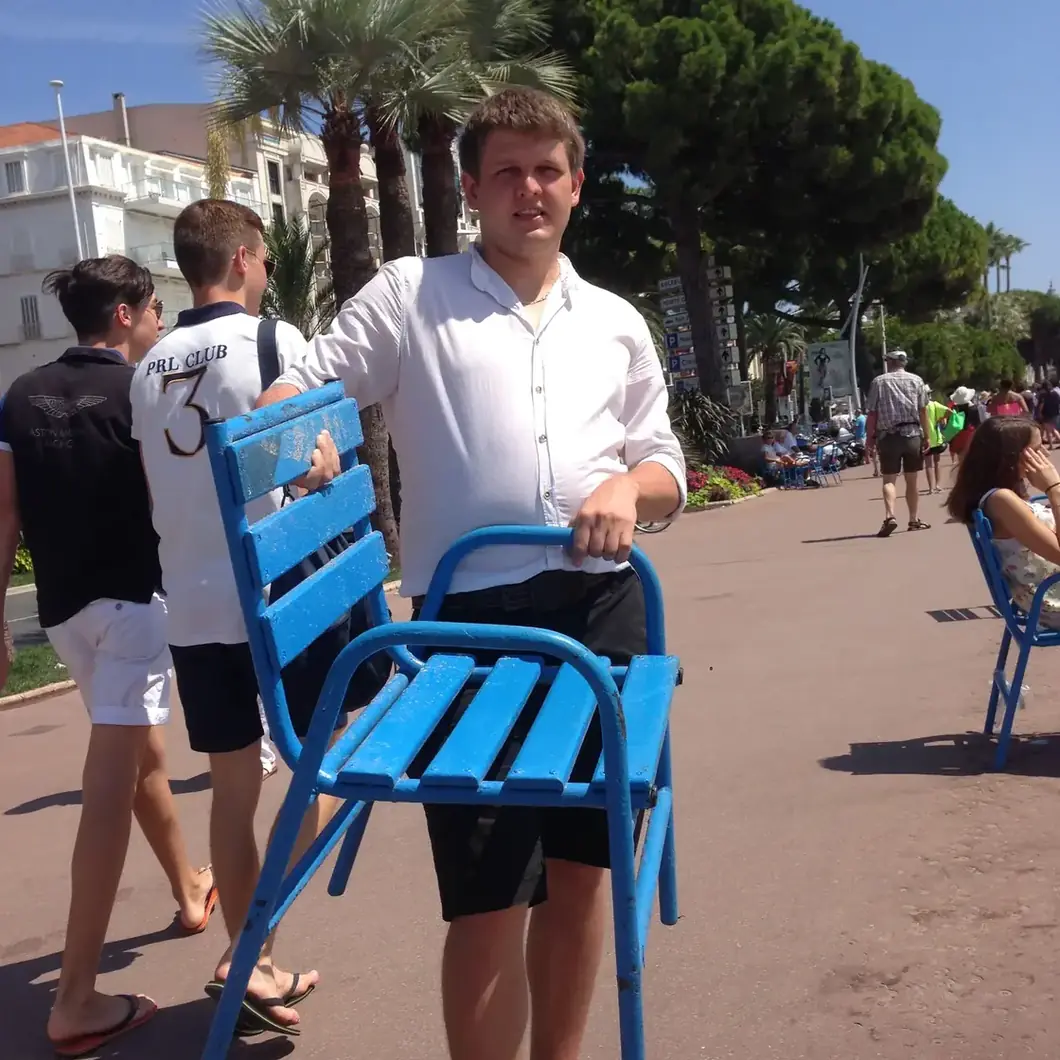
I walk out onto the Croisette. You can walk past the hotels and see who comes out of which entrance. Or you can grab one of those blue chairs that sit right out on the promenade. In the photo I’m hauling one off somewhere. This is the practical side of Cannes. You can book a five-star hotel by the sea, or you can pull up a chair the city put out for you. Five-star view either way.
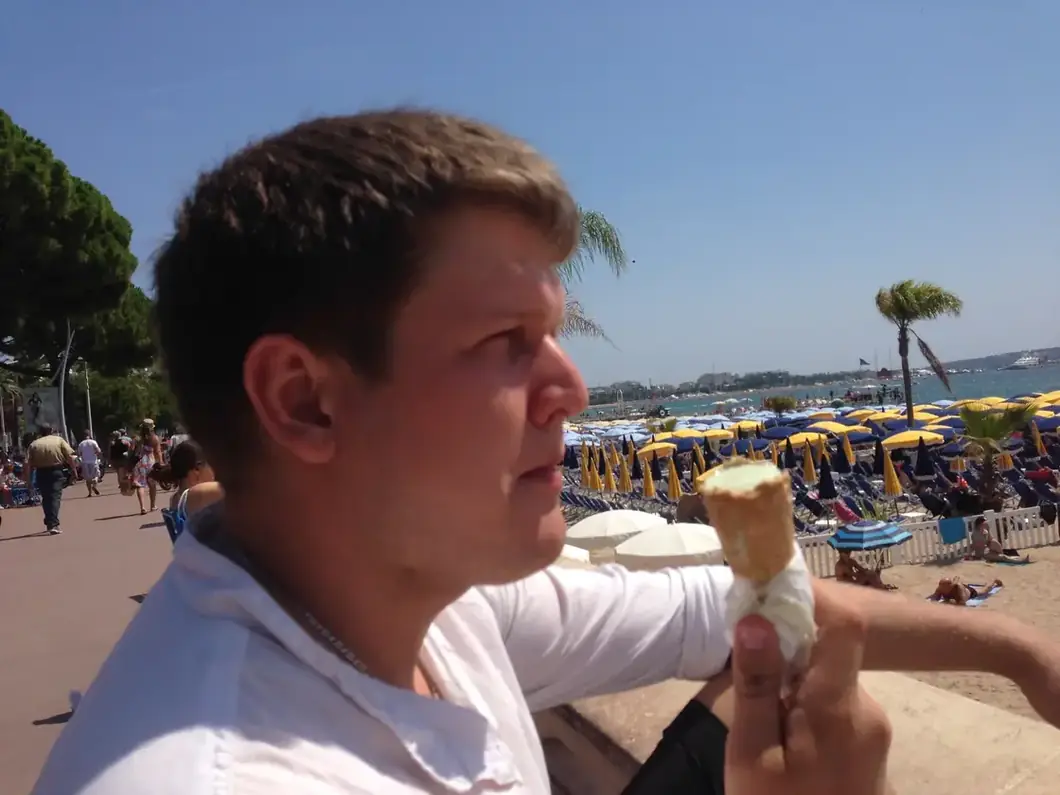
Then I get an ice cream. I’m standing there with a cone, with beach umbrellas and water behind me, in no hurry for this day to end. And if I’m going to bring a famous person into this, it’s not to guess who once had an ice cream here. In 1958 Picasso really does paint this bay, while he’s living up above Cannes at Villa La Californie. In his painting of the Bay of Cannes you see the sea through palms and buildings. Today I see it first from above, through the greenery, then from the promenade, over the umbrellas. He has his angle, I have mine. And I have one problem he didn’t have at his easel. I have to finish this cone before it melts.
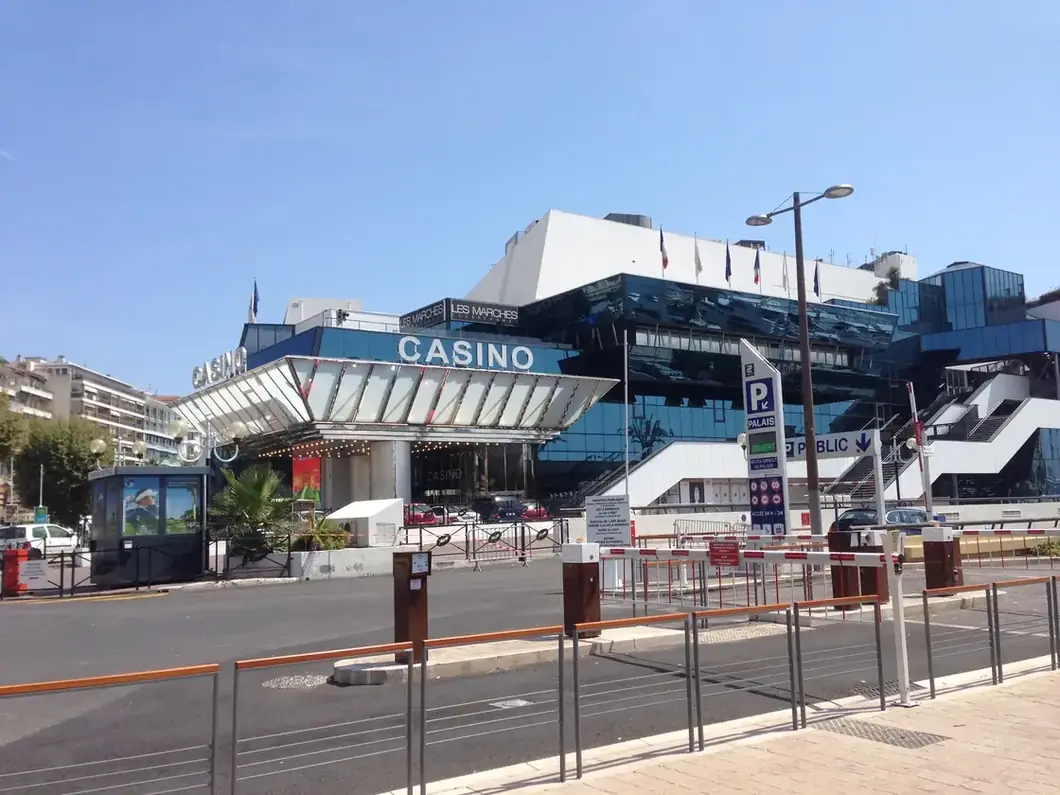
On the other side of the Palais I take a photo of a glass front with a big CASINO sign. Funny that the detail I barely register on this walk takes me right back to how the festival began. You can pass the spot where all that cinema history got started and come away remembering a big sheet of glass. Then you can go down to the port and shoot something of your own, with no ambitions for an award. You’re just hoping it records properly.
Trying to Work from the Road
Down in the Old Port I record a video for my course. I’m in a white shirt, there are yachts behind me, and you can see the old town over the rooftops. From the outside it could pass for an ordinary vacation video. But I’m doing more than filming where I’ve ended up. I’m trying to do work I can take with me.
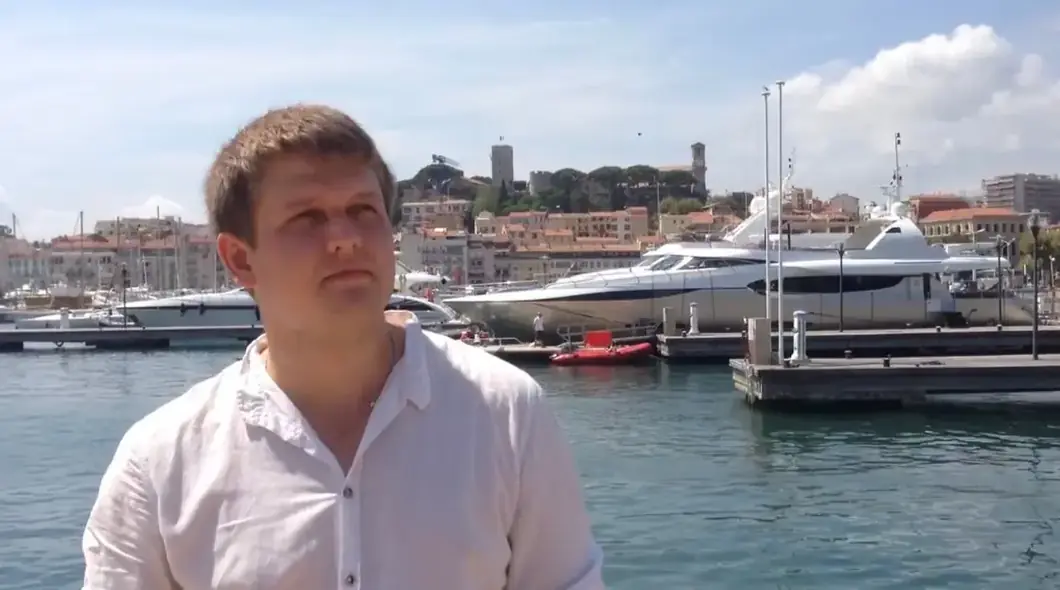
I’m looking for ways to earn money while I travel. I want to see if I can stop treating work as the thing I have to get through before I can go somewhere for a few days. Can I do both without one getting in the way of the other? I don’t have it figured out yet. But here I am, standing in the port in Cannes, recording something for my course. To me, little experiments like this are at least as interesting as getting another photo of a famous building.
Video from the Old Port
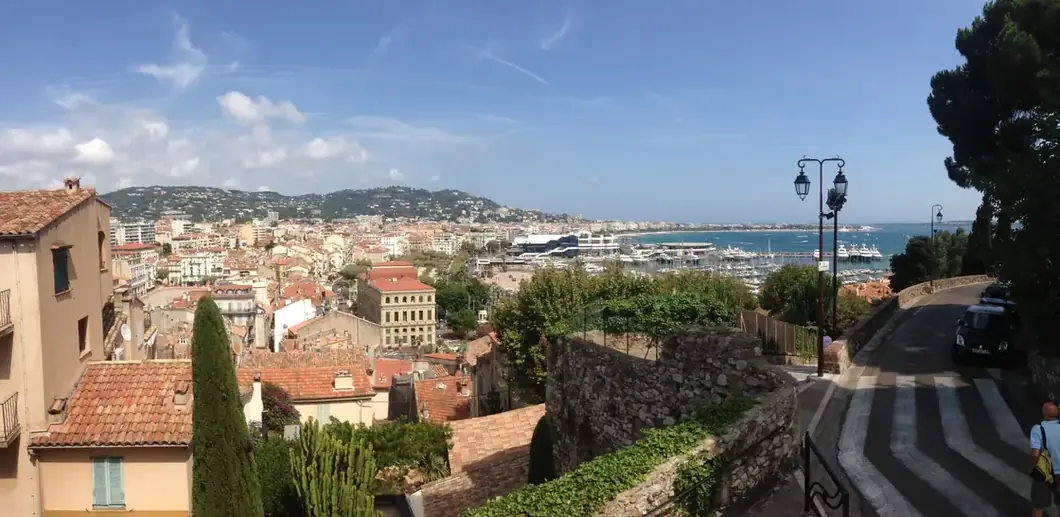
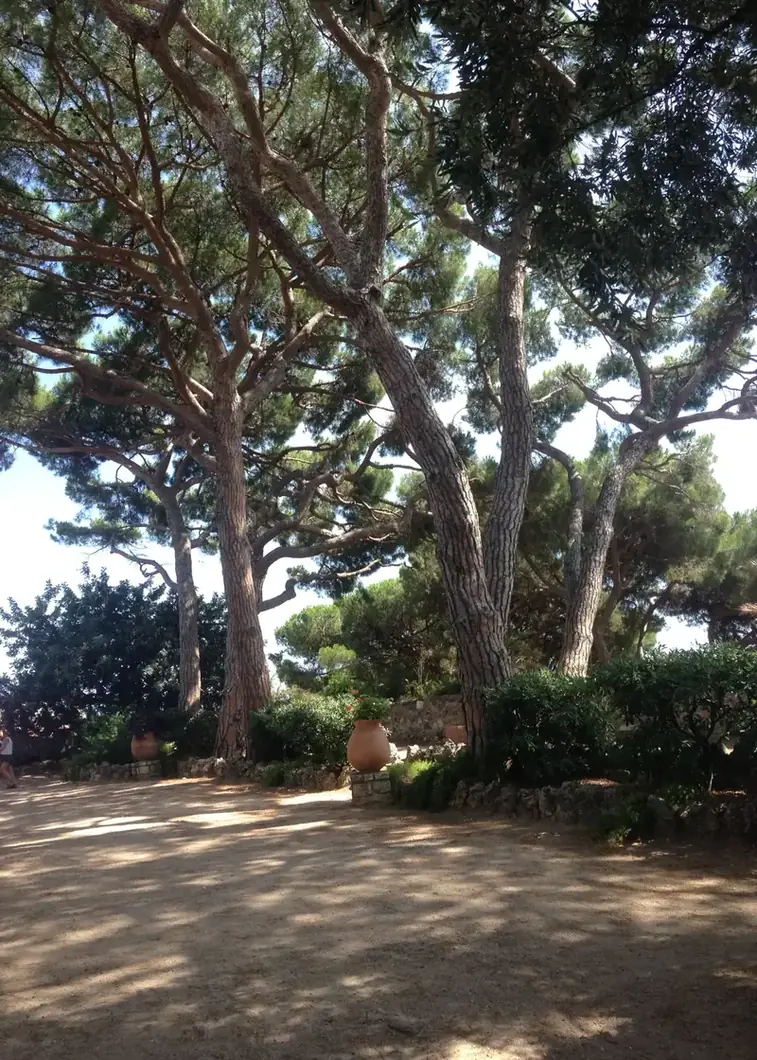
Later I look down on the port from above. Red roofs, trees, little white boats, then the bay and the hills. In another photo there’s just shade under the trees. I like that I don’t have to go to a different world to get from a chair in the middle of the busy Croisette to that patch of shade. And after all the talk about who came here and what they filmed, I’ve got my own Cannes to remember. The guys throwing balls near the house. A baguette on the table. Me dragging a blue chair off somewhere.
That’s why I wanted to come here in the first place. To see what there was beyond the name everybody knows. I found the five-star view. The part that might take me a while is figuring out how to make it last longer than a few days off.