
Marseille: To the Fortress the Count Escaped From
France · August 10–12, 2014
We get to Marseille just as it’s getting dark. Something is lit up above the rooftops. A castle? A church? I’ve come for a castle, of course, so by now everything looks like a castle. This one is Notre-Dame de la Garde. People here call it the Good Mother. Tomorrow I’ll see it from the water. For now, it’s one giant landmark glowing over the city. Handy when you’ve just arrived and aren’t entirely sure where you are.
A Harbor Full of Yachts, and I Photograph One
The next day we head down into town. At Place Estrangin-Pastré I get a photo by the fountain, with an old savings bank behind me. I can’t remember if I meant to get the bank in the shot. But I’m already into investing, so the idea that I came all the way to the sea and found a bank is entirely plausible.
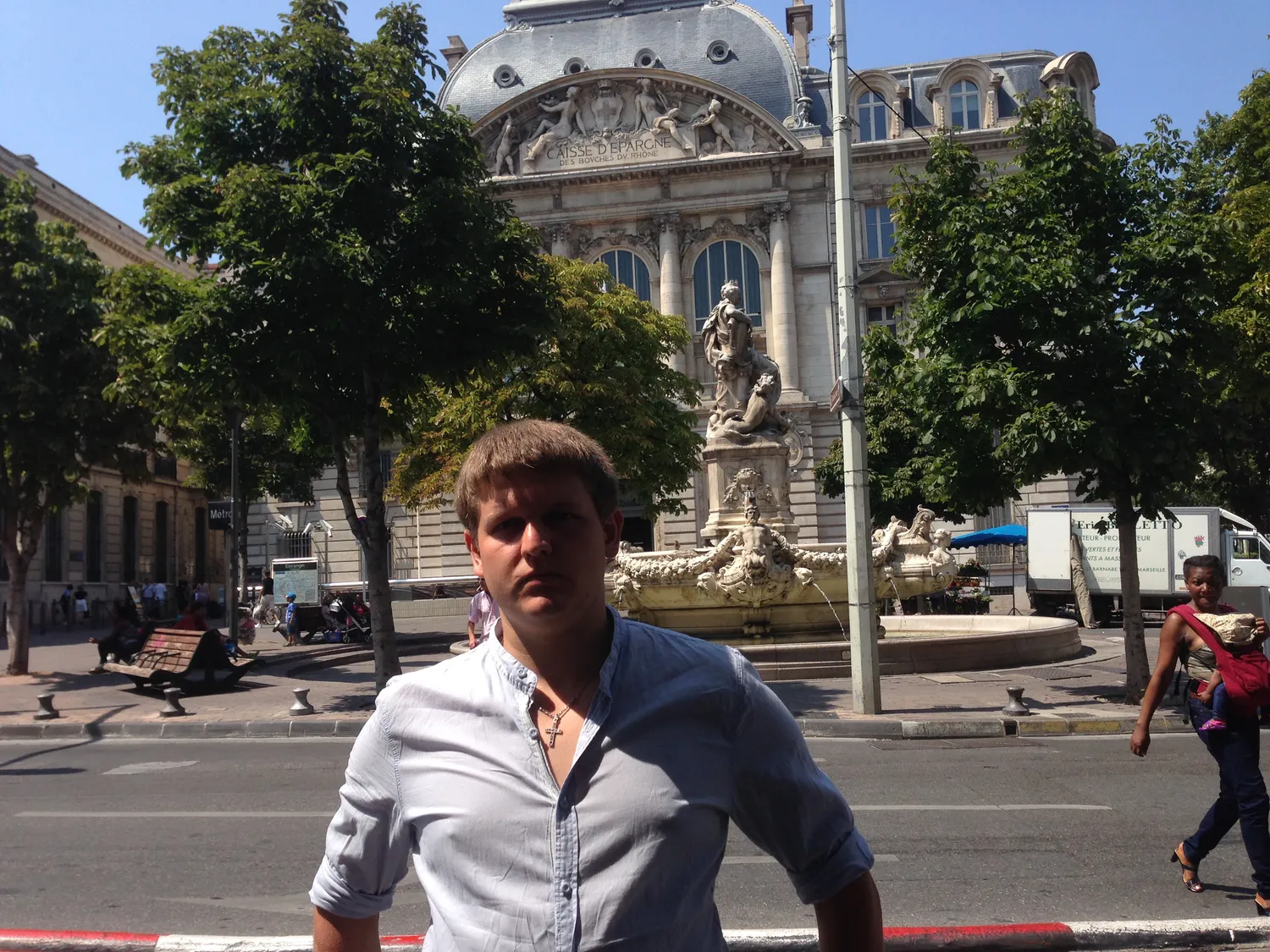
A local merchant gave the city that fountain, and the sculptures are all about trade and seafaring. Even in the middle of a square, Marseille manages to bring the conversation back to the port. That’s where it all starts, really, when the Greeks found Massalia. As for “La Marseillaise,” it turns out it was written in Strasbourg. Volunteers from Marseille sang it on their way to Paris, and the song took its name from their city. Now that’s how you do a cover. Standing at the harbor and seeing how much passes through it, I’m a little less surprised that even a song could travel so far.
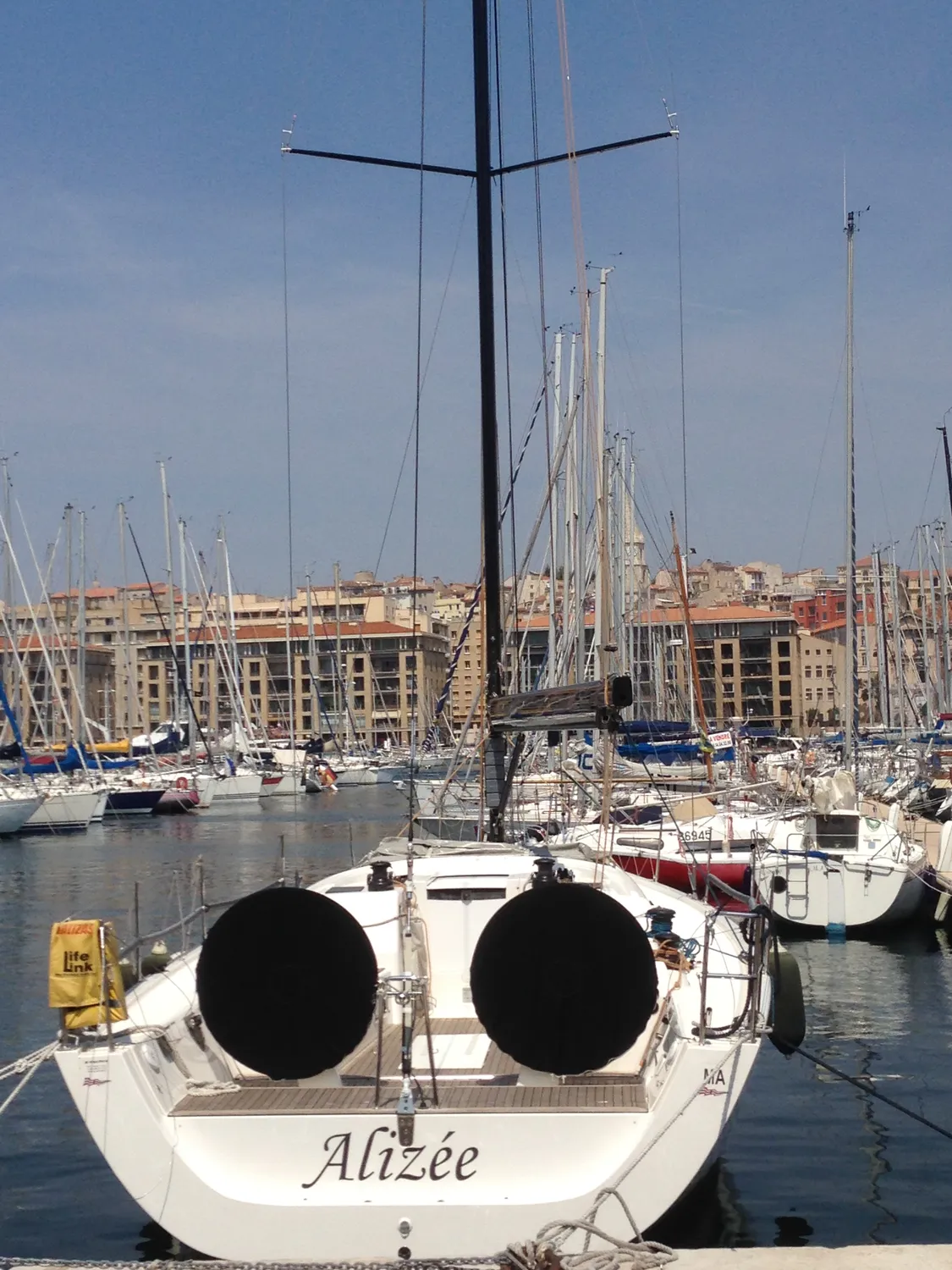
We reach the Old Port. From up high, there are so many masts they almost blur together. And out of all those yachts, I take a picture of a little white sailboat. On the stern it says “Alizée.” And immediately I hear her singing in my head. I’m crazy about her at the time. That voice gives me goosebumps, and she’s so lovely I can just sit there and watch and listen. So I have no idea who’s got the biggest boat here. But I know who wins my contest for the best name.
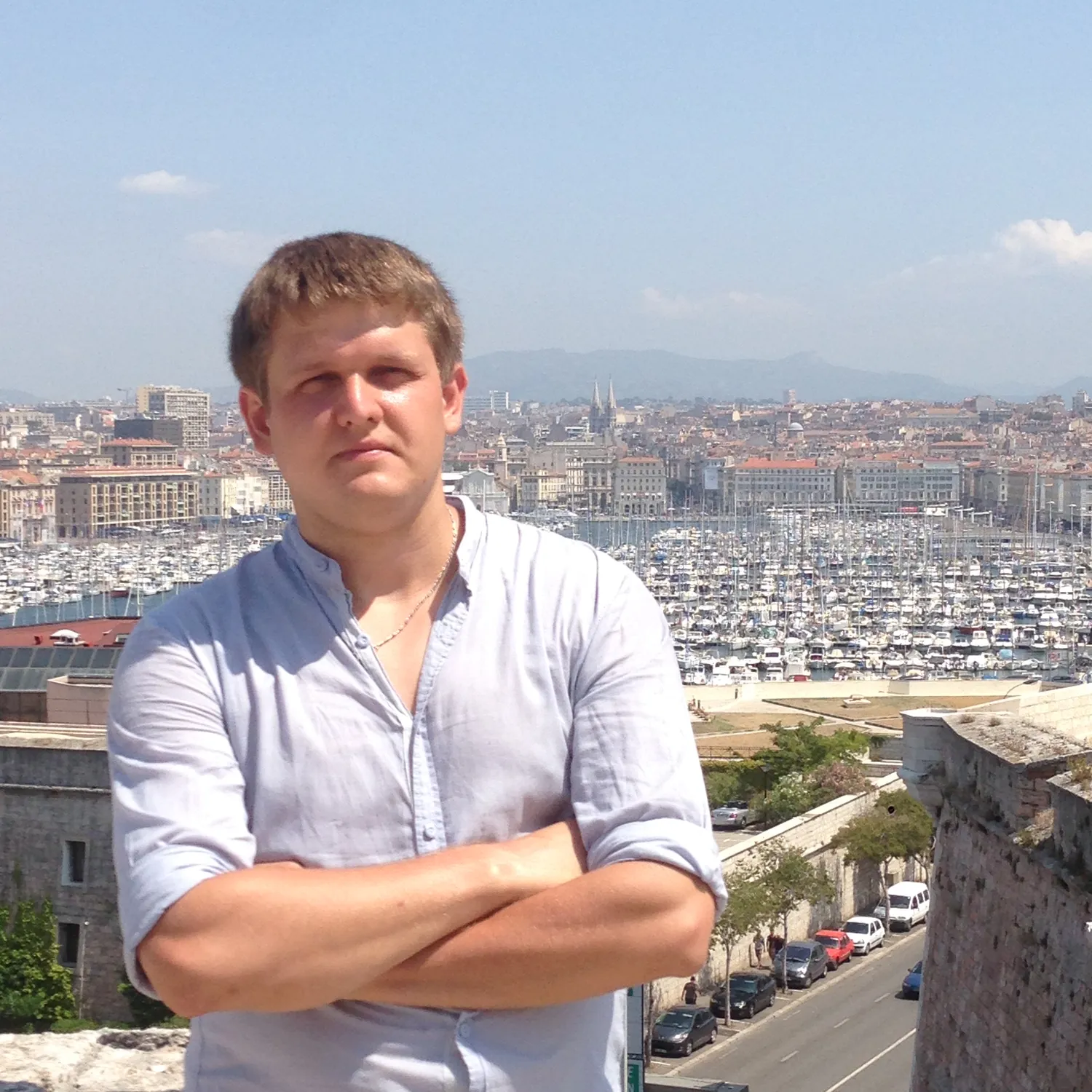
We climb a little higher above the port. I stand by a stone wall with an entire harbor full of boats behind me. Fort Saint-Nicolas stands on one side of the entrance, Fort Saint-Jean on the other. I film the round tower first, then turn the camera until the whole harbor comes into view. It looks like the entrance to an empire. Don’t ask me which one. I’m only in charge of the view. And I keep wanting to film it: I can’t decide whether to look at the old stone right under my feet or at the entire harbor behind it.
The City Slips Behind Us
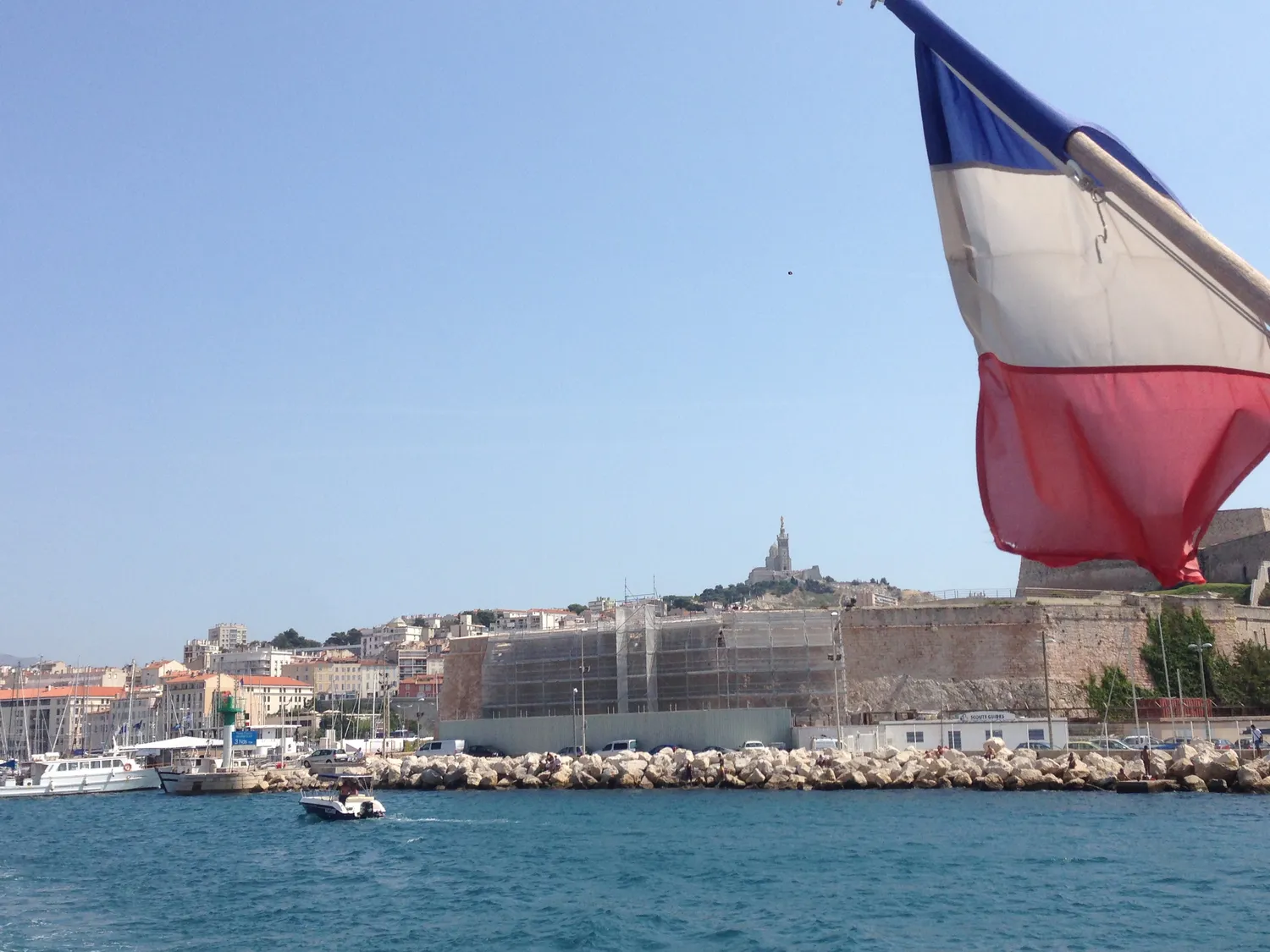
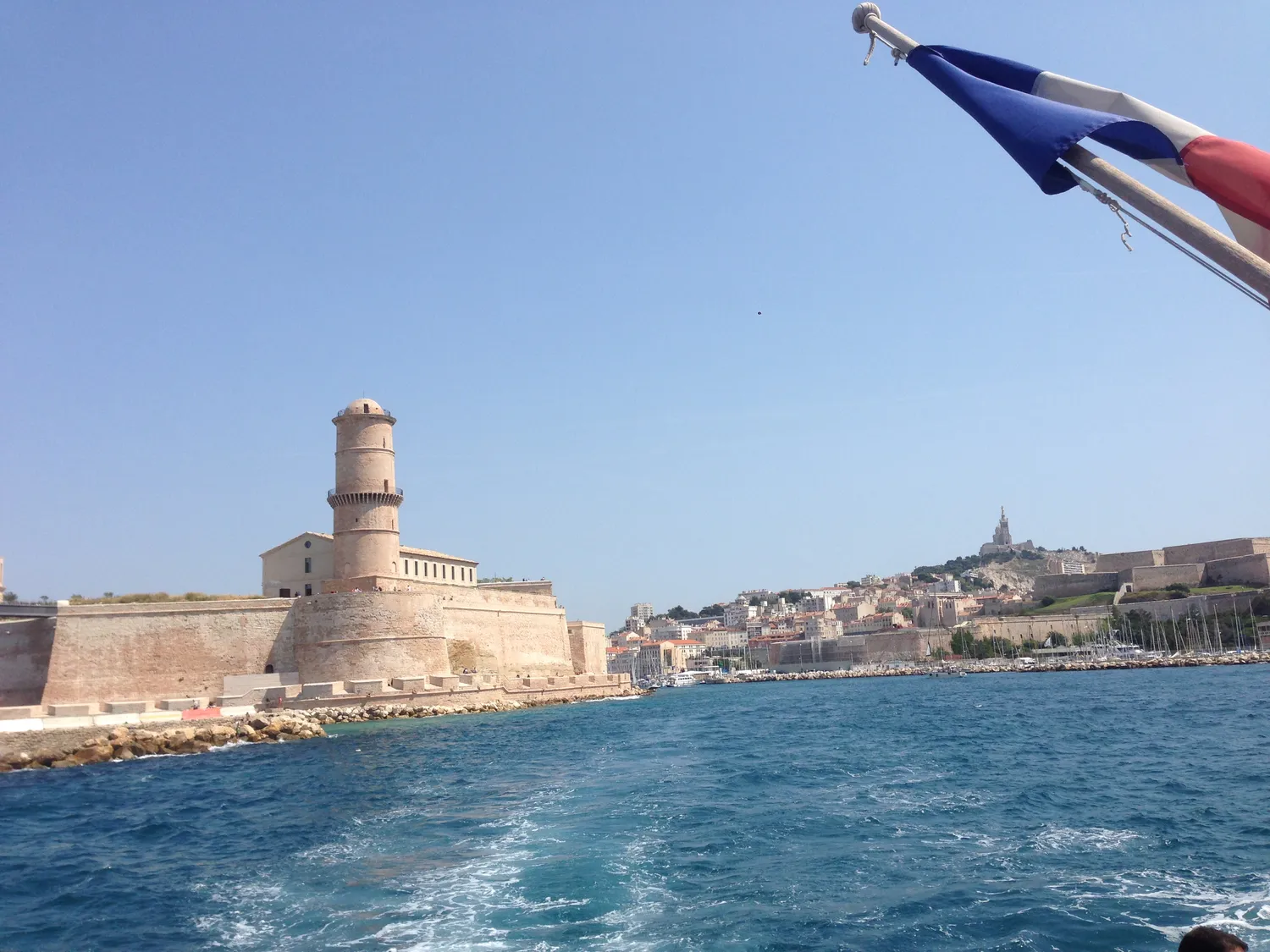
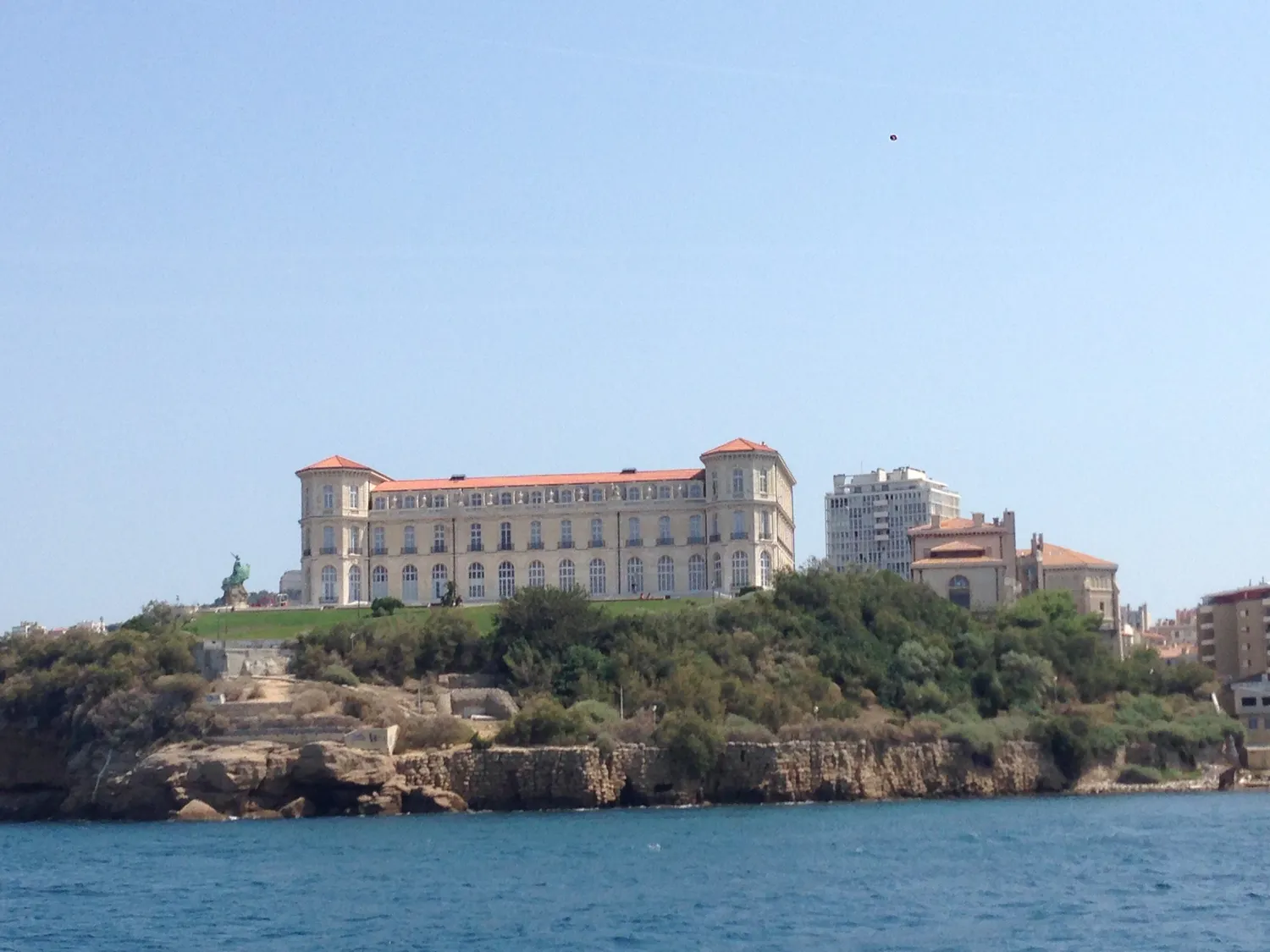
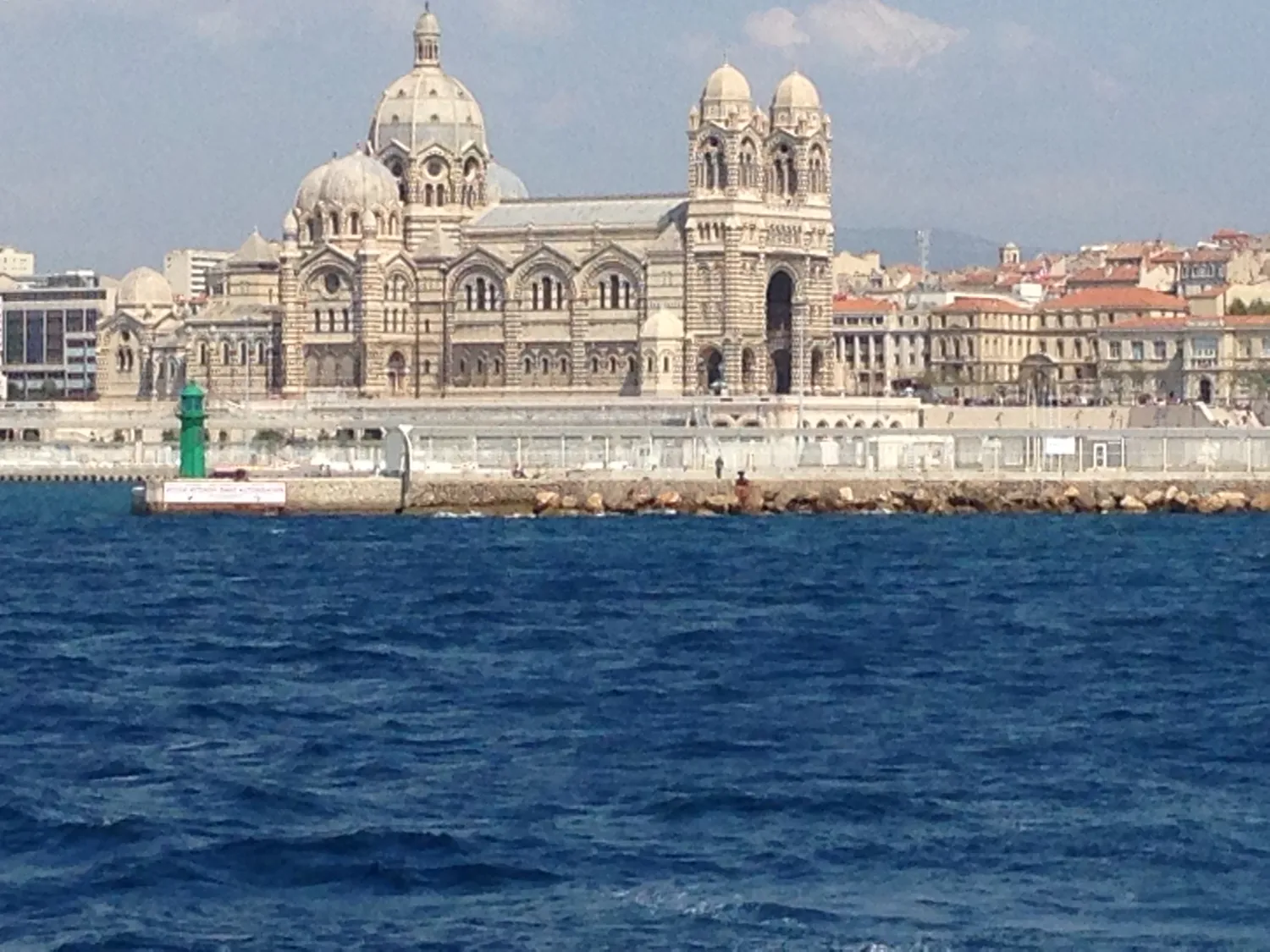
Now we’re looking at it all from a boat. There’s a French flag above the water, then Saint-Nicolas and the same Good Mother, this time in the sunshine. We pass the round tower of Saint-Jean. Next comes the Palais du Pharo on the cliff, and across the water the striped cathedral of La Major. My head keeps turning. I was just looking at the palace and already want another look at the cathedral. Luckily the boat takes its time. I look back at the Pharo, and there’s the basilica peeking out behind it again. From land they’re three separate buildings. From the water I get to watch them slide in and out from behind one another.
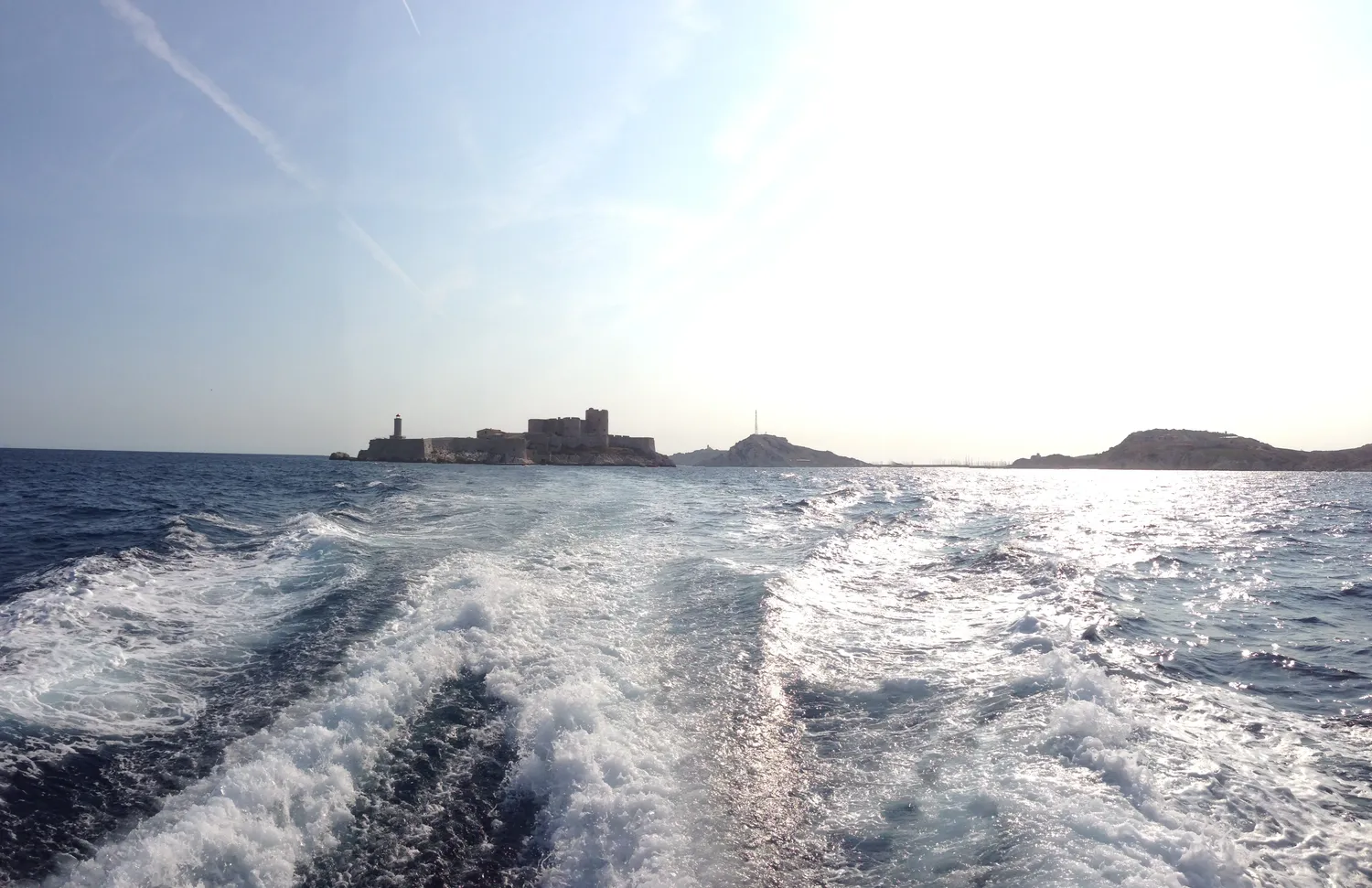
The city falls away to one side, and an island comes into view. First there’s a little lighthouse with a red top, then a wall that seems to grow straight out of the rock. The fortress is completed under Francis the First in fifteen thirty-one to defend the approach to Marseille. The locals nickname it the Bad Neighbor. Then it becomes a prison, and the nickname starts to make even more sense.
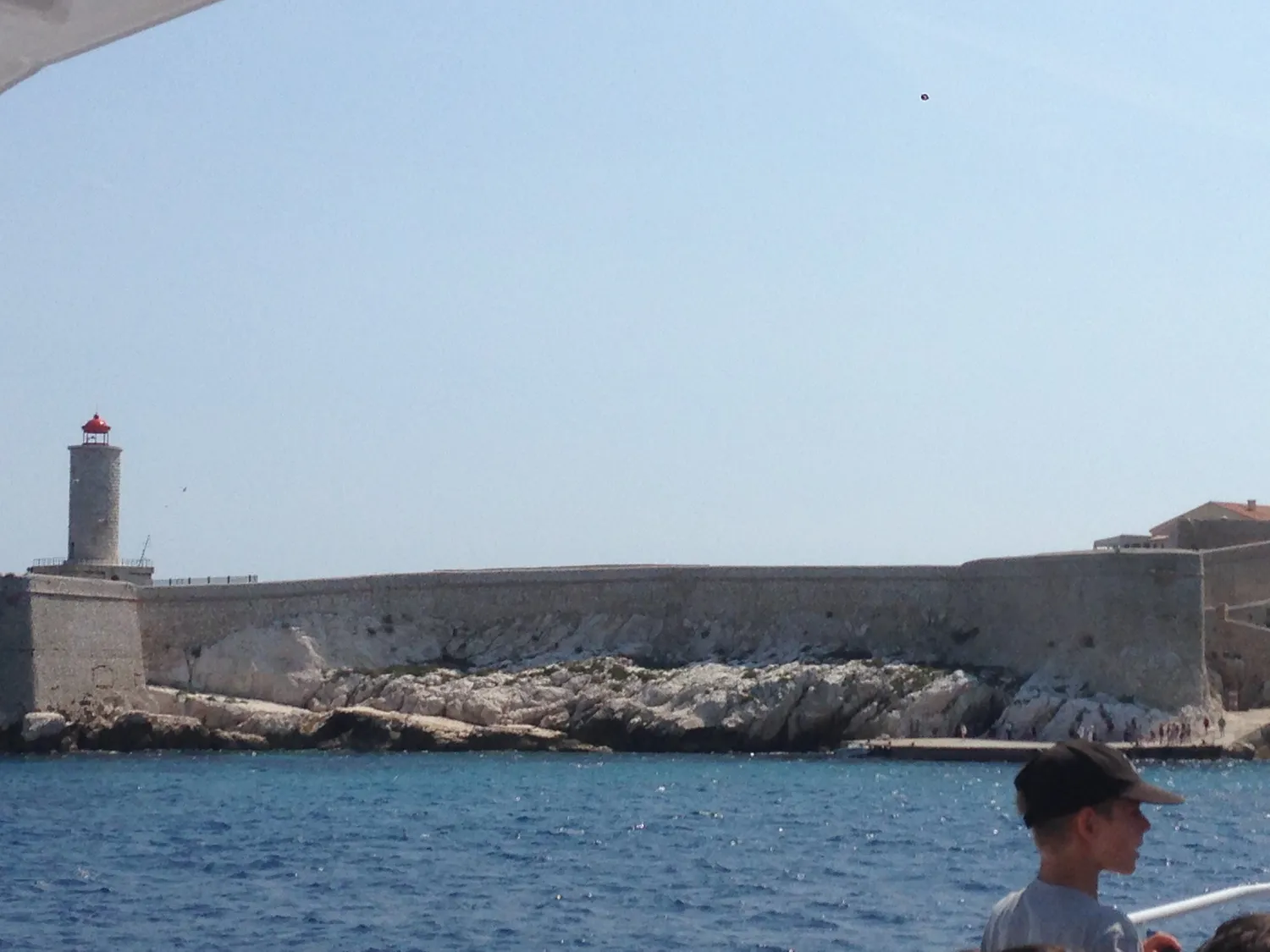
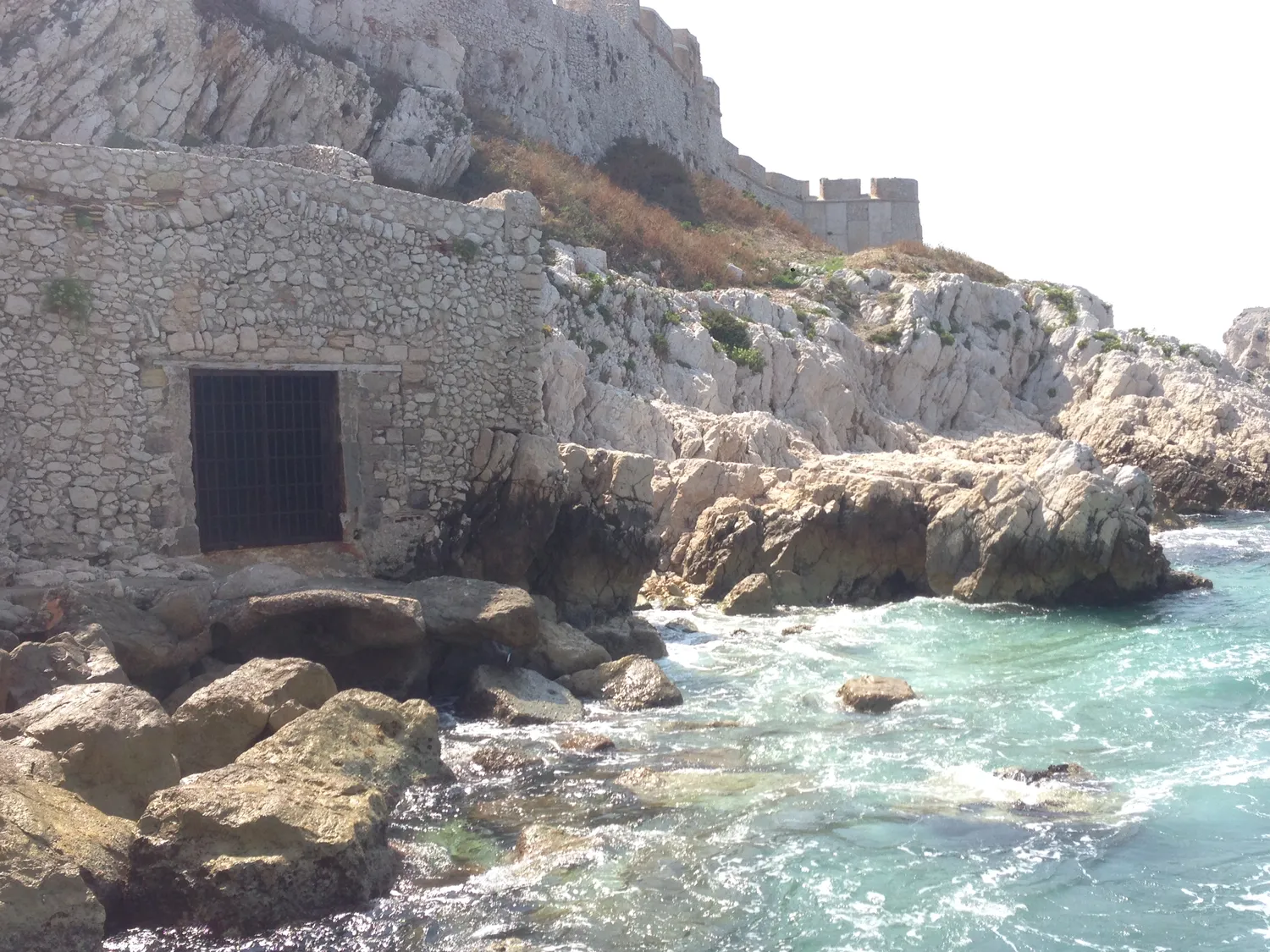
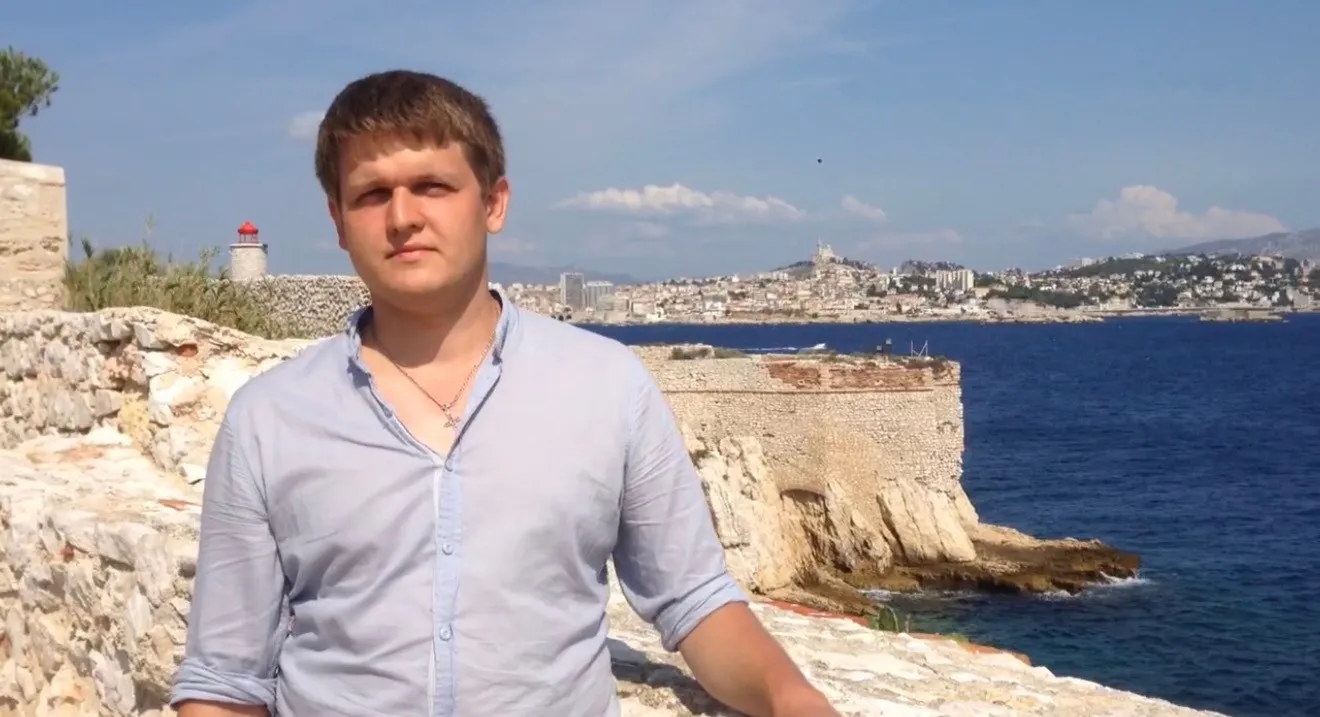
I step ashore, and the feeling is odd. It’s a little creepy. This was a prison. But it’s also a place I know from a book, and here I can put my hand on the wall. I turn my head, and there’s all of Marseille across the water. It’s warm, the sea is still that same azure. I come out here to look at it. Someone else once looked at that same water for years, thinking about how to get to the other side.
How to Become a Count When They’ve Taken Even Your Name
For Dumas, it all starts in Marseille. Edmond Dantès isn’t a count yet. He’s a young sailor about to get married. Some people who want him out of the way write a letter denouncing him, and instead of a wedding he gets the Château d’If. Years go by. In his place I’d probably spend them wondering who did this. He actually learns things he’ll need if he ever gets out. He meets Abbé Faria, who teaches him languages, science, and how to think, and tells him about a treasure. I like the order: education first, capital second.
The way he gets out, though. You have to hand it to Dumas. Faria dies, and Dantès takes his place in the sack meant for his body. They carry him out of the fortress and throw him into the sea. He eventually reaches the treasure on another island, Monte Cristo, off Italy. So if you’ve brought a shovel to the Château d’If, you can put it away for now.
Dumas knows Marseille well, visits the waters around Monte Cristo, and draws the story of betrayal and revenge from a set of police memoirs. He writes the novel with Auguste Maquet. In the eighteen forties the story comes out in newspaper installments. Imagine reading up to the point where they throw a man into the sea, and that’s it. The next episode hasn’t been printed yet. No “one more before bed.” The newspaper’s finished, and Dantès is still in the water.
The treasure is where things get interesting. Dantès comes back under a different name and can finally get to everyone who betrayed him. At first I’m on his side. Then people who had nothing to do with that letter start getting hurt, and I want to say: Edmond, slow down a little.
I walk past the round towers. Dantès is fictional; the stone under my feet is real. According to the museum, the caretakers even dug a passage between the rooms they showed visitors as the cells of Dantès and Faria. In the book a man digs to get out of prison. In real life they dug because people wanted to get in.
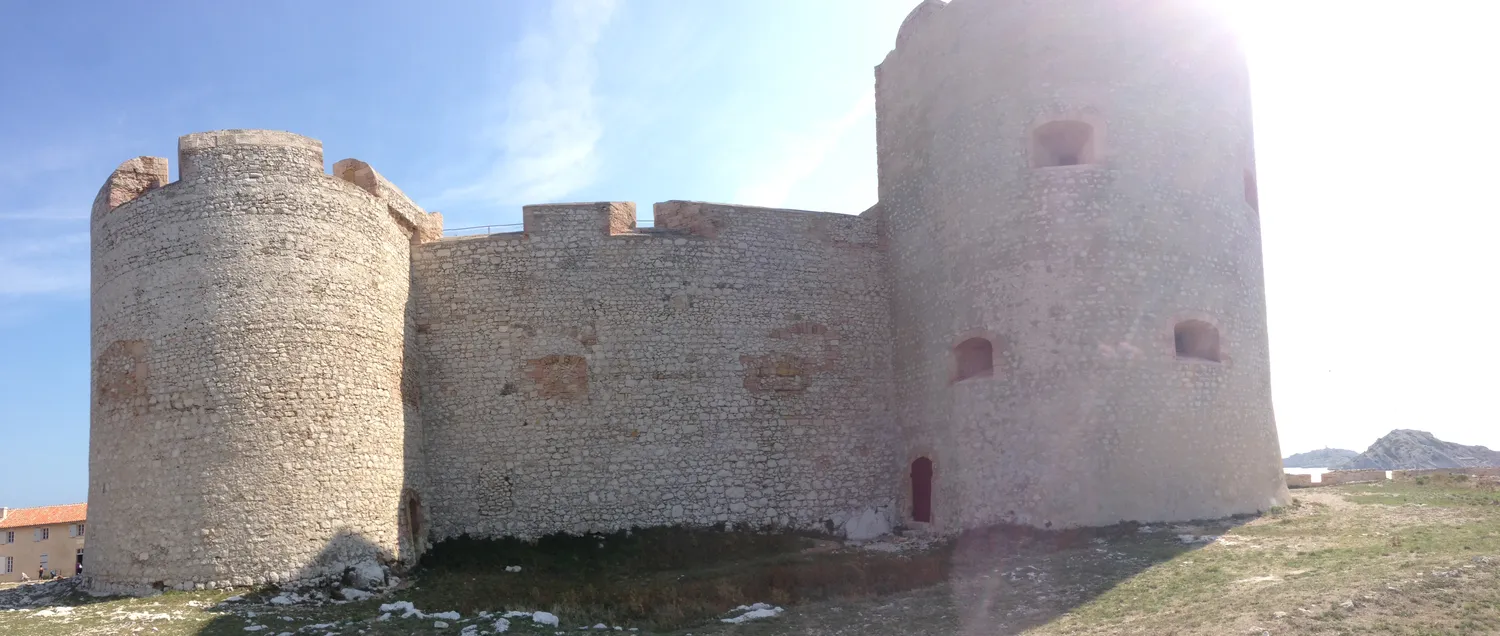
On the way back there’s a white wake behind the boat, the sun hits the water, and the fortress becomes a silhouette again. I look back once more, even though there’s plenty of Marseille still ahead of me. First I look at If from Marseille. Then I look at Marseille from If. And by the time we’re leaving, I’m sorry to go.
A City That Still Surprises Me
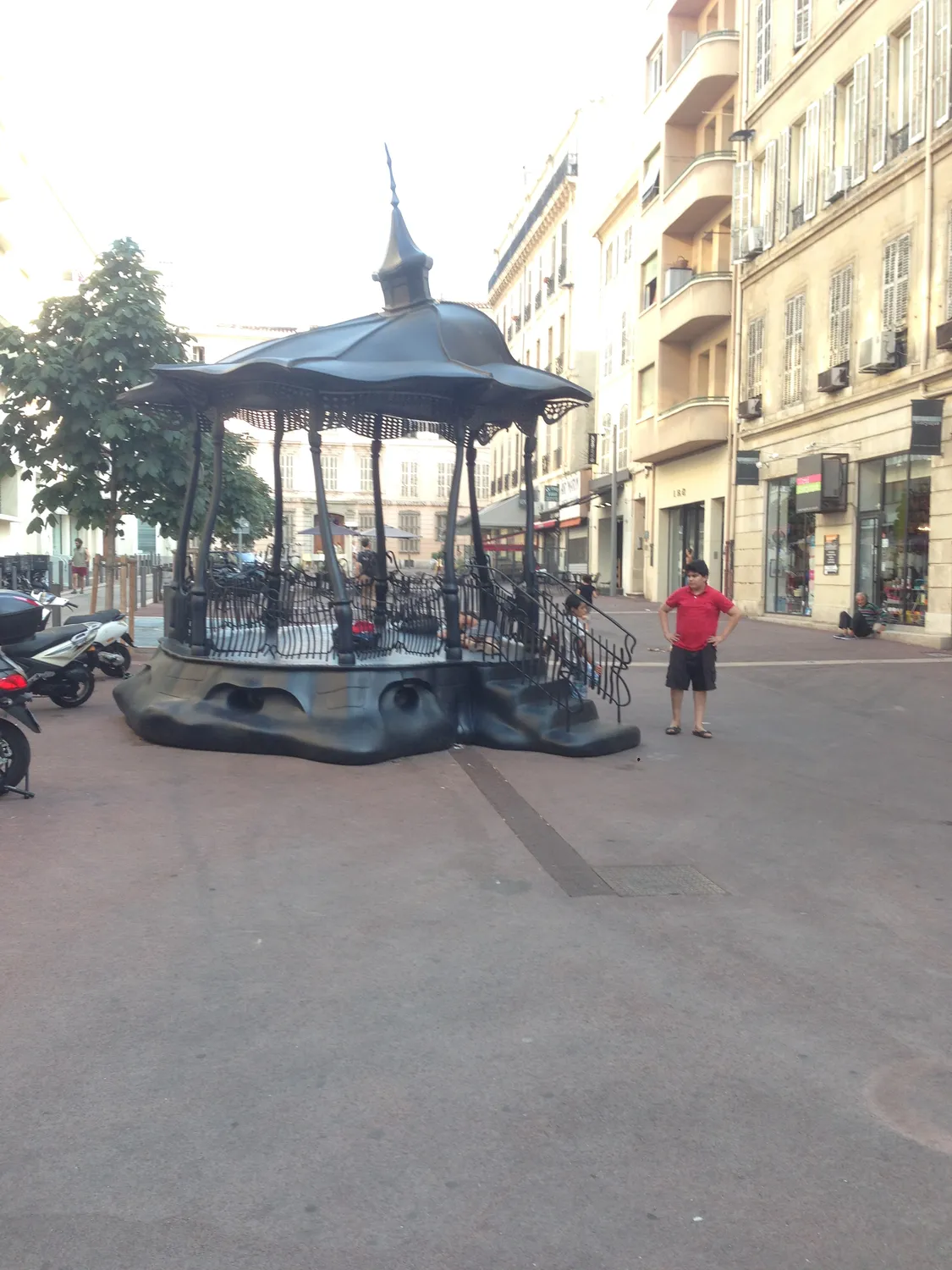
Back on land, we go for a walk. In Place Lully there’s a black bandstand that looks like someone forgot to bring it in out of the sun. I go closer to see what happened. Turns out nothing happened. It’s called “L’Opéra noir.” It’s supposed to look like that. My first thought is that it needs fixing. I suspect the artist would take that as a compliment.
From one neighborhood to the next, the people change, the streets change, even what I want to photograph changes. This isn’t the France I pictured. And somewhere here Zidane was born, the guy who scores twice in the ninety-eight final when France wins its first World Cup. Somehow I think of him without even trying. A city that doesn’t quite fit my picture of France produces the man I associate with one of the most French victories I can think of.
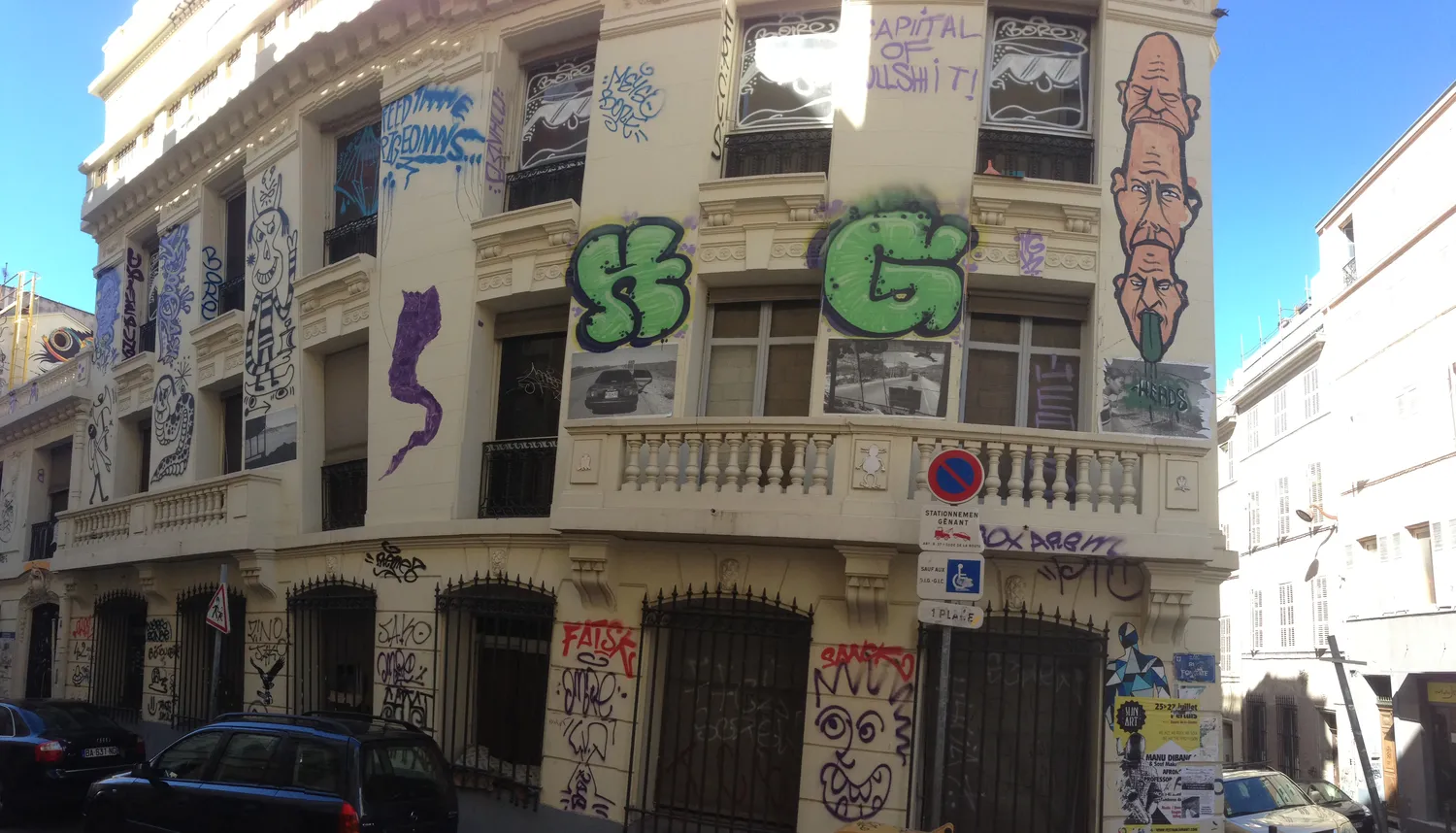
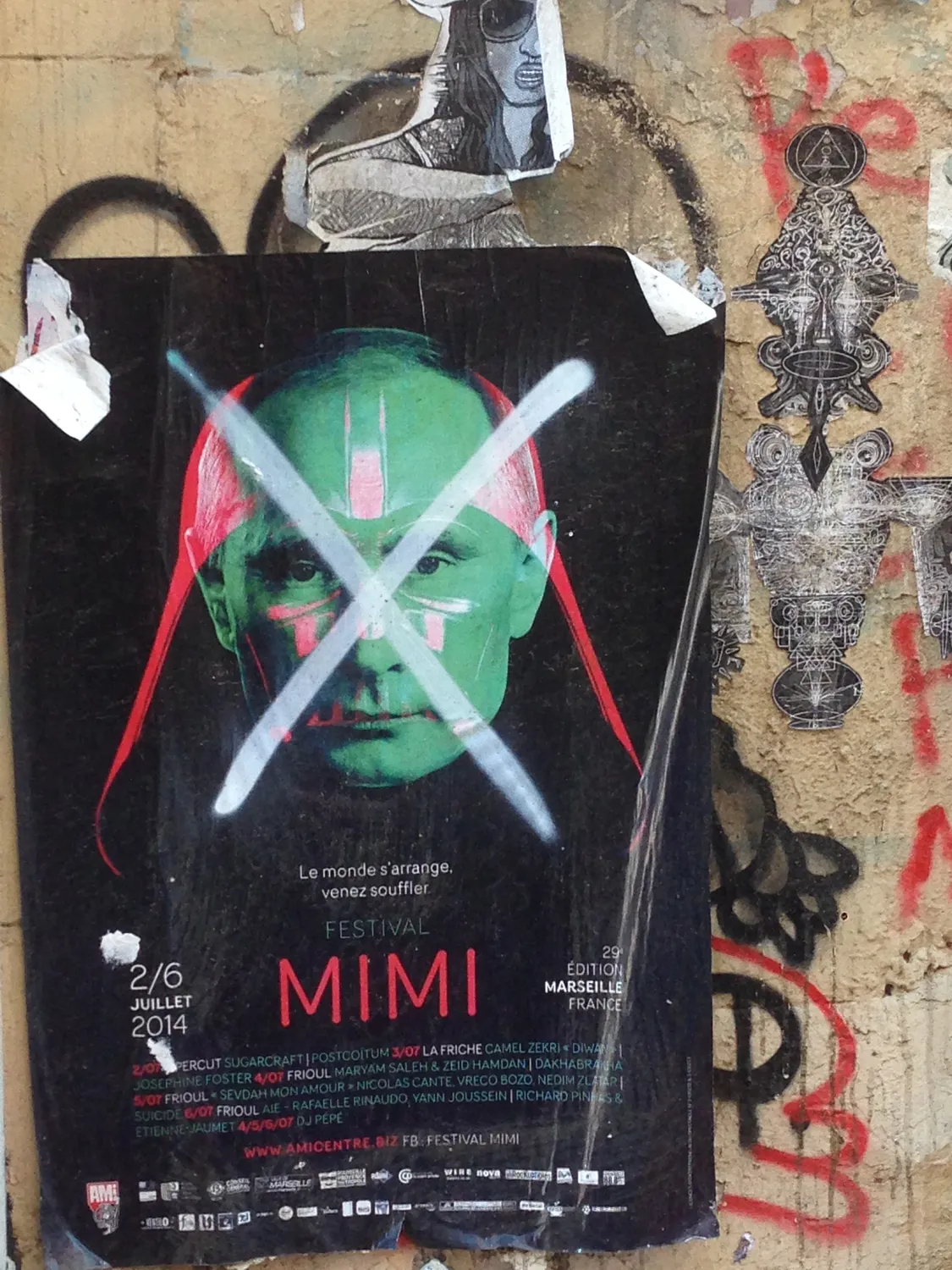
In the morning near Cours Julien, I find a building where graffiti has taken over most of the facade. Nearby is a July poster for the MIMI music festival: a green face I recognize as Putin, a white cross, and the name of our own DakhaBrakha. It’s August twenty-fourteen, Russia has already annexed Crimea, and there’s a war in the Donbas. I’m walking around Marseille taking pictures of walls, and one of them takes me back to Ukraine for a minute.
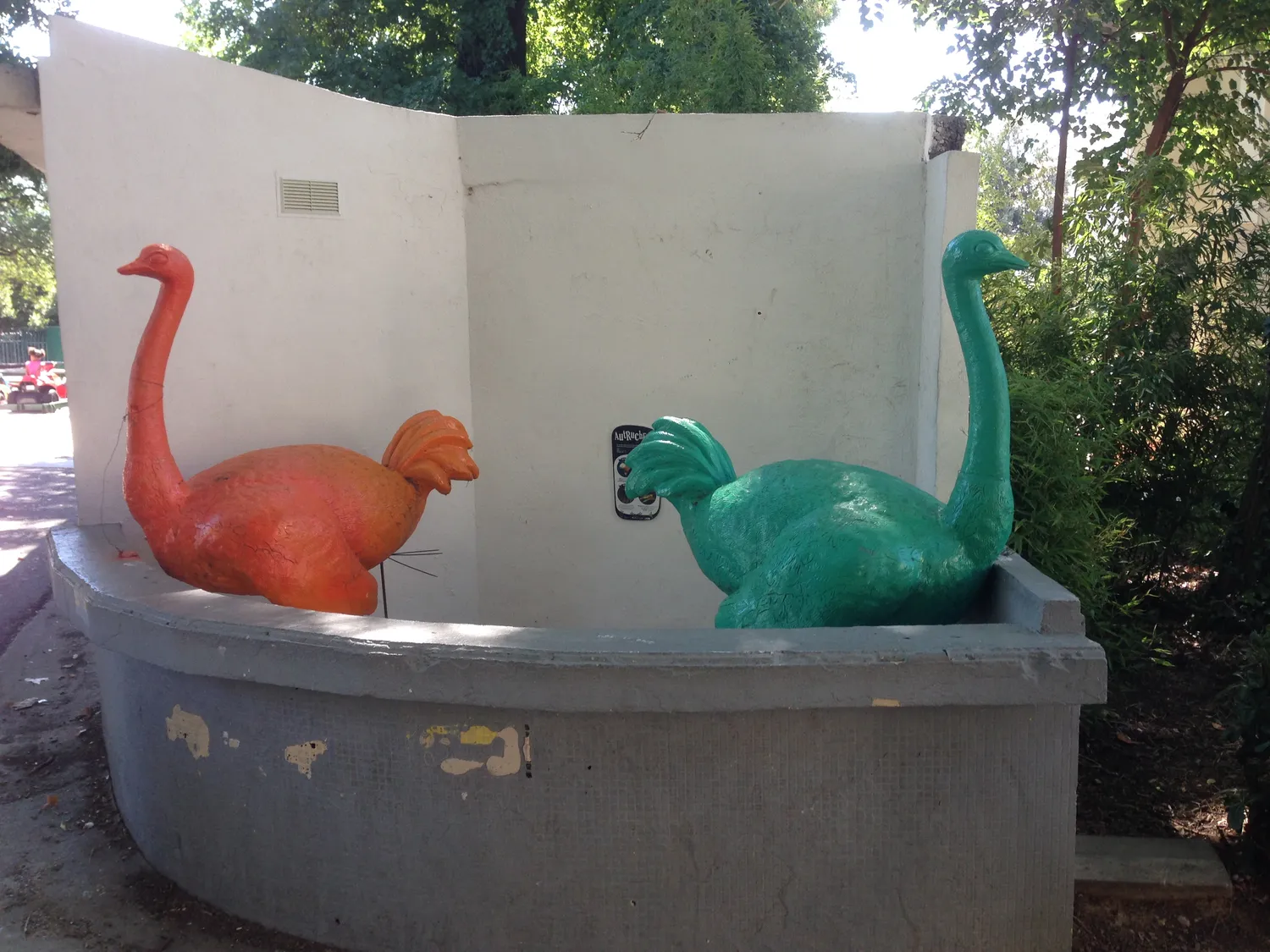
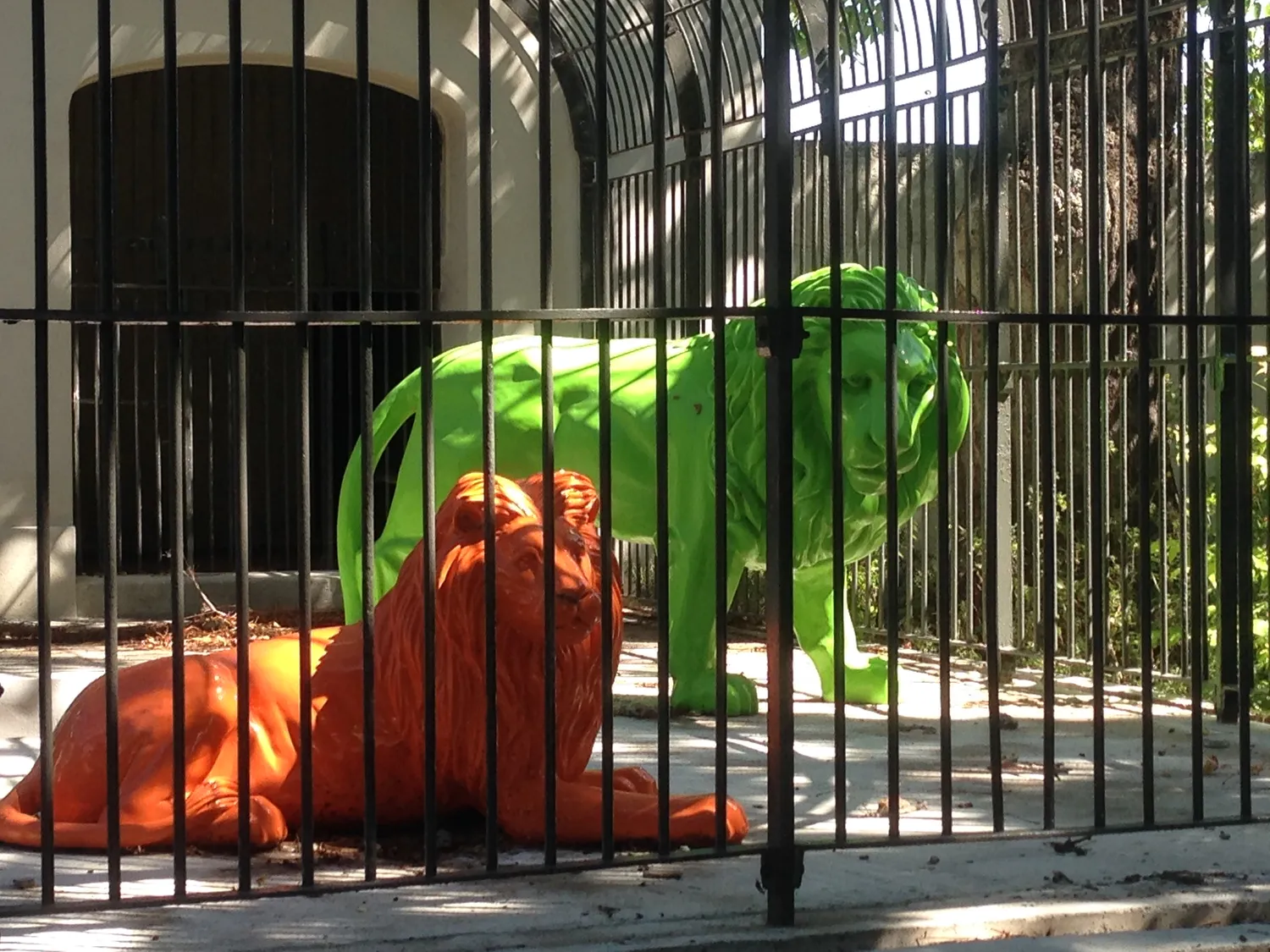
Next is Parc Longchamp. Behind bars there’s an orange lion and a green lion. Colorful ostriches stand nearby. The zoo closed back in eighty-seven, and last year they put resin animals in the old enclosures. Finally, a zoo where I can get a little closer and the animals definitely don’t mind.
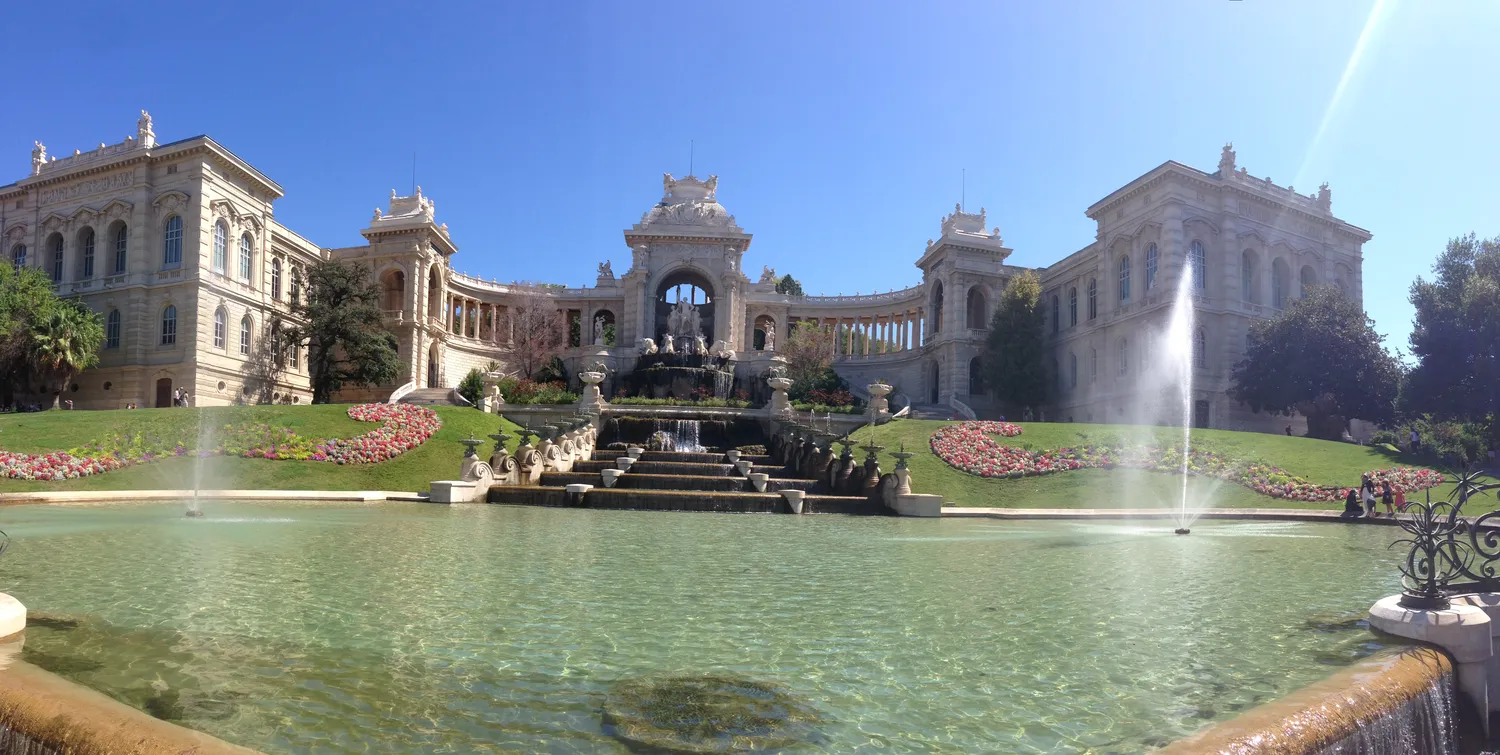
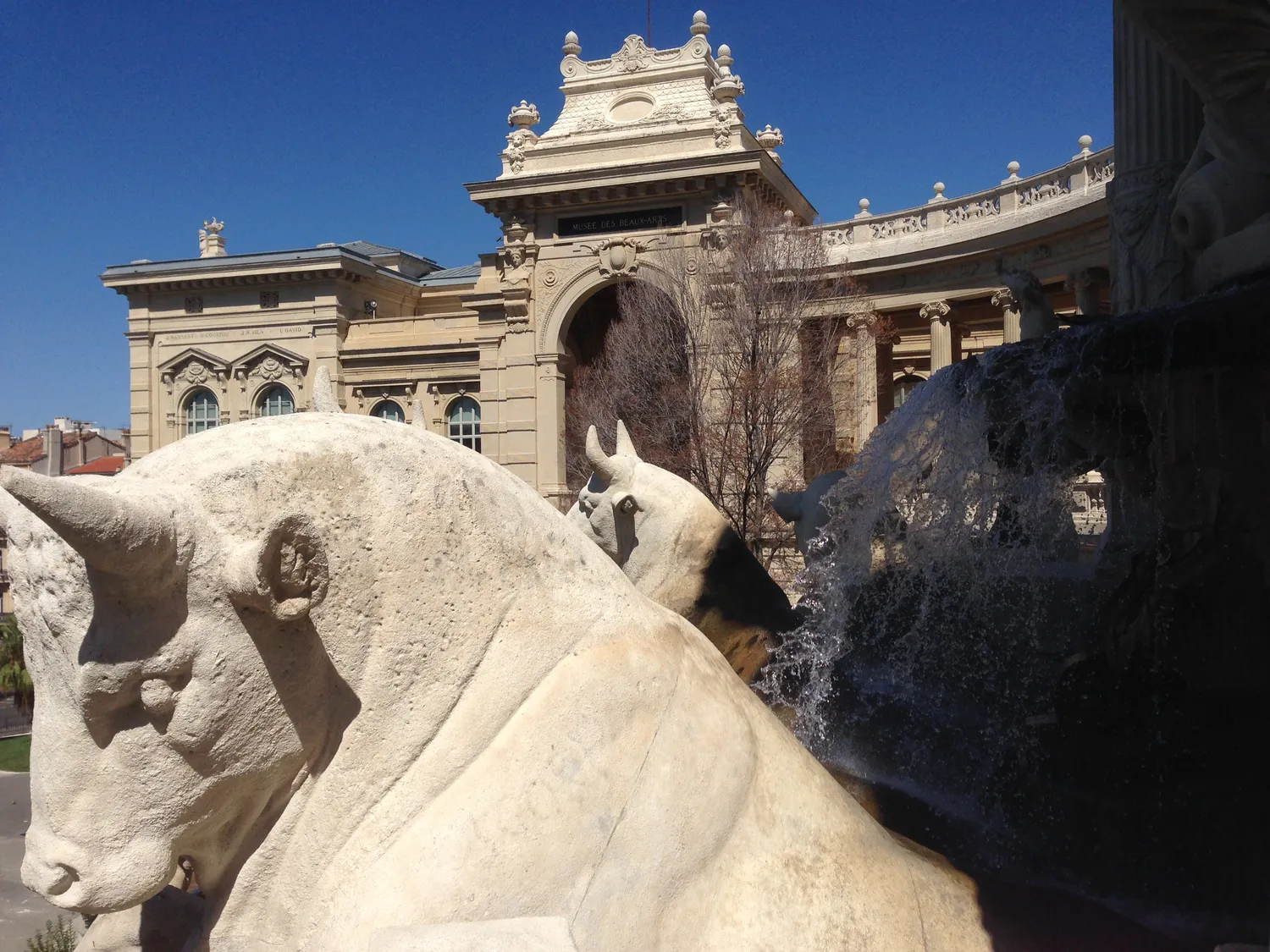
Right nearby is a huge cascade, with a colonnade and stone bulls. I think, some palace! It turns out this is how Marseille celebrated water from the Durance finally reaching town. The river is even there in the form of a woman, standing on a chariot. Some people cut a ribbon when they open a water supply. Marseille goes with bulls, columns, and an entire palace. Credit where it’s due: they know how to welcome water. The architect, Henri Espérandieu, also worked on the Good Mother. I start with his basilica and finish at his fountain. Although “finish” is a little optimistic.
Our Flight Is From Milan. We’re Still in France.
We’ve got an evening flight home from Bergamo. Great plan, as long as you don’t look at where we are. We’re still in Marseille. We look for a ride. The only one that works leaves from Aix-en-Provence. We think about it for three minutes. If there’s no ride from Marseille to Milan, I guess we’ve got one more French town before the flight.
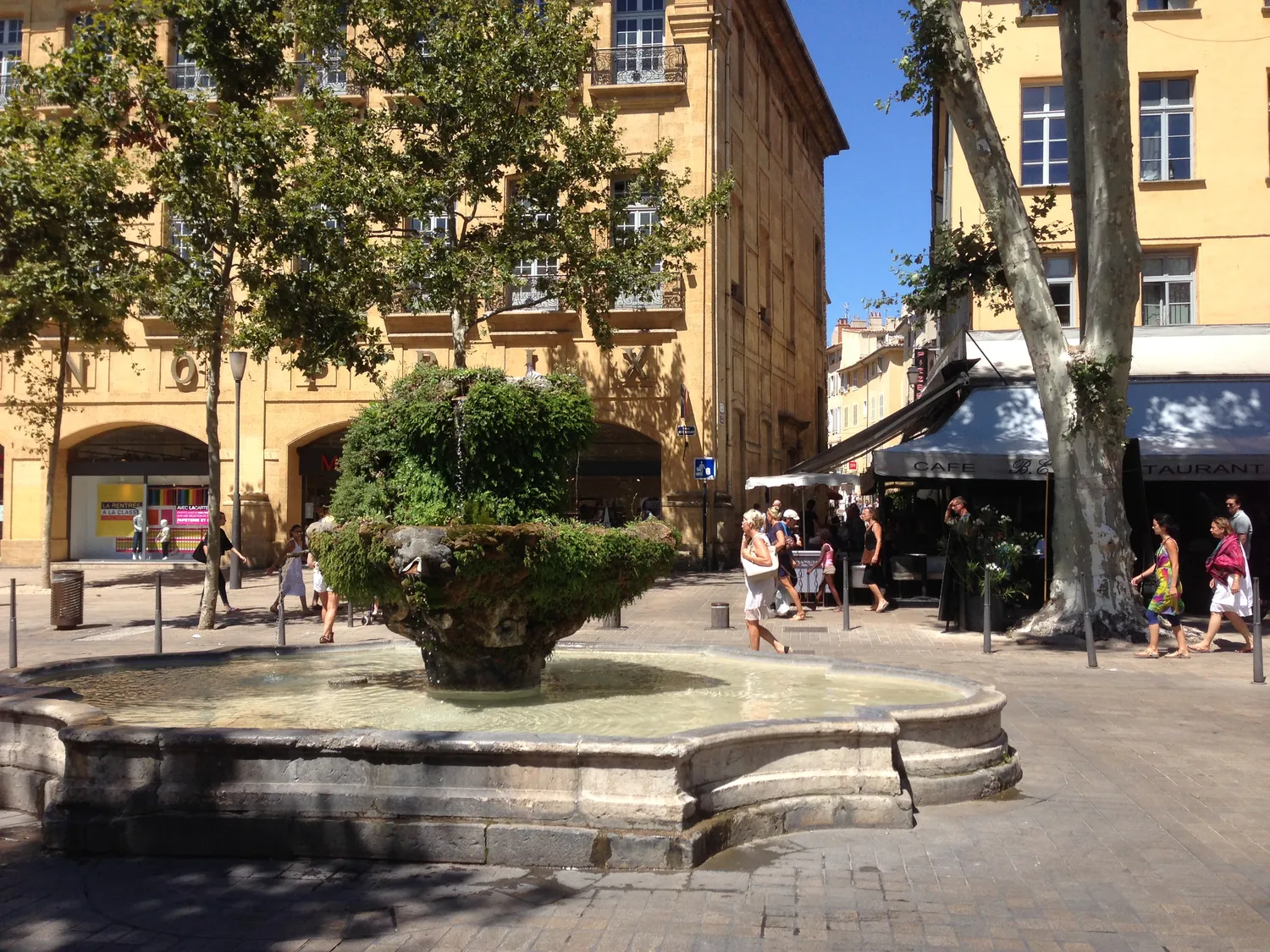
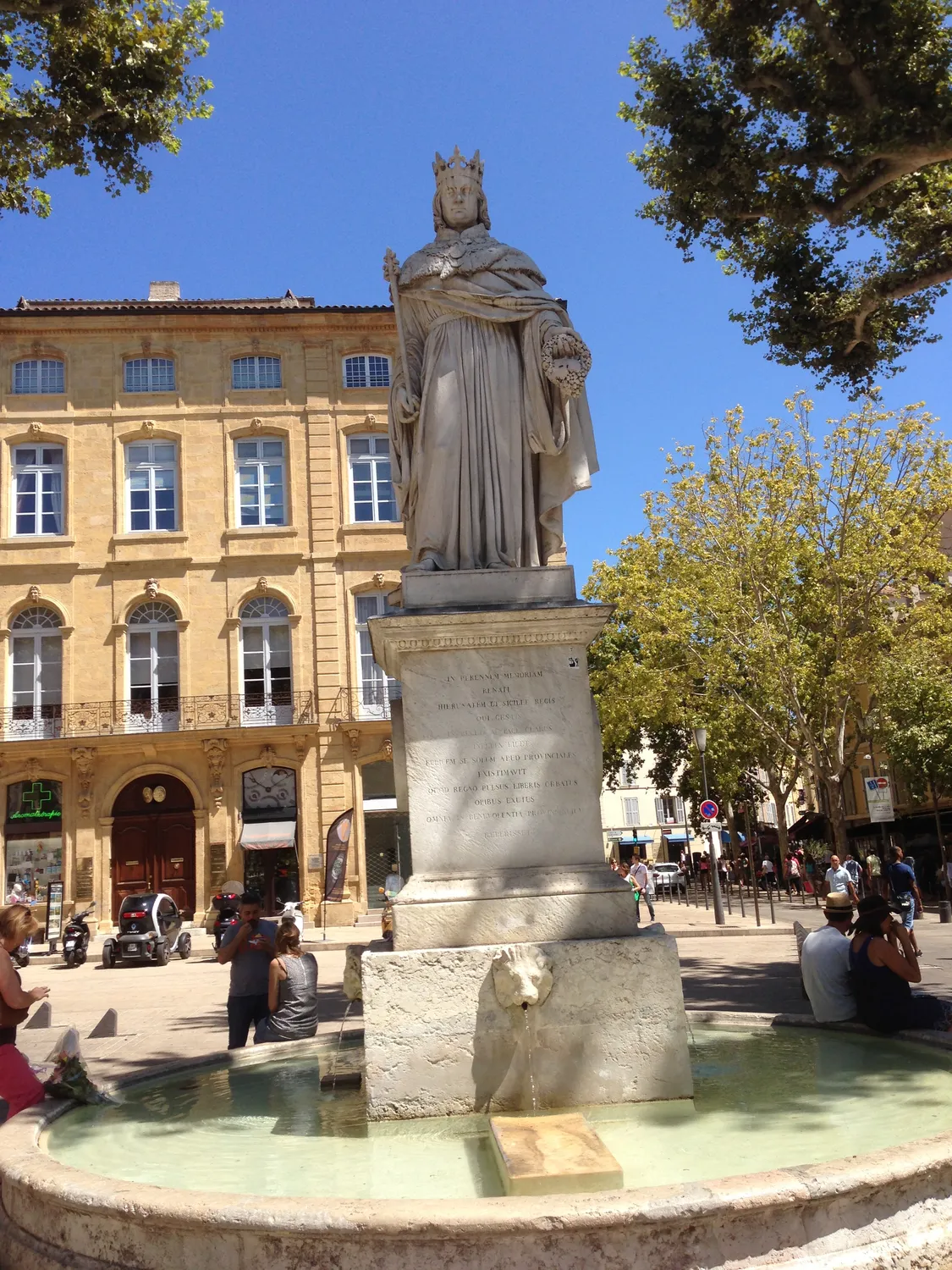
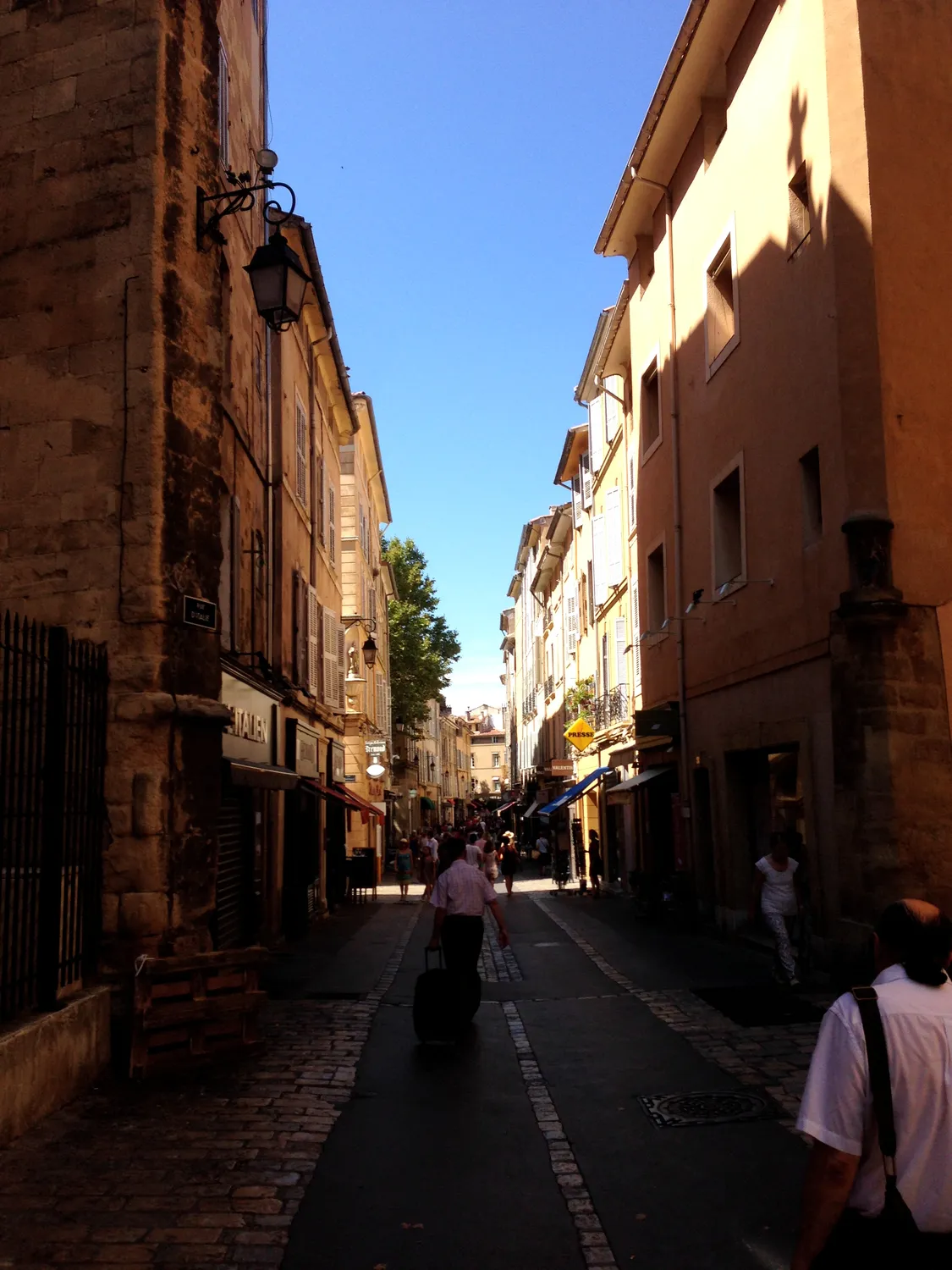
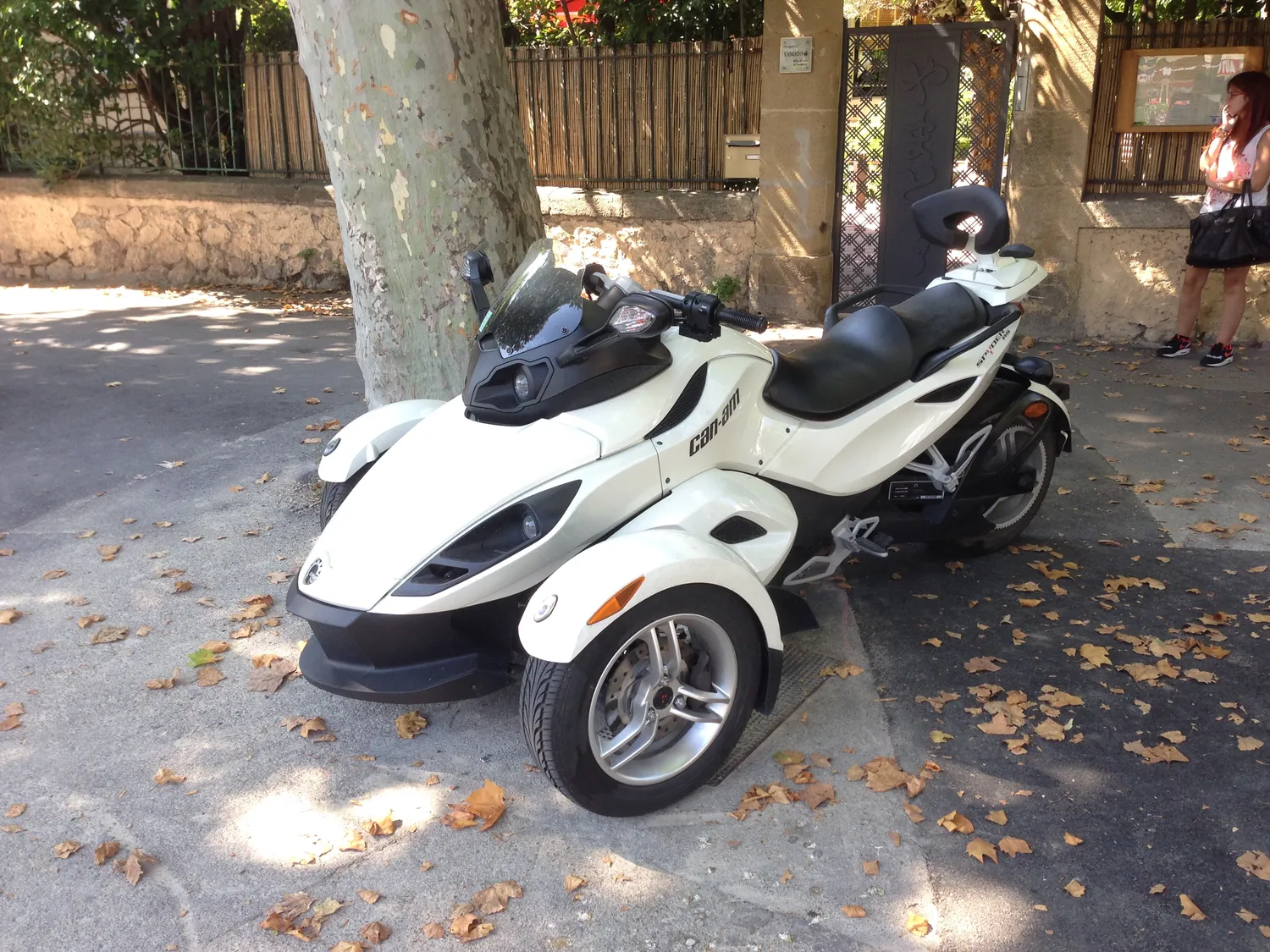
In Aix we have a little time before the ride. On Cours Mirabeau I see the Fountain of the Nine Cannons, then a statue of King René. A scepter in one hand and a bunch of Muscat grapes in the other. He’s kept one hand free for the important stuff. We turn down a narrow street with awnings and eat some baguette. I even have time to photograph a white three-wheeled Can-Am. It looks like a motorcycle finally worked things out with a car, but they could only agree on three wheels.
We get in the car, make it to Bergamo, and actually catch the flight to Ukraine. This morning I’m taking pictures of lions that aren’t going anywhere. By evening I’m on my way to Italy with photos of the count’s island and a town that wasn’t even on the itinerary. All we were trying to do, by the way, was get home on time. If everything had gone to plan, I wouldn’t have seen Aix at all. But really we had one plan: be at the plane that evening. Everything else just found a way to fit.