
Minsk: A Millionaire Before Lunch
Belarus · August 2014
In Minsk, I become a millionaire before I’ve properly made it out of the railway station. Not bad, right? By the end of the day, though, I have a different goal: get across the border. That turns out to be harder.
What it costs to become a millionaire
After our trip around Europe, we spend a little time at home. And I get bored again. Apparently I’ve developed some kind of travel gene: I’ve barely got back and I’m already looking at where to go next. This time the idea is simple: visit the Baltic countries in one trip. The easiest route goes through Minsk. Belarus is right next door, and I’ve never been. So why not?
I think we take the night train to Minsk. We sleep on the way, get out at the station, and for those first few minutes it doesn’t feel like I’ve gone very far. Everything feels close to home. Then I walk up to the exchange counter, look at the board, and yep, this is definitely another country.
They’ll give me three hundred local rubles for one Ukrainian hryvnia. If I want to buy that hryvnia back, it’ll cost me seven hundred. And just to be clear, these aren’t two different exchange offices. It’s one counter, two columns on the same board. I change a few hryvnias, see what a great deal I’m getting, and switch to dollars. One dollar gets me more than ten thousand Belarusian rubles. There we go. Done. Millionaire.
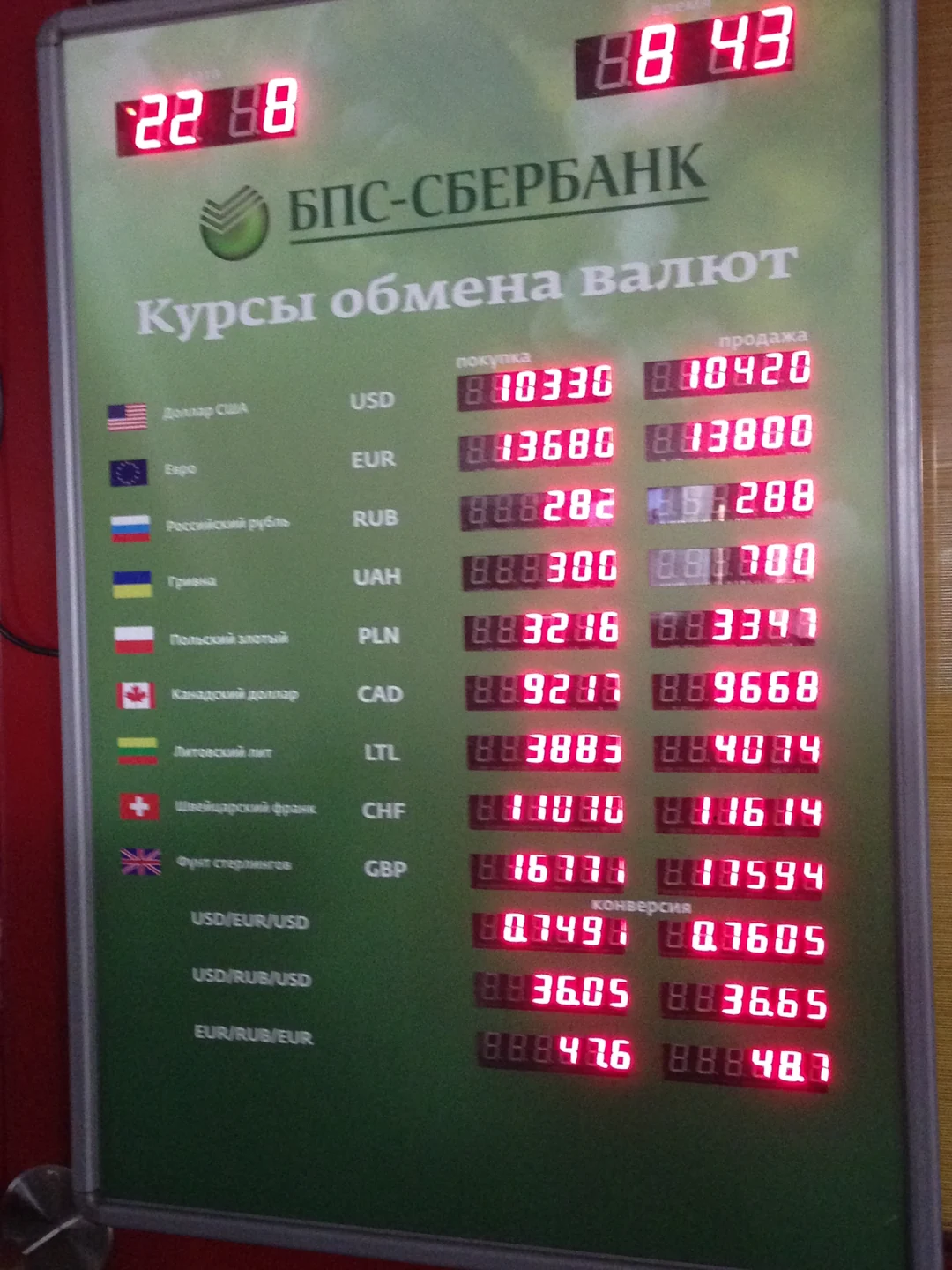
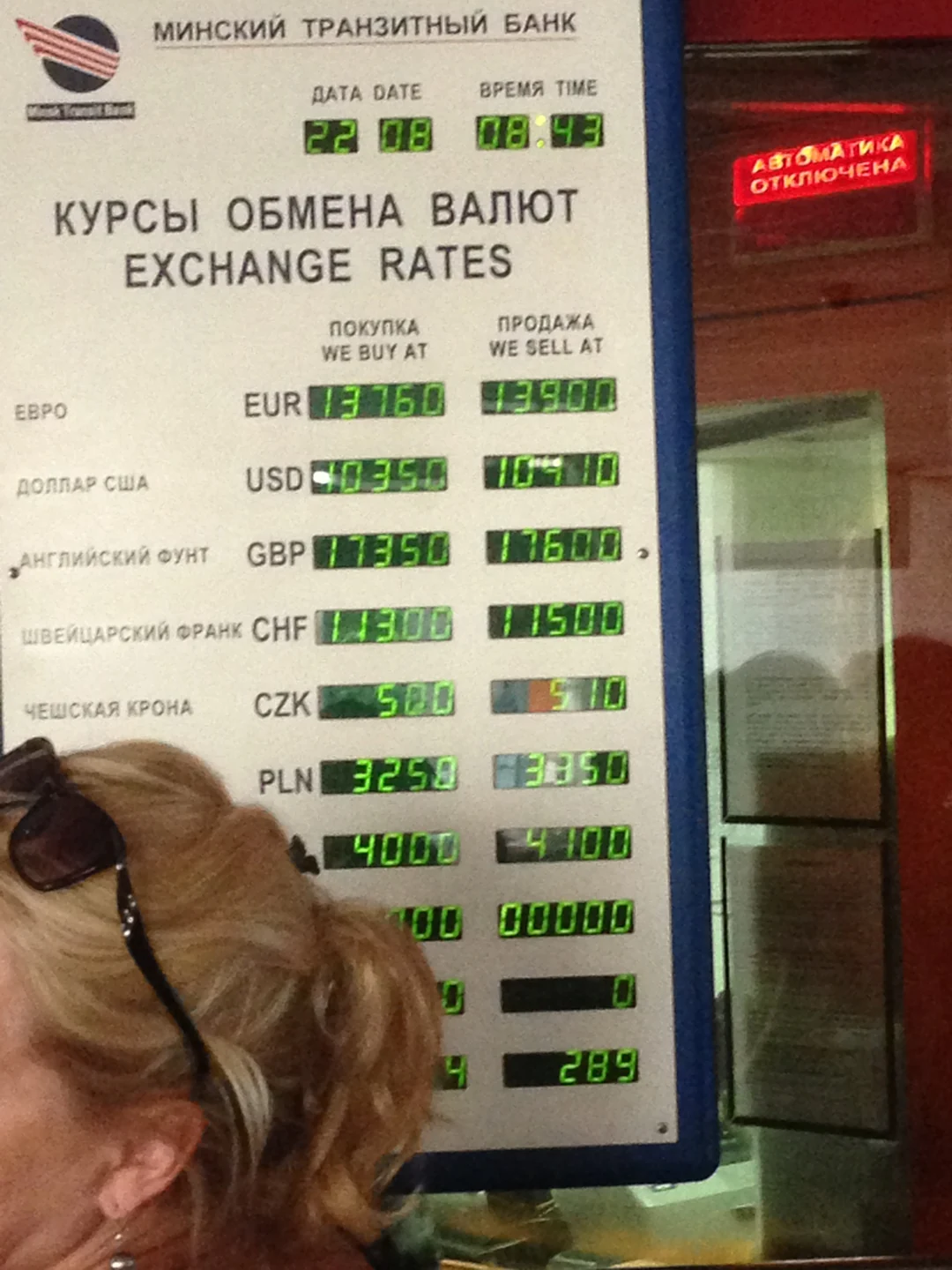
People call the local money “little hares,” after the hare on an old one-ruble note. I like that a currency with that many zeros can still have such a cute nickname. I head out into the city. Might as well see how millionaires live around here.
Minsk, from one side of the street to the other
The roads are the first thing that gets me. The streets are so wide that by the time your eyes get from one side to the other, you’ve had a look at half the block. The paving is good. Everything’s clean. In the photo you can see one of the towers known as the Gates of Minsk. The two of them stand across from the station as if the city wants you to get a sense of its scale before you’ve even started walking.
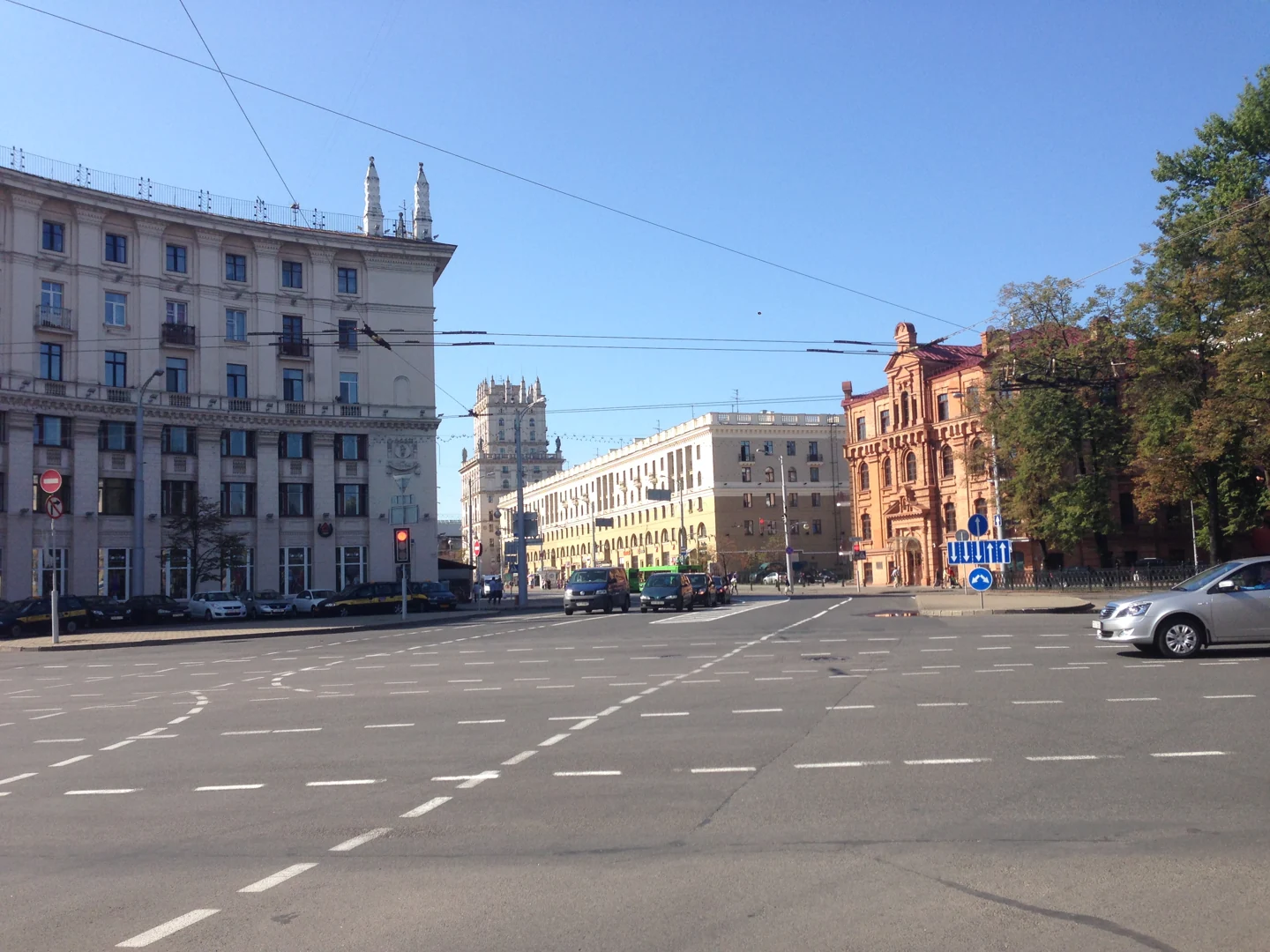
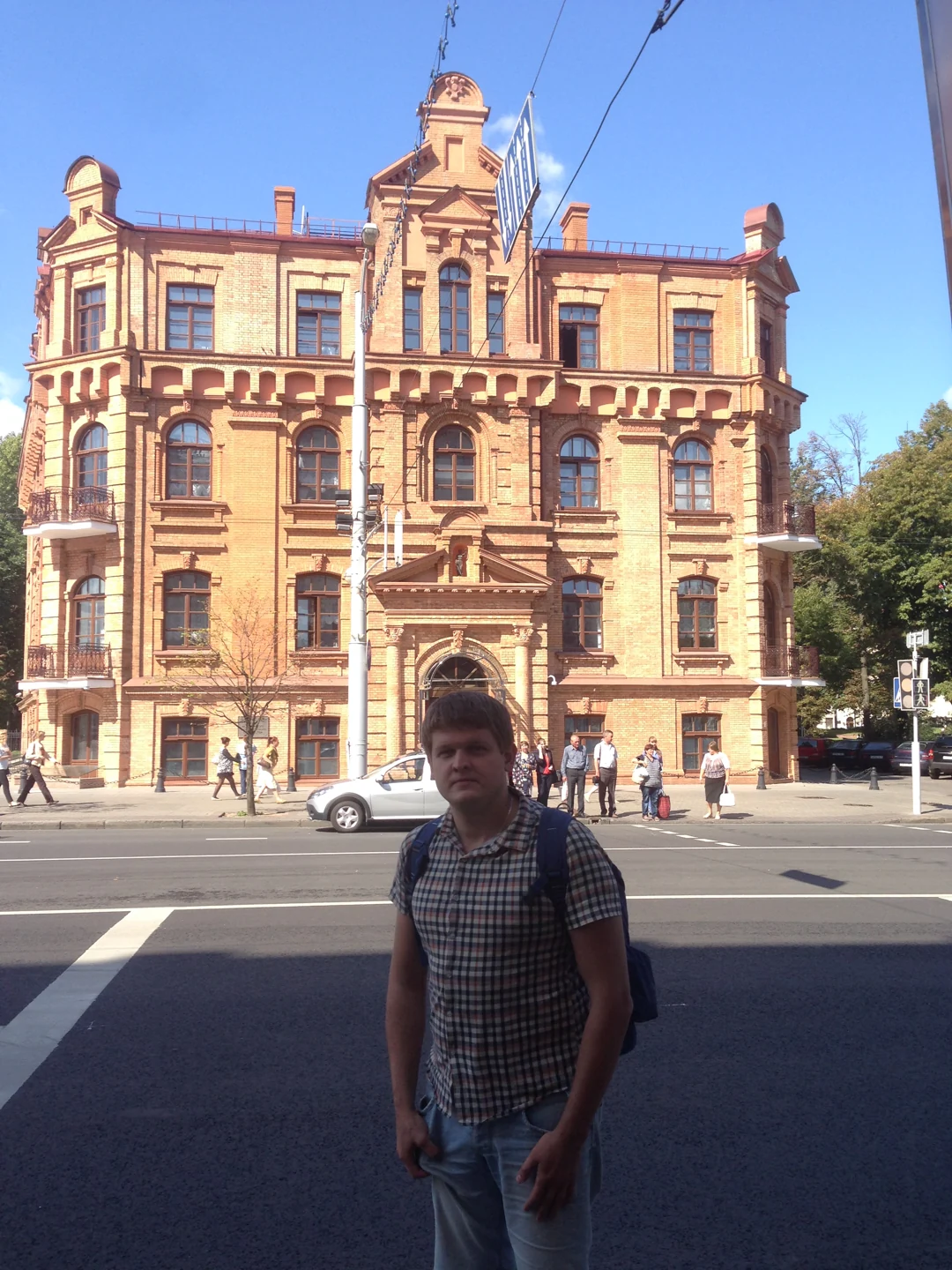
There’s a reason for that scale. Much of central Minsk is rebuilt after the war. Independence Avenue, with its big squares and long façades, shows what they wanted their capital to look like. But the whole city didn’t get the same façade. Near the station, I get a photo in front of a brick building with arches. It used to be Yelizaveta Reiman’s girls’ school. It’s a few minutes’ walk from those monumental towers, but it looks like it wandered in from a different Minsk altogether.
And there’s one address I won’t forget: nineteen Bobruiskaya Street. Back home, “What are you, from Bobruisk?” sounds like somebody giving you a hard time. And now I’m standing in front of the street sign thinking, well, there you go. The joke has a real town and a whole street of its own.
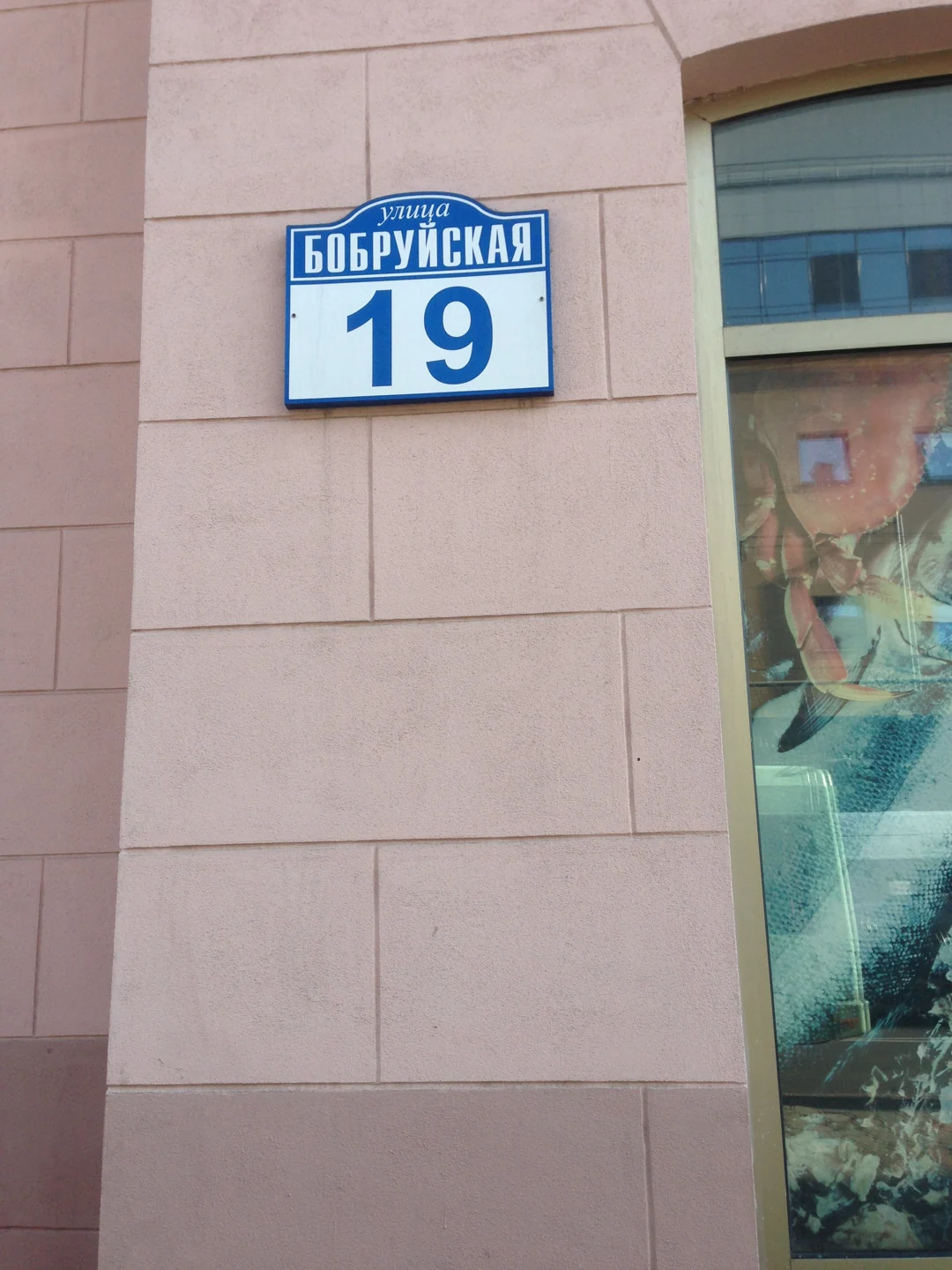
Near that street we find cherry pies. Just in a shop. And this surprises me almost as much as the avenues: they taste like my grandmother’s. I wasn’t expecting anything; I just walked in and bought one. Prices give me a similar little surprise. Kyiv is already inexpensive, and Minsk feels even cheaper. Obviously, after one trip to the exchange counter and a few pies, I’m not ready to publish an economic survey of Belarus. But it feels affordable to me.
What keeps the city going
By the opera house the city changes scale again. There’s a round white façade, a wide sweep of steps and water spilling down in tiers. I’m standing at the fountain with a backpack, and behind me it feels like the show’s about to start, ticket or no ticket. The Svislach River isn’t far. Down by the water you can just walk without having to be anywhere. After the station and those big streets, I like that there’s room for that here, too.
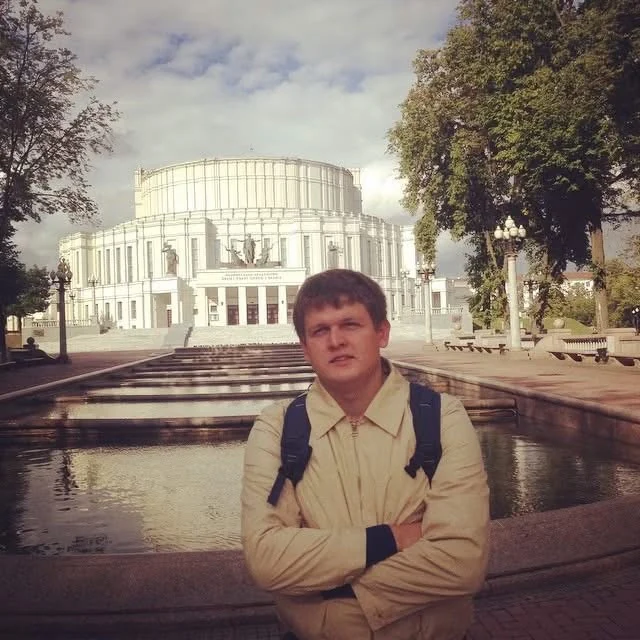
If I asked what Minsk is living for this year, “order” wouldn’t cover it. In May the city hosts the Ice Hockey World Championship. More than six hundred thousand admissions across two arenas. A quiet city? Depends when you show up. In July a new war history museum opens. The memory of the war takes up an entire building and a sizeable piece of the city. Minsk also makes a living building tractors and trucks, and there are already people here making a living writing code.
Russian is what you mostly hear on the streets then; Belarusian is more visible in names and on signs. The people I cross paths with strike me as a little reserved. Maybe they aren’t keen to talk to visitors, or maybe that’s just how my day goes. I don’t know. But I come away with that feeling that people are a little guarded. You can go out for a walk down the wide avenue, no problem. Go out to that same avenue, get people together and publicly say what you disagree with, and it’s another story. Public gatherings are tightly restricted here.
I’m walking through a clean, beautiful city. Nobody treats me badly. People are generally hospitable. And I still catch myself thinking: damn, it’s like I’ve stepped into the Soviet Union for a bit. Not because everything here is the same. It’s just that right next to what I like, there’s always something that makes me a little uneasy.
To Vilnius, while everyone’s standing still
Next we’re off to Vilnius. We go by car, and at the border it becomes clear how loosely I’m using the word “go.” There’s a huge line ahead. The cars move so slowly we have time to get out, go for a walk and even go for a run. A rare chance to be faster than a car on an international journey and still not get particularly far.
While we wait, I think about how I’d pictured this stop. On the map, there’s Minsk, there’s Vilnius, and there’s a line between them. It looks as though the main thing is to find a ride. Then you get to the border and that line stretches into hours. You can walk along it, turn around and see the very same cars behind you.
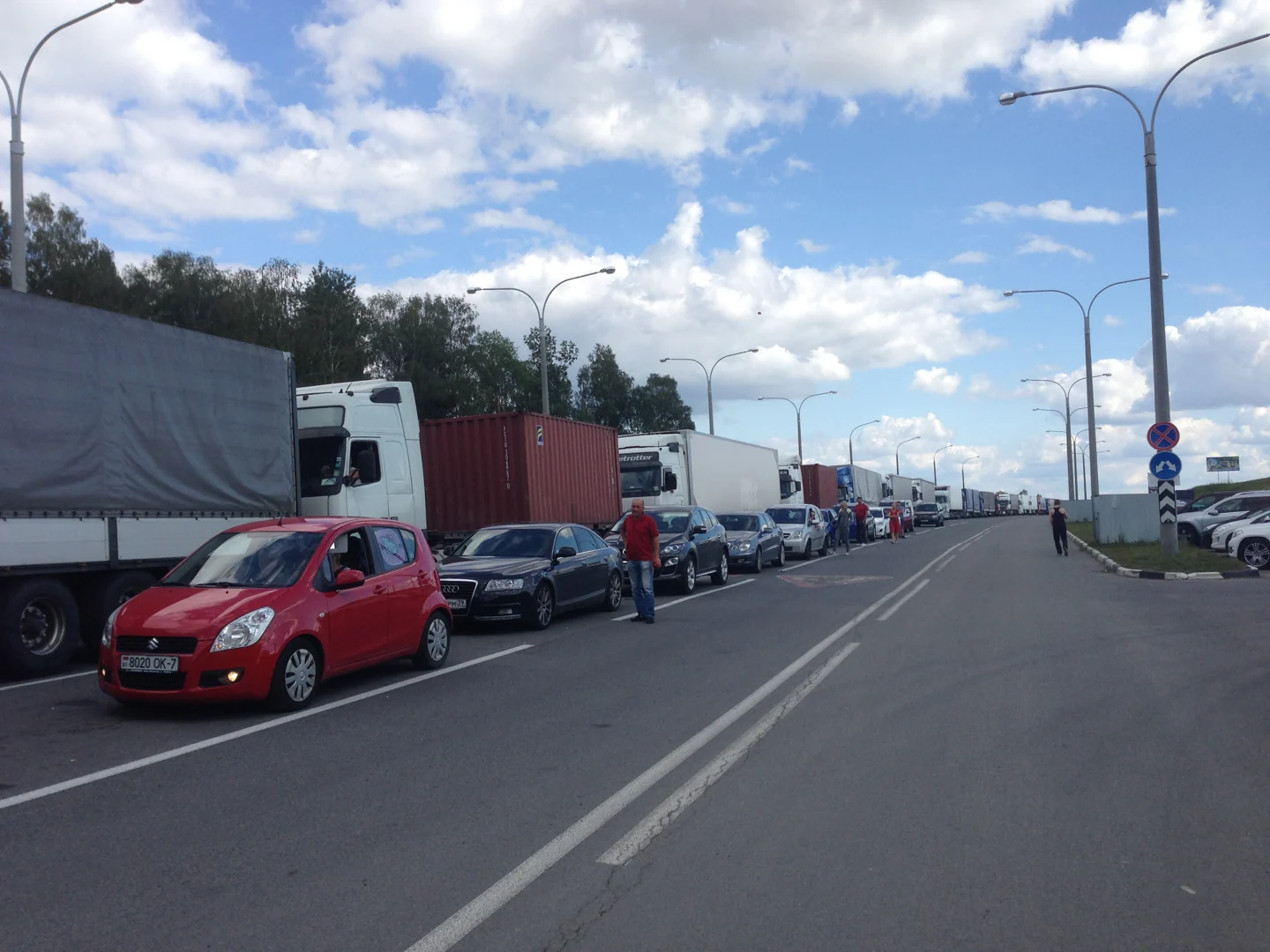
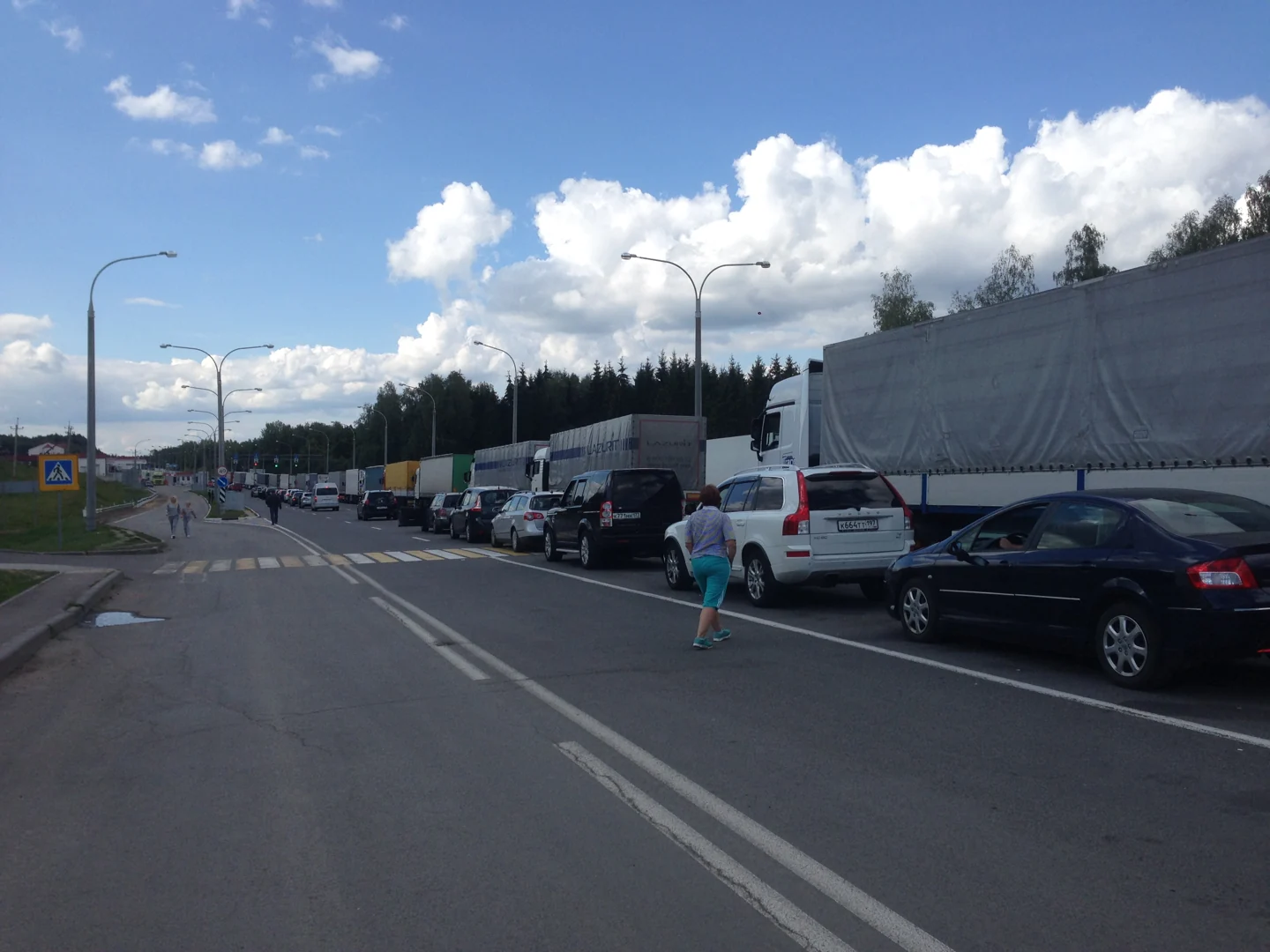
In one day, I get used to Belarusian money, learn one Belarusian address, and find out that the longest part of a trip isn’t always the farthest on a map. This morning I never would’ve guessed that the fastest part of our drive to Vilnius would be running next to the car. Eventually, we do get across. In the morning I’m at the station counting zeros; now I’m counting how long it takes to move a few yards. Never mind. We’re moving again. Minsk starts out as a convenient stop on the map and turns into a whole day I’m still thinking about. And now it’s on to Vilnius.