
The French Riviera: Why Not?
France and Monaco · August 2014
We've got an evening in Milan. What we don't have is a plan for after that. I open the map. I'm not looking for a hotel or plotting a route. I'm just looking for somewhere I can get to from here that I haven't been to yet. There's Genoa, there's the sea, and farther along there's Nice and Monaco. Funny how that works. On their own, each of those names sounds like a whole trip. Zoom in and suddenly they're all in a row along the coast.
Should we go? Yeah, let's go. That evening we find a ride on BlaBlaCar. Some guys are heading that way, and that's all we need to know. Yesterday the plan was a ticket to Milan. Now we have seats in a car to Nice. I like that where there'd usually be a fixed itinerary, there's still room for a simple “why not?”
Tunnels and Blue-and-White Shade
The road turns out to be part of the trip. Mountains, a tunnel, more mountains. We come back into daylight and everything's green. A little later there's water out the side window, and then there's nothing again because we're in the next tunnel. In one shot near Genoa there's nothing beyond the guardrail but a slope and sky. Farther on, near San Bartolomeo al Mare, a whole little town comes into view, with the sea behind it. Those two shots get the road right. You're looking at the mountain itself, then for a second it moves aside and shows you where you're going.
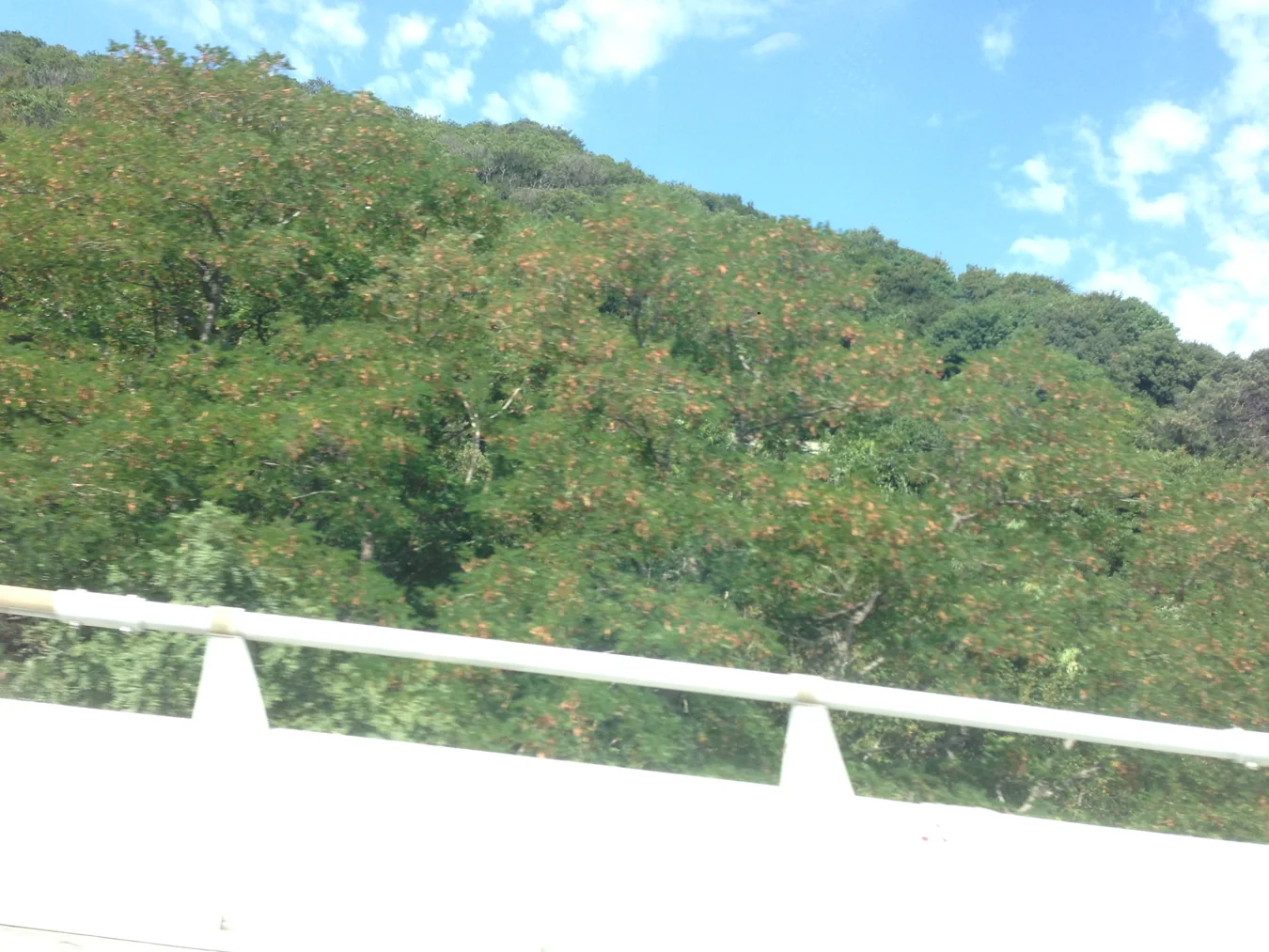
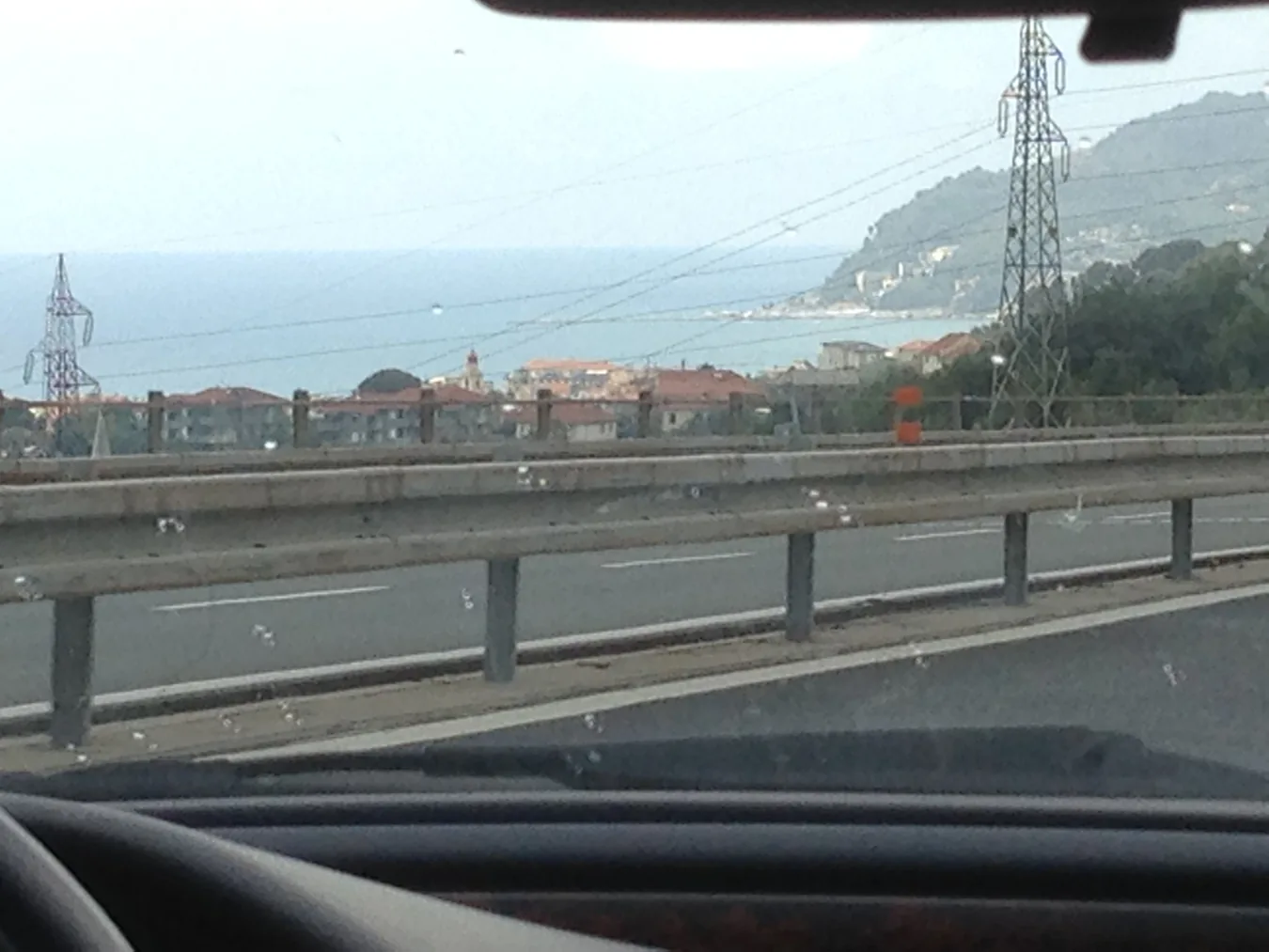
I don't have to look out the window the whole time, either. There's music playing, it's summer, and I'm in a good mood. Some trips, you want the drive to be over because everything interesting is waiting at the other end. Here I'm already happy in the car. I haven't seen the apartment and I still have no idea what I'm doing in Nice today. I wouldn't mind if the road went on a little longer.
In Nice we stay in an apartment not far from the water. You can't see it from the balcony. You get a street, pale buildings, red roofs and hills behind them. The thing that gets me is the awning. You turn a crank and blue-and-white striped fabric rolls out over this tiny balcony. The balcony itself is in the same colors. I watch the shade arrive as it opens. Somehow this little thing gets more of a “wow” out of me than plenty of things designed to get a “wow” out of you.
The whole apartment feels like that. Nothing much has happened yet, and I can already picture sitting here with a coffee and a baguette, in no rush to go anywhere. It's not that the view is unbelievable. I just start to get the pace you could live at here. It puts me in a pretty good mood. Like there's more ahead than a few days off. There's a lot of beautiful stuff out there, and I can just pick a place and go.
Across the Street
First walk down the Promenade des Anglais. The hotels are on one side of the road, each one a little more interesting than the last. You look at one facade, then the next, and they've all got their own thing going on. The sea is right on the other side. No three more blocks to go, no fancy sign telling you which way to the entrance. Cross the road and there it is.
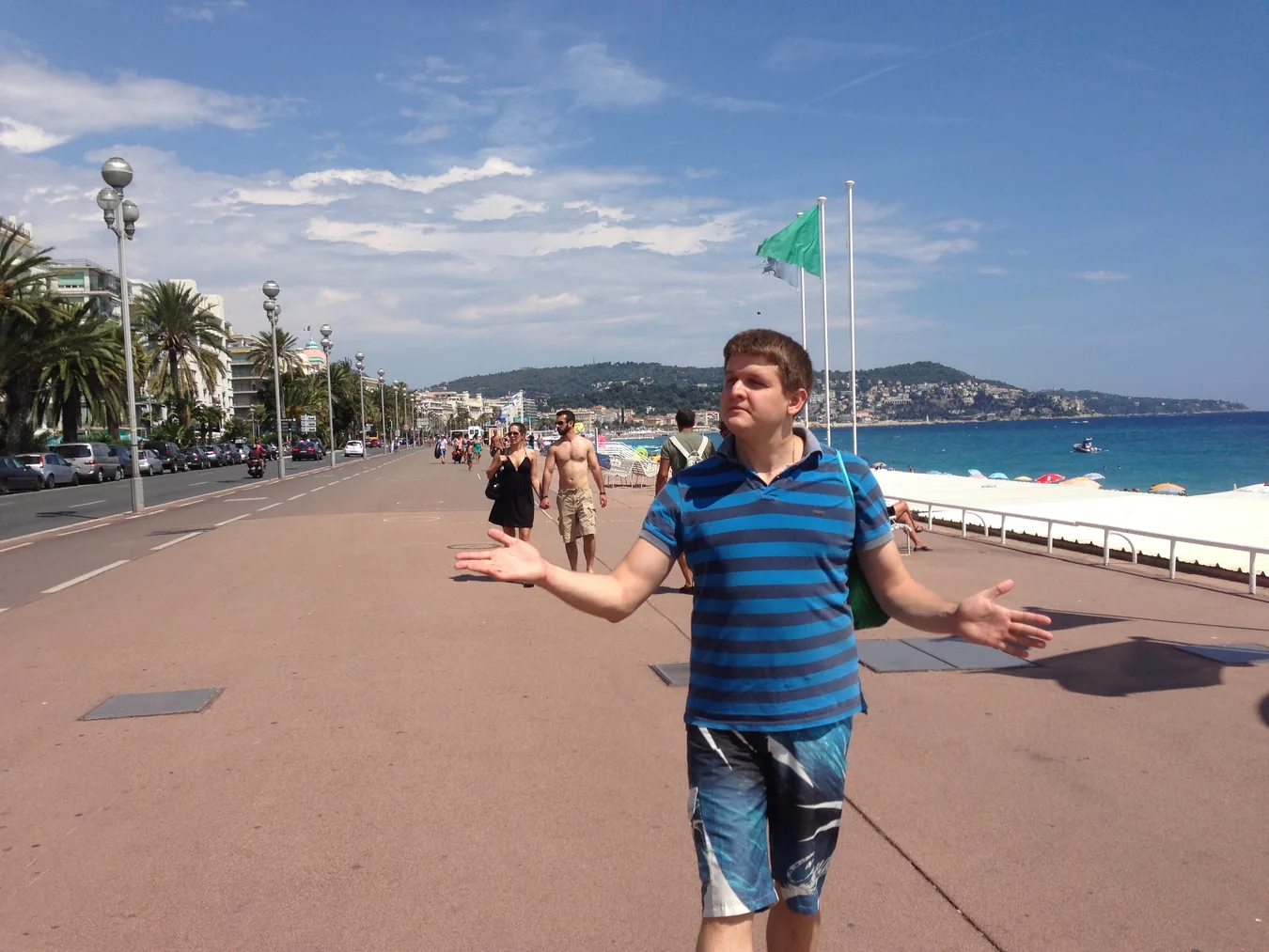
And the water really is azure. Sometimes a place has a beautiful name and you get there and realize someone just did a good job naming it. Here I stand looking at the water and, no, nobody's oversold it. It's pale at the pebbles, deeper and bluer farther out, and even in an ordinary photo the color speaks for itself. The French name, Côte d'Azur, finally makes sense to me without anybody having to translate it.
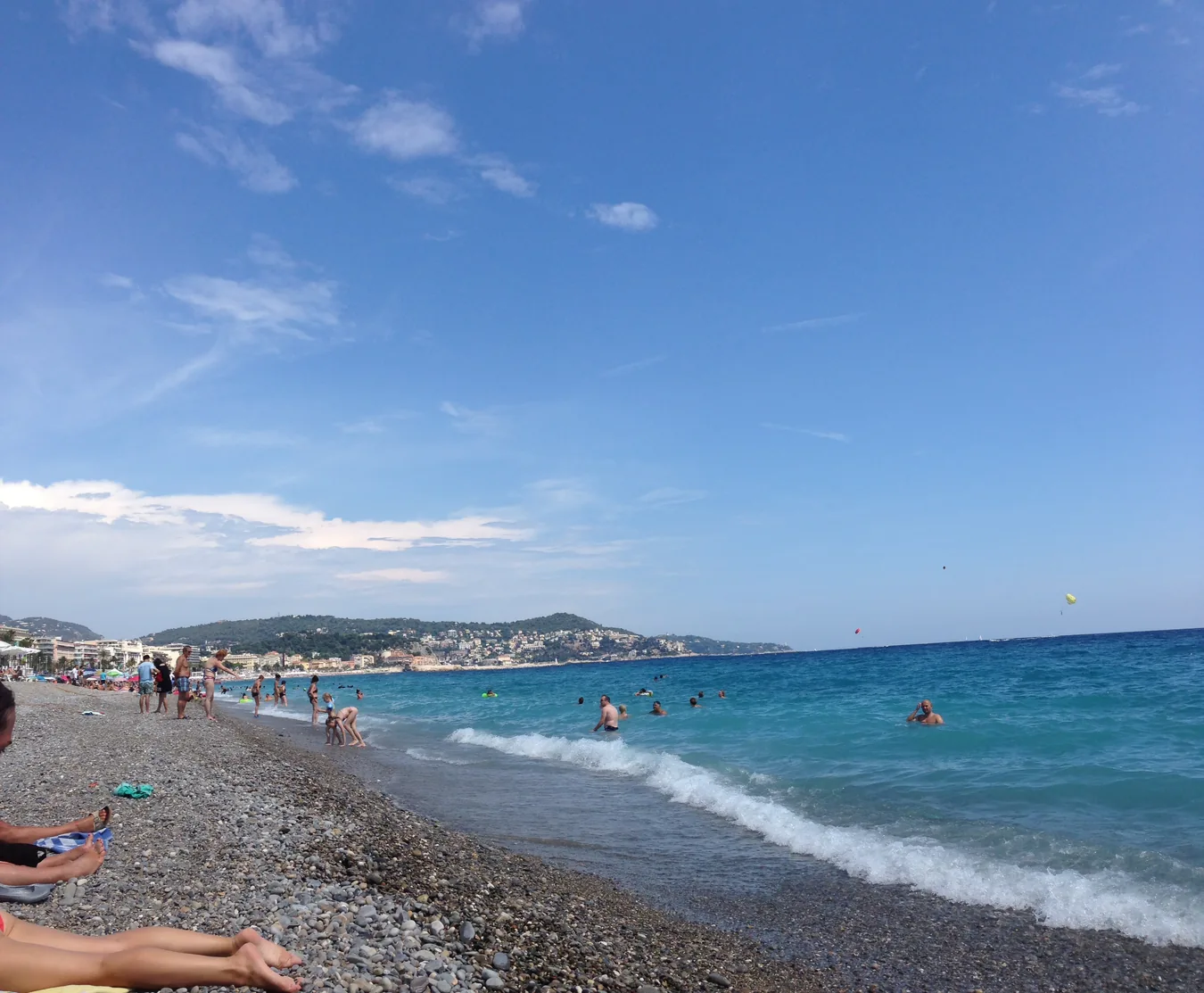
Dumas was in Nice long before you could run a finger across a map from Milan to France. In his travel writing he describes people from different countries meeting by the sea and speaking different languages. He's writing about a winter resort. I'm here in August. But there's one simple thing his Nice and mine have in common: people have come a long way and now they're just walking by the water.
A little farther along the coast, Matisse once rents a narrow, perfectly ordinary room with a big window overlooking the sea, and starts painting Nice from it. What's interesting isn't just that a great painter had a good view. The room itself is nothing special, but he has that light, and it's enough to make him curious about what's happening beyond the window. I'm no painter, but the coast keeps distracting me today too. We walk one way, then back again. I get another look at the things I've already seen and it doesn't feel like I'm repeating myself.
A Mission in Monte Carlo
Toward evening there's another “why not?” Monte Carlo is close. We go back, change, and head for the station. On the way I stop next to an old blue car. What I like in Nice is that cars like this don't only sit behind glass in a museum. This one's parked on a regular street. I'll see much more expensive and much louder cars later today, but I want a photo with this one too.
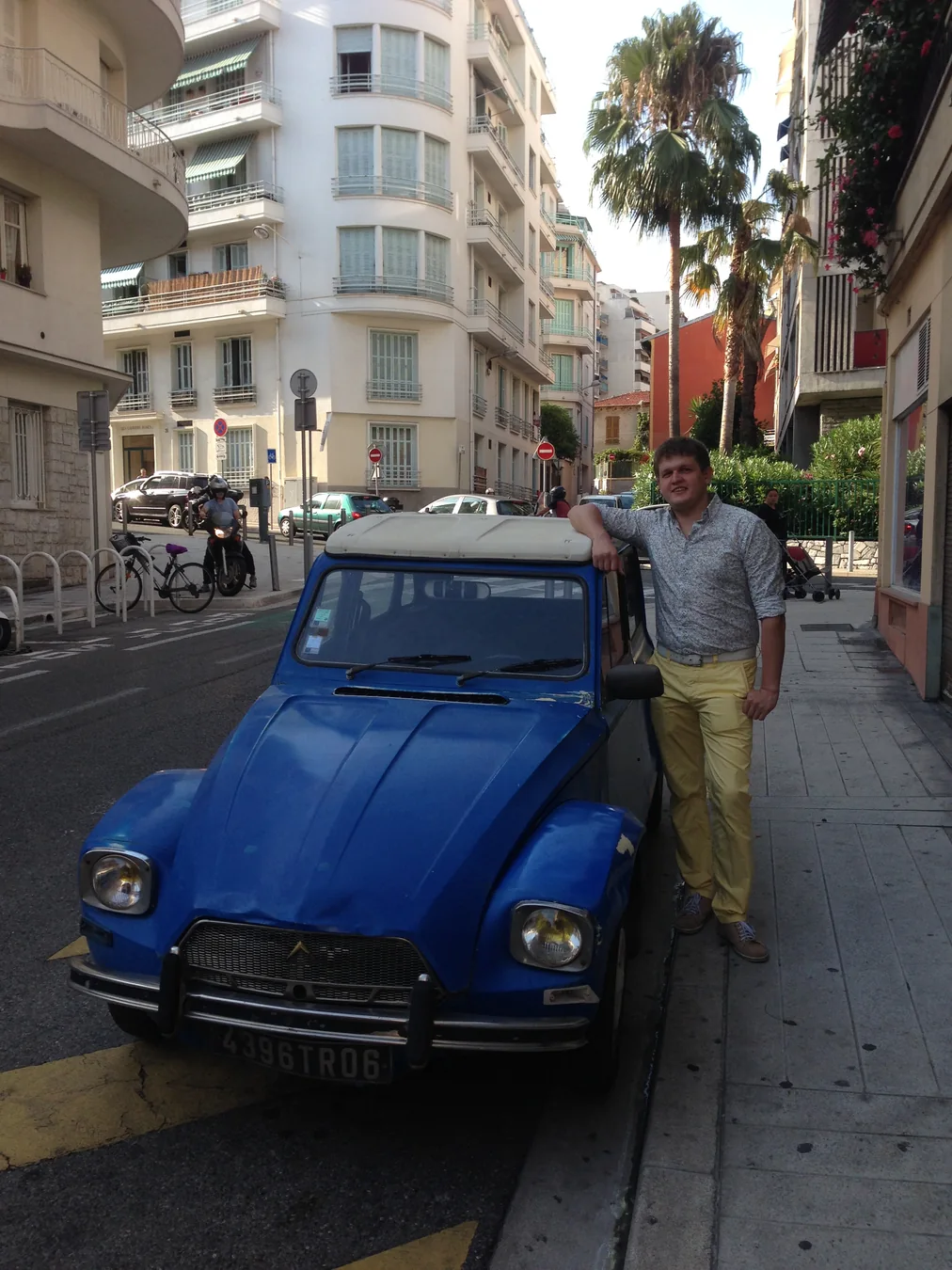
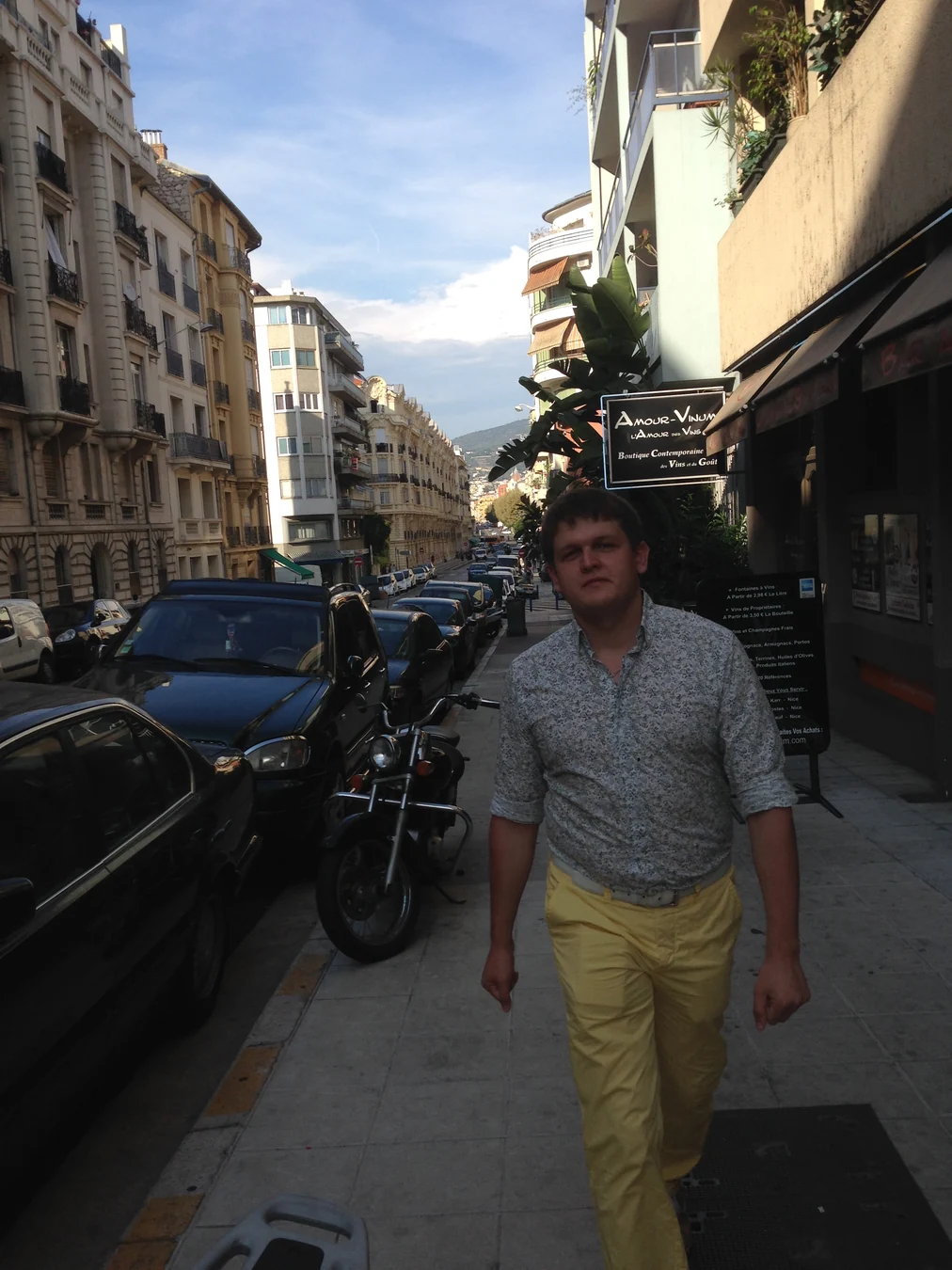
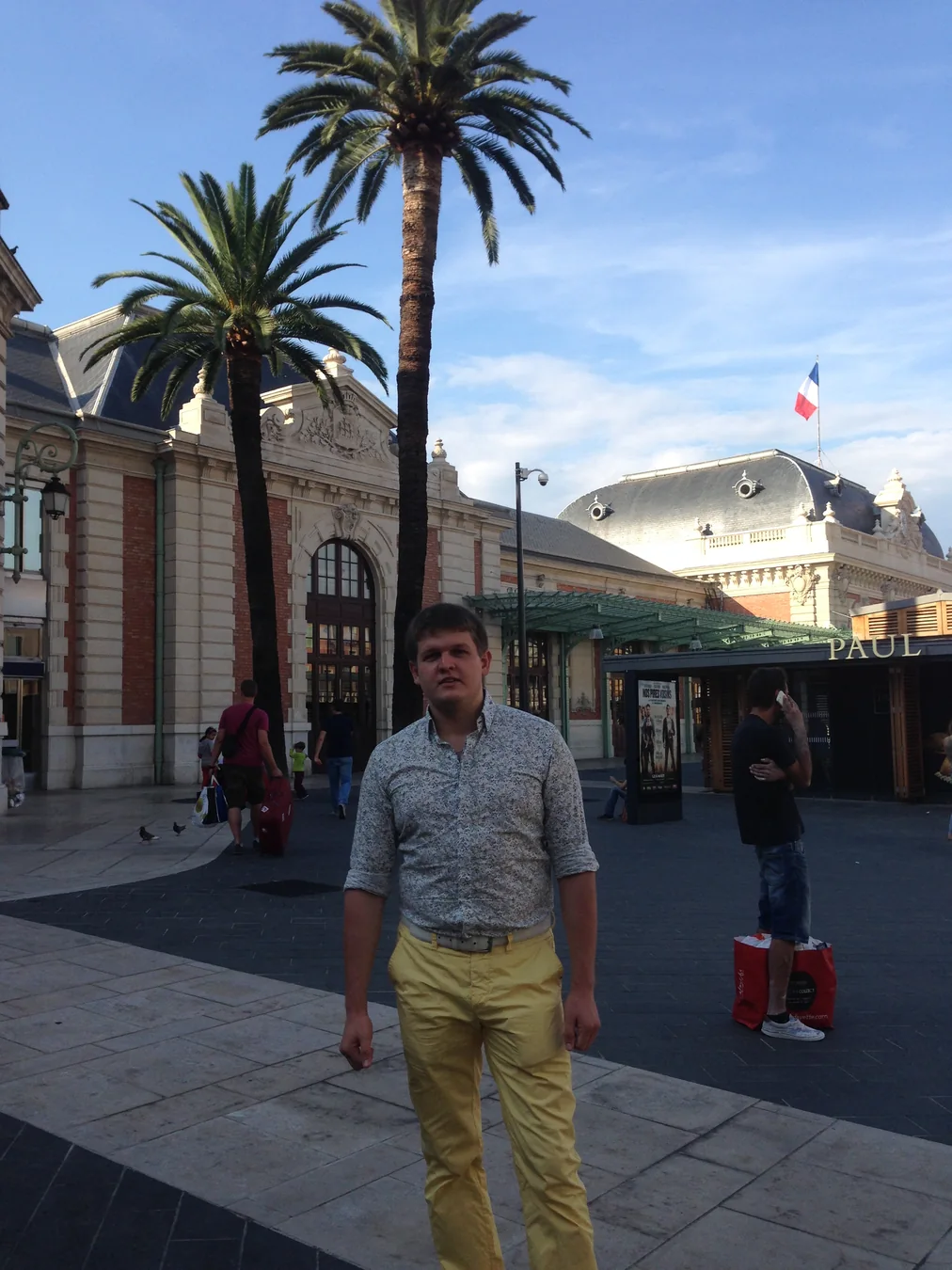
At the station we catch a train. Something about the words “train from Nice to Monte Carlo” makes me laugh. Monte Carlo sounds like somewhere you're supposed to arrive on a yacht, win a trip to, or at least dress up properly for. Instead there's a regular station, palms out front, and you can just hop on a train. By the way, Monte Carlo isn't a country or a French city. It's a district of Monaco, and Monaco is a different country. On the map we're crossing a border. In real life we're just riding along the coast.
First impression: how did they fit all of that in here? Buildings stacked on top of buildings. Sea below, mountains behind, and somehow there's room in between for homes, roads, hotels and everything else. Down in the harbor they seem to have gone the other way and made things bigger than they need to be. Especially the yachts. Walking along, I keep looking at the boats and then looking again at how they all fit. A few of them look like buildings that happen to float.
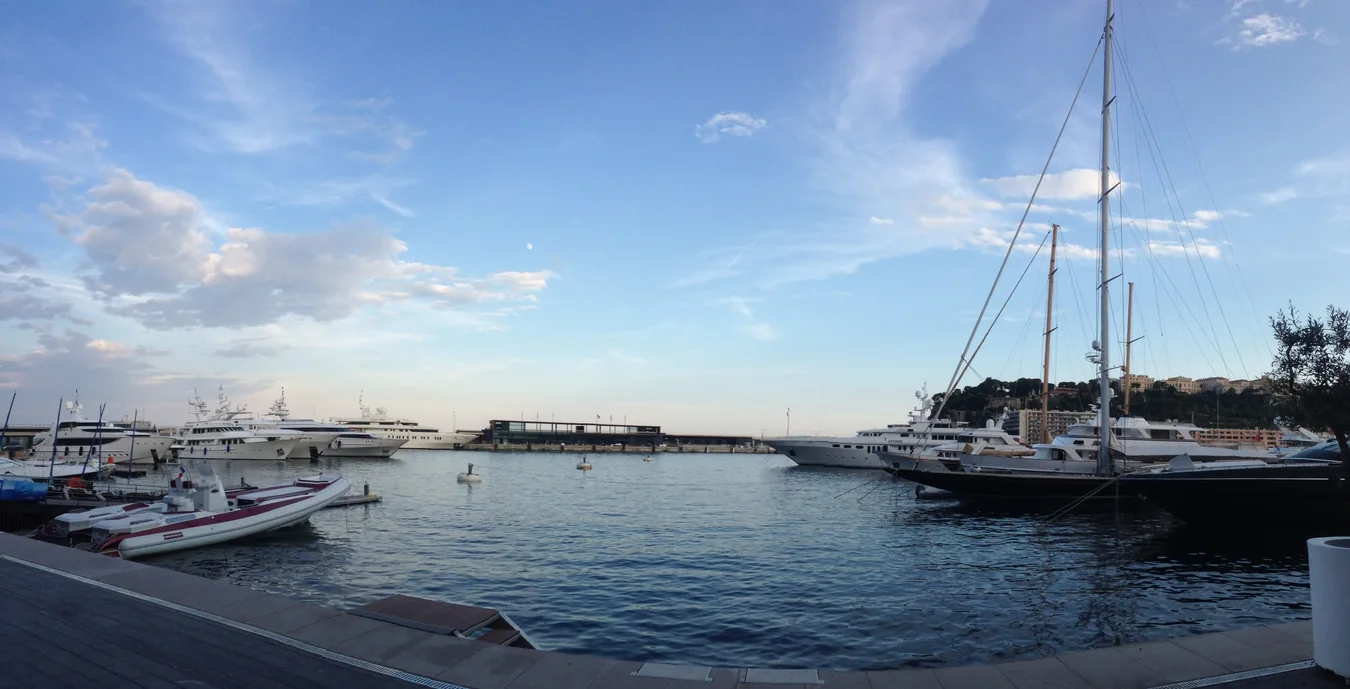
The yacht club looks like a ship too. It's behind me in the photo from Quai Louis the Second, to the right of the yachts. The new building, designed by Norman Foster, opened in June this year. This ship that isn't going anywhere hasn't even been here two months. But it looks like the only building that was ever going to make sense in that harbor.
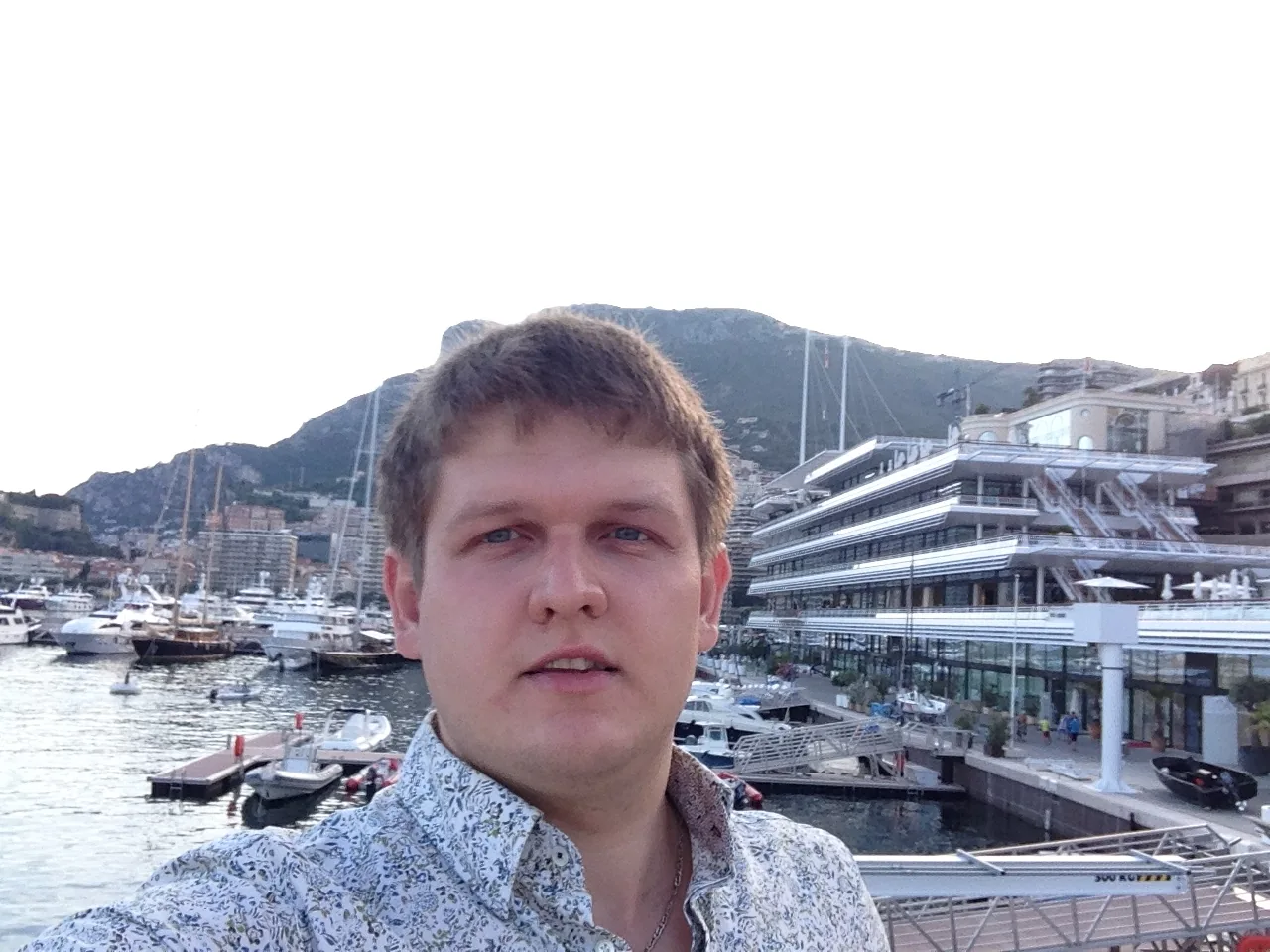
I look up the slope and try to imagine what even one square meter would cost here. I don't really need a number. You can see the problem from where I'm standing: not much land, plenty of people who want it. Most residents don't pay local personal income tax, although most French citizens, for instance, are an exception. I wouldn't explain the whole scene with a tax rate, though. You can't just decide to make land out of sea. And judging by this harbor, people aren't about to stop wanting a place where they can look down and see their yacht.
Farther west on this same coast, in the nineteen twenties, Sara and Gerald Murphy are having people over at their place in Cap d'Antibes. Fitzgerald and Hemingway are among them. A different bit of coast, a different decade, but I get the idea. When you've got the sea and friends nearby, you don't have to make up a reason to stay another day.
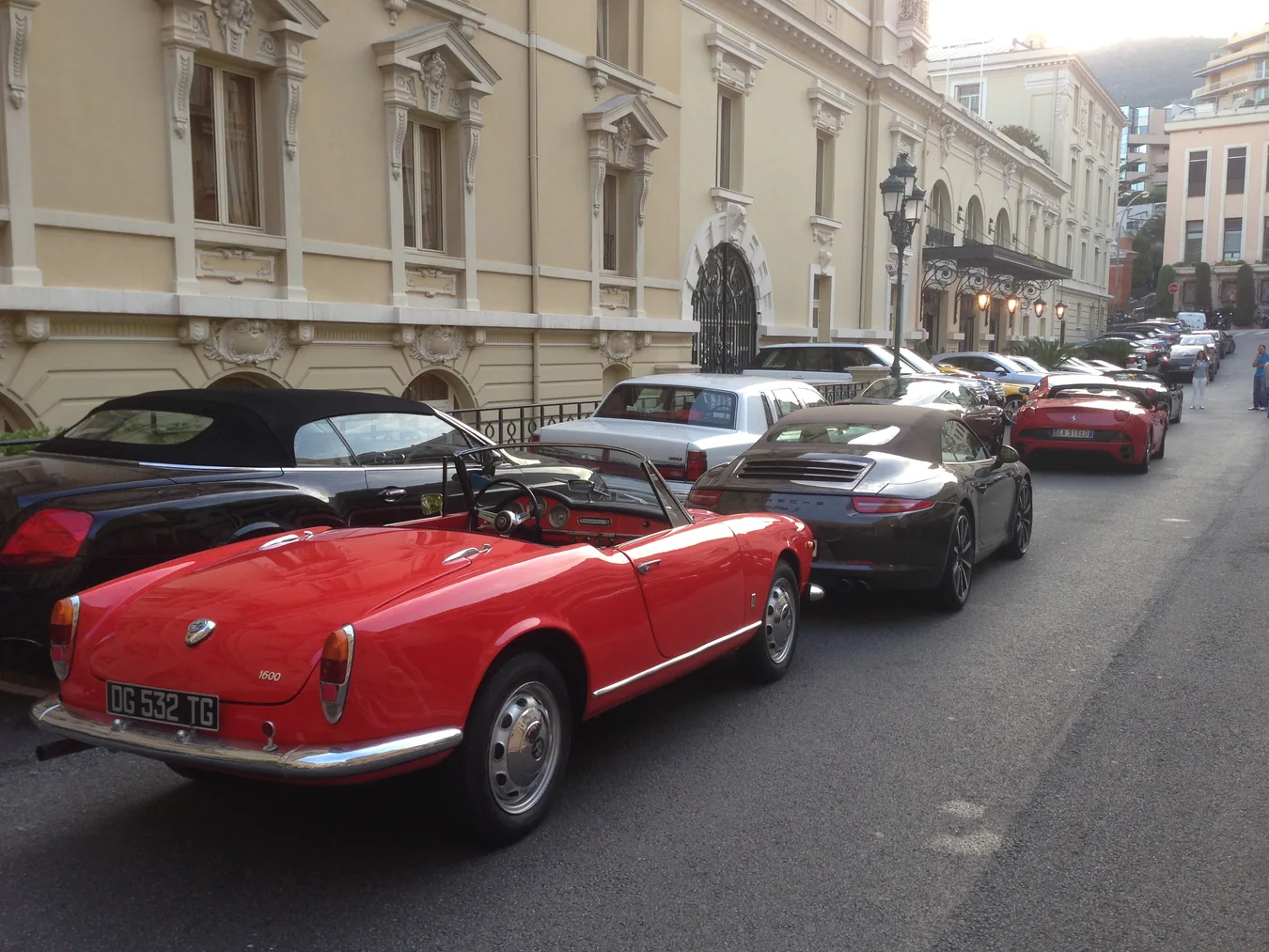
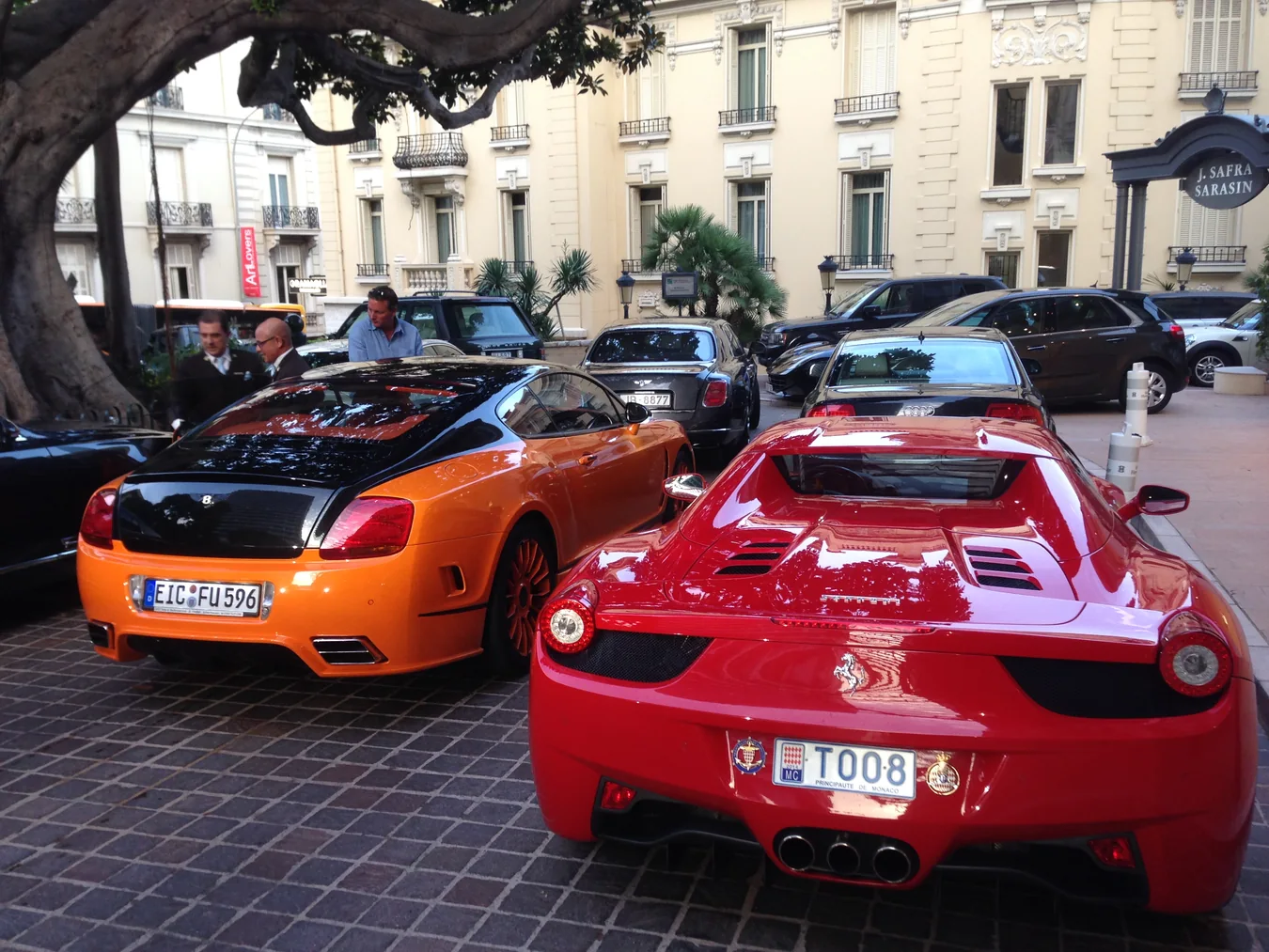
We walk from the harbor toward the Hermitage, past one Bentley after another, Ferraris, old cars and new supercars. This is new for me. Not seeing an expensive car, but seeing one waiting in line behind another expensive car. A few steps from all of that there's a different kind of luxury: the old grand hotel, the pale facades, the casino square. What pulls up out front changes a lot faster than the buildings it's pulling up to.
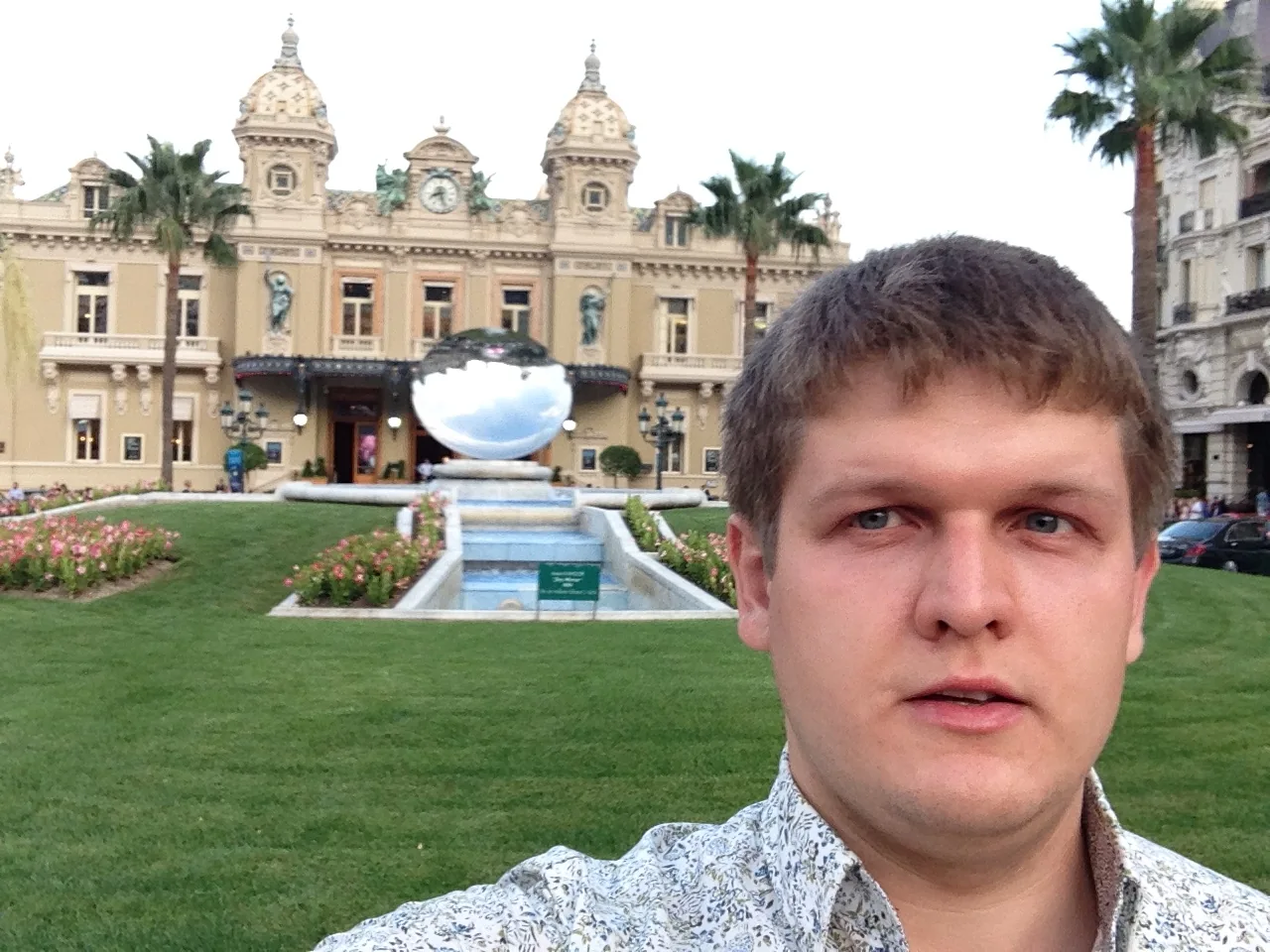
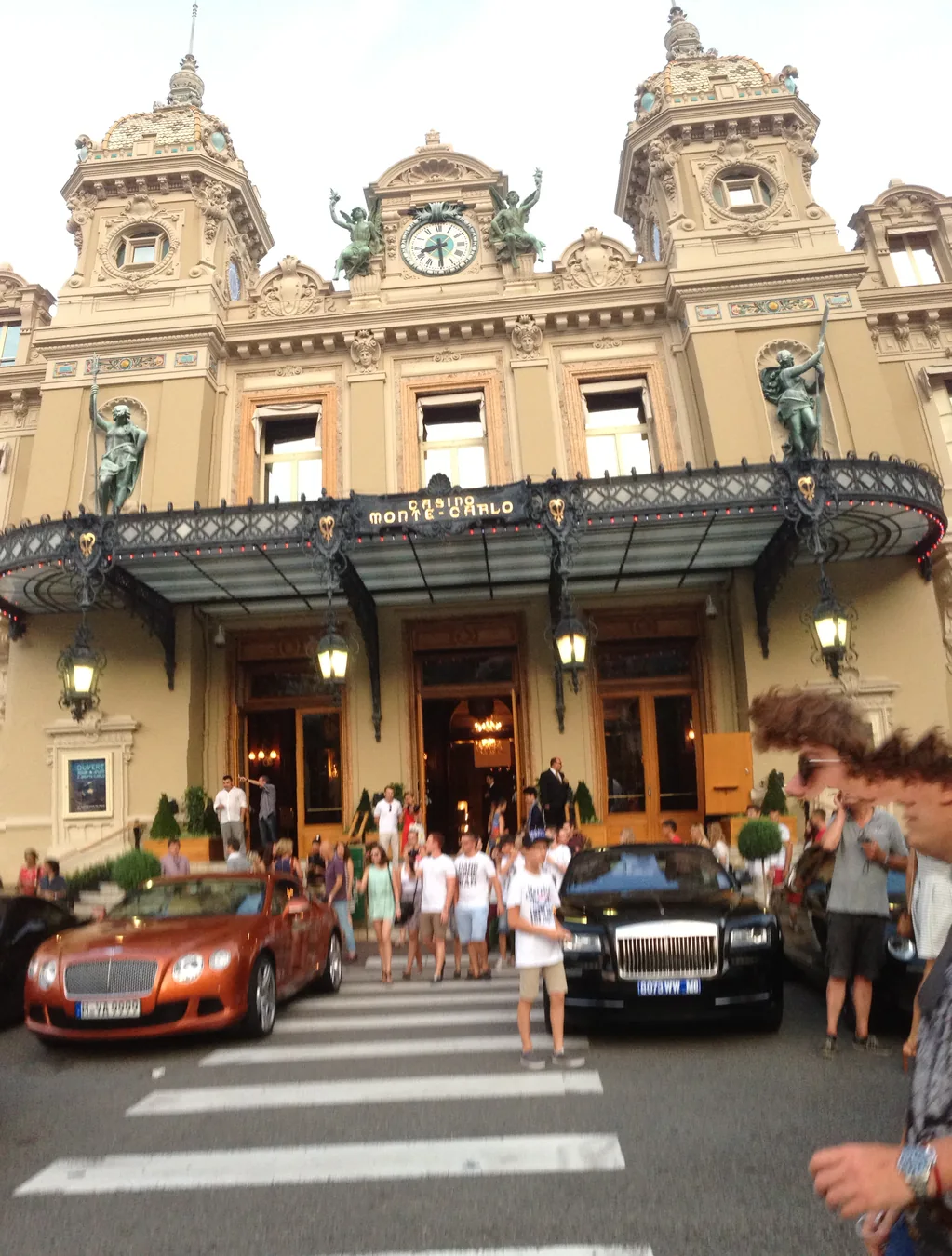
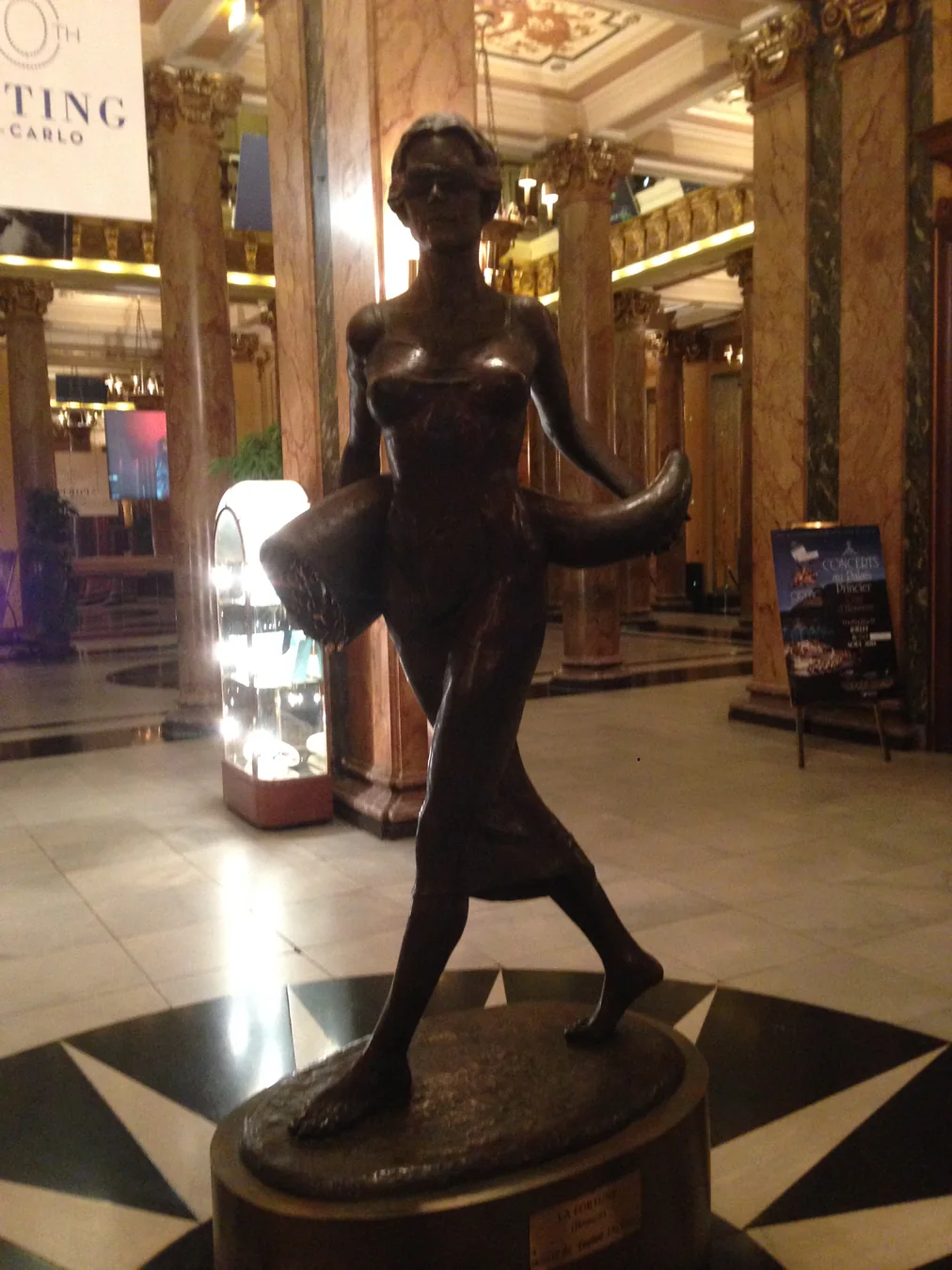
My plan for the casino is simple: go in and lose a hundred euros. In the usual spirit of things, we've come all this way, so we're not going straight back to the station. At the entrance there's a bronze Fortune by Daphné du Barry, blindfolded, holding a horn of plenty that people rub for luck. With my particular objective, I can probably do without the extra luck.
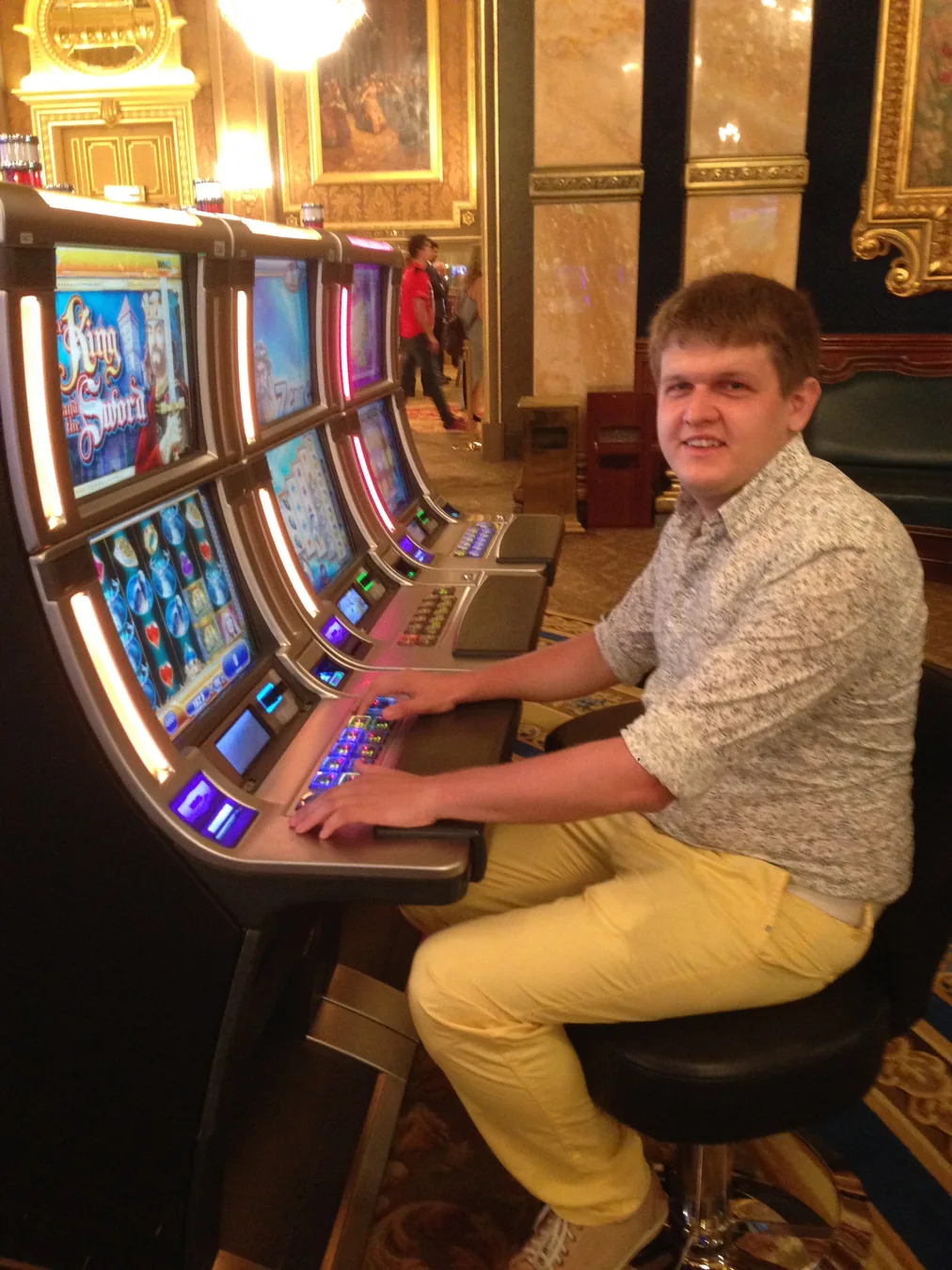
First we win a little. Then we lose. Then we lose everything we'd put aside for it and leave happy. Mission accomplished. There's a photo of me at a slot machine, but what I'm thinking about isn't how much I could have won. I wonder how many people came through the exact same doors with precisely the opposite plan. There's an opera house by Charles Garnier next door, in the same complex. Outside, you'd think everybody was here for the same thing. One person wants luck, another wants the opera, and I can already say I did what I came to do.
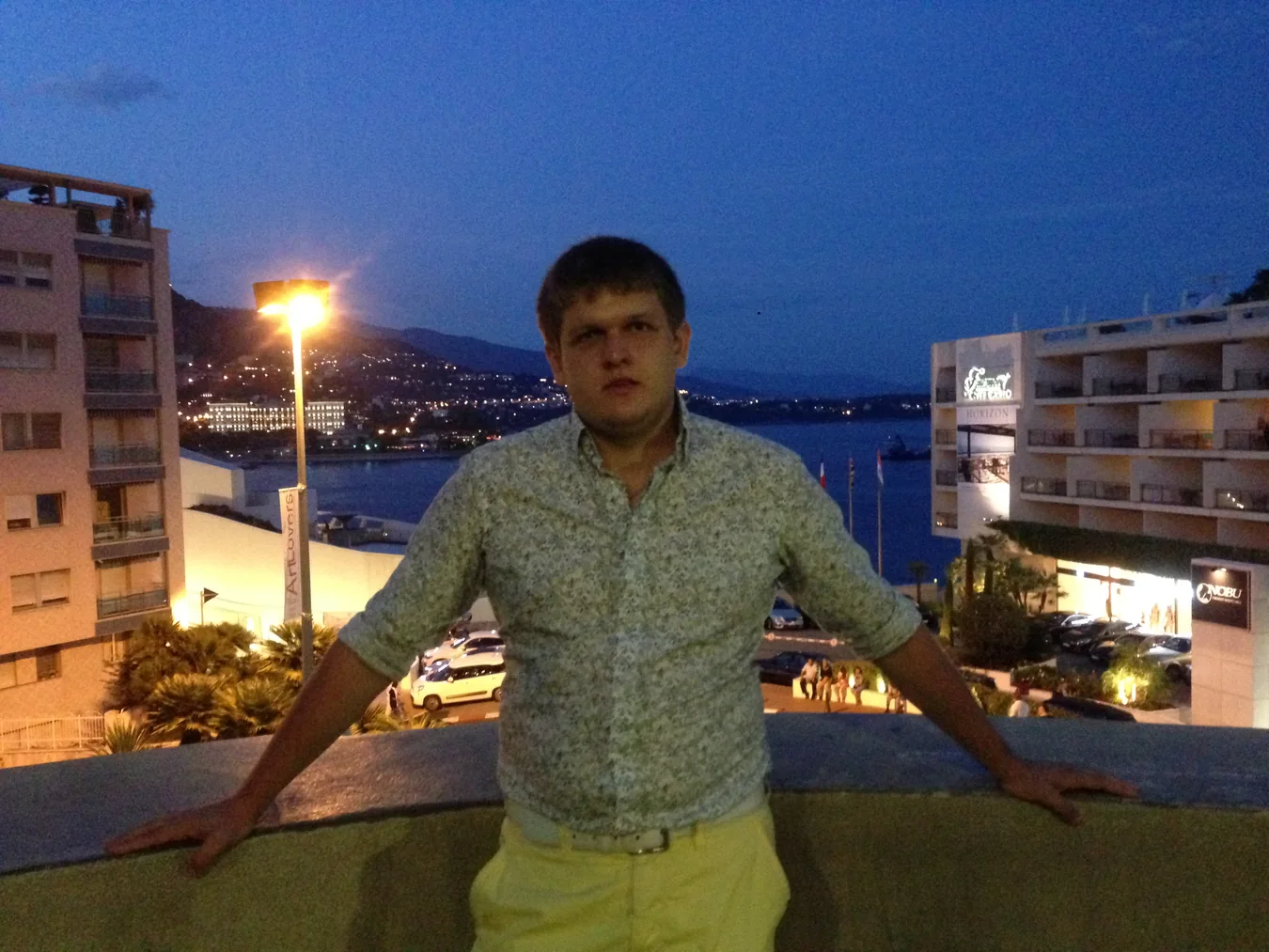
After the casino I walk a little farther, up to the parapet by the Fairmont. The lights are below, with water beyond them. Right nearby is that Formula One hairpin where the drivers have to slow to nearly fifty kilometers an hour. At the other end of the walk there's the neighborhood near the station and Sainte-Dévote, the first corner. I like seeing the city both ways. Today these are streets I walk along, looking at the lights. For a few days a year, half the world is watching those same streets as a racetrack. Somewhere in between we fit in a birthday dinner at a restaurant overlooking Monte Carlo. Then it's back to Nice.
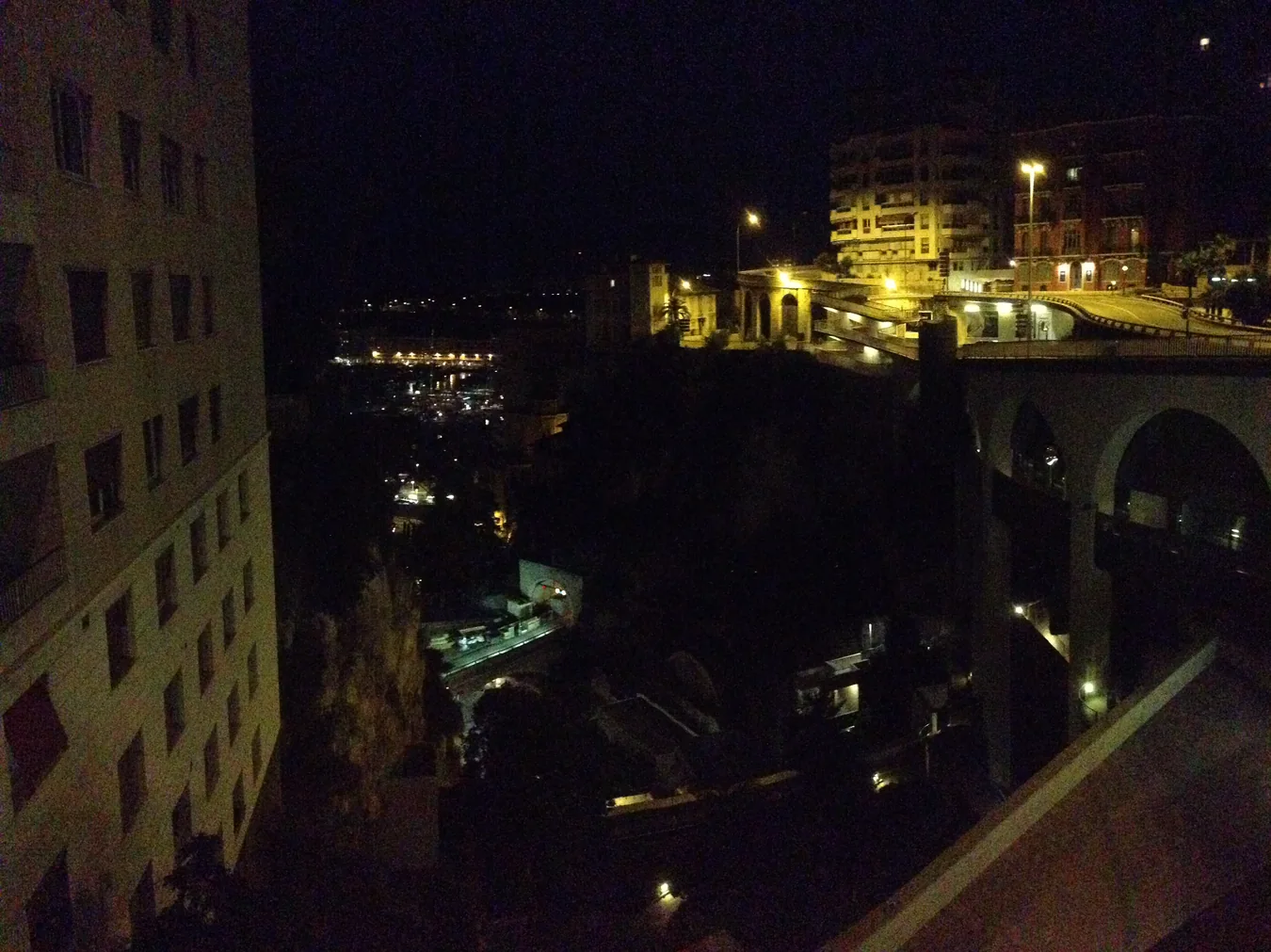
Macarons, the Sea and a Bicycle
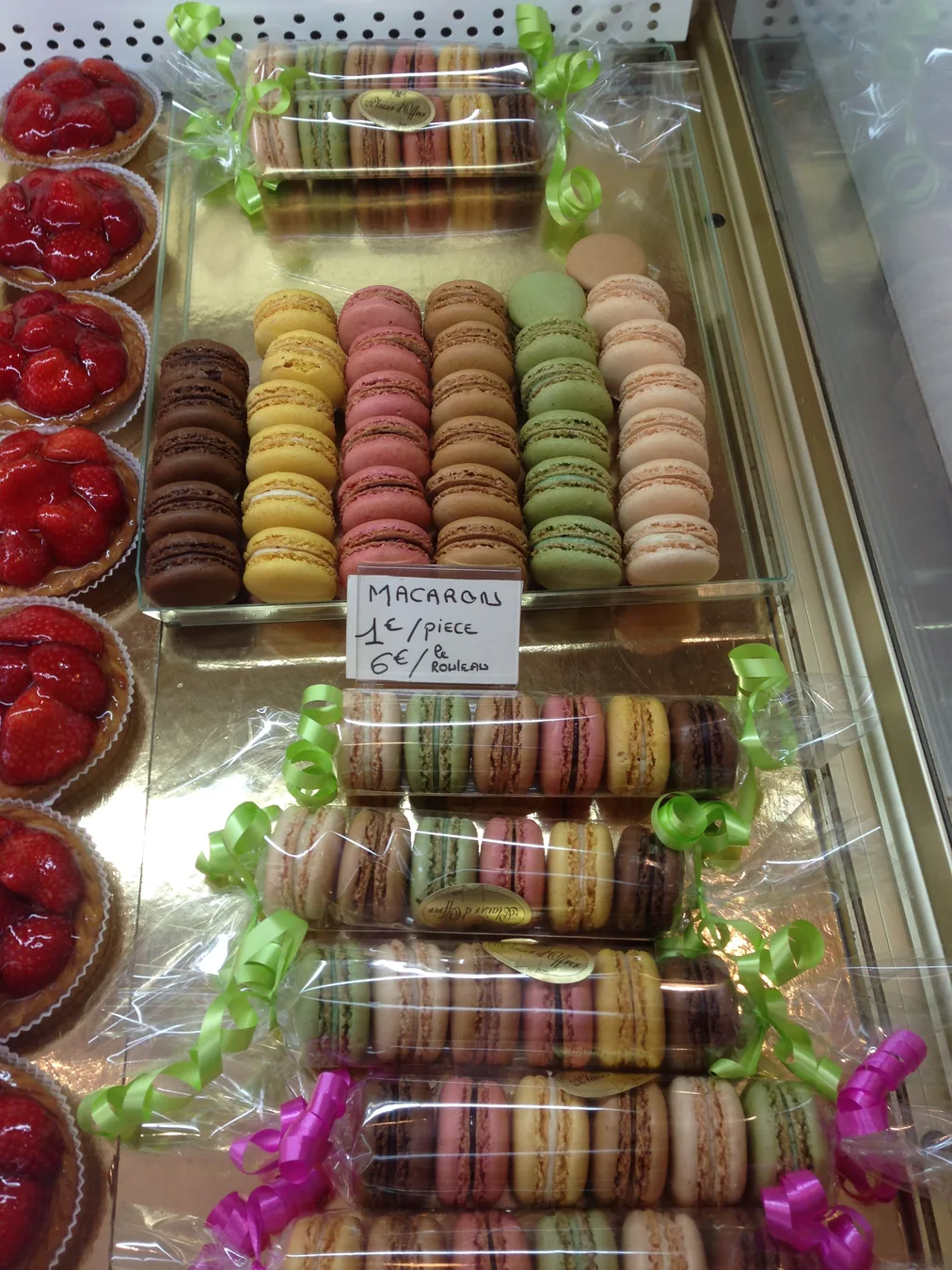
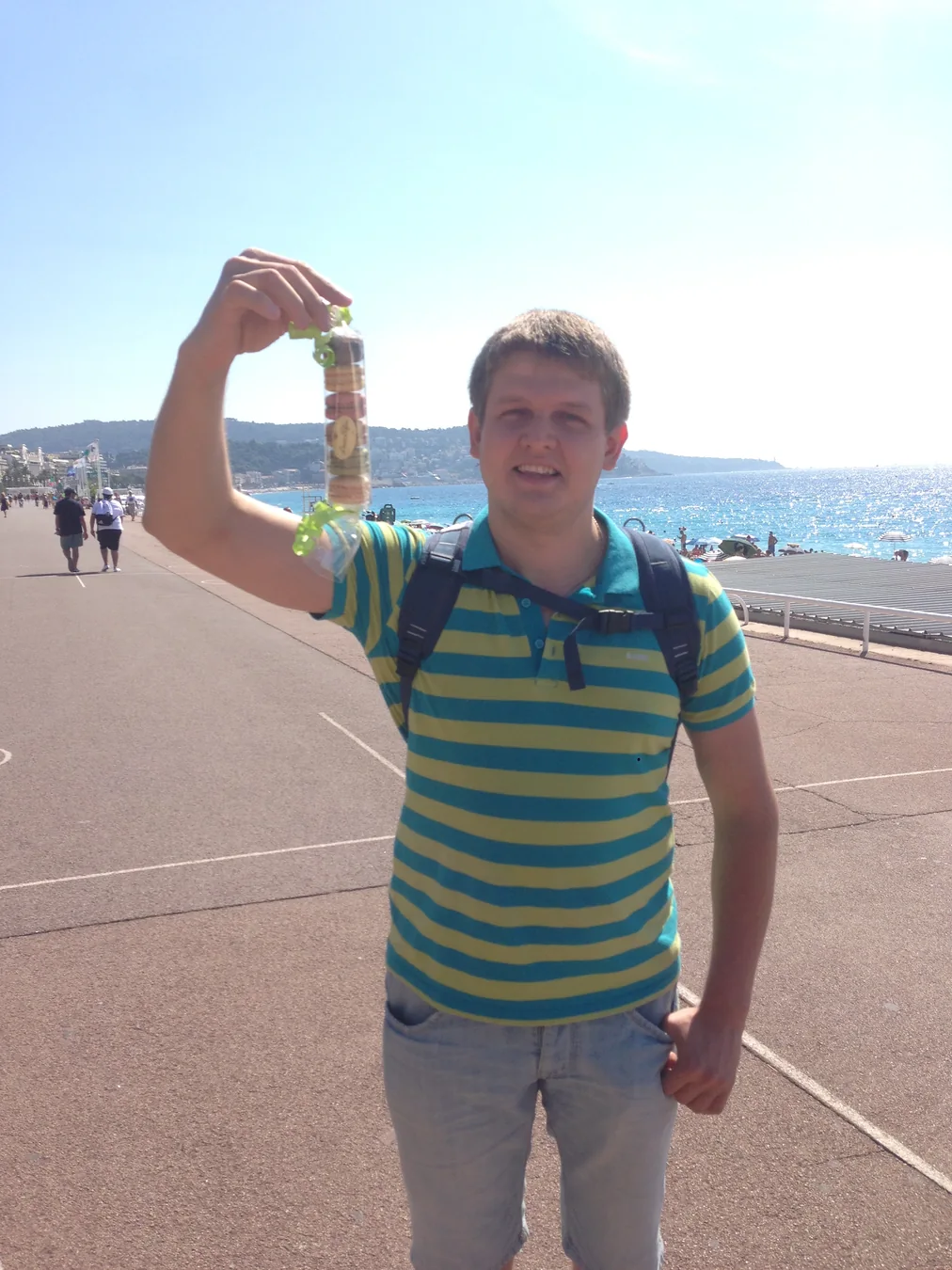
Next morning the sign in the display says “macaron.” As far as I'm concerned, makarony are something you boil for dinner. Here they're colorful little cookies, and you can get them in a tube, take it down to the promenade and pose with it like you've won something. A little compensation for yesterday's casino. I try one and it's actually delicious. Two almond shells with a filling in between. No pot, no fork, and I'm very happy to eat these makarony.
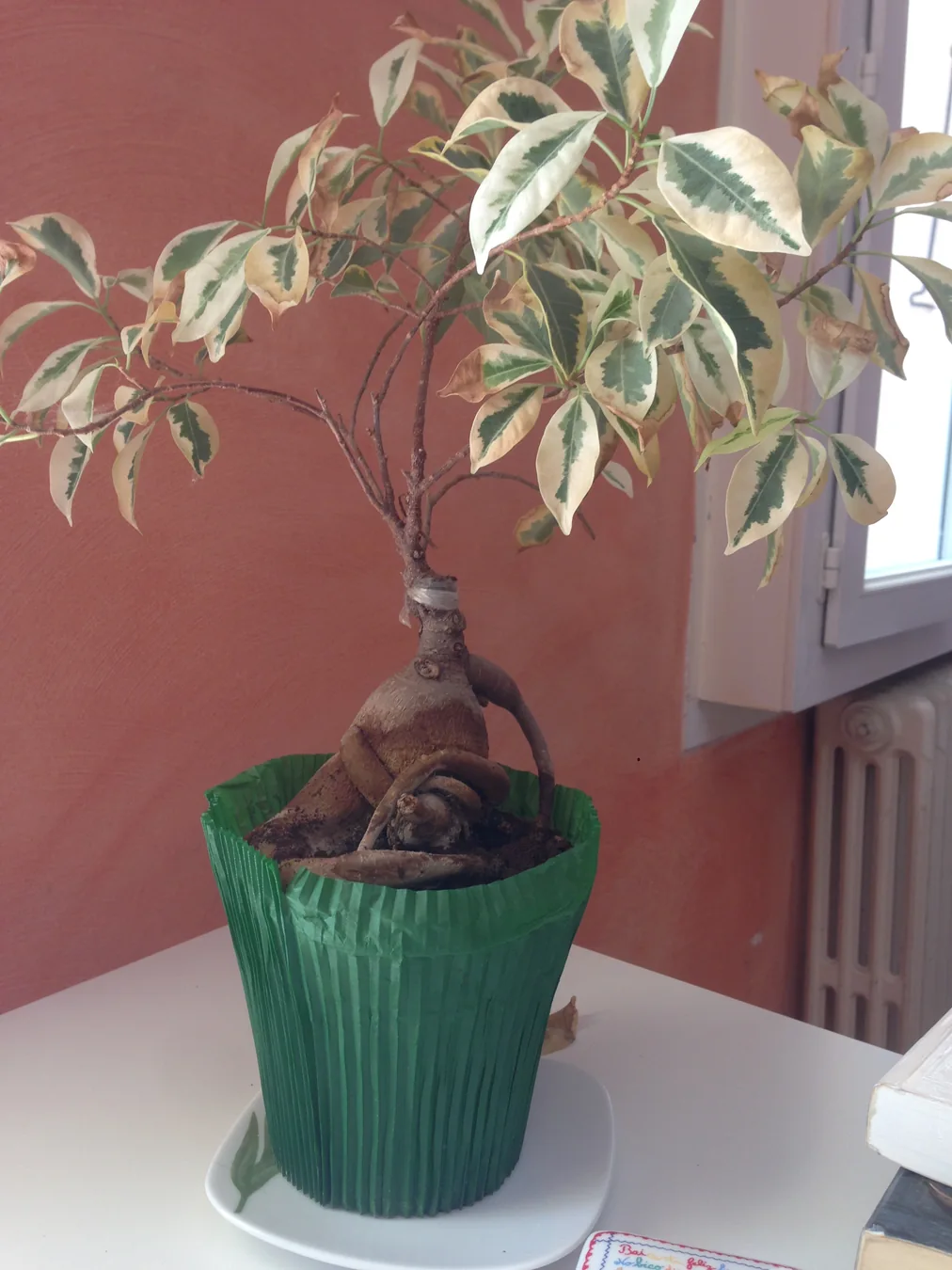
Somewhere in Nice I spot a little potted plant that looks like a mandrake halfway out of the soil. The roots are enormous for a tree that size. It's an ordinary bonsai-style ficus, but I wouldn't be surprised if it started screaming at the prospect of being repotted. So today, between two walks by the sea, I've found pasta I don't have to cook and a mandrake I thankfully don't have to repot.
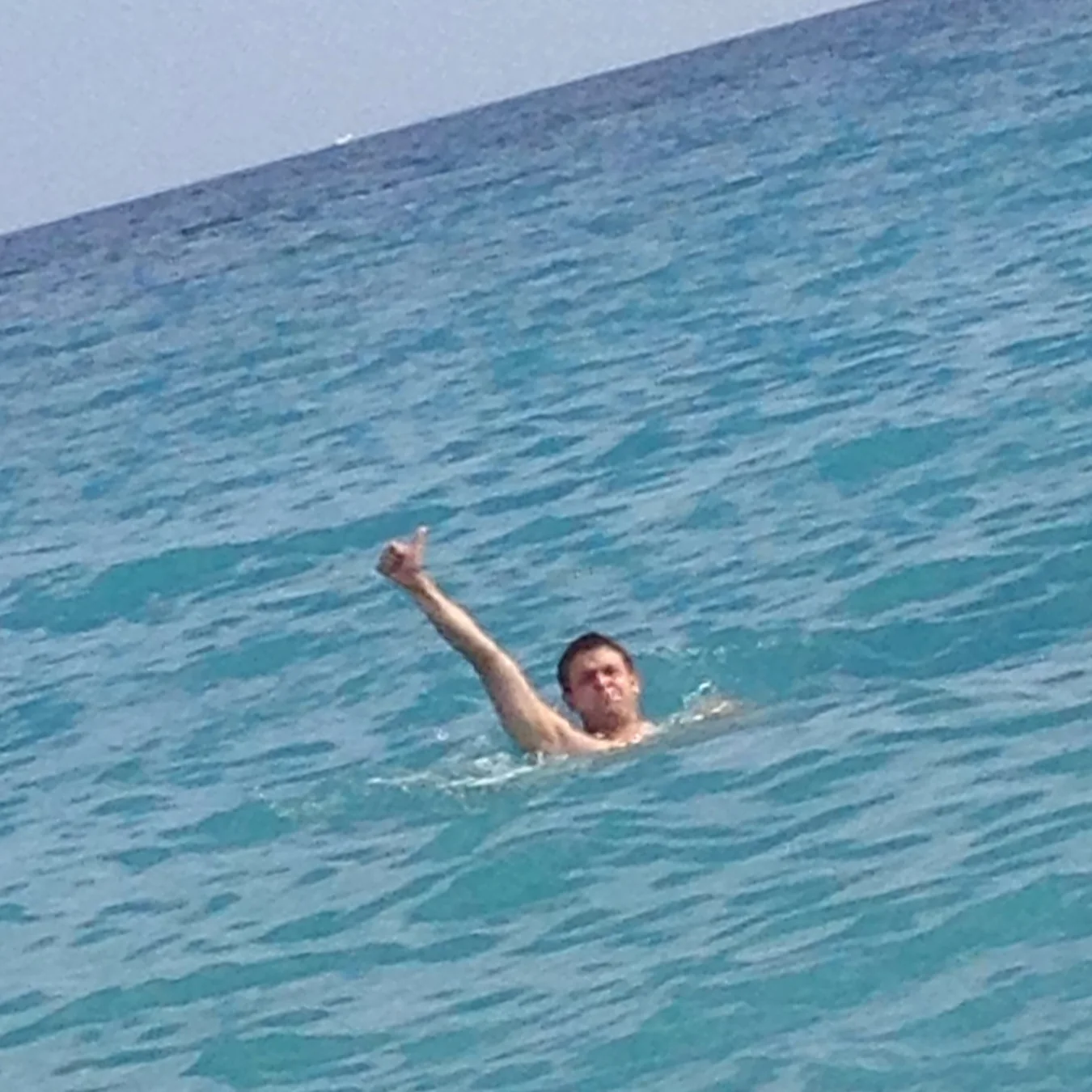
Then I stop just looking at the color and go for a swim. Plage du Voilier, pebbles, water so azure I want to say “azure” again, even though I've said it already. There's a photo with my hand sticking out of the water giving a thumbs-up. That's the whole review. I could keep describing the shades, or I could get in the sea once and leave it at that.
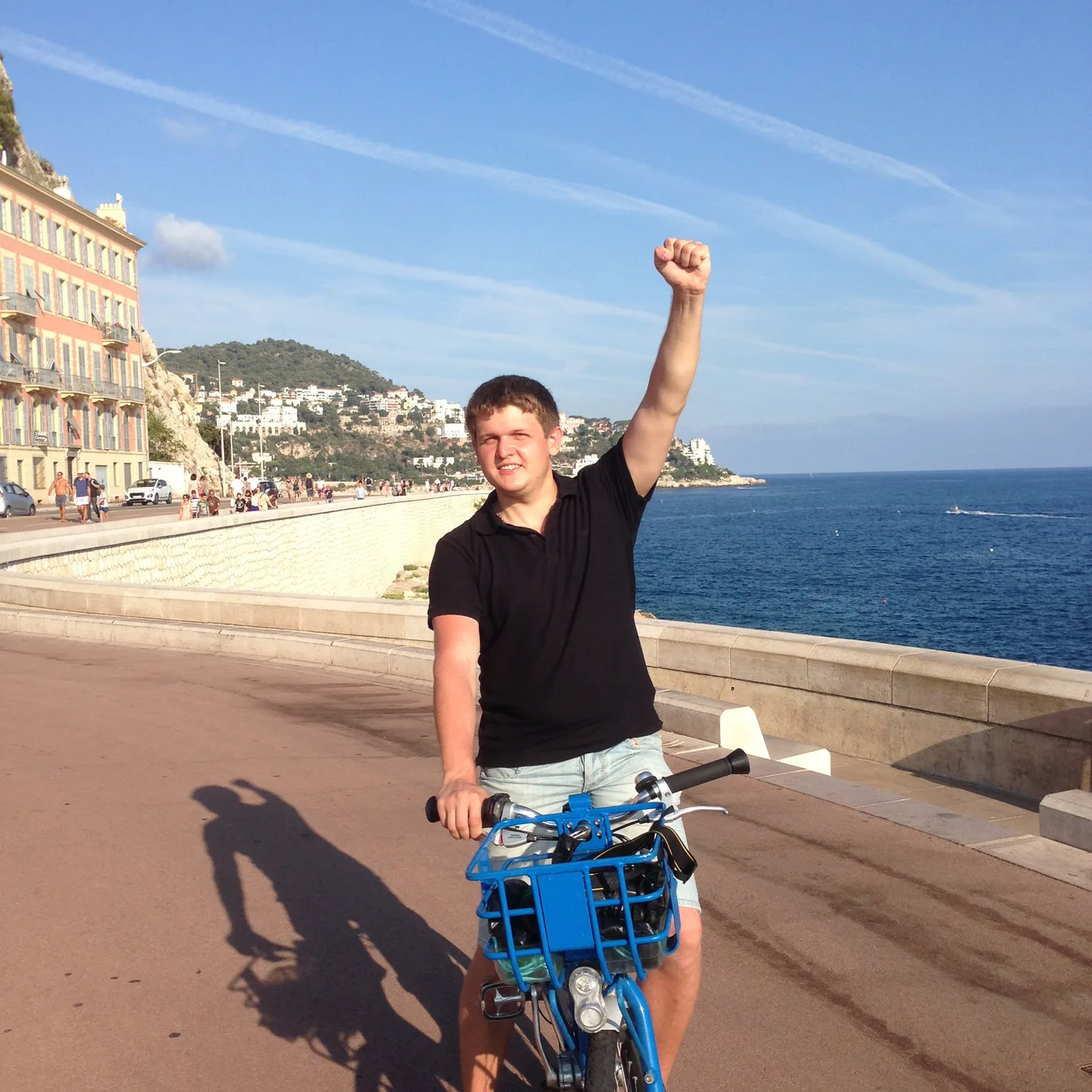
After the swim I want to see the coast a little differently, so I get a bike. I can go a lot farther than I would on foot without missing everything the way I would through a car window. I don't want to go fast. I like being able to stop whenever I want, look where the shoreline's turning, and go on. At the foot of Castle Hill I stop with the bike and raise a hand for the photo. After all those cars in Monte Carlo, turns out I've found a vehicle I'm pretty happy with too. It's blue, it has two wheels, and it doesn't get in the way of looking at the sea.
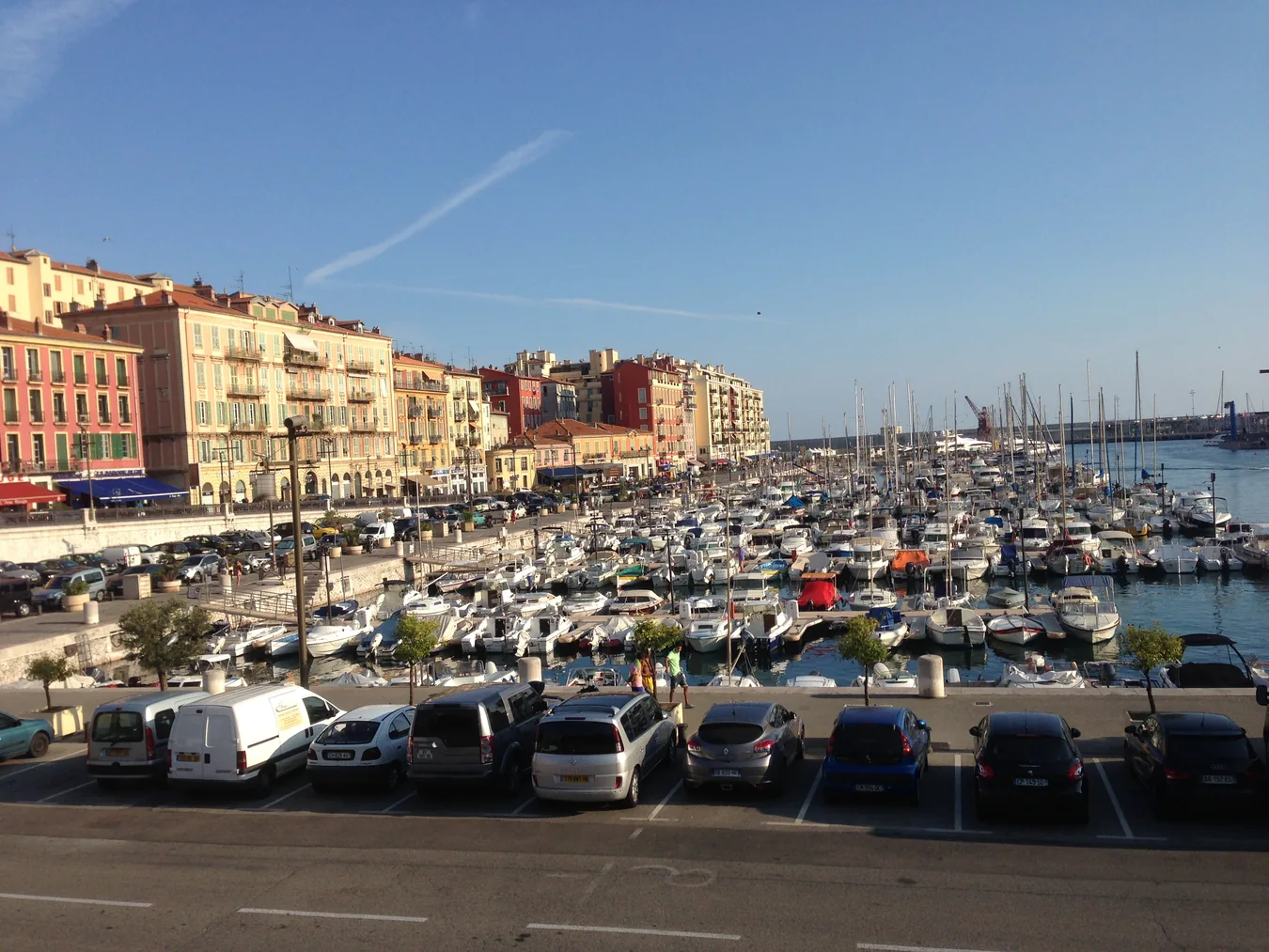
Then there's Port Lympia. Warm-colored buildings on one side, boats and masts and the hillside on the other.
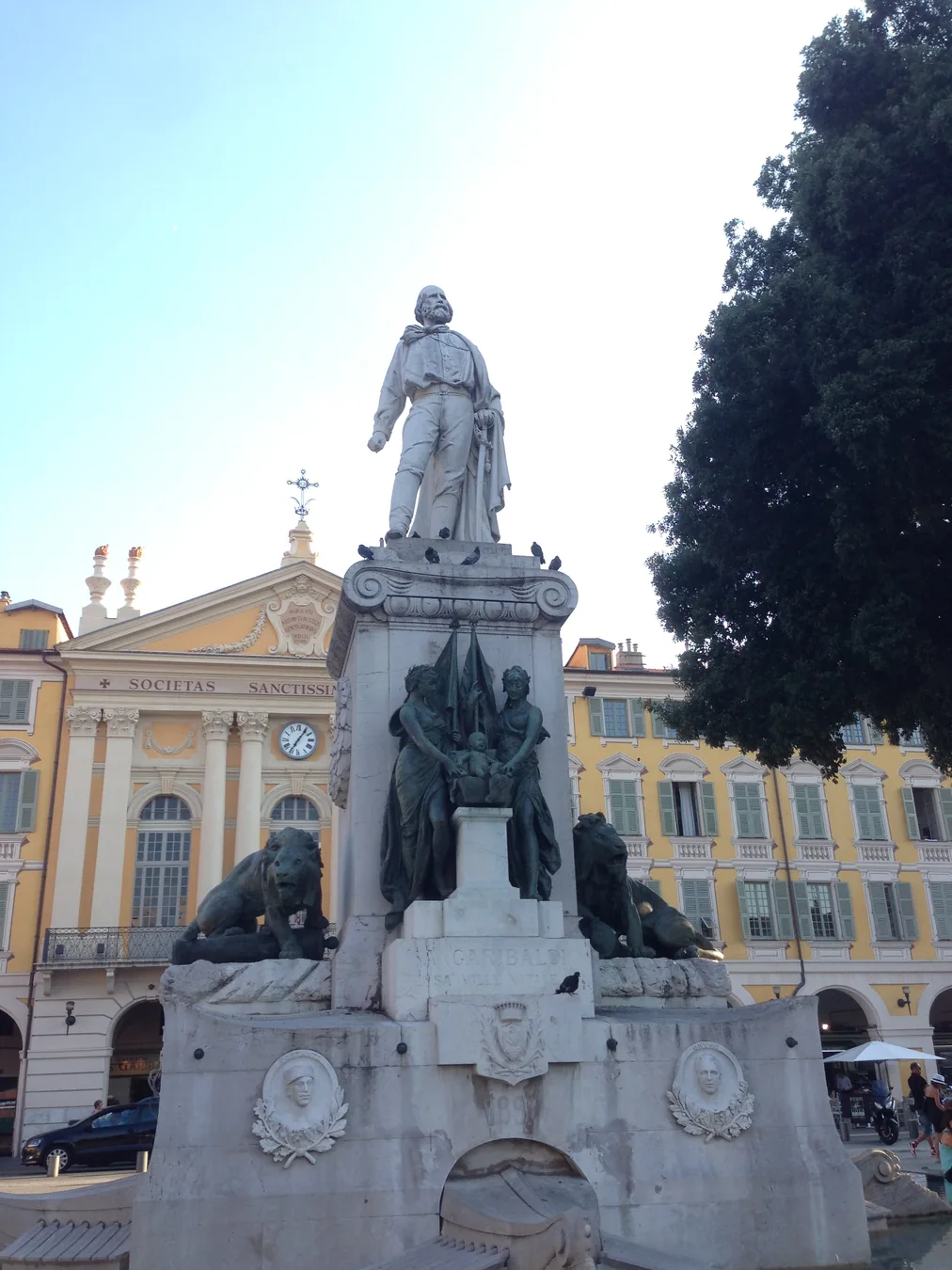
Then Place Garibaldi. I've just come from Italy into France, and here's a monument to one of the people who unified Italy. Garibaldi was born in Nice. In his lifetime it was French and then part of the Kingdom of Sardinia. It became French for good in eighteen sixty. It's handy when a map can show you a border with one line. It's a lot more interesting when you go for a walk and that line stops looking so simple.
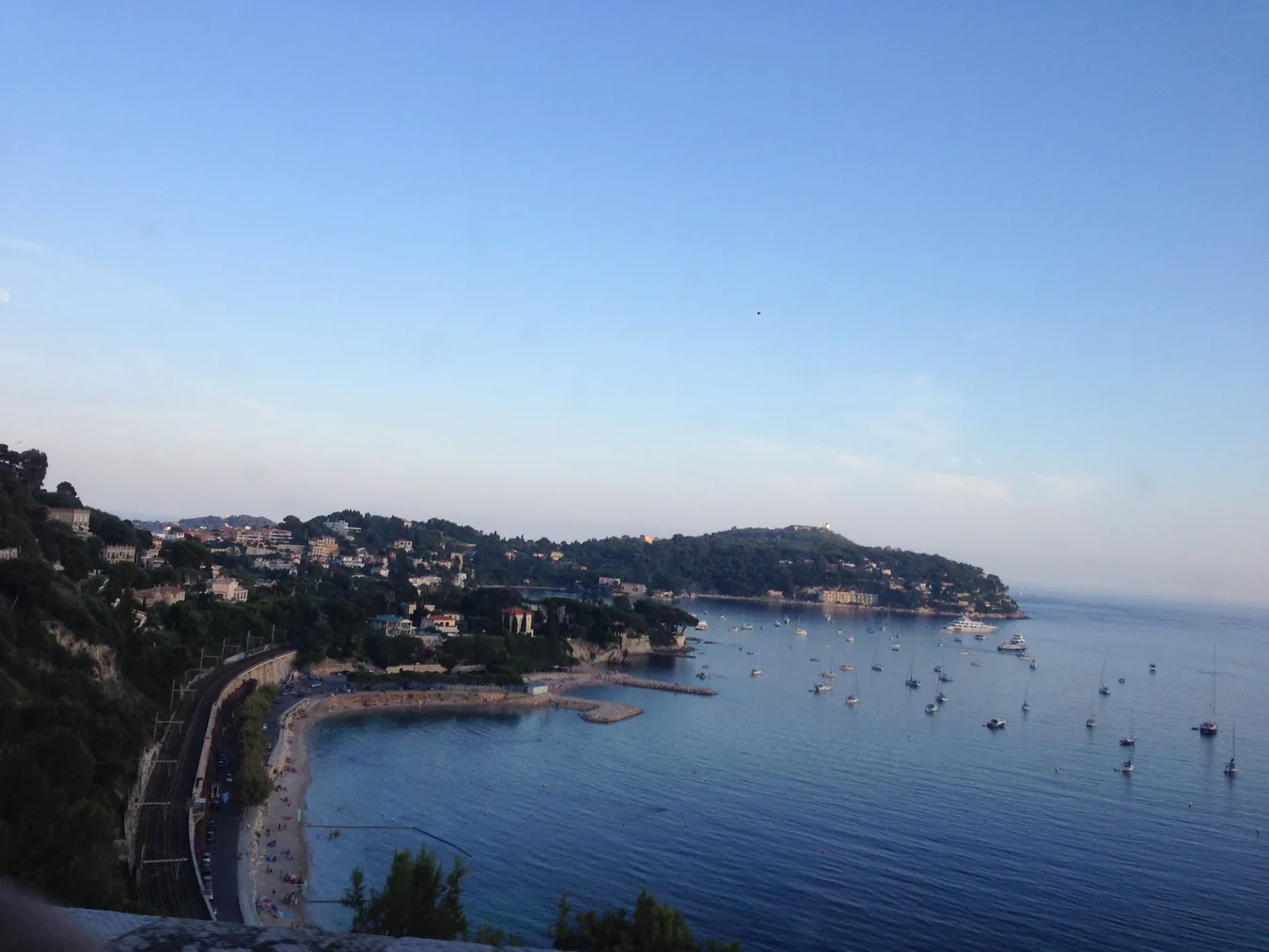
That evening, up higher, I get a view over the bay at Villefranche. It's a different bay from the one I've been swimming in. The boats are little dots on the water, with buildings stretching out behind the shore.
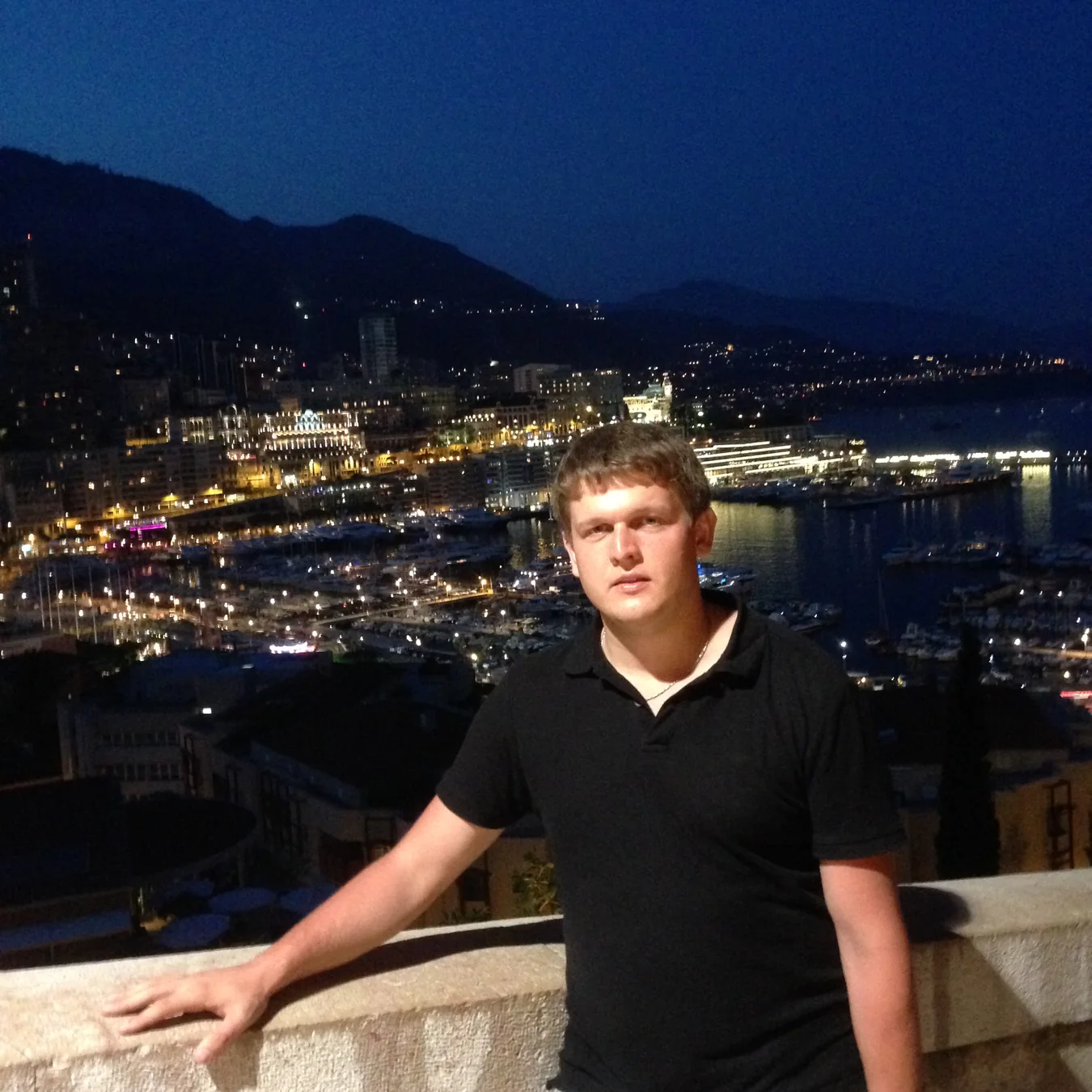
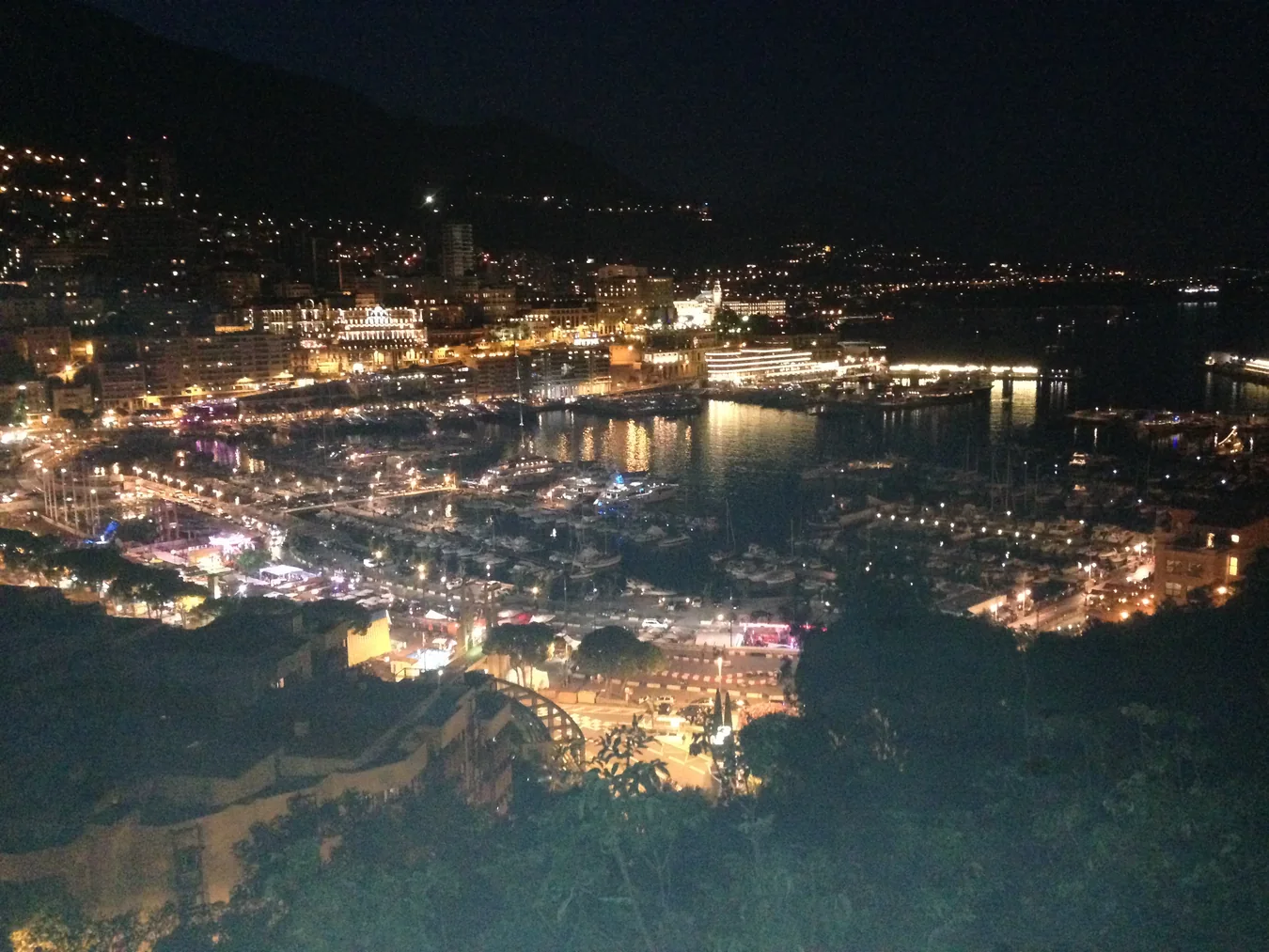
Then it's Monaco again. Yesterday I looked at the harbor from the waterfront. Today I'm higher up by the Prince's Palace. From here I can see how the harbor, the buildings and the road all fit together. That's one of the best things about trips like this. You can go to the same city twice and never see it the same way.
A Little Farther Along the Coast
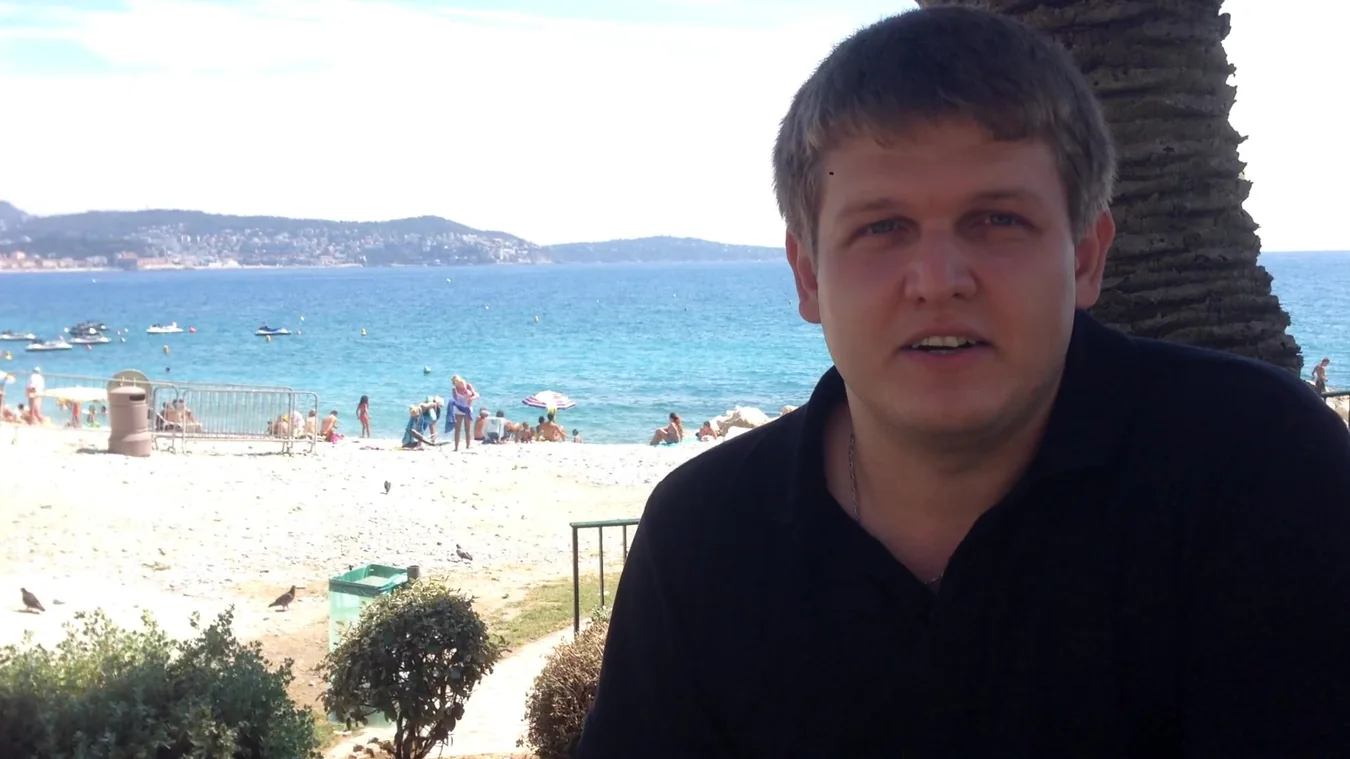
The next day in Nice I sit by the promenade and record a little video for a course. The course won't come to anything, but there's still a frame from it. I'm in a black T-shirt. There's a palm behind me, people on the beach, and that same water.
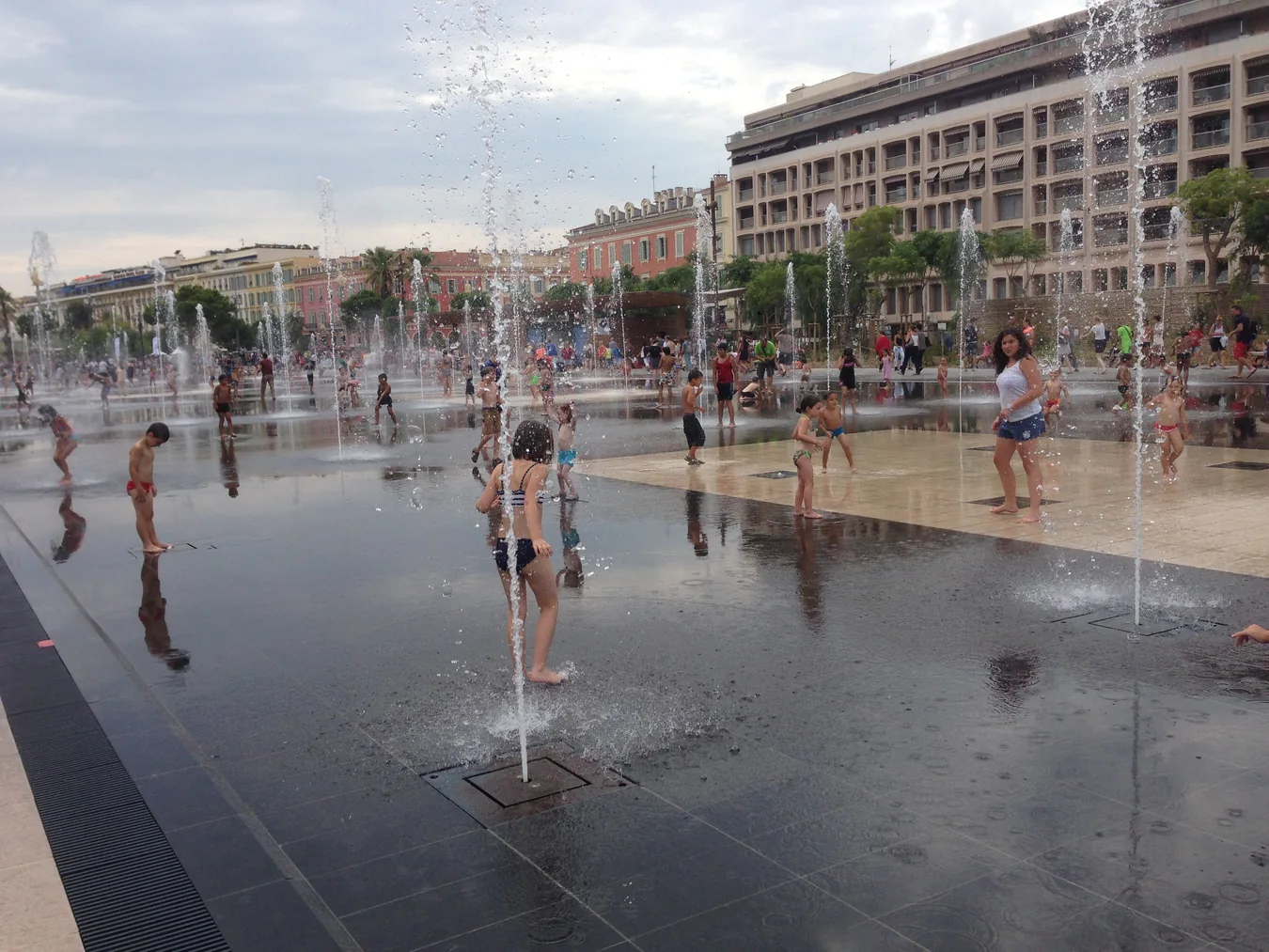
Then near Place Masséna I see a very different kind of water. It shoots up from under the paving, right in the middle of town. Kids run between the jets, trying to guess where the next one will come from. It's the water mirror on the Promenade du Paillon, which opened last year. I like that in Nice I can walk to the water in the morning, swim in it during the day, and then see it come up out of the ground right under my feet.
In Fitzgerald's Tender Is the Night, the coast opens with a hotel and a beach where everybody seems to know how to spend a summer better than anyone else. In Hemingway's The Garden of Eden, newlyweds on the Mediterranean also have everything they need to be in no hurry, which doesn't make their summer any simpler. We haven't been looking for their hotels or their characters. It's just that these names used to sound like places in somebody else's story. Now I'm walking along this promenade, seeing what my own summer looks like.
The best part is that I didn't have to plan this summer in that much detail. It started with a map in Milan and a handful of names along a coast. Now in between those names there's the shade from a blue-and-white awning, a first look at that water, a hundred euros I successfully didn't bring back, and a blue bicycle. I look at the map again. Next we'll go to Cannes. We'll see what happens when we get there.