
Rome: I Came for Easter and Ended Up at a Birthday Party
April 20–21, 2014
Why Not Rome?
I was in Lviv when I got the urge to go somewhere again. I didn't want to drop everything and run. I'd just been itching for something new for a while: a different city, unfamiliar streets, an adventure that wasn't on the calendar yet. We were talking about where to go. Why not Rome? It was Easter. We could see the Pope and walk around the city in spring. And the whole idea struck me as terribly romantic. There wasn't much more to discuss.
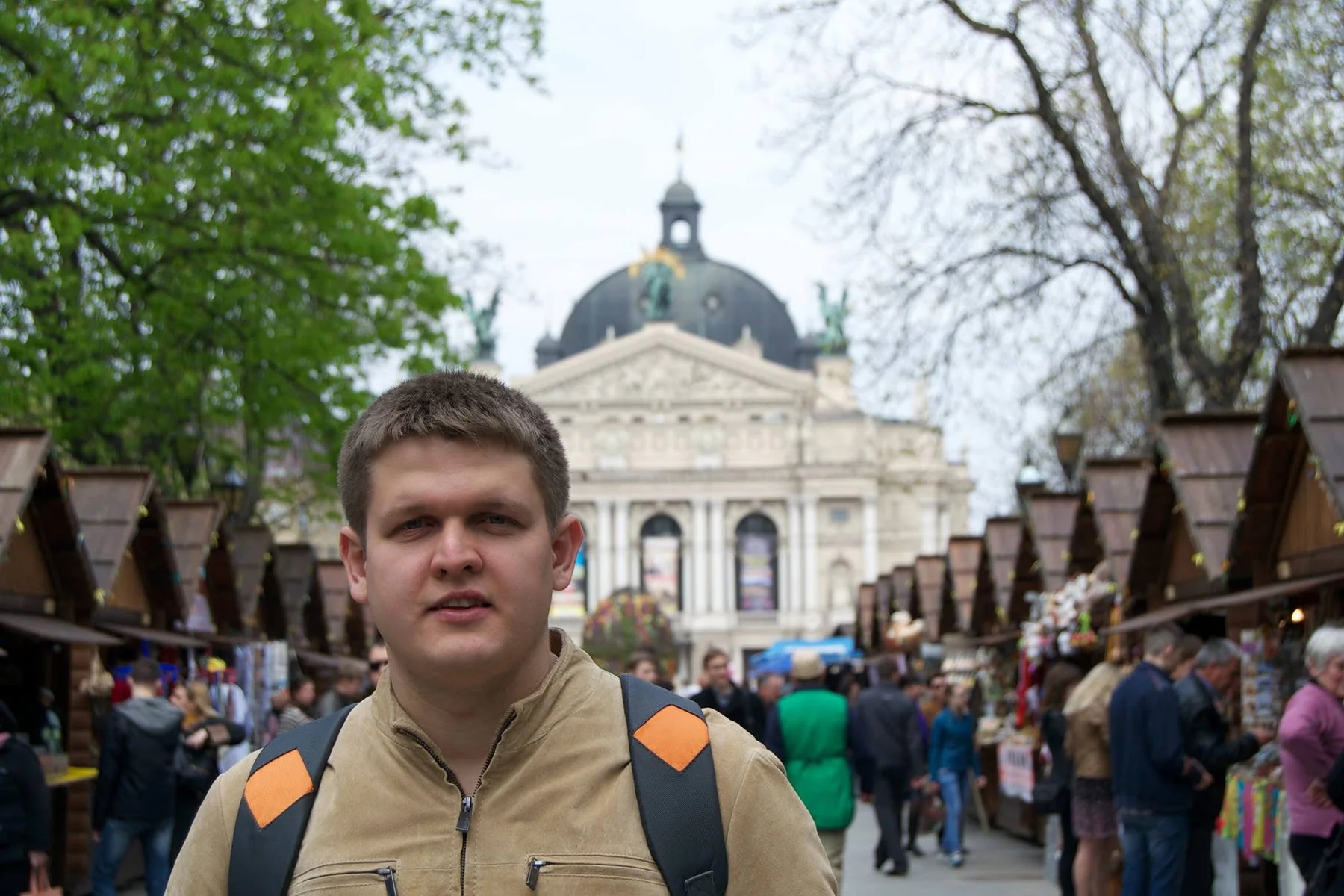
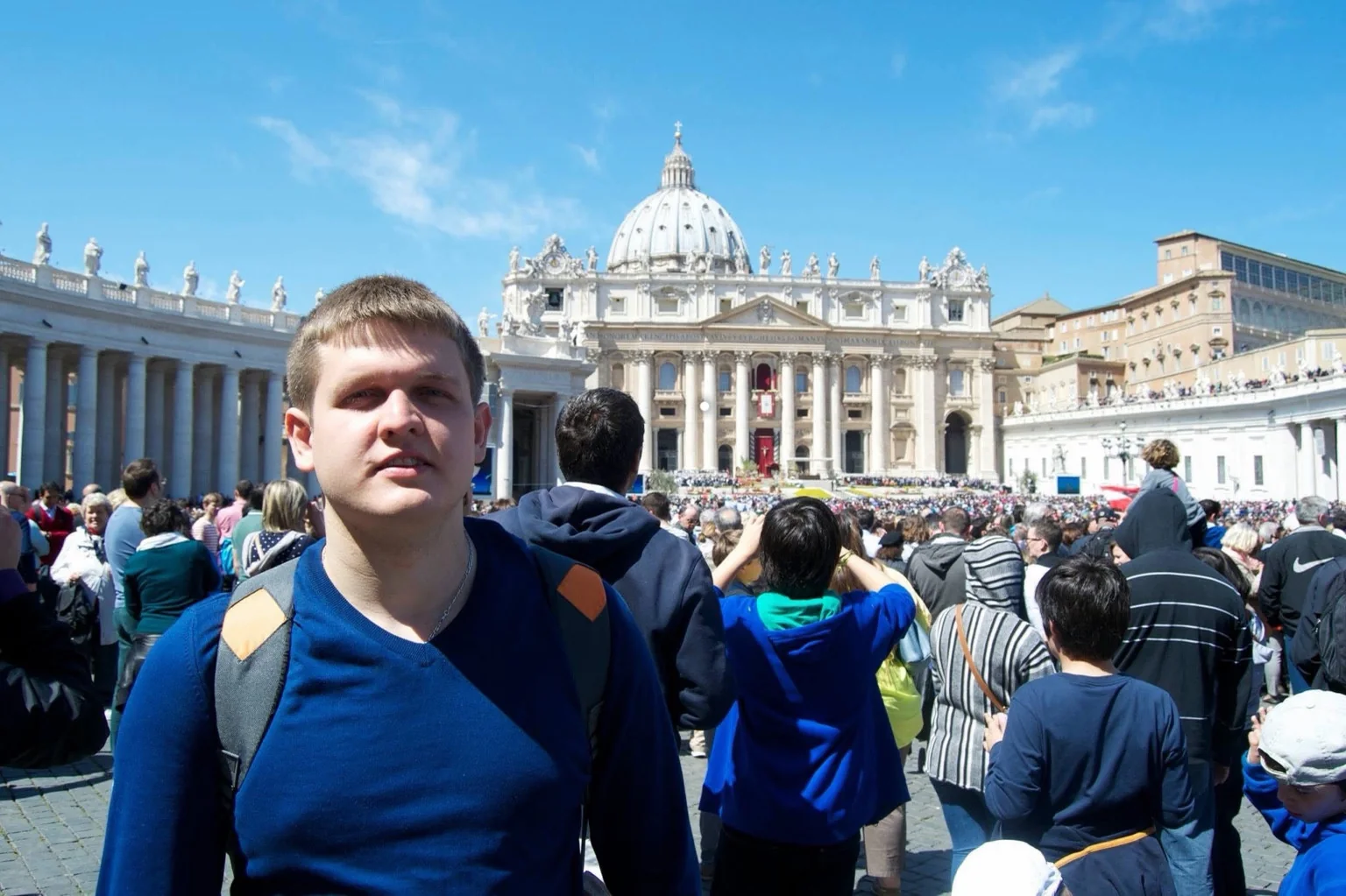
There was one catch in our plan: we still had to get from Lviv to Rome. We found a ride to Kraków on BlaBlaCar, but no one was going to Katowice, where we wanted to catch a flight. So we pieced the trip together in three legs: Lviv to Kraków, Kraków to Katowice, then a plane to Rome. Just making the decision made me happy. One day I felt like going to Rome. About a day later I was standing in a packed St. Peter's Square with the Vatican right in front of me.
Easter in St. Peter's Square
The square was already packed. Everyone was trying to find a seat or get closer to the aisle where the Pope would pass. I put on a bit of a poker face. We found a spot with a view of both the basilica's central balcony and the aisle between the rows. In a square that big, it turns out those are two different problems.
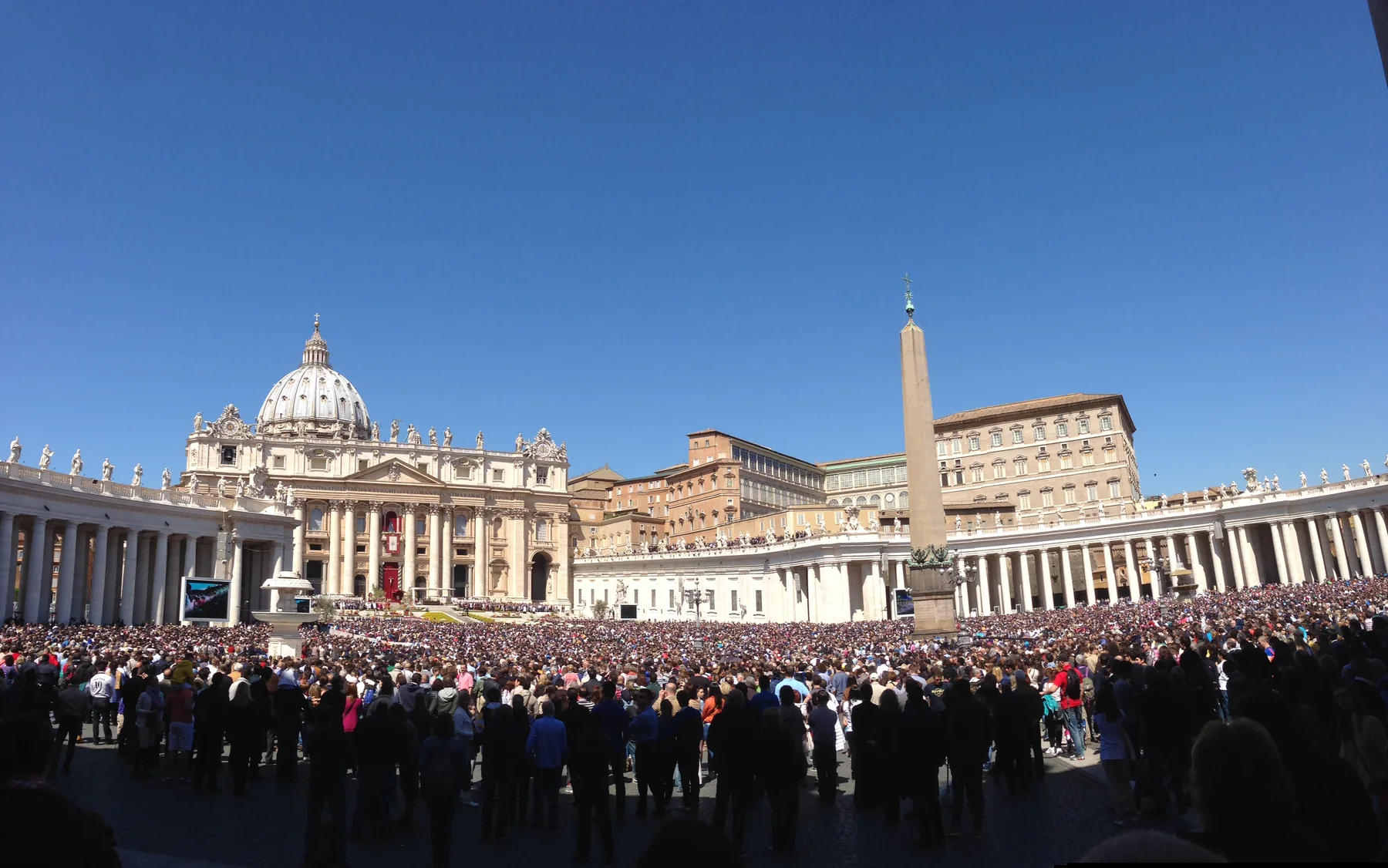
Watching people fill the square, you can see why it was built this way. The colonnades don't stand like two straight walls. They curve toward each other as if they were wrapping their arms around the crowd. Gian Lorenzo Bernini designed the square for Pope Alexander VII, and work lasted from 1656 to 1667. The shape had a practical purpose, too: you could gather a lot of people and still give them a view of the ceremony. The obelisk in the middle is older than anything around it. It once stood in a Roman circus associated with Caligula and Nero. The first basilica went up under Constantine in the fourth century, on a nearby site that Christian tradition honors as the apostle Peter's burial place. And here I am in the crowd, with that same obelisk still sticking up in the middle of the square. One walk and you find yourself counting in centuries.
You could tell the Pope was coming before you could actually see him. First a forest of arms holding phones goes up in front of you. A white, open-top popemobile comes down the aisle, and Francis greets the crowd. The open top is what makes the whole thing possible: the Pope can come right up to people instead of being a figure on a balcony way off in the distance. John Paul II was shot in this very square in 1981 as he made his way around the crowd. Once you see how many people surround the vehicle, that story no longer feels like a distant fact from a textbook.
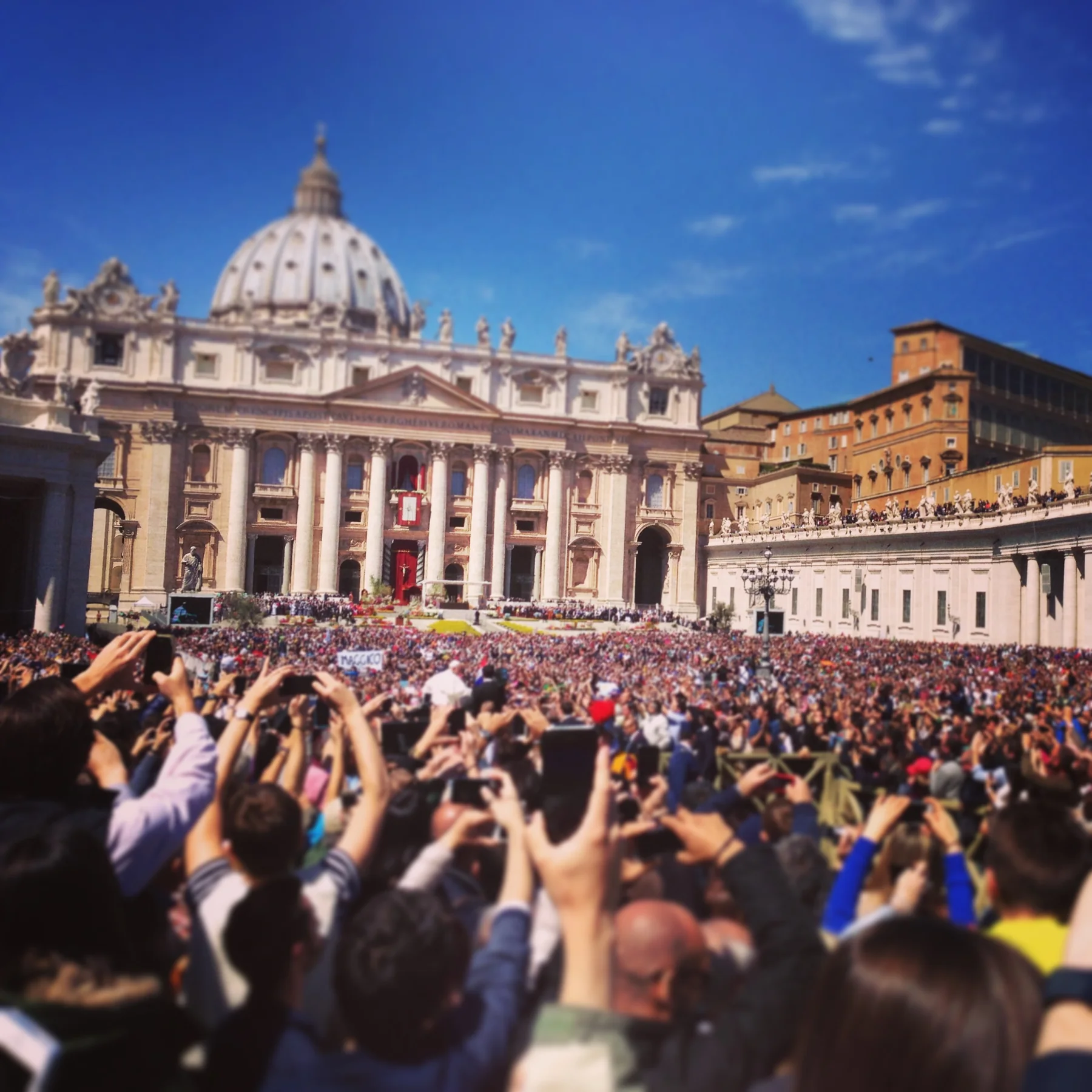
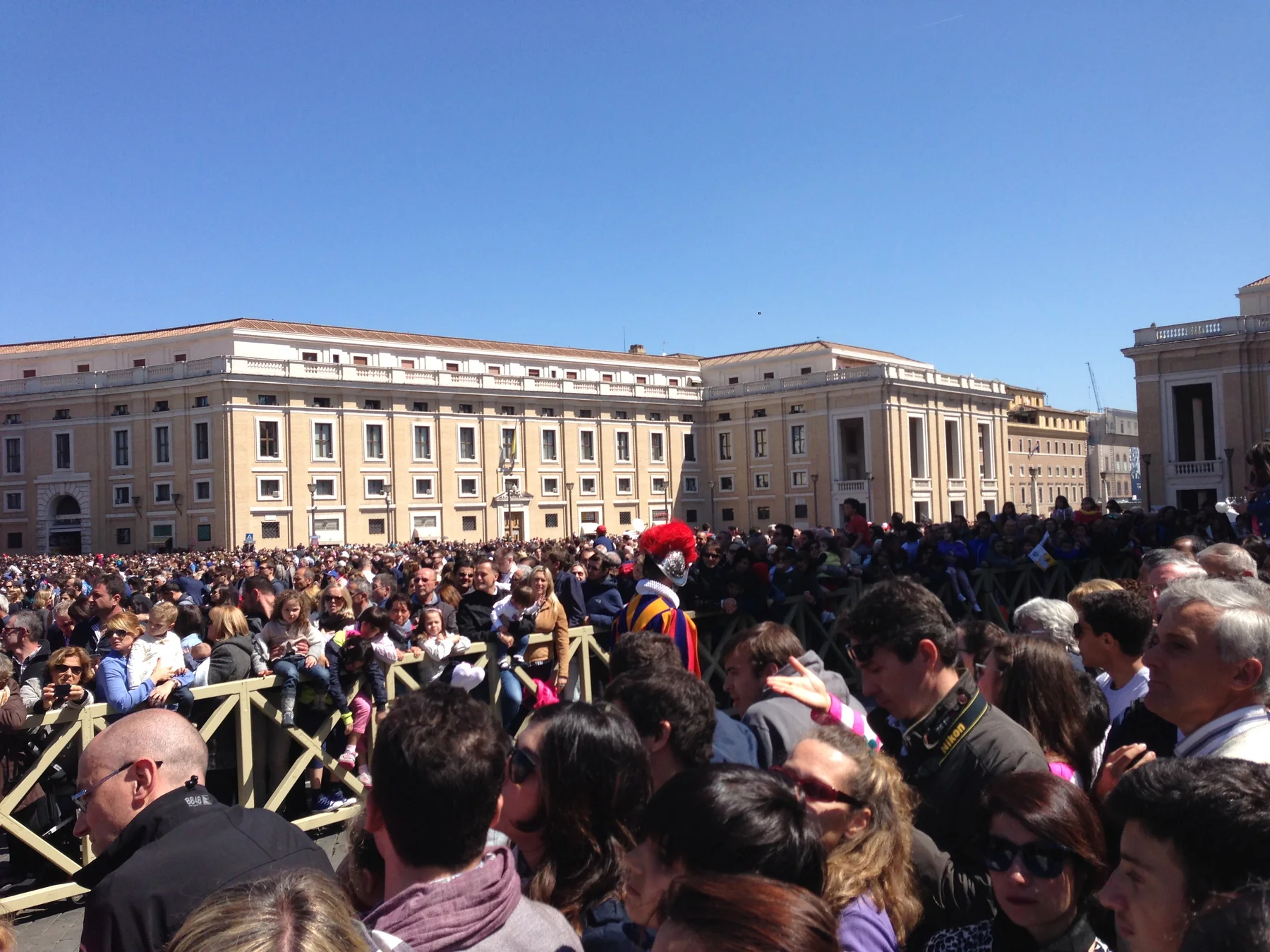
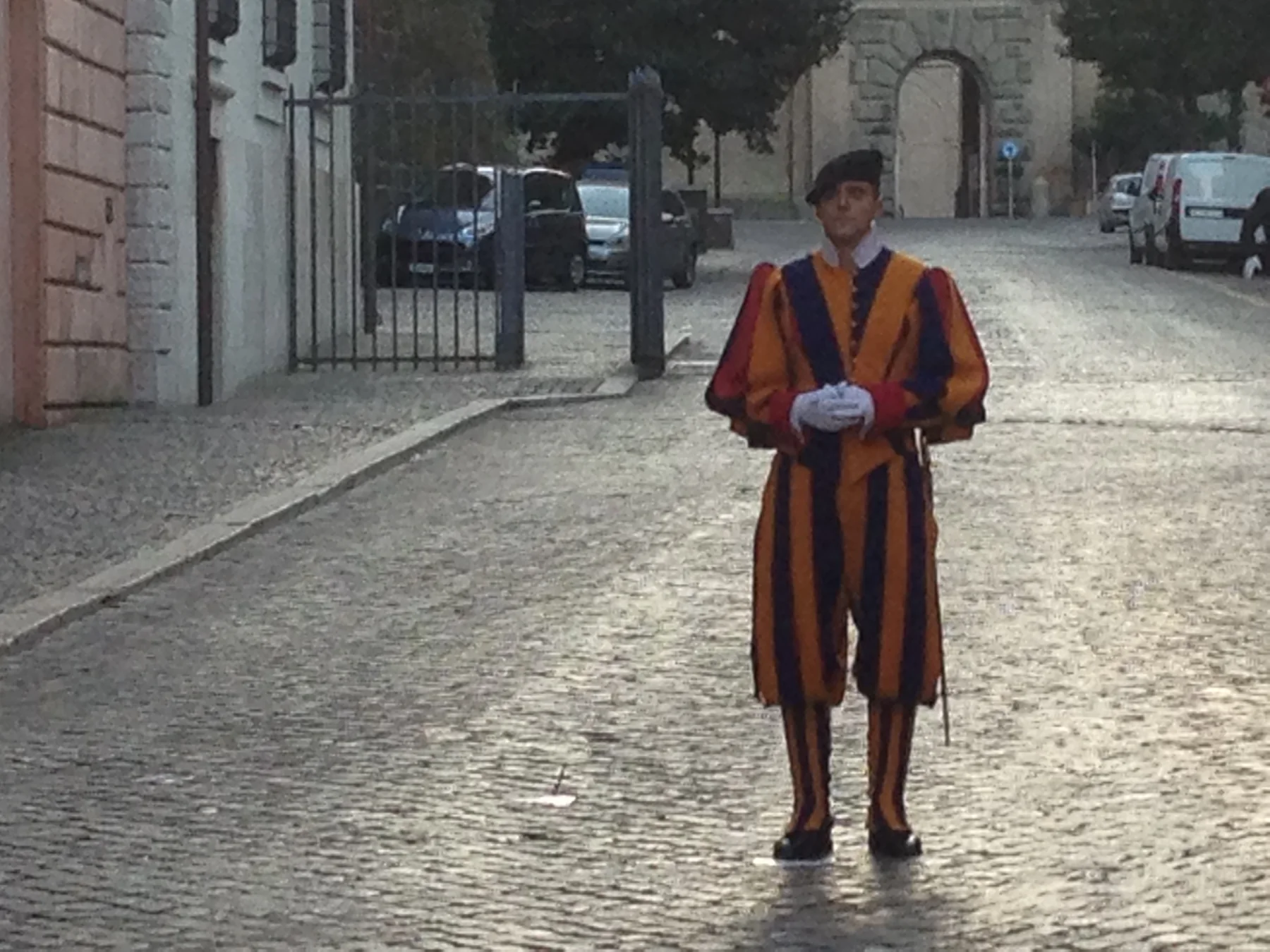
The guards who caught my eye were the guys in striped uniforms. Red plumes on their helmets, blue, yellow, and red fabric. At first glance you'd think it was all for show, but the job started out for entirely practical reasons. In the early sixteenth century Swiss infantry had a good reputation, and Pope Julius II asked them to protect him. The first 150 guards arrived in 1506. In 1527, during the Sack of Rome, some of them died covering Clement VII's retreat to Castel Sant'Angelo. They still protect the Pope, control access to the Vatican, and take part in ceremonies. The halberds and the uniforms have stuck around. The job itself is very much a modern one.
At noon Francis came out onto the central balcony to give his Easter address and the Urbi et Orbi blessing, “to the city and to the world.” A year earlier, this was where people had first seen him as Pope. Jorge Mario Bergoglio, an Argentine and a Jesuit, was the first Pope from the Americas. He took his name from Francis of Assisi. In his Easter address he mentioned Ukraine, too, calling for peace and dialogue. It's hard to make out every word in a crowd like that. But it mattered to me that Ukraine was being talked about on Easter, from that balcony.
Vatican City is tiny. The Lateran agreements of 1929 established its present status as a state, but the Holy See has a much longer history. The square isn't full just because it's easy to get here if you live in Rome. People make the trip from other countries. And when the Pope speaks, he can be heard well beyond those colonnades. He can't tell another country what to do, but he can say something people will listen to. John Paul II, for example, helped bring Argentina and Chile to the negotiating table over the Beagle Channel dispute. The two countries made the treaty themselves. What impresses me is that the tiny Vatican could act as a mediator at all.
The whole thing left me feeling warm and light: the beauty of the ceremony, the mood of the crowd, the way this could be deeply personal to someone who believes in the Resurrection and still be something the whole world watches. For me, there's another side to the Bible and other sacred texts: how to live, how to treat people, what helps us trust one another and do things together. The kind of thing we might look for in a self-help book now was passed down here from generation to generation. Those rules shaped customs and morals, and sometimes laws. Standing in the square, I could see how much power a story can have when it matters to a lot of people. You can find that power in religion, politics, or business. But surrounded by people on Easter, what struck me most was the scale of it and how long it had lasted. This tradition was here long before me and it probably won't disappear after me.
From the Vatican to the Trevi Fountain
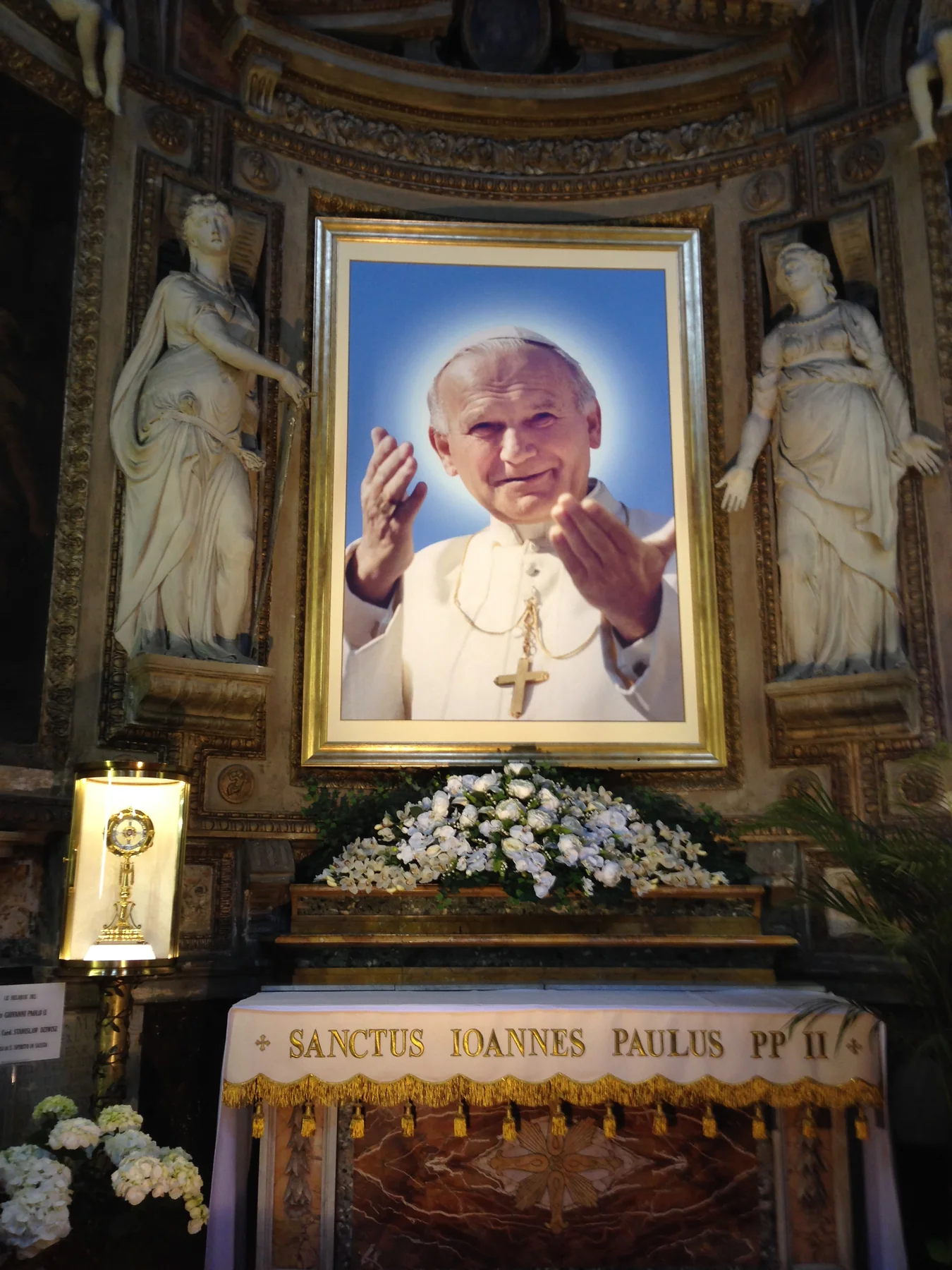
From the square we went into the Church of Santo Spirito in Sassia. There was a portrait of John Paul II by the altar, flowers around it, and his name in gold lettering on white fabric. This is a shrine to Divine Mercy. “Shrine” sounds a little mysterious, but it's a church people make a point of coming to pray in, and a place pilgrims travel to. John Paul II did a lot to spread the devotion, so his picture belongs here.
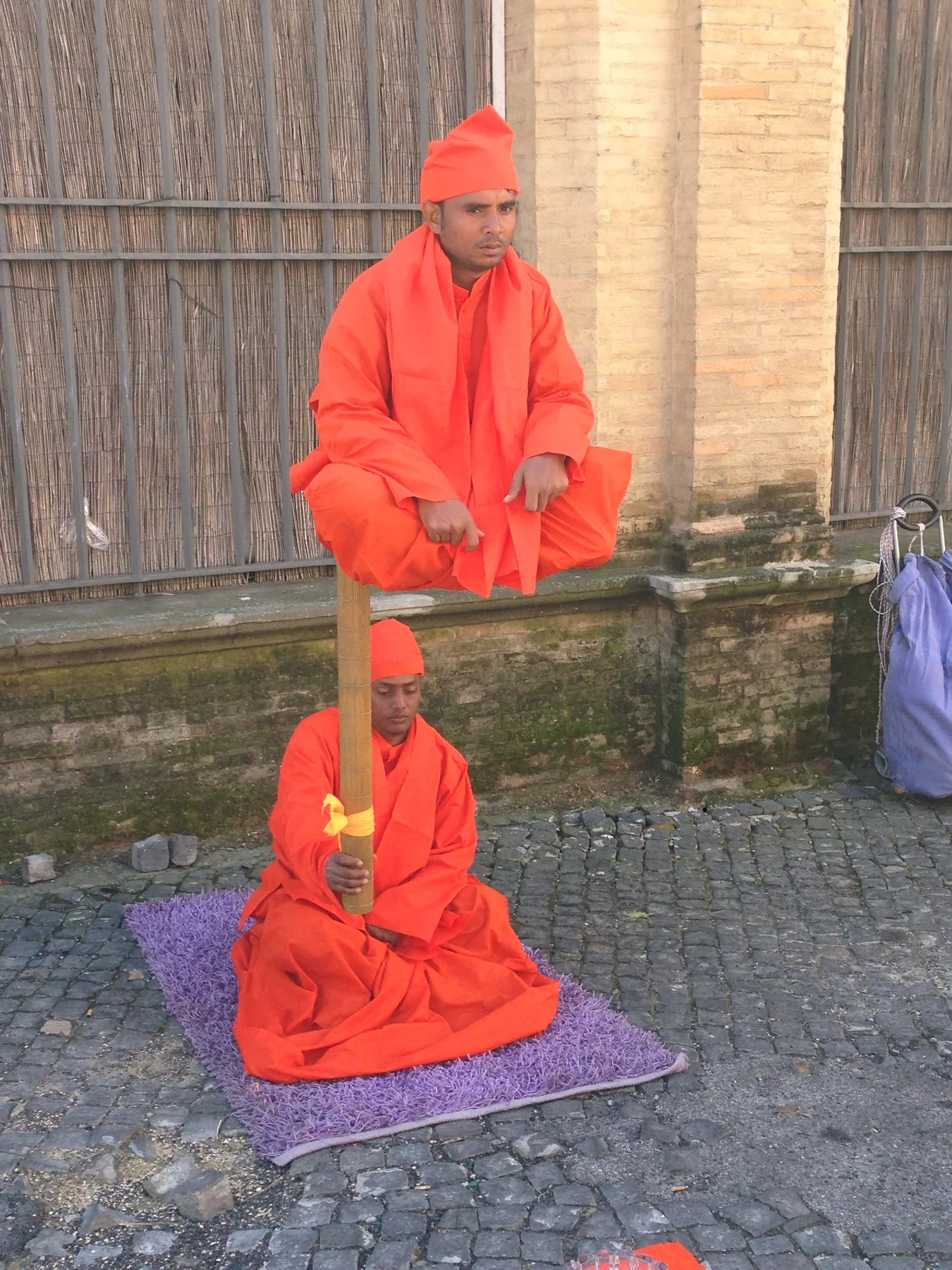
Just nearby, two people in orange had their own way of drawing a crowd. One held a pole and the other seemed to be sitting in midair. I watched, trying to figure out what was holding him up, and walked away none the wiser. I like how quickly that can happen here: one moment you're looking up at the Pope's balcony, and a few minutes later you're in the middle of the street wondering how a man has managed not to fall onto the pavement.
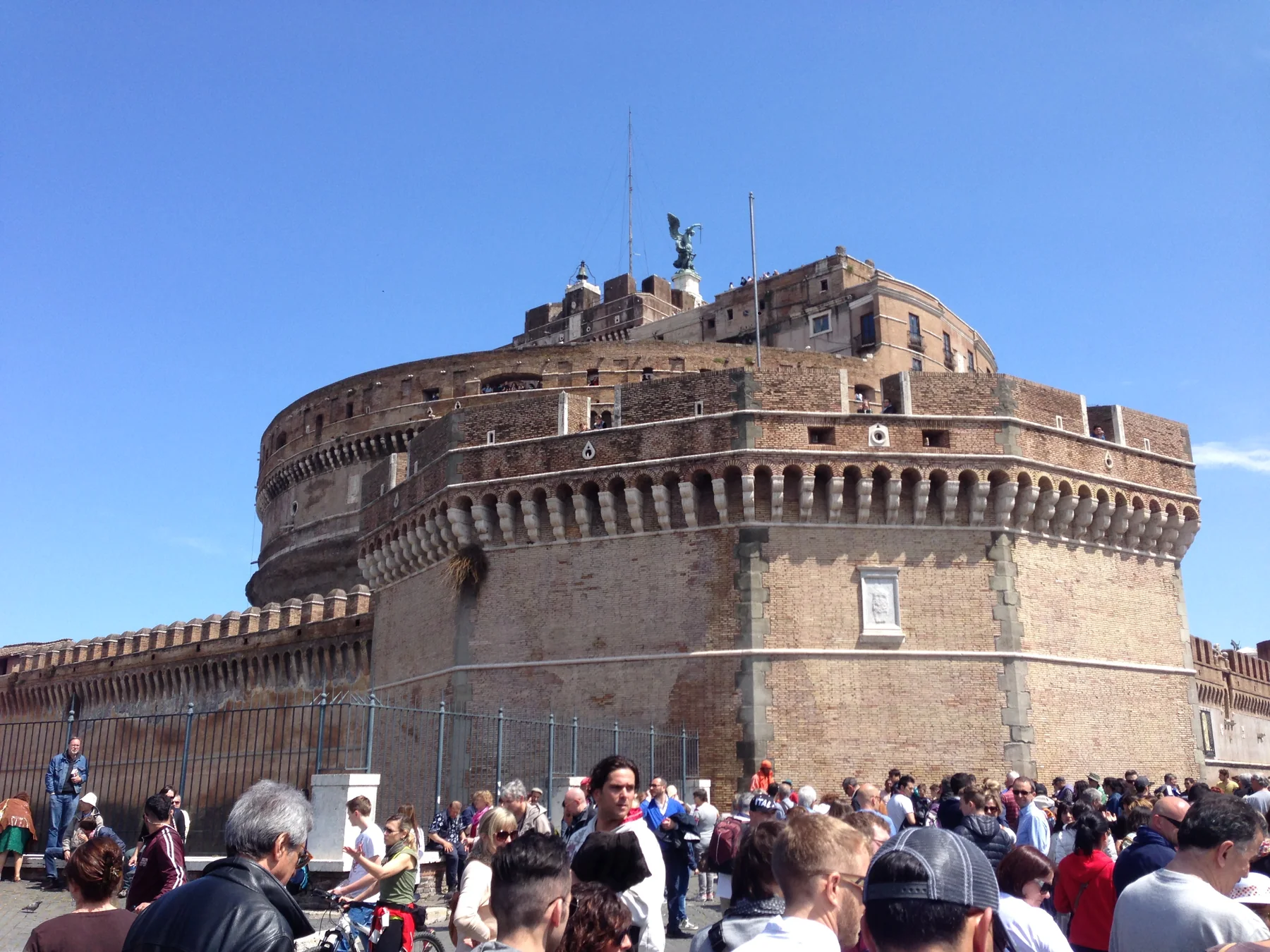
After that we just went walking. By the Tiber stands Castel Sant'Angelo, where Clement VII once took refuge. It began as Emperor Hadrian's mausoleum and later became a fortress and a refuge for popes. So there you are, out for a walk after the Easter celebrations, looking at a building where two of our stories have already come together: the Roman emperors we're going to hear plenty more about, and the guards we just saw by the basilica.
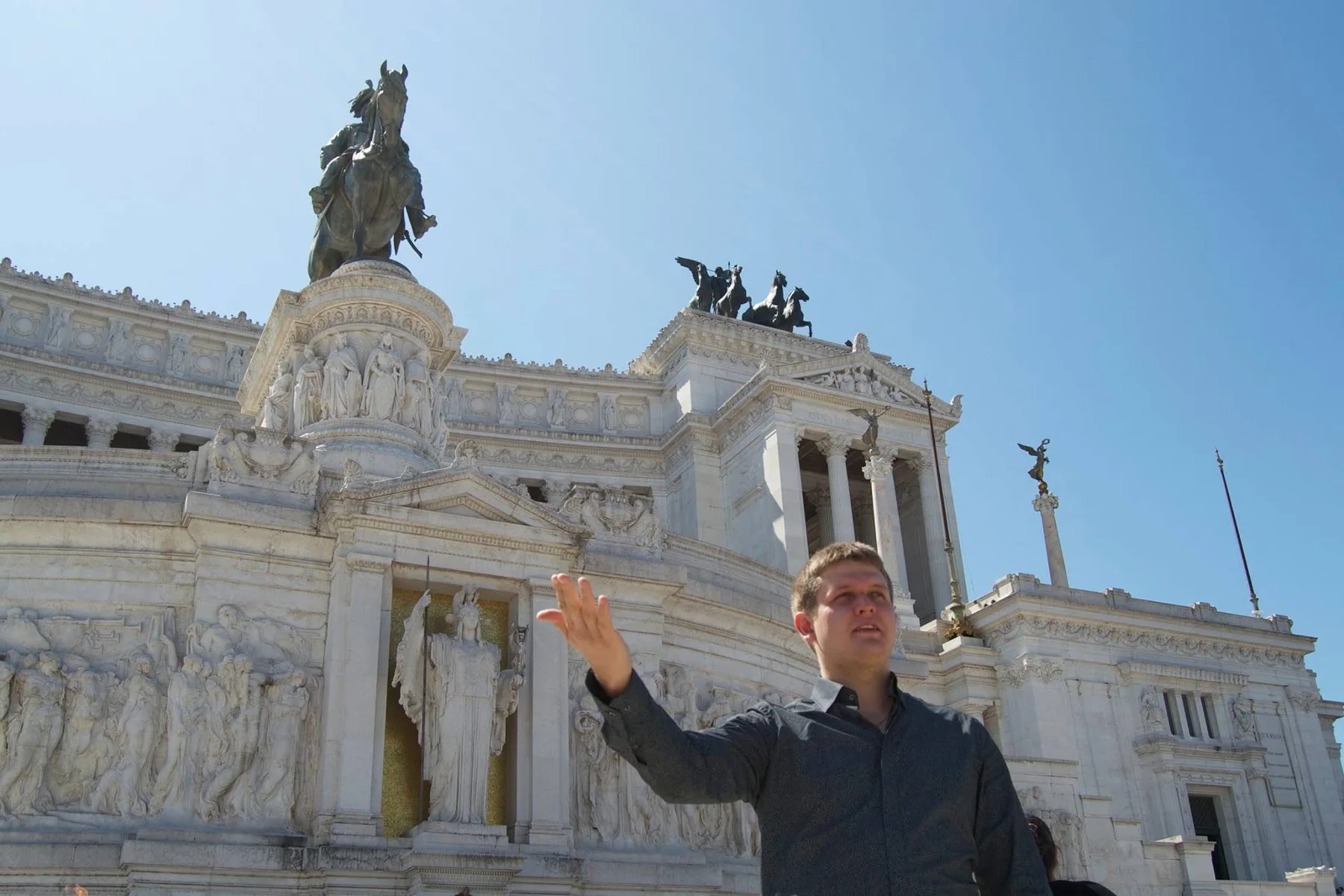
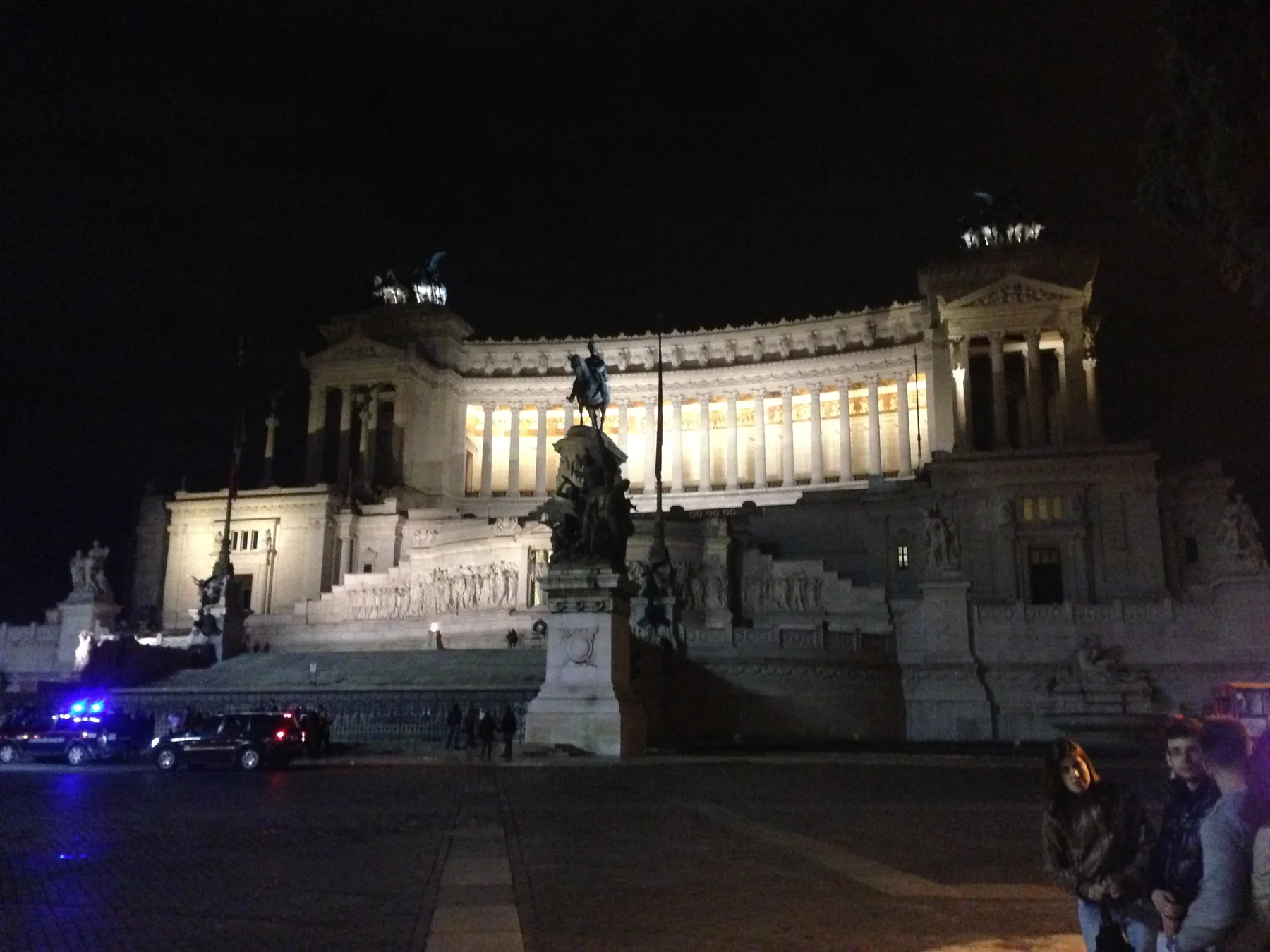
In Piazza Venezia, Rome told a story on a completely different scale. The white Vittoriano, with the equestrian statue in the middle, is dedicated to Victor Emmanuel II, the first king of a united Italy. The monument opened in 1911. After World War I, the Unknown Soldier was buried here. You're looking at a monument to someone whose name is on it and, at the same time, to someone whose name nobody knows.
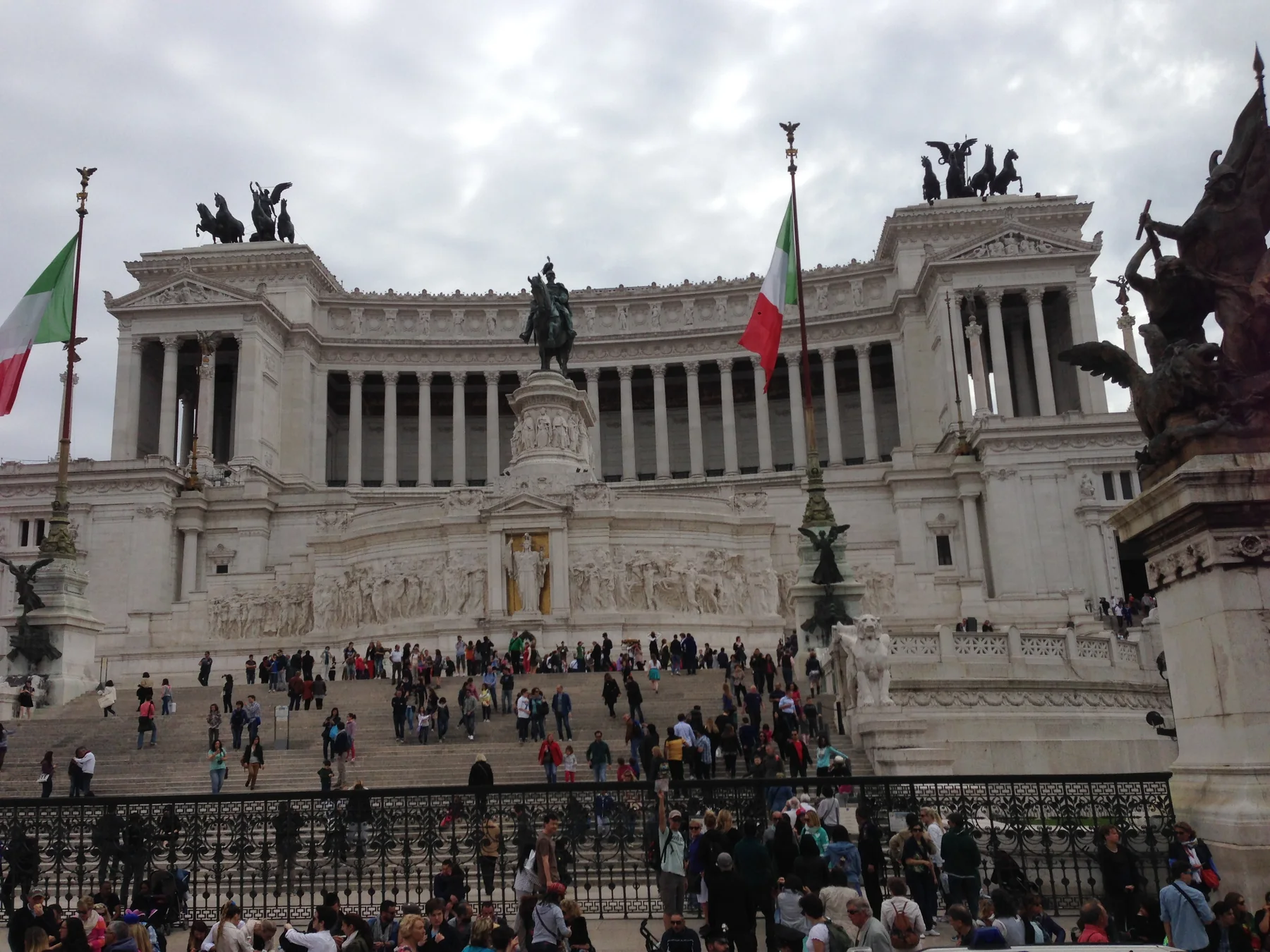
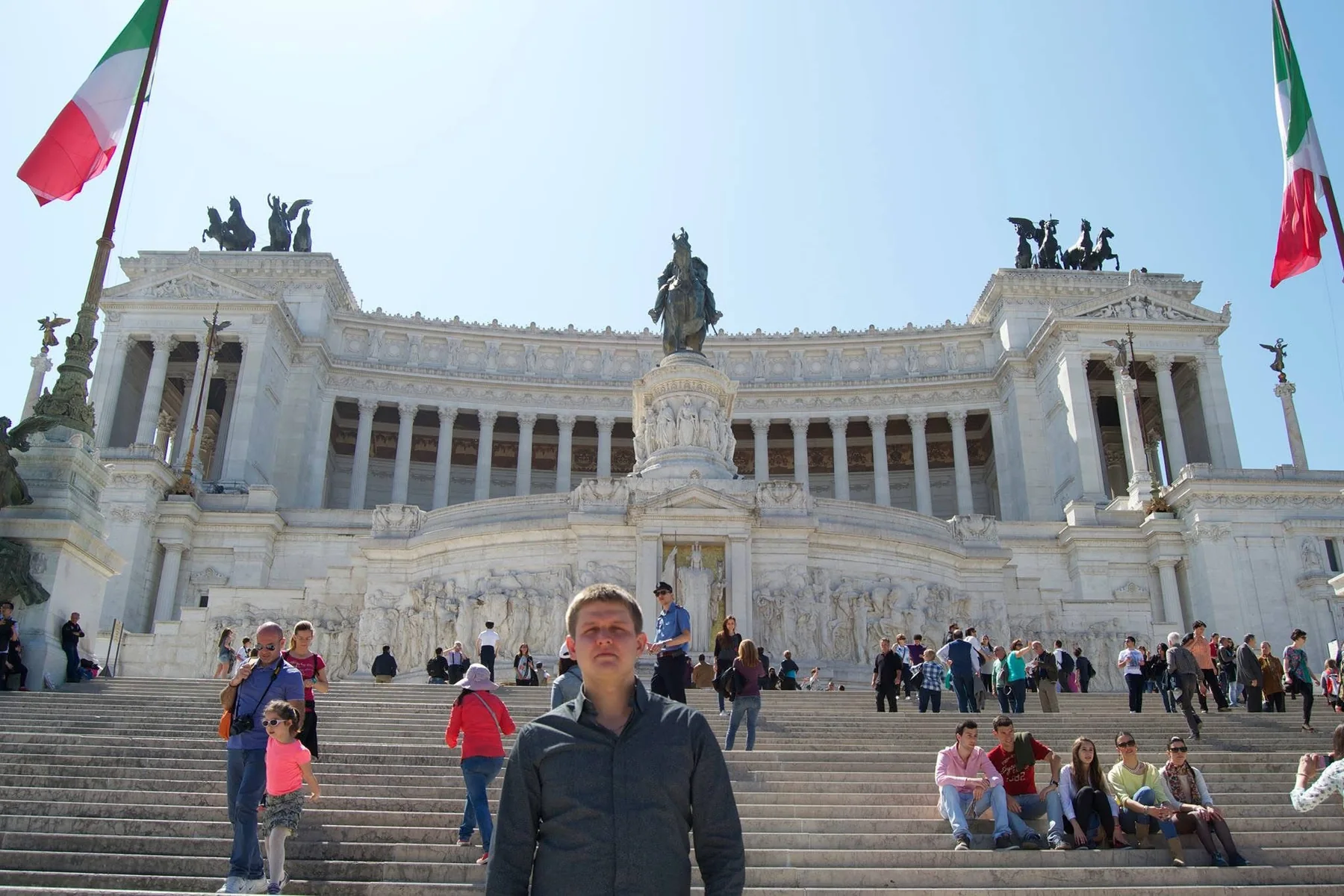
We didn't make it to the top that day. From below you could already see how it was put together: the stairs make the climb an event in itself, and you spot the rider on horseback before you've even made out the details of the facade. We found out what you could see from up there when we came back the next day.
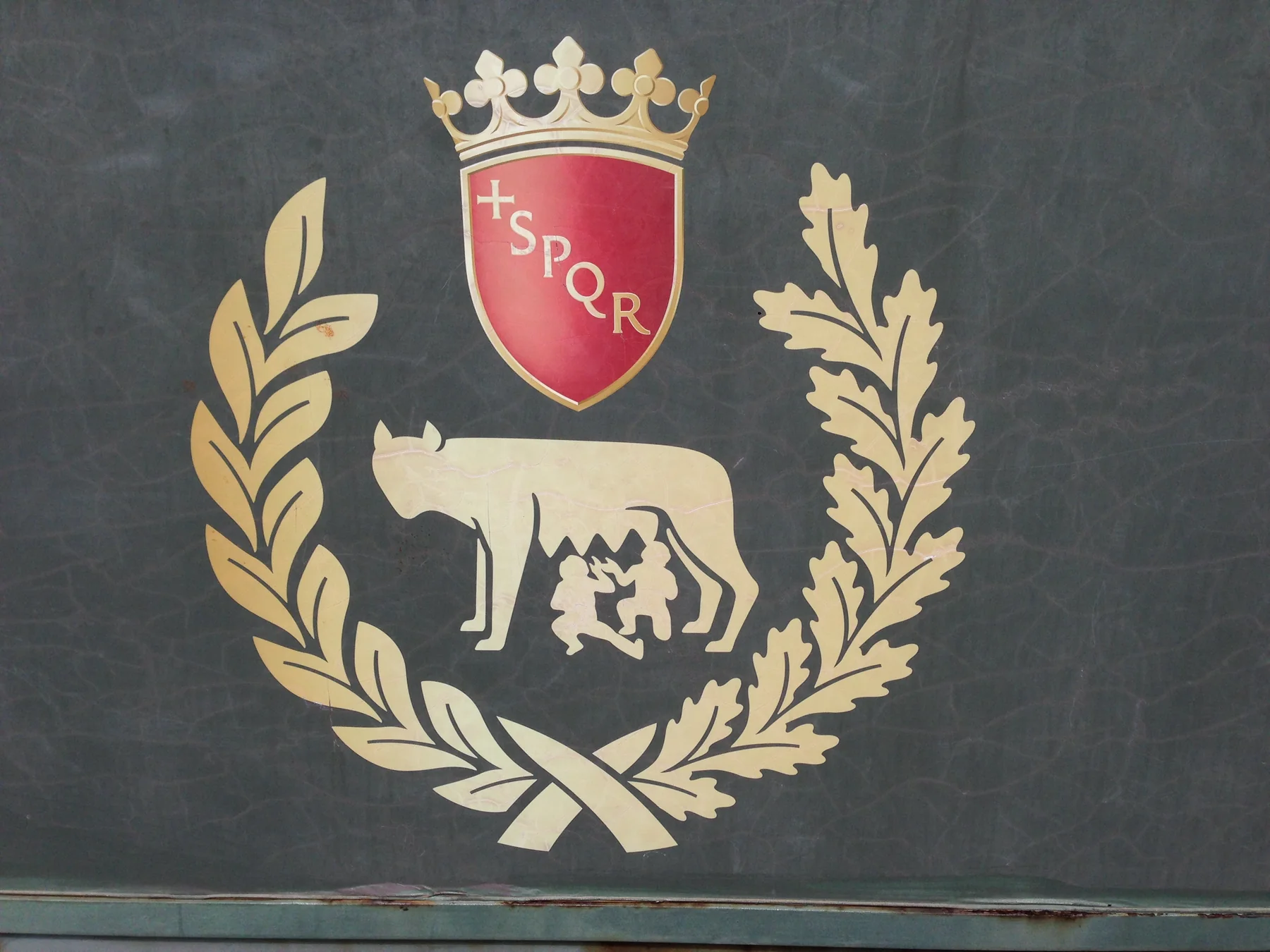
In the Lateran square I saw a she-wolf nursing Romulus and Remus, with four letters alongside them: SPQR. In Latin that's Senatus Populusque Romanus, “the Senate and People of Rome.” The wolf goes back to the founding legend. The letters tell you in whose name ancient Rome acted. They still work as an emblem of the city. Rome has changed enormously since the days of Romulus or the Senate, but you can still recognize it by those two babies underneath the wolf. Gold or copper can matter to us for more than what they're made of, too. The story people attach to an object can outlive the ruler who left the mark, and the state he ruled. After the morning at the Vatican, I found it especially interesting to notice that right out on the street.
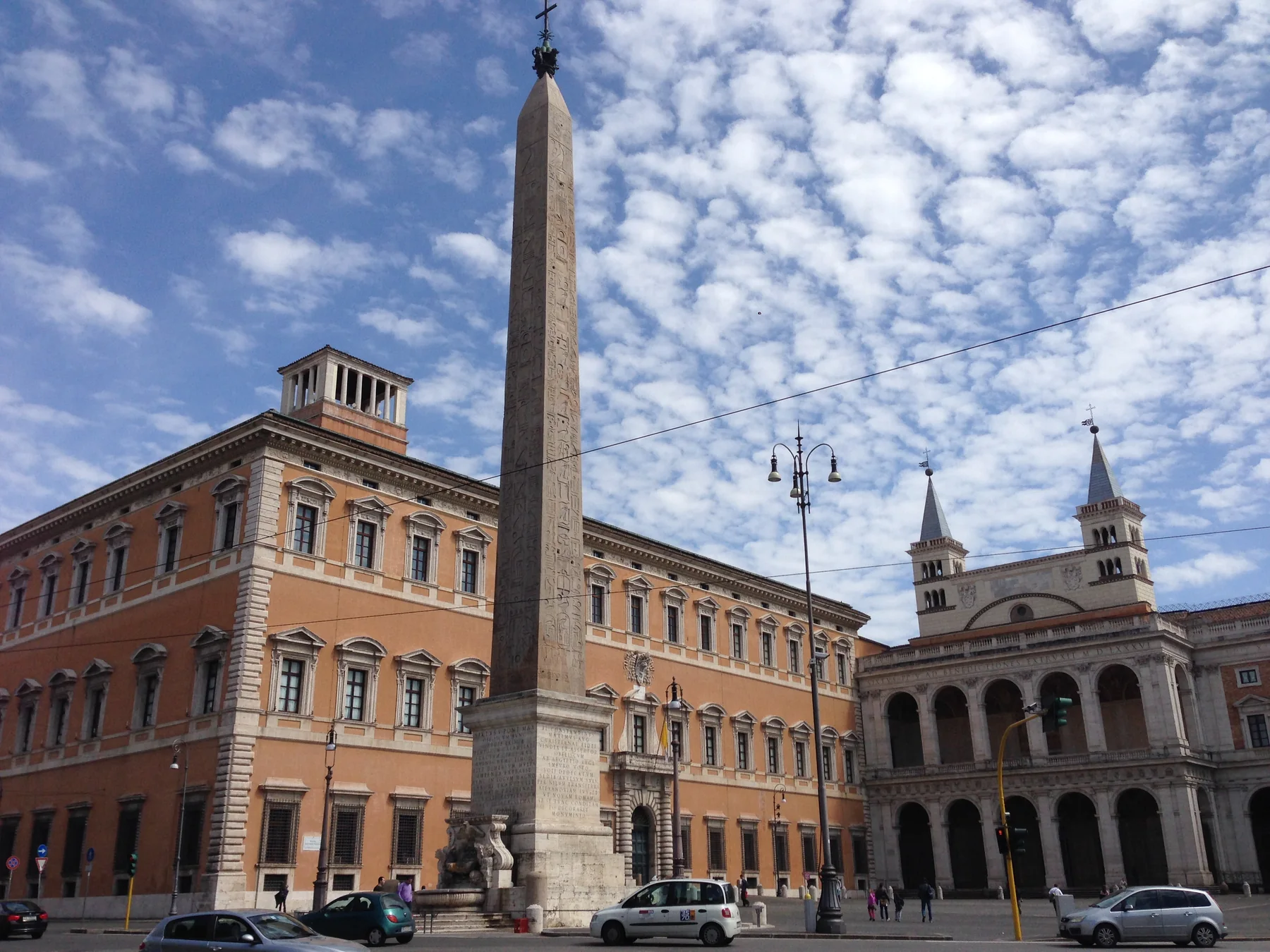
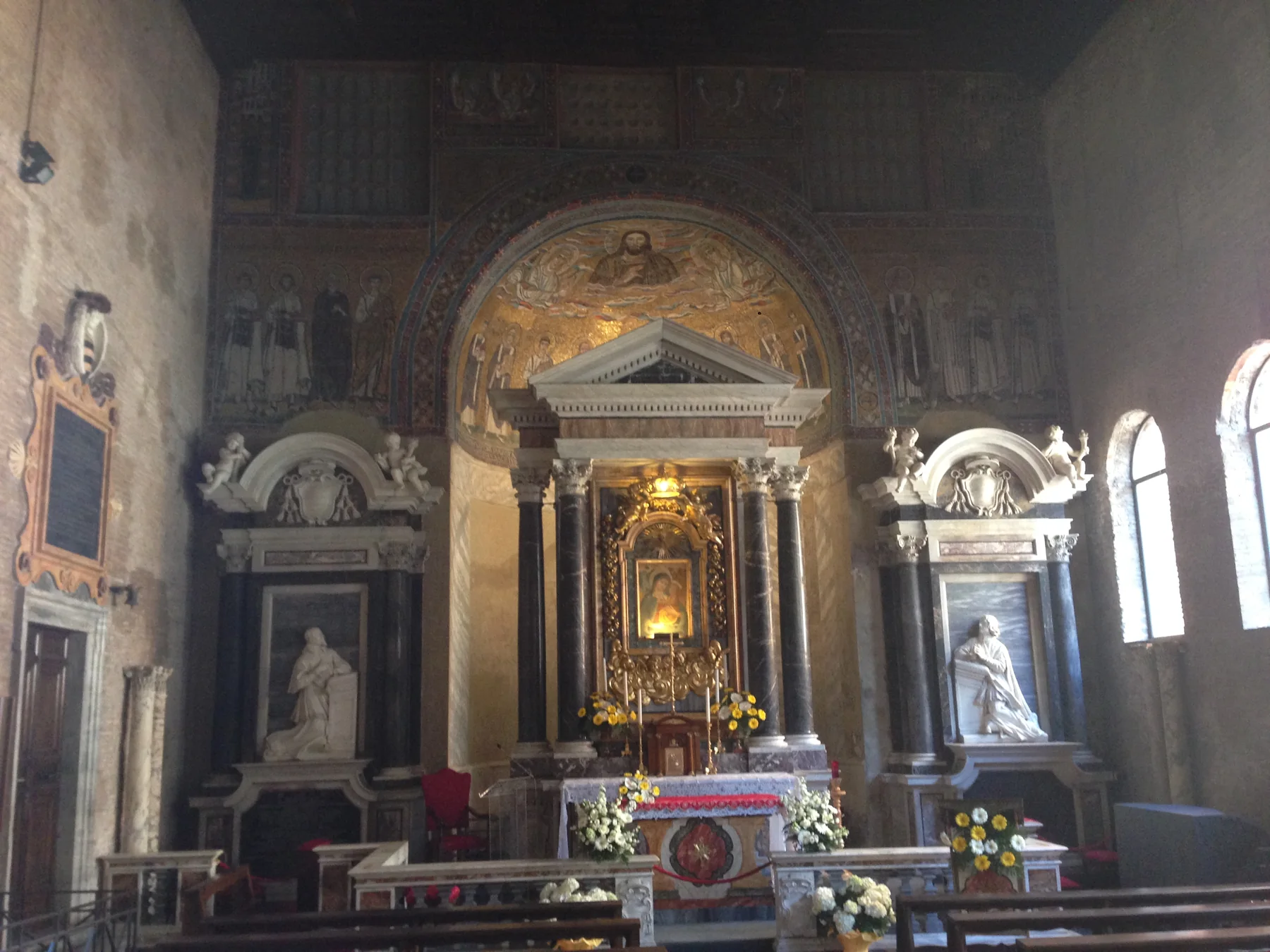
There was another connection with that morning just next door. The basilica by the obelisk is the Lateran Basilica. It's the cathedral of the bishop of Rome, who is also the Pope. St. Peter's isn't. Part of the square had already been named after John Paul II. The familiar face from the portrait in the little church came back into the story, this time in the name of a square. In the basilica courtyard, the pace is altogether different: cloister arches instead of barriers and crowds. In the nearby baptistery, where baptisms took place, there's a small chapel, San Venanzio, with a golden vault.
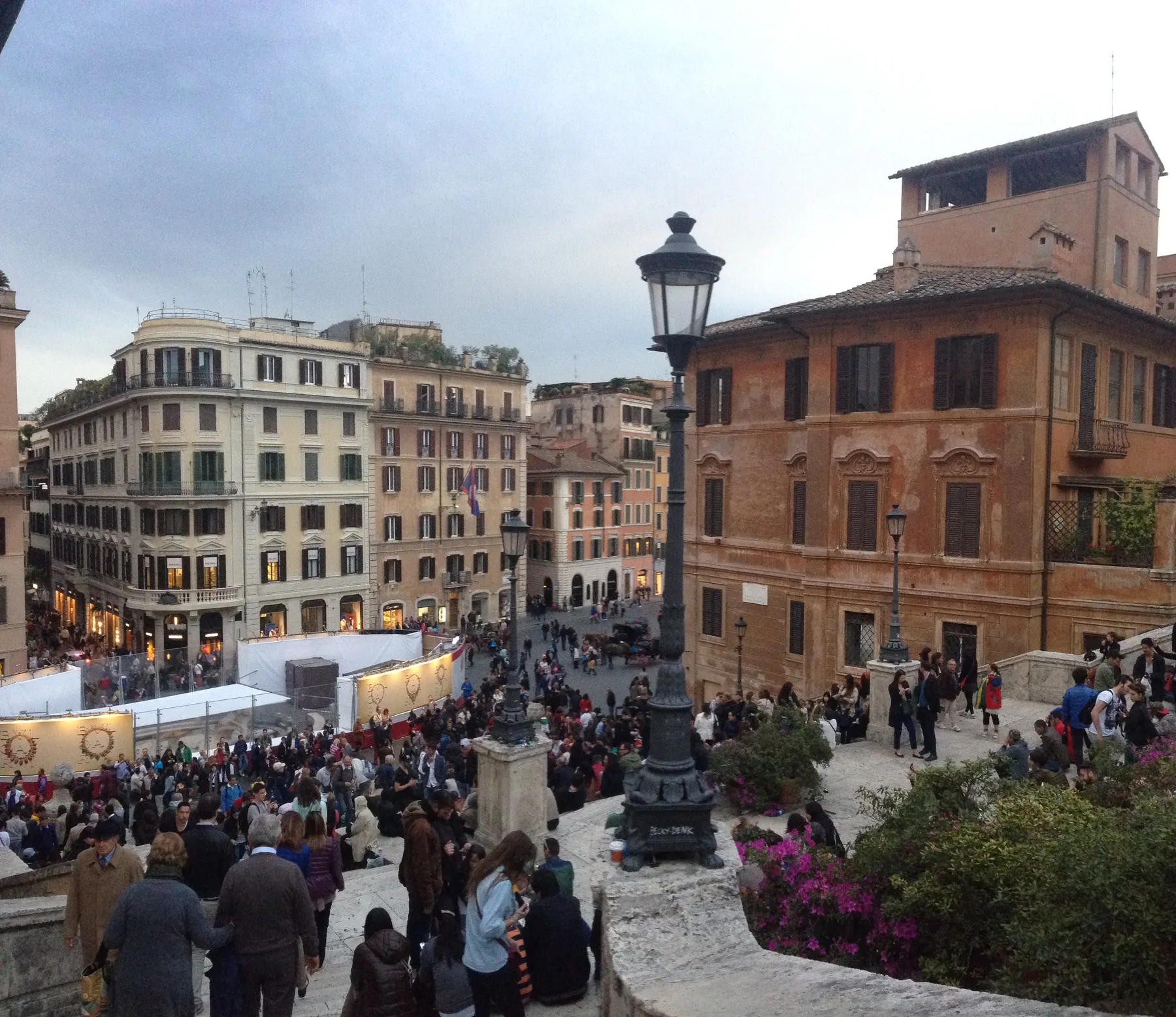
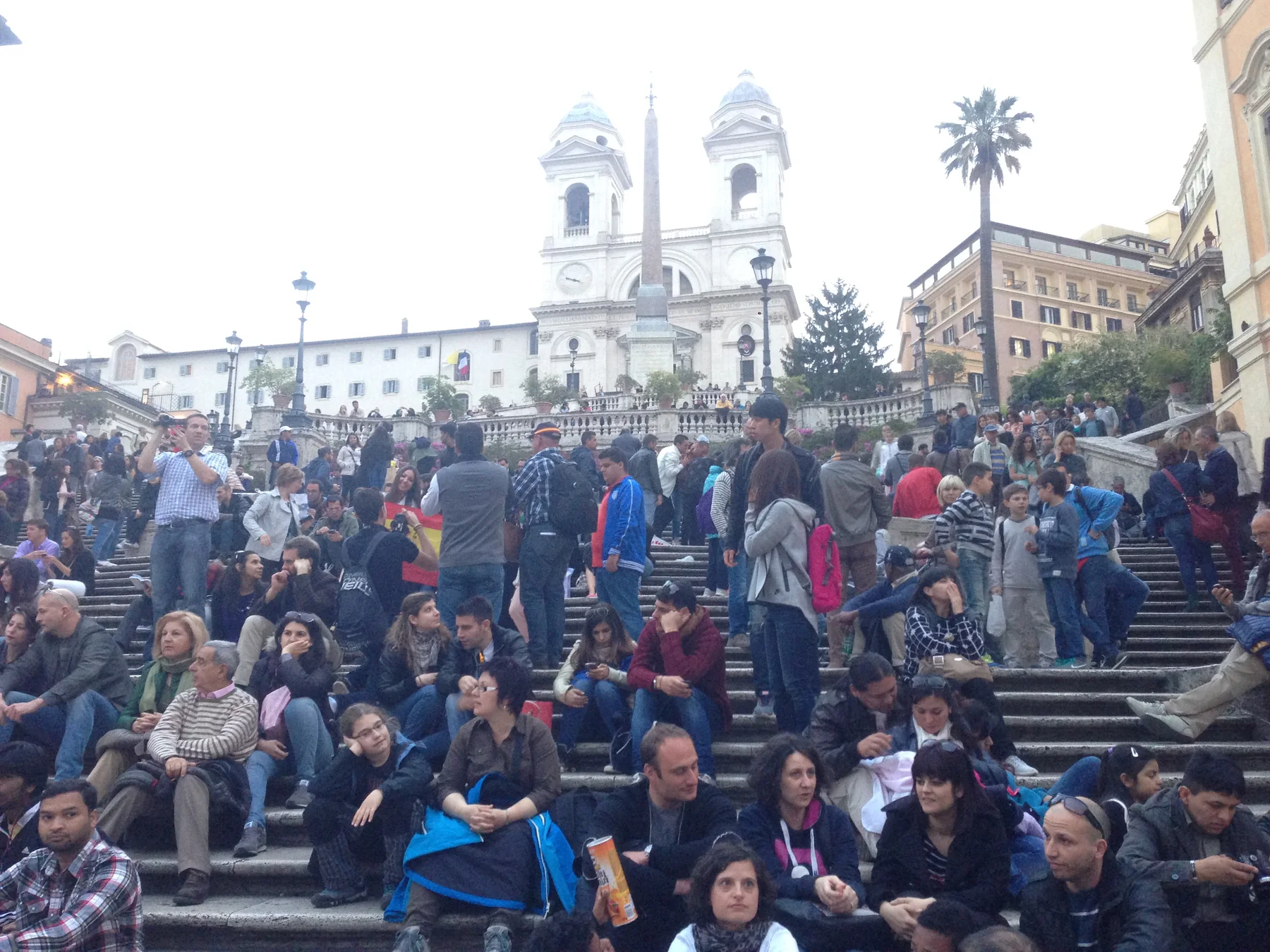
We reached the Spanish Steps toward evening. From the bottom you look up at the obelisk and the two towers of Trinità dei Monti. From the top you can see the people, a streetlamp, and the square below. The steps connected the square to the French church on the hill in the eighteenth century. They're called the Spanish Steps after the square, which is associated with the Spanish embassy. Quite an international story for one staircase. In the evening people use it almost like a living room, sitting down to talk and watching who's coming up.
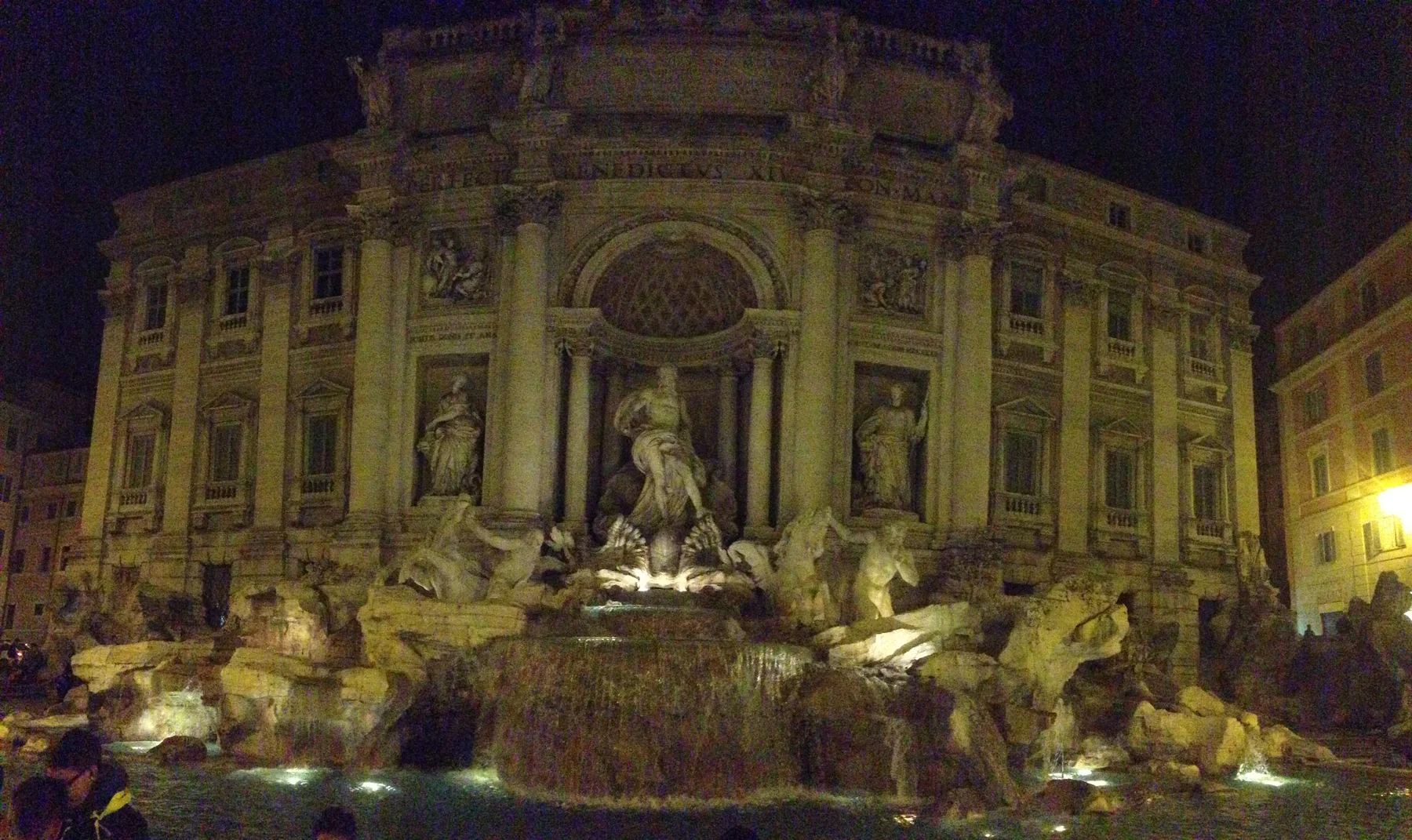
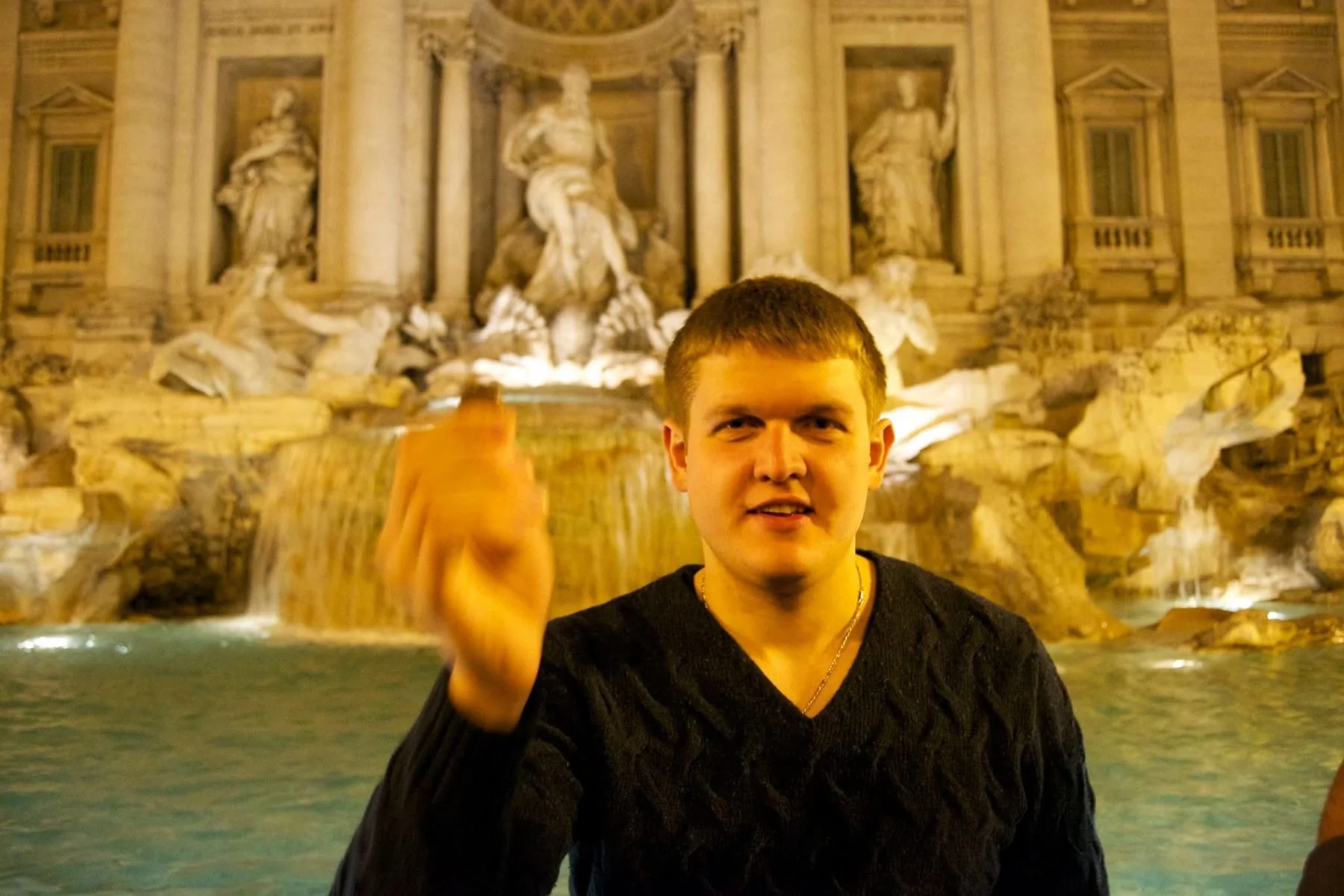
My first day ended at the Trevi Fountain. Lit up at night, it looks like a whole palace with water pouring straight out into the square. The custom is to stand with your back to the water and toss one coin over your shoulder so you'll return to Rome. I threw one in, too. It hadn't even been a full day since my first walk, and I was already making sure there'd be another.
April 21. Rome's Birthday
The next morning I went back to the Vittoriano. The night before, it had been lit up above the square. Now I could finally go up to the terrace. There was a seagull standing on the marble. Behind it were the rooftops and domes of Rome, and it was looking the other way as if the view had bored it years ago. I get it. If I lived on the roof of the Vittoriano, I might look like that, too. For now, I just stood there looking at the city in every direction.
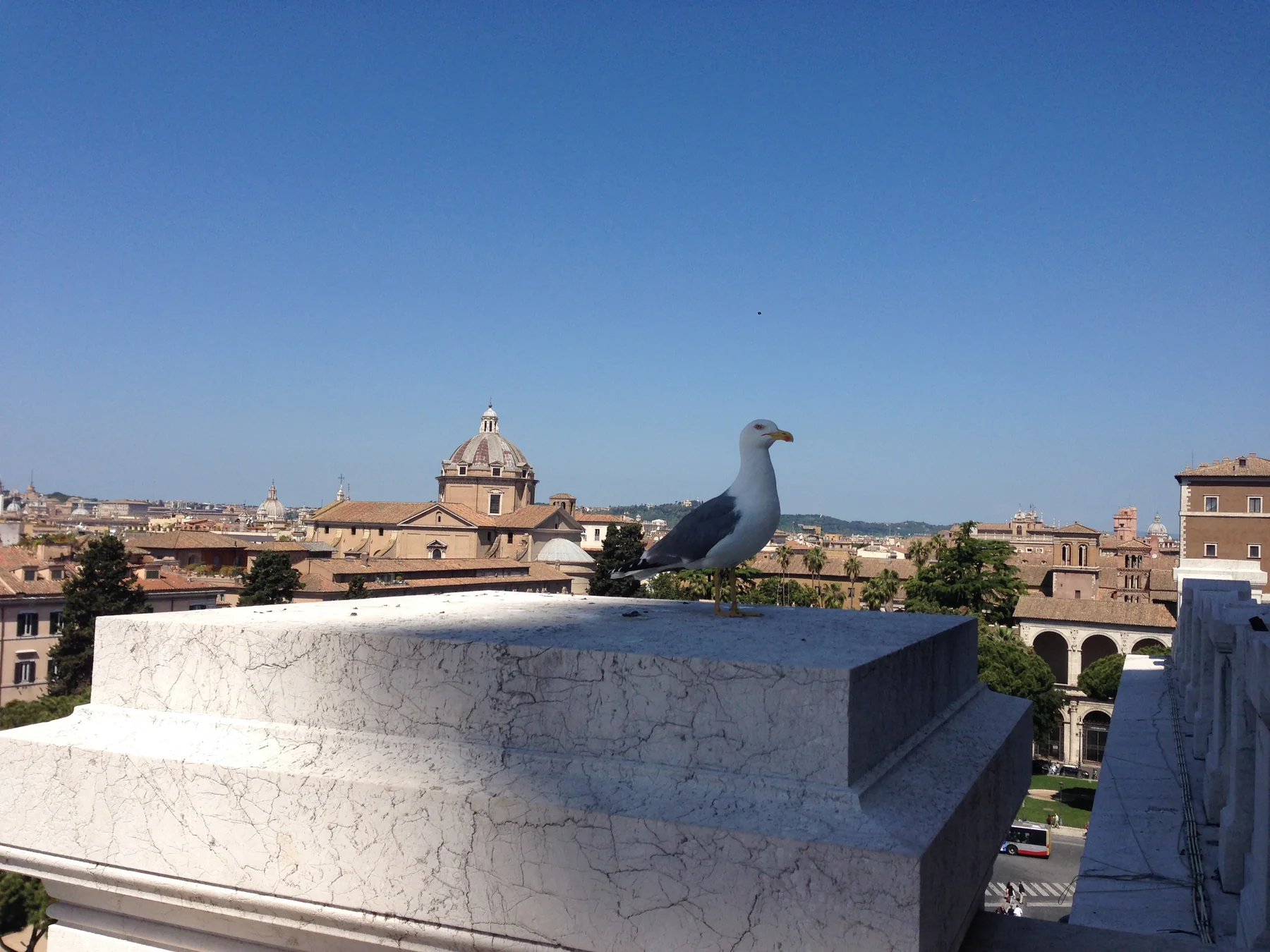
On one side you can see Piazza Venezia: the street, rooftops, and umbrella pines. On the other are the ancient ruins of the Imperial Fora. The day before, I'd walked between all these buildings and sometimes couldn't see past the facade across the street. From up here it's easy to see how close together they all are: the monument to a united Italy, church domes, and blocks where columns are all that's left of antiquity.
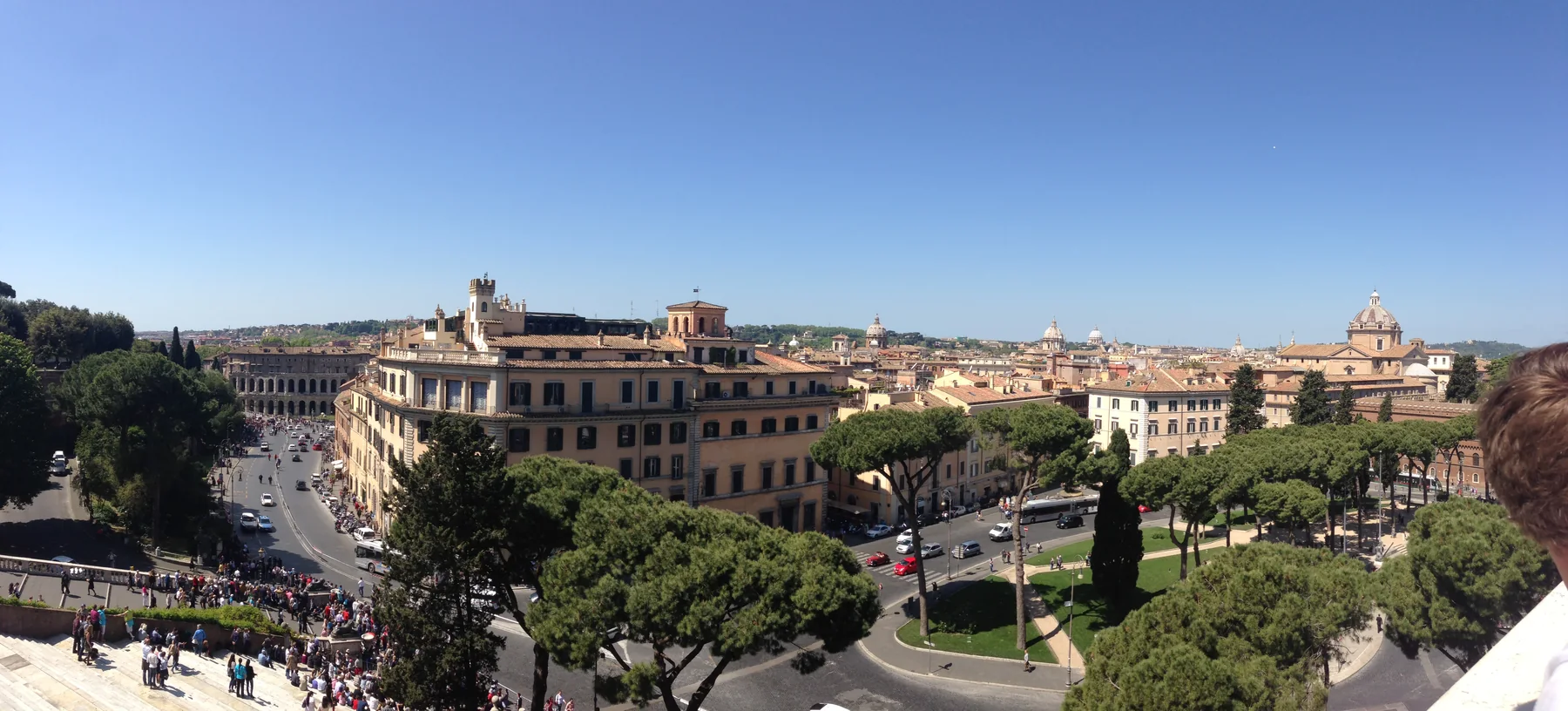
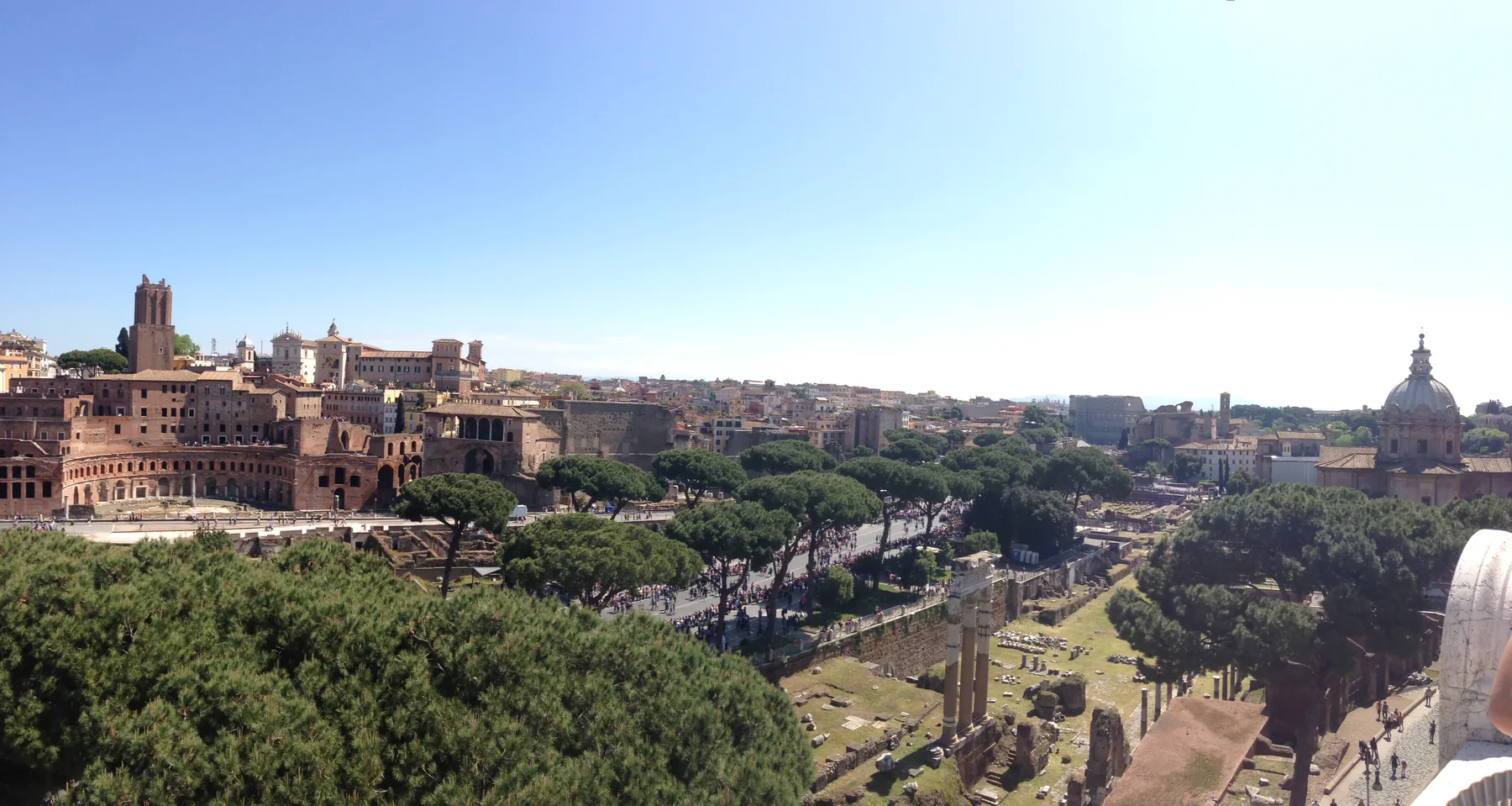
We had no idea April 21 was Rome's birthday. According to legend, Romulus founded the city on April 21, 753 BC. This was not, of course, part of our grand plan, which we'd put together in one evening in Lviv. We'd come to see the Pope, and apparently Rome had decided to invite us to its own party as well.
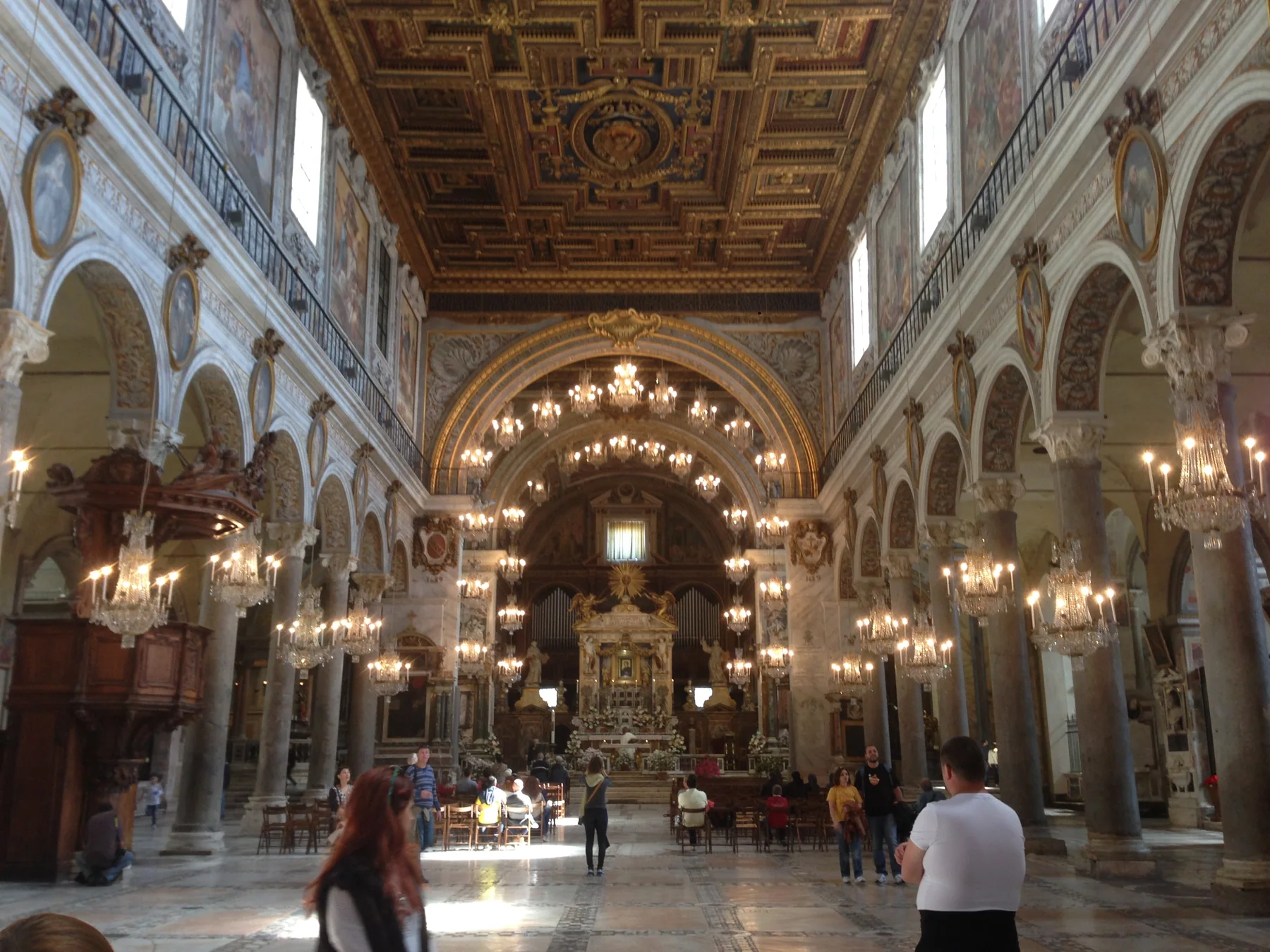
On the Capitoline Hill, near the Vittoriano, we went into Santa Maria in Aracoeli. There are 124 steps up to the basilica, dating back to the fourteenth century. Inside, instead of white marble in the open air, you see a gilded ceiling and long rows of columns. Beside it there's another way up, the Cordonata, which leads to the Capitoline Square. At the top are Castor and Pollux with their horses. I like that there are two climbs right next to each other, so easy to mix up from below, with completely different stories waiting at the top.
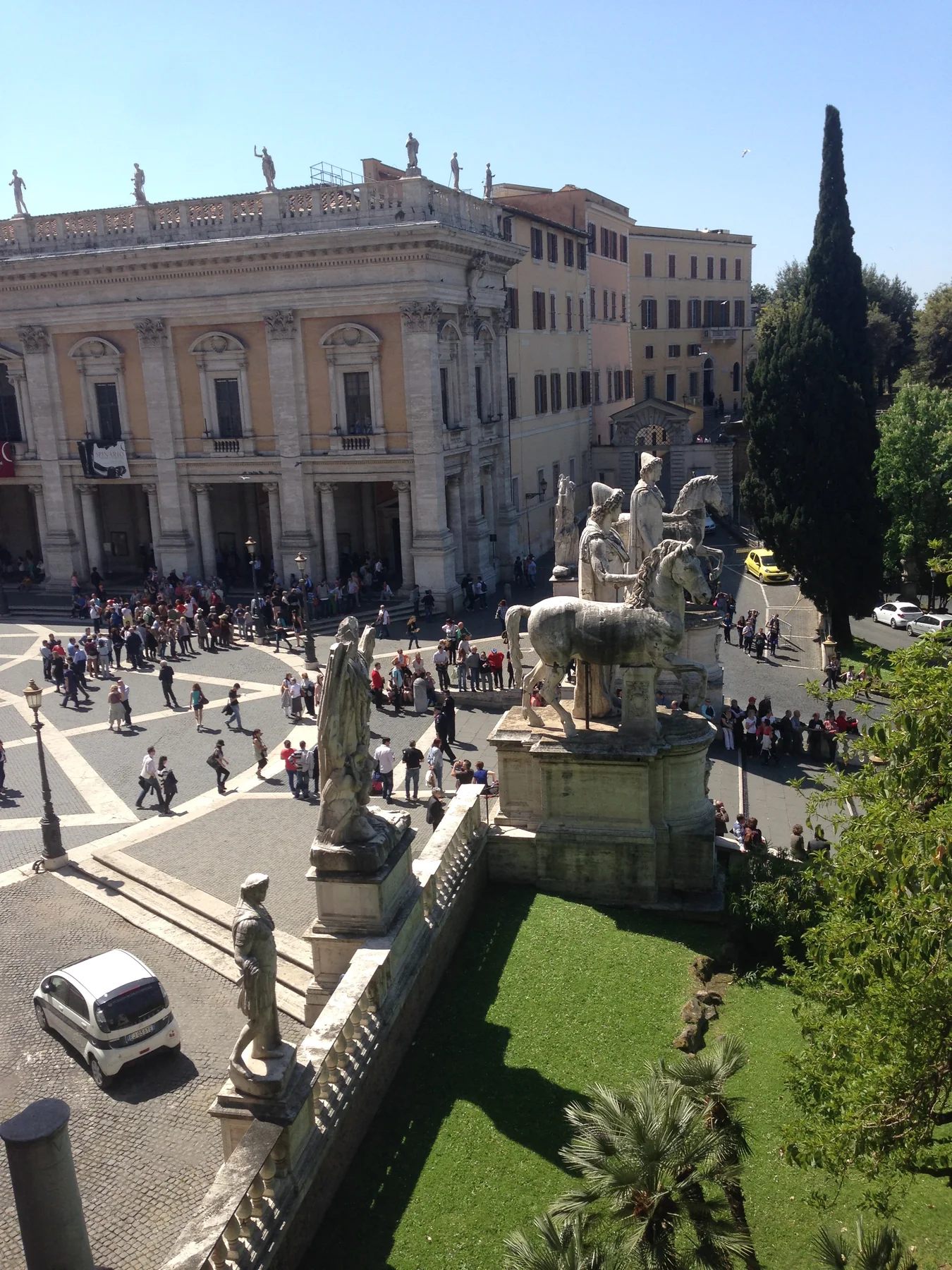
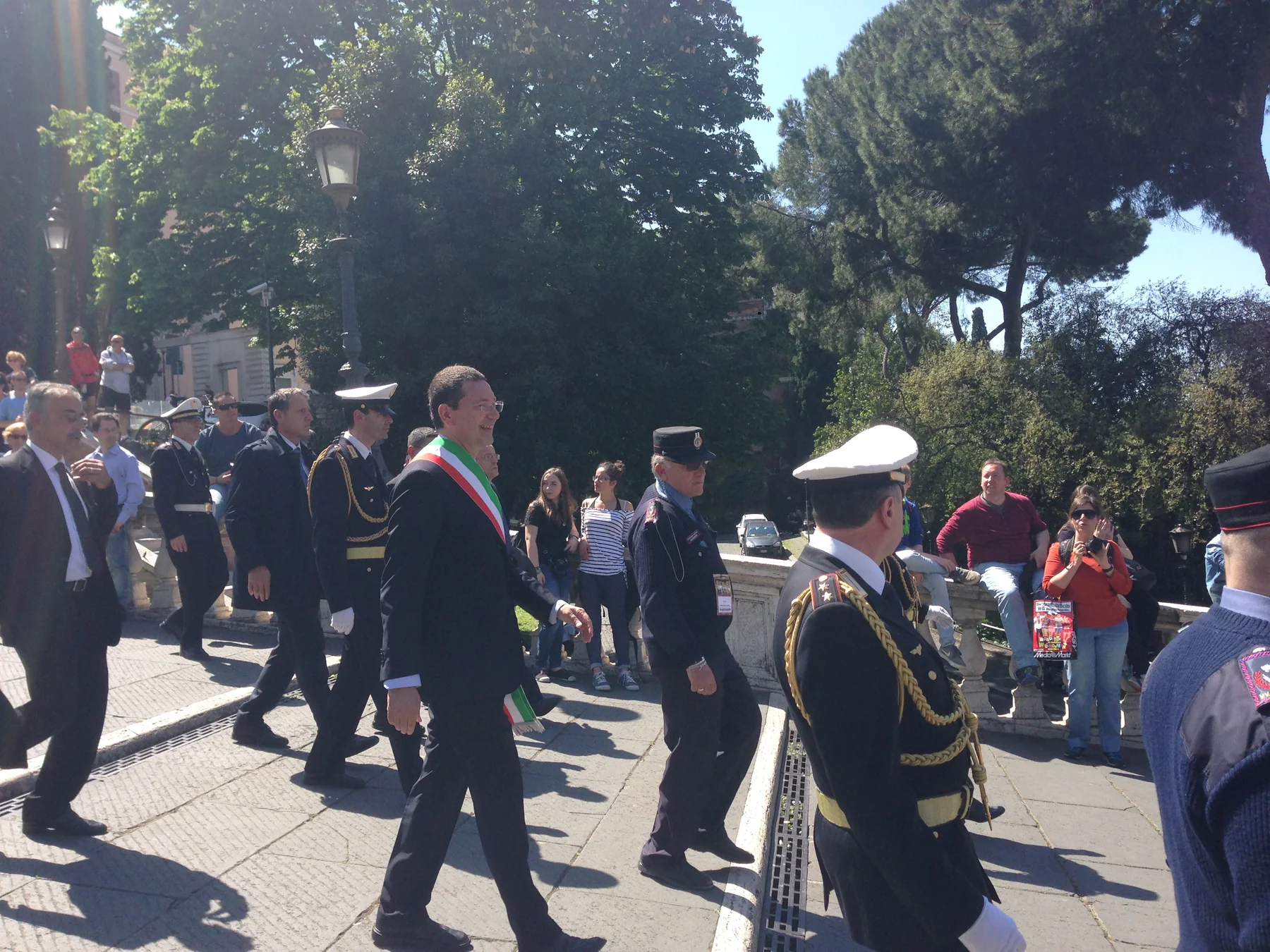
At one point we saw a man in a suit and a tricolor sash walking with a group of people in uniform. I took him for the mayor. Well, there you go. Someone had told him the distinguished guests from Ukraine were coming. Rome had plenty of guests that day without us.
The Forum, the Circus, and the Colosseum
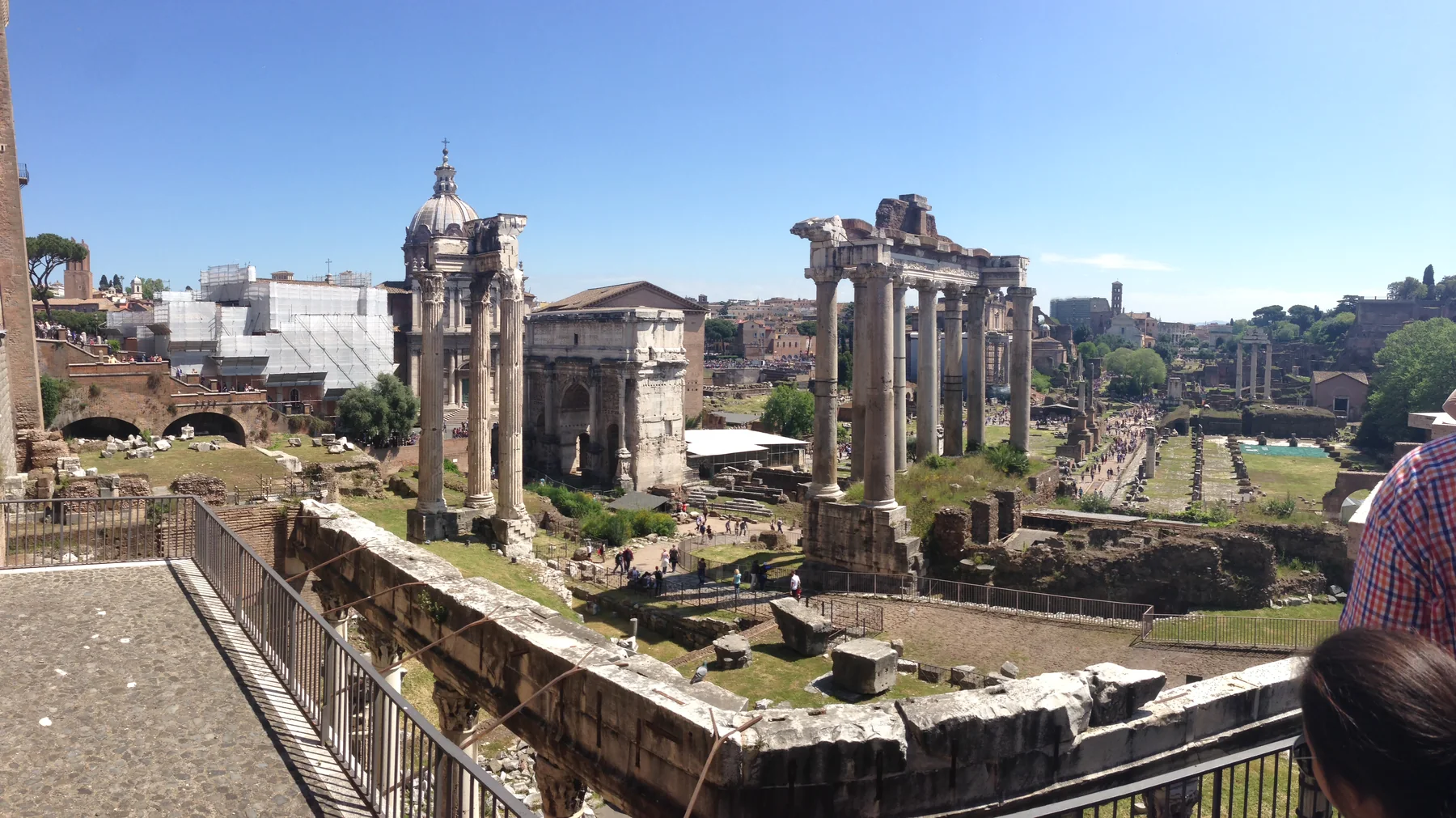
We looked down on the Roman Forum from the Capitoline Hill. What's down there now are columns, foundations, and what's left of temples. It's easier to picture it all as one place when you think about why Romans came here: to hear a speech, catch up on the news, settle something in court, or see a procession. Somewhere around here senators met, and people sorted out perfectly ordinary business. Yesterday I'd seen “the Senate and People of Rome” written on the street. Today I was looking at a place where that Senate and those people really had been part of the same city.
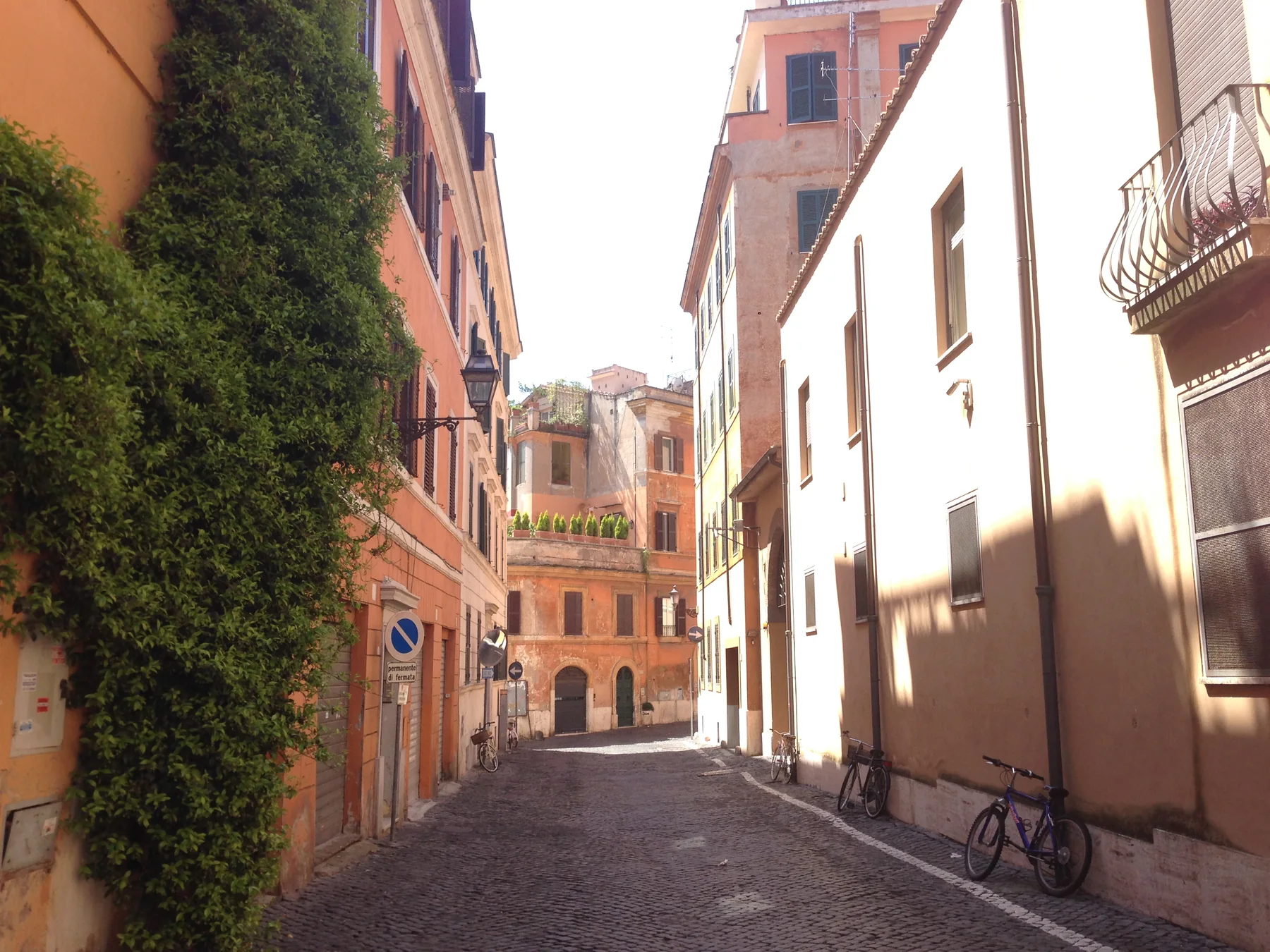
Views like that aren't the only thing that makes you fall for Rome. We turned onto a narrow street: cobblestones, orange buildings, something green climbing the wall that looked like a grapevine. I absolutely loved it. There were those Roman colors, and sounds I remember as cicadas. One minute you're looking at ruins; turn the corner and you're walking past somebody's windows. And you think, this is what I wanted to see when I decided to come.
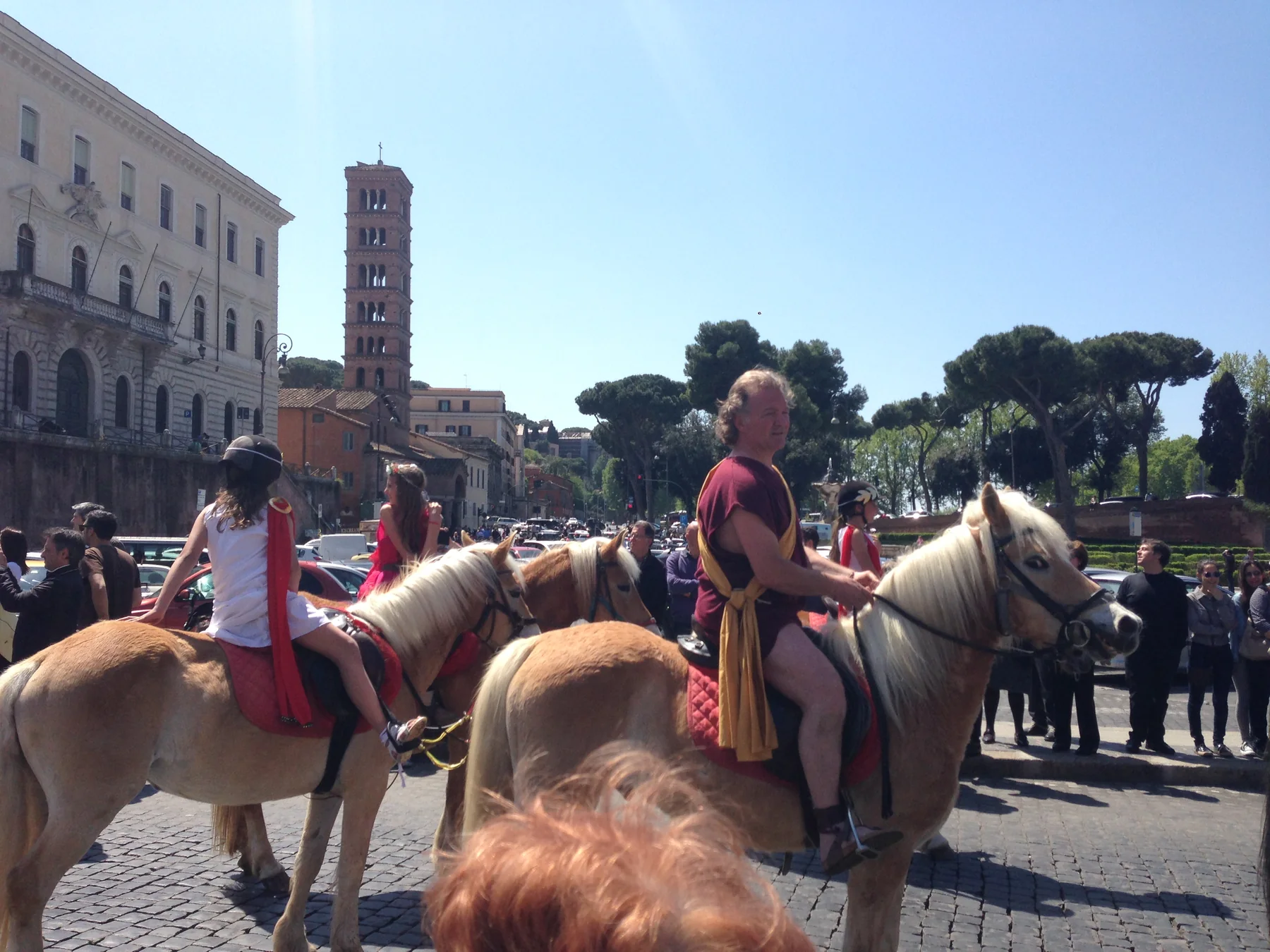
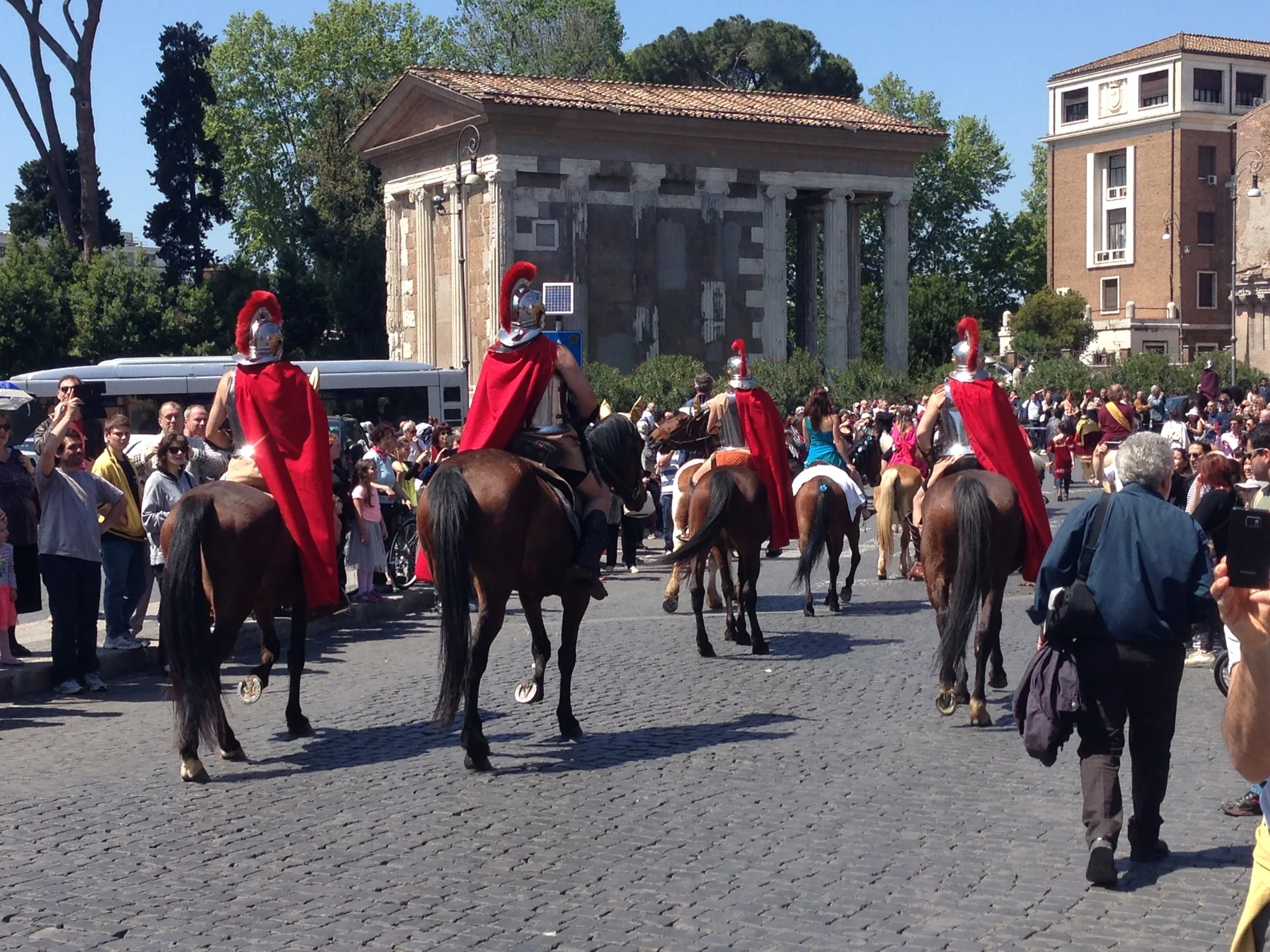
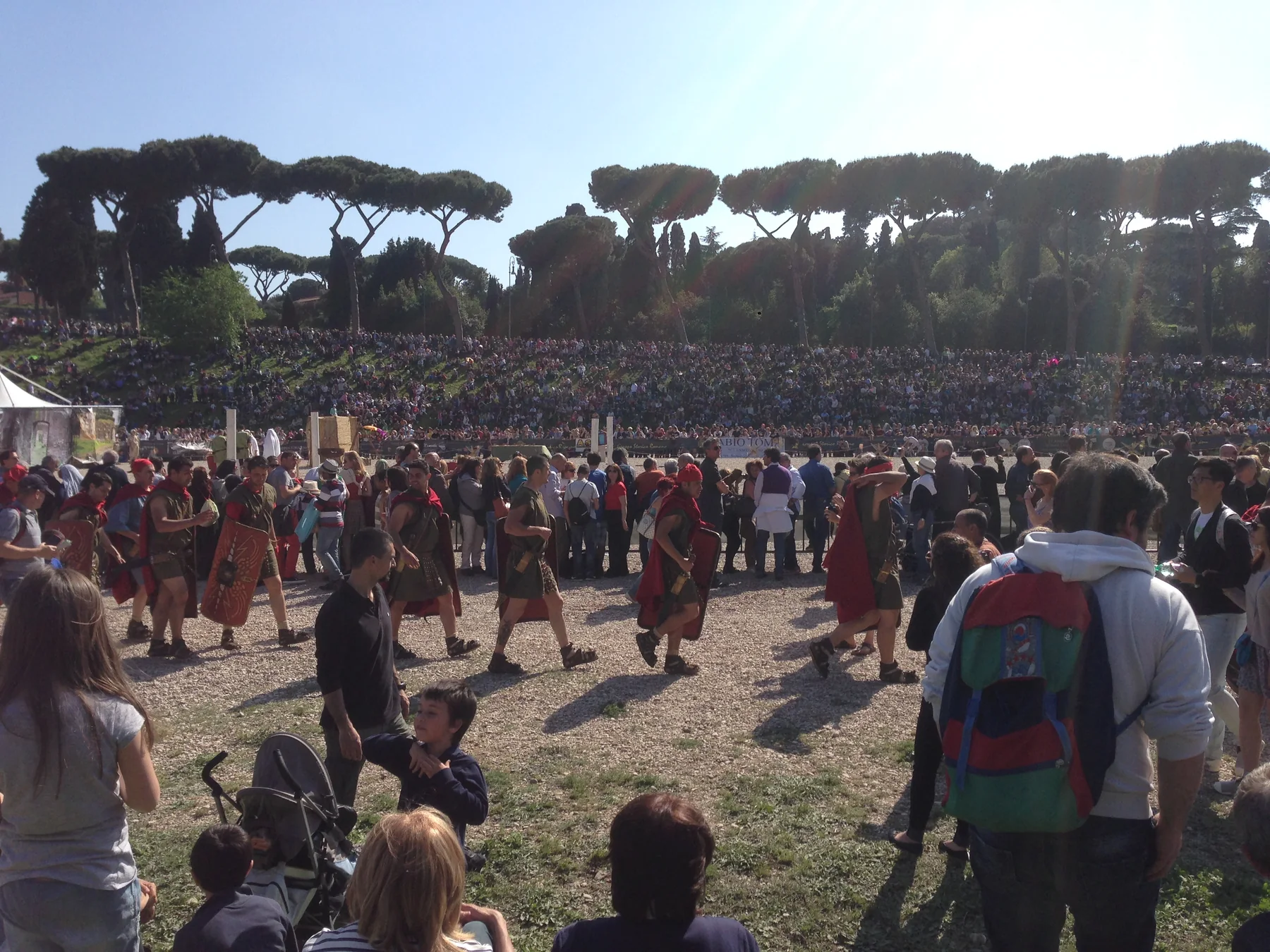
Then came the riders. One group on pale horses, then red cloaks and crested helmets. It was the procession for the city's birthday. Reenactment groups had recreated clothes and weapons from different periods, and Gruppo Storico Romano organized the parade and performances. The day before I'd watched people gather for a holiday the Church had kept alive. Here they'd dressed up as ancient Rome themselves and literally taken it out into the street.
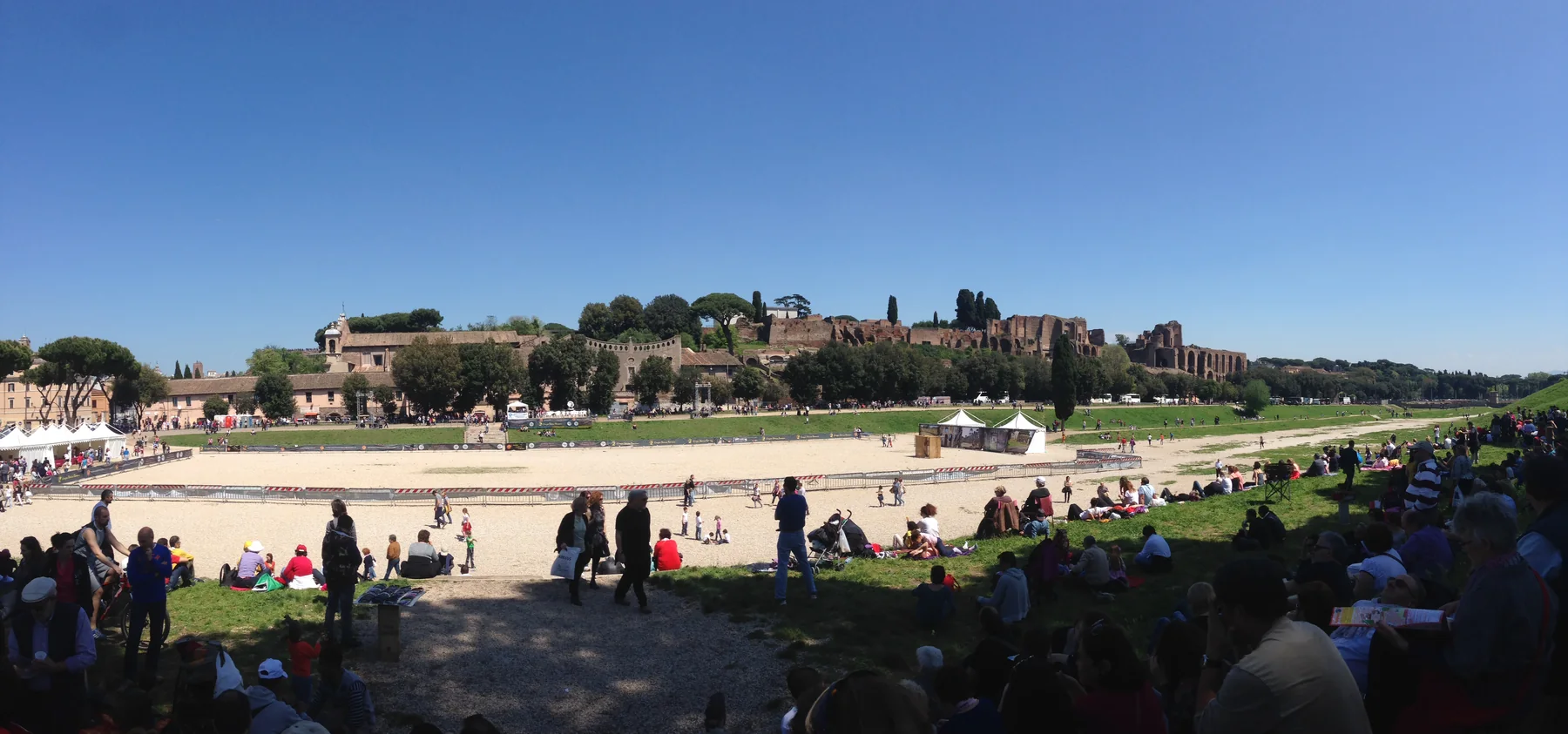
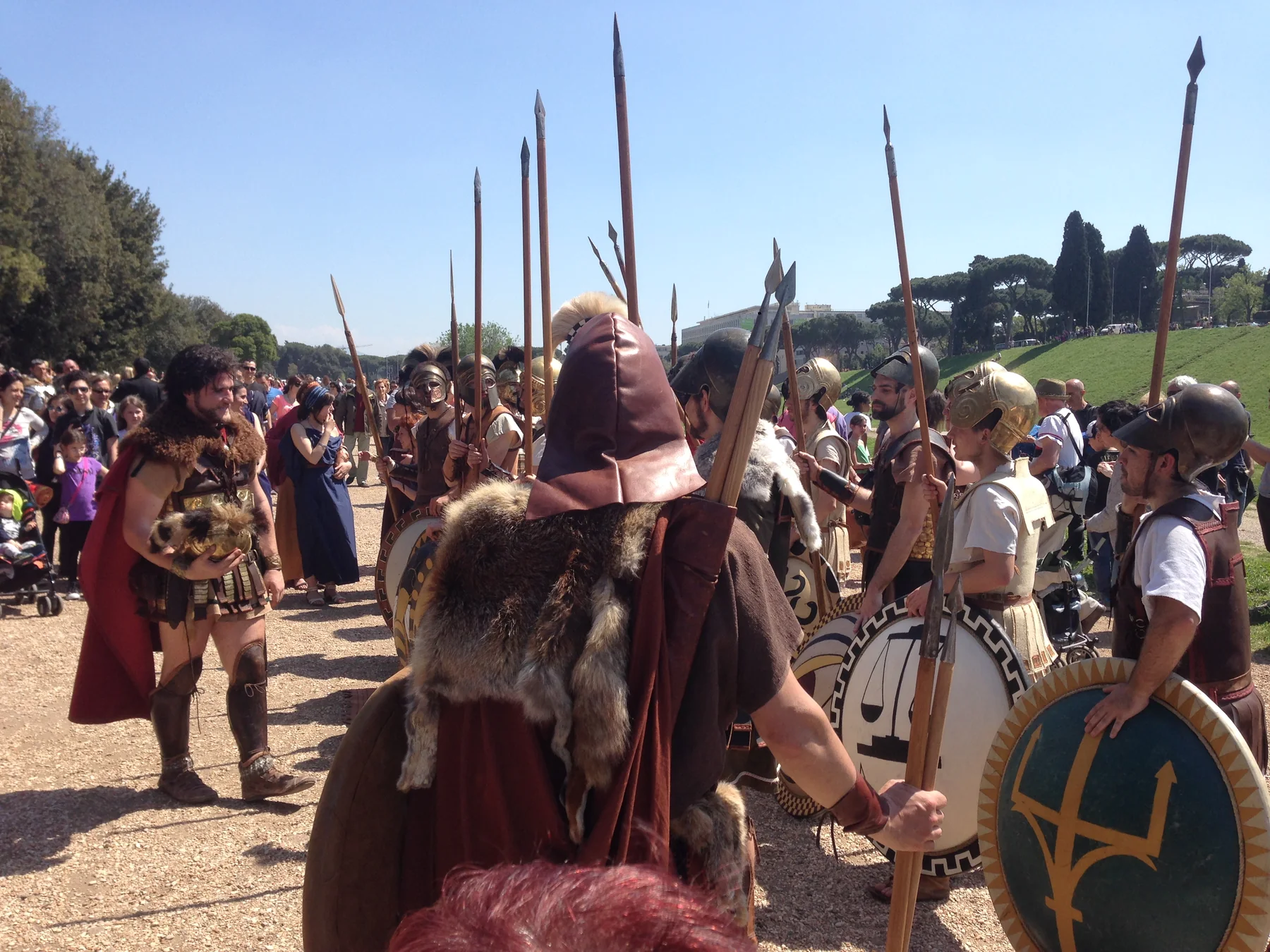
From there we walked to the Circus Maximus. It's a long open space between hills now. In ancient times they raced chariots here. The drivers made laps around a central strip, with people watching from the slopes and the stands. Even without rebuilding the stands, it's easy to see why the city needed an arena that long. The chariots needed room to get up to speed, and the crowd wanted to see the straightaway as well as the turn. That day spectators were sitting on the grass, tents were up, and the participants were gathering. I went closer, right in among them. From that distance you could make out the patterns on the shields, the fur, the spears, and the helmets. I couldn't tell at the time exactly who they were supposed to be.
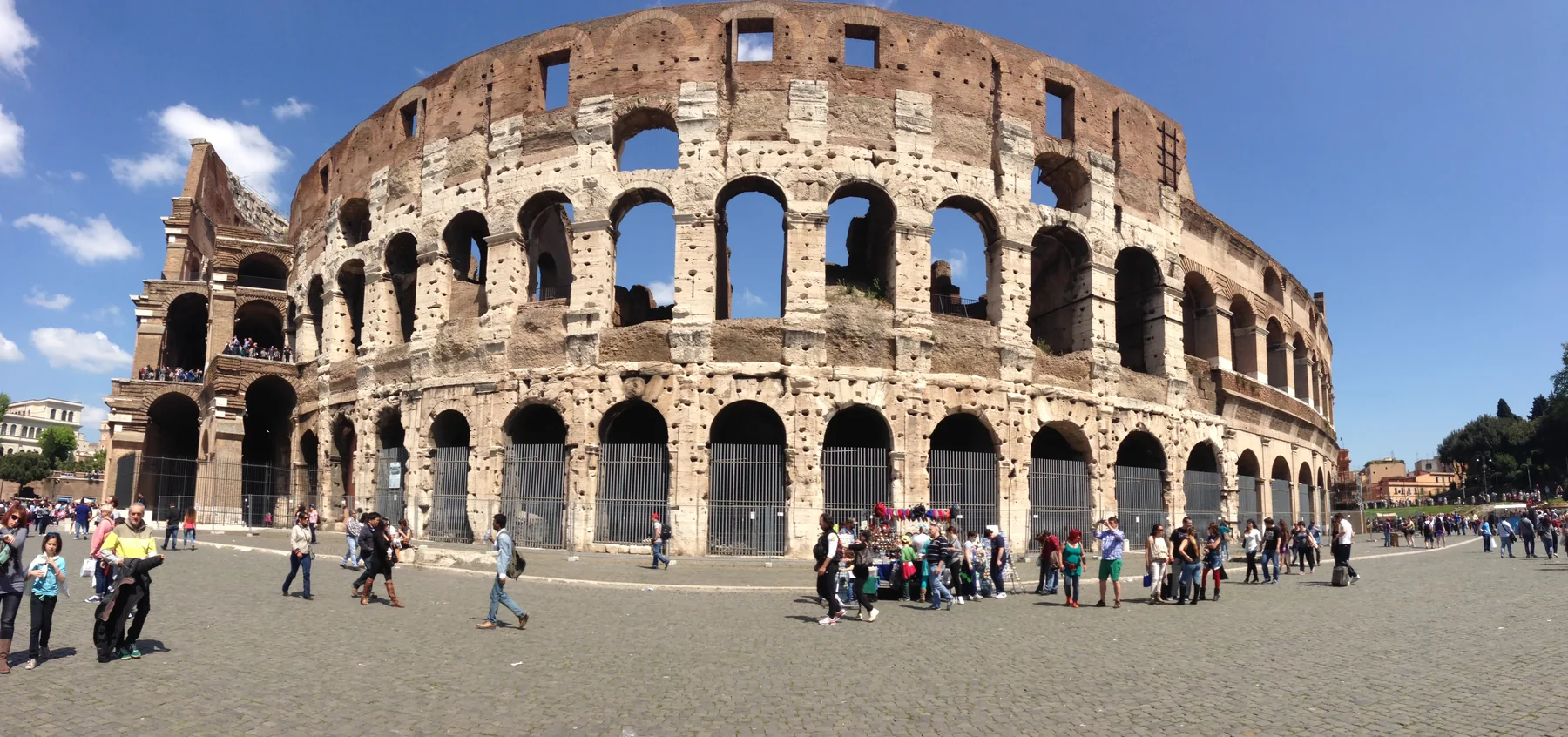
Then we came out by the Colosseum. After the Circus Maximus, the difference is obvious. There everything stretches out for racing; here it's an oval arena with rows of spectators all the way round. The Flavian emperors built the amphitheater, and Titus opened it in AD 80. From the outside, the thing that gets you is how far those rows of arches go. Inside, you can see the part of the building that used to be hidden from the crowd.
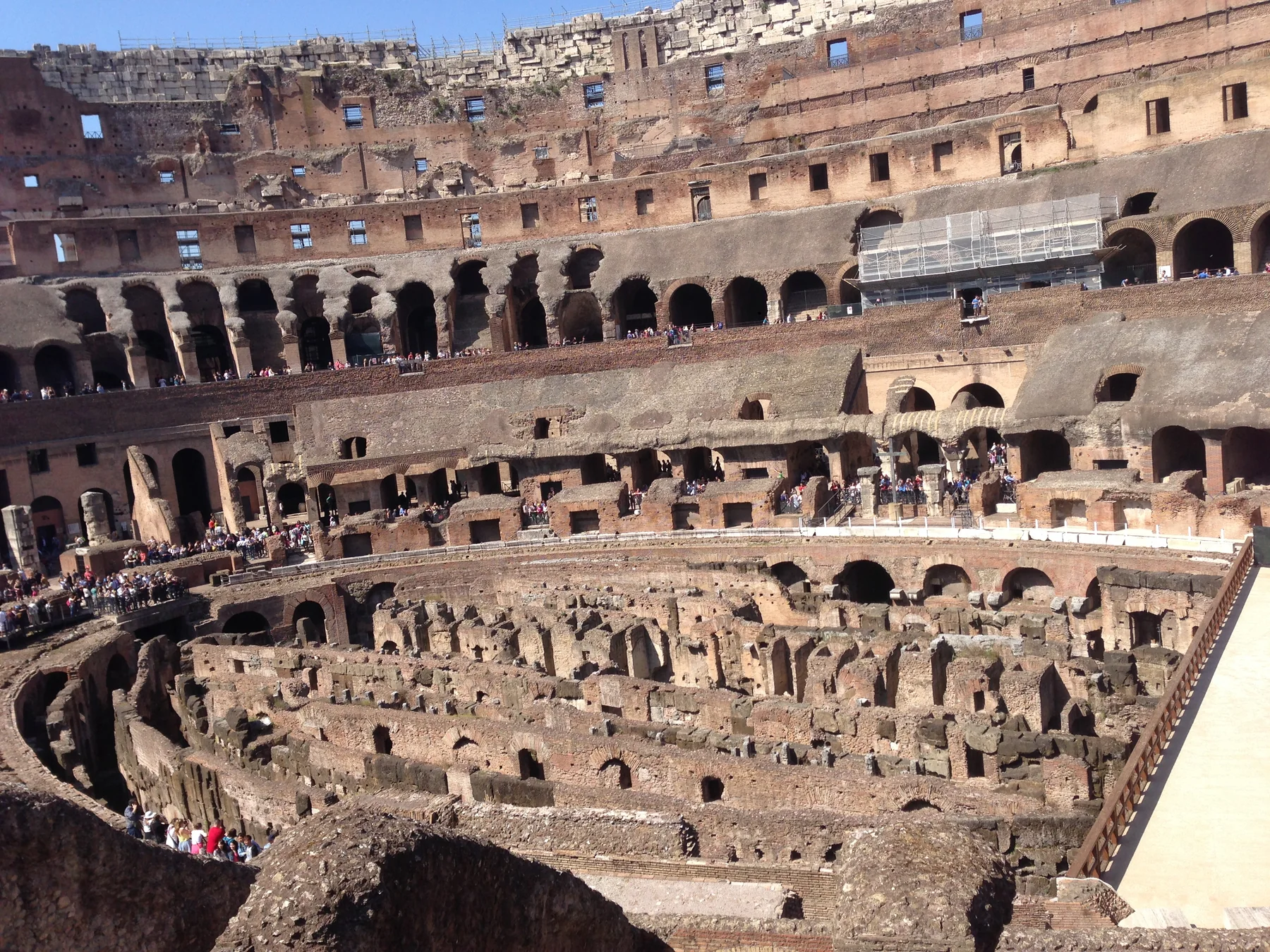
The arena had a wooden floor. Underneath were corridors and machinery. Winches and lifts would bring animals or scenery up through trapdoors. The audience saw something suddenly appear in the arena. They didn't see how many people were working below to make it happen. Today, from above, those underground walls are exactly what you see. It made me think of the man who seemed to be sitting in midair the day before. I never did figure out what held him up, but I recognized the principle: a good effect starts somewhere the audience can't see.
After the Colosseum we went back to the Circus Maximus. By then the crowd was sitting on the slopes. Two groups met in the arena, threw things at each other, and fought with swords. Watching from outside, you'd think anyone could put on armor and swing a sword. I tried on armor, too, and had a go at fighting one of the reenactors. Without any training, I did, to put it mildly, not all that well. That made it even more interesting to watch the people who'd actually practiced.
From the Pietà to a Closed Door
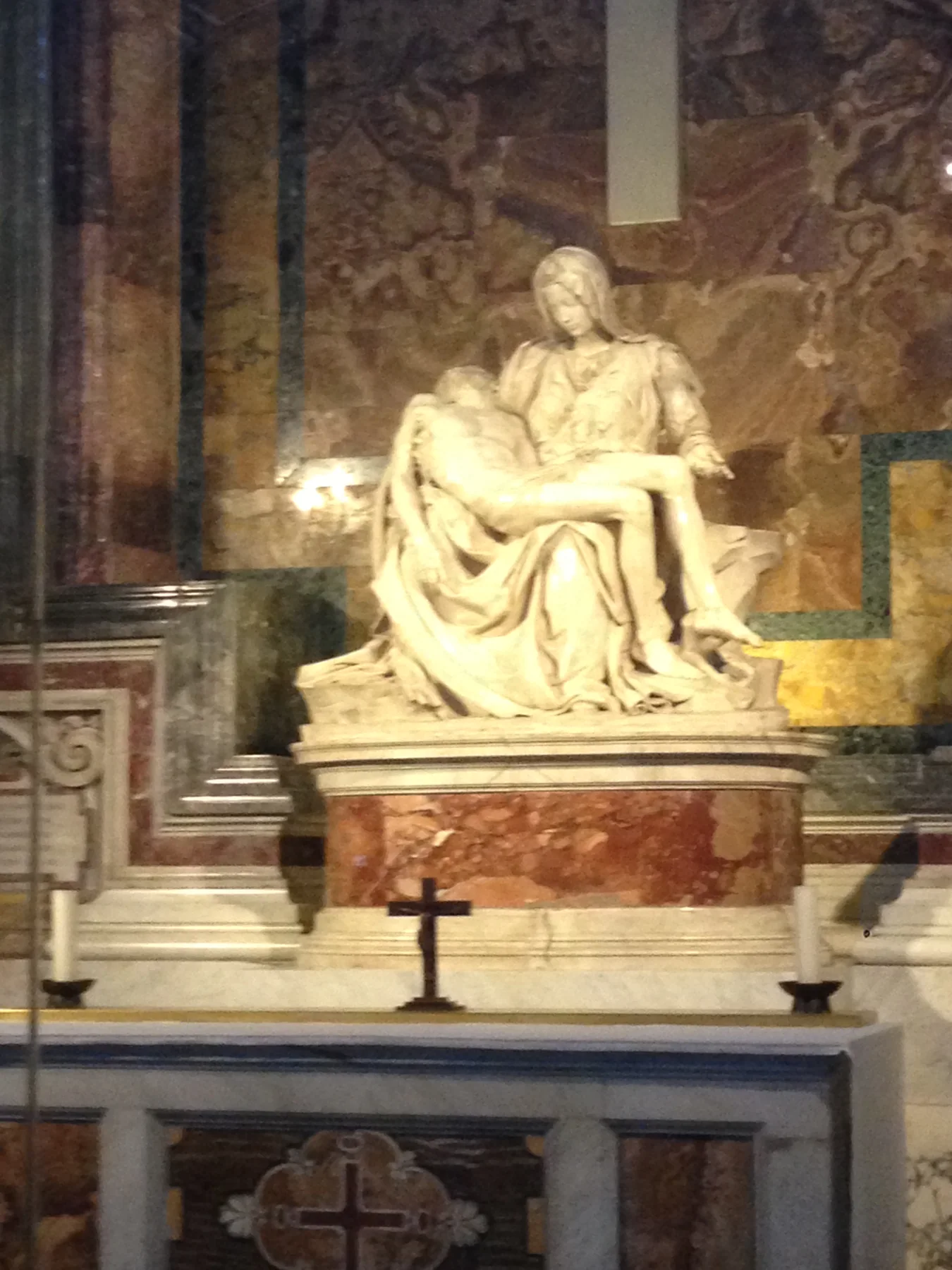
That evening we went back to the Vatican, our second visit in two days. Yesterday I'd looked at the basilica from the square, trying to keep the balcony in sight. This time we went inside. There's Michelangelo's Pietà, Mary holding Christ's body in her lap. Michelangelo was twenty-three when he worked on it, and he carved both figures from a single block of Carrara marble. There's a signature on the sash across Mary's chest. He never signed another of his sculptures like that.
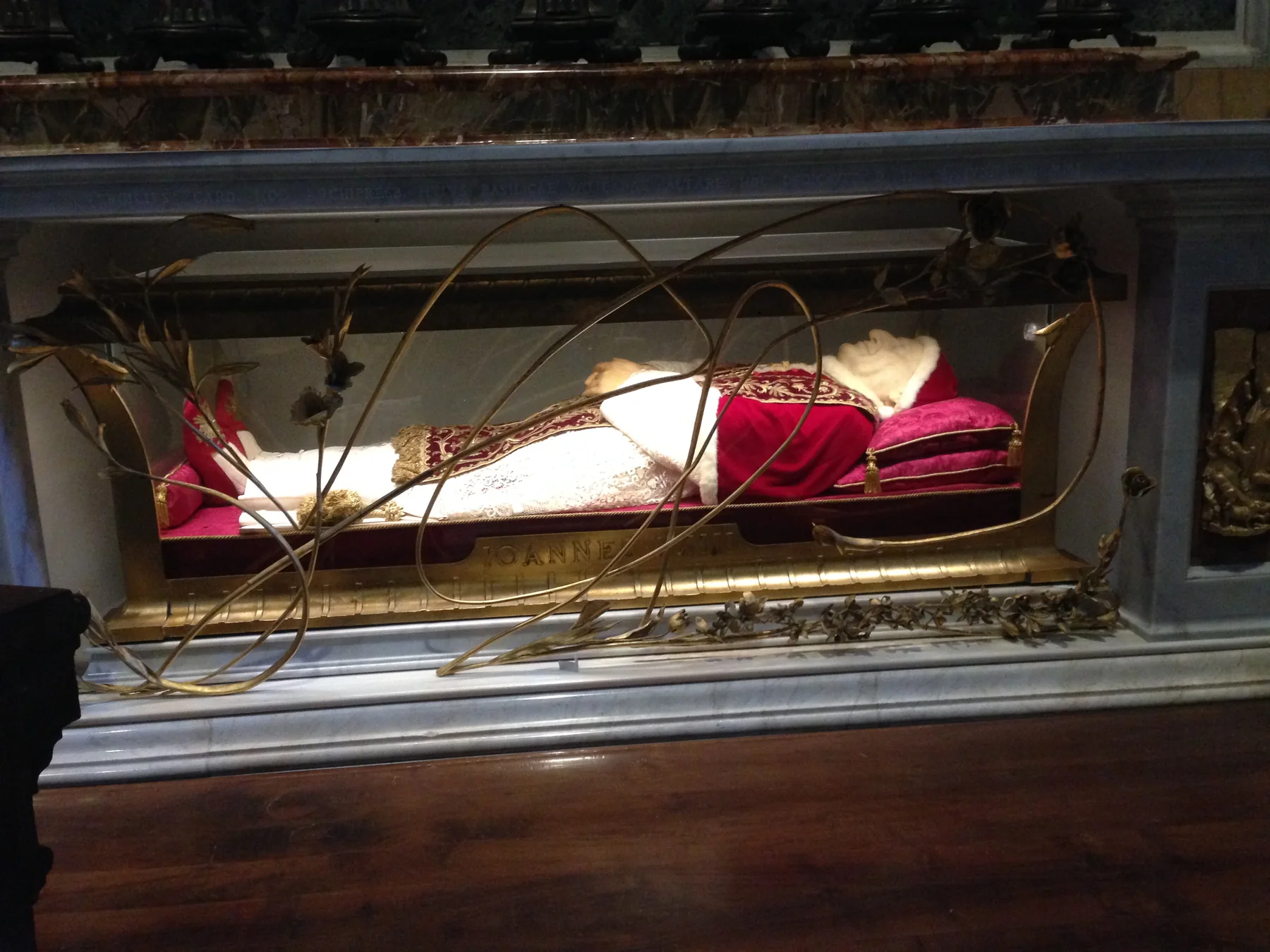
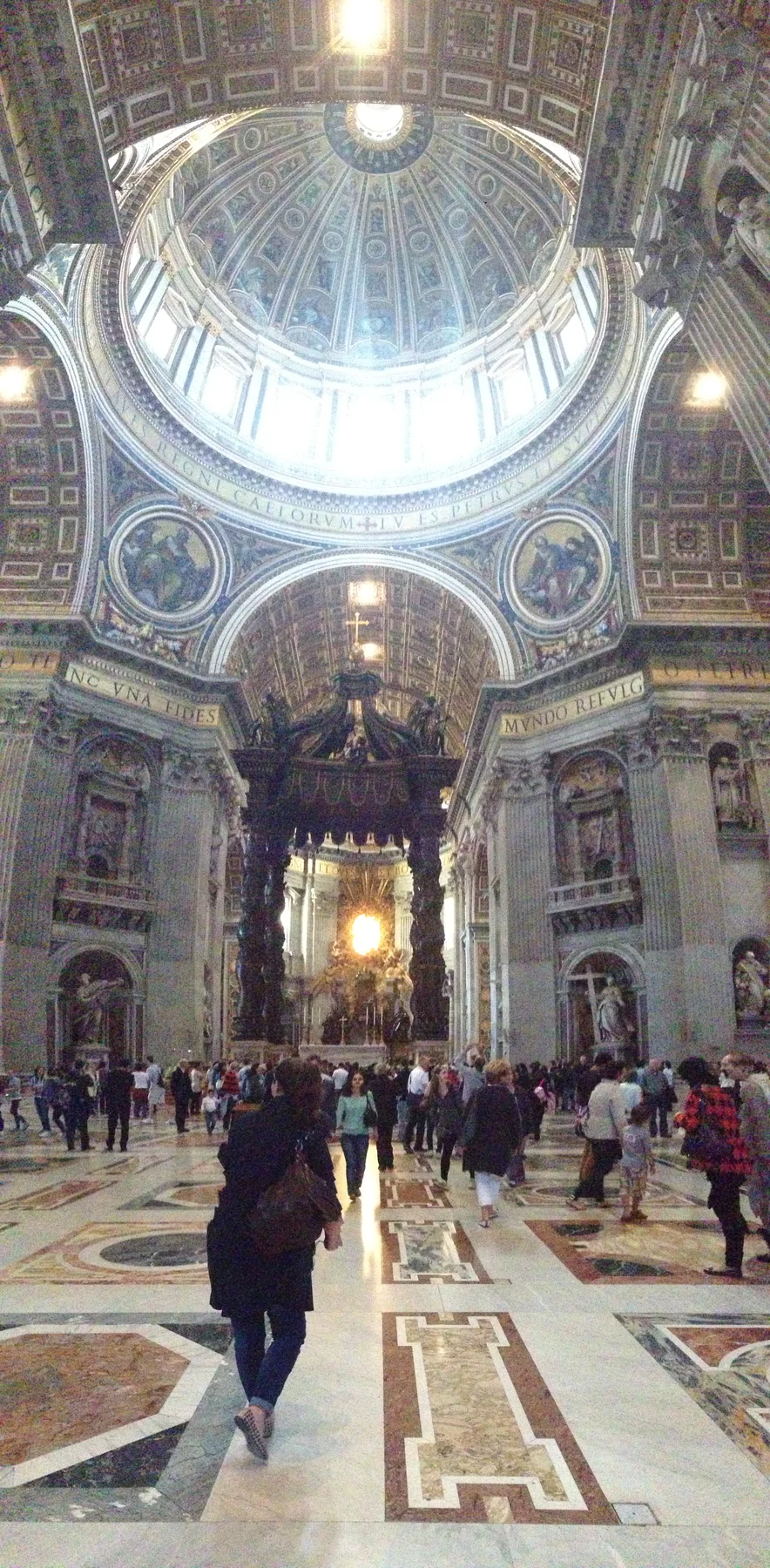
Under the altar of St. Jerome is the glass tomb of John XXIII. Farther in, beneath the main altar, the Church honors a very different tomb: that of the apostle Peter, whom Catholic tradition considers the first Pope. According to tradition, Peter was executed in Rome under Nero. Under Constantine, in the fourth century, the first basilica was built over the spot where he was believed to have been buried. More than a thousand years later, in 1506, Julius II began building a new basilica. Bramante drew up the first design, Michelangelo designed the dome, and Carlo Maderno built the facade. The basilica was consecrated in 1626. Several generations of builders came and went, and the point they'd built it all around stayed the same. Bernini's bronze canopy now rises above it.
On the way out I saw another Swiss Guard. This time he wore a dark beret instead of a helmet, and white gloves. The same striped uniform gave him away at once. The Easter crush was gone. Those colors are pretty hard to miss on the cobblestones in the evening.
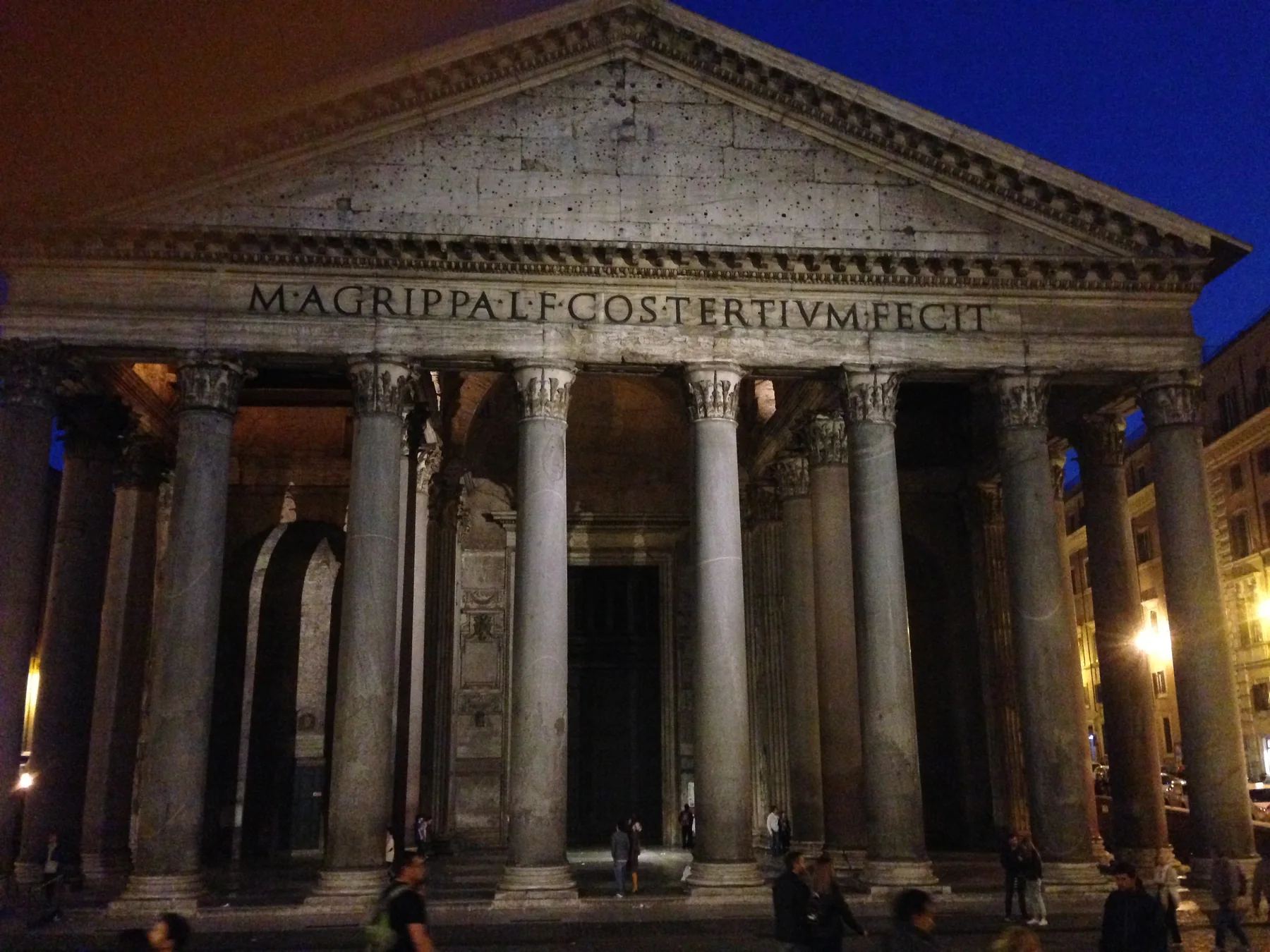
We wanted to go into the Pantheon, too. It stands on a square, with Agrippa's name in big letters above the columns. He's associated with the first building; the one here today dates to Hadrian. It was consecrated as a Christian church in 609. I wanted to see where the Romans kept their gods. But the doors were already closed, and the gods weren't letting us in on the first try. Even Washington, where the scale of the buildings had impressed me, felt modest next to Rome. As it turns out, you don't have to get inside to see that.
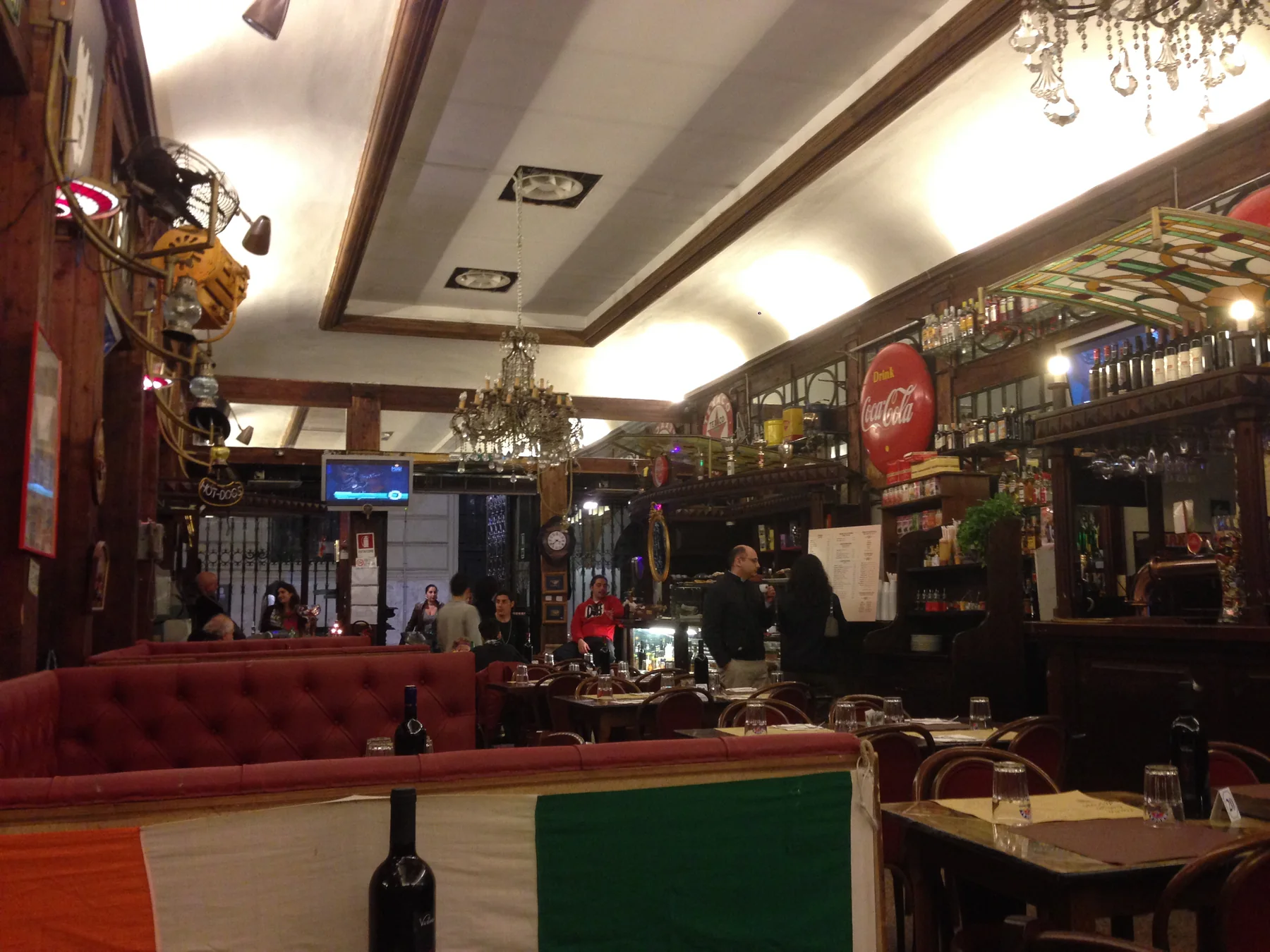
Since we hadn't had much luck with the gods, we decided to find a little Italian cafe and try some wine. A local singer was performing inside. It was one of those songs you want to join in with right there at the table, even if you don't remember all the words: “Mamma Maria.” And that was how Rome's birthday ended. We'd come for a couple of days to see the Pope, and we finished the evening listening to an Italian song in a cafe because the ancient gods had already shut the door.
April 22. On to Budapest
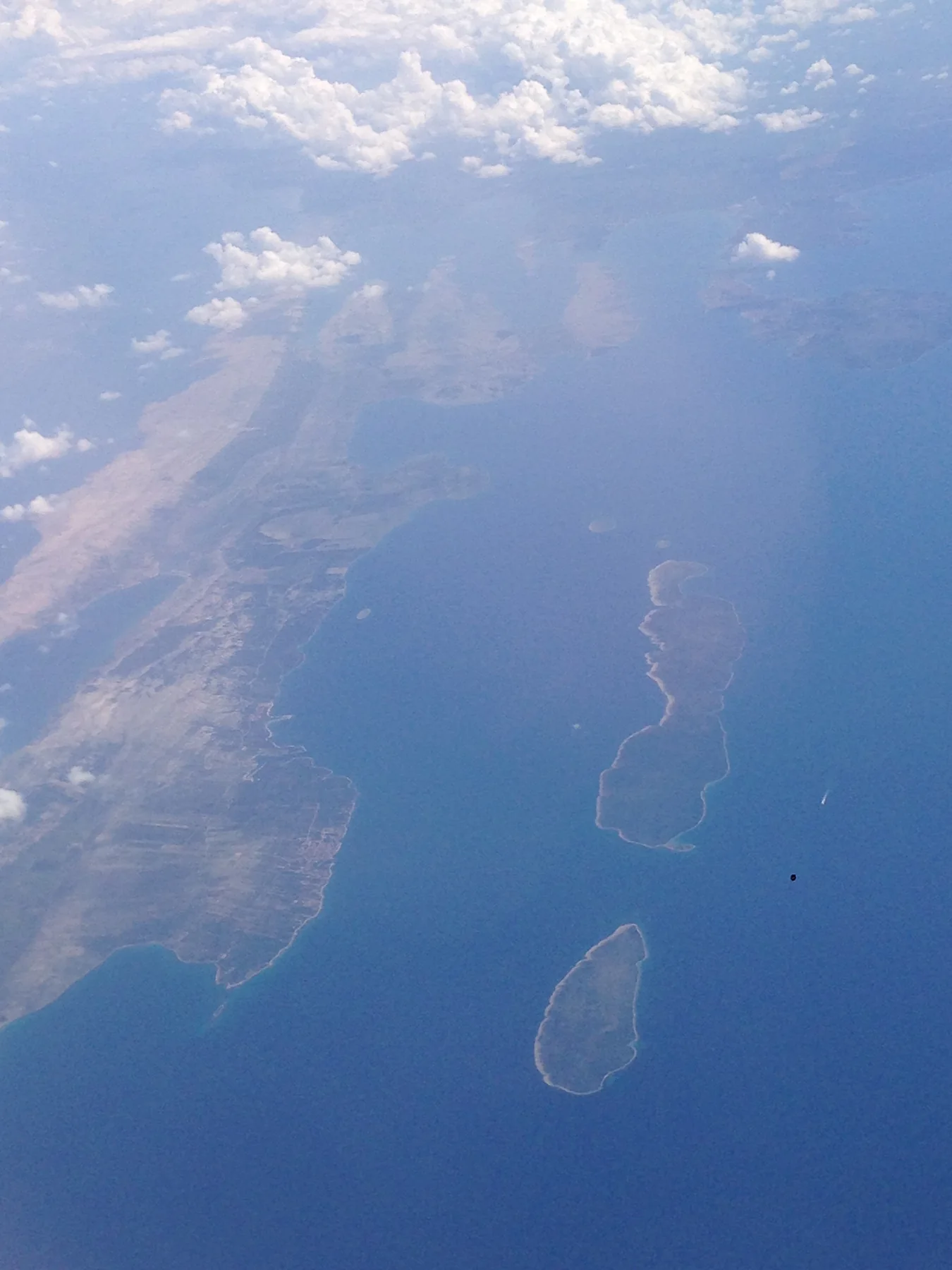
The next day we flew from Rome to Budapest. I think all we had time for there was a night's sleep. Then it was on toward home.
On April 18 I was still in Lviv, and by the 24th I was sitting at a conference in Kyiv. Between those two dates was everything that began with one evening's “Why not Rome?” And a coin in the Trevi Fountain so I could come back someday. And that was my Roman holiday.