
San Francisco: One Day in Silicon Valley
January 27–29, 2014
We flew into San Francisco from Los Angeles late at night. Normal people get off a flight like that, go to a hotel, pick up their key, and go to bed. We’re standing outside a marina in Brisbane, looking for the security guard who’s supposed to give us the keys to a sailboat. Airbnb was still new to us. The ads said you could rent more than just an apartment. So we decided to see how far “more than just an apartment” could go.
First we found the guard. He checked our IDs and handed over the keys. Then we had to get in, figure out where our slip was, and find the boat we’d paid for among all the others. The numbers on the docks were supposed to make it obvious. It took us a while to appreciate that.
The sailboat turned out to be small and lovely, just right for two. The bed was right up in the bow. At night the boat rocks a little, and you can hear things out on the water. Who’s doing all the talking? Hard to tell in the dark. I can’t say it was particularly comfortable. But not long ago I was in Ukraine, and now I’m lying in the bow of a sailboat outside San Francisco. All it took was booking a slightly different place to stay.
What You Can See in the Morning
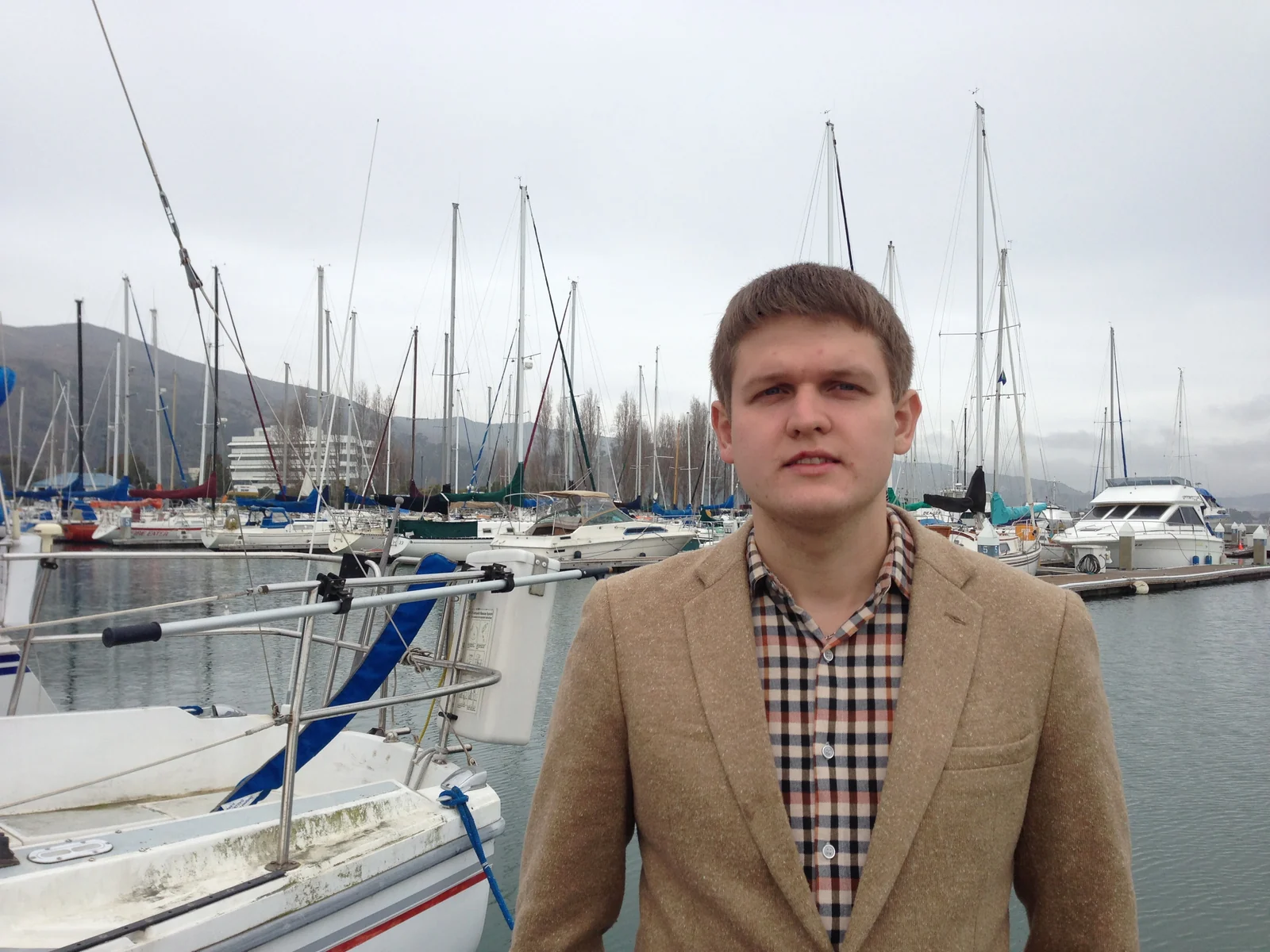
We wake up, step outside, and only then see where we’ve ended up. Water, masts, hills across the bay. At night all we could see were the numbers on the docks. Now we stand there looking out and thinking, wow, it’s beautiful here. When a day starts like this, there’s a good chance it’ll be a good one.
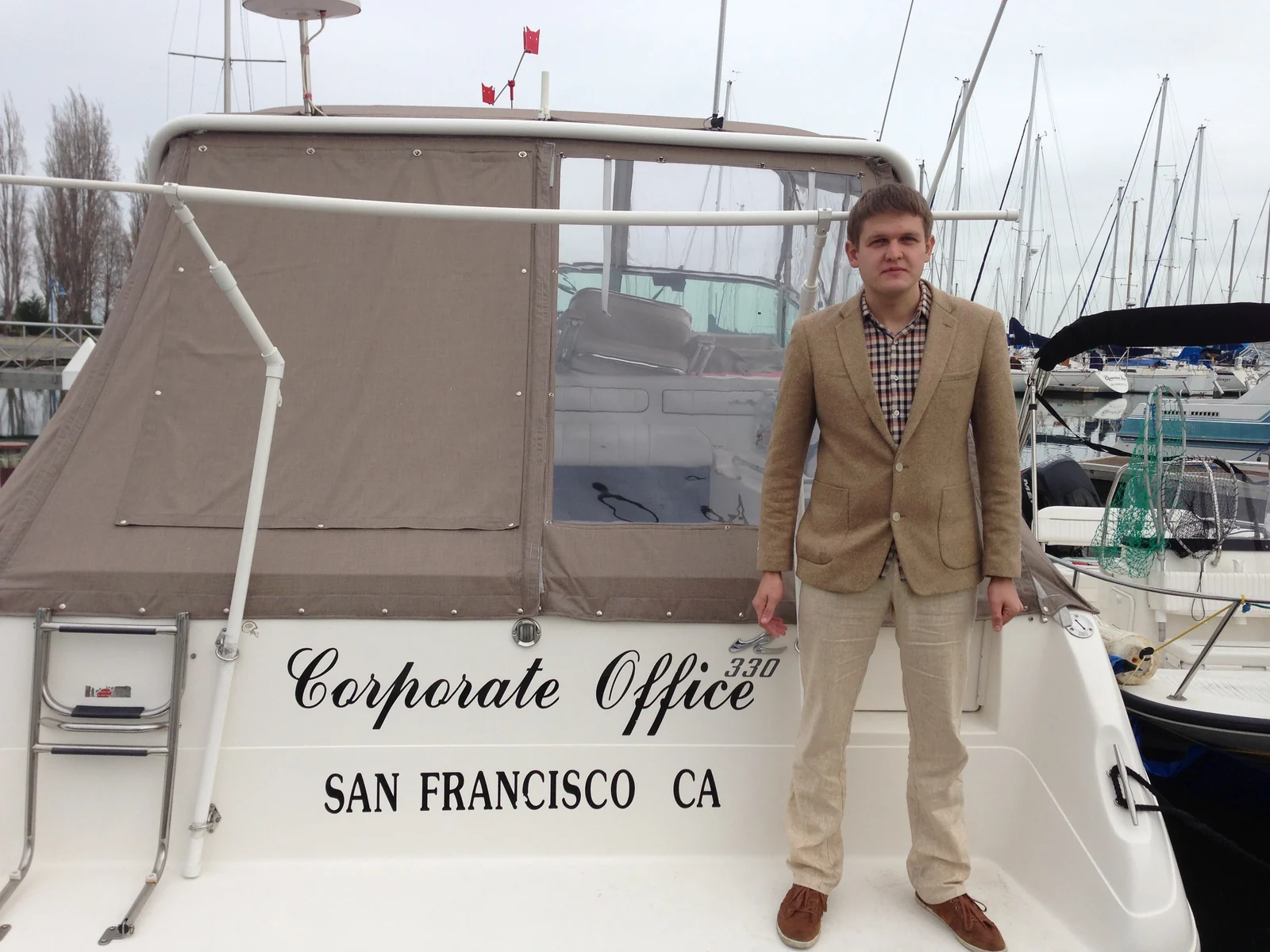
We walked around the marina to see who our neighbors were. One yacht had “Corporate Office” proudly written across it. That’s not the one we slept on. After a night on a sailboat, the idea of an office on the water didn’t sound all that strange.
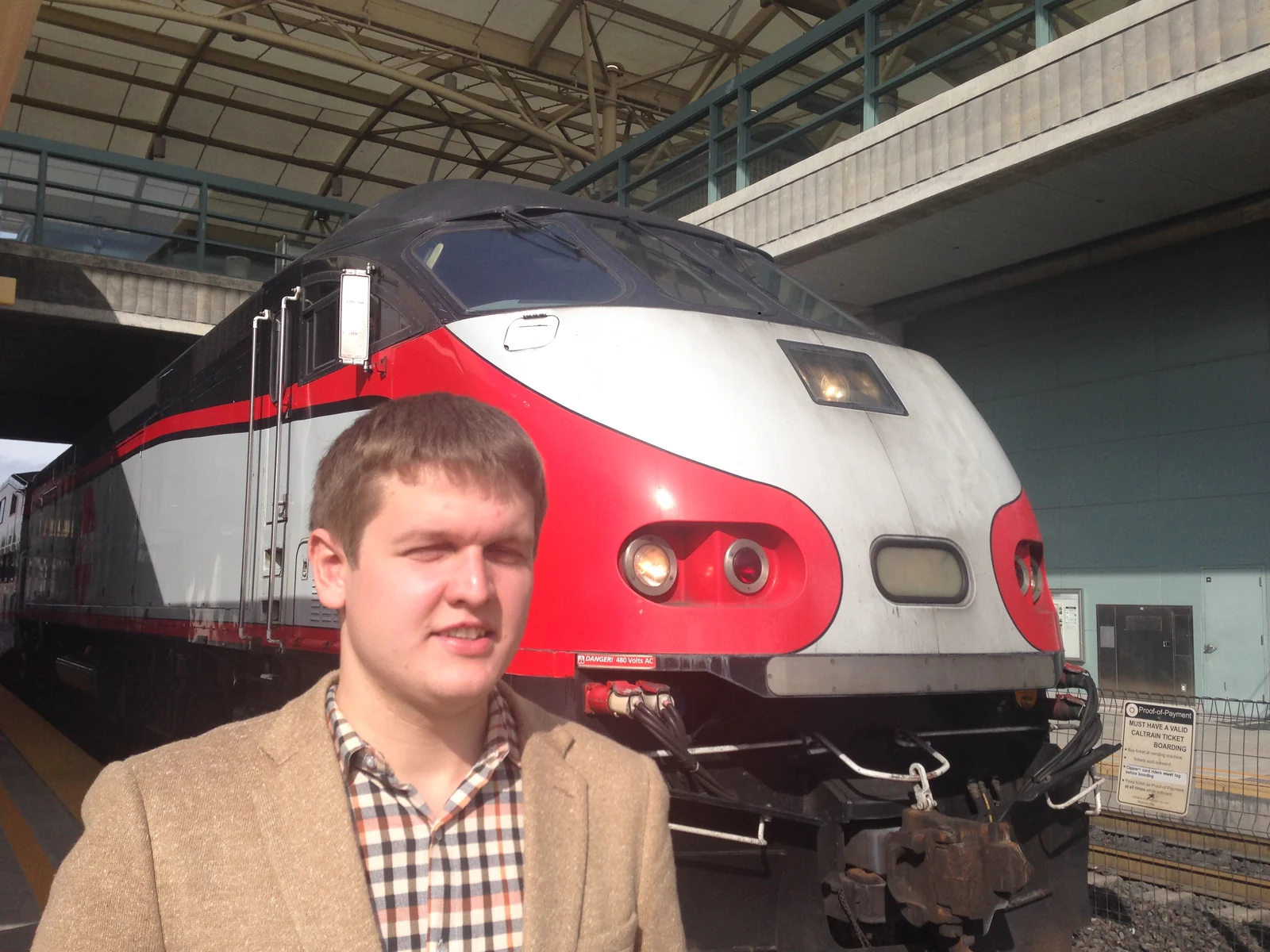
We had one full day for Silicon Valley. Uber seemed expensive, so we started looking at train schedules. We still had to get to the station. That photo of me with a train was taken in Millbrae, a separate city south of San Francisco. Stanford was first on the list. I wanted to start where the people behind the companies we were going to see had once sat in class, with no idea that one day people would come all that way to take pictures next to their signs.
Where Companies Come From
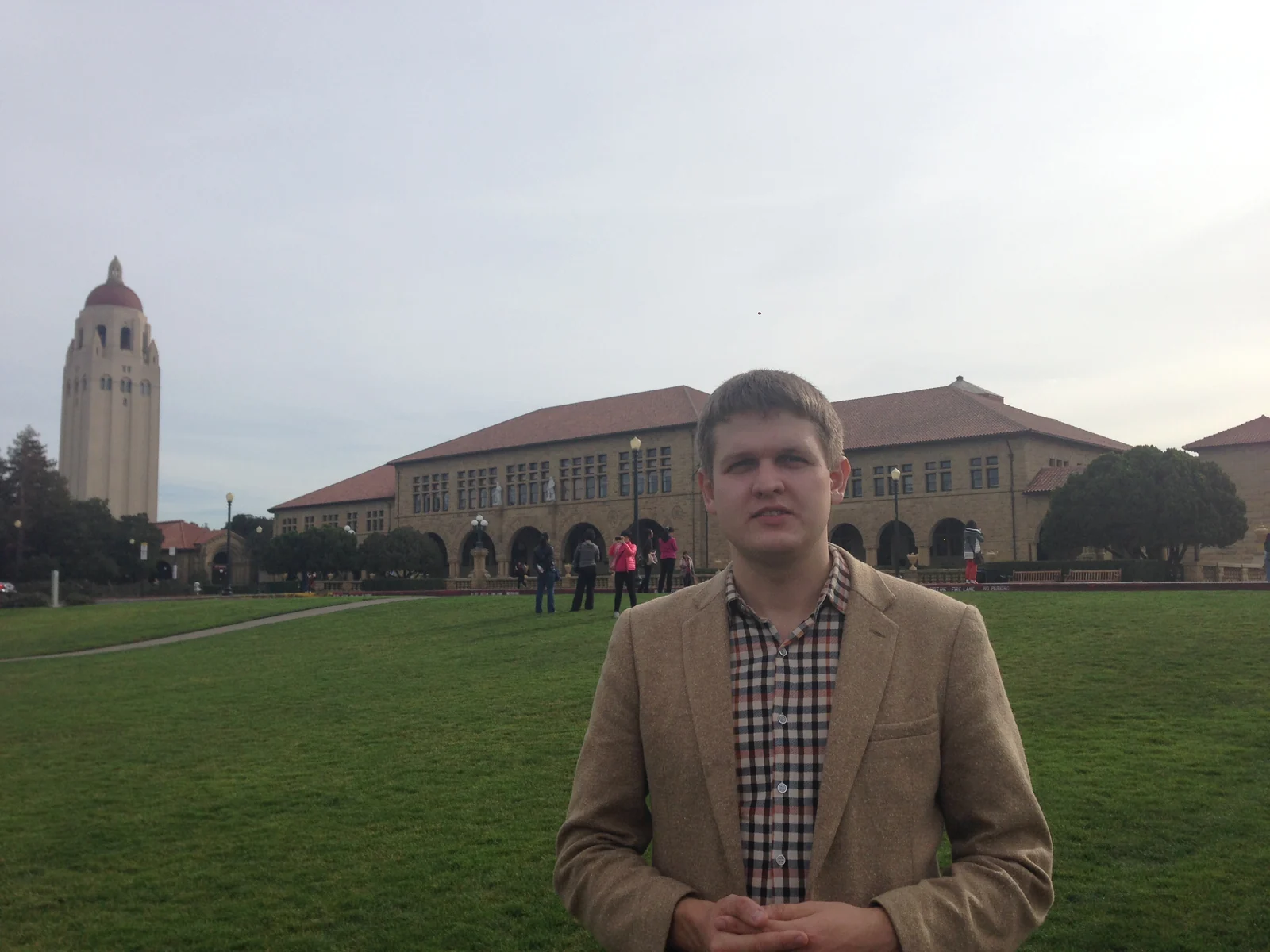
As you approach Stanford, there’s a broad lawn, Hoover Tower, and the arches of the main courtyard. We’d come to see the university, but I wanted to know how something much bigger than the university itself kept growing out of this one place. The stories are quite different, even if they start practically next door to one another.
Bill Hewlett and David Packard met at Stanford. Their professor, Frederick Terman, encouraged engineers to put what they knew to work outside the classroom. Hewlett-Packard grew out of an audio oscillator and a garage in Palo Alto. Half a century later, Jerry Yang and David Filo were organizing links to sites they’d found on the early web. That directory became Yahoo. And Larry Page and Sergey Brin, also Stanford grad students, were looking at how links between pages could tell you which ones mattered most. That’s how Google started.
I’m interested in what happens between these two sentences: Somebody comes up with something in a dorm room. Then millions of people use it. At a university you can find someone worth tackling a problem with, and a professor who’ll help you turn the idea into a prototype. Nearby there are incubators, investors, engineers who’ve already launched products, and companies you can show what you’ve built. If it works out, someone on that team might go on to help the next one. What I wanted to see up close was the distance between “let’s give it a try” and the first customer.
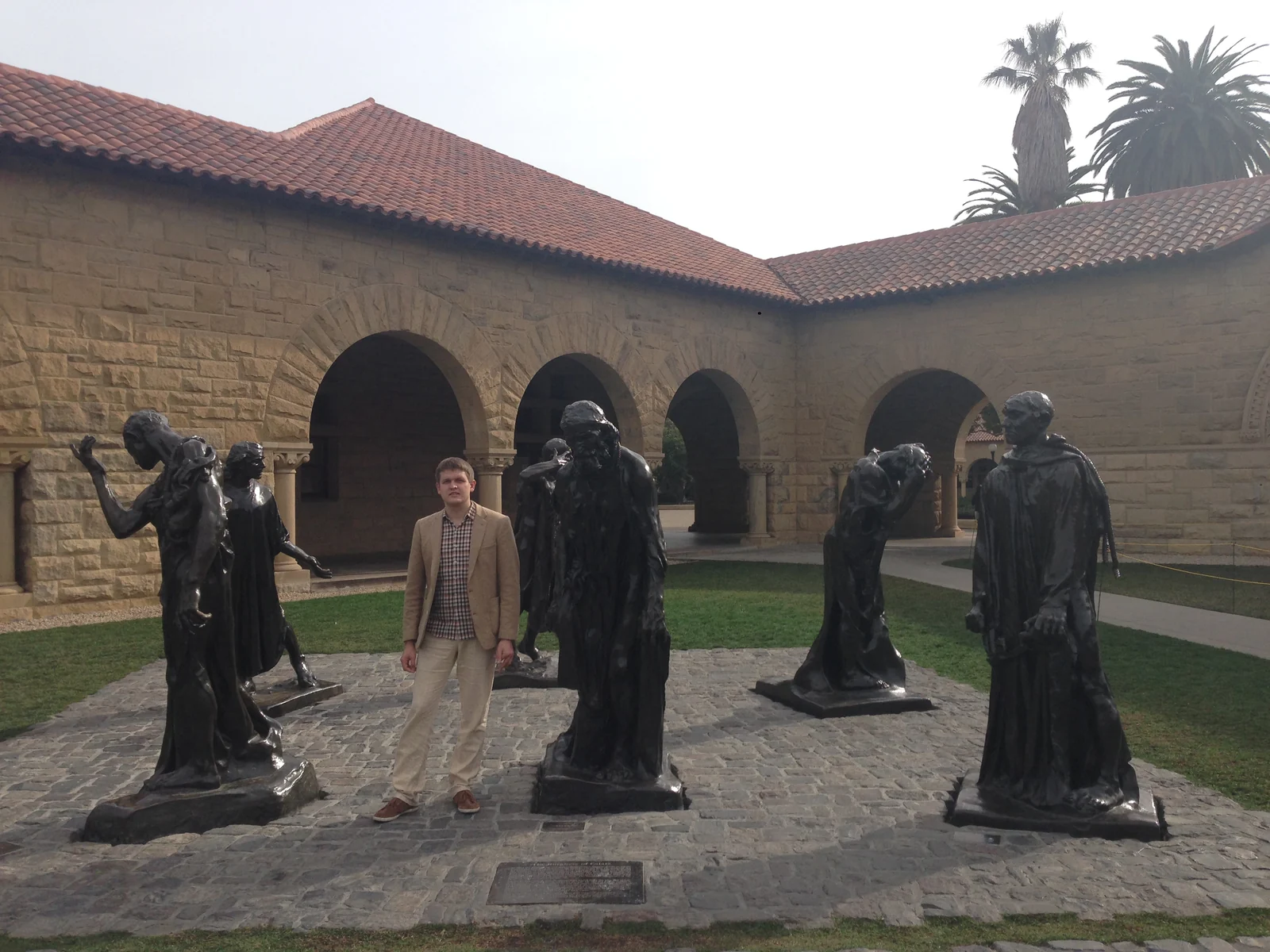
Just before the main courtyard, I stopped by a Rodin. The Burghers of Calais stand right where you walk through Memorial Court. As the story goes, during the siege of Calais six townsmen offered to surrender to the English king so he would spare their city. One is holding a key, another covers his face. They all agreed to do the same thing, and each is going through it in his own way. In the photo I’m standing among them, almost at the same level. I think that’s why it gets to me: it’s hard to look at those faces without asking who you’d be willing to step forward for.
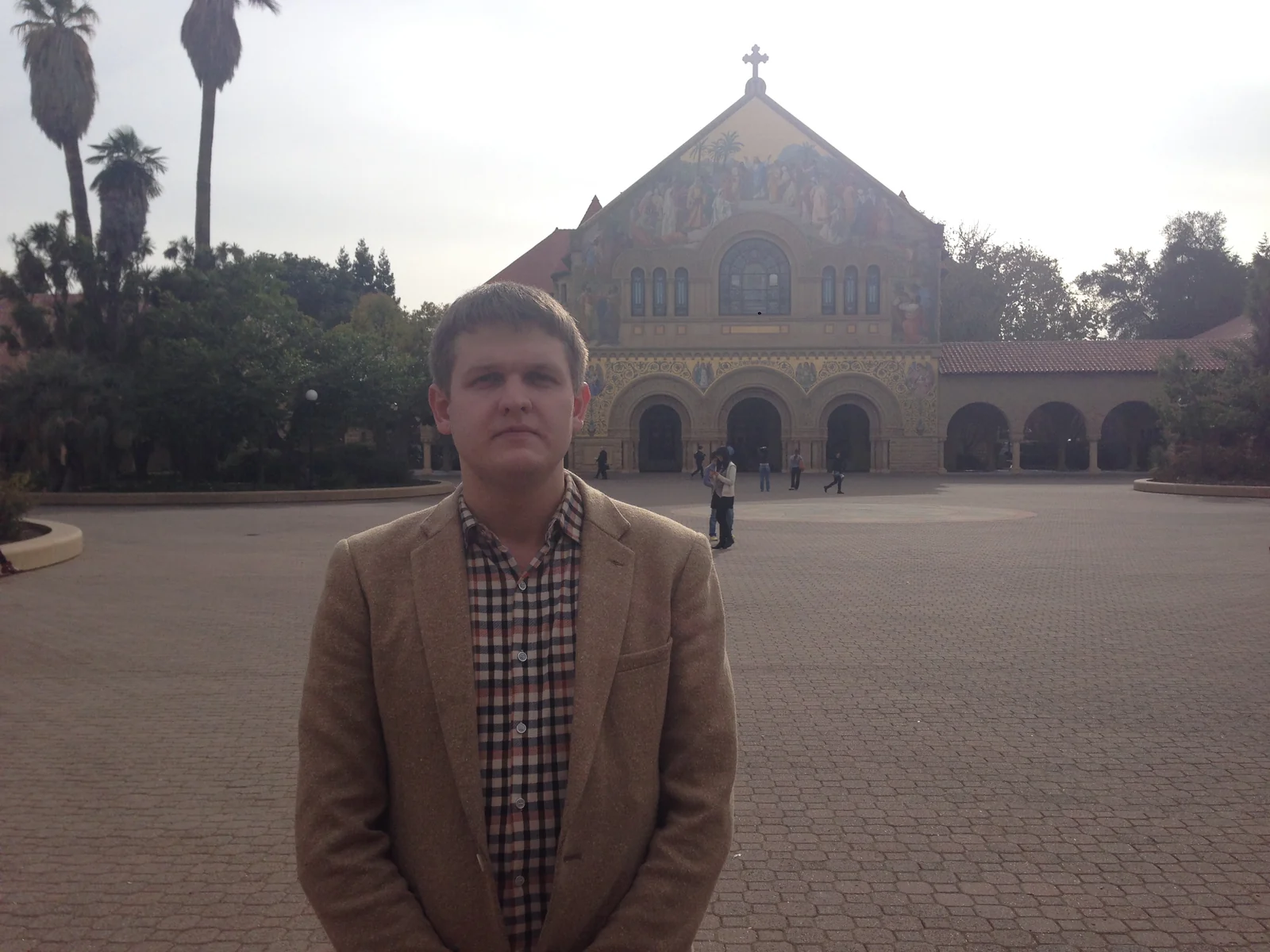
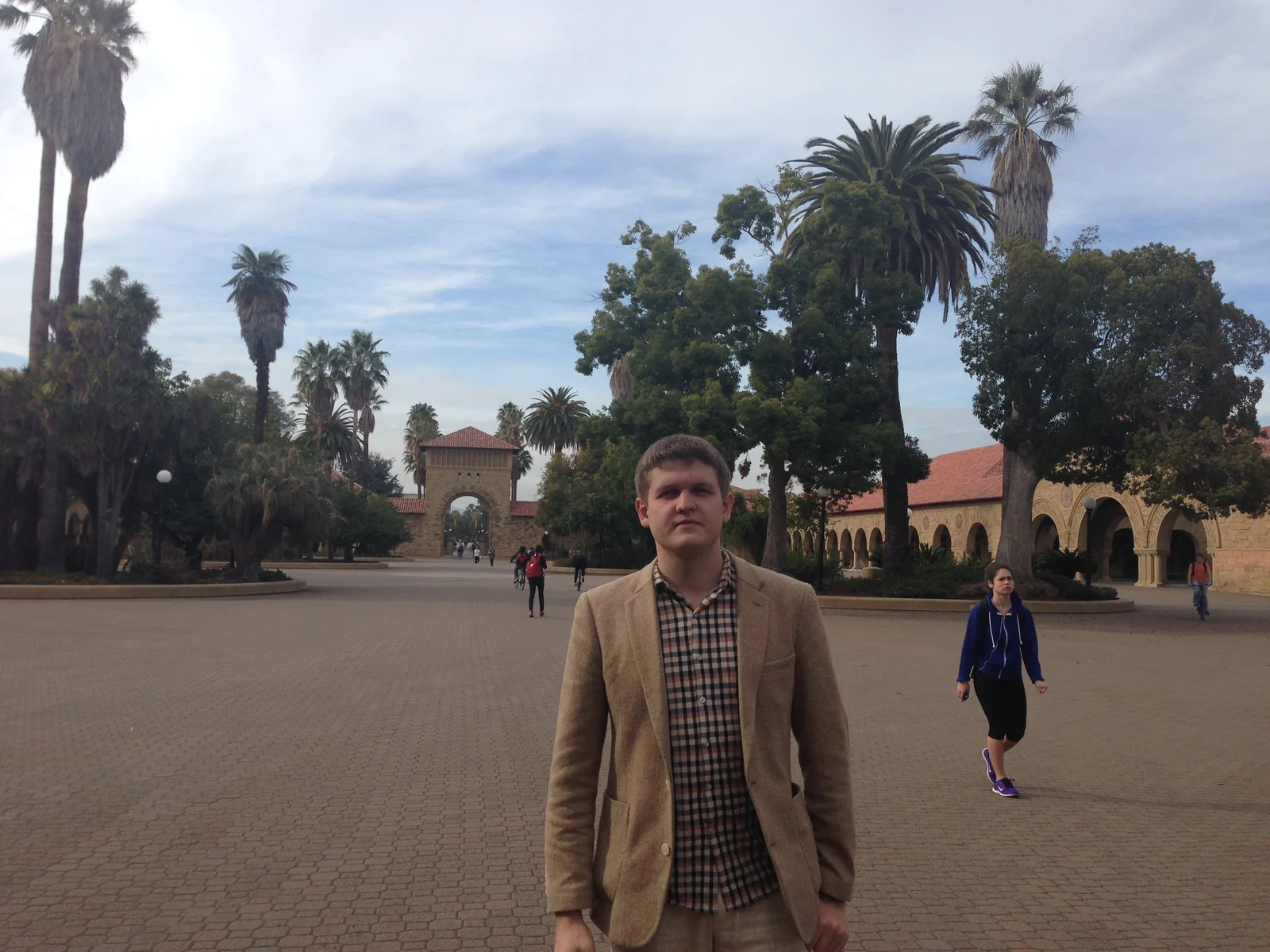
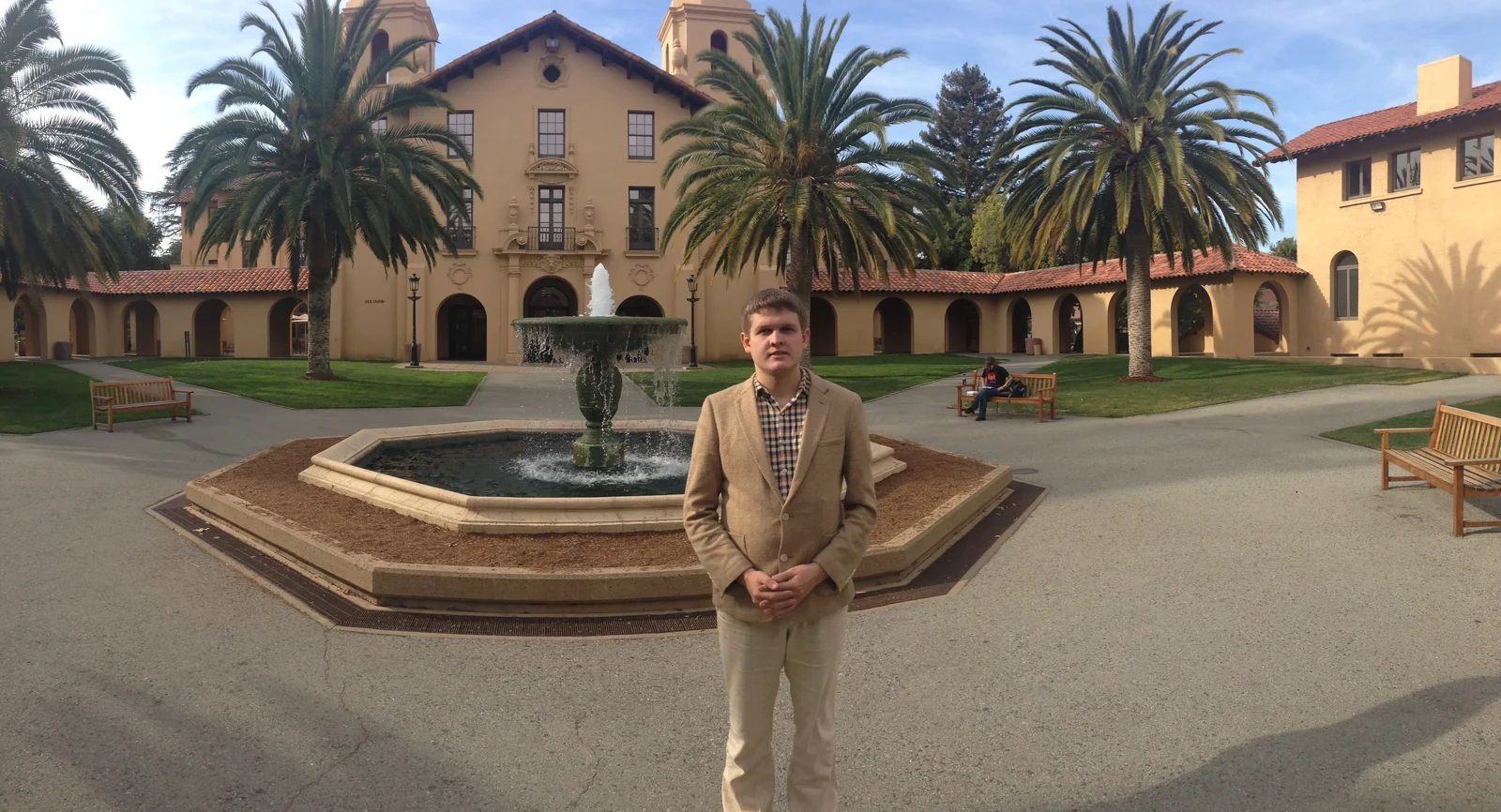
Memorial Church stands farther into the main courtyard. Jane Stanford commissioned it in memory of her husband. We walked under the arches and made it to Old Union, a student courtyard with palm trees and a fountain. It’s easy to start a company’s story with a garage, a directory, or a search engine. Here you’re looking at a place where, for years before any of that, people just met each other.
We stopped for a photo by the fountain. In Menlo Park there was a sign worth walking all the way around. The company you were standing in front of depended on which side you looked at.
Facebook on One Side, Sun on the Other
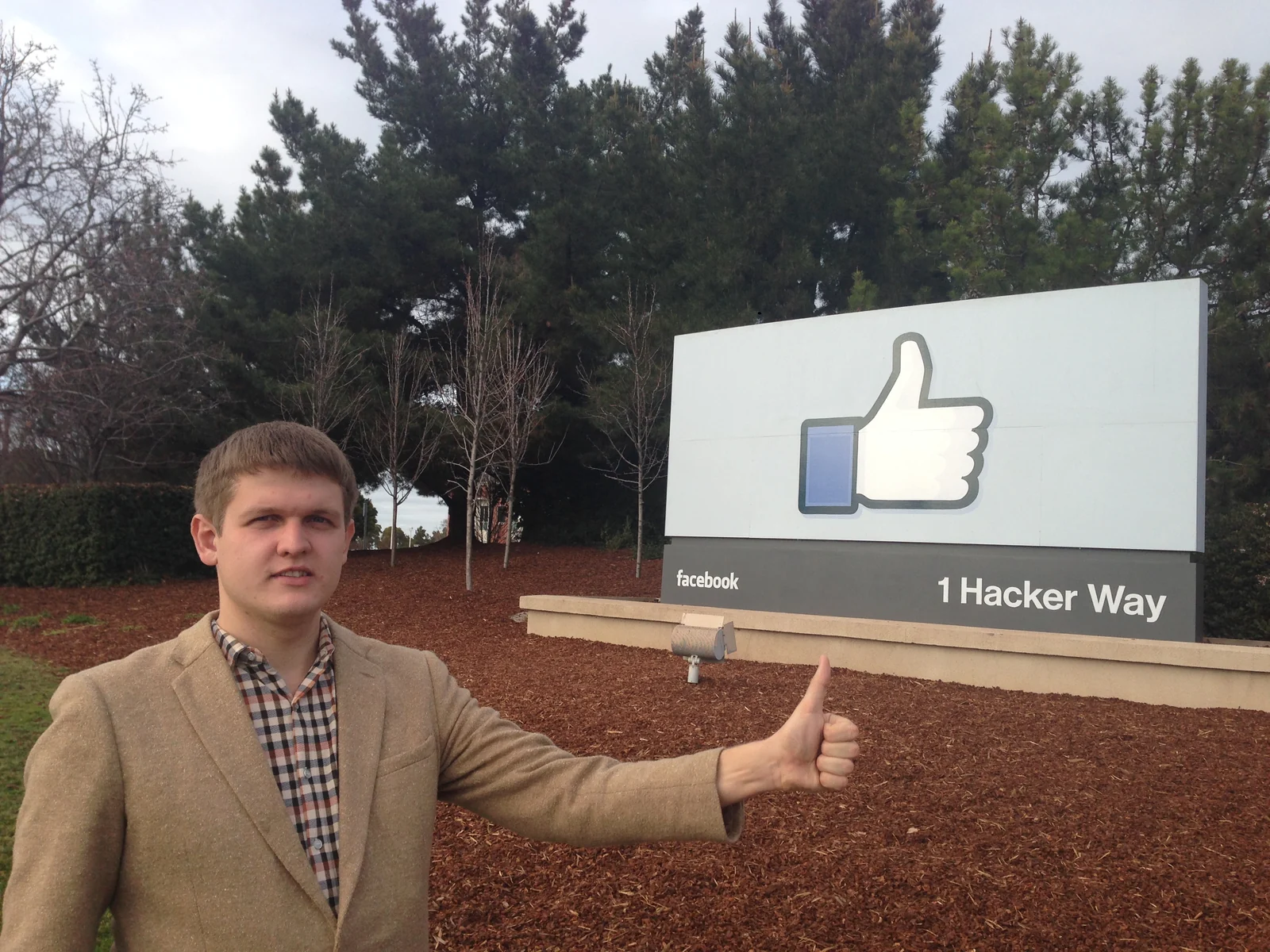
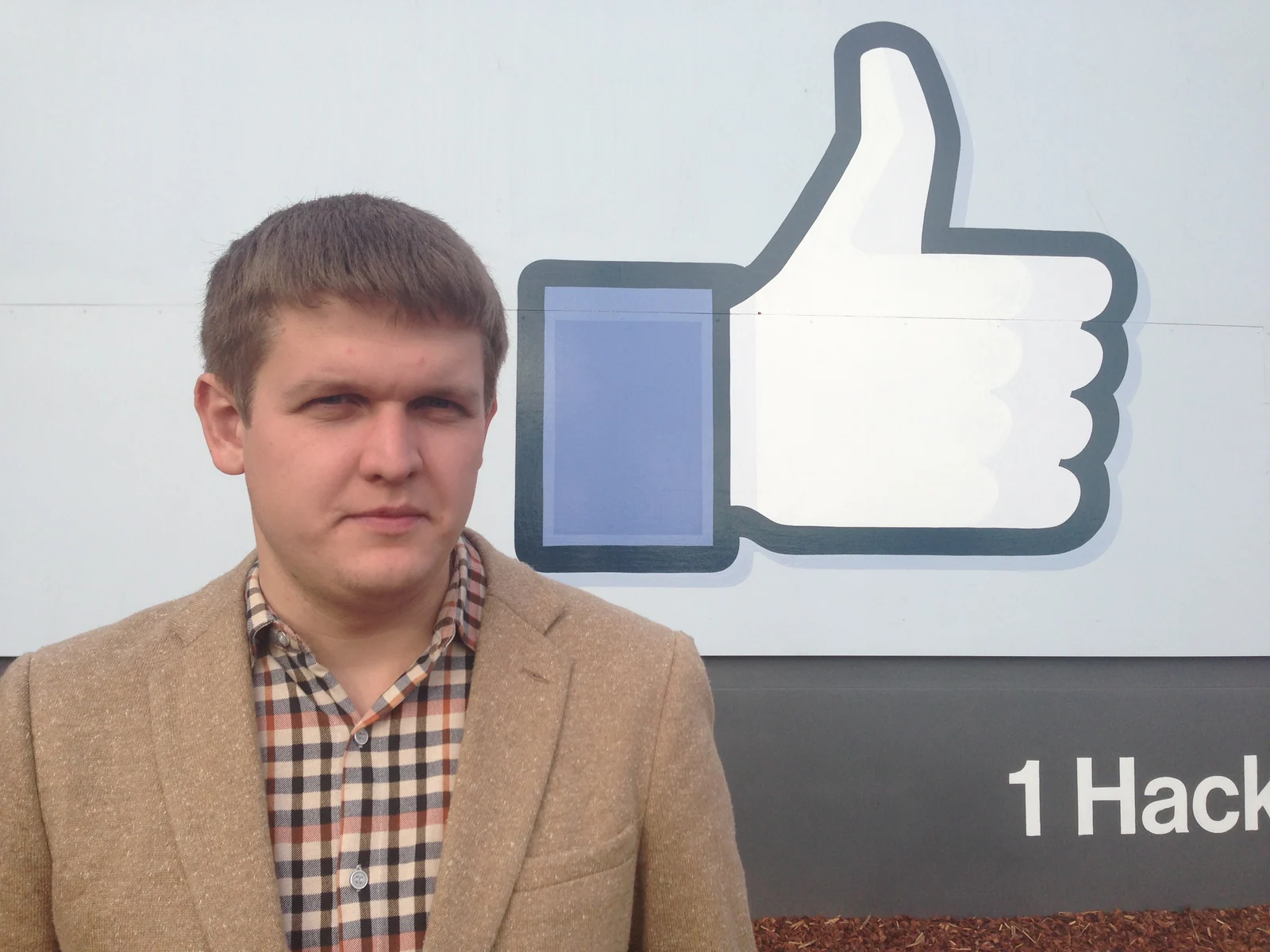
In Menlo Park, of course, we wanted to go inside and say hi to Mark. An ambitious plan for people Mark wasn’t expecting. We didn’t get in. But I did give the “Facebook, 1 Hacker Way” sign a thumbs-up and even recorded part of a course there. I walked around the sign, too.
On the back it says Sun Microsystems in big letters. Before Facebook, this was Sun’s campus. One of its founders, Andy Bechtolsheim, had built a workstation while he was still at Stanford. That’s where the name Sun came from: Stanford University Network. Sun developed Java, and by the time of our trip Oracle had bought the company several years earlier. So there you are at the Facebook sign, and staring back at you from the other side is another story that started at Stanford.
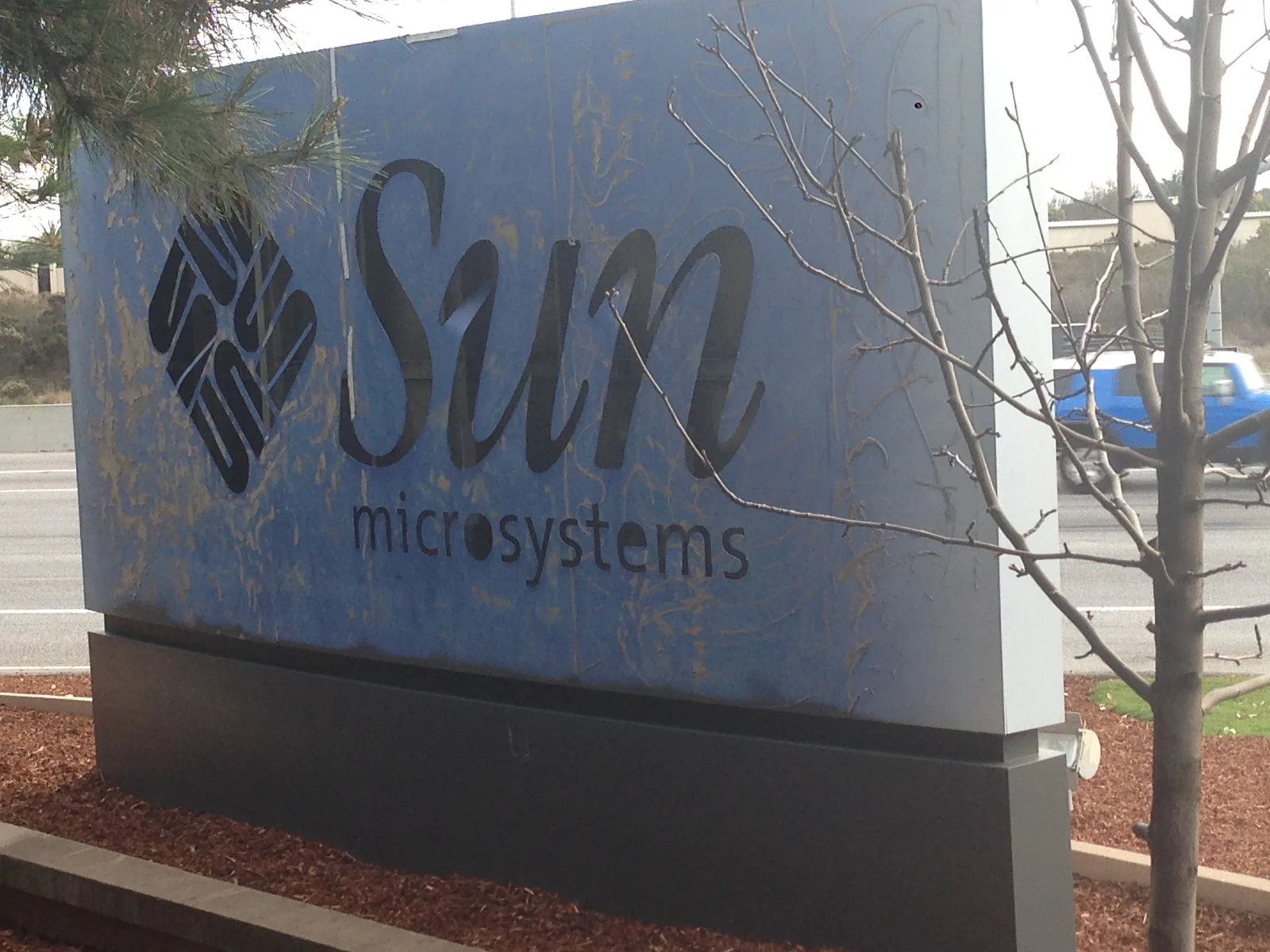
The sign’s designer, Ben Barry, says they left the old name there on purpose. Why make a new sign when there’s already one right there? And the back can remind you that someone else’s name might take the place of yours one day. I like that they put up that reminder for themselves. I wouldn’t leave it just to companies, either. When I stop learning and moving forward, the world doesn’t stop with me. The way I see it, I’ve got two options: keep growing or start falling behind, little by little.
Five Million Dollars at the Next Table
I think we were already on our way from Facebook to Google, sitting on the train, talking and laughing, when the man across from us asked, “Oh, hi. Are you from Ukraine?” We got talking. He turned out to be a fairly well-known Ukrainian startup entrepreneur. I wouldn’t have thought to put a meeting like that on our itinerary if we’d had twice as much time that day.
Another time we were just sitting in Starbucks drinking coffee. At the next table, some people were telling an investor about their project. And then I hear a number: five million dollars. I don’t know how it turned out for them. What struck me was that I was sitting there with a coffee, and a few steps away someone was trying to raise money for a project. There was another little piece of that distance between the university and the market I’d wanted to see for myself.
Android in the Courtyard
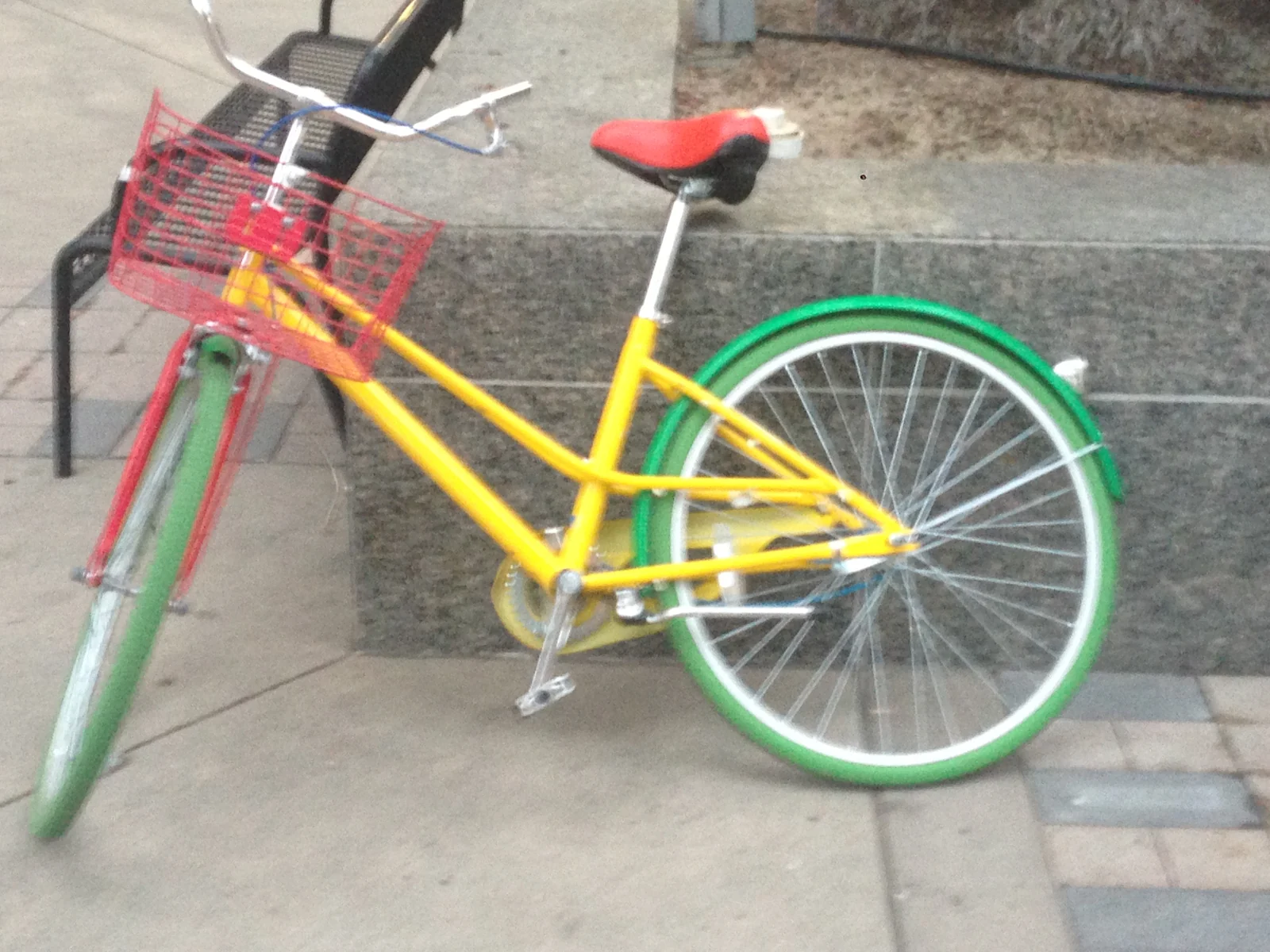
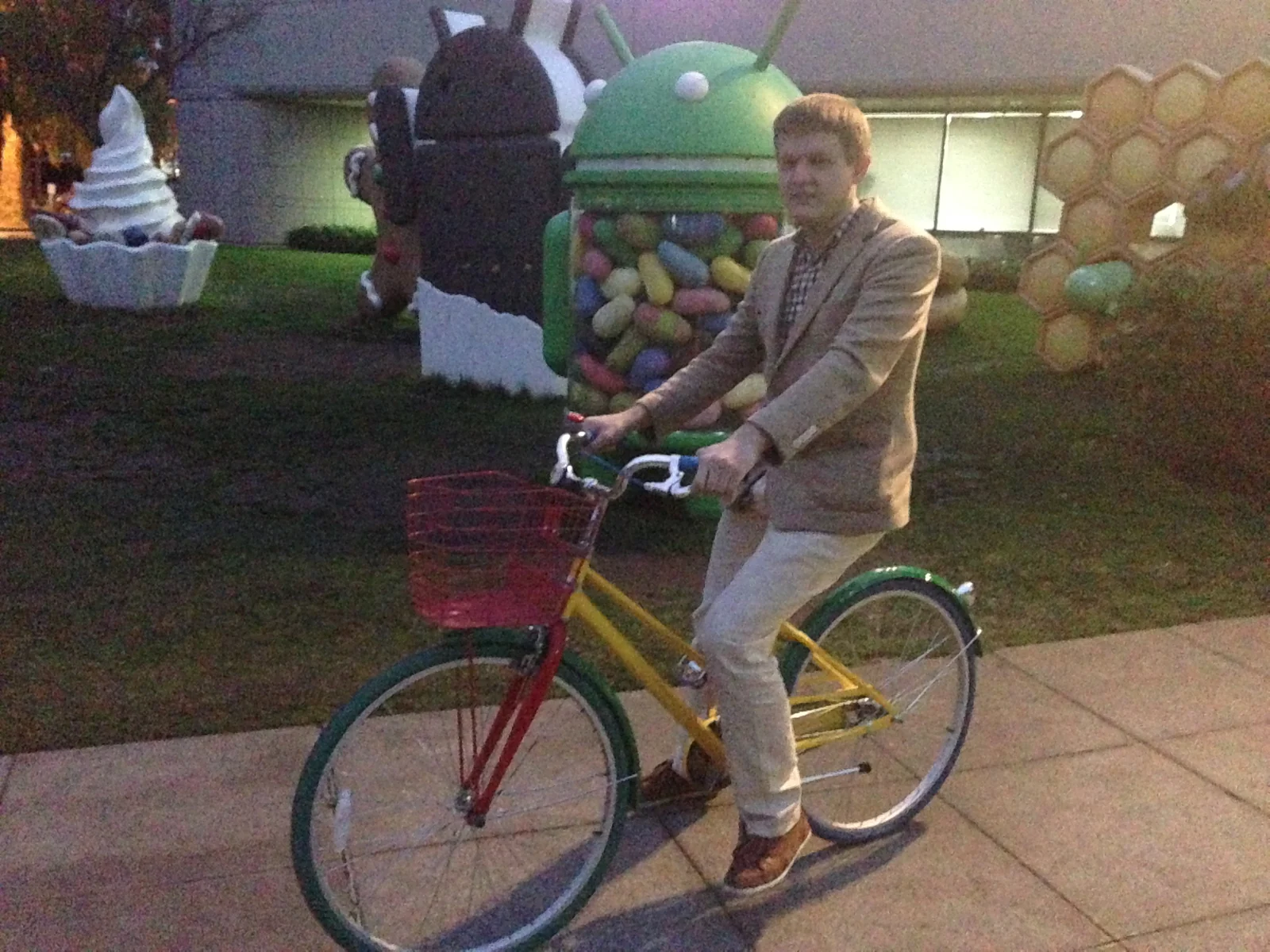
We got to Google toward evening. First I took a picture by the sign on Charleston Road. Then we saw the colorful bikes: yellow frames, green fenders, red baskets. You could use one to get from building to building. I didn’t ride one, but I did get on for a photo. Behind me there’s a whole crowd of Androids: one looks like a cookie, another is full of candy.
Then there’s the big green robot you couldn’t mistake for anything else, even without the candy. I stood next to it and raised my hand. By January 2014, Android was hardly new. But on that lawn its history looks almost like a series of photos: you go from one figure to the next and see how much changed in a few years.
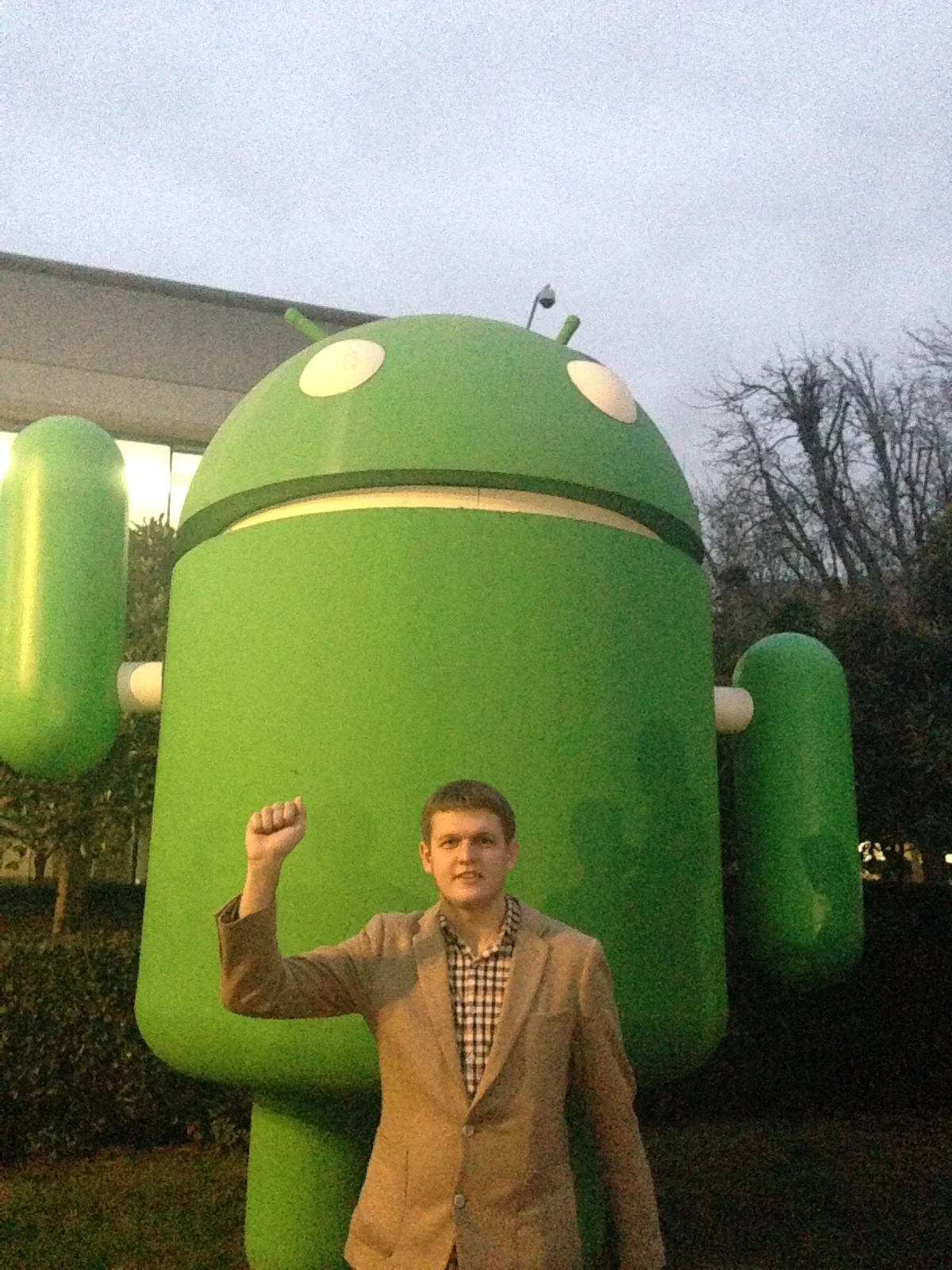
It started with a small team that Google bought. That alone guaranteed nothing. What mattered was what happened after the purchase: Google and its partners built an open platform that different manufacturers could use to make phones, carriers could use to sell them, and developers could write apps for. The first Android phone came out in 2008. In September 2013, Google announced over a billion device activations. That small team’s idea was able to grow well beyond one company.
I like the bike and the figures together in that picture. The bike shows how you get from one building to the next on an ordinary day. The figures show that even a new software release can be an excuse to do something fun.
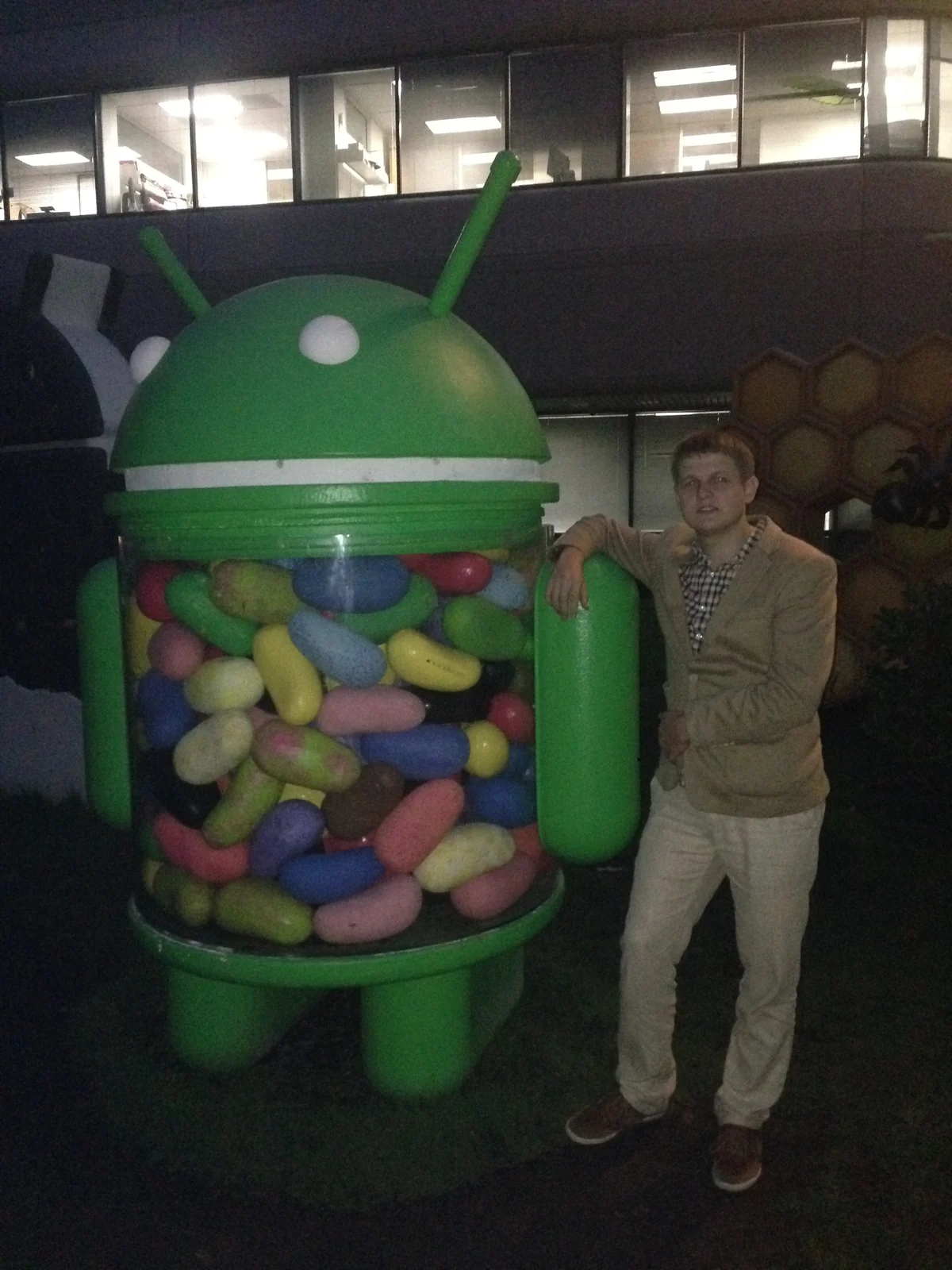
I took another photo with Jelly Bean. The green robot has a see-through belly full of colorful jelly beans. Why did the engineers name a version of their operating system after candy? The obvious way to explain it, apparently, is to put the answer right outside their windows.
Why Would a Company Need a Whole Campus?
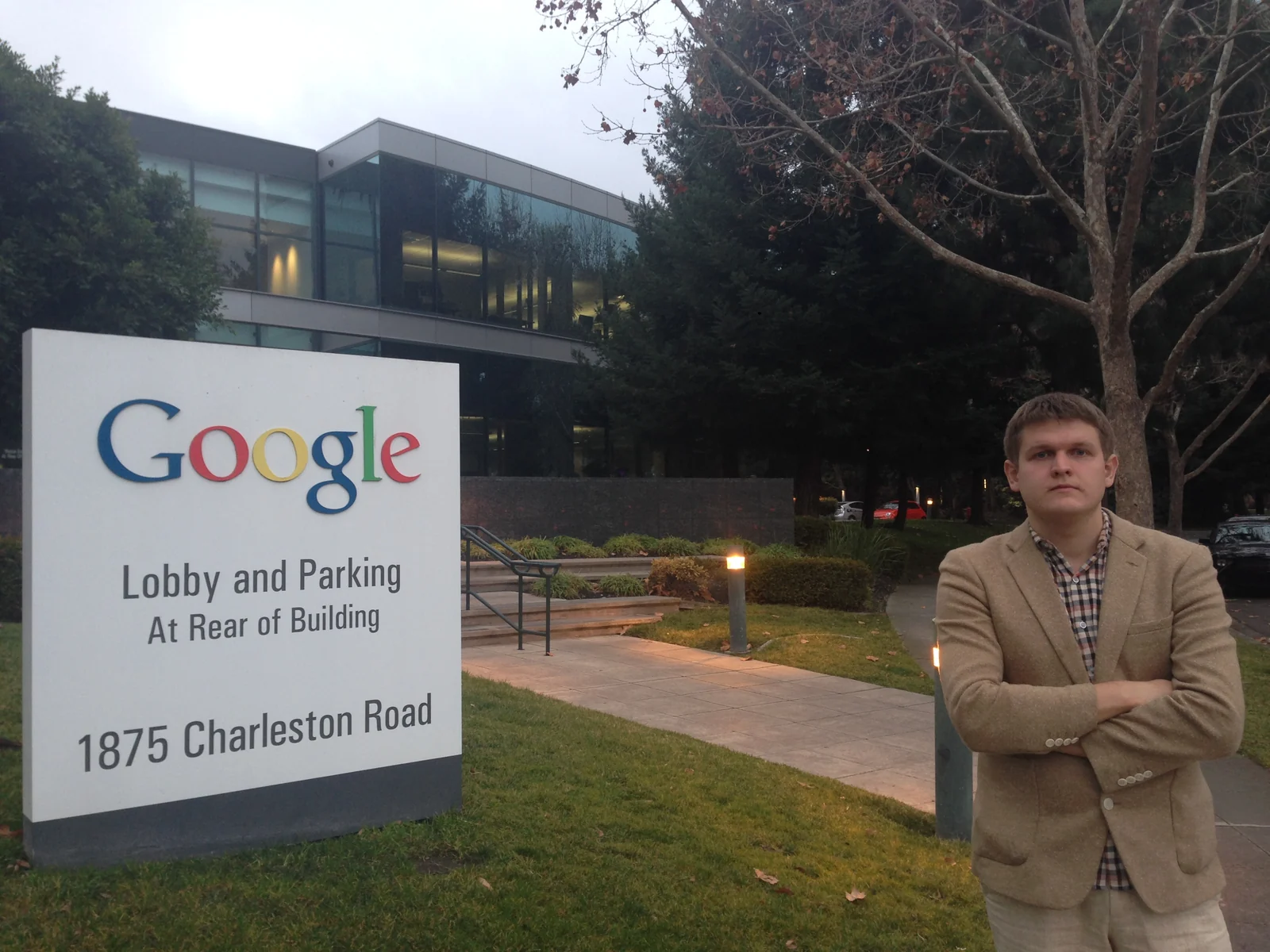
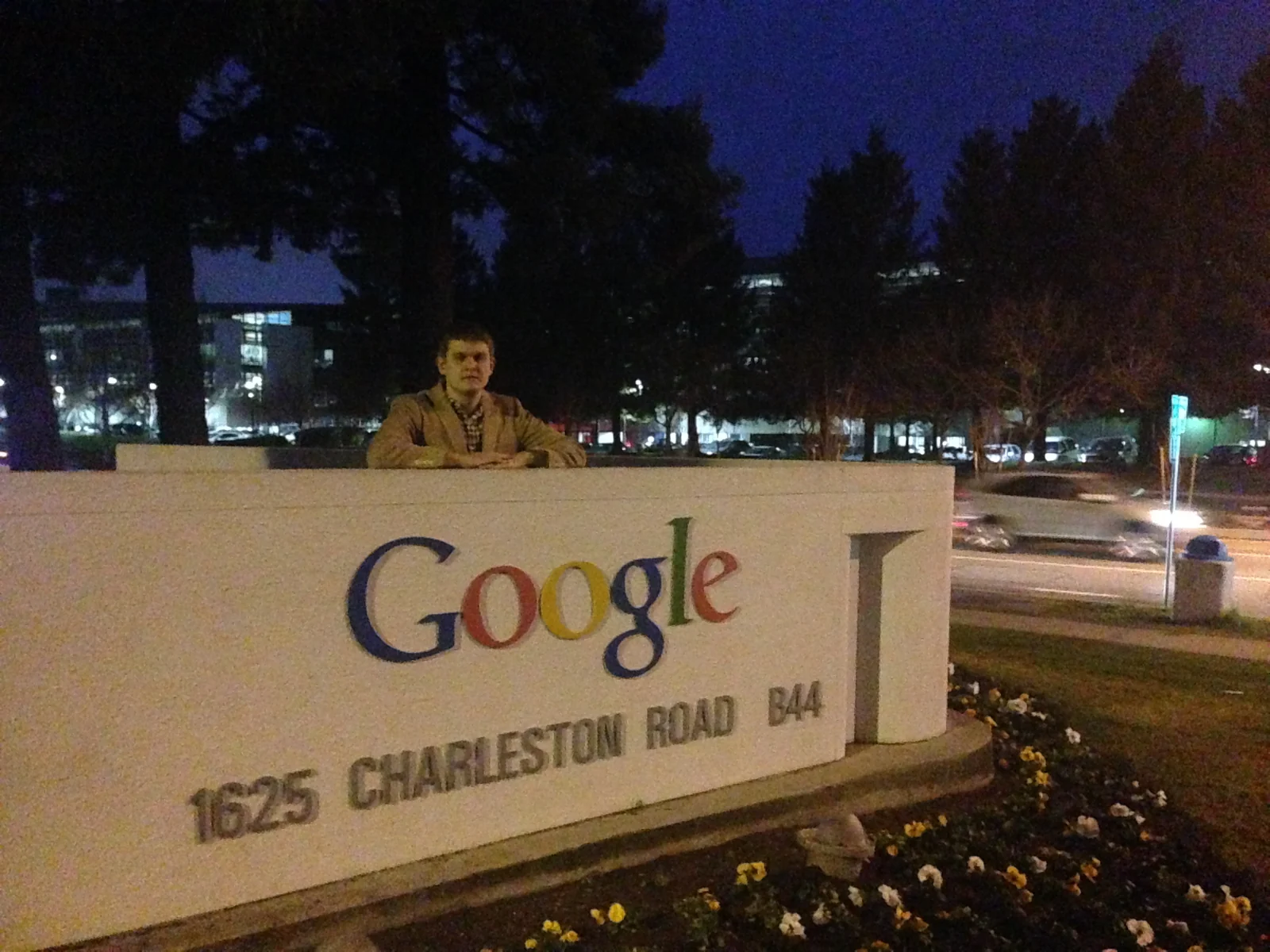
After dark, I stood behind another Google sign, this time outside Building B44. You can see my head above the sign, with trees, the road, and office lights behind me. In Menlo Park, Facebook left the old name on the back of its sign. Here the previous company is harder to spot: the core of the Googleplex was once a Silicon Graphics campus. Google moved into buildings that were already there and reworked them to suit itself. That original core covers about twenty-six acres.
I liked the idea behind it. Some rooms gave you a place to sit and concentrate. Elsewhere you could run into people from the next team, chat at lunch, or keep talking as you crossed the courtyard. Google’s founders had encouraged employees to spend part of their working time, roughly a fifth, on things they themselves thought would help the company. They pointed to Google News as an example of what could come out of that. It’s the combination I find interesting: if you want people to try new things, they need a little time and a place to talk them through with someone.
Back on the Water
After Google we went back to our sailboat in Brisbane. This time we knew where our slip was. One more night on the water, then off to the airport the next day and on home to Kyiv. That was the end of our trip through America.
I took a pile of photos next to famous signs that day. But when I think about what taught me the most about Silicon Valley, I put the Stanford courtyard, the guy across from me on the train, and the five million I heard about over coffee right alongside those signs. Behind the signs were people who’d learned things, found one another, and got to work. I wanted to spend more time in places where things like that could get started. Even if it started with booking a boat for two nights instead of a perfectly normal hotel.