
Cambodia 2013: Between the Sea and Angkor
We started thinking about Cambodia while we were still on Koh Chang in Thailand. Thought about it for half an hour or so, then started planning the next country. No long run-up this time.
The Border and Local Transport
We crossed from Thailand into Cambodia on the Trat side, heading towards Koh Kong. There were soldiers at the border, and a certain tension in the air. Nothing terrible happened to us, but it wasn't exactly a relaxed atmosphere.
Knowing something about the country's past added to that feeling. Under the Khmer Rouge regime in 1975–1979, people here were subjected to mass killings, persecution and enslavement. And an unpleasant thought crossed my mind: what if someone who took part in that violence was now standing opposite me at the border? I knew nothing about any of these particular people's pasts. It was an association in my own head, not a story I knew about a border guard. Historical context — ECCC.
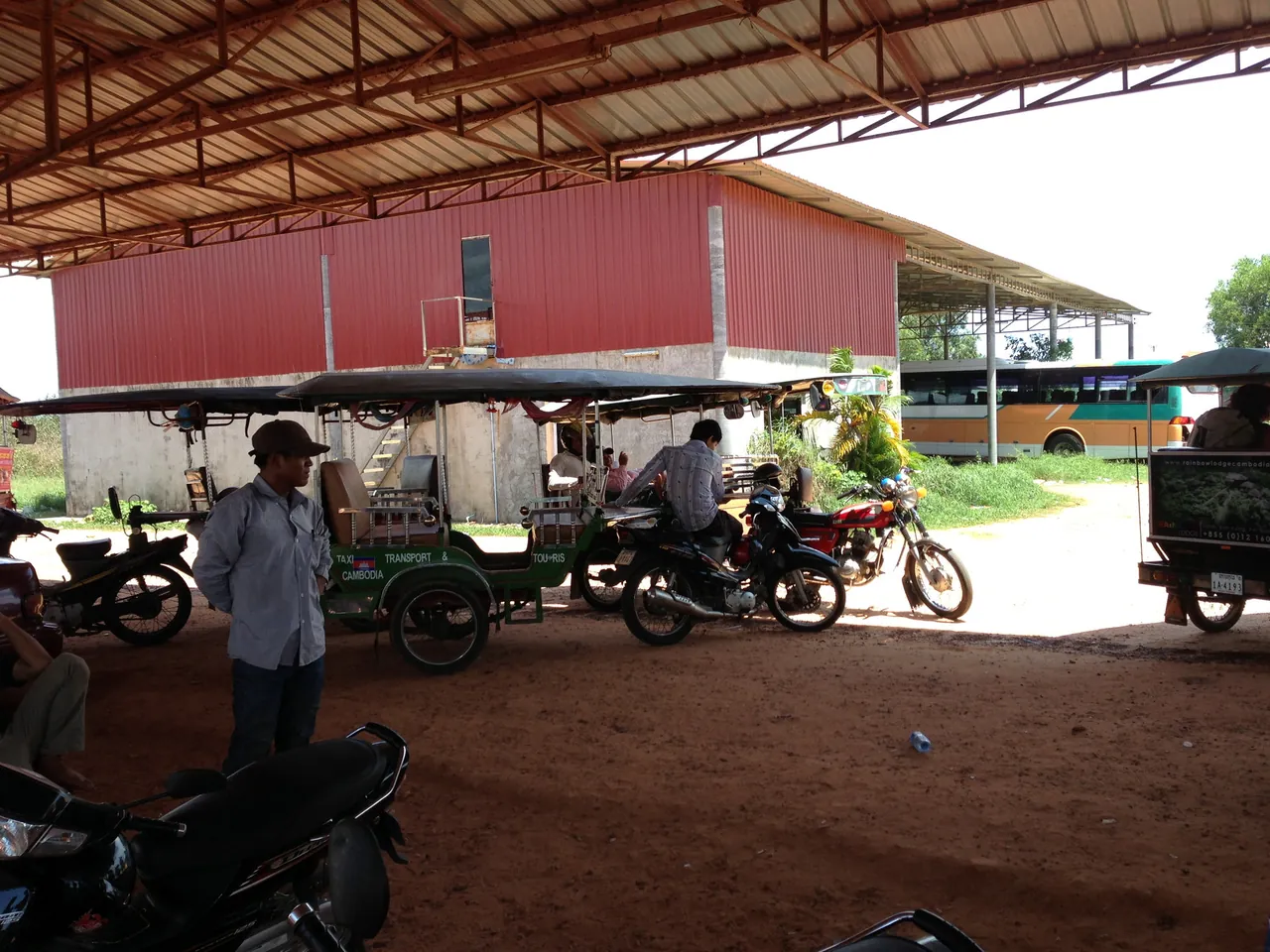
As far as I understood, you weren't allowed to take photographs there. But I did get a picture of the local transport after the crossing. A motorcycle with a cart attached, complete with seats for passengers. You look at it and don't immediately know what to call the contraption, but apparently a name isn't required for its main job: getting people where they need to go.
After that, I think we took a bus towards Sihanoukville. We arrived in town, then got to Otres Beach on one of those little local puttering machines. And that was where life became very pleasant indeed.
A Bungalow That Might Interest a Cow
We moved into a bungalow right on the beach. Step outside and there's the sea in front of you. You can go straight in for a swim. And it was a good beach for swimming, too.
The price was something ridiculous: four, or five, or seven dollars a night. I wouldn't swear to the exact amount, but that was the sort of money we were talking about. I also knew of places in Sihanoukville where you could stay for a dollar. Ours cost more. You could say we treated ourselves to a bungalow right by the sea.
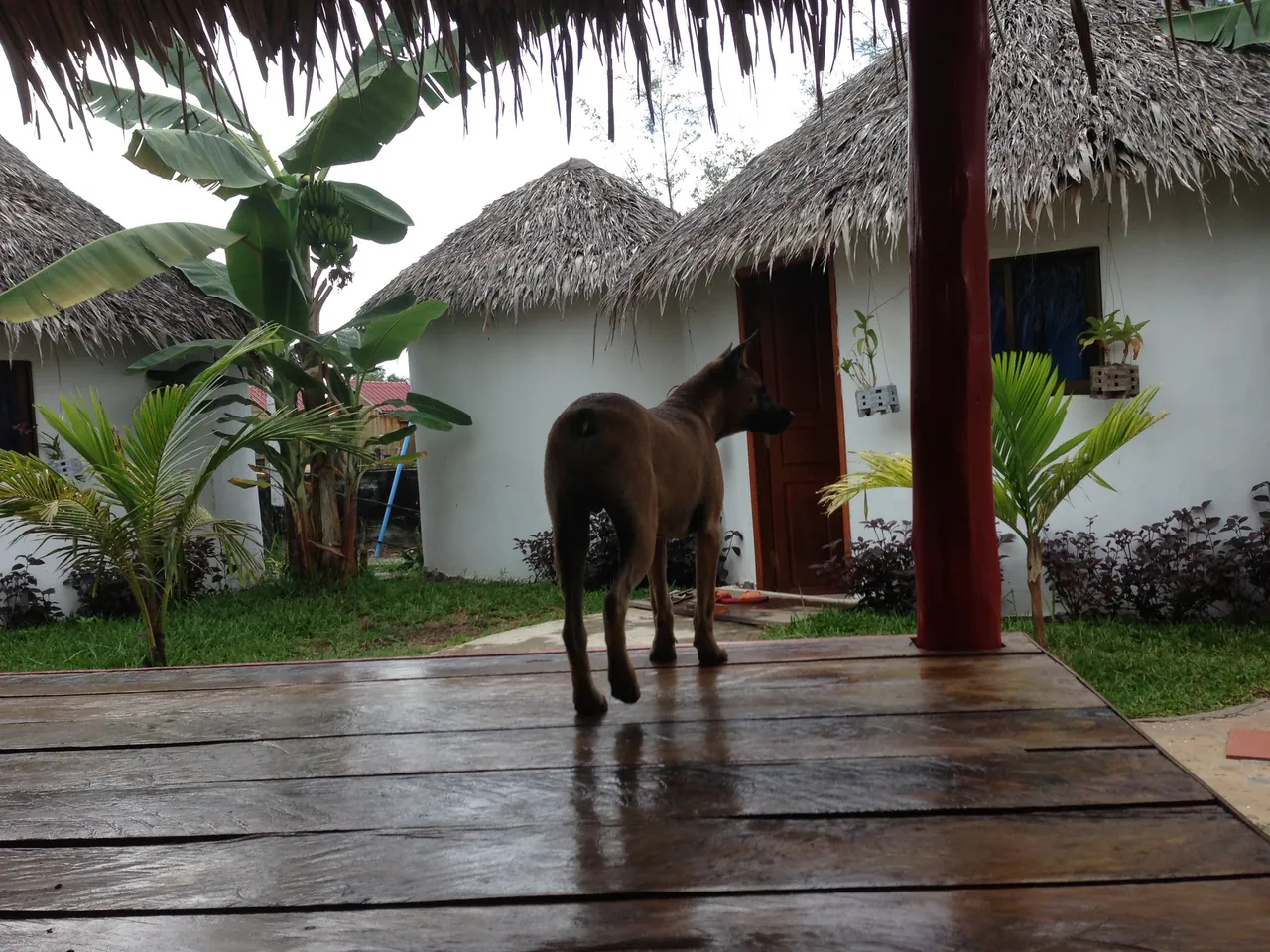
The bungalow was made from some kind of plant material: palm leaves or something along those lines. I couldn't tell you exactly what. But it did have one distinctive feature: a cow could wander onto the beach and have a little nibble at our house. When you and a cow both like your accommodation, you just like it in different ways.
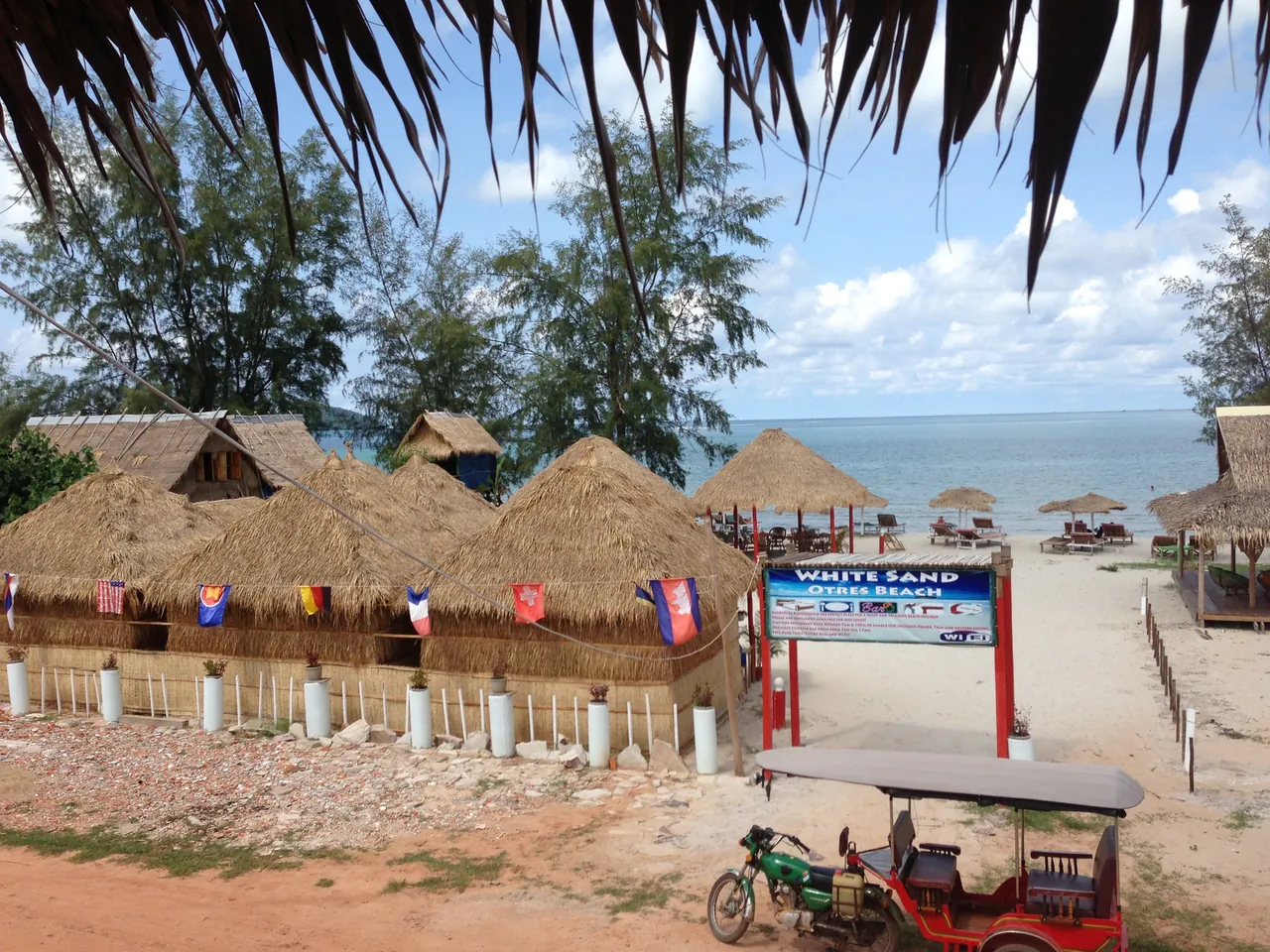
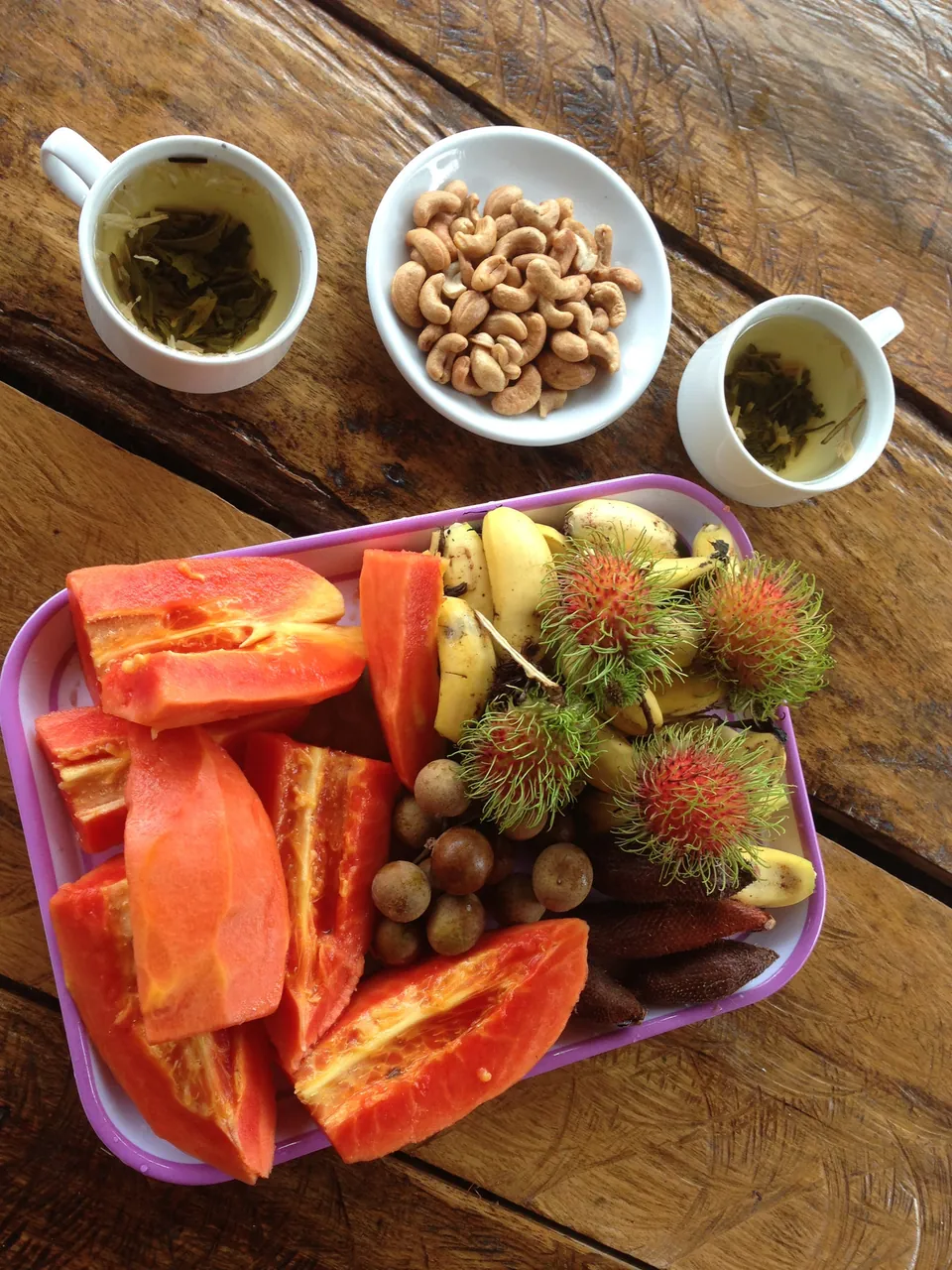
There was a little restaurant nearby with a view of the bungalows. We made this our base, worked online and dealt with our various bits of business. The sea wasn't going anywhere while we did. Fruit, vegetables, seafood, a run, fresh air: not a bad daily routine at all. I really took to the place.
Koh Rong and Something Resembling a Pier
We took a trip from the coast to Koh Rong. One of those tourist outings to an island: you go over by boat or ferry, then walk around among the greenery. There were little creatures climbing about, too. The details of that walk have blurred together, but it was a beautiful place.
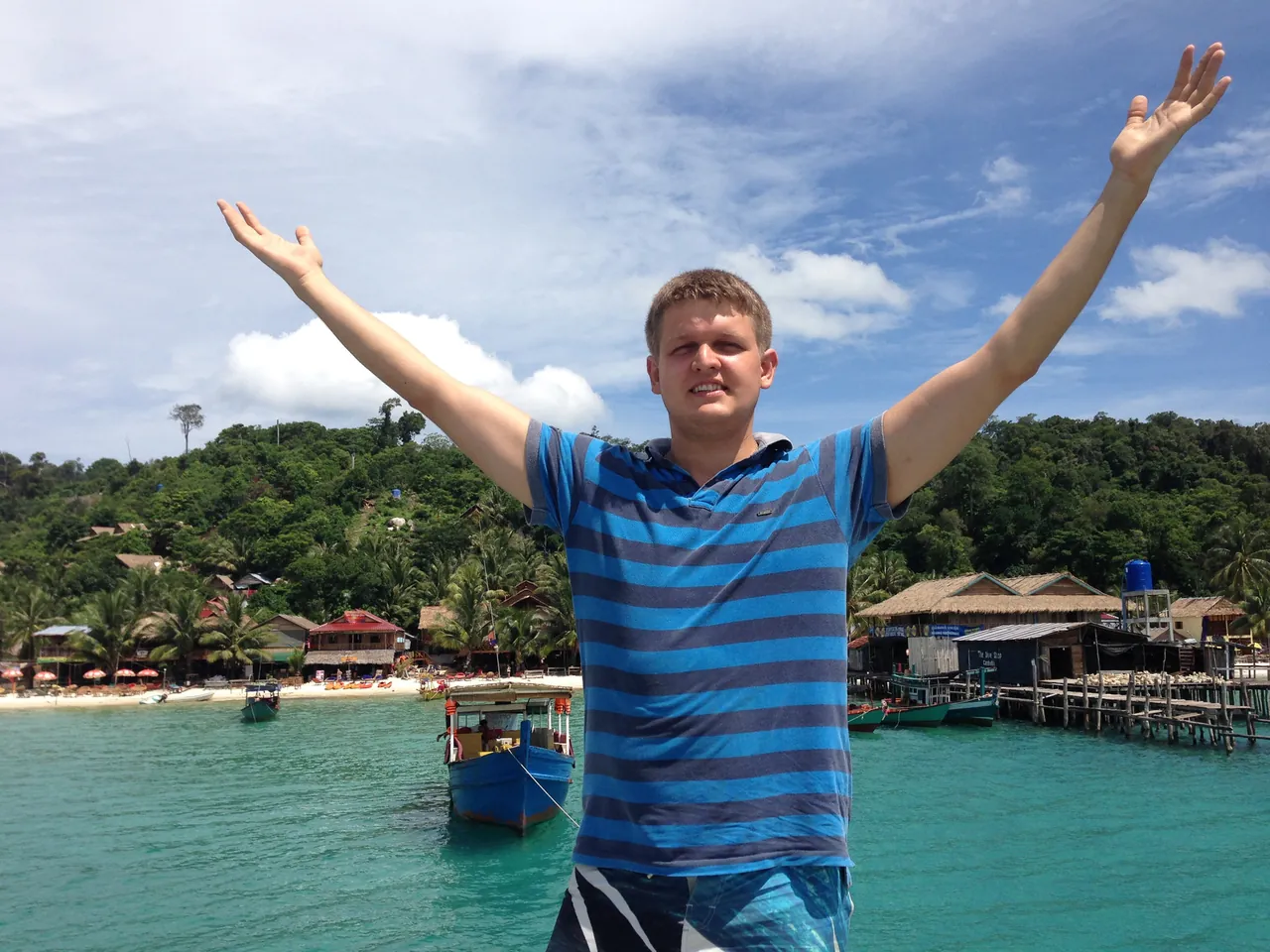
In the photo where I'm standing with my arms in the air, we're out on the water near the island. Whether we were heading towards it or away from it, I won't pretend I remember. But my general attitude to what was happening is pretty clear: everything was great.
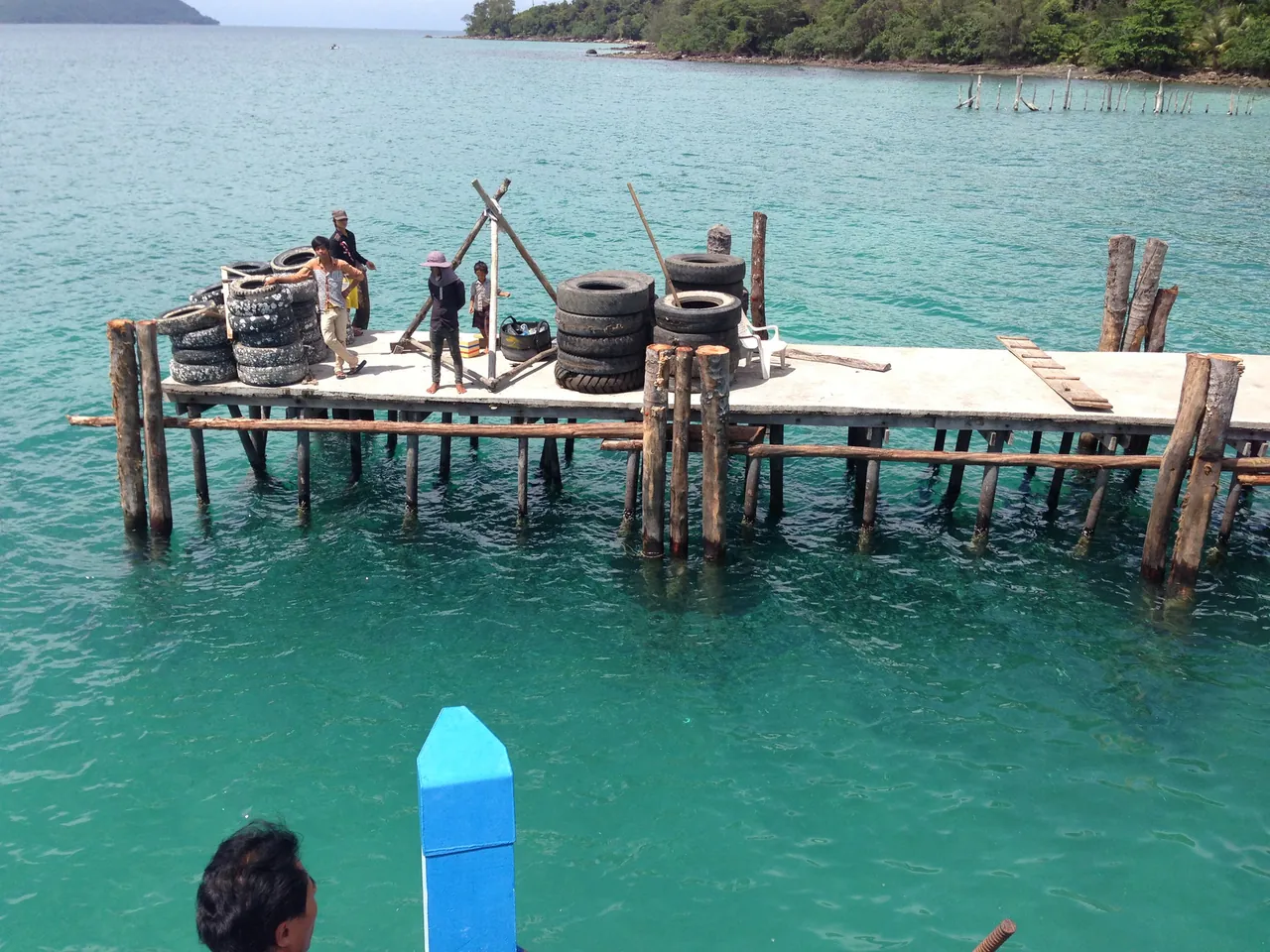
The pier was great, too. In its own way. It looked only vaguely like a pier: some piles, some decking for boats to pull up alongside. A bit dodgy, but fun. Judging by the boats that actually docked there, it was doing its job.
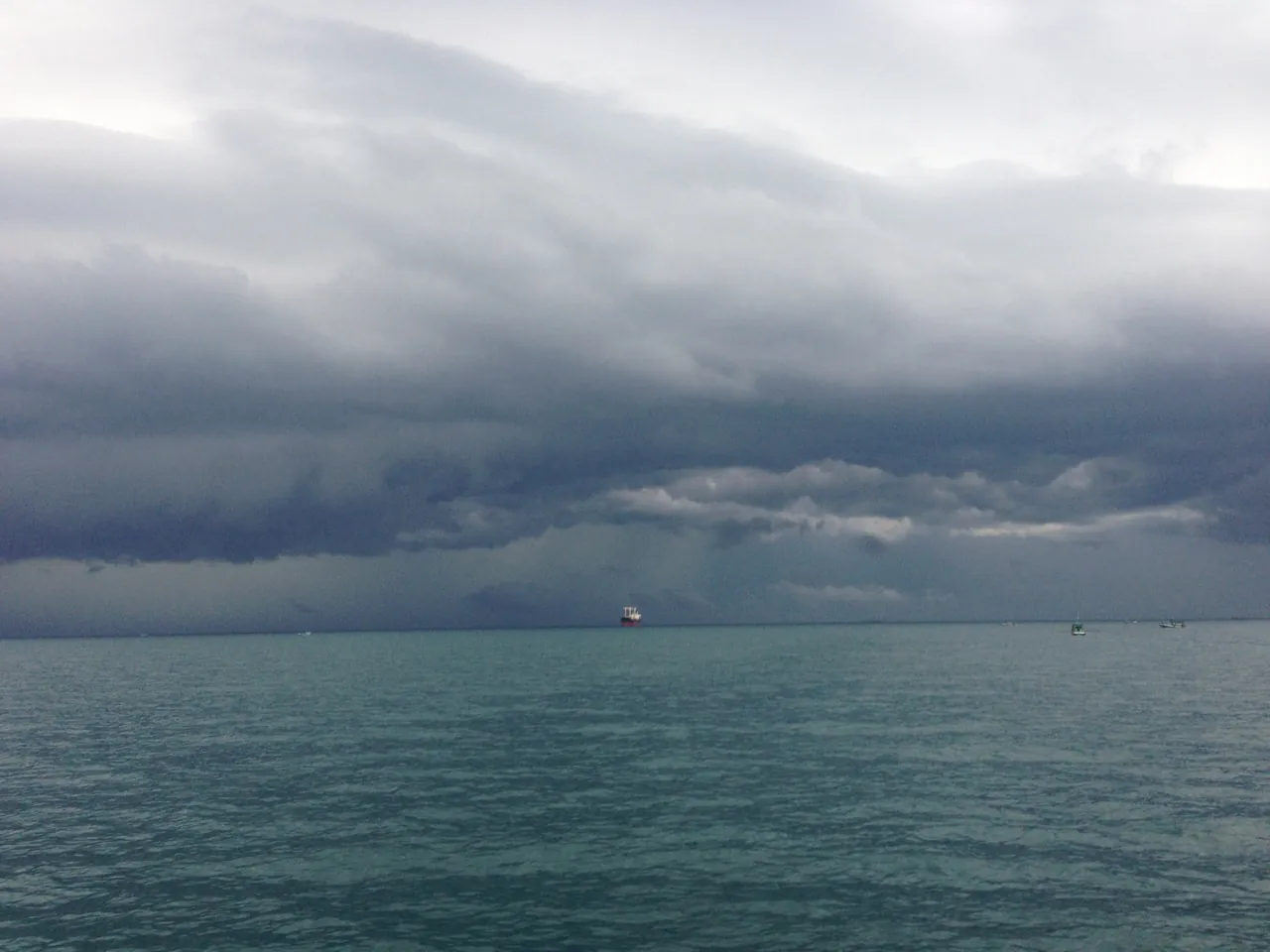
While travelling between the islands, we got caught in a storm. Not the kind where it turns into a fight for survival. Just a proper, unpleasant little storm: the sea no longer looked quite as carefree as it did in the morning photos. Another experience for the collection.
A Bus You Lie Down In
The beach part of the trip lasted a couple of weeks or so, I think. We spent some time by the sea, then headed to Siem Reap, a convenient base for visiting Angkor.
We took an overnight bus. Except it had beds instead of ordinary seats. You get on the bus and travel lying down. As I remember, the journey took nine or ten hours and we weren't moving very fast, so it seemed a perfectly sensible arrangement. Got on, lay down, fell asleep. Woke up: Siem Reap. An interesting way to travel, without spending the whole night trying to work out where to put your legs.
I liked Siem Reap itself, too. An atmospheric little tourist town, with wooden cafés and signatures left by travellers who had been there before us. I couldn't retrace our exact route around town, but that sense of authentic Asia stayed with me. A cool place to spend the night before heading off towards Angkor Wat.
Angkor at Sunrise
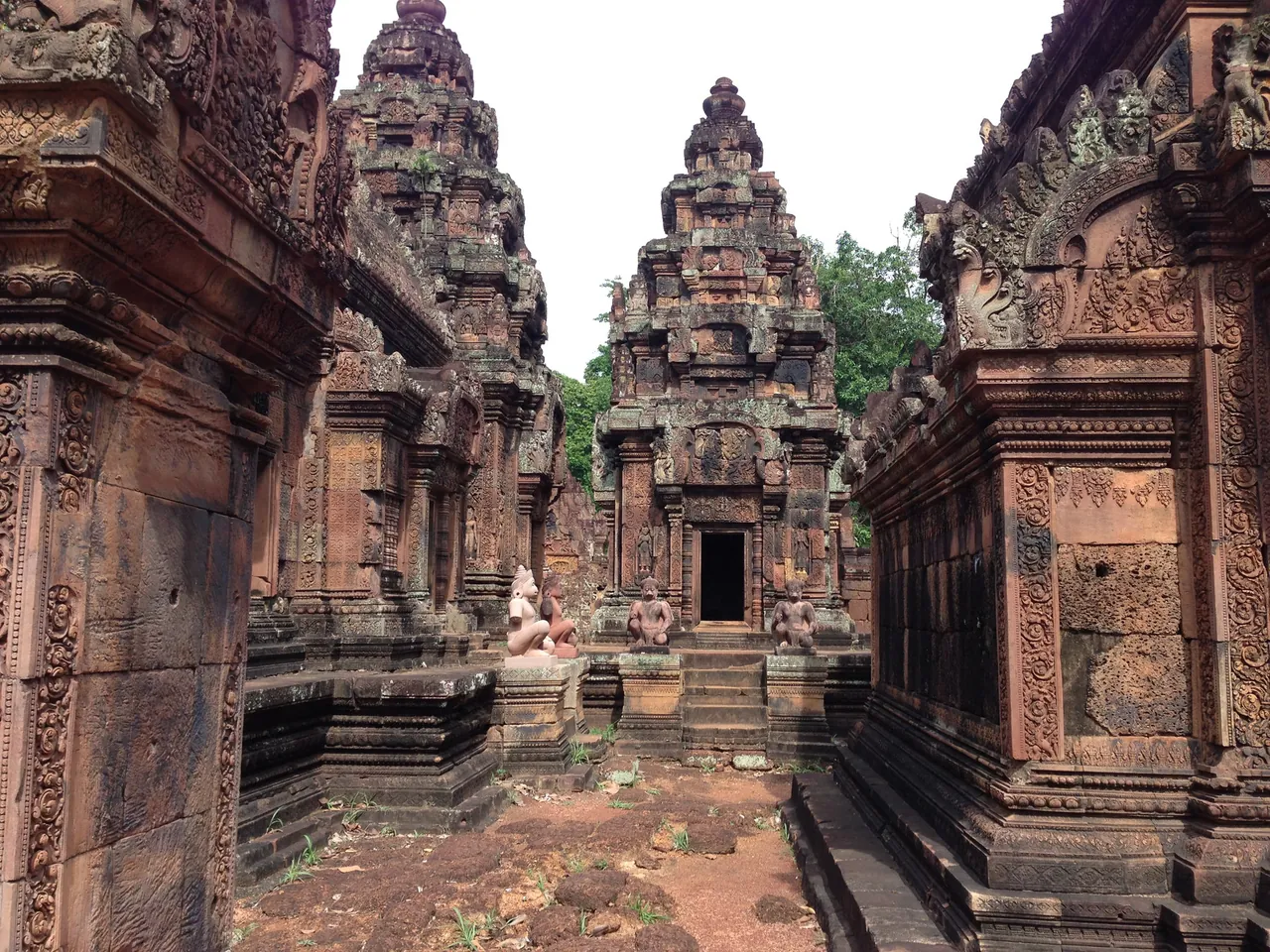
We arrived at Angkor Wat at sunrise. The towers, the water, the morning light: there was something magical about it all. A very beautiful place. You really can feel the history in the air, even without trying to memorise every date and name on the spot.
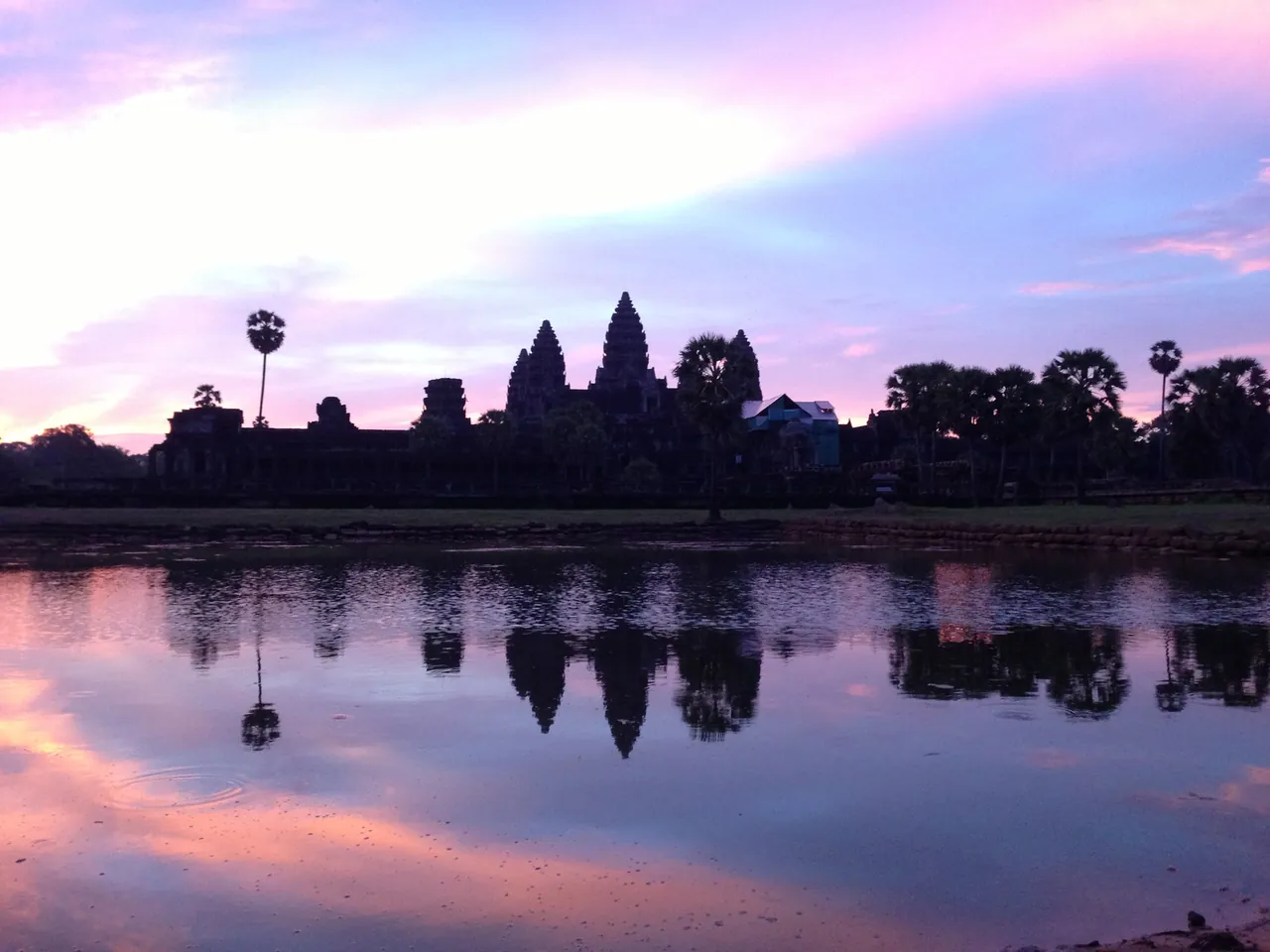
Angkor Wat was built in the twelfth century under King Suryavarman II as a temple to Vishnu. And Angkor as a whole is much more than one temple: the remains of Khmer Empire capitals from different periods, temples, reservoirs and the roads between them. APSARA — Angkor Wat, UNESCO — Angkor.
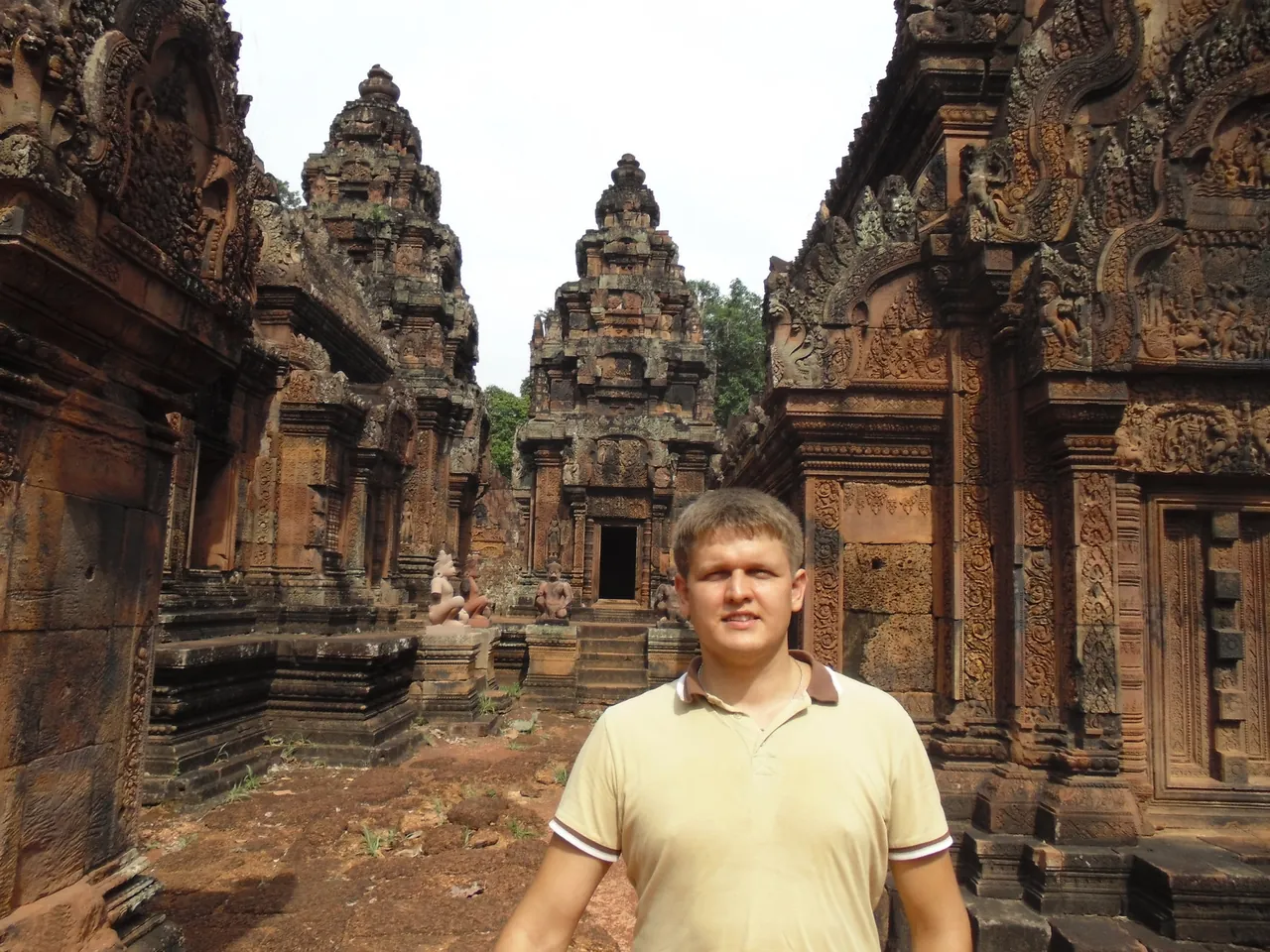
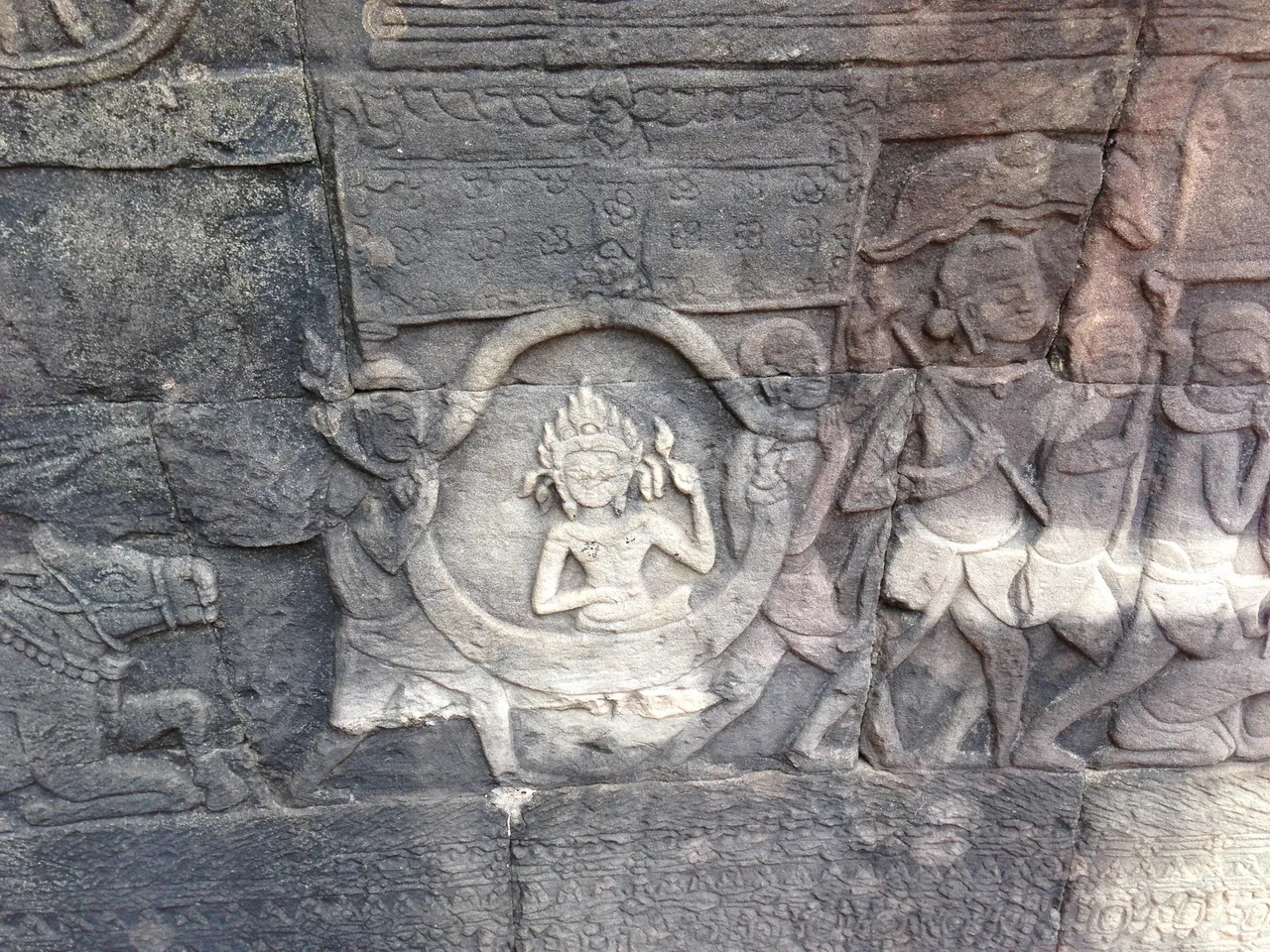
There are whole stories in pictures on the walls. Scenes from the Ramayana and the Mahabharata, myths, royal scenes. You could spend a very long time looking at the stone reliefs. They don't all depict Cambodia's literal history. About the reliefs — APSARA.
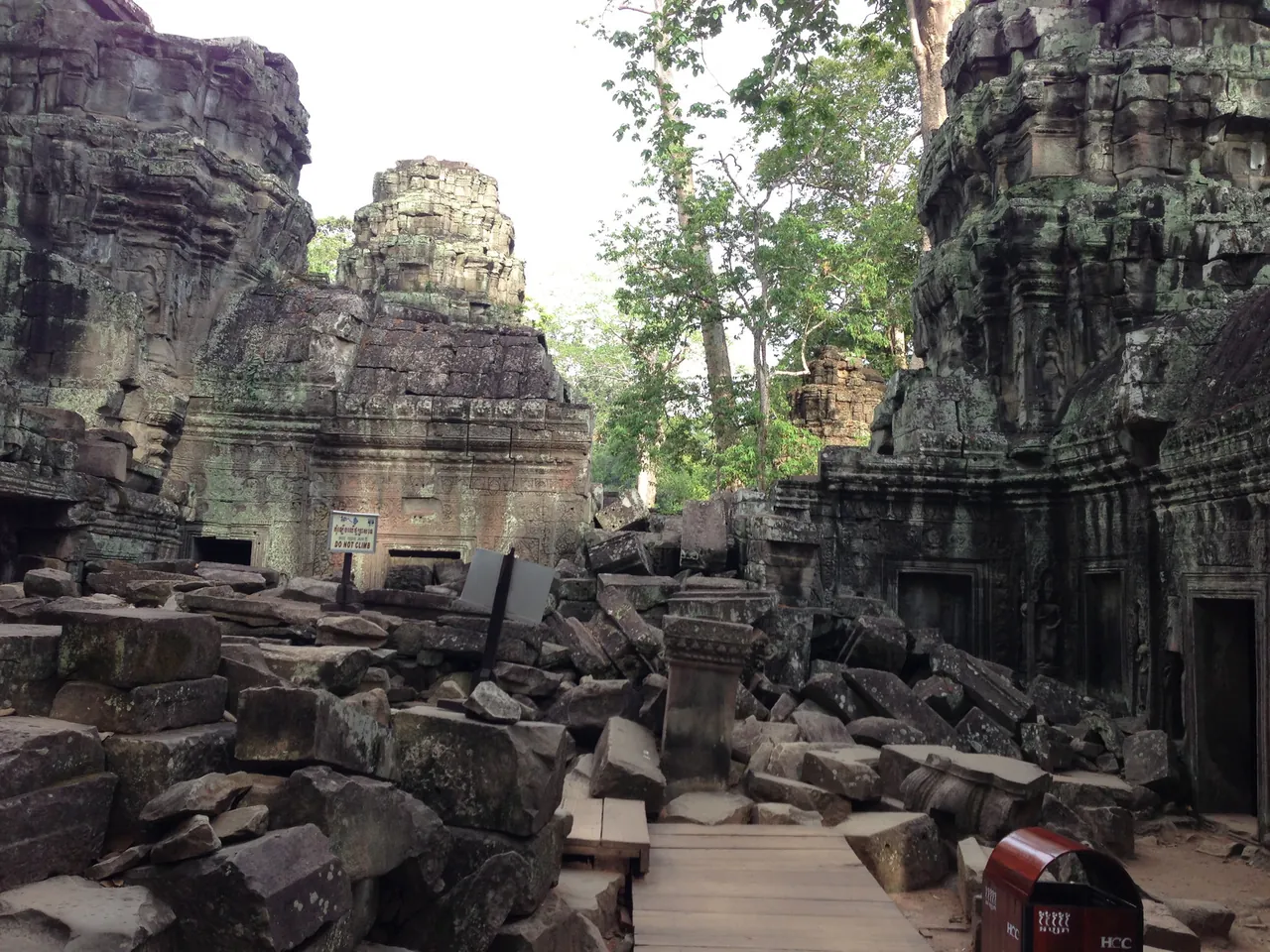
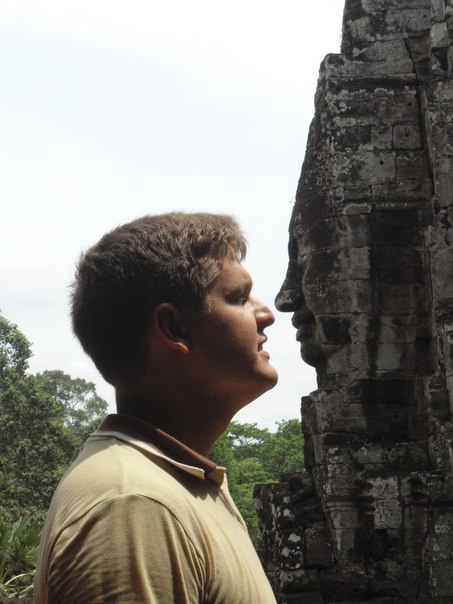
We walked all over the place: down one side, down the other, all the way around. Angkor Wat was absolutely brilliant.
A Little More Beach Life
19 May, and the sea again: we were still on the coast near Sihanoukville. Those days of fruit, working online and beach life didn't fit into just one short stop.
The Shooting Range
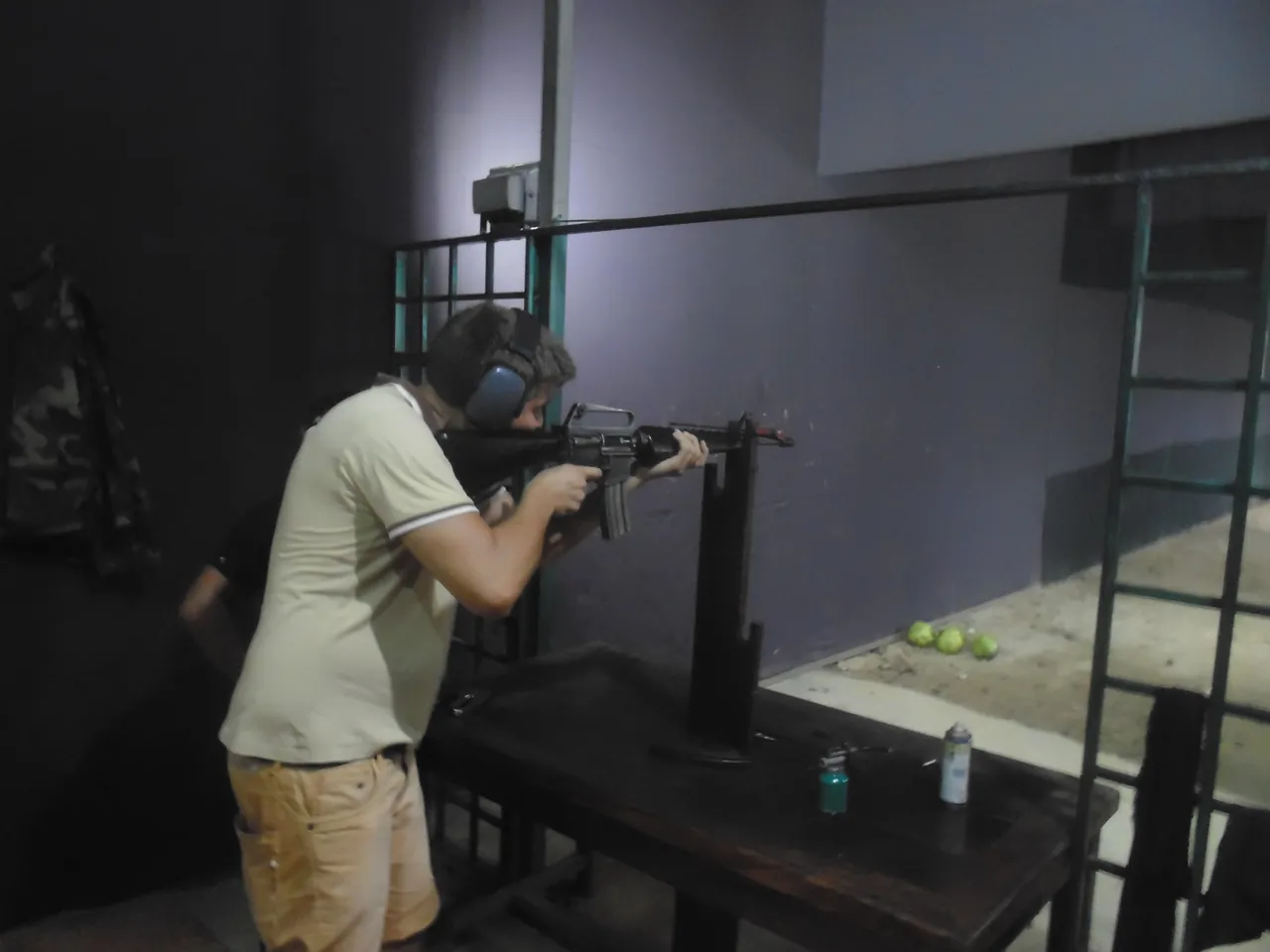
We also went shooting in Cambodia. The range offered options all the way up to a bazooka, a cannon and firing a shot from a tank. At least, that's the selection I remember. It doesn't mean I tried the whole lot. The photo with the assault rifle gives the best idea of our outing.
Remembering Those Who Died
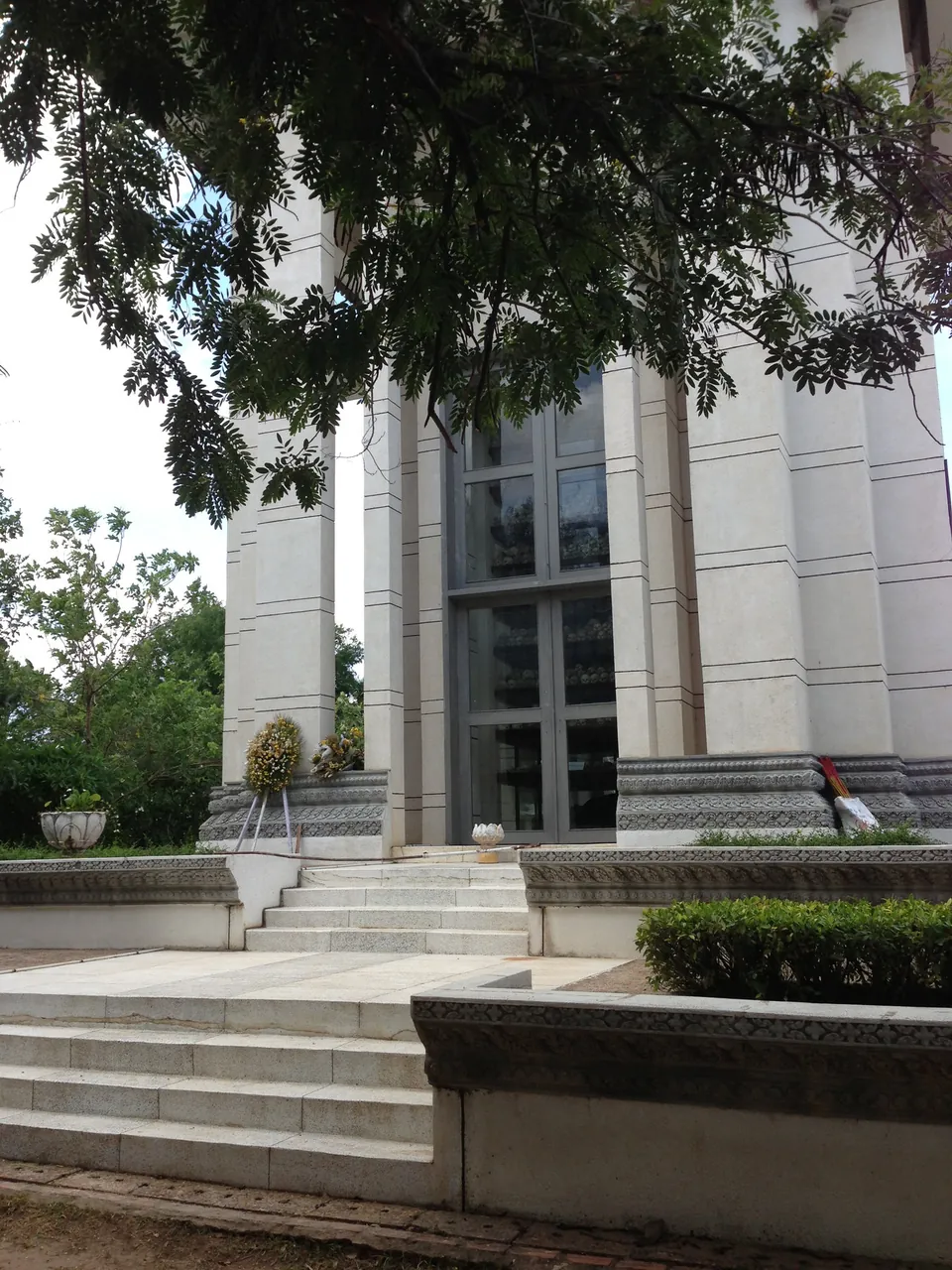
We also visited the Choeung Ek memorial near Phnom Penh. Under the Khmer Rouge, people were executed and buried here, including prisoners from S-21. About the memorial.
What stayed with me were the dirt paths the visitors walked along. Human bones were sticking out of the ground beneath them. In another part of the memorial there were old, torn clothes belonging to people who had been killed there. That is what I saw for myself, and what stayed in my memory.
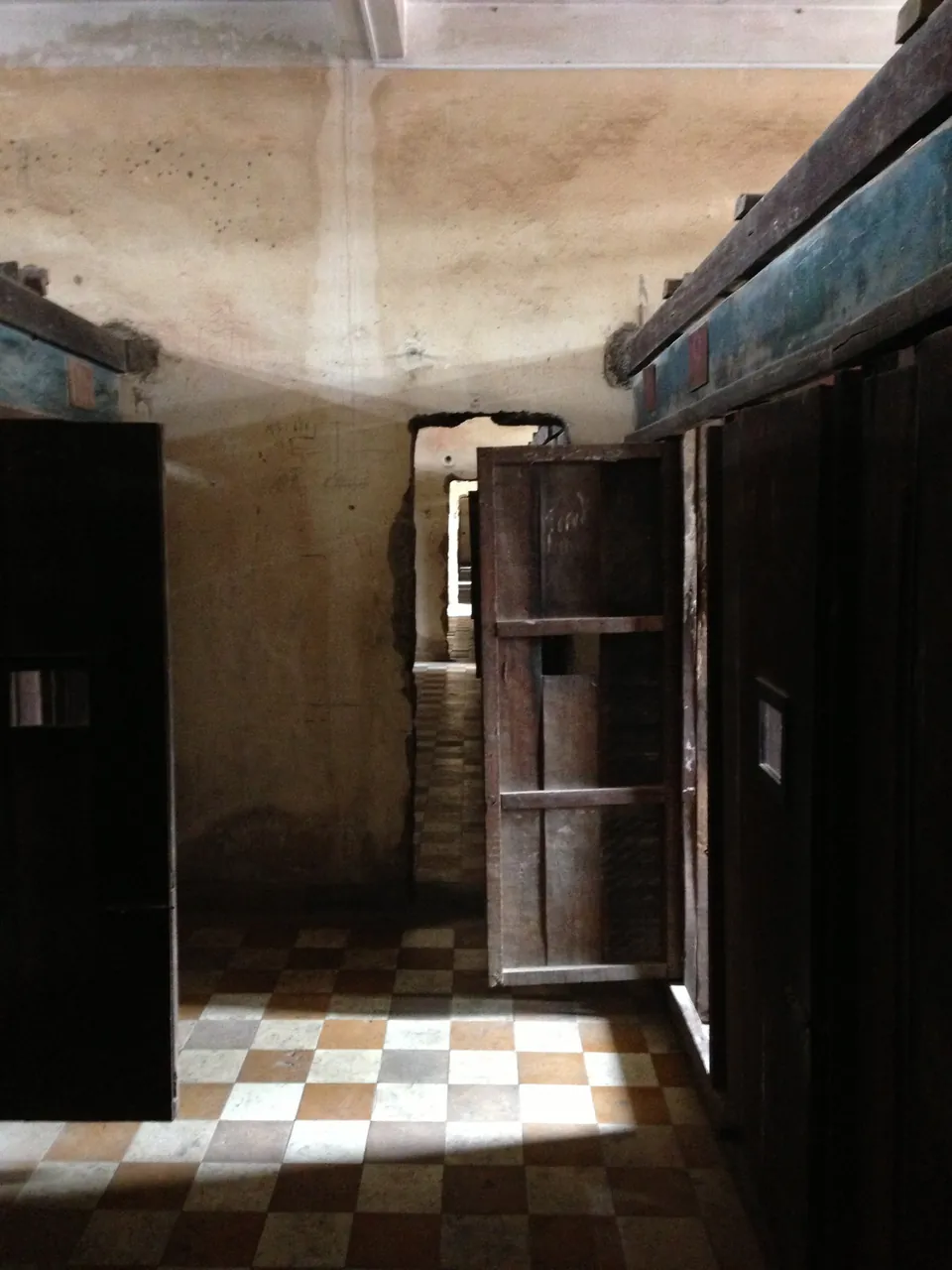
In Phnom Penh, we visited the Tuol Sleng Genocide Museum. It is the former S-21 prison: under the Khmer Rouge, school buildings were turned into a place of imprisonment, interrogation and torture. The former classrooms were divided into cells for prisoners. The history of Tuol Sleng Museum.
Motorbikes and Lexuses
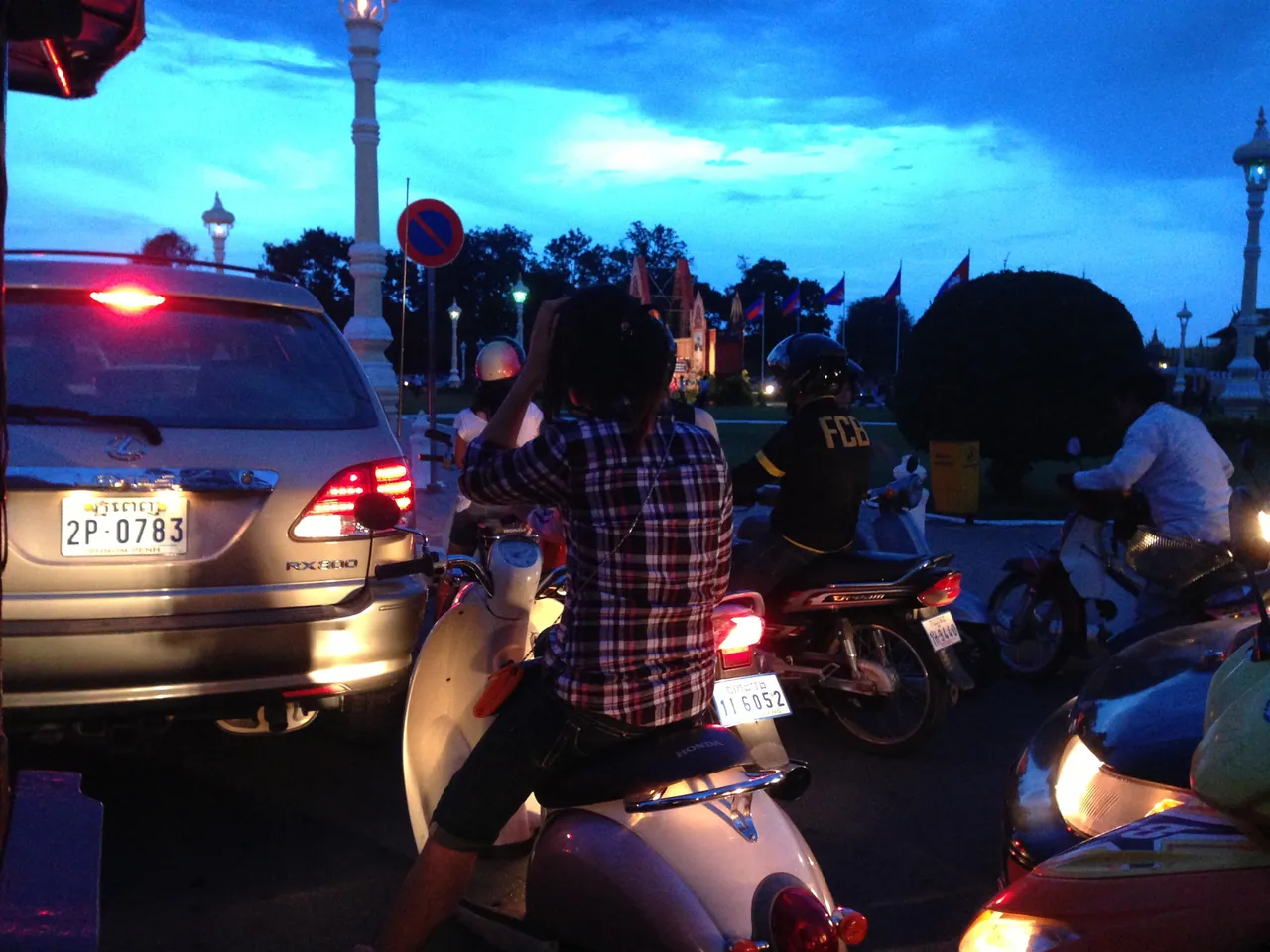
I also remember Phnom Penh for its horrendous traffic. You're driving down the street, surrounded by motorbikes, scooters and Lexuses. Then more motorbikes. And another Lexus. At the time, I thought of a Lexus as a very expensive, almost exceptional car, yet here they kept turning up in the traffic.
I wouldn't attempt to identify the exact models. What struck me was the combination: the country seemed very poor, yet there were noticeably a lot of expensive cars on the streets. The contrast between wealthy and very poor people was hard to miss. In my mind, I connected it with corruption, too, though of course a car can't tell you how its owner made their money. That's my impression of the city, not an audit of other people's wealth.
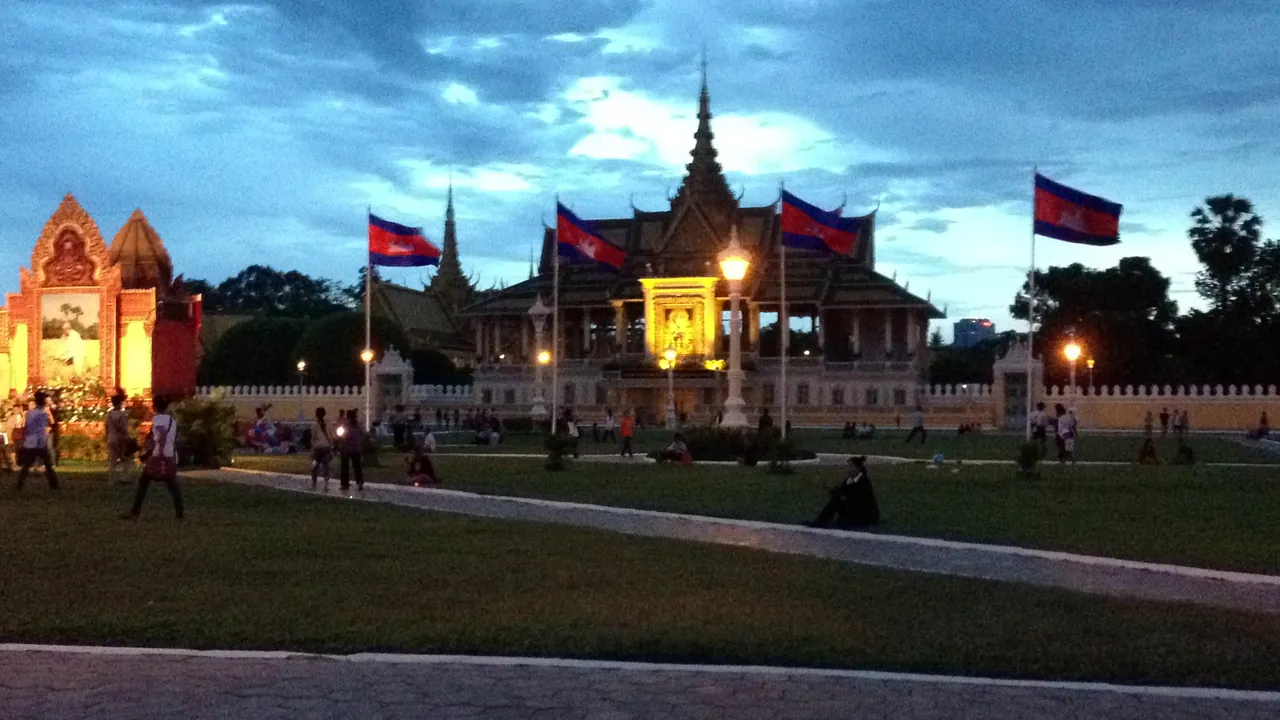
The palace stayed in my memory, too: orange-red roofs, those distinctive shapes, Cambodian flags.
Then we flew from Phnom Penh to Kuala Lumpur. And that was the end of the Cambodian part of our trip.