
Maidan and Mezhyhiria: The Winter That Changed Kyiv
November 2013 – March 2014
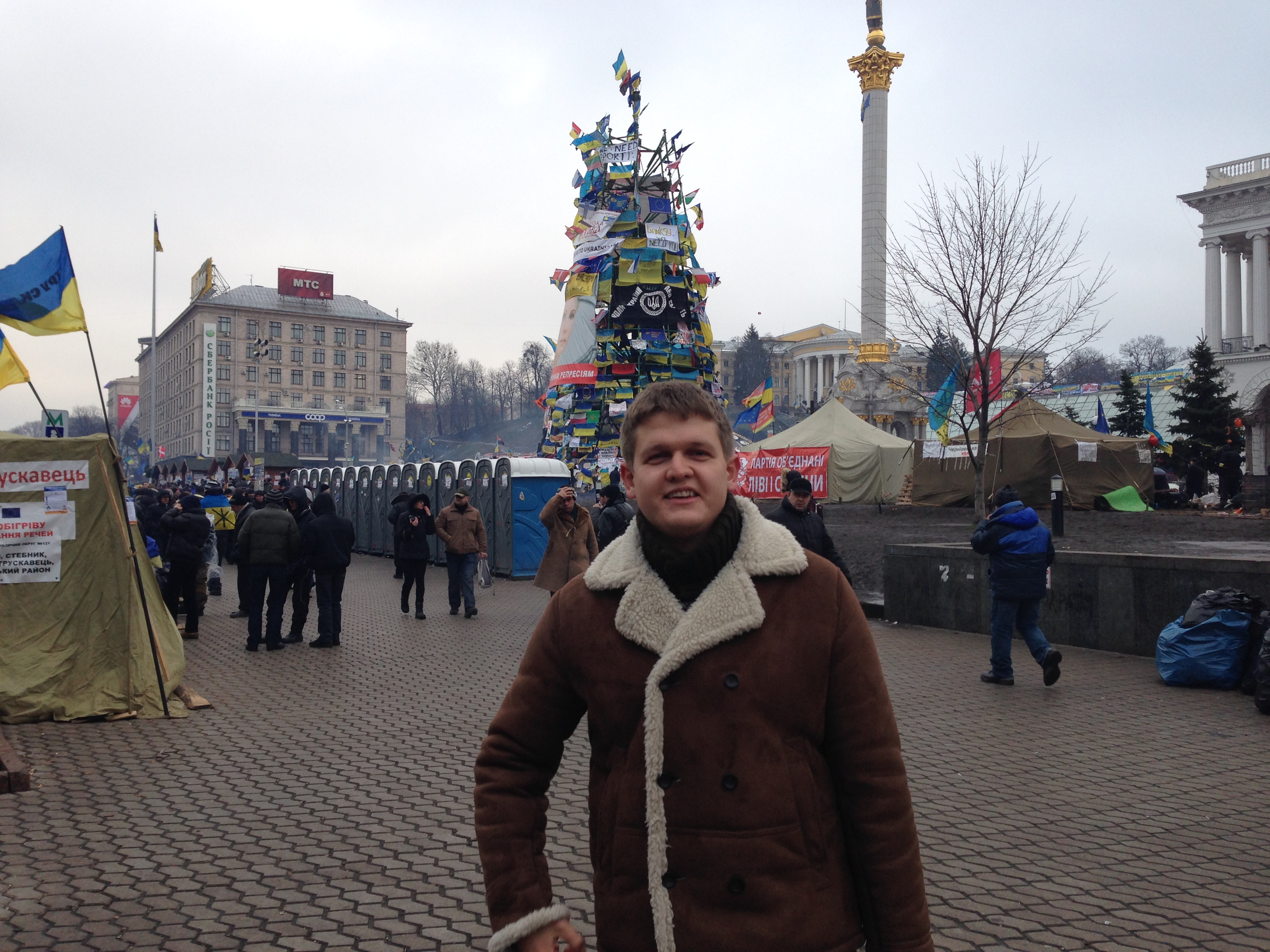
I was living almost in the centre of Kyiv then, on Baseina Street. Maidan and Khreshchatyk were just around the corner: my bank was there, along with the little restaurants where I went to eat. Ordinary places you walk past every day, hardly imagining that they will soon become the scene of historic events.
When the Maidan protests began, my friends and people I knew went along. I decided to take a walk over and see what was happening too. I had already travelled a lot by then. I had grown up in an independent Ukraine and felt European. So when the government halted preparations to sign an agreement with the European Union, I had a feeling that things were heading in the wrong direction.
I went to Maidan of my own accord. Nobody paid me anything to be there. I simply wanted to go, see the people and take in the atmosphere.
The First Days
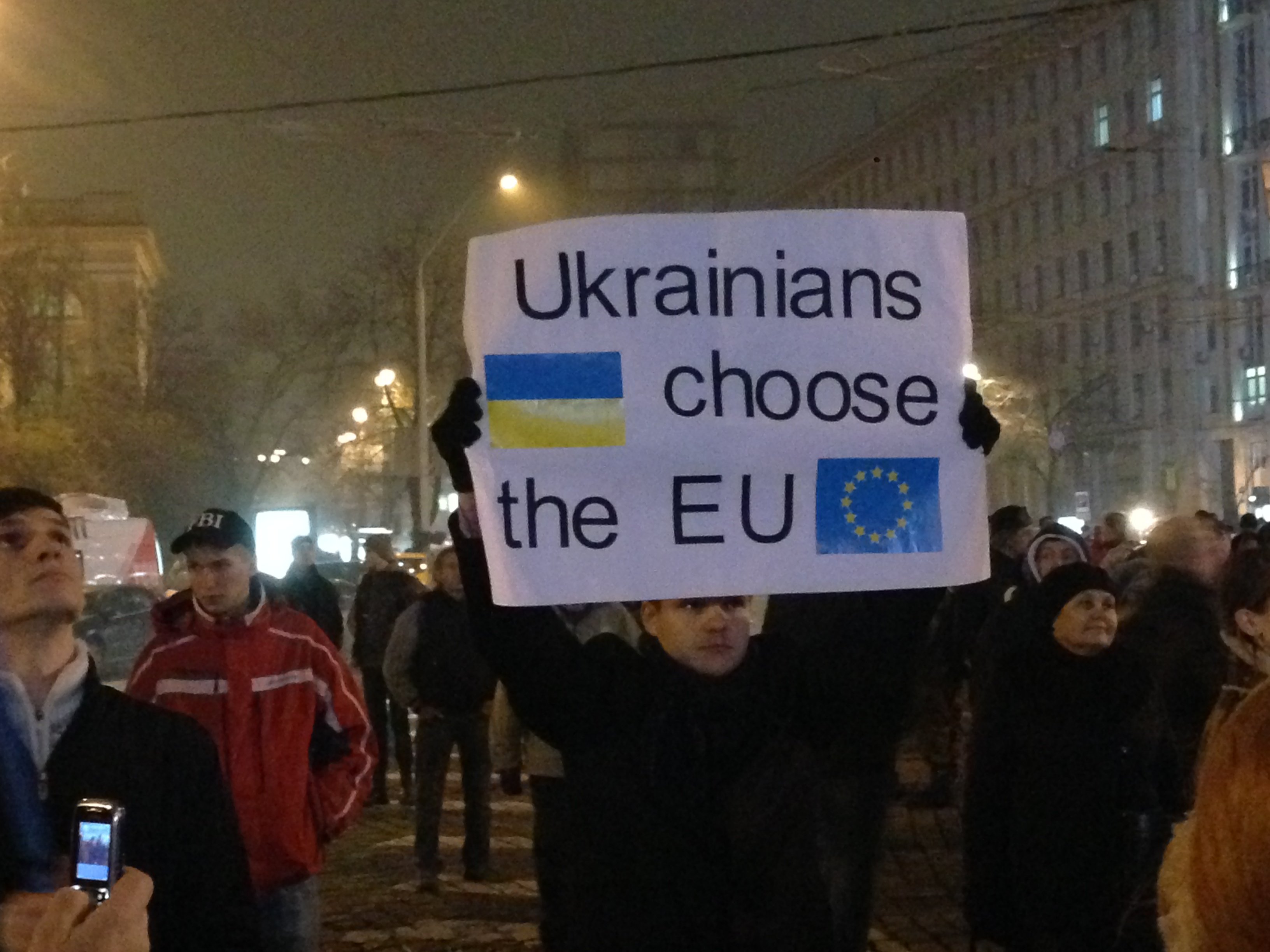
People stood beneath the Independence Monument, listening to speeches and discussing the news. There were Ukrainian flags and faces painted blue and yellow. On 24 November, someone in the crowd was holding a sign in English: “Ukrainians choose the EU”.
We also walked towards the Cabinet of Ministers building. Security forces had blocked the road, and lights were on in a few of the building’s windows. It was strange to watch the familiar streets around my home gradually changing.
More people kept coming. They also gathered by the monument to Princess Olha, singing songs and bringing flags. Food arrived from different regions, and everyone was fed for free. We even stopped by to try what they had cooked. There was something very alive about it all: strangers coming together and supporting one another.
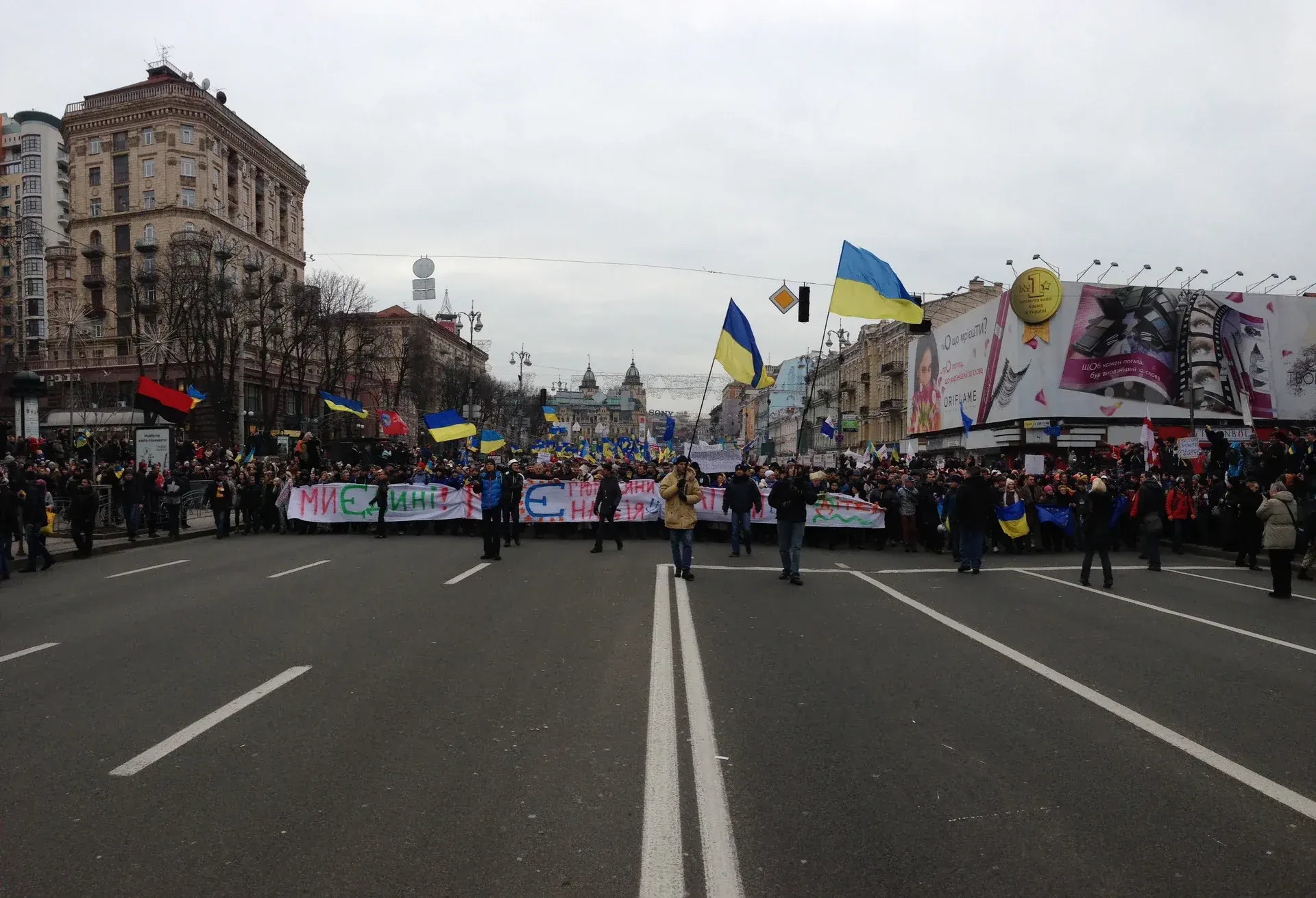
After the protesters were dispersed in the early hours of 30 November, many more people came into the centre. On 1 December, a continuous stream of people carrying signs walked from Shevchenko University to Maidan. Thousands upon thousands of people.
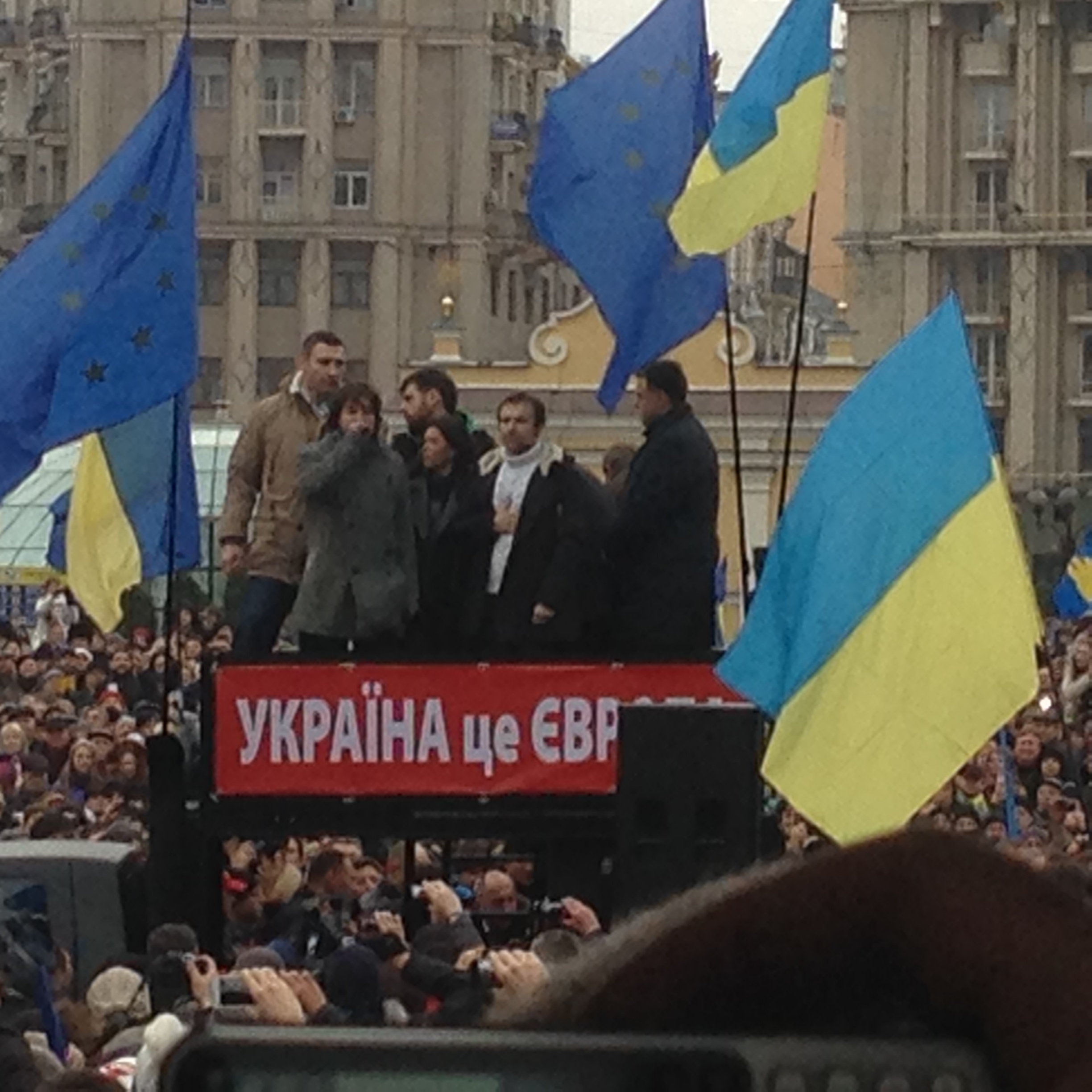
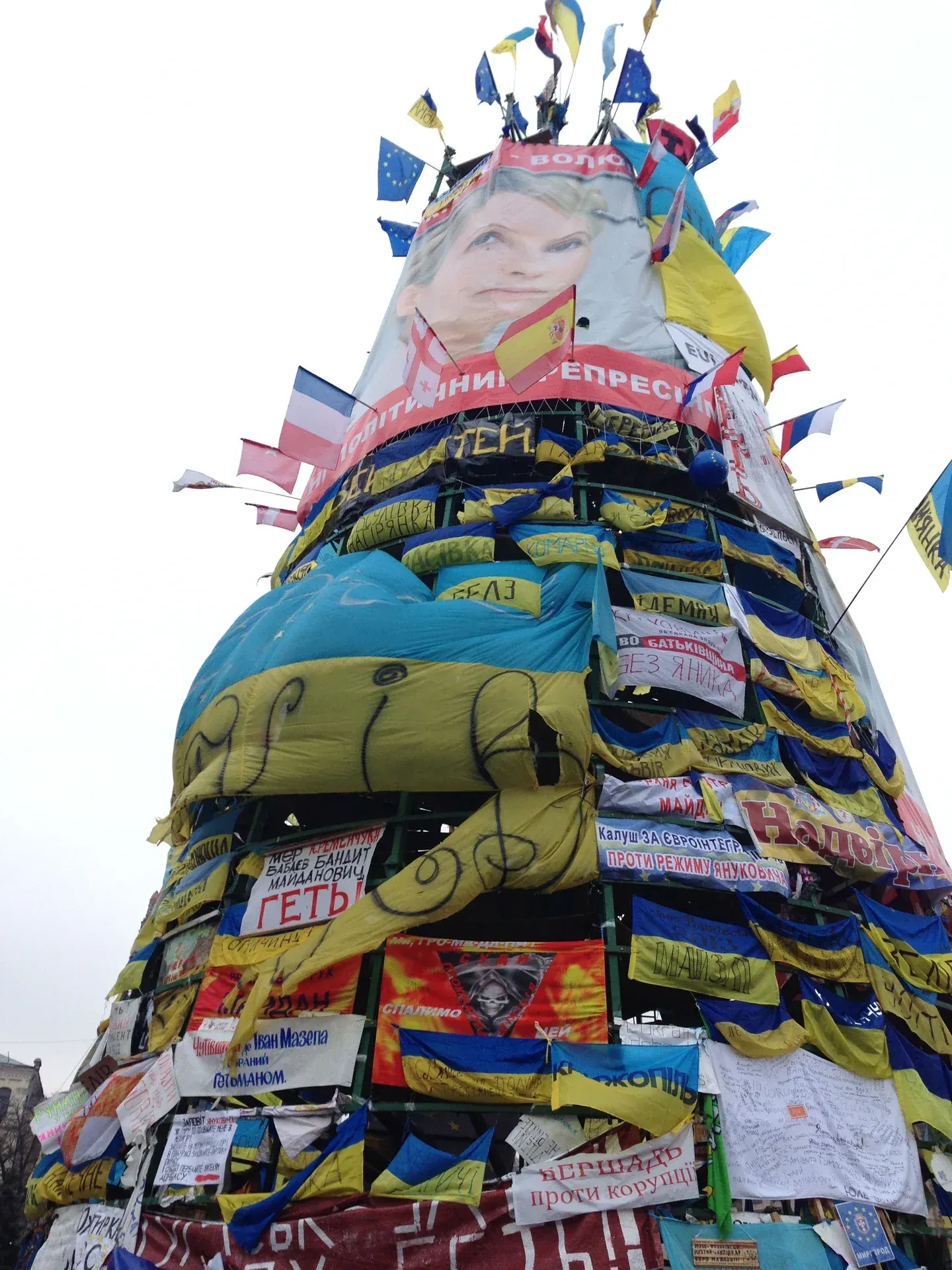
The frame of a New Year tree stood in the square. They never got around to decorating it as an ordinary tree. Instead, it became covered in Ukrainian flags and messages. People spoke from the stage, and Sviatoslav Vakarchuk sang. Vitali Klitschko was there too.
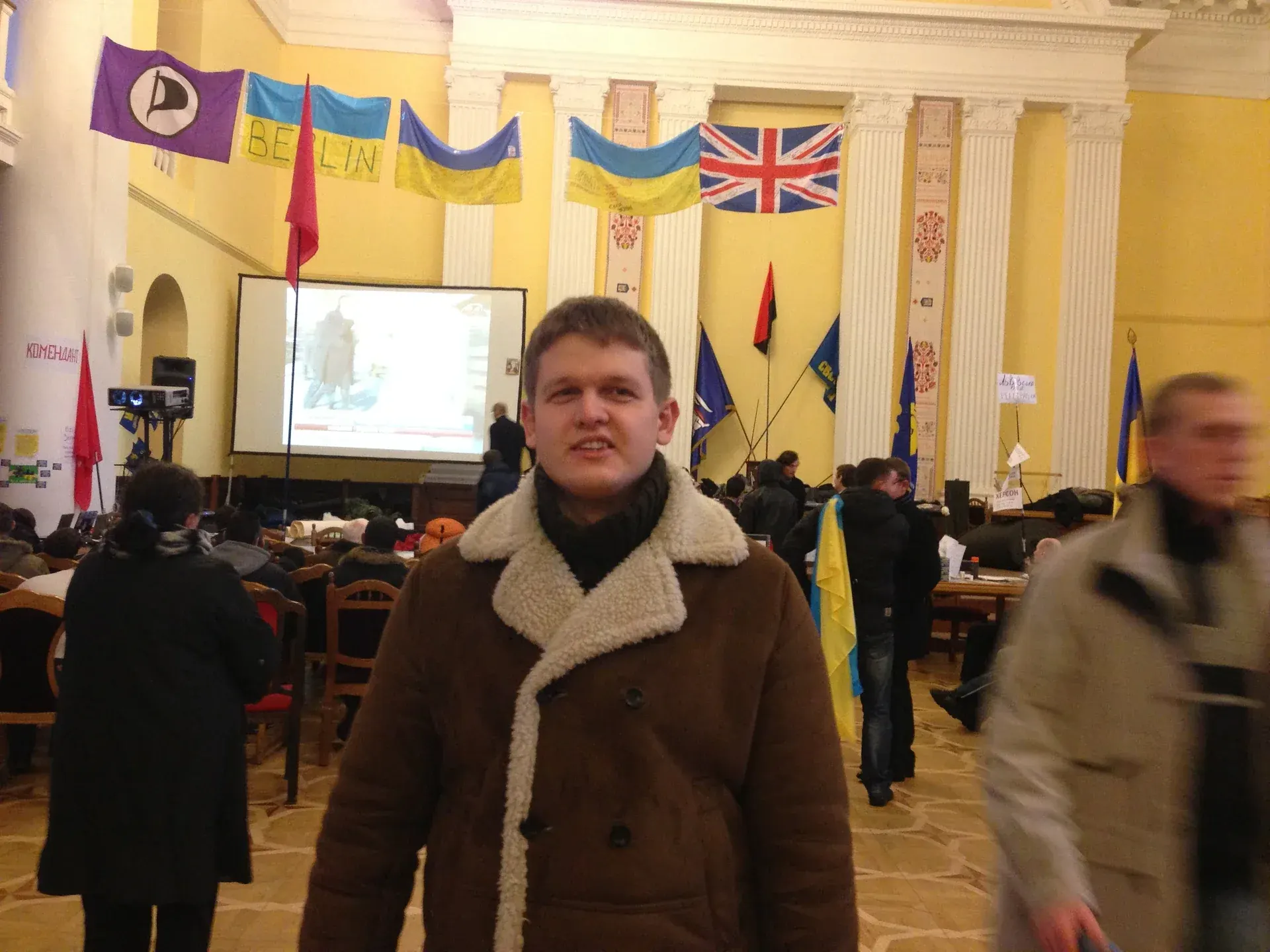
Maidan began to take on a life of its own. People set up camp, cooked food and slept in the city centre. I went inside the city administration building on Khreshchatyk: there were posters on the walls, and people were staying and sleeping there. I was struck by how much they had organised themselves.
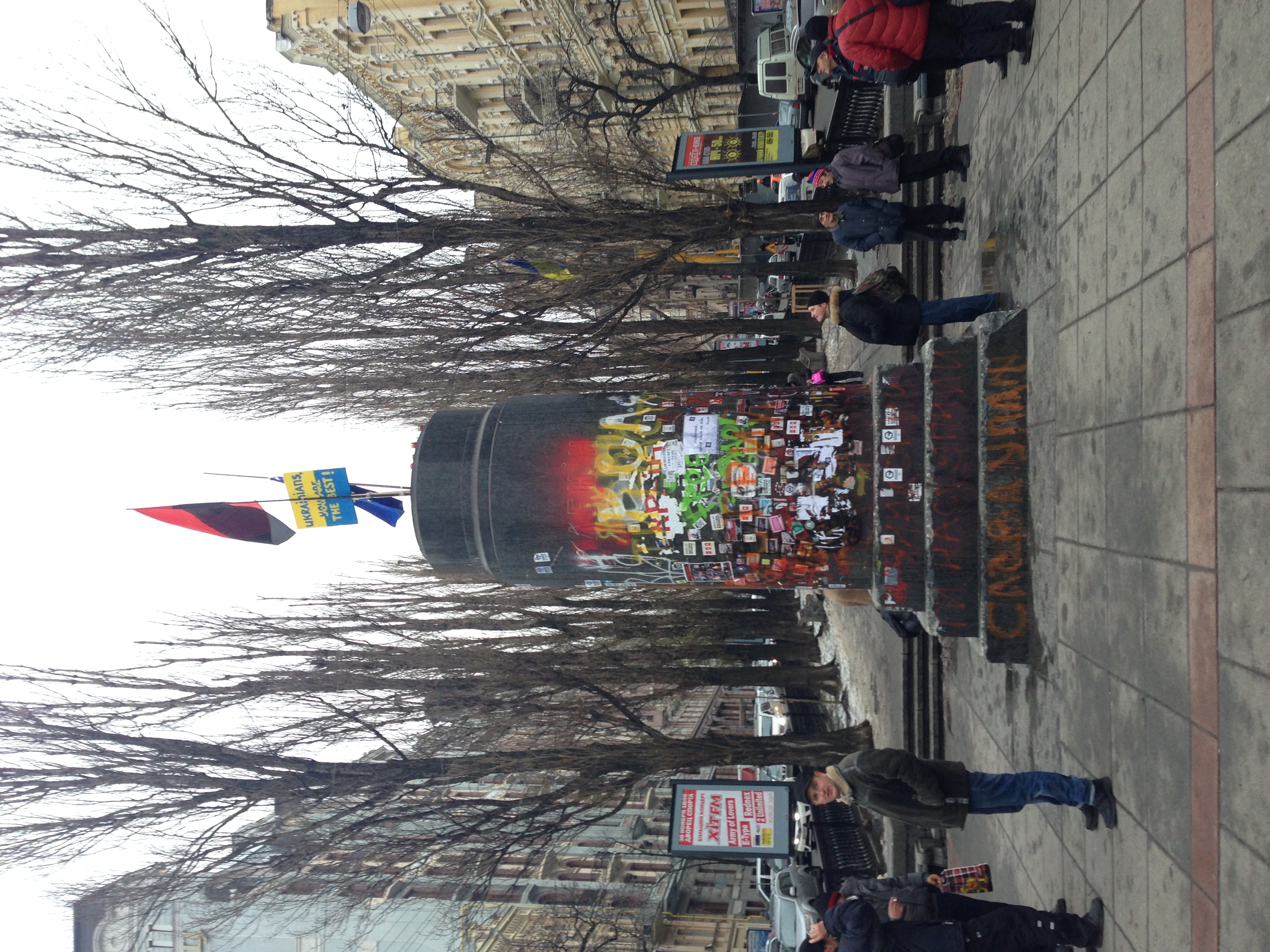
A statue of Lenin used to stand opposite Bessarabskyi Market. By December it was gone, leaving just a pedestal with flags. To me, it symbolised the Soviet past being left behind.
I often went to Maidan and walked around the tree covered in flags. I wore a helmet there too. Among the crowd were elderly women in Ukrainian headscarves.
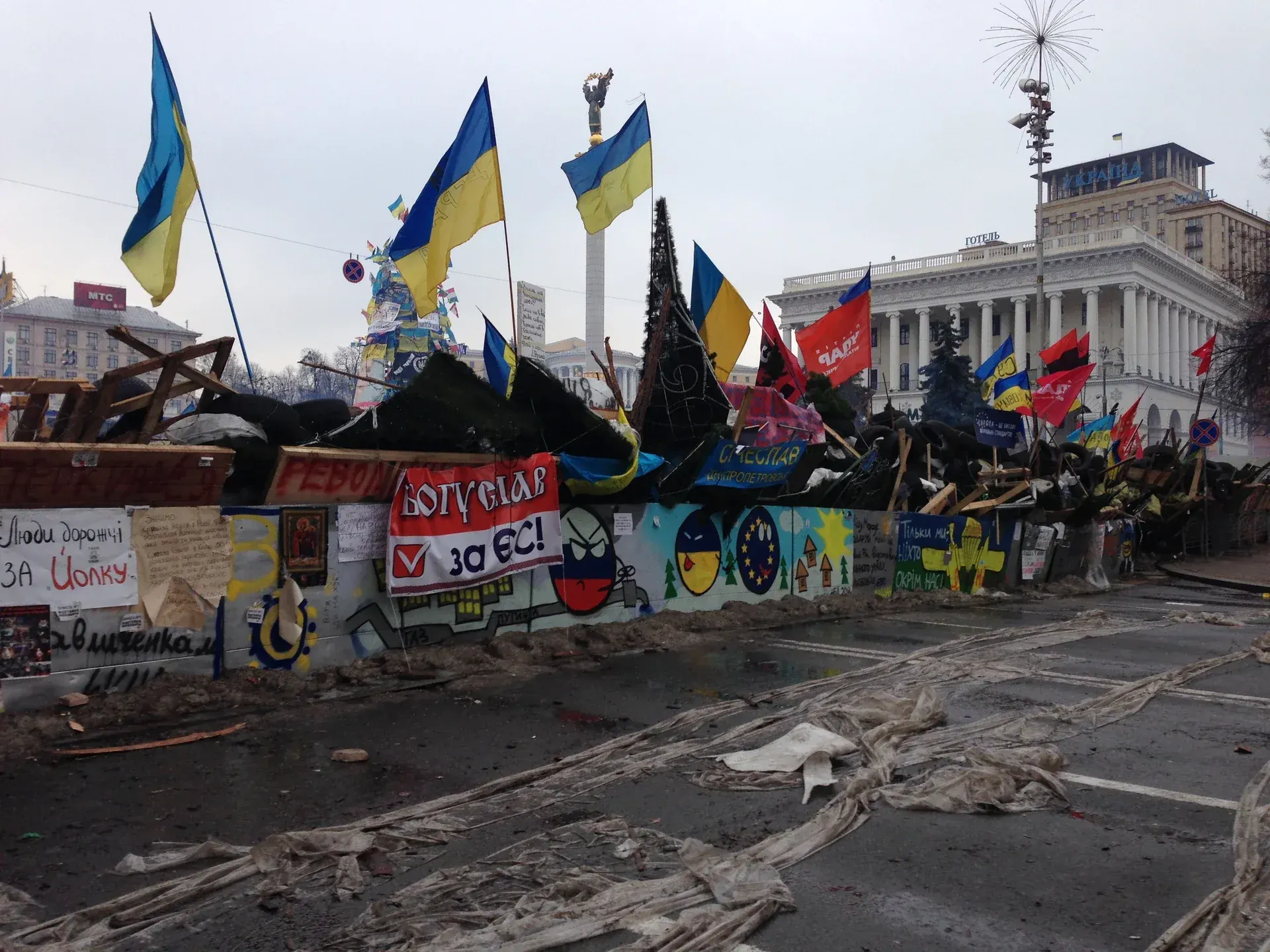
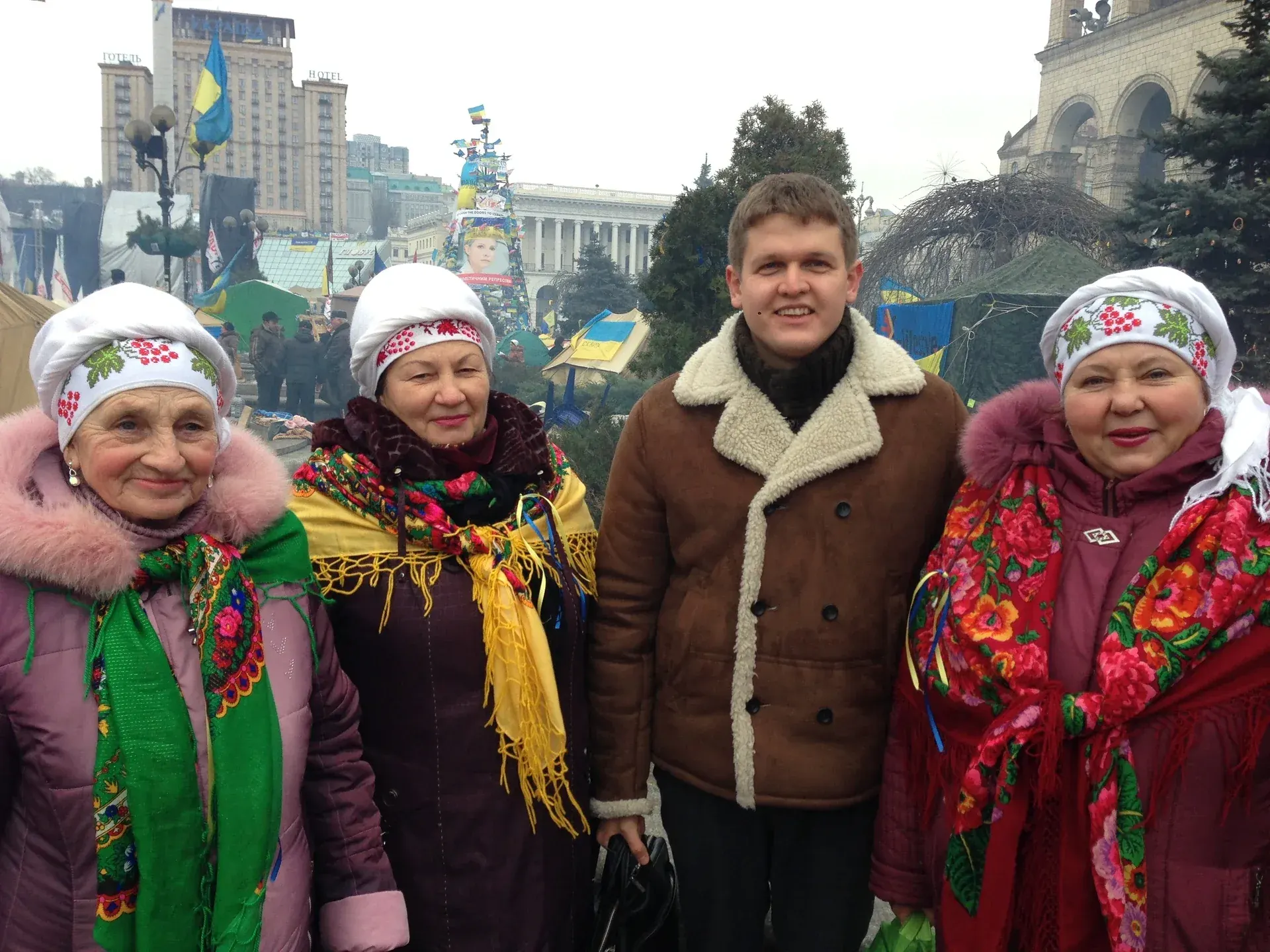
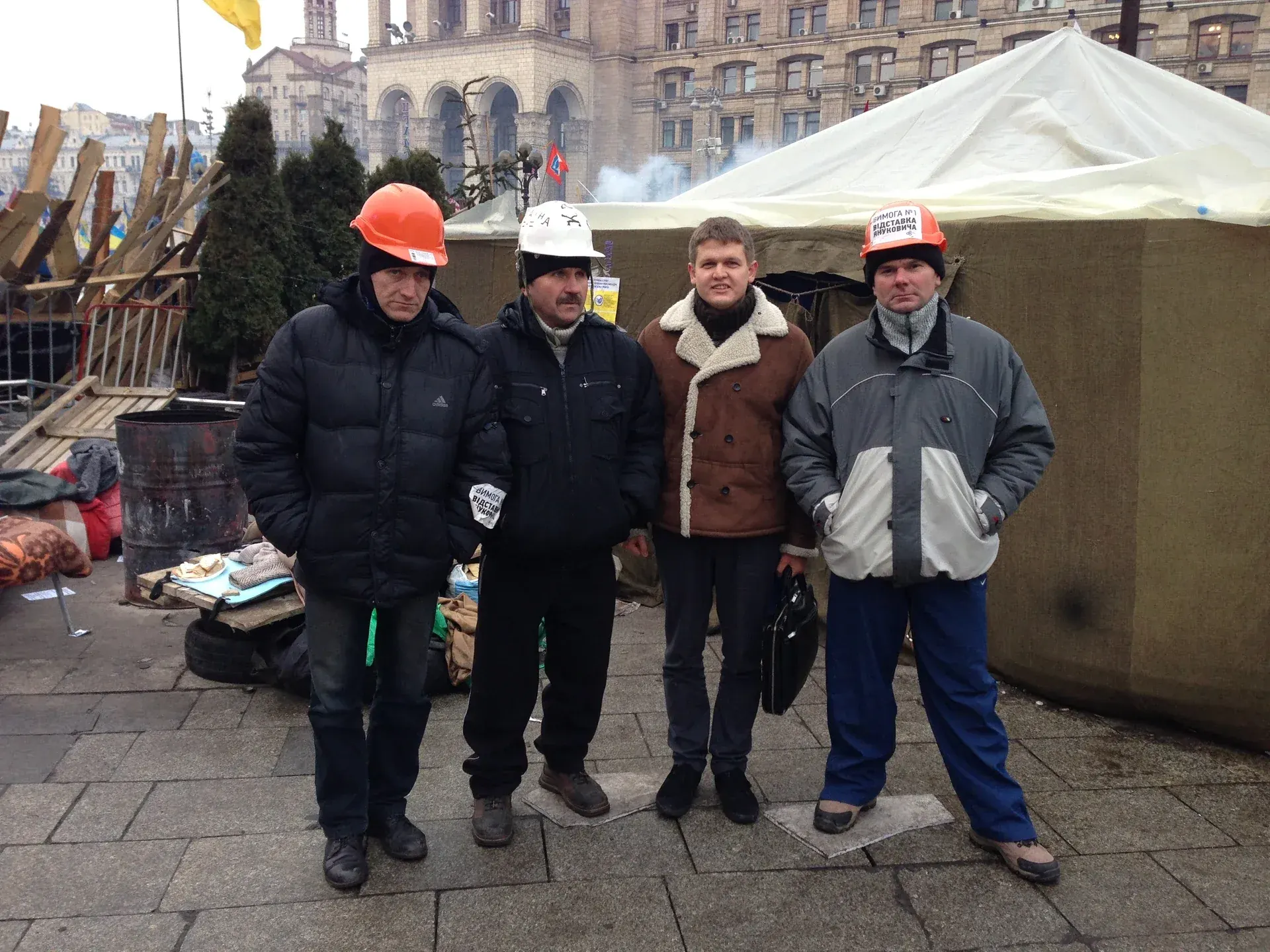
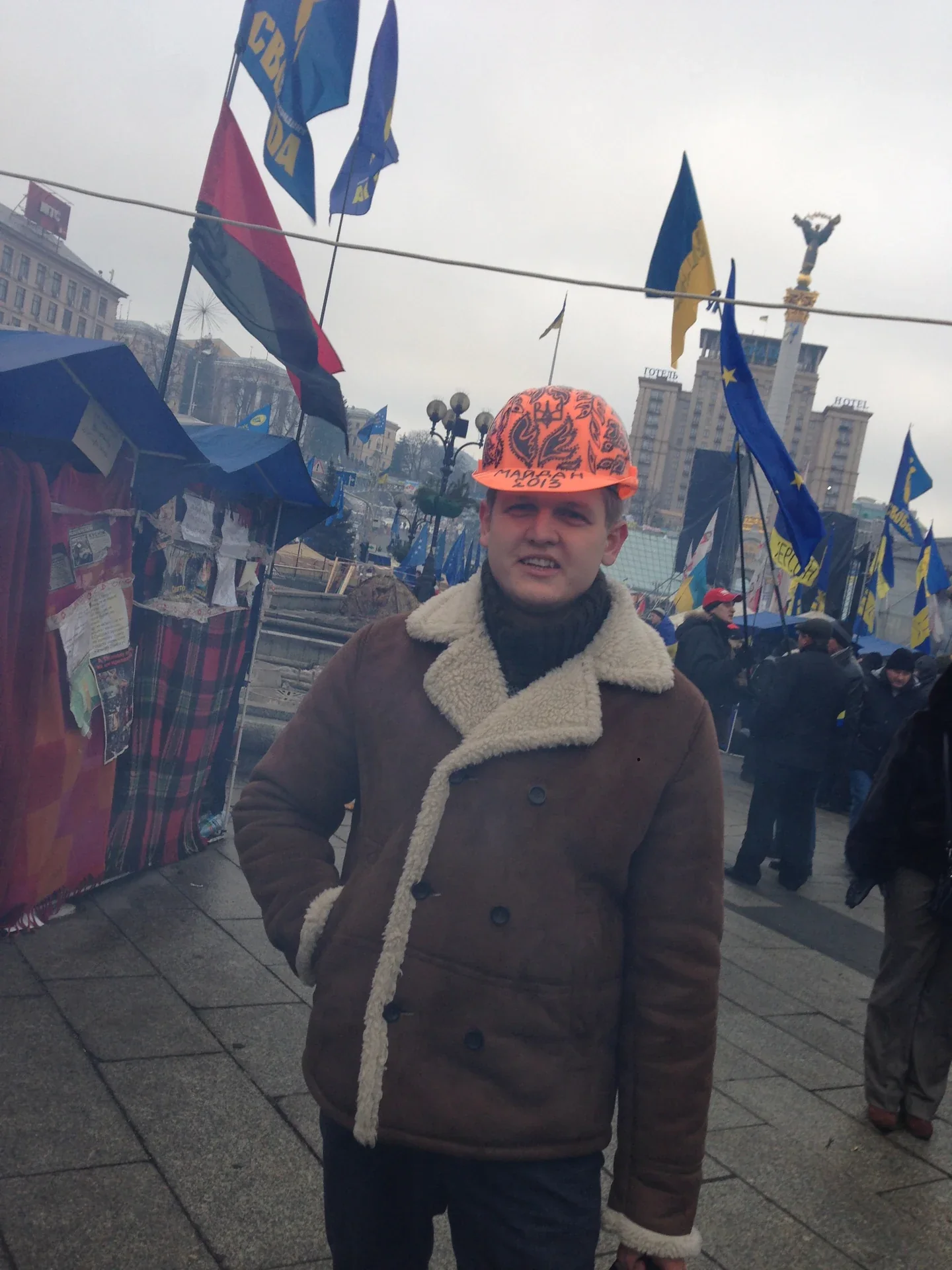
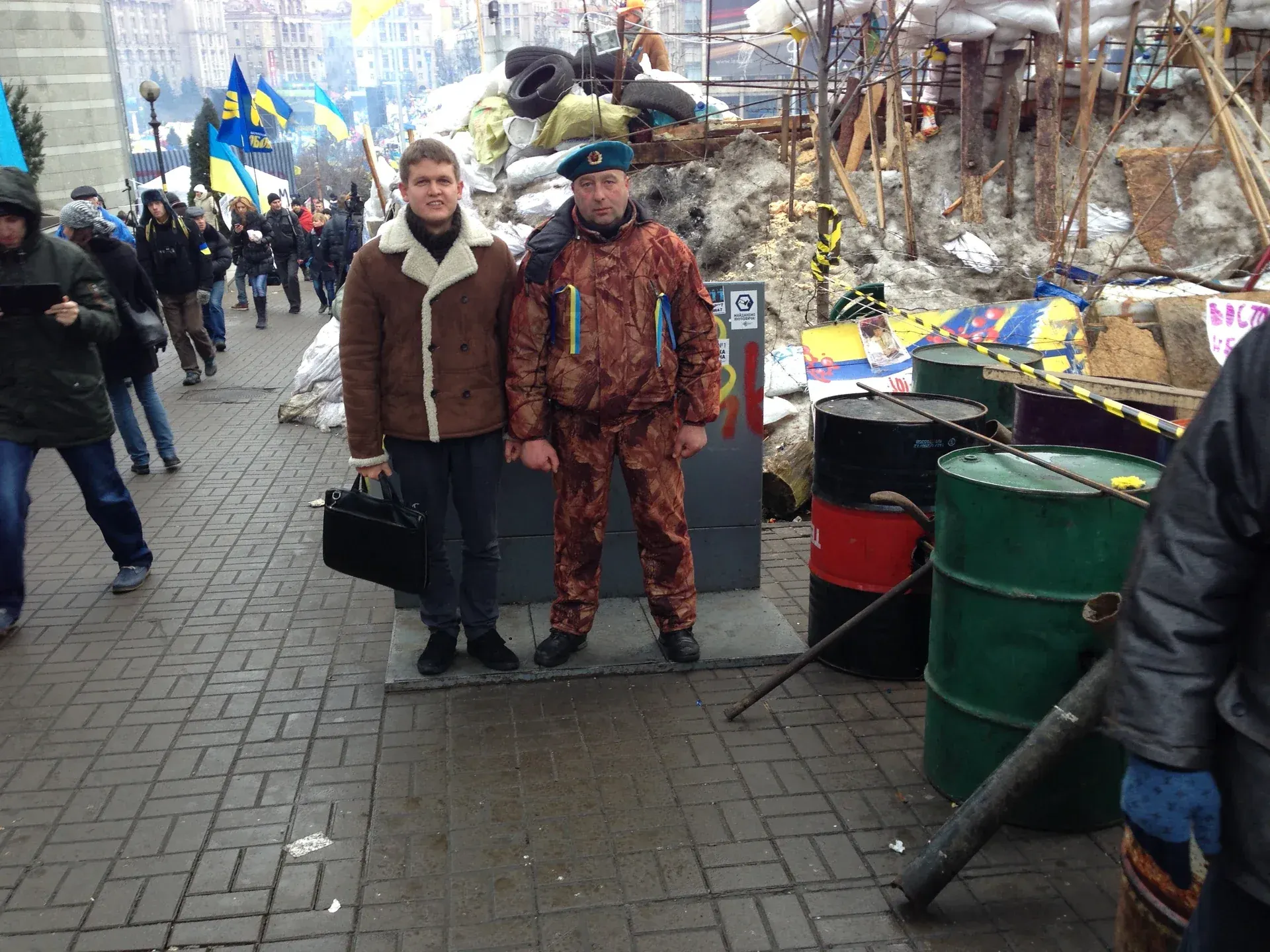
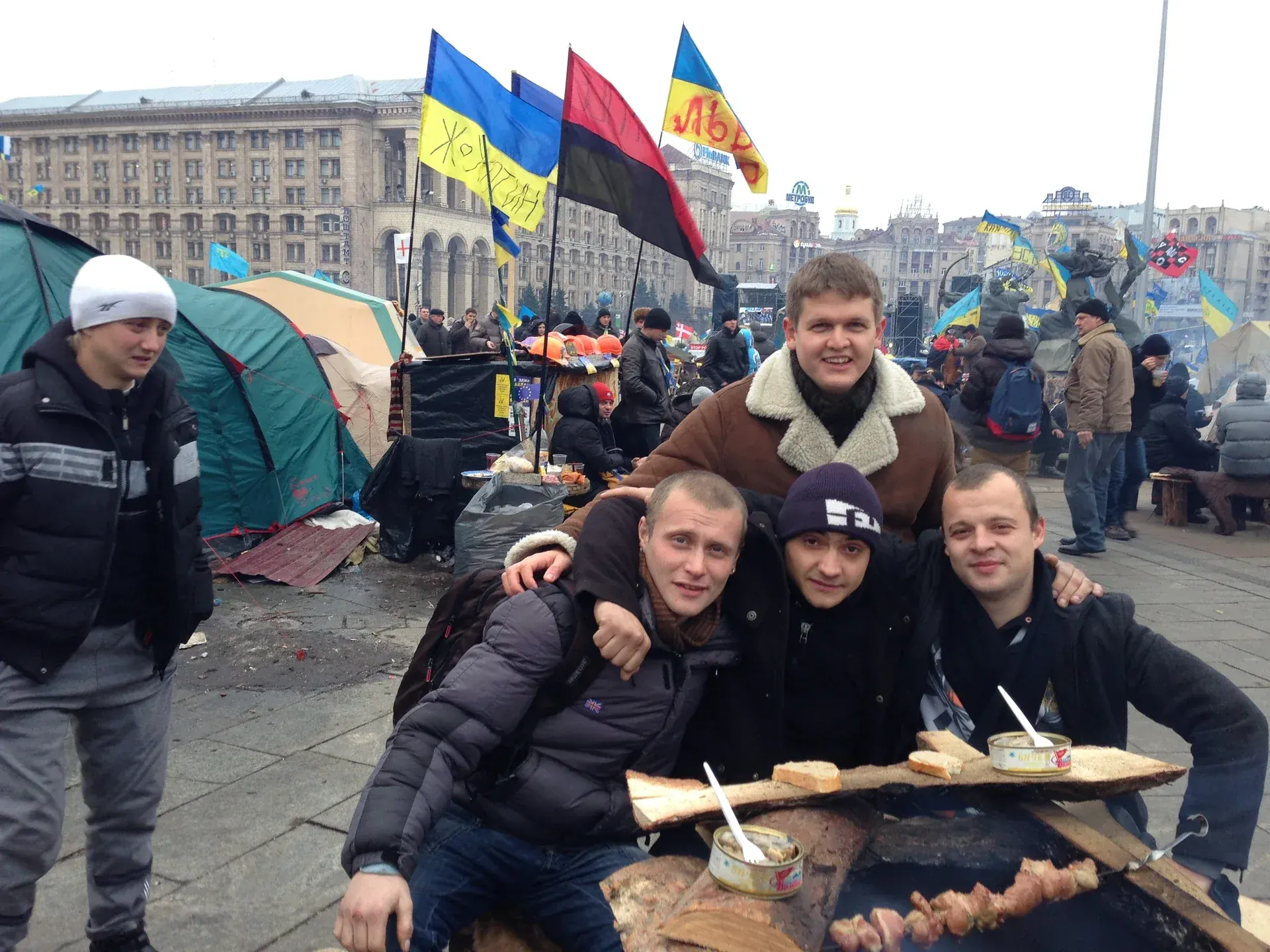
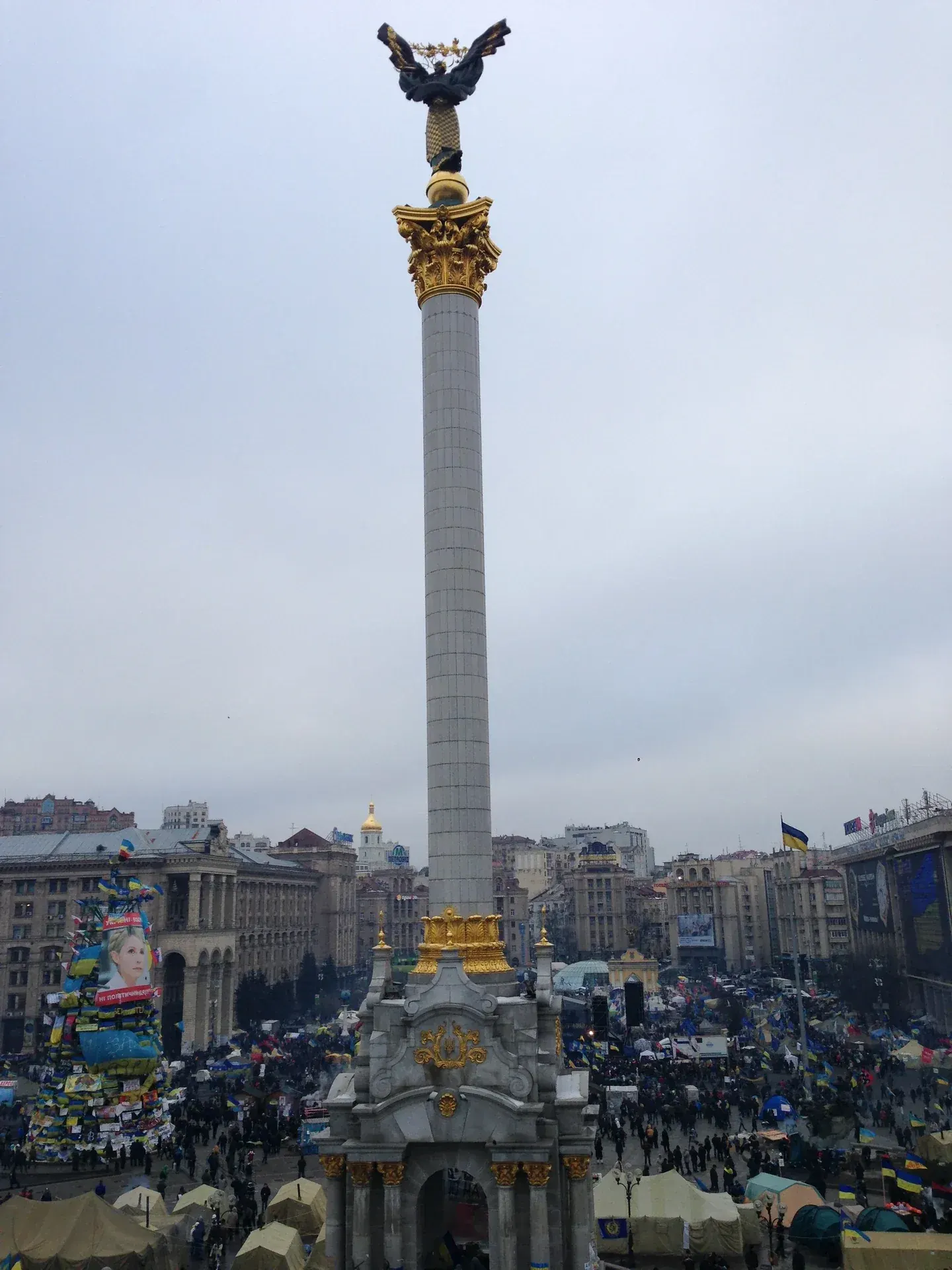
On the evening of 21 December, I stopped by again to try some food from a field kitchen. Everyone was being fed, and spirits were high.
After that, I flew to America. By the time I returned to Kyiv, Maidan had changed completely.
Coming Back
On 18 February, I went back to the centre. There were barricades and burning tyres on Hrushevskoho Street. I walked over to see what was happening. There was a wreath bearing the words “Heroes never die” and portraits of three people. The first deaths had already occurred in January.
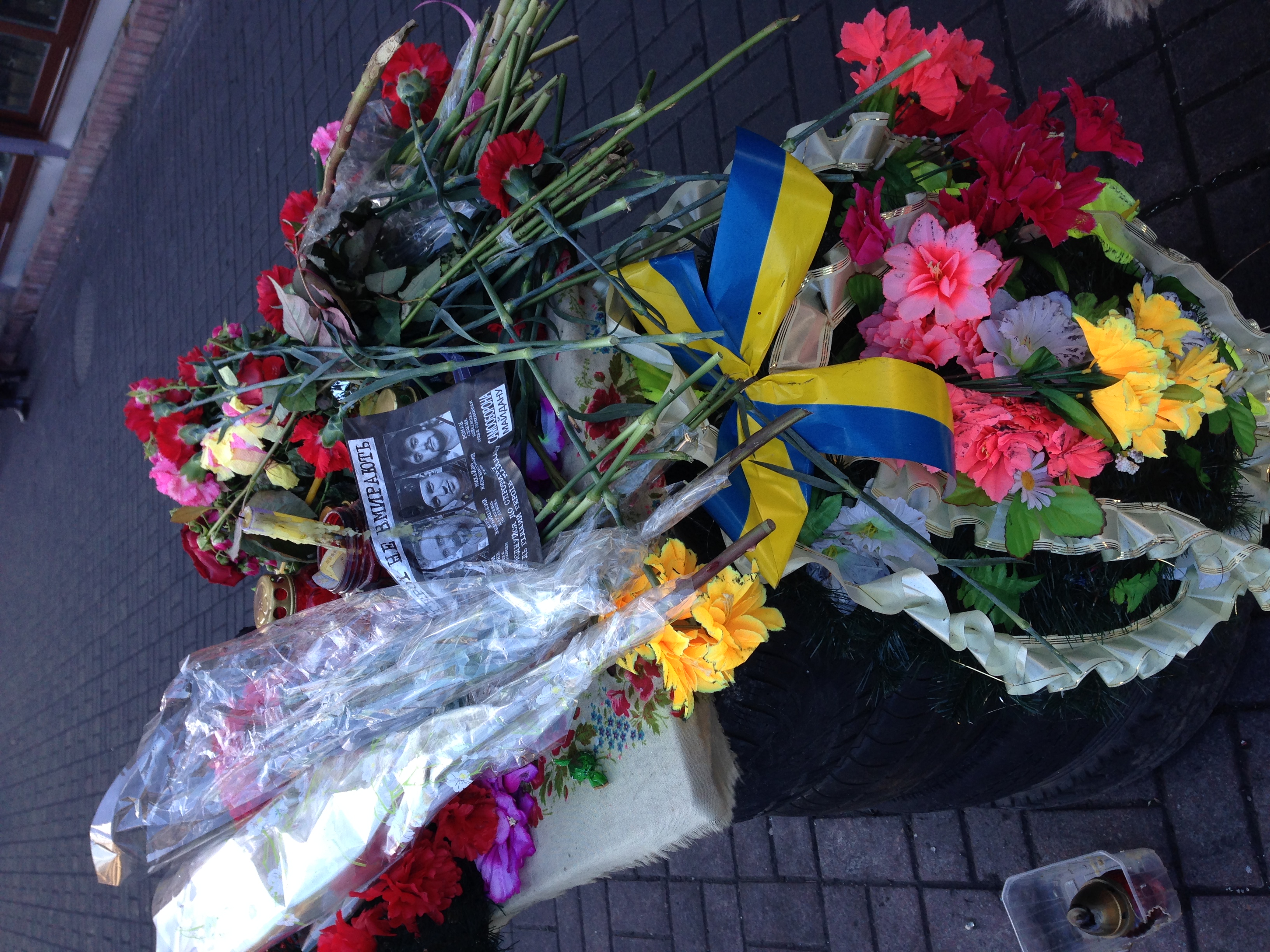
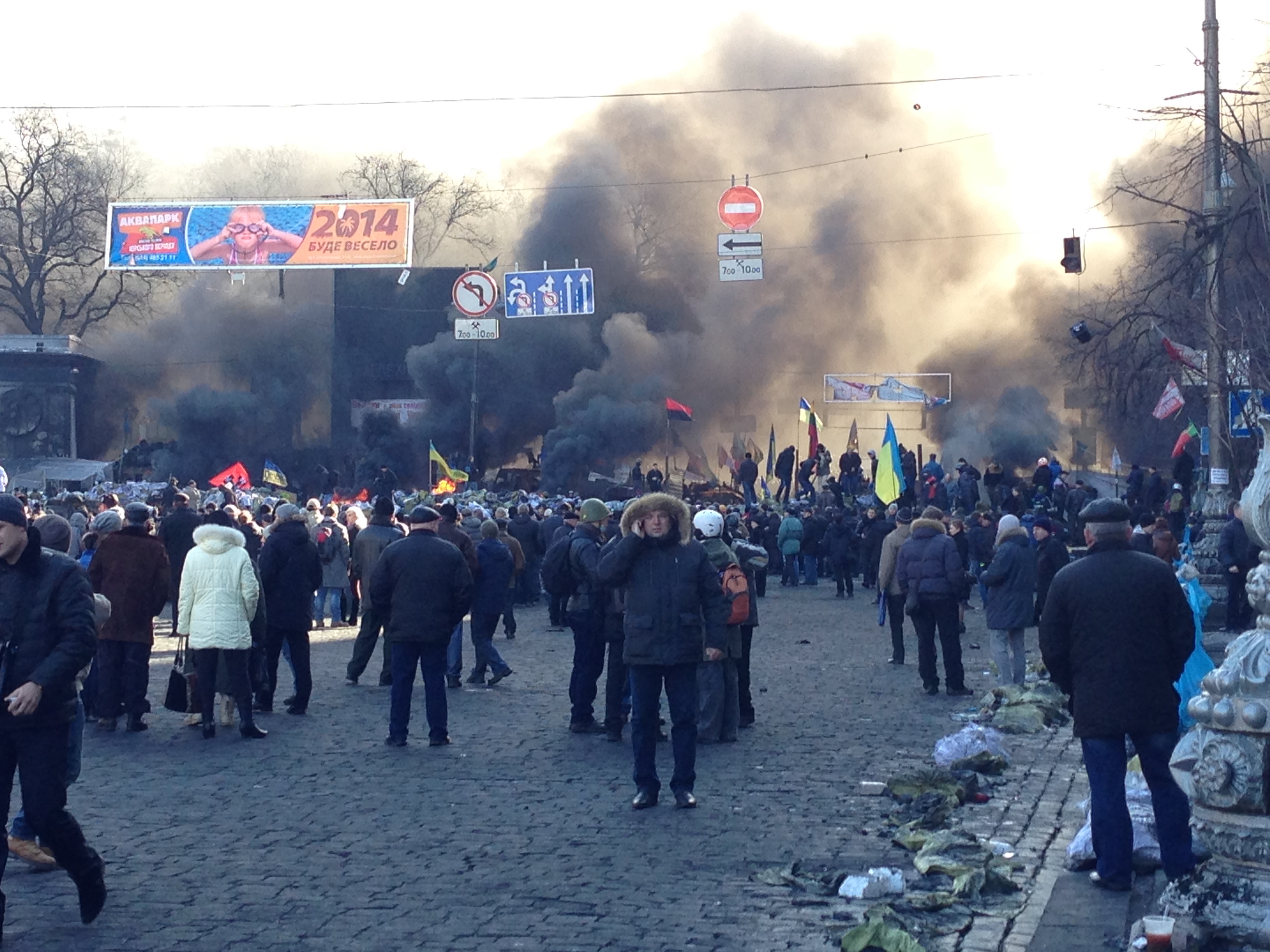
At that point, I found it hard to understand where it was all heading. I could not believe that people could be killed here, in the centre of Kyiv.
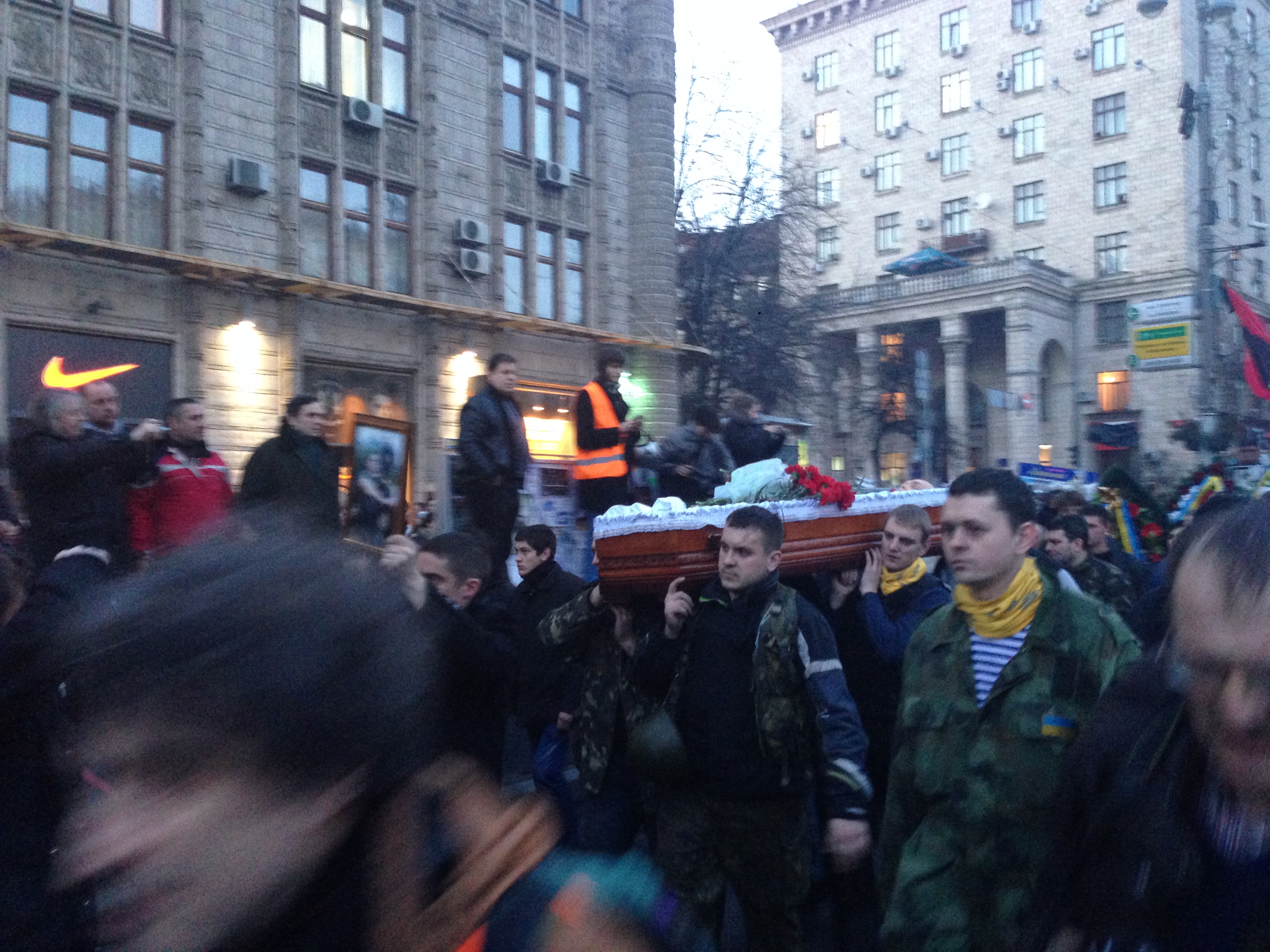
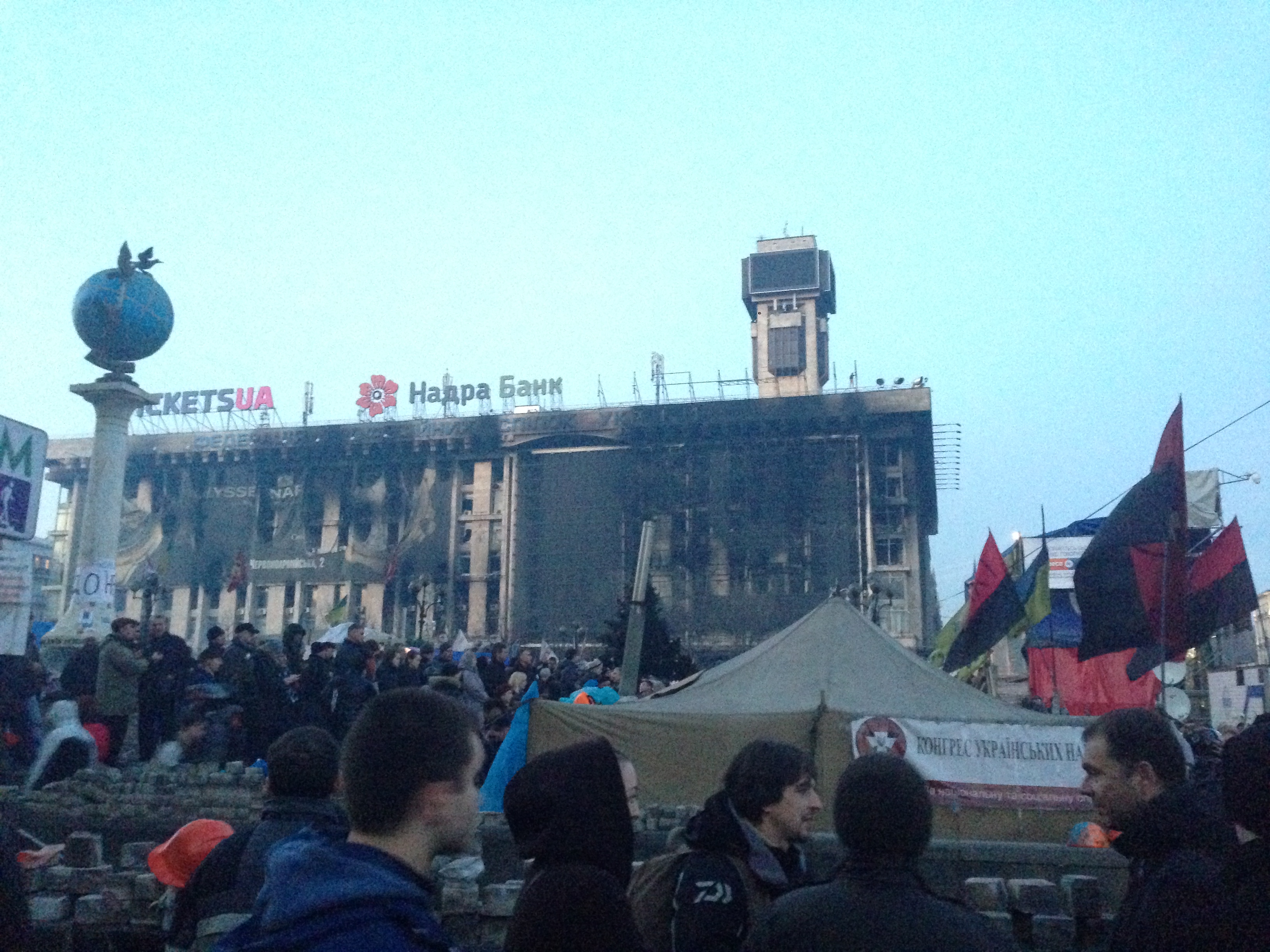
The most tragic events unfolded between 18 and 20 February. The mass shootings on Instytutska Street took place on 20 February. On the 21st, I was back on Maidan. They were carrying a coffin with one of those killed across the square. The burnt-out Trade Unions Building stood nearby. Candles had been lit where people had died, and those spots had been cordoned off.
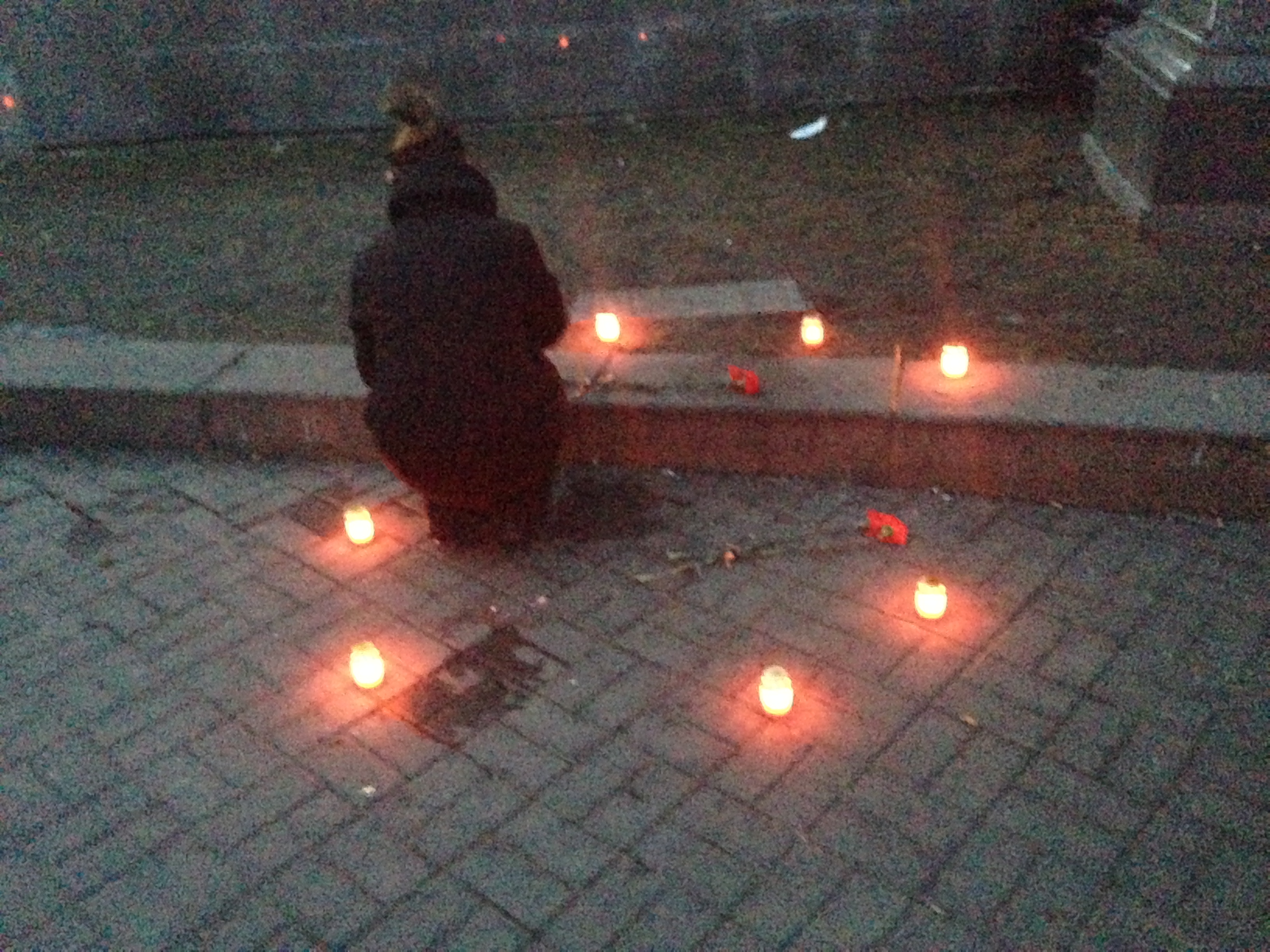
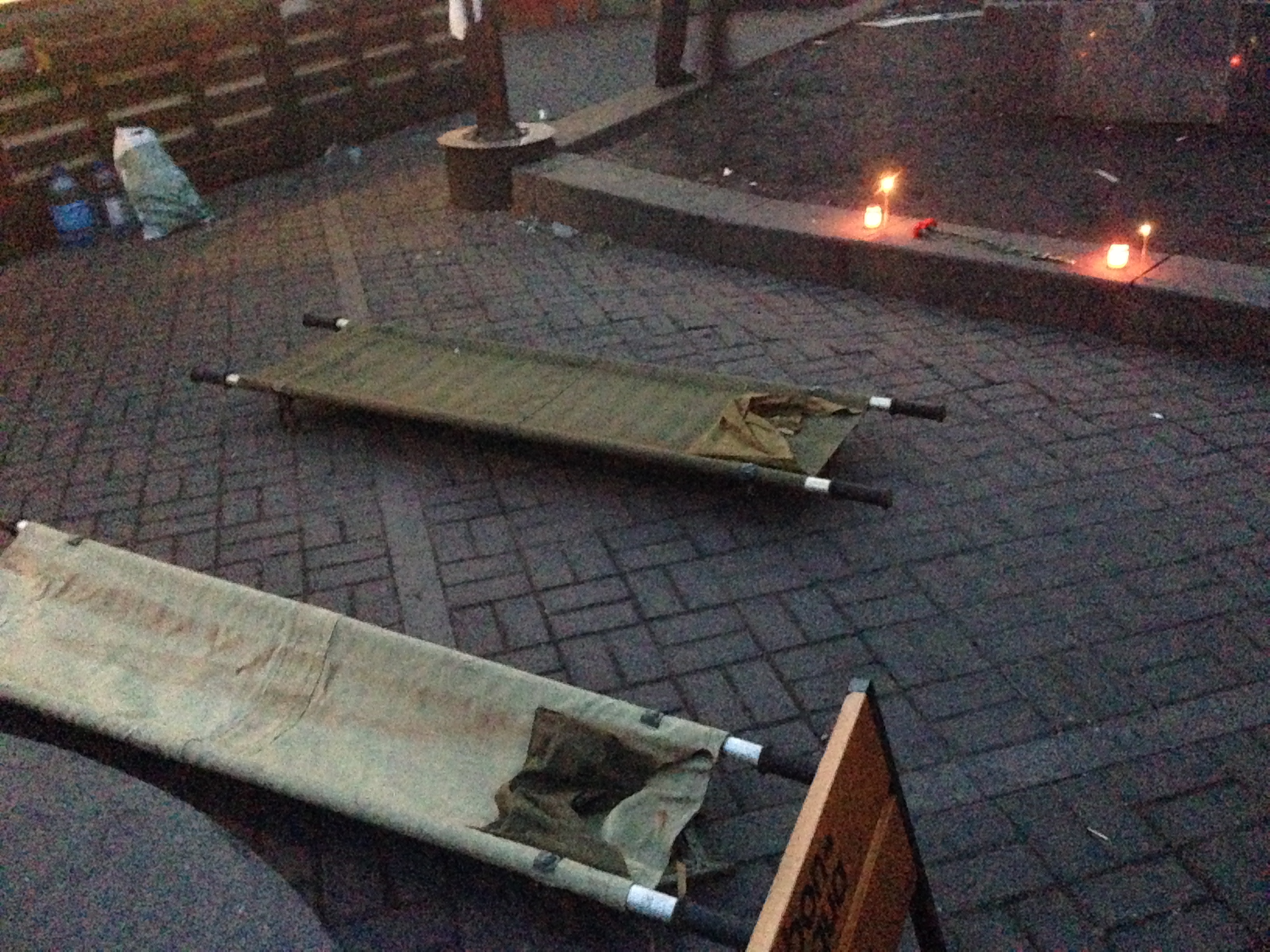
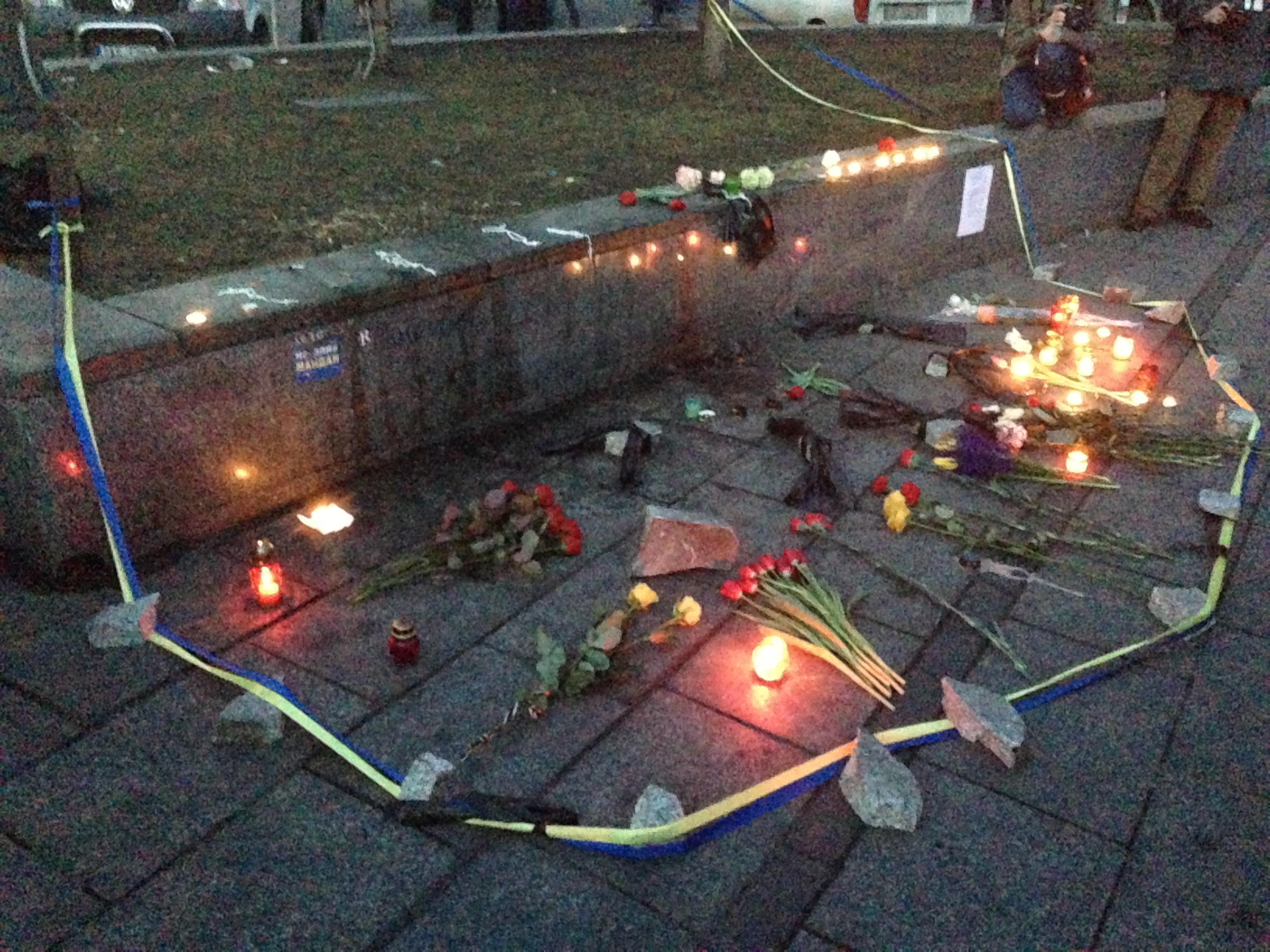
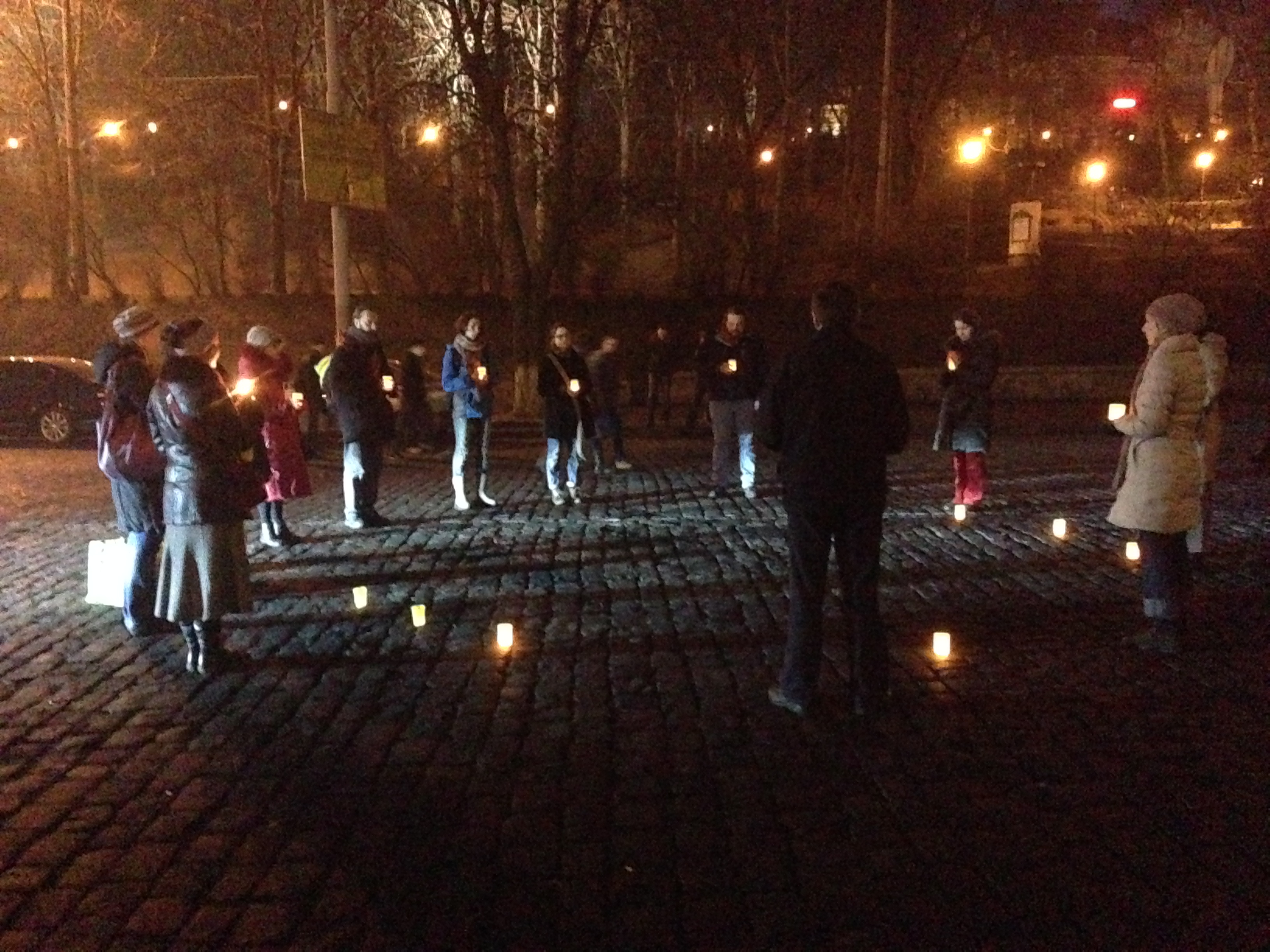
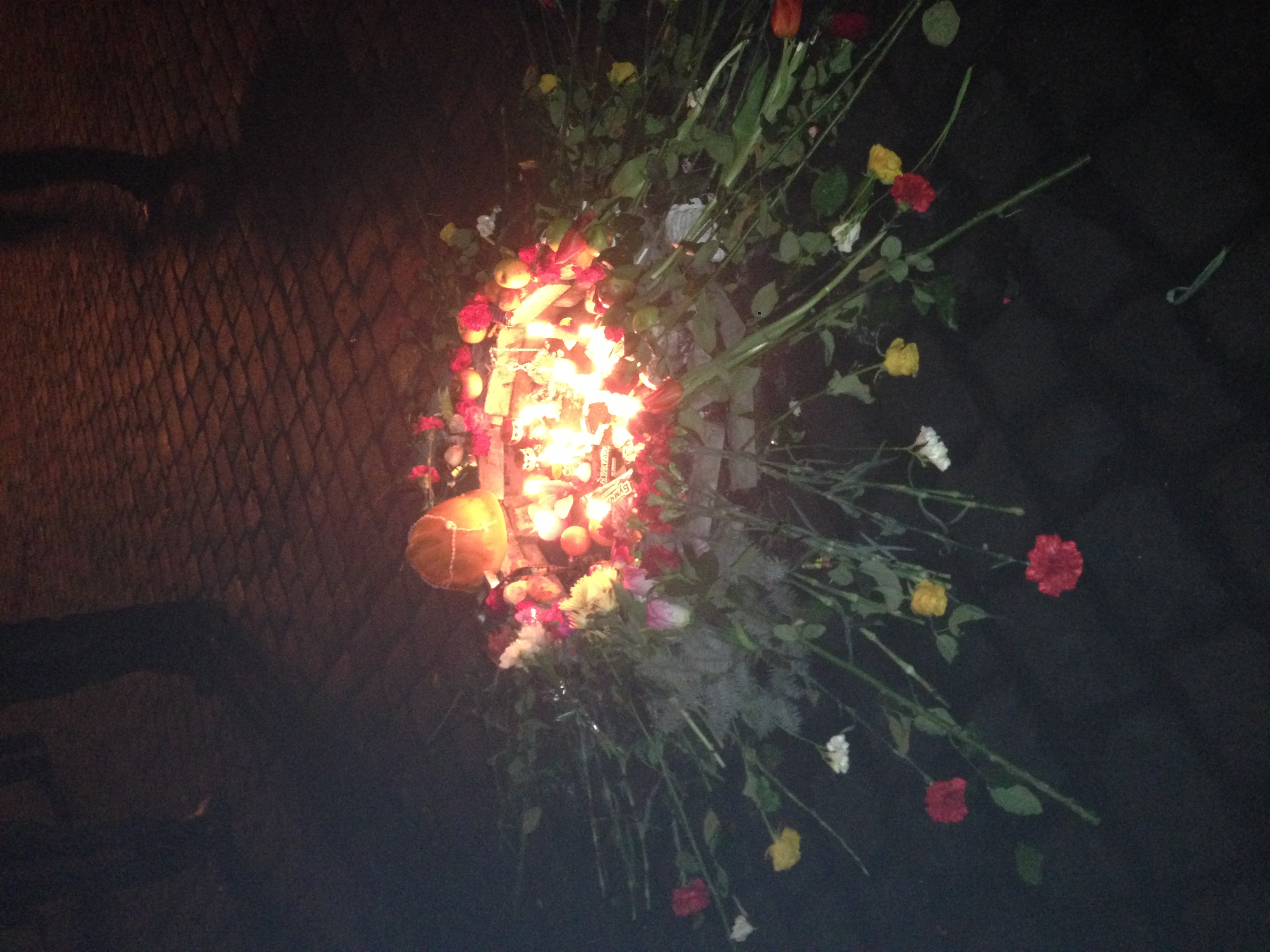
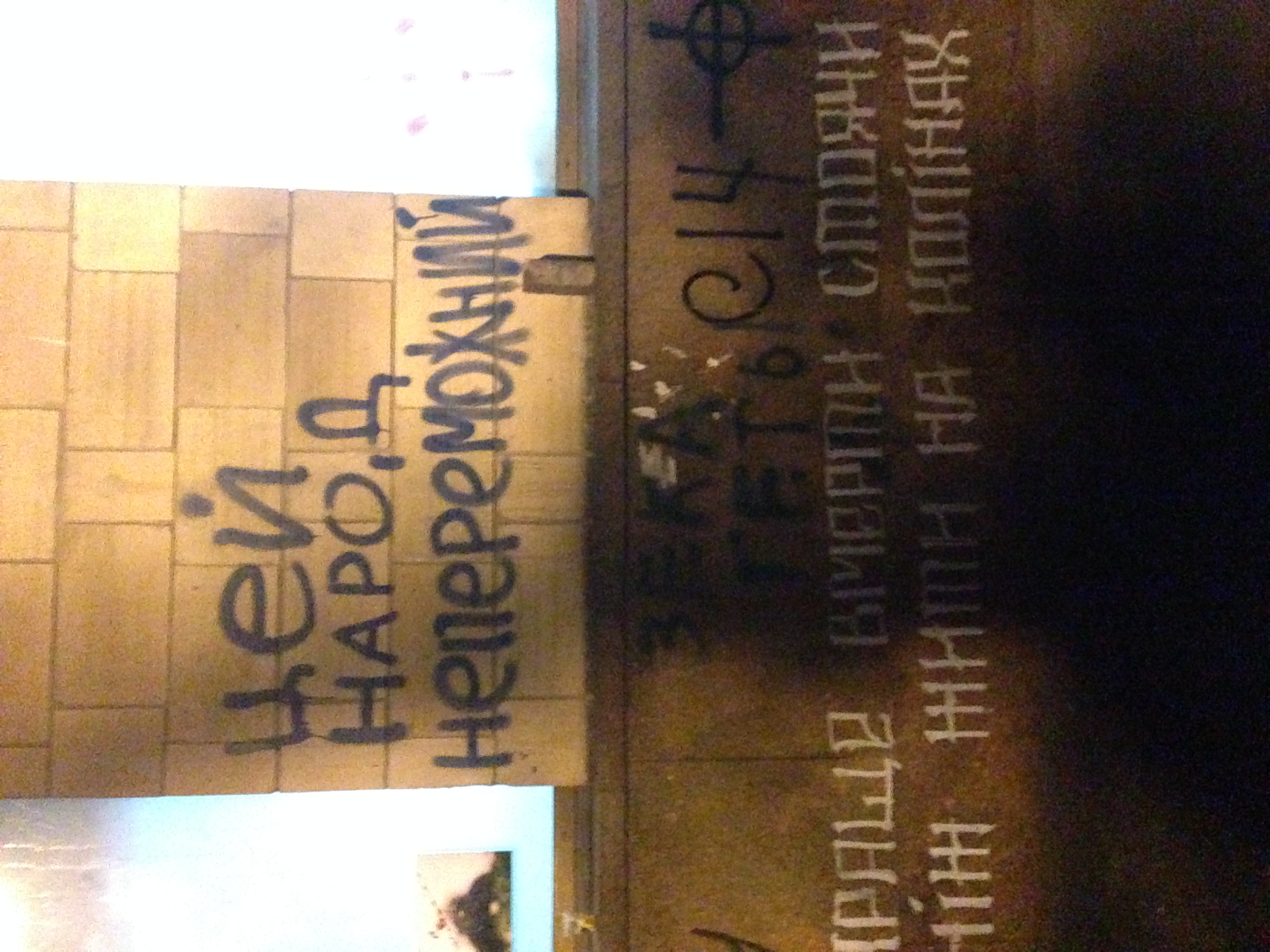
On one wall were the words “These people are invincible”. There were flowers and candles all around. It was nothing like those early days when we came just to see what was happening and try the food at the field kitchens.
Mezhyhiria
On 22 February, we decided to go to Mezhyhiria to see Yanukovych’s residence. It turned into quite an adventure.
We took a taxi towards Novi Petrivtsi, but got caught in an enormous traffic jam on the way there. Huge numbers of people were arriving by car and on foot. A kilometre or two from our destination, we realised the taxi was not going to get any further. We got out and walked with everyone else.
People around us were celebrating. There was a sense of victory, though no one yet knew what would happen next. Someone was trampling on a Party of Regions flag outside the entrance. Others stood by the gates and on the fence. A sign on the gates read: “People!!! Do not destroy the evidence of abuse of power!”
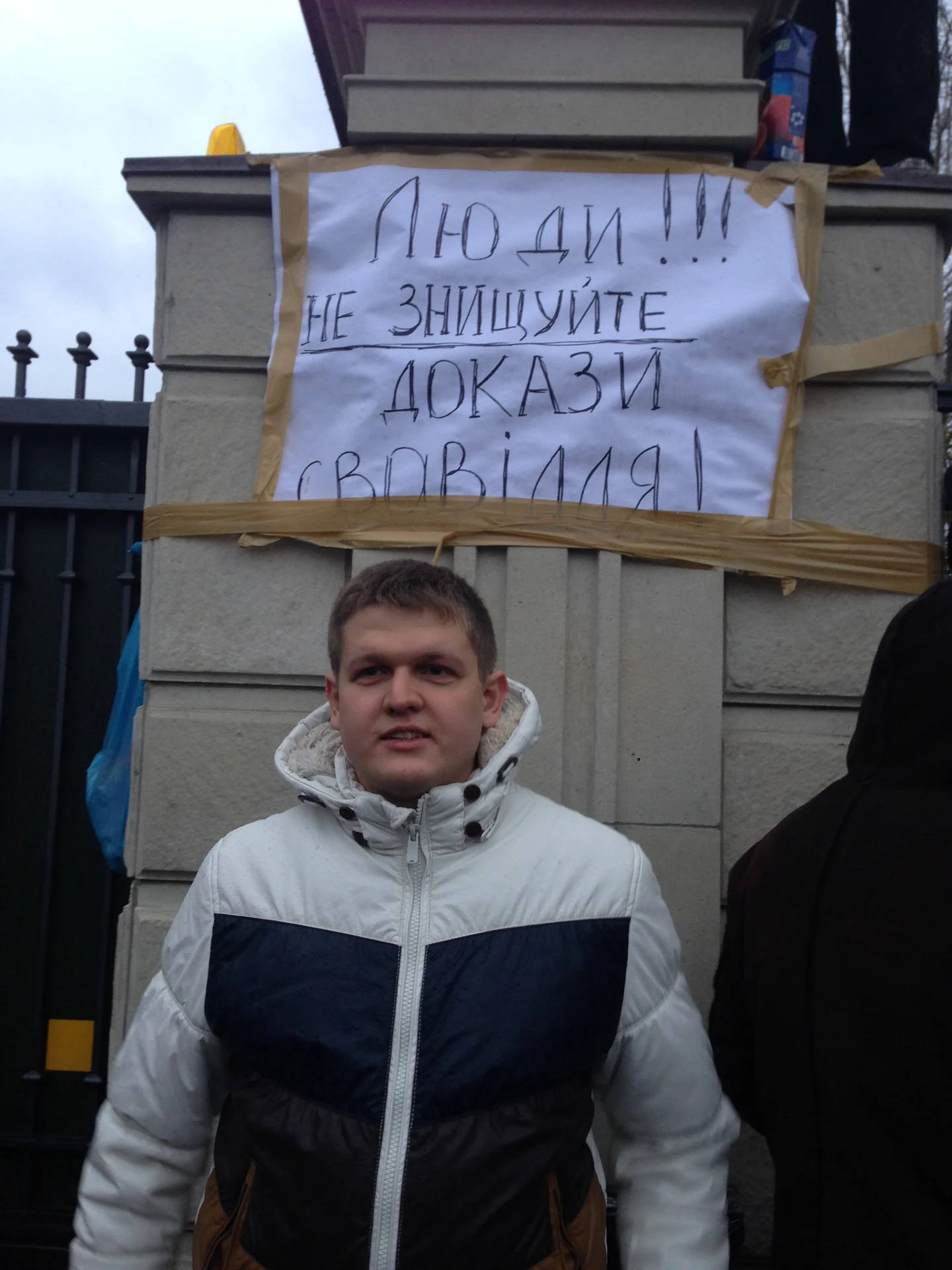
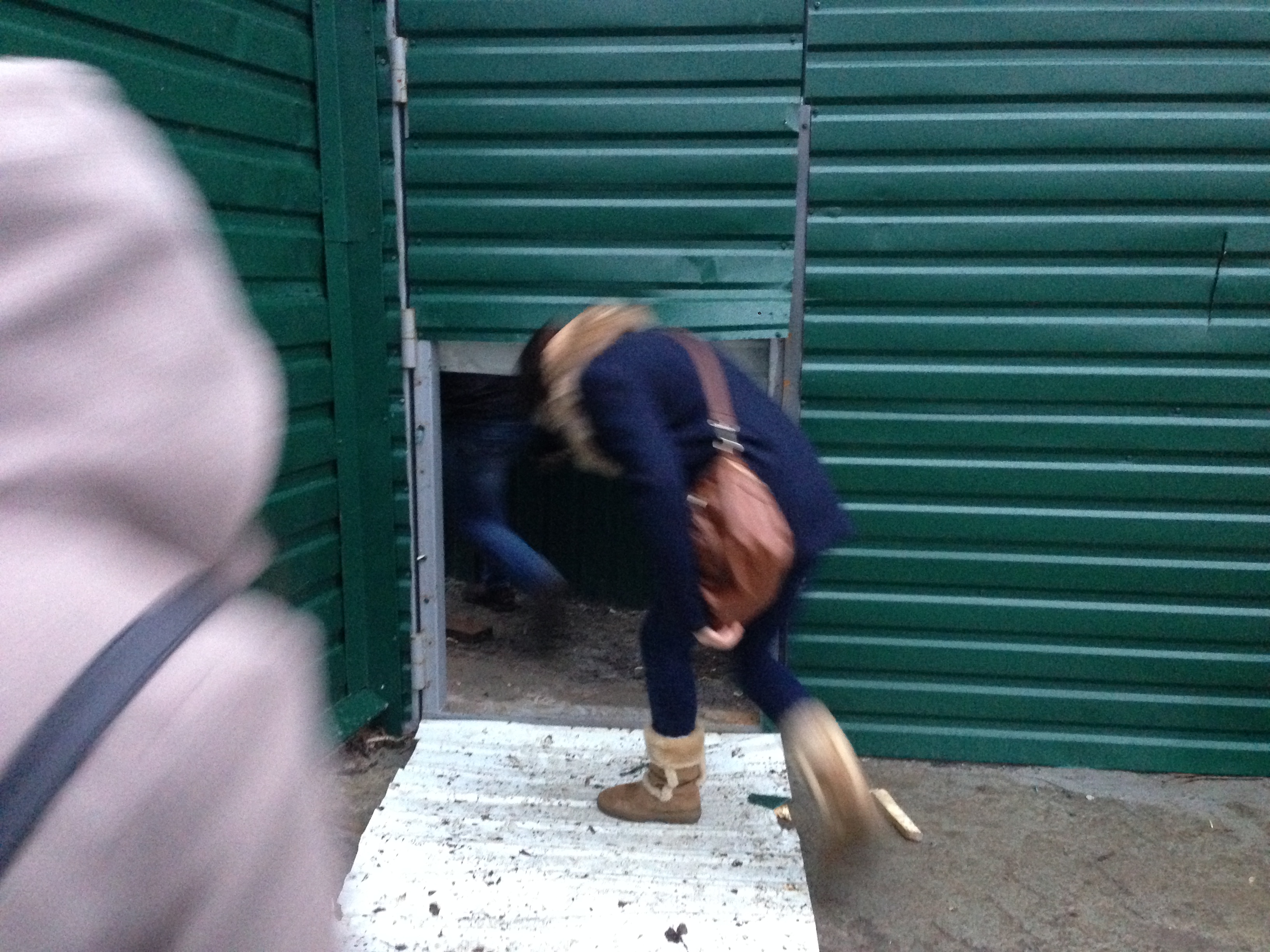
We could not get in through the main entrance. But we never give up! We knew people were getting in somehow, so we decided to walk around the perimeter. We walked and walked until we finally found a hole in the fence. That was how we got inside.
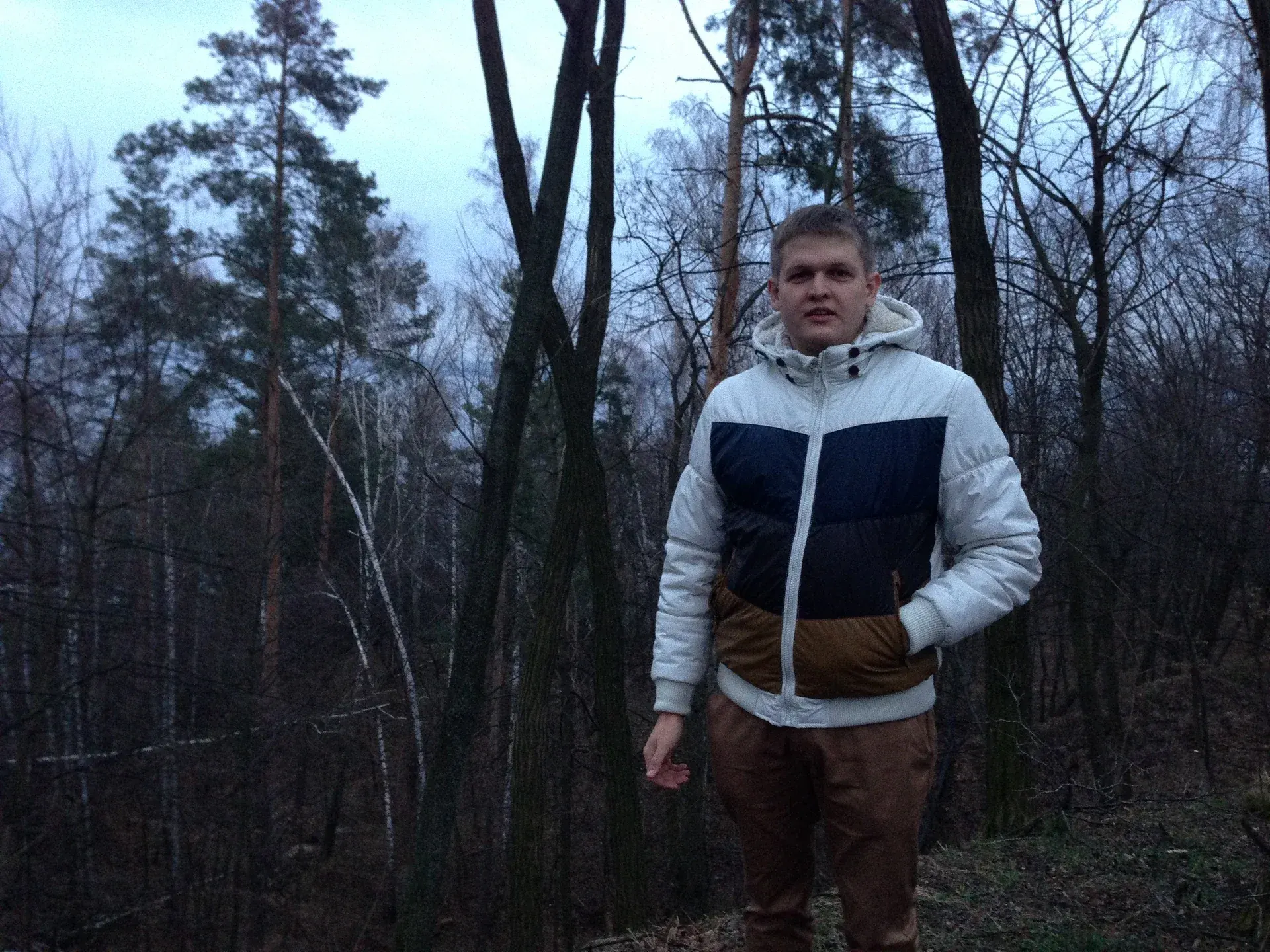
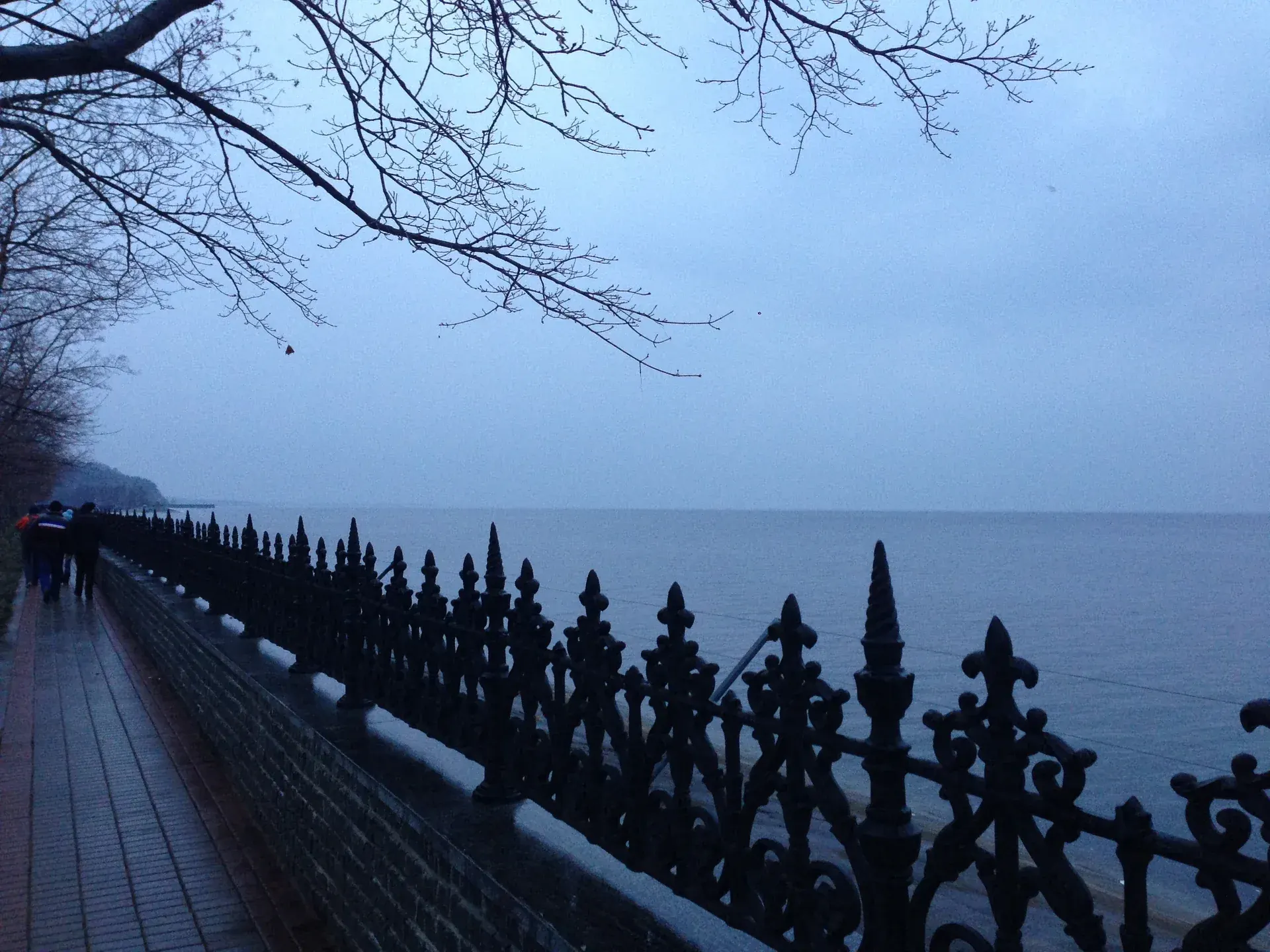
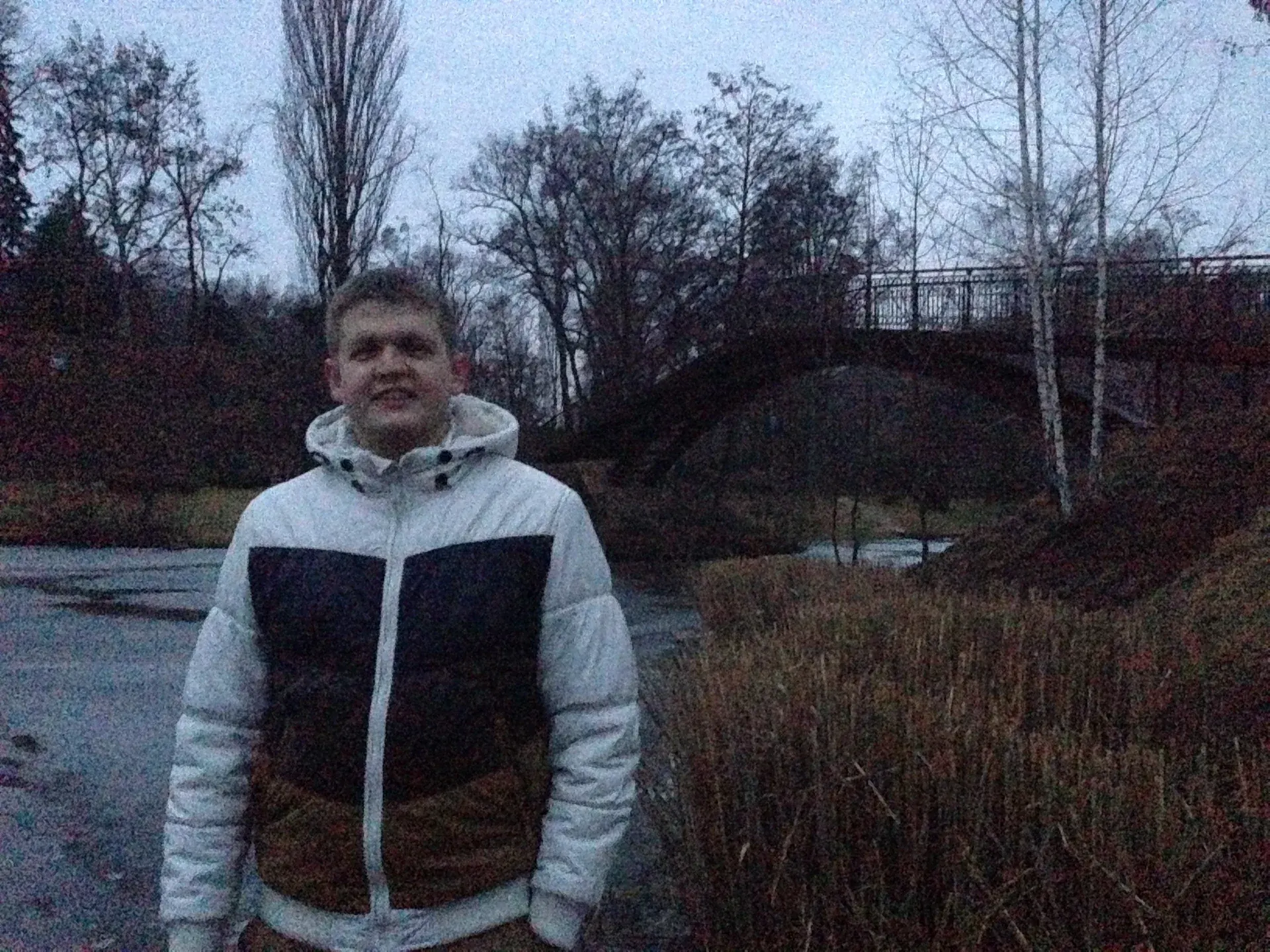
Inside was a whole little town set in a park. Birch trees, paths, lakes, little bridges and a huge waterfront where you could walk for hours. We wandered around the grounds, took photos by the bridges and looked at everything around us.
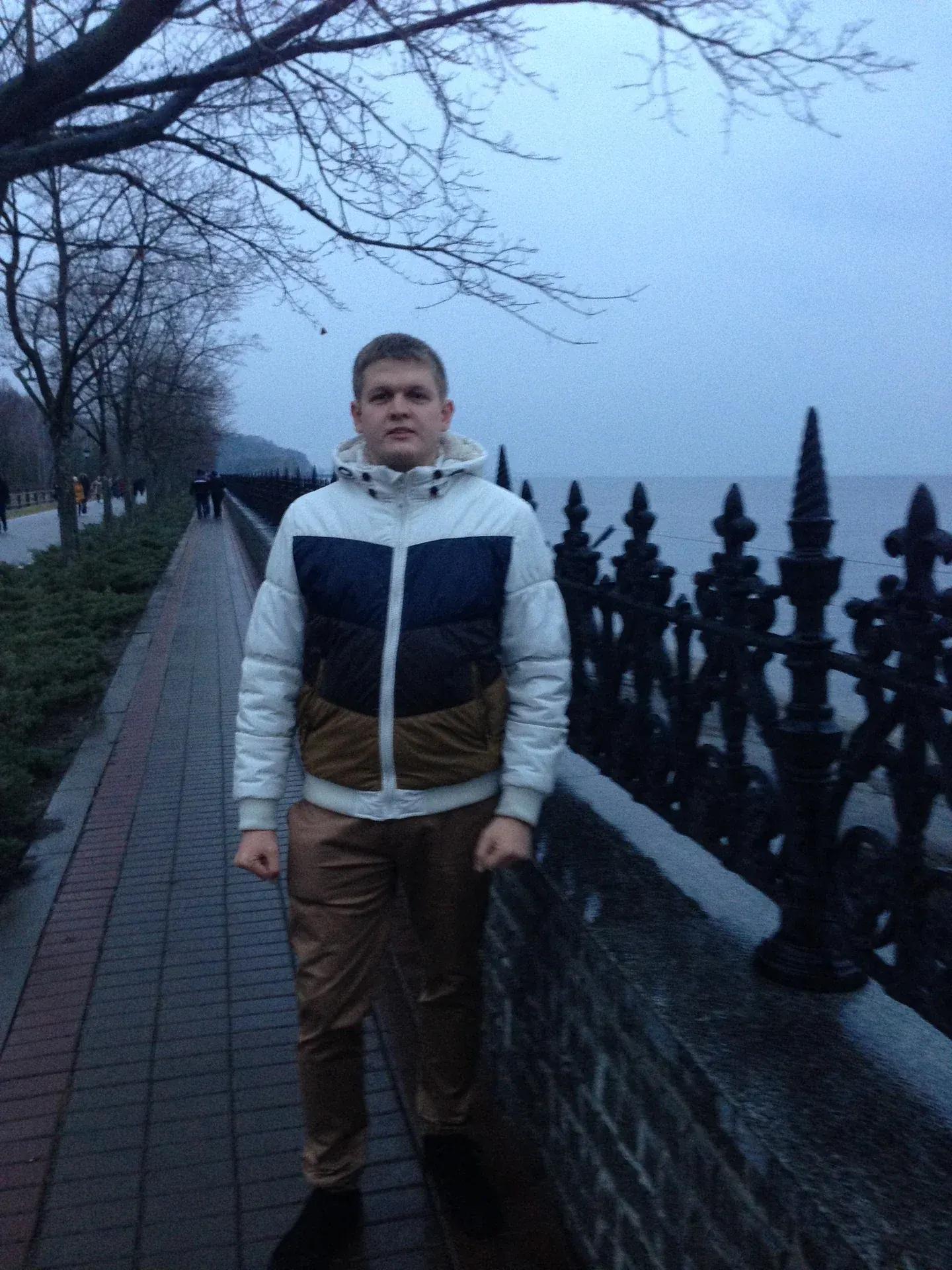
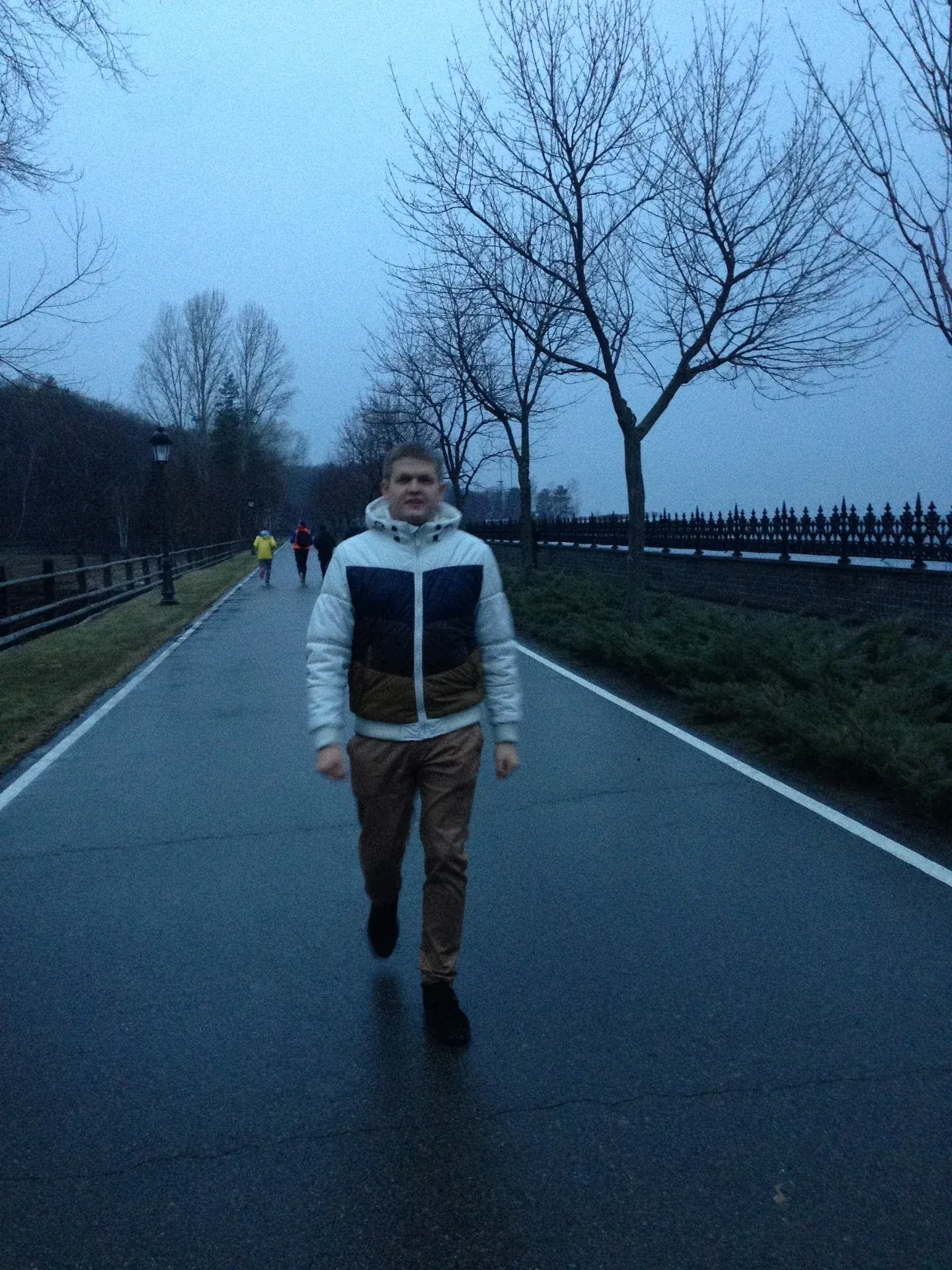
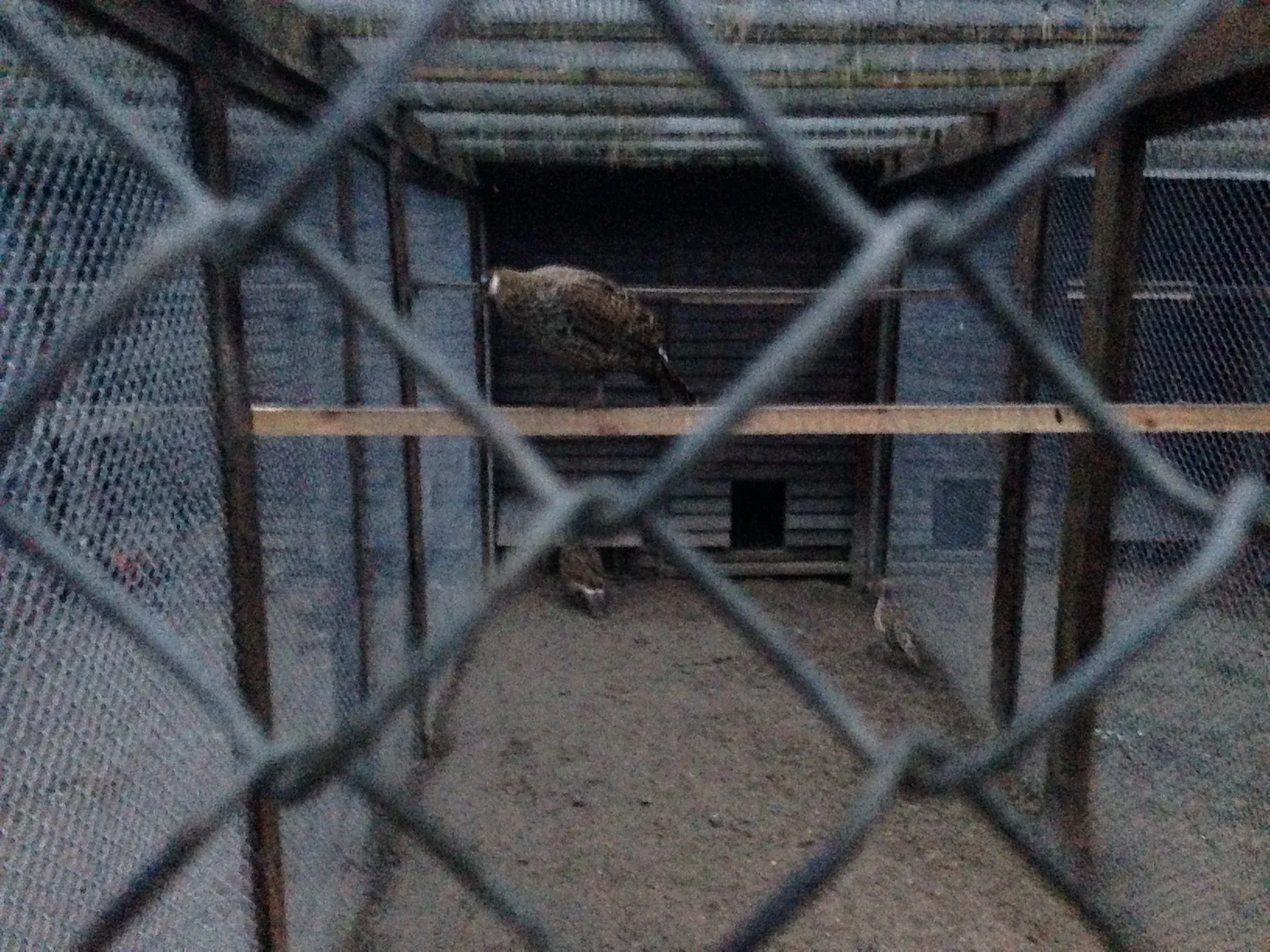
Then we came across a zoo. There were various pheasants in the cages, including golden pheasants. I looked at it all and thought: wow, so this is how the president of a poor country lived.
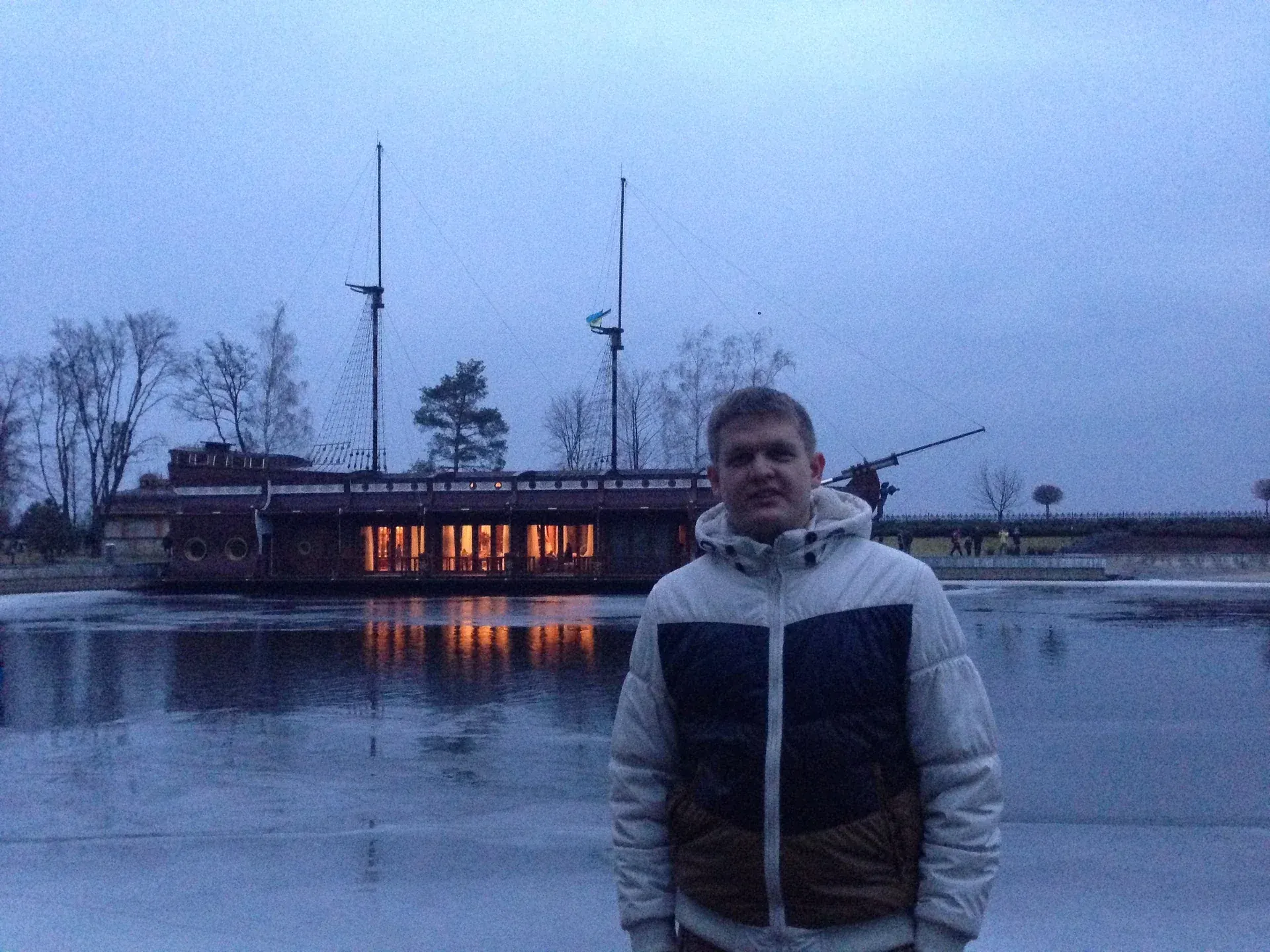
By the waterfront stood a ship that looked like a galleon. Beautiful and unusual, right there in the middle of the residence. Inside was a lot of alcohol that, as I understood it, had been given to Yanukovych as gifts. I also spotted bottles of personalised vodka with his portrait on them. Someone had made the president his own vodka. That made me laugh.
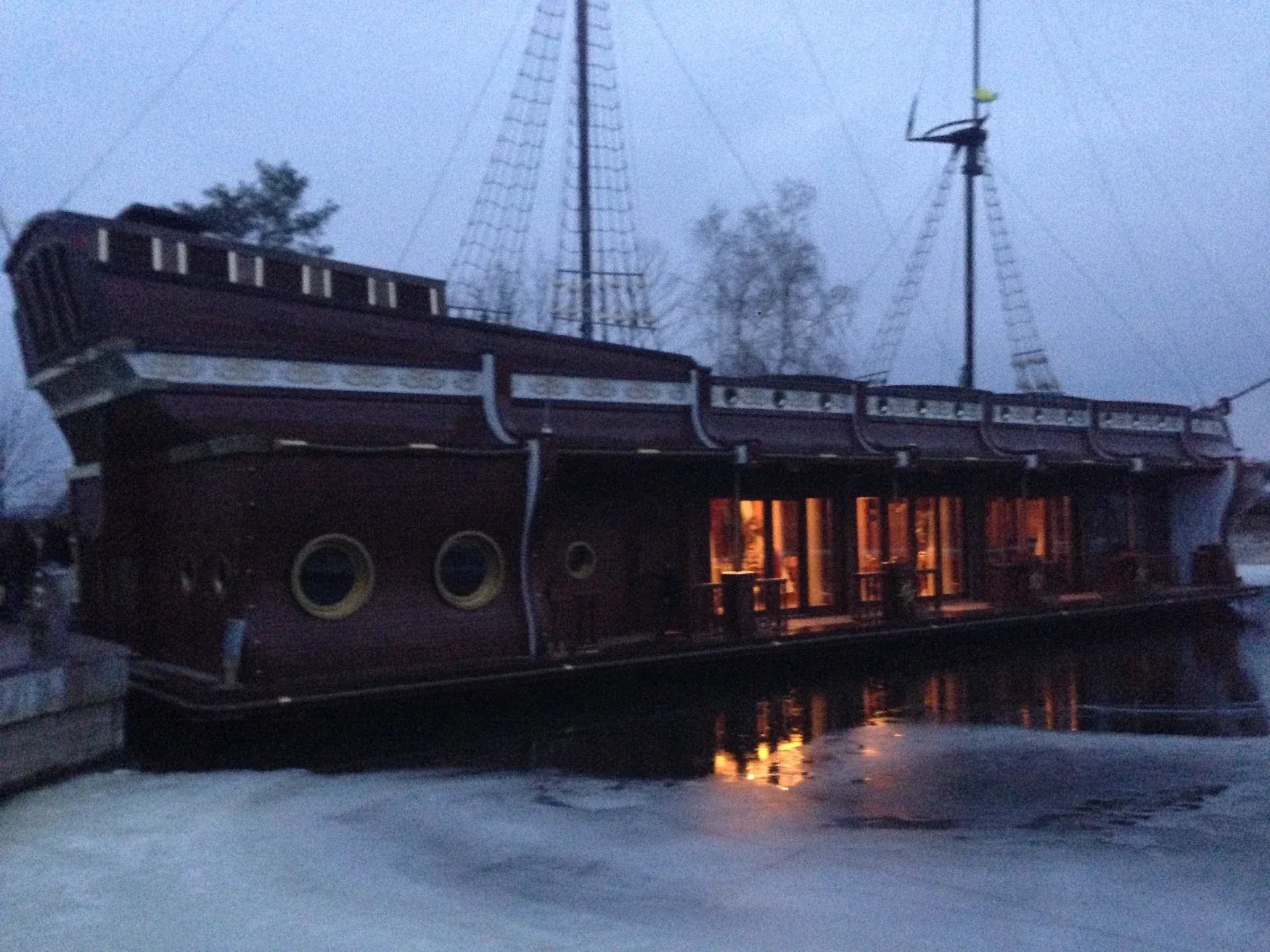
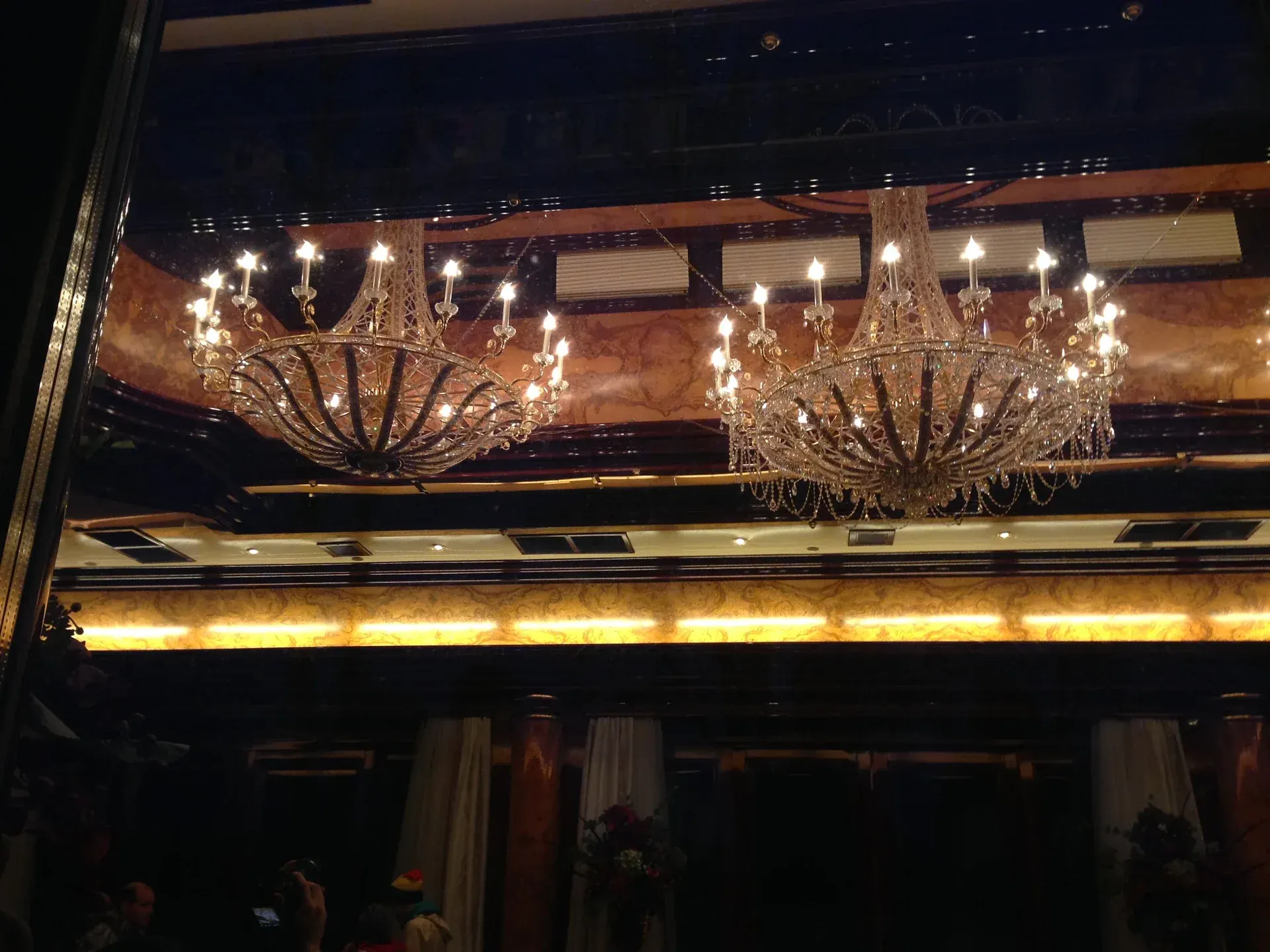
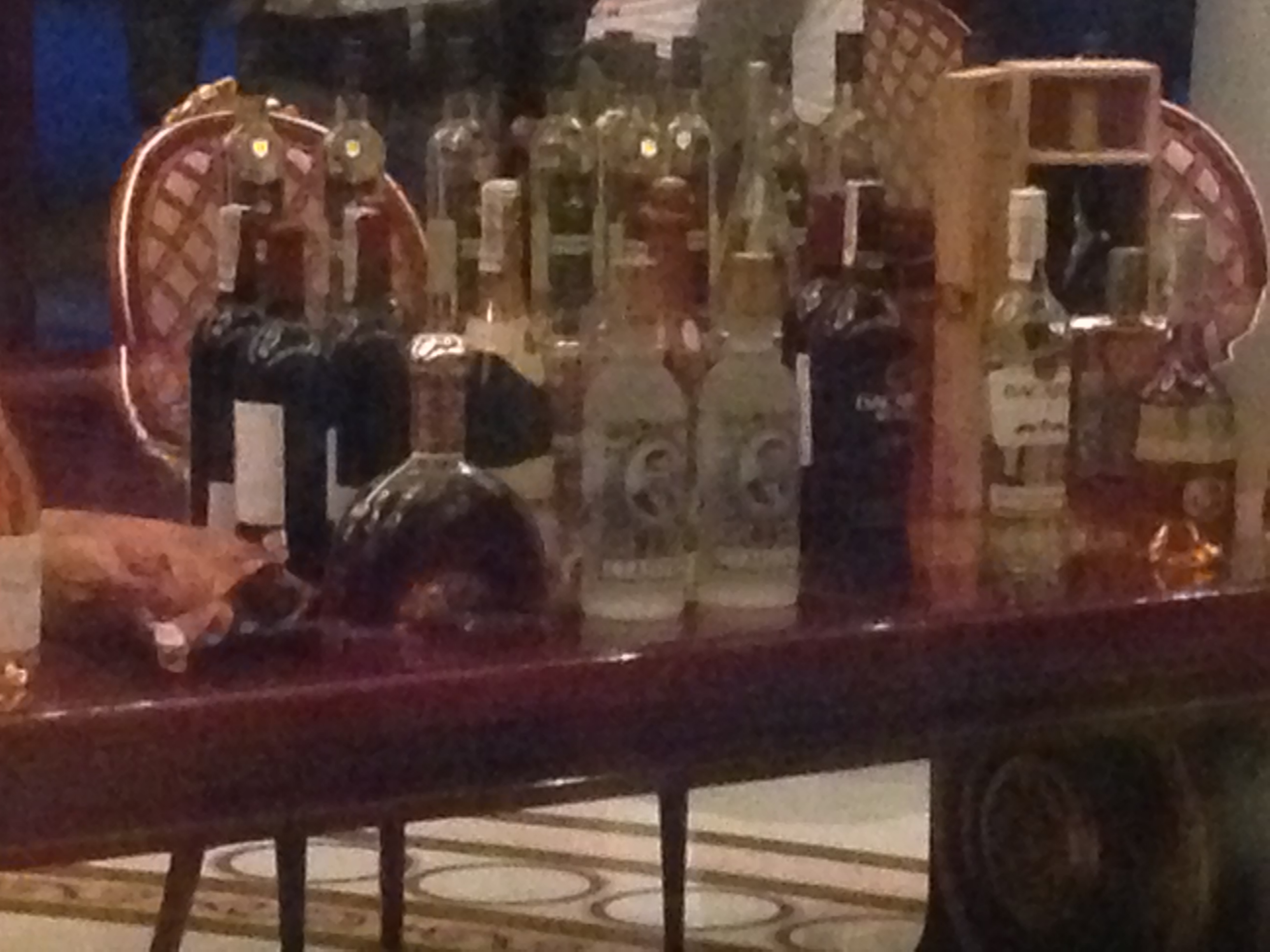
We kept walking until it got dark. We never made it to the large wooden building. Then we found our way out of the grounds and headed back to Kyiv.
Back to Maidan
When we returned, we ended up on Maidan again. There were still many people there. One part of the story had ended: Yanukovych was no longer in power, and people were celebrating what they saw as a victory. But nearby were flowers, wreaths and candles, reminders of the price paid for it.
So much remained uncertain. What would happen to the country next? Who would govern it, and how? We did not yet know the answers.
I went back to Maidan again. On 26 February, the flowers and wreaths were still there. On 5 March, I saw a wooden sculpture of Shevchenko that had been carved there.
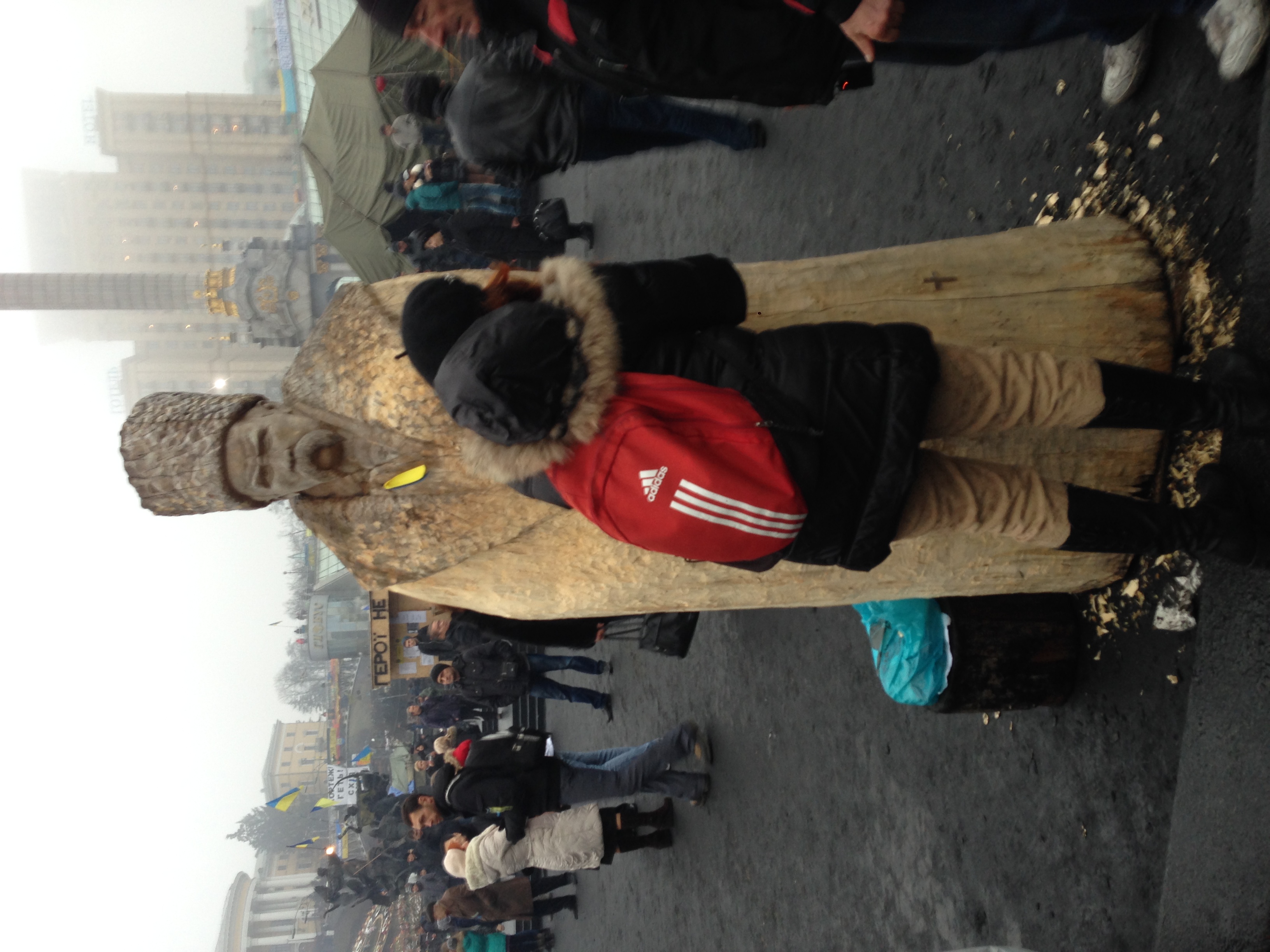
Over those months, Maidan had changed beyond recognition. First came flags, songs and field kitchens, then barricades and smoke, followed by candles and farewells to those who had been killed. And the next day we were already heading to Mezhyhiria, looking for a hole in the fence and marvelling at pheasants and a bottle of vodka with the president’s portrait on it.
I saw all of this in my own city, on the streets I was used to walking every day.