
Philadelphia: Cowperwood in My Headphones, Wharton in Person
January 2014
Another Statue of Liberty
In New York, I saw the Statue of Liberty from a ferry. In Philadelphia, all I needed was a sidewalk. There was a little replica behind a low fence in Northern Liberties, with a lantern where the torch should be. I stood next to it. This time I didn't have to go halfway out into the harbor to get the whole thing in the shot.
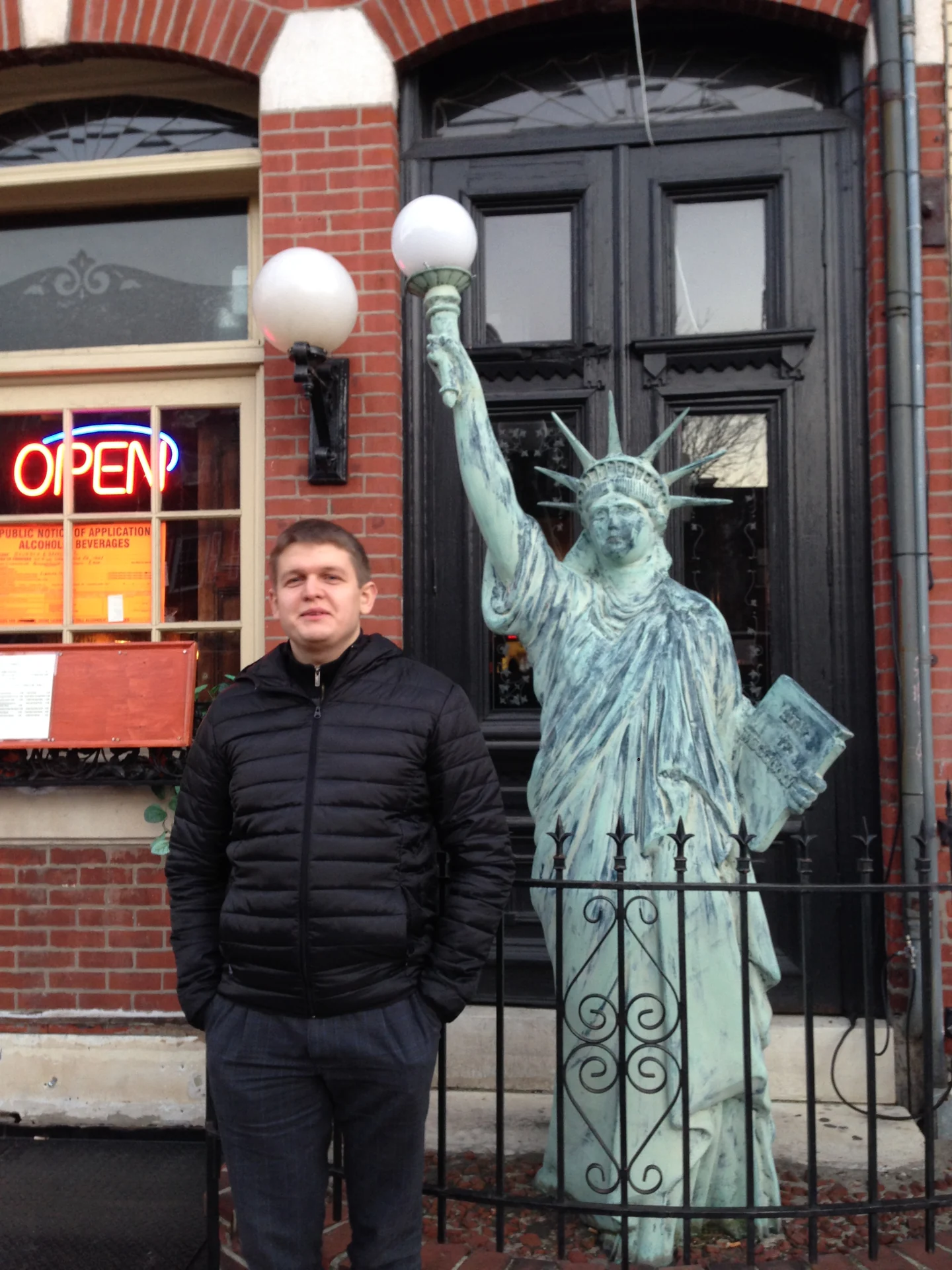
Philadelphia does have a connection to the real statue in New York. In 1876, before the whole thing was ready, the arm and torch went on display here at the exhibition marking a hundred years of American independence. The arm then went to New York, where the completed statue was unveiled ten years later. This little one, of course, had nothing to do with that exhibition. It just made me laugh. I'd barely arrived from New York, and Philadelphia had already found a way to remind me of it.
The statue was right there in front of me. The entrance to our Airbnb was another story. We looked and looked and couldn't figure out how to get in. I think we had to go through an inner courtyard. You've got the city, you've got the address, you're pretty sure you're in the right place, and you still can't tell if that's your door. A little later I was looking just as closely at doors, only this time I was looking for traces of someone who never existed.
A Visit to Cowperwood
His name is Frank Cowperwood. I've got Theodore Dreiser's “The Financier” in my headphones. I'd already read the whole trilogy, but I wanted to hear the book again right in the streets where Cowperwood got his start. He was one of my role models in business. Not in his personal life, and definitely not in everything else. I was interested in how he sized up people and deals, how he tried to see where the money was really moving. And I wanted to see what the city actually looked like after seeing it through Dreiser's eyes.
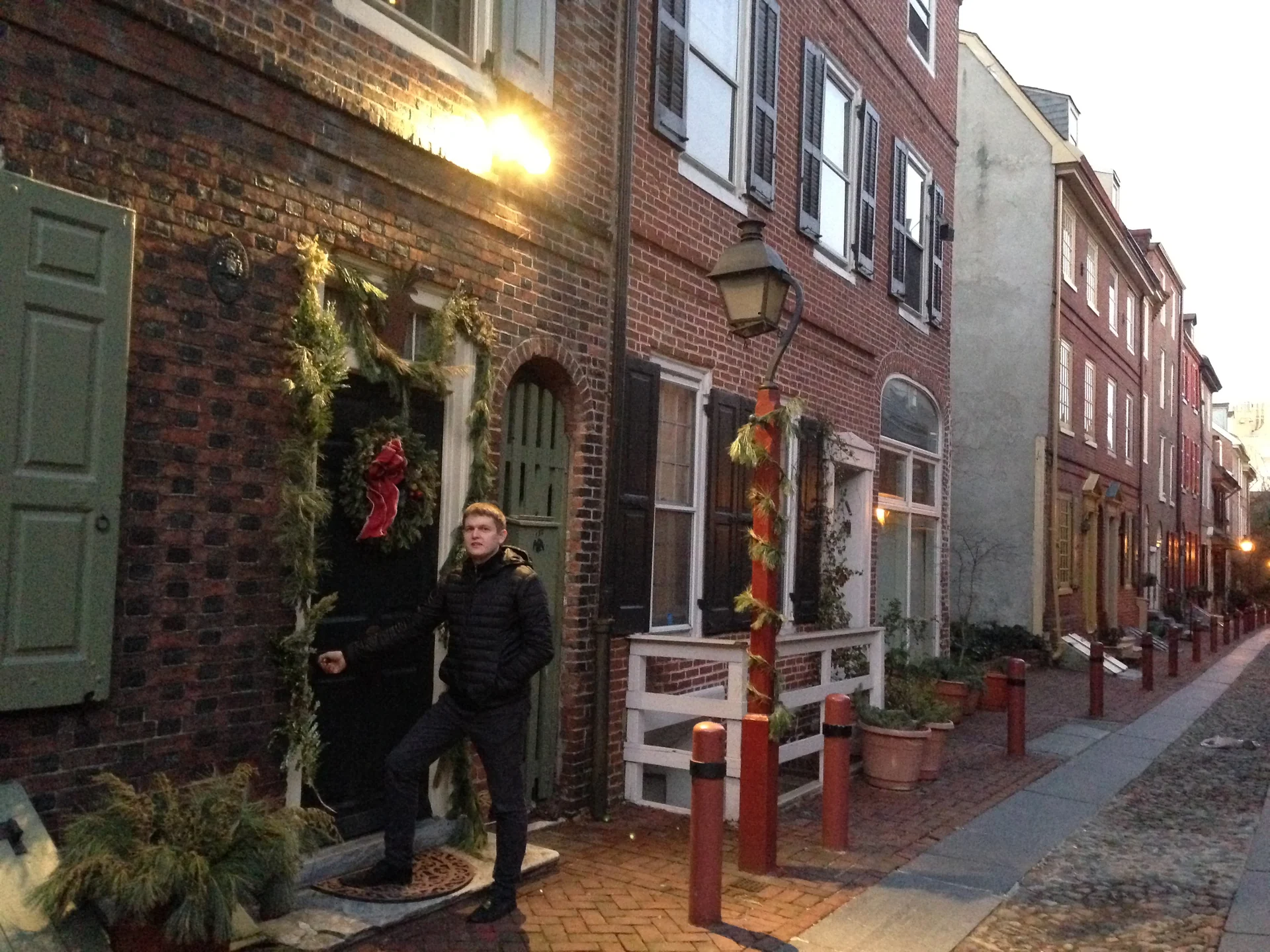
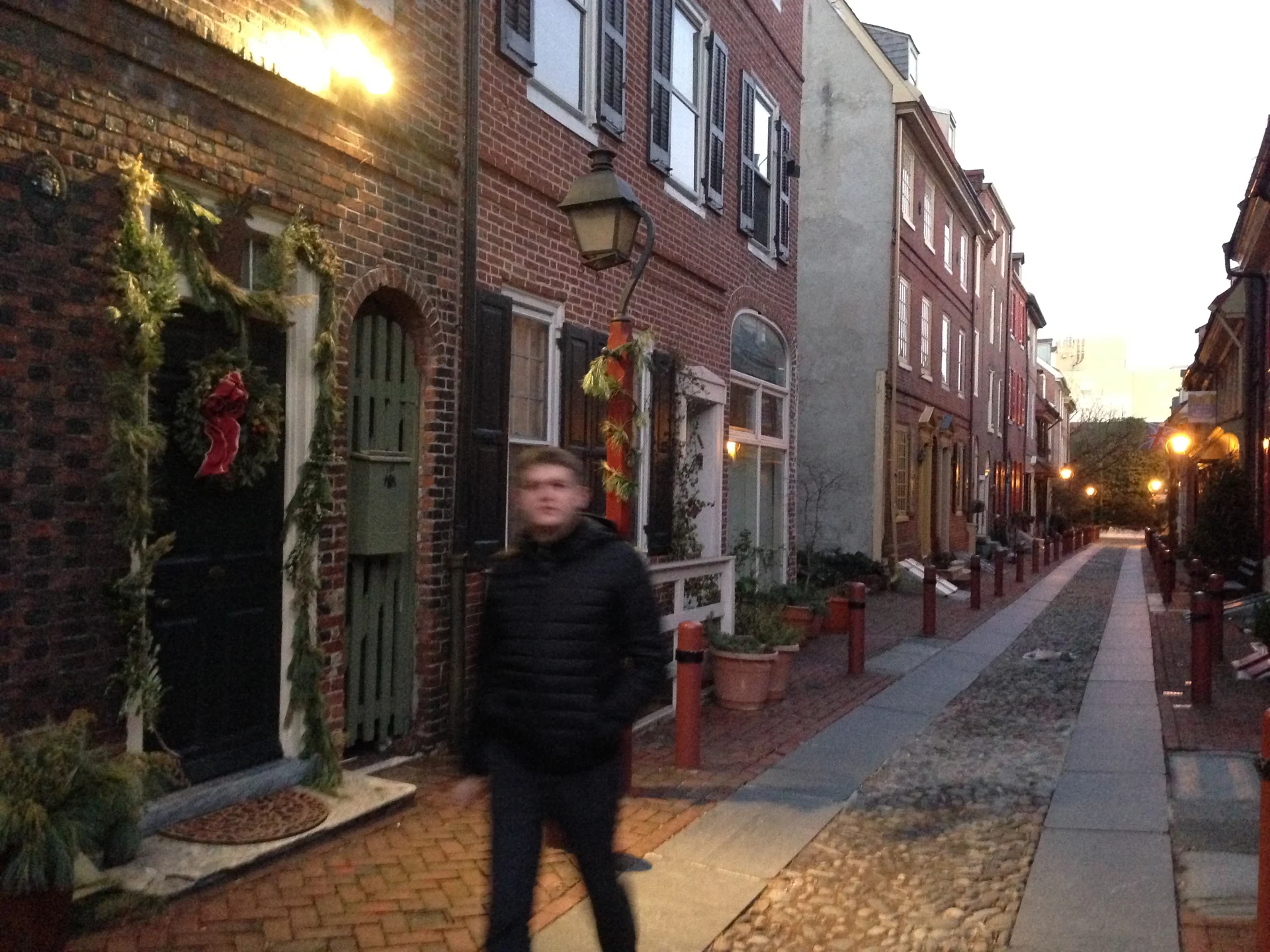
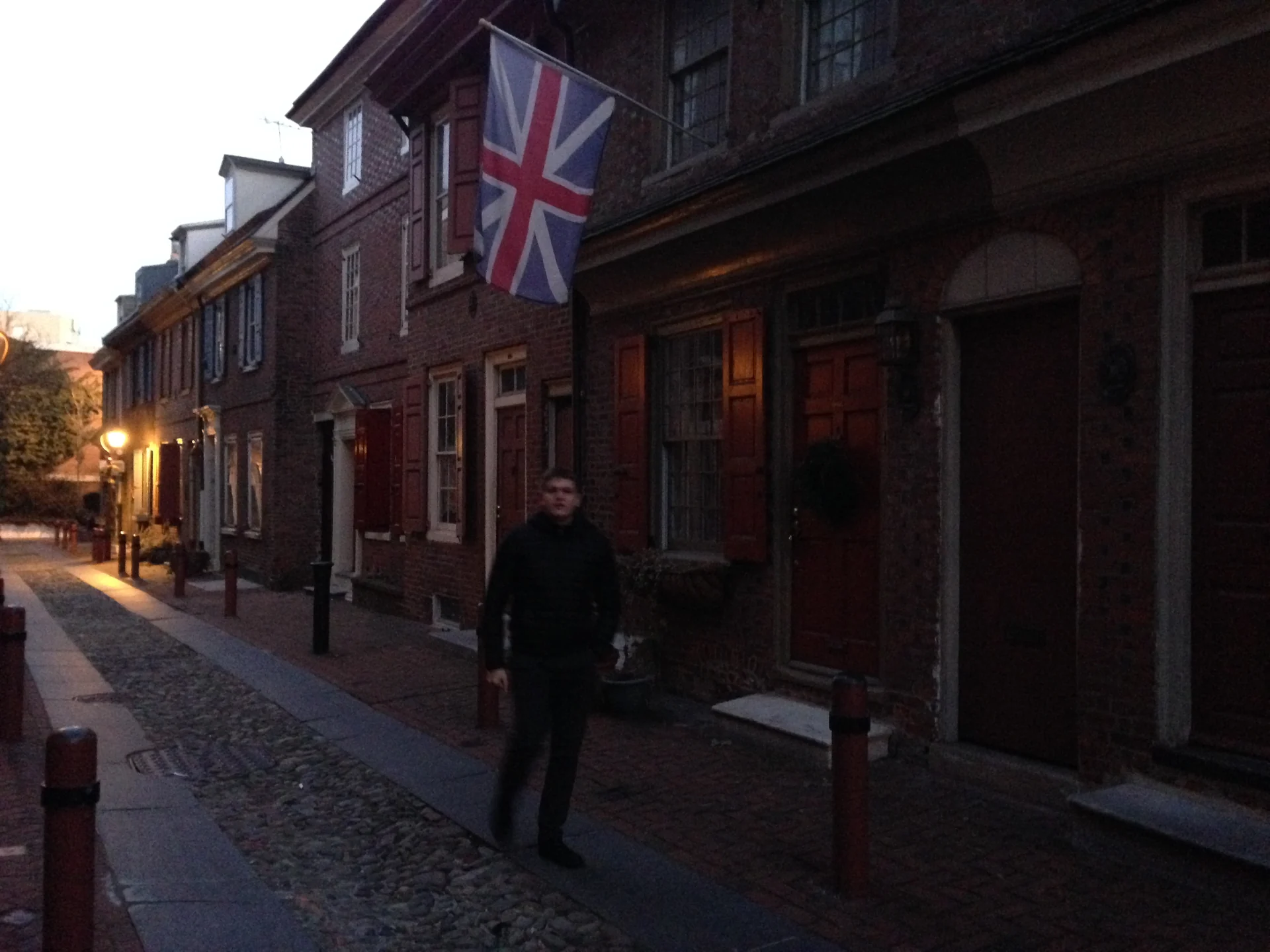
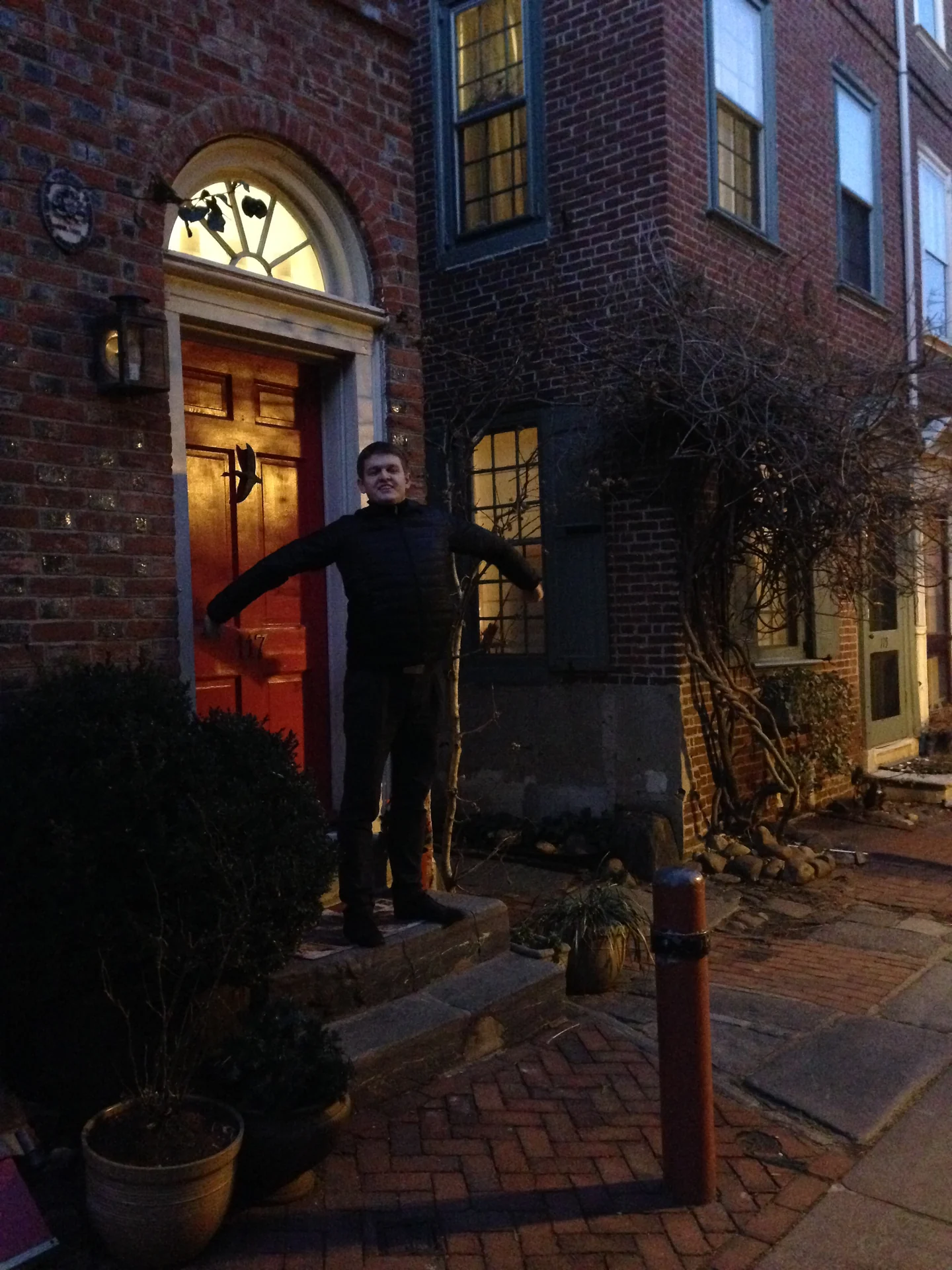
I turned into Elfreth’s Alley with Dreiser in my ears. It's narrow, with cobblestones underfoot, brick on both sides, shutters and green doors. Dusk is settling in, the lamps are on, and nobody's taken down the Christmas wreaths yet. I posed by one door as if I'd dropped in on Cowperwood. Then I walked along the row of houses. I'm a blur in one of the photos, but at least you can tell I was out for a walk and not making another attempt to stand up straight for the camera.
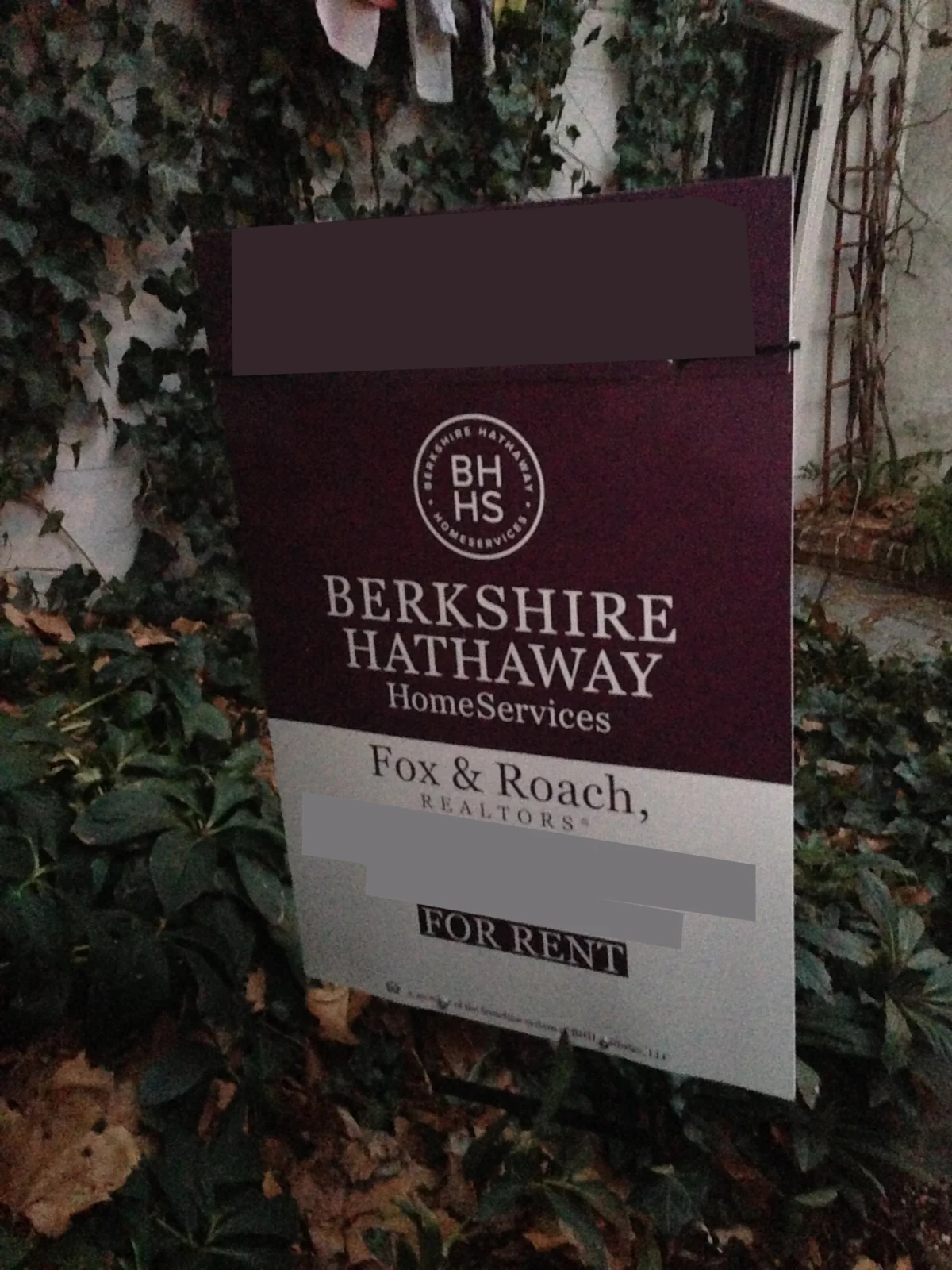
On that same old street, on a fence, I saw the name Berkshire Hathaway in person for the first time. I'd heard about Warren Buffett for years, and he was a role model for me too. So there I am, listening to a book about a nineteenth-century financier, looking at an ordinary For Rent sign. A local real estate agency, Fox & Roach, put it up under the Berkshire Hathaway HomeServices brand. Buffett wasn't renting out the place himself. It was just that a name I'd only encountered in books and conversations about investing was suddenly hanging on a fence at eye level.
I passed under a British flag and stretched my arms out by a lit-up red door, as if I'd just stepped out of the house and could finally have a good stretch. I like that mix. In the space of one block, I'd paid a visit to a fictional financier, passed a sign with a real one's company on it, and kept listening to Dreiser without even turning off the street.
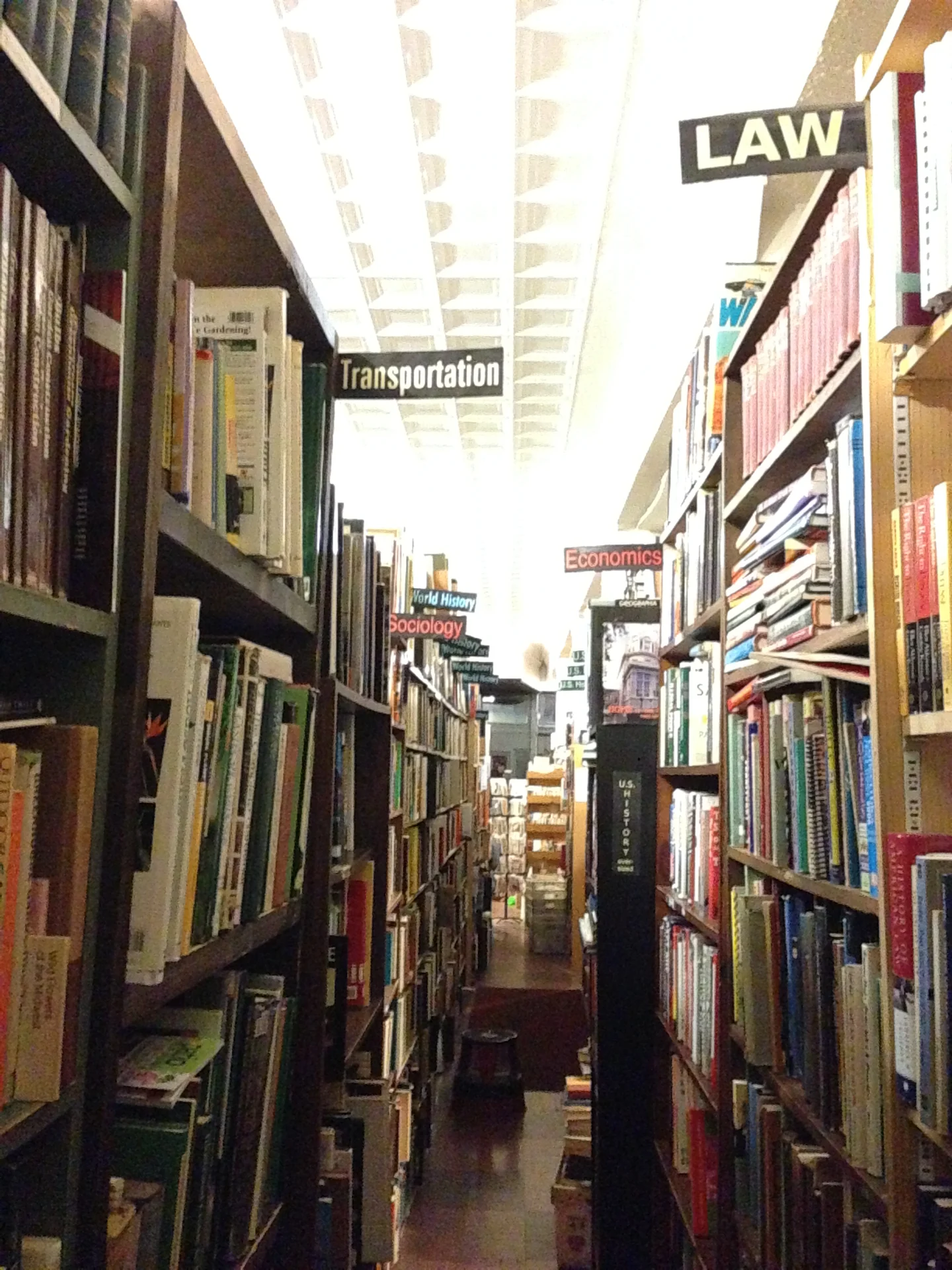
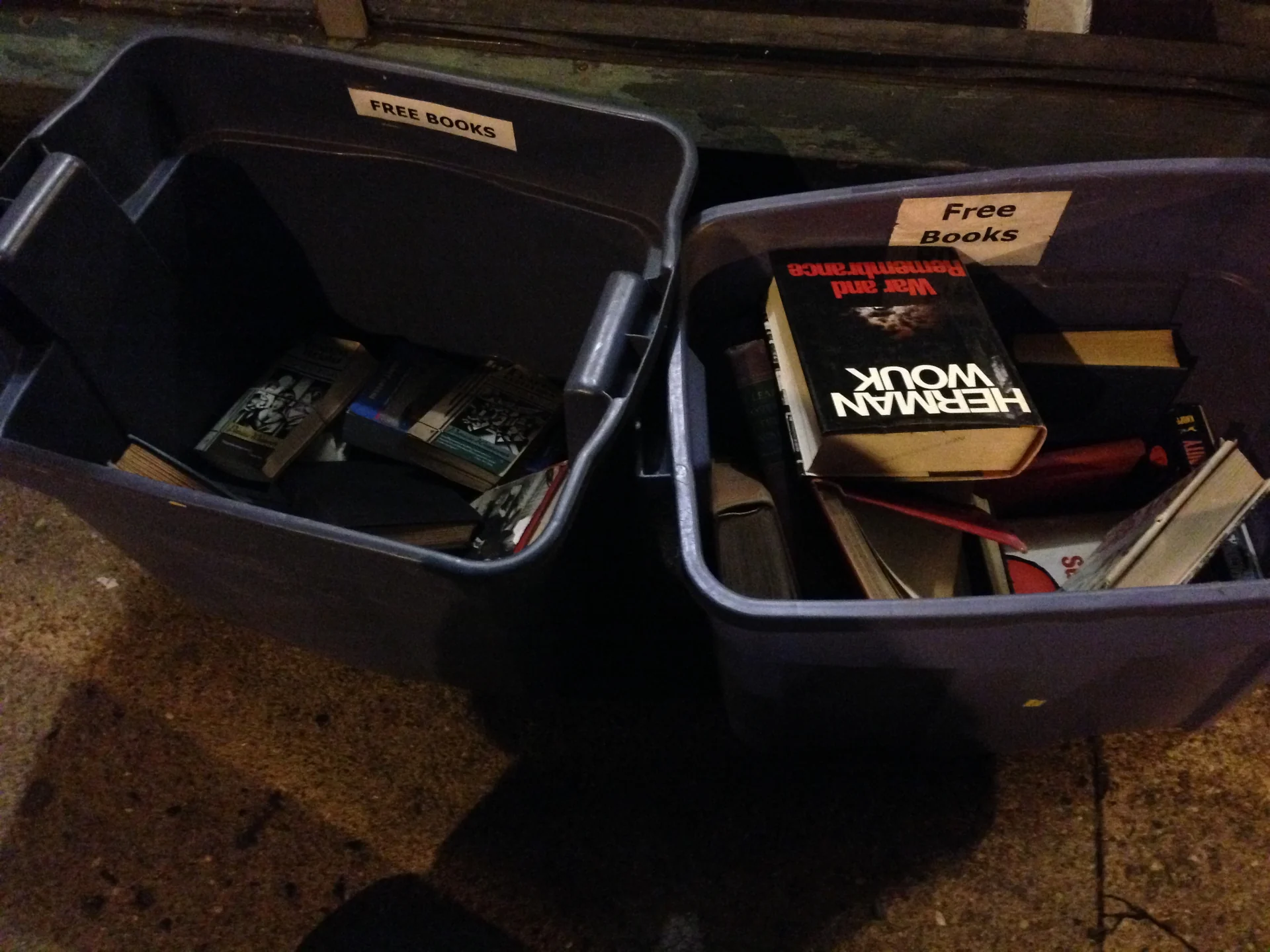
On Second Street we went into The Book Trader, a used bookstore with narrow aisles, books packed tight on the shelves, and even boxes marked “Free Books” near the exit. I took a bunch of pictures. I already had a book, just in my ears. But when you're walking around Philadelphia following a novel, it's hard to pass a bookstore like that without going in.
Chestnut Street isn't far from the bookshop. Toward evening, I got a picture under the sign that says “123 Chestnut Street.” Chestnut Street really does exist, and here I am on it. Cowperwood himself, of course, wasn't behind that door. It's the former Corn Exchange National Bank building, built in 1903, decades after the events I'm listening to. But it's the same financial district where Dreiser put his characters.
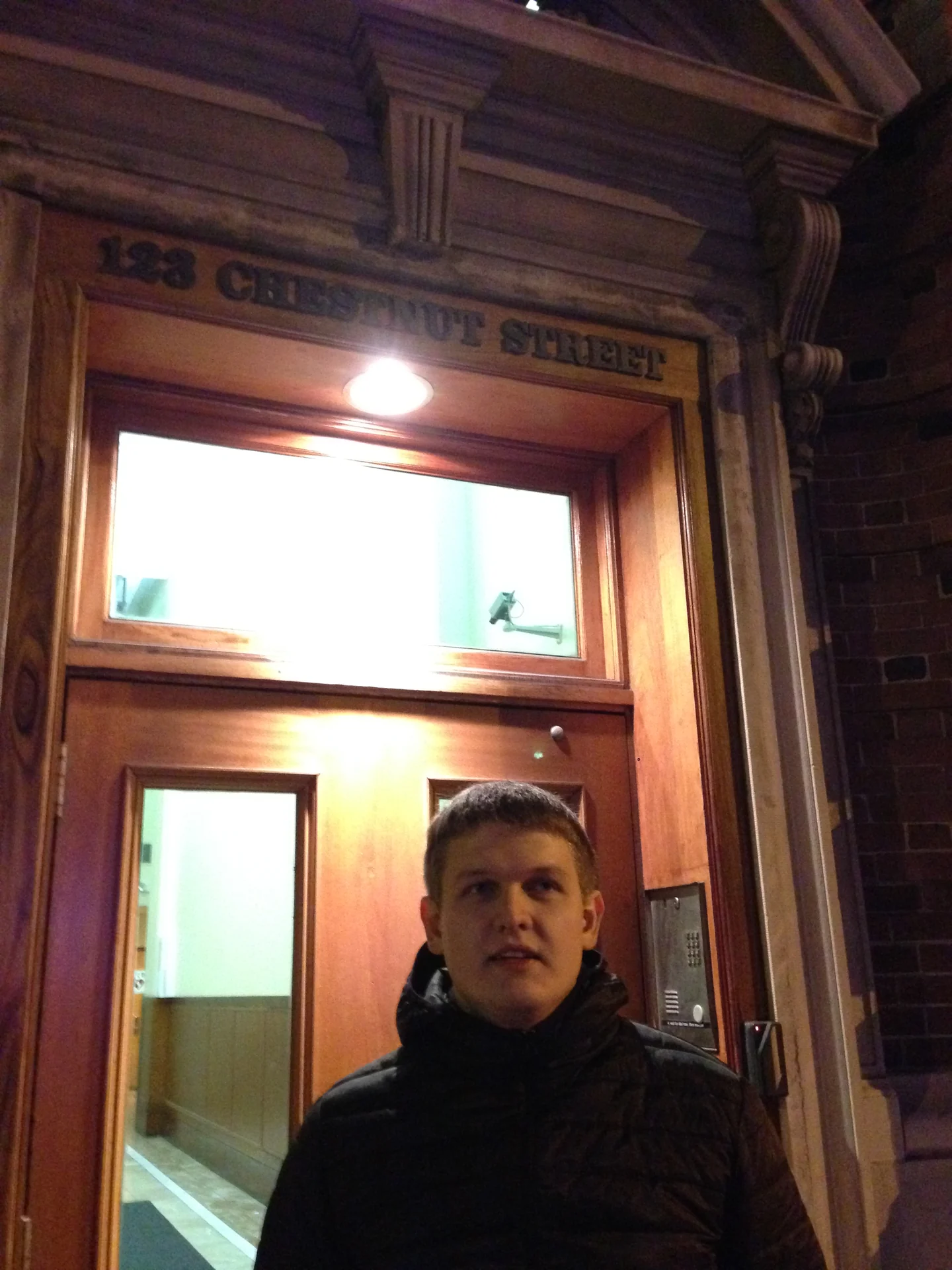
Dreiser gives Cowperwood a different address for his first job, but it's close by: Henry Waterman & Co. at 74 South Second Street. There he gets to see up close how the trading business works. Next he goes to work for the bankers and brokers at Tighe & Co., at 66 South Third Street. Then he opens his own office on the same street, at number 64. The number on the door changes, and so does the scale of what he's willing to take on. Soon he's thinking beyond other people's deals to entire streetcar lines, including one on Chestnut Street.
I can't say I suddenly saw Philadelphia the way Dreiser did. But it hit me that until then I'd only known these names from a book. Somewhere out there was a city called Philadelphia, with a street called Chestnut, where Cowperwood was starting to build himself an empire. And suddenly I'm standing right under that sign. It felt like I'd gone back to the source. I actually got goosebumps.
Drexel Steps Off the Page
The next morning, January 20, we went out to see the universities. You'd think the previous day's walk was behind us, but one name from the book turned up here too. There's a big bronze dragon named Mario outside Drexel University. Of course I got a picture with him. But I also noticed the name above the dragon. In “The Financier,” Drexel & Co. is up there with the big players in the very same district we'd walked through the day before.
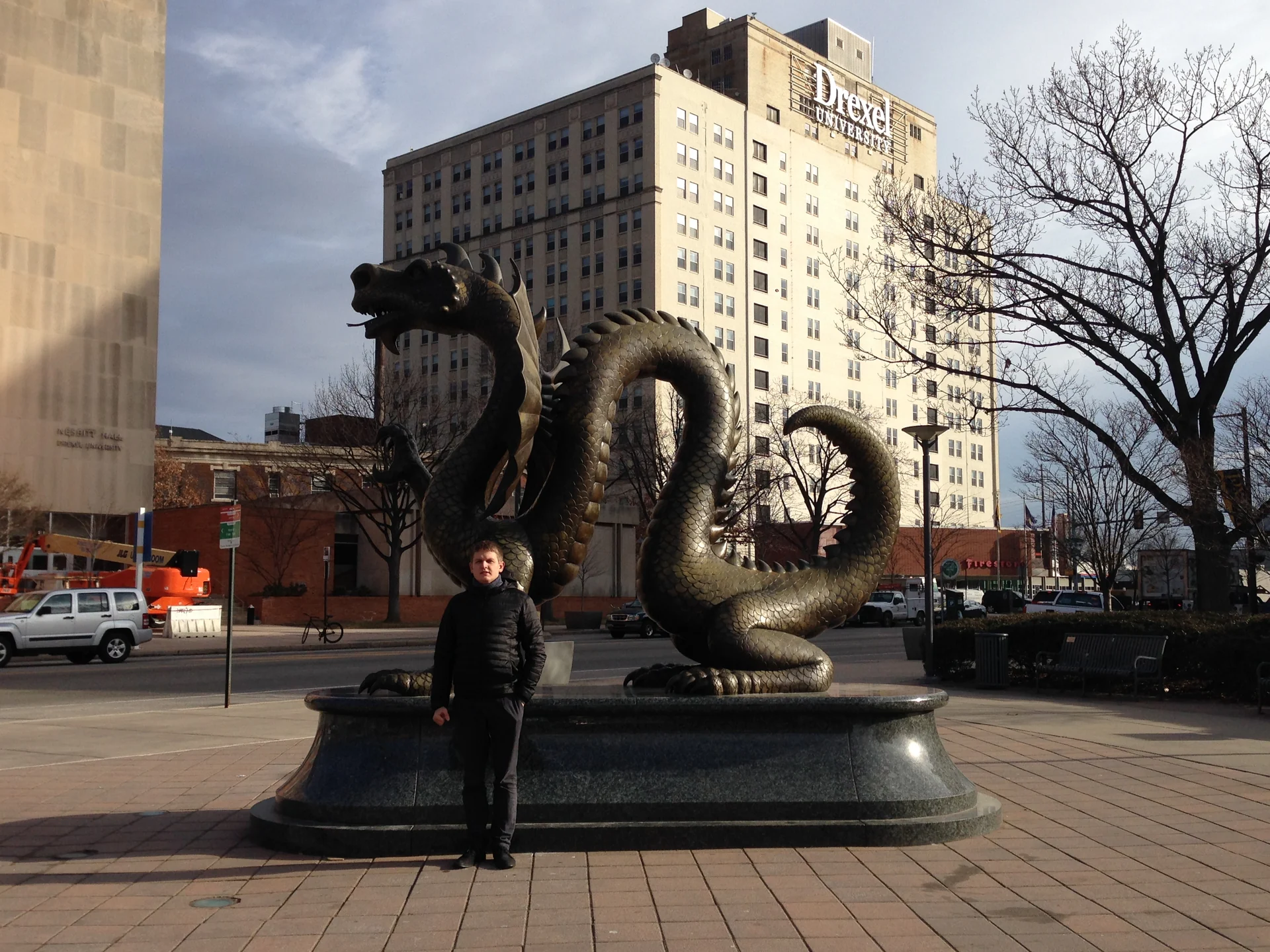
There was a real Philadelphia investment banker behind that name on the building: Anthony Joseph Drexel. In 1871, he and John Pierpont Morgan founded Drexel, Morgan & Co. in New York, and Drexel was Morgan's mentor. Then in 1891 he opened the Drexel Institute of Art, Science and Industry in Philadelphia. That's what became this university.
I'd also come across the Drexel name in “King of Capital.” That's a different era: the later Drexel Burnham Lambert and the high-yield bond market. The name got there through former partners and a series of mergers, not because one company stayed the same for a hundred years. There's a moment in Dreiser when, after the Great Chicago Fire, Cowperwood, who's so eager to play in the same league as the big firms, has to go to Drexel & Co. and find out whether they'll call in his loans. In the book, that name could decide whether his business survived another day. Here it's written above a bronze dragon.
From Online Course to Campus
From the dragon we walked on to the University of Pennsylvania. Penn traces its history back to 1740 and is part of the Ivy League. It moved from downtown Philadelphia to this campus in the nineteenth century. And Wharton, which I especially wanted to see, is Penn's business school. Joseph Wharton founded it in 1881. It was the first collegiate business school. So I'd walked to another place where the history of finance became the history of education. And I'd already gotten to know Wharton in my own way.
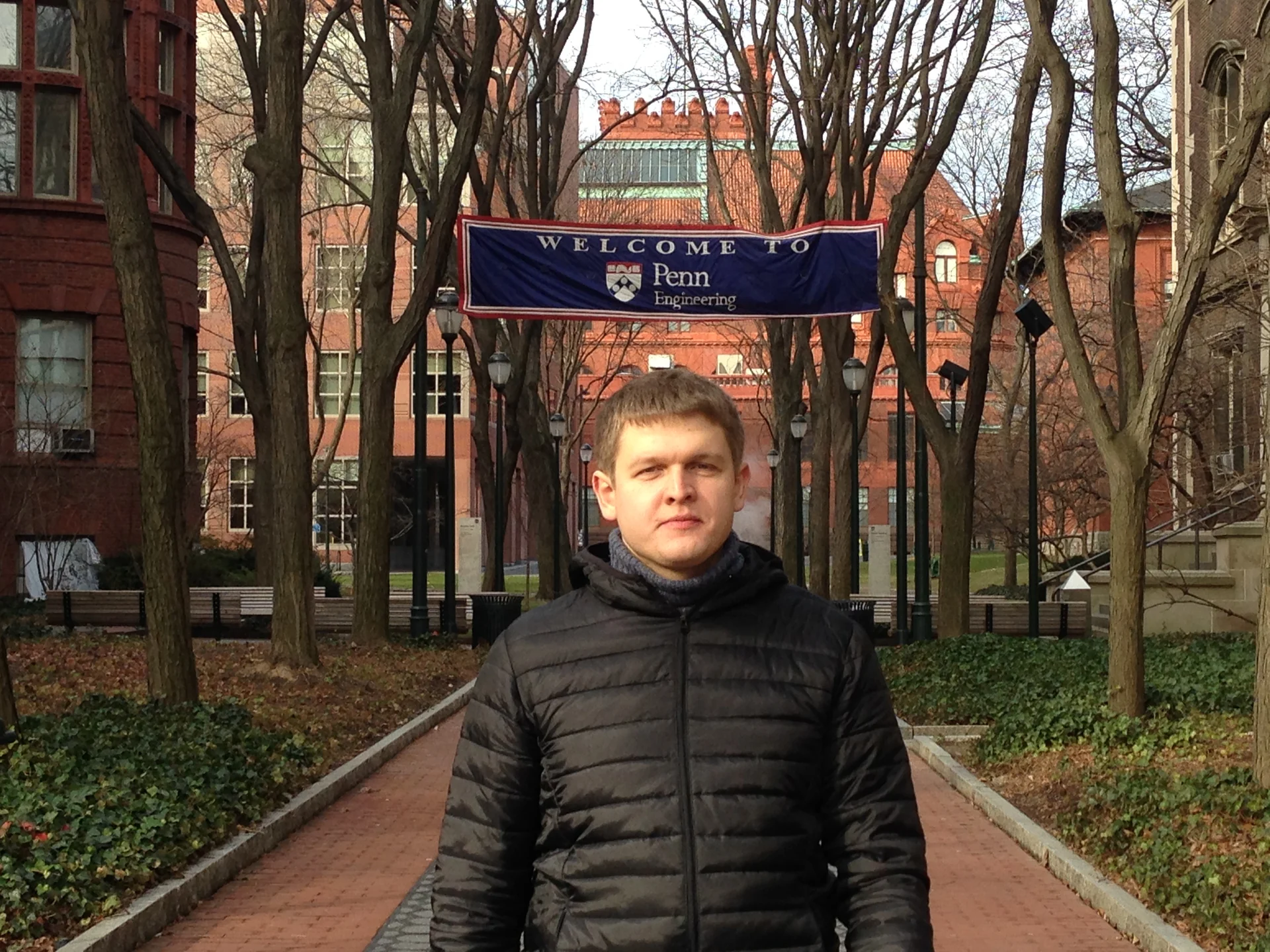
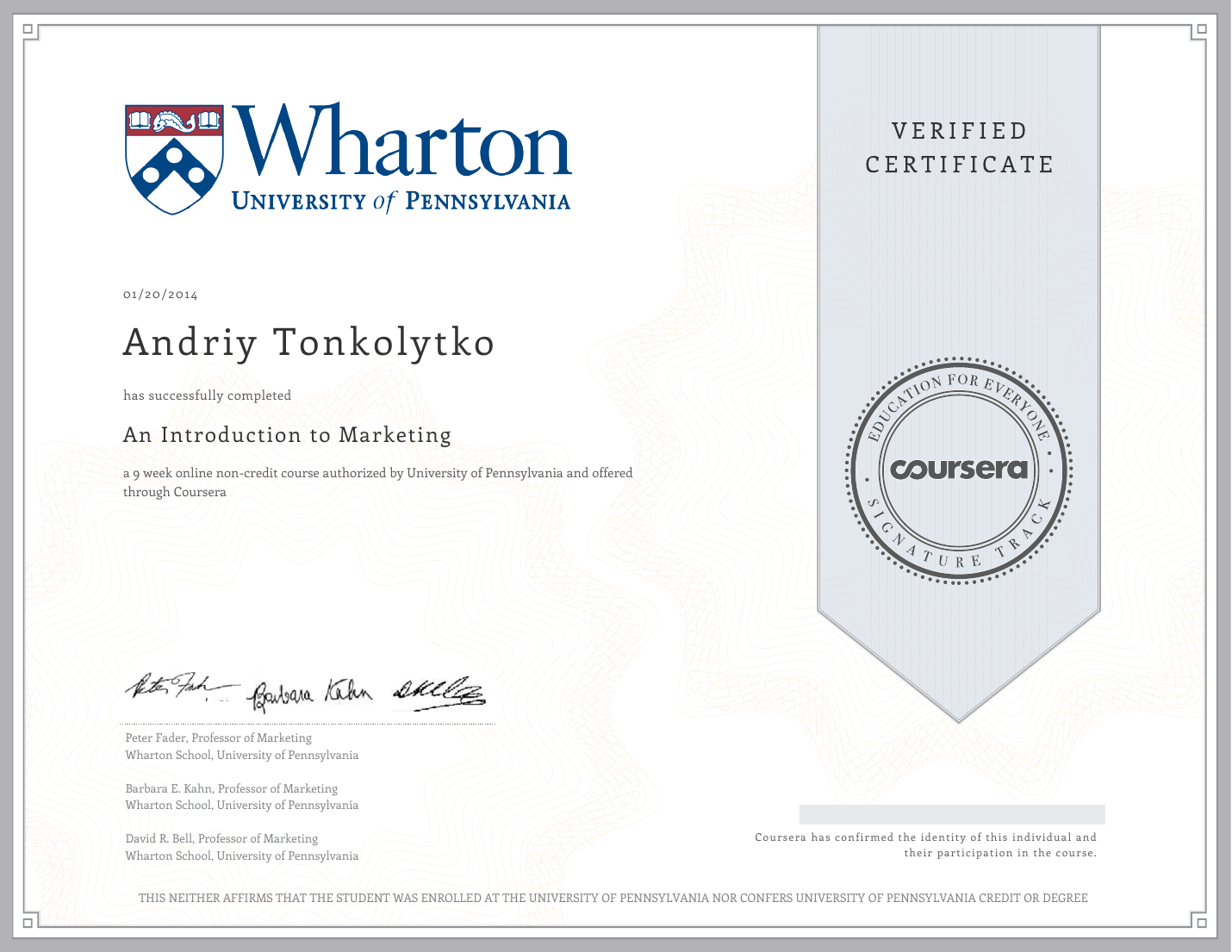
I'd finished their “An Introduction to Marketing” course on Coursera. Nine weeks online, with three Wharton professors: Peter Fader, Barbara Kahn, and David Bell. The same series covered corporate finance, accounting, and operations management. My classmates came from all over the world. As far as I remember, there were even vice presidents from financial firms among them. That's what got me. You could be anywhere and learn from the same people who teach right here. On January 14, I got an email saying I'd finished the course. And six days later, here I am walking around the campus.
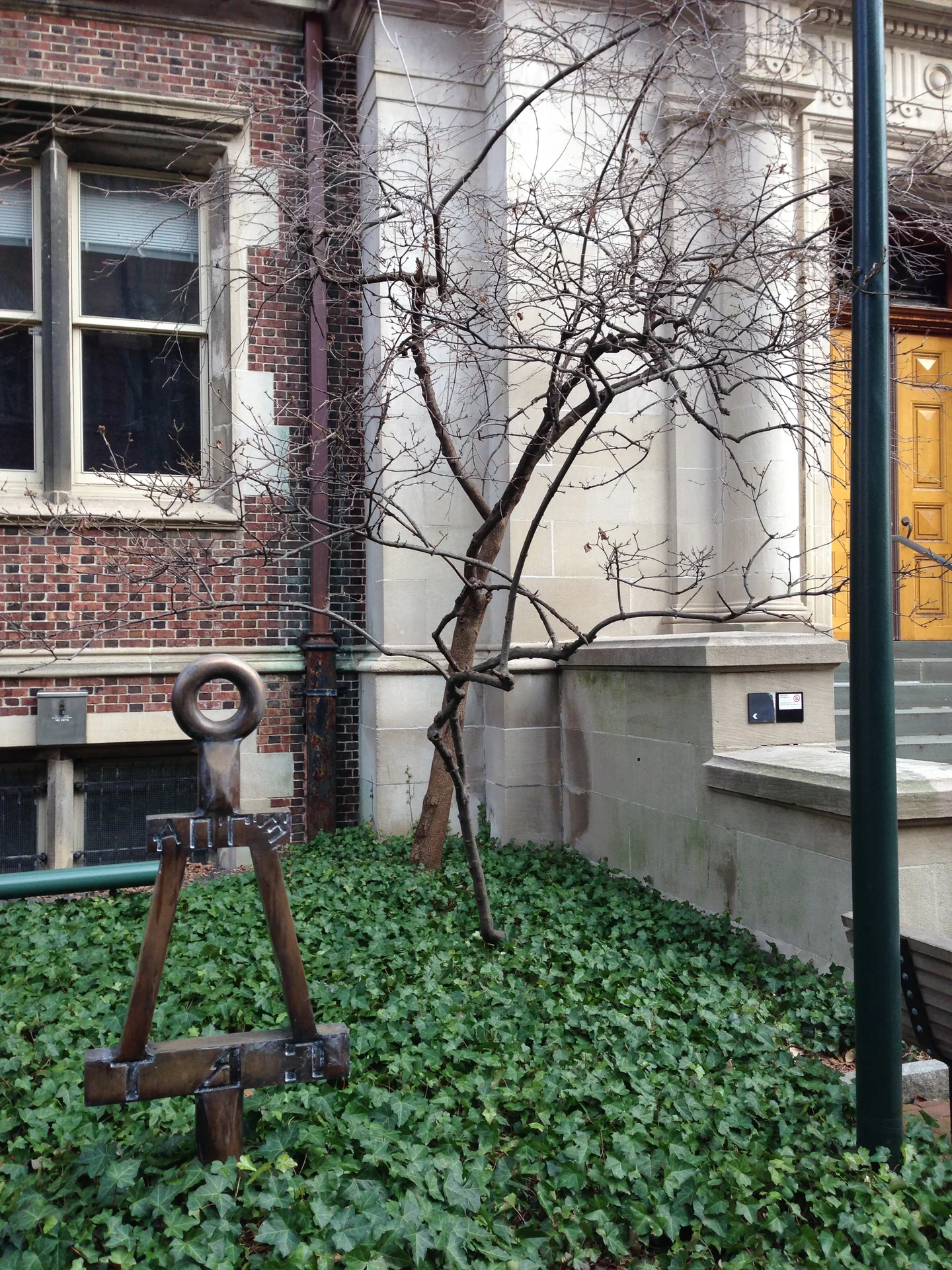
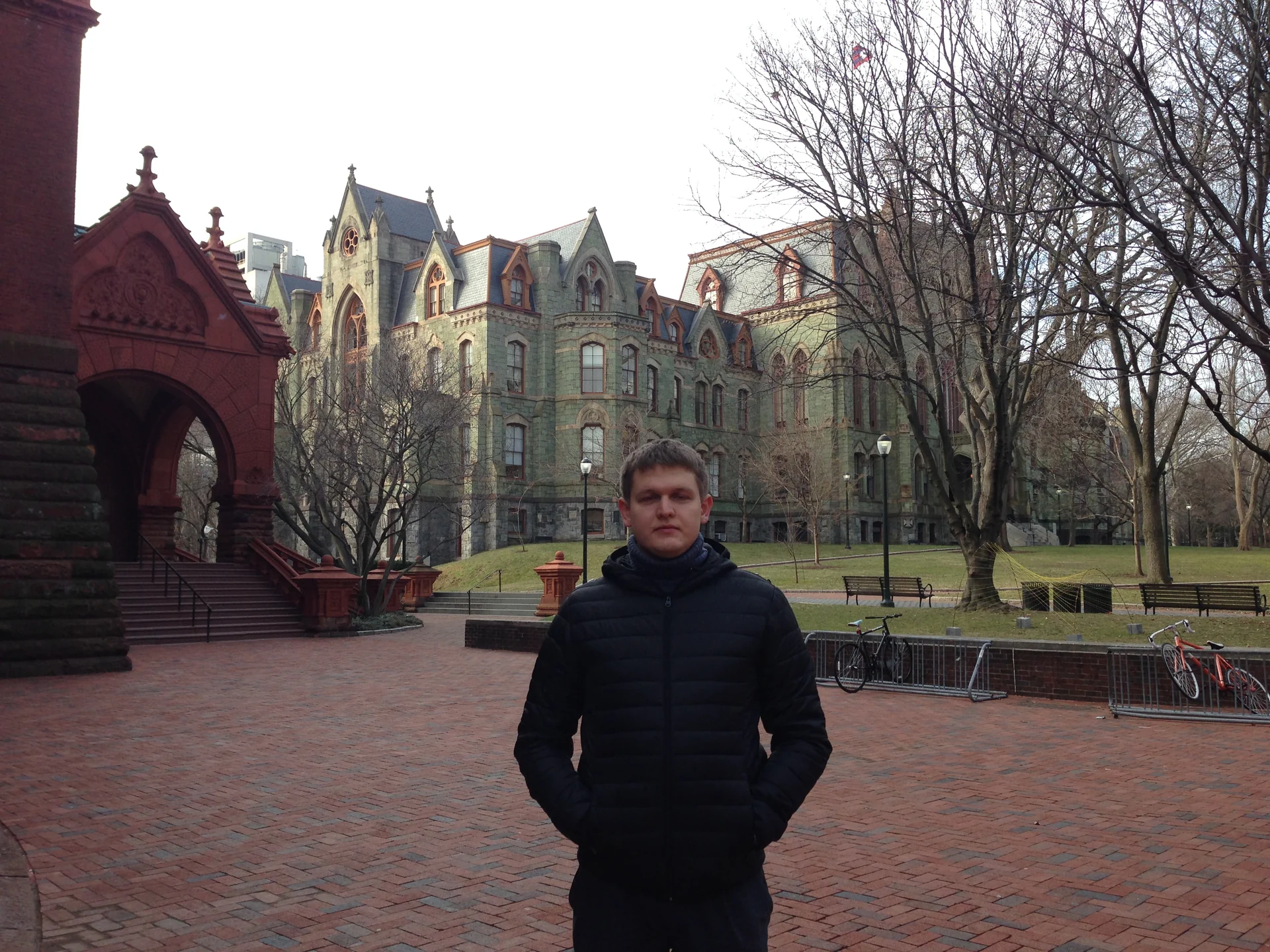
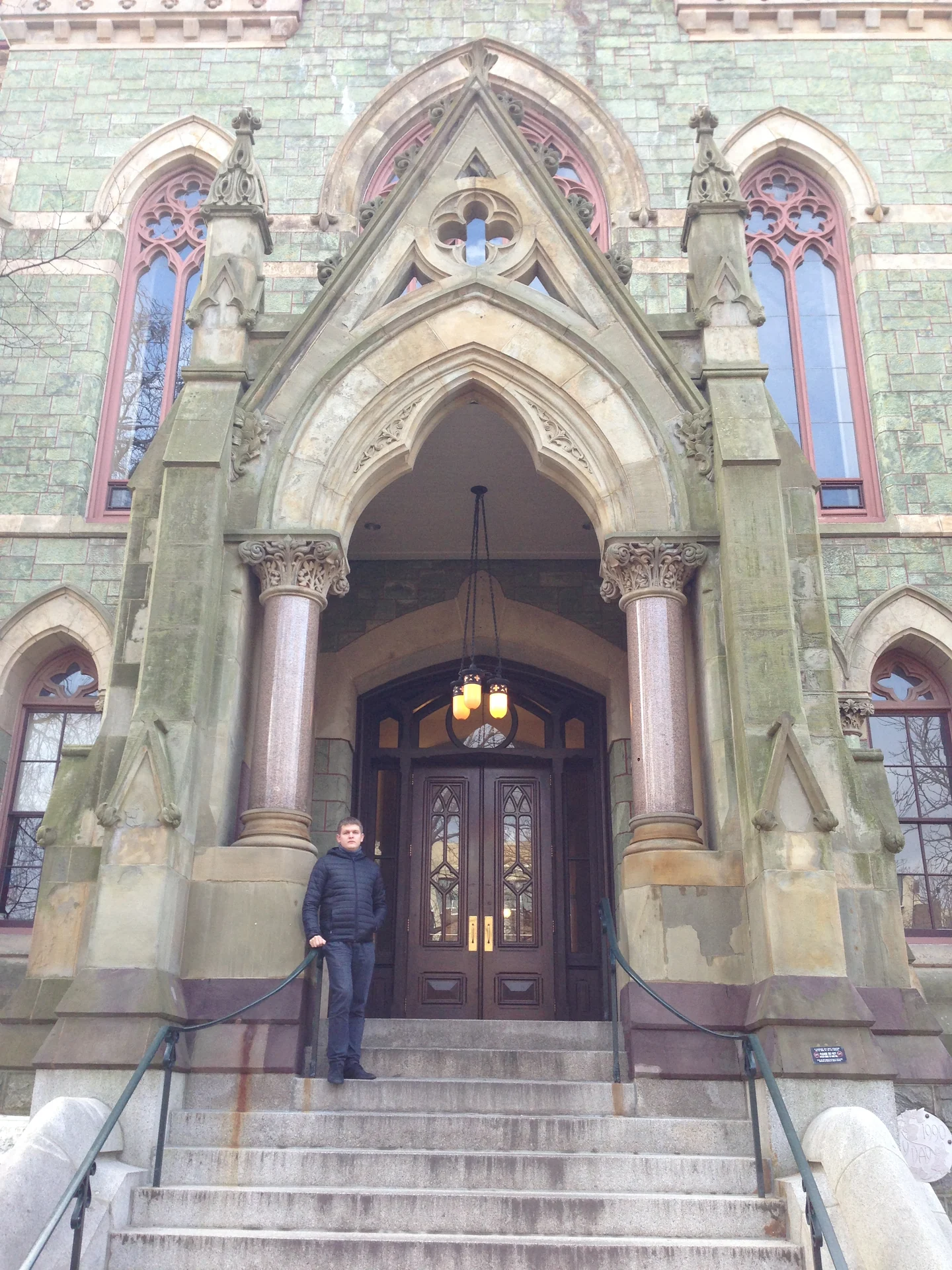
On Smith Walk, I noticed a metal symbol with Greek letters. It's the Bent, the emblem of Tau Beta Pi, the engineering honor society. Its Penn chapter has been around since 1921. A few minutes later I'm on College Green, also called Blanche P. Levy Park. On the left is the red portico of the Fisher Fine Arts Library. Ahead is green College Hall. Up close you can see the green even better. It comes from a local stone called serpentine. With its Gothic windows and steps, College Hall was Penn's first building on this campus.
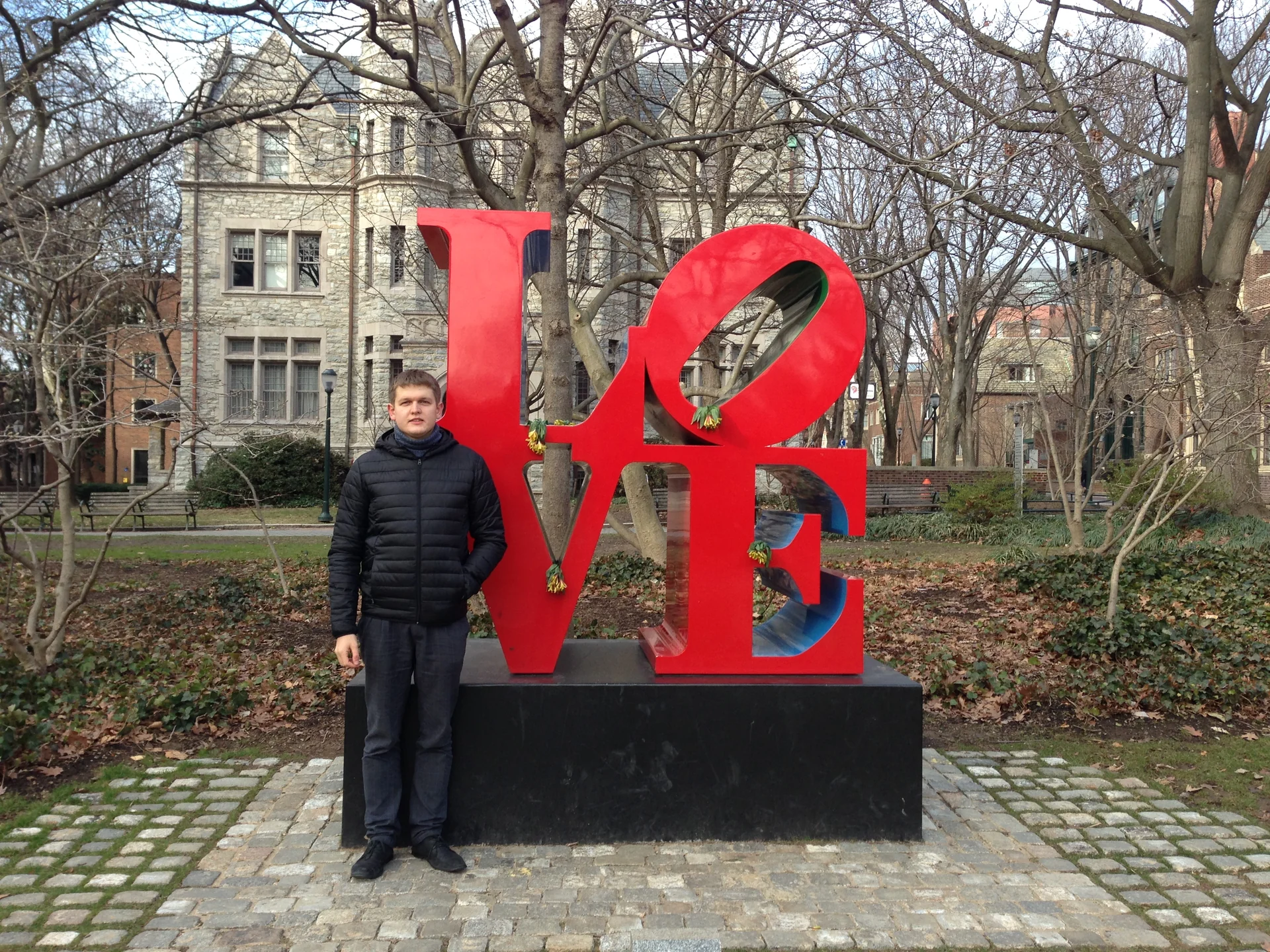
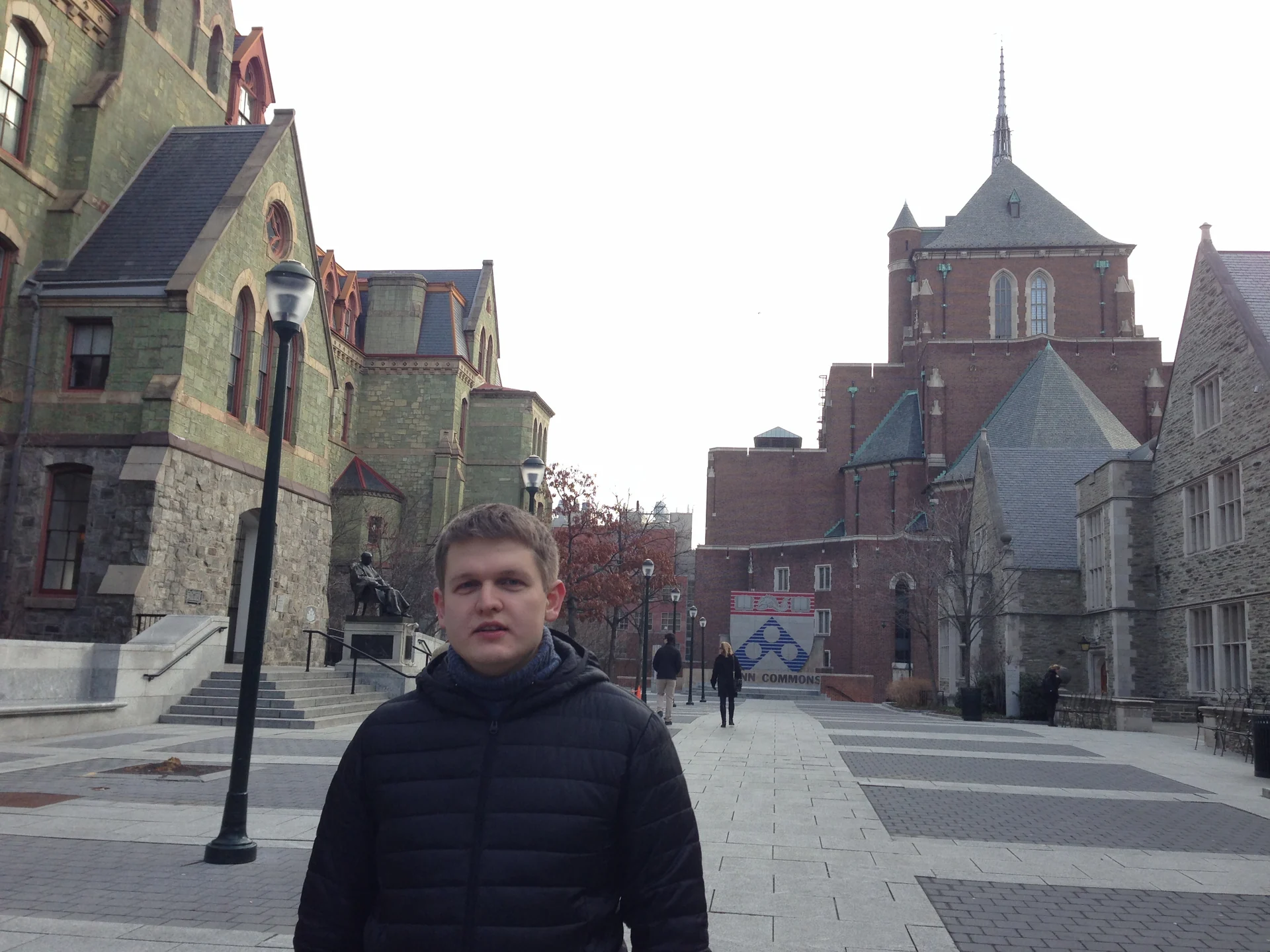
After the green of College Hall, the red of Robert Indiana's “LOVE” catches your eye on Locust Walk. There's another one in Philadelphia, the one that gave downtown's LOVE Park its name. This is the university's own. At Wynn Commons, I stopped by the big Penn coat of arms. The courtyard was named for Steve Wynn, a Penn graduate who helped make the space possible.
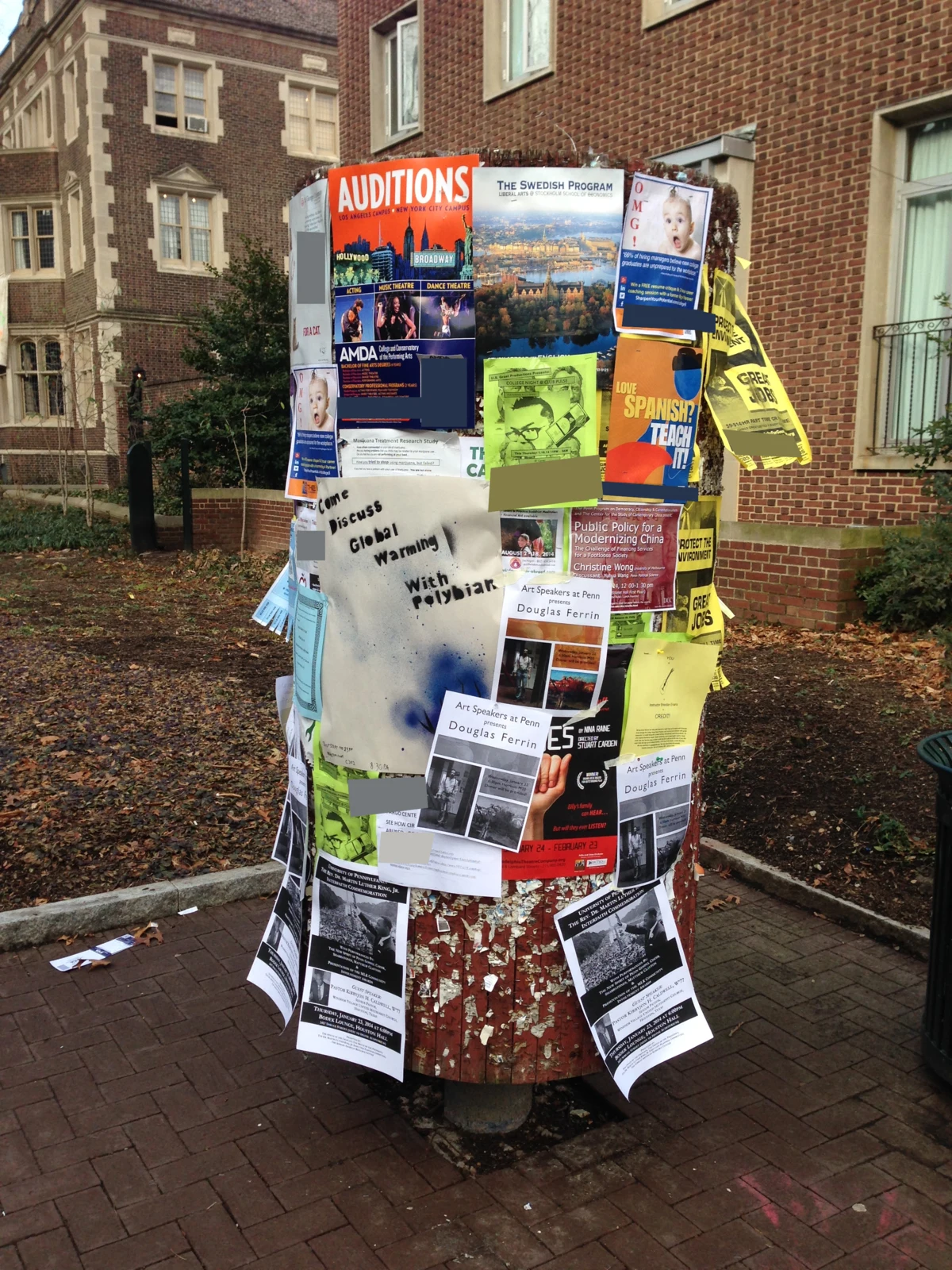
After the buildings, the sculpture, and the big coat of arms, it was something much simpler that stopped me outside Wharton: a round post plastered with flyers. They're holding theater auditions, looking for Spanish teachers, inviting people to talk about public policy in China or global warming. There's a notice for the artist Douglas Ferrin and another commemorating Martin Luther King Jr. A minute ago you're walking past Gothic windows and coats of arms, and now you're reading what students are up to this week. This isn't a museum. There's something going on behind those walls.
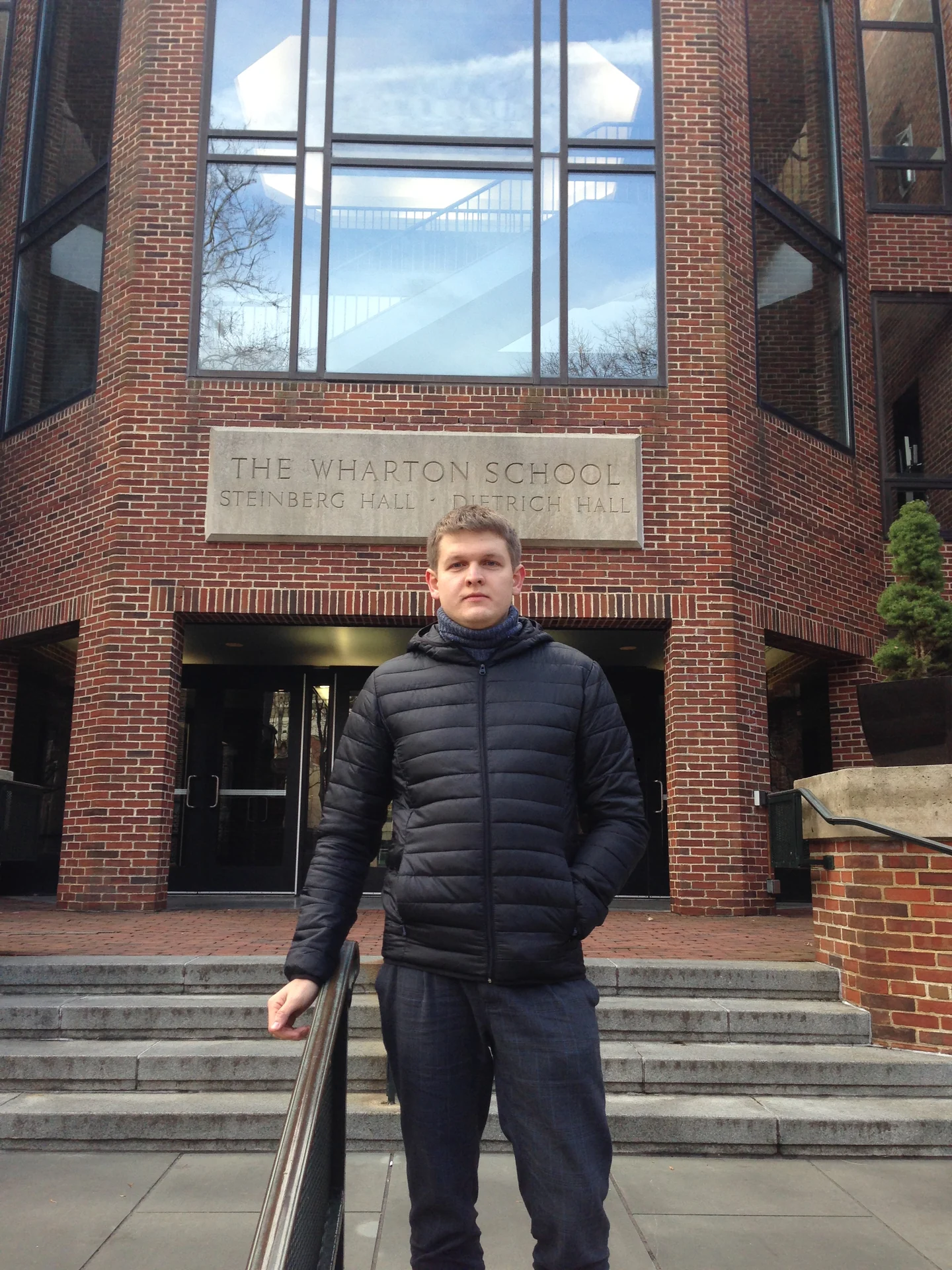
A few steps from the flyers, there it is: “The Wharton School,” carved in stone over the entrance to Steinberg Hall–Dietrich Hall. I'm standing on the steps. My marketing certificate is dated today, January 20, even though the email confirming I finished the course came on the fourteenth. It's a certificate for an online course, not for studying on campus. But now I know what the place looks like, after seeing its name on a screen so many times.
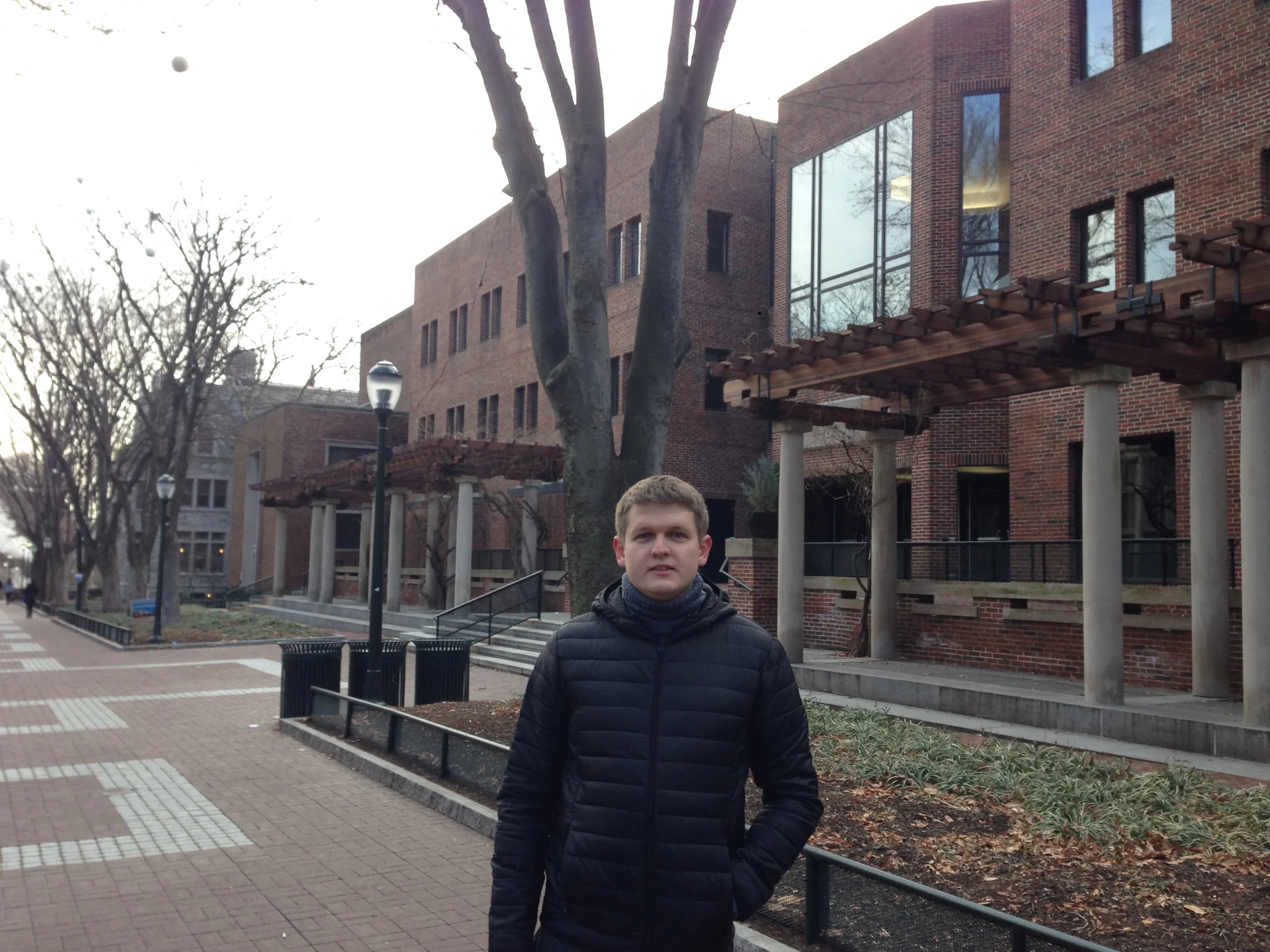
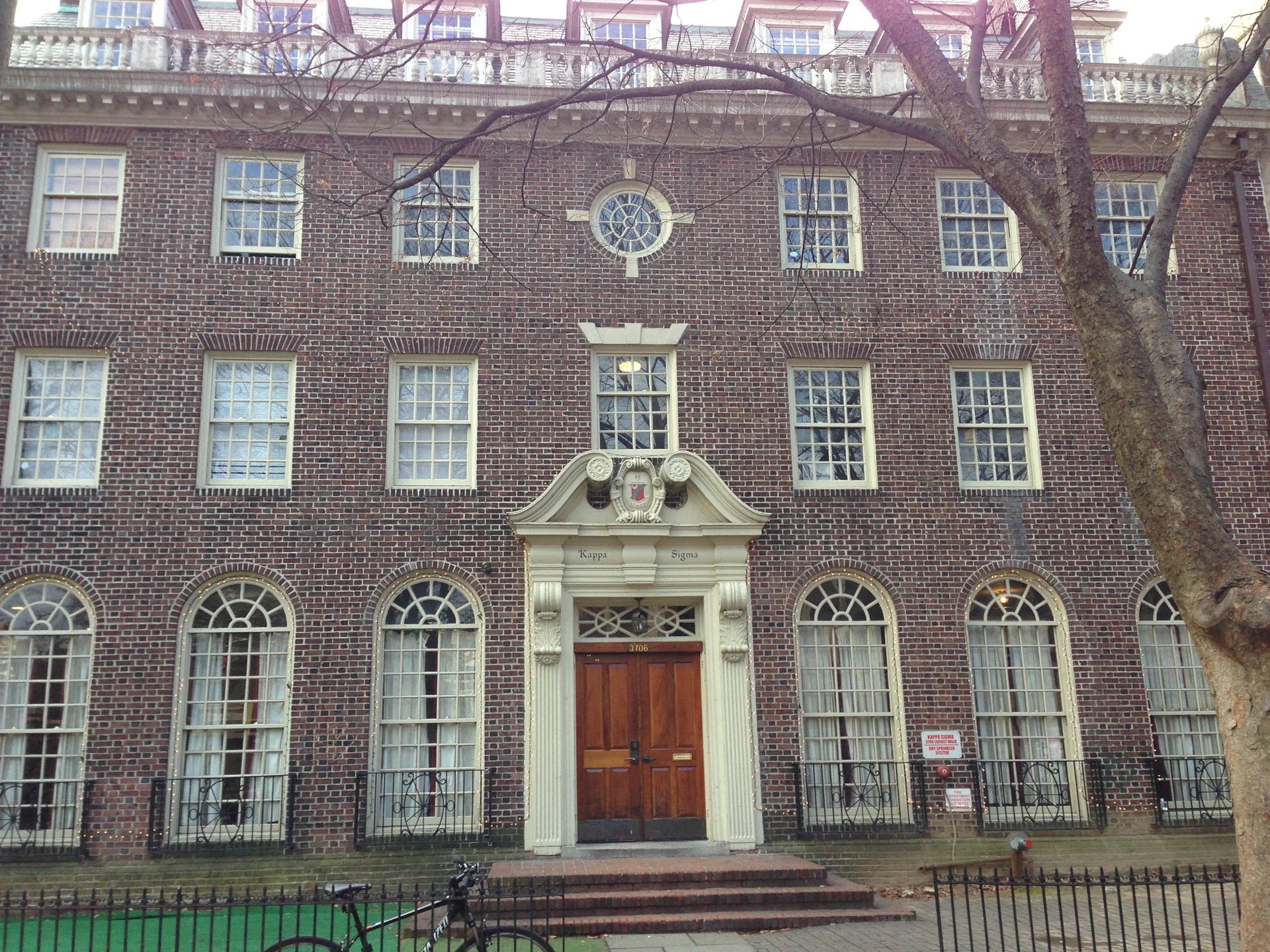
Not every name over a door here has to do with classes. On the same walk I saw “Kappa Sigma” above the door at number 3706. Now that really is a student fraternity with a house of its own. I was surprised that some students actually lived in houses like this. I was used to dorms in five- or nine-story buildings, where everyone lived in one big anthill. Here they have regular university dorms and separate houses for fraternities and sororities. A few Greek letters can mean different things. I'd already seen the engineering society's emblem at the start of the walk.
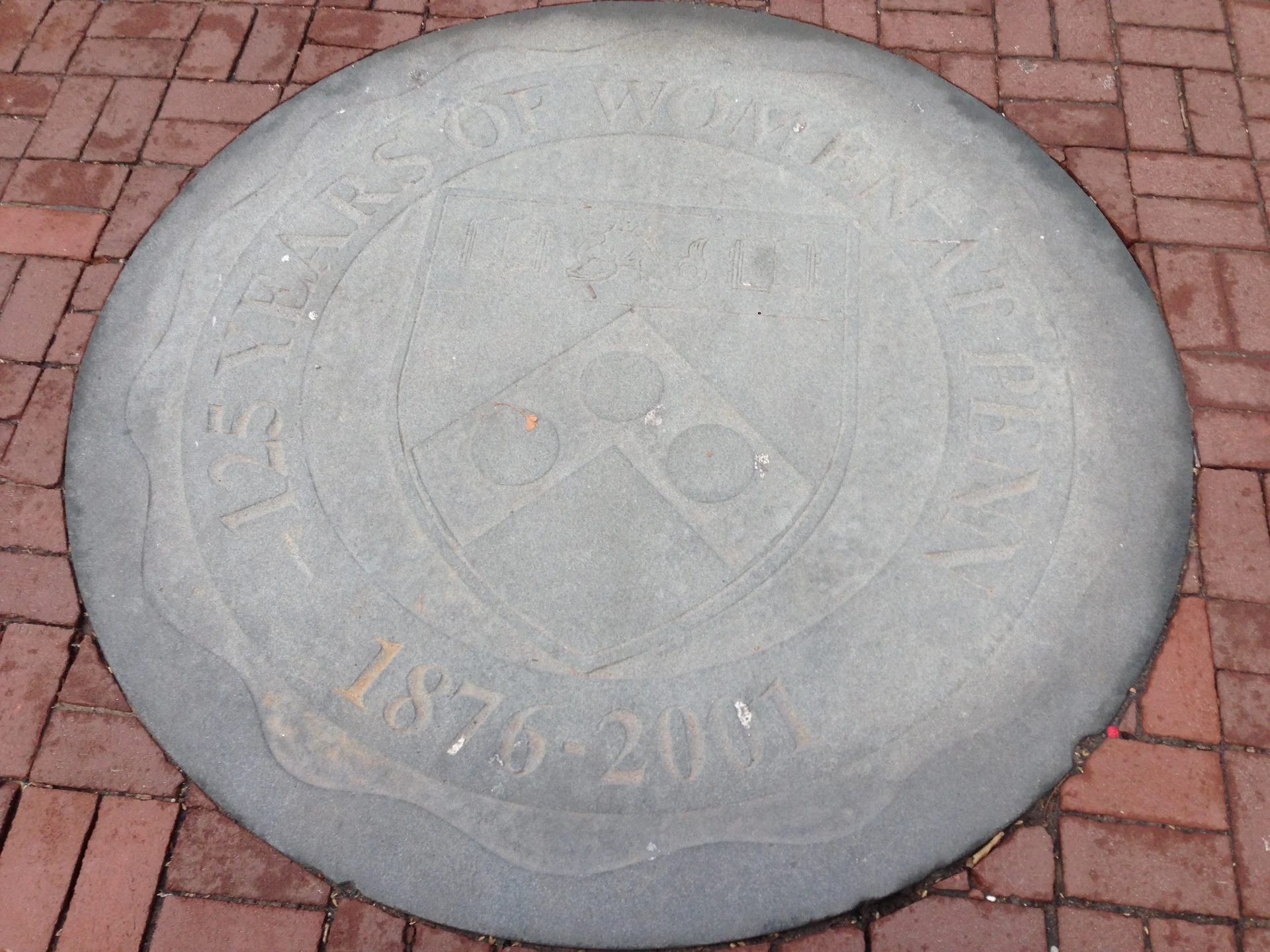
The next inscription wasn't over a door at all. It was right under my feet, on a round stone set in the pavement with the Penn coat of arms. At first you might take it for a manhole cover. Look closer and it says “125 Years of Women at Penn,” 1876 to 2001. In 1876, two women became the first to take individual courses at Penn as special students, without being eligible for a degree. In 2001, the university dedicated a walkway to mark that history. I'd finally made it to Wharton and found more history under my shoes.
The Wharton Fridge
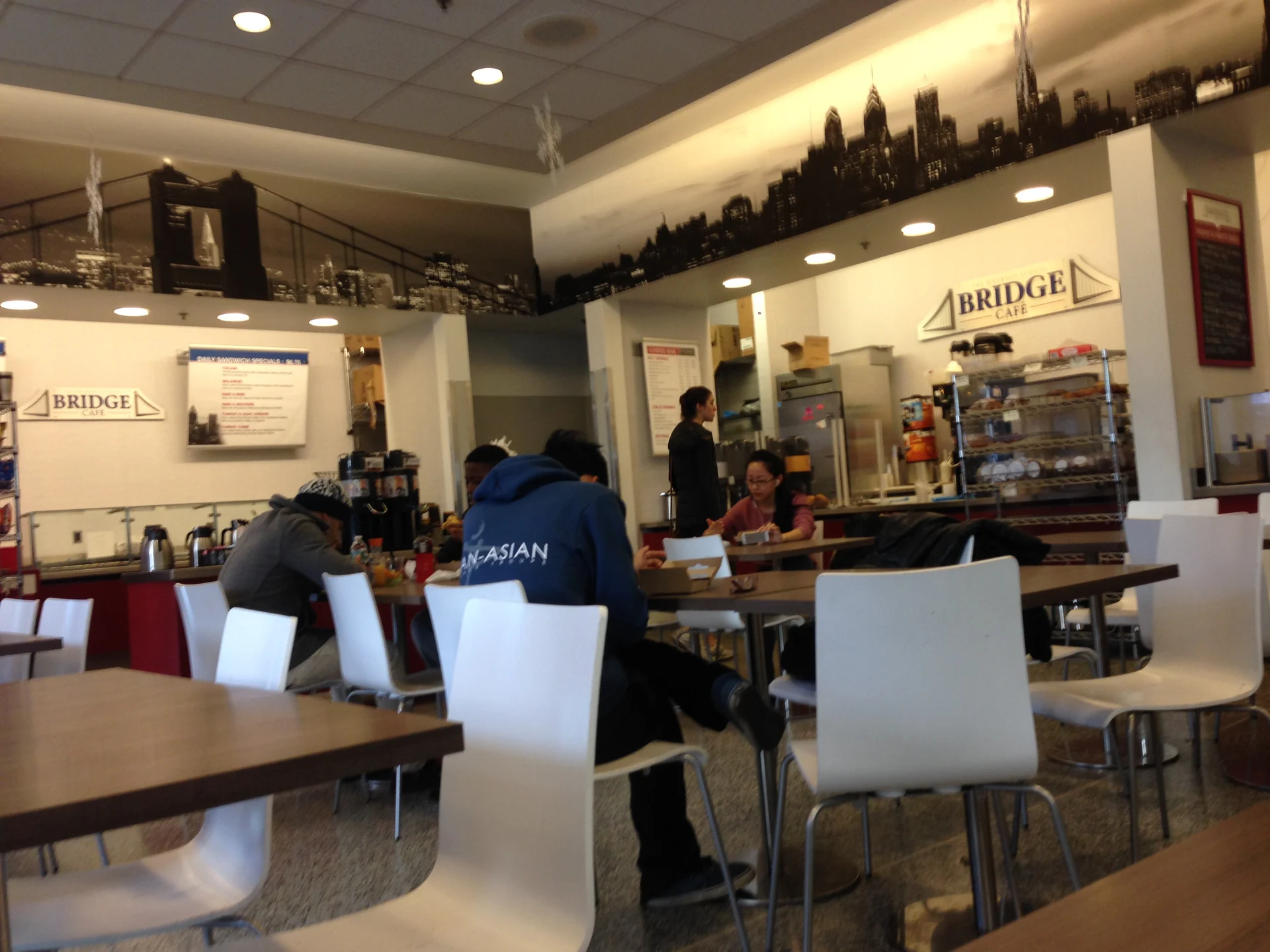
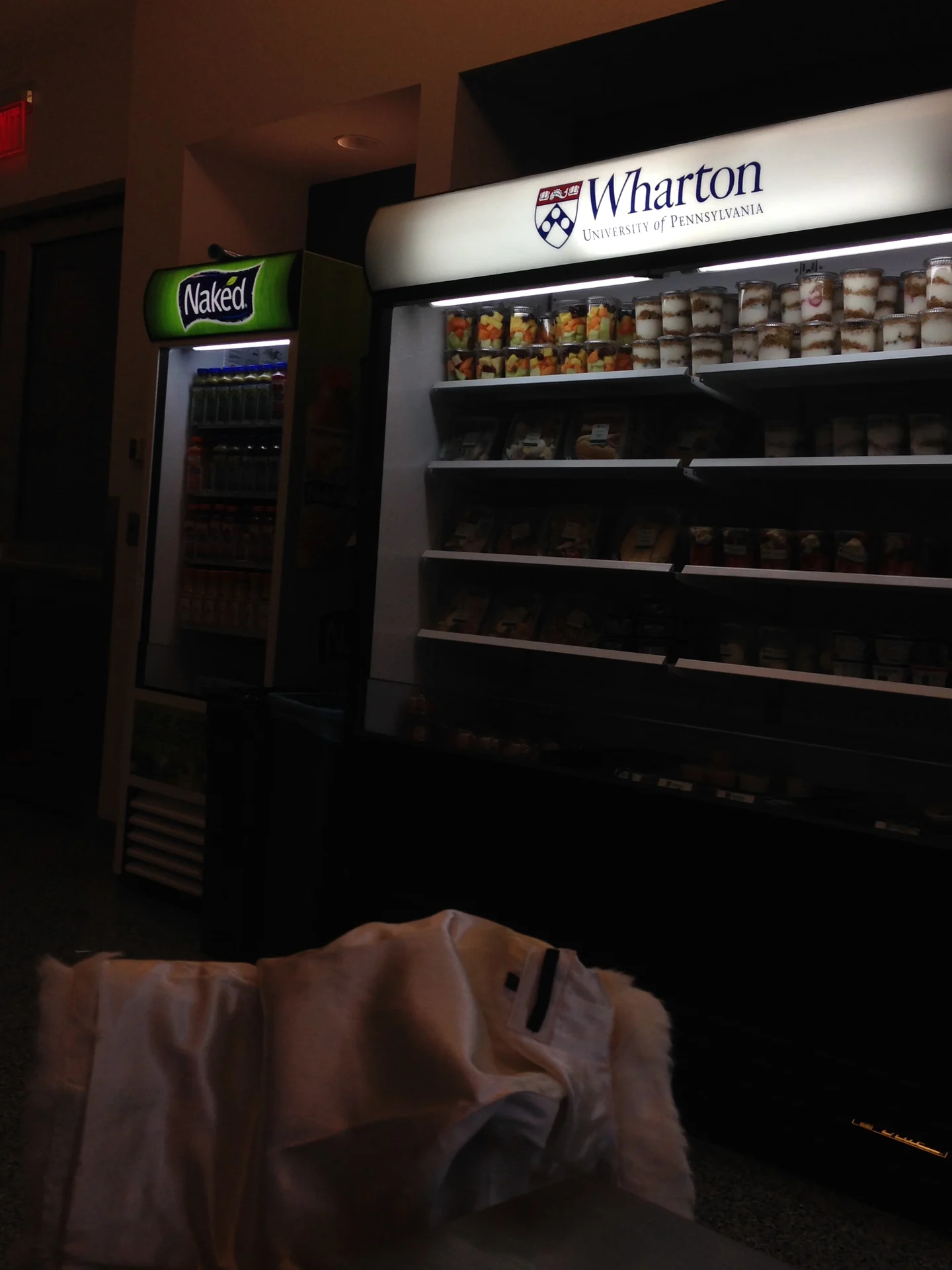
After our walk, we went for a bite at the Bridge Café in Huntsman Hall. Now we could take in the university from a table. We sat among the students, ate, and looked around to see how it all worked. After the university cafeterias I knew in Ukraine, even the way they'd done up the room surprised me. Everything was thought through, from the tables to the signs. Even the fridge with ordinary food in it said “Wharton.” I took a picture of that too. They could have just put in a fridge. Here, even the fridge is part of the university.
You sit there among the students and think about how many different people have come through this campus. Some of those names were already familiar to me from outside the university. Musk studied economics at Wharton and physics at Penn. Donald Trump graduated from Wharton too. Peter Lynch, who ran the Magellan Fund, got his MBA here. Jeff Weiner, who's running LinkedIn now, is another Wharton graduate. And Steve Wynn, whose name I'd just seen in the courtyard, studied English literature at Penn. He went into hotels and casinos after that.
You could look at those names and decide the school knows some kind of secret. I think it starts by bringing in people who already want to do a lot. Then it gives them strong teachers, a habit of testing their decisions, classmates who raise the bar, and connections that can open a few doors early on. A list of graduates alone won't tell you how much credit the school deserves. But I felt one thing even on this short walk. When the people around you set big goals, you take the ones you already have more seriously and start setting new, higher ones for yourself.
Franklin and the Road Ahead
Benjamin Franklin could tell you a thing or two about what the right company can do for you. I went back to College Hall and got a photo by his statue. He's seated high on a pedestal, with the green building behind him. That's the Franklin on the hundred-dollar bill. Turn it over and there's another Philadelphia building on the back, Independence Hall. But he has a very different role here. In 1749, Franklin laid out his ideas for a practical education and helped bring together the trustees for a future academy. It opened in 1751. So he's here not as some famous graduate but as one of the reasons the university exists at all. The statue first stood by the downtown post office in honor of the first U.S. postmaster general. It was dedicated here in front of College Hall in 1939.
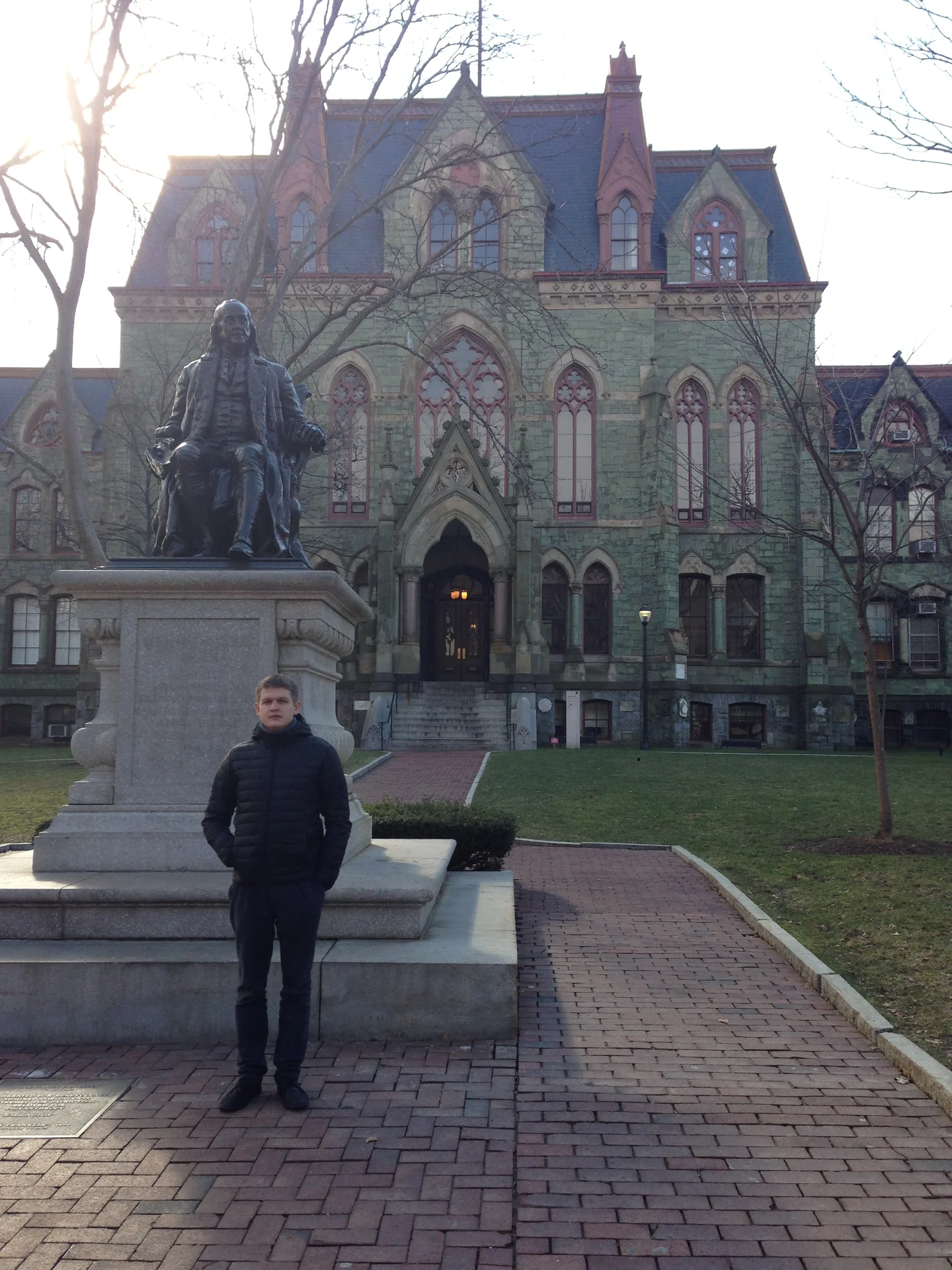
Franklin had his own way of bringing people together to make each other better. He tells the story in his “Autobiography.” In 1727, while still a young printer, he started a club in Philadelphia called the Junto. On Fridays, members brought questions they wanted to talk about. Every three months, each of them had to write an essay of their own. They talked about ethics, politics, and what they called natural philosophy. What I like about that story is how simple it is. You get people together who like to think, and you make sure they keep bringing each other something worth talking about.
Maybe that's what connected all these different places for me. From Dreiser in my headphones to lunch at Wharton, I kept coming back to the same feeling: what I was seeing here genuinely inspired me. You didn't do anything all that special. You walked a few streets, looked at some doors, sat in a cafeteria. And then you walk away with goosebumps, thinking maybe you could take your goals a little more seriously. And maybe those goals themselves could be a little bigger.
That was the end of our walk through Philadelphia. We headed for Washington.