
Sri Lanka 2012: Another Dimension and an Elephant Shower
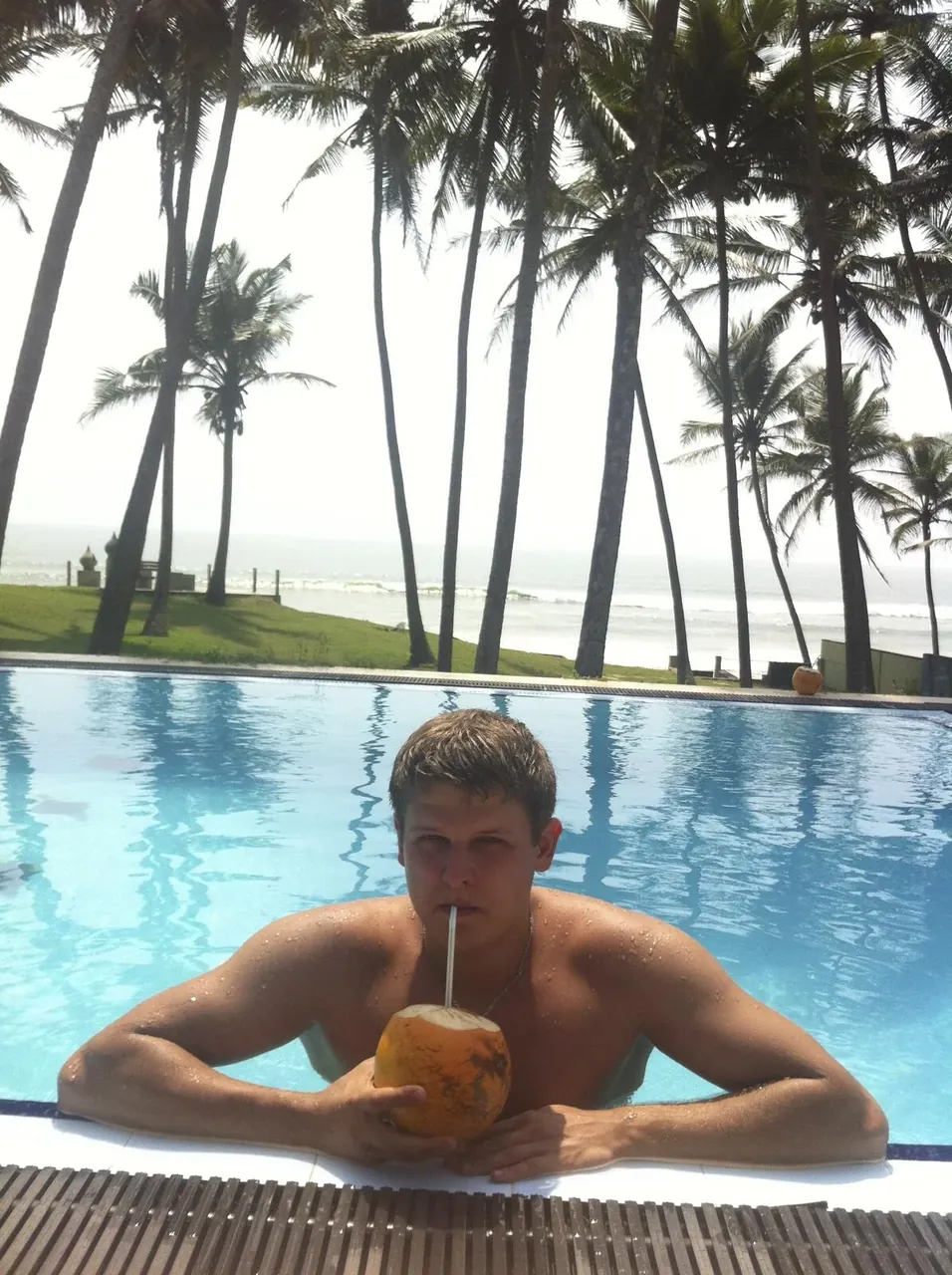
Hikkaduwa: From a Fan to the Ocean
We travel via Dubai. On October 27, I write to the travel agent that we are already here, waiting for our connection to Colombo. We have found a way to arrange everything as cheaply as possible.
We land in the evening and head to some hotel. For one night, I think. Inside: a bed, a fan, a door. A washbasin, too. That is probably the complete inventory now.
A dodgy hotel. But that is an experience too. Just not one you want to stretch over your entire holiday.
In the morning, we have a quick breakfast and set off towards Hikkaduwa. And hit a traffic jam. A long, substantial one, with no apparent intention of ending. We are on the road for five, six, maybe even seven hours. At this pace, the number of kilometres left no longer matters much. What matters more is whether anything up ahead is going to move at all.
The ocean will have to wait a little.
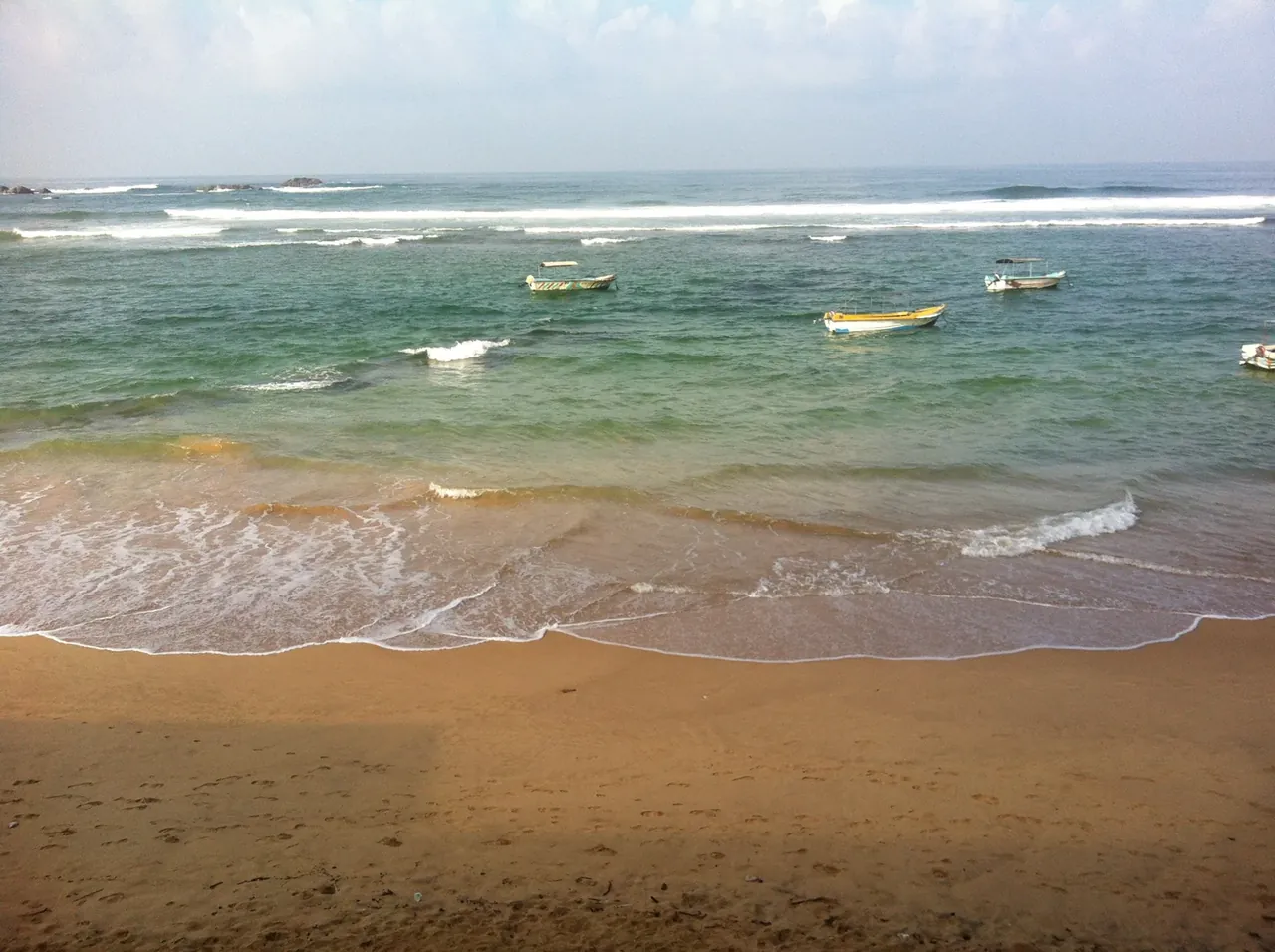
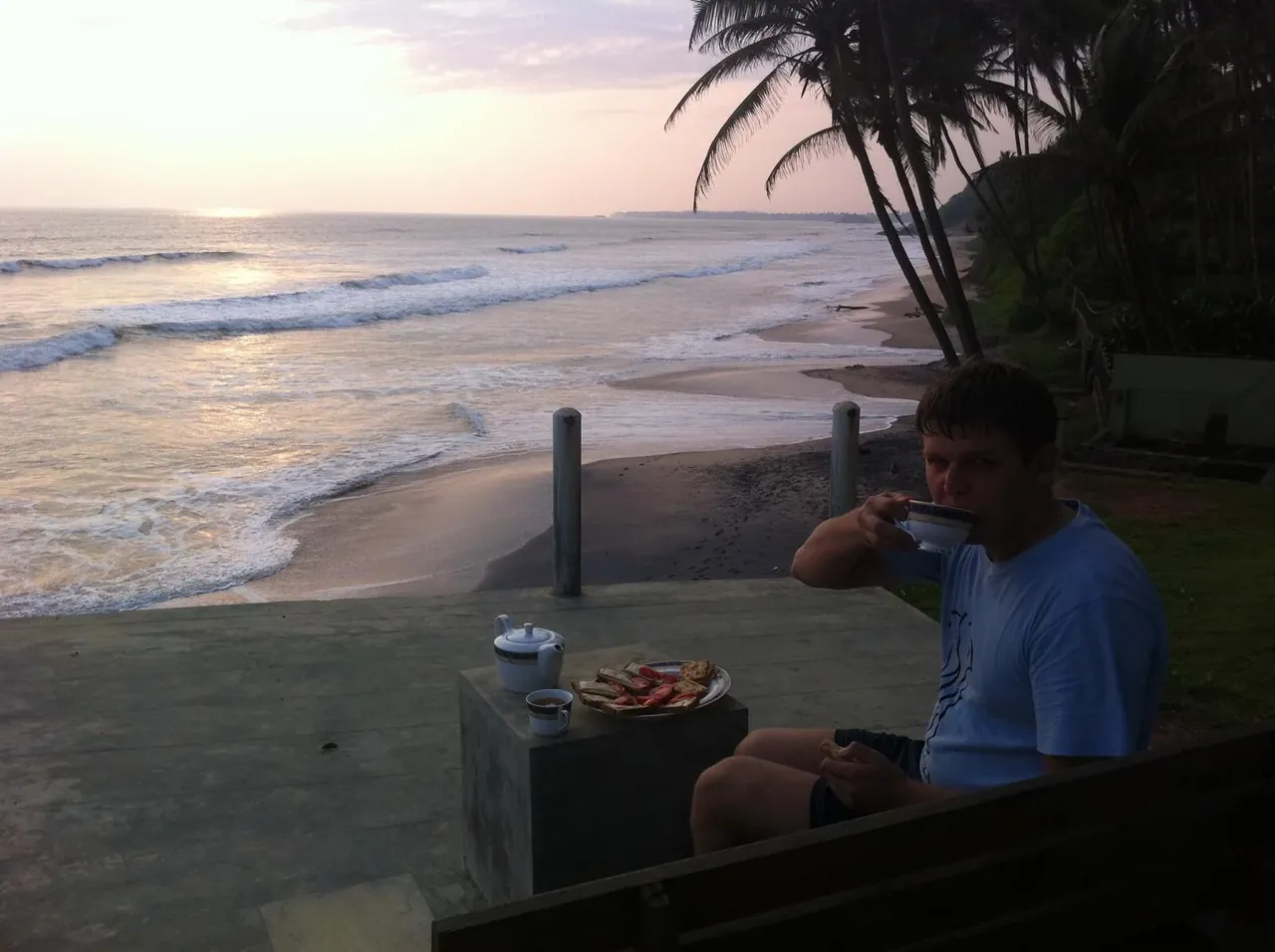
In Hikkaduwa, though, we move into a place right by the beach. Not even a hotel, but an authentic little guesthouse on the seafront. We are on the floor above ground level, with sand and water below us, literally a few metres away.
Now that is a different story altogether.
You look outside: an ocean so very blue, fishing boats, a beach. After the first night with the fan and that long journey, this change of scenery is especially welcome.
On November 1, another little detail comes to light: I have brought the keys from home with me. Now they need spare keys back home, and I have to sort this out from Sri Lanka.
The keys wanted a trip to the ocean too. Unlike people, they did not need to buy a ticket :)
In Hikkaduwa, we swim, take excursions and head off in different directions. I also find a diving school here where I can take a PADI course.
And I think: why not?
It opens up so many new possibilities for travelling. You can go to another country for more than cities, beaches and mountains. You can go diving too.
I do not feel like spending ages thinking about it. Screw it, just do it. I sign up at Dive Sites Lanka.
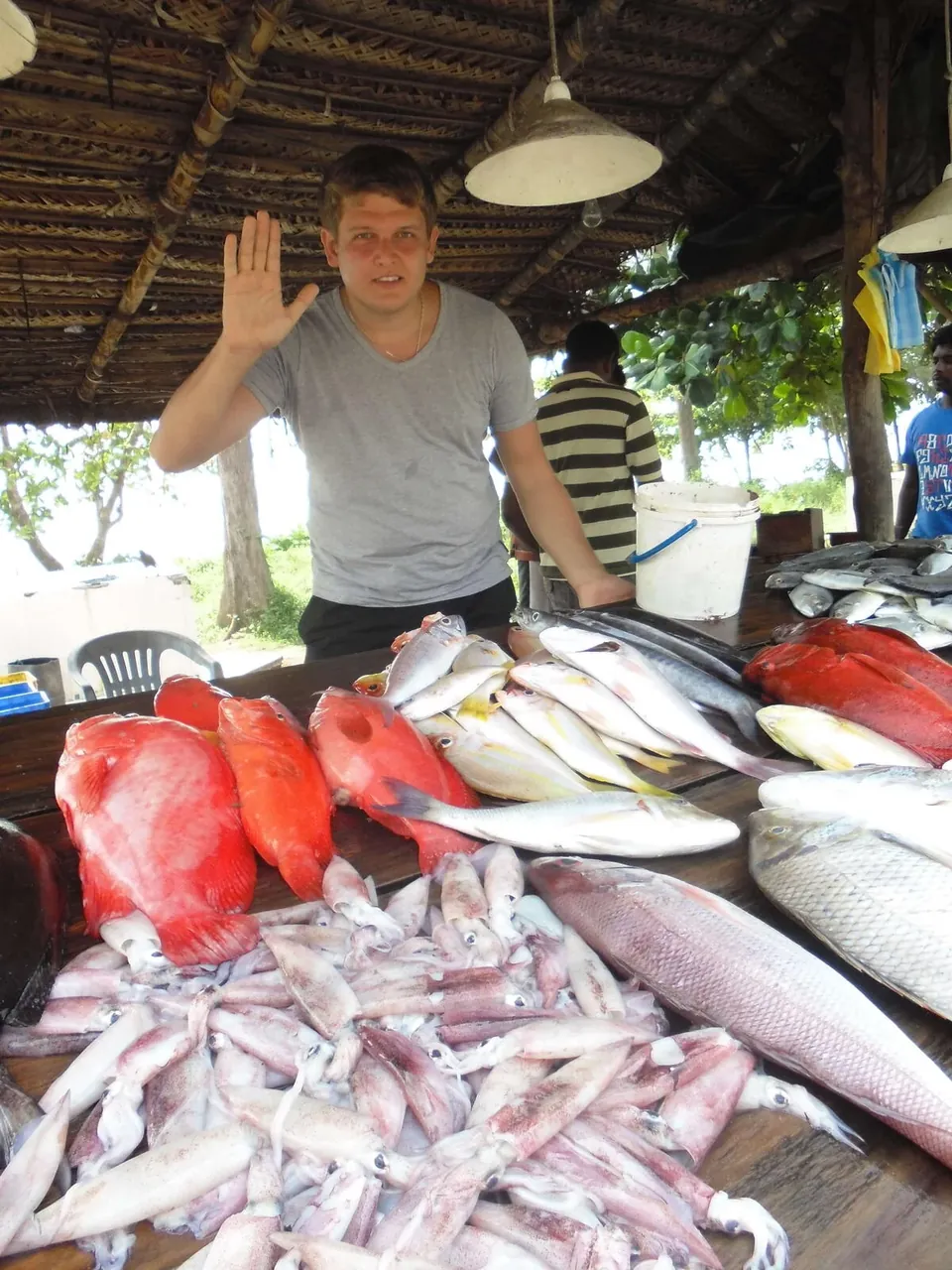
There is plenty of theory: a book, lessons, training videos. But I get to study it on the beach. Have some seafood freshly caught from the ocean, drink some mango juice — and now learn how to dive into that ocean properly.
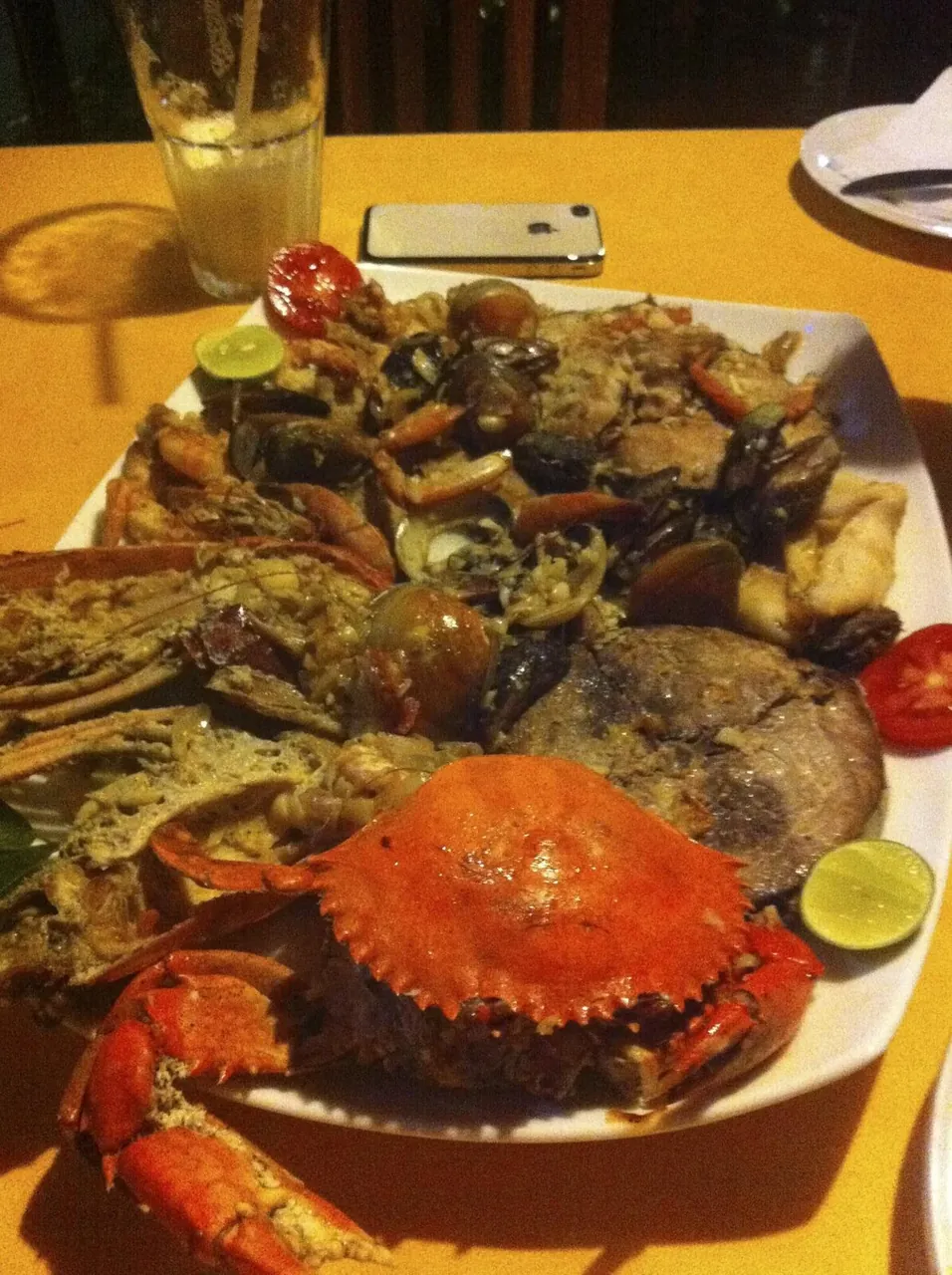
The setting is suspiciously good for studying. So good that even the theory does not feel like a punishment for wanting to go scuba diving.
The school is in the next building: from the book, you move on to a lesson or a video, then back to the beach. That kind of schedule suits me.
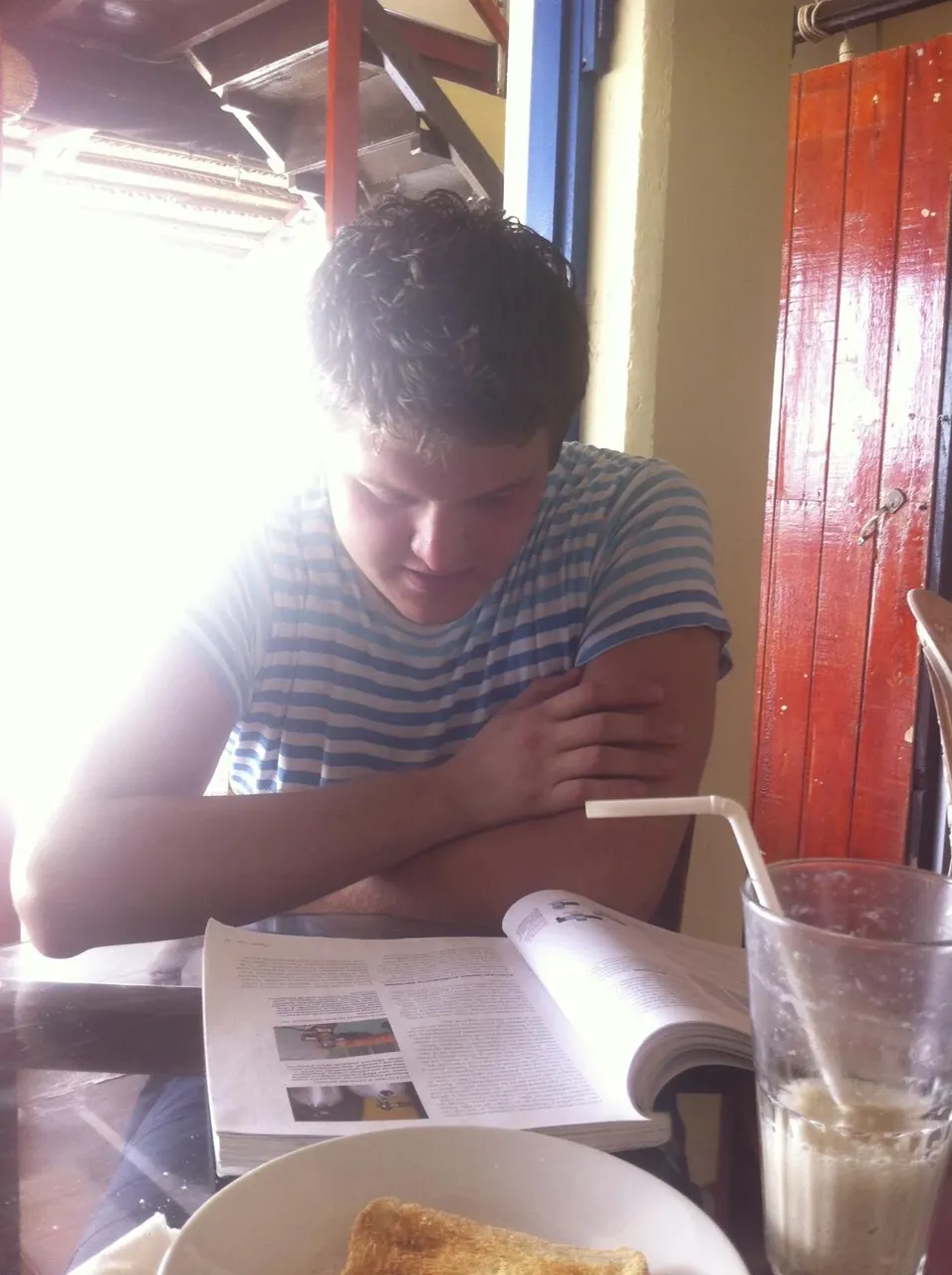
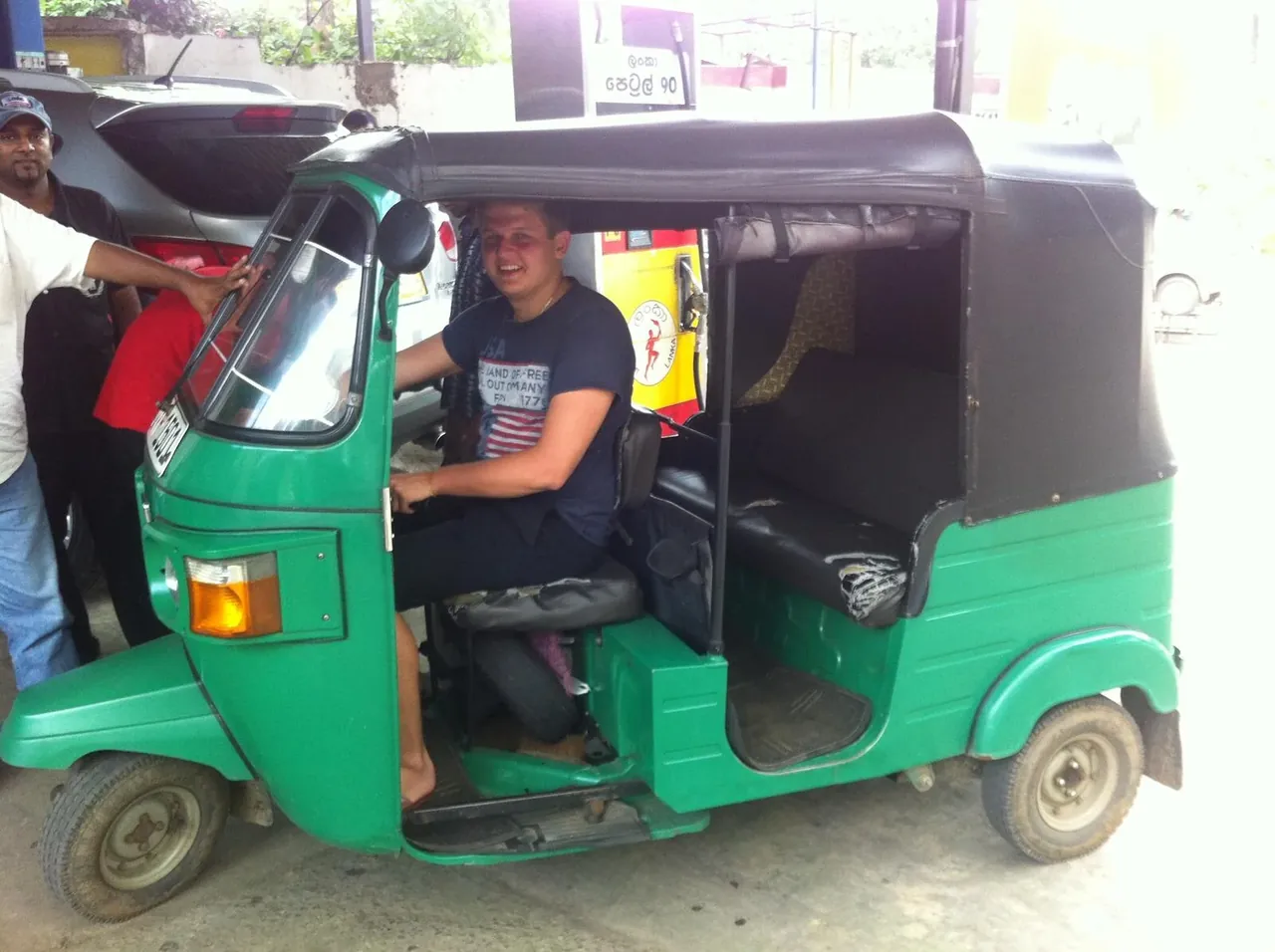
The beach and the dive school are only part of our life on the island. Venturing beyond Hikkaduwa, we discover a completely different Sri Lanka. Even getting around becomes an adventure here.
The Island Beyond the Beach
On the train, the open space of the beach gives way to an old, cramped carriage full of people. More or less sitting on each other's heads, with vendors somehow still squeezing between them selling local food. Everything is very cheap, though not everything looks like something you want to taste immediately.
There is a lot going on. Someone is looking through a window, someone else is leaning out. The train passes slopes and steep drops, and sometimes the edge seems a little too close. Look down — beautiful. Look at how close we are to that ‘down’ — a bit scary now.
Then there are bridges, more greenery, new views. One of the bridges reminds me of an old Roman aqueduct: those arches, all that beauty around it. I want to take it all in and photograph it.
Comfort is a particular concept here. But there is enough authenticity to fill the whole carriage. Despite the cramped conditions and the nearby drops, I absolutely love the ride.
On November 10, I try a form of transport that gives me a completely different perspective on the same greenery. I get on an elephant.
We make our way through the greenery, along different paths, past rice fields and thick vegetation. Everything looks wonderful from up here, but the scenery is not the only thing you need to watch. Sometimes a branch is heading straight for you.
The elephant keeps going, and you duck. One way, then the other. It turns out the passenger has to do a little work too.
As an experience — beautiful and great fun. As long-distance transport — I already have a few objections. Uncomfortable, slow, and the elephant may have its own ideas about which direction to take. I do not know how people travelled far like this. Though I am comparing it with cars and planes, of course. Not exactly fair competition for the elephant.
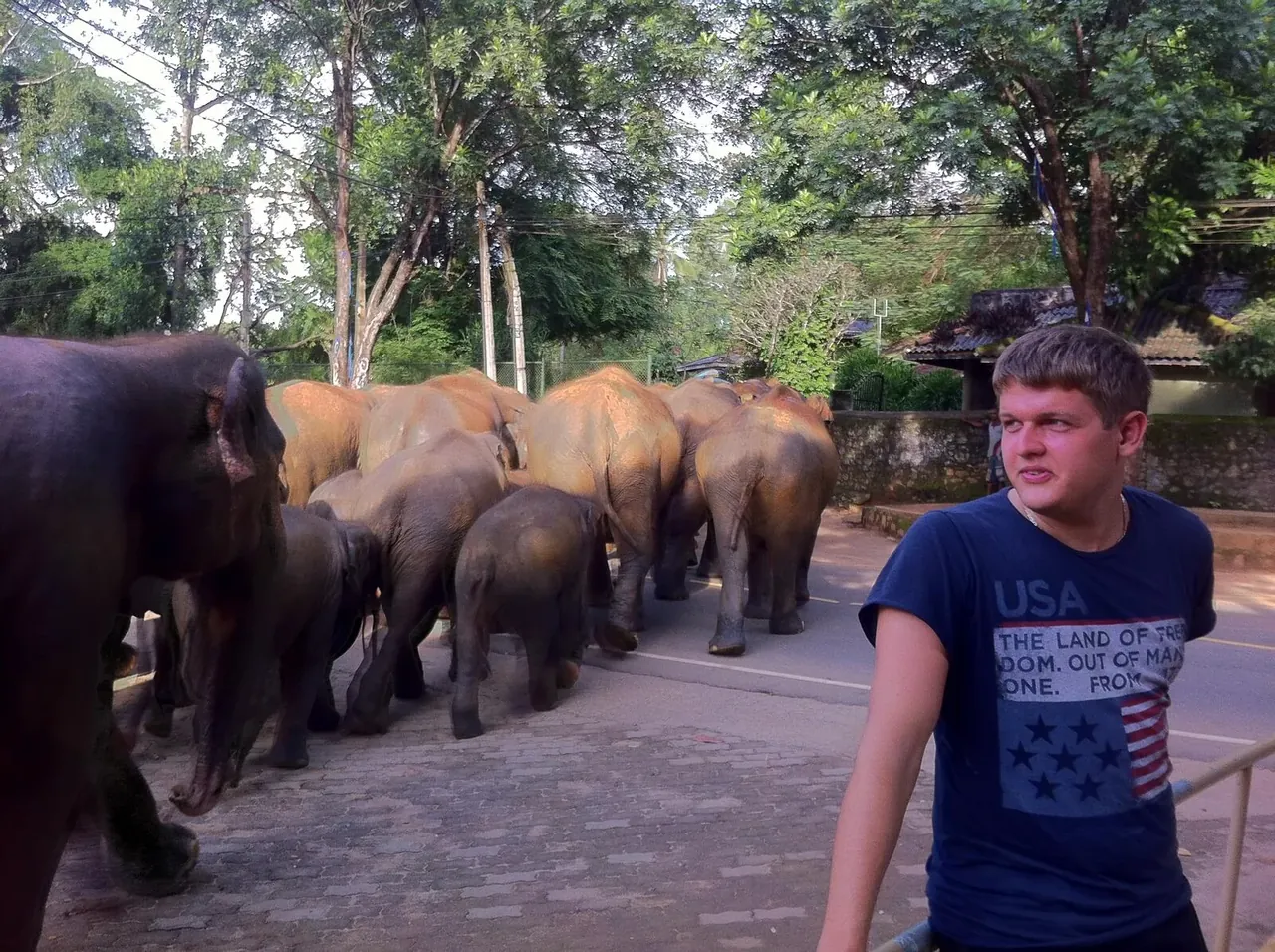
We meet elephants in different places around the island. In Pinnawala, there is a whole crowd of them: adults, little ones, lots of baby elephants. I stand with them behind me — this is definitely a moment for a souvenir photo. You could hardly call it an ordinary urban backdrop.
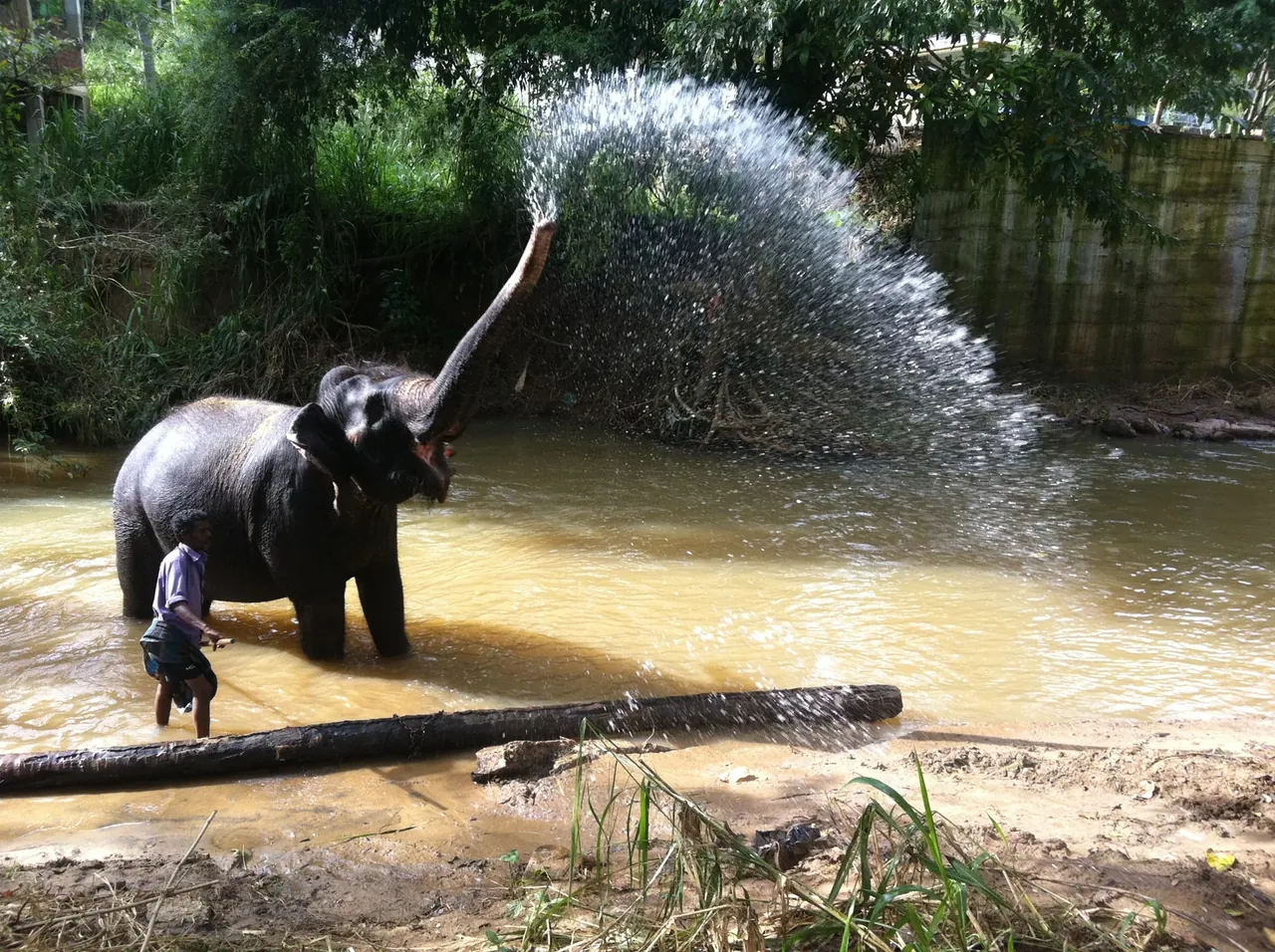
The funniest elephant episode happens in the water. I am sitting on top, the elephant fills its trunk with water and sprays me.
A natural shower I did not order.
You are in a river, there is an elephant underneath you, and that elephant has just decided to give you a wash. A very unusual shower enclosure, but one of the most fun showers of my life. It is hard not to have a reaction to that kind of service :)
And in Kandy, even the air changes.
Kandy, Sigiriya and the Green Island
In Kandy, we stay in a small hotel somewhere in the mountains. It is fresh here, even cool. After beach life, the difference is noticeable: as if we have briefly arrived in another Sri Lanka.
We walk around the city. Interesting architecture, water, greenery. By the lake, we feed the fish, and this really is a new experience for me.
Throw something into the water — and suddenly a huge shoal appears. There are so many fish that it seems there are more of them than water. They all fight for the food, rushing in at once, with colourful ones among them.
I thought we were just going to feed a few fish. Instead, there is an entire underwater crowd with a very good response time to lunch.
On November 11, we visit the Temple of the Tooth. It is very beautiful inside. Flowers, offerings, people coming to the shrine and leaving donations. We enter the room where the relic is kept and look around. The beauty is what strikes me most here: how it is made, how everything looks together.
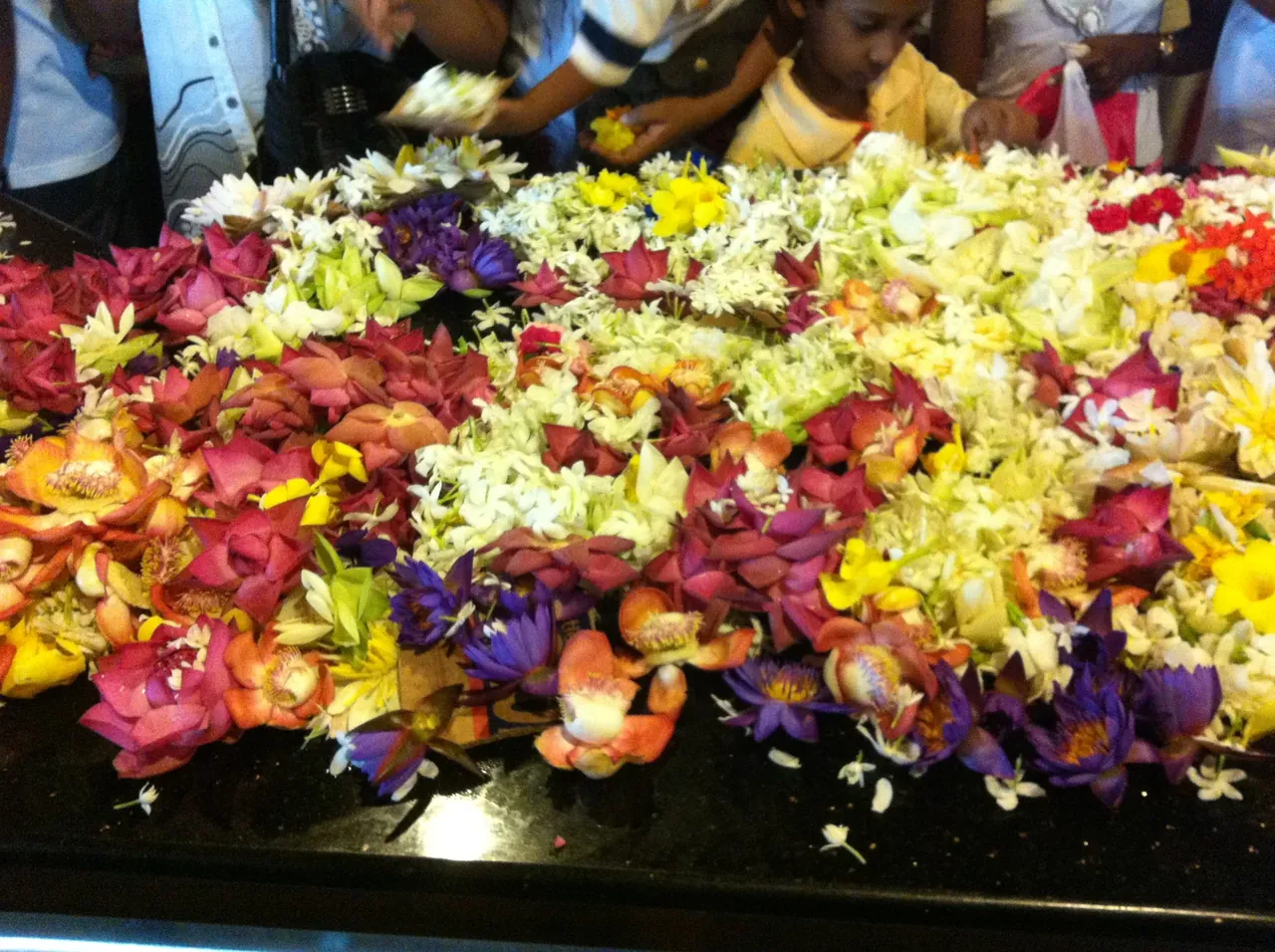
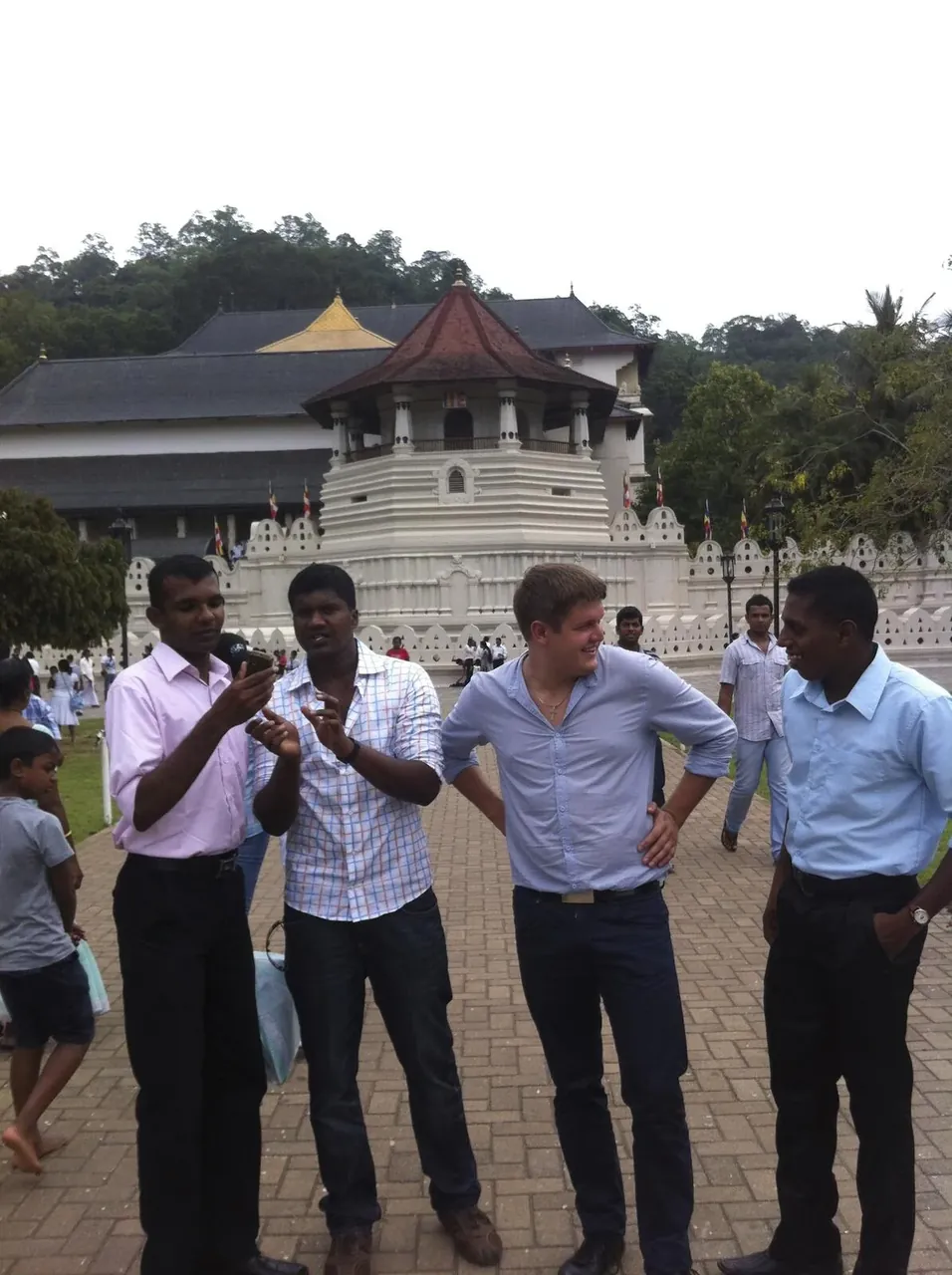
But alongside that, I get a very different impression. Against the backdrop of poverty and people in tuk-tuks, the expensive cars really stand out. I remember a Range Rover and other fancy cars that I associate with the senior monks.
And to me, the whole picture looks like a scam. For some, faith is something deeply important; for others, it seems to be a good source of income. You look at the donations, all this beauty, the expensive cars — and get the feeling that the beauty is being used as a funnel to make someone richer.
That is my impression of what I saw. It does not make the temple any less beautiful. Beauty remains beauty, even when I have plenty of questions about how it is being used.
Walking around Kandy, we look at a Buddha statue behind pale curtains, with flowers in front of it. I have my photo taken beside an elephant in a museum display case. Unlike the previous one, this one takes me nowhere and does not spray me with water.
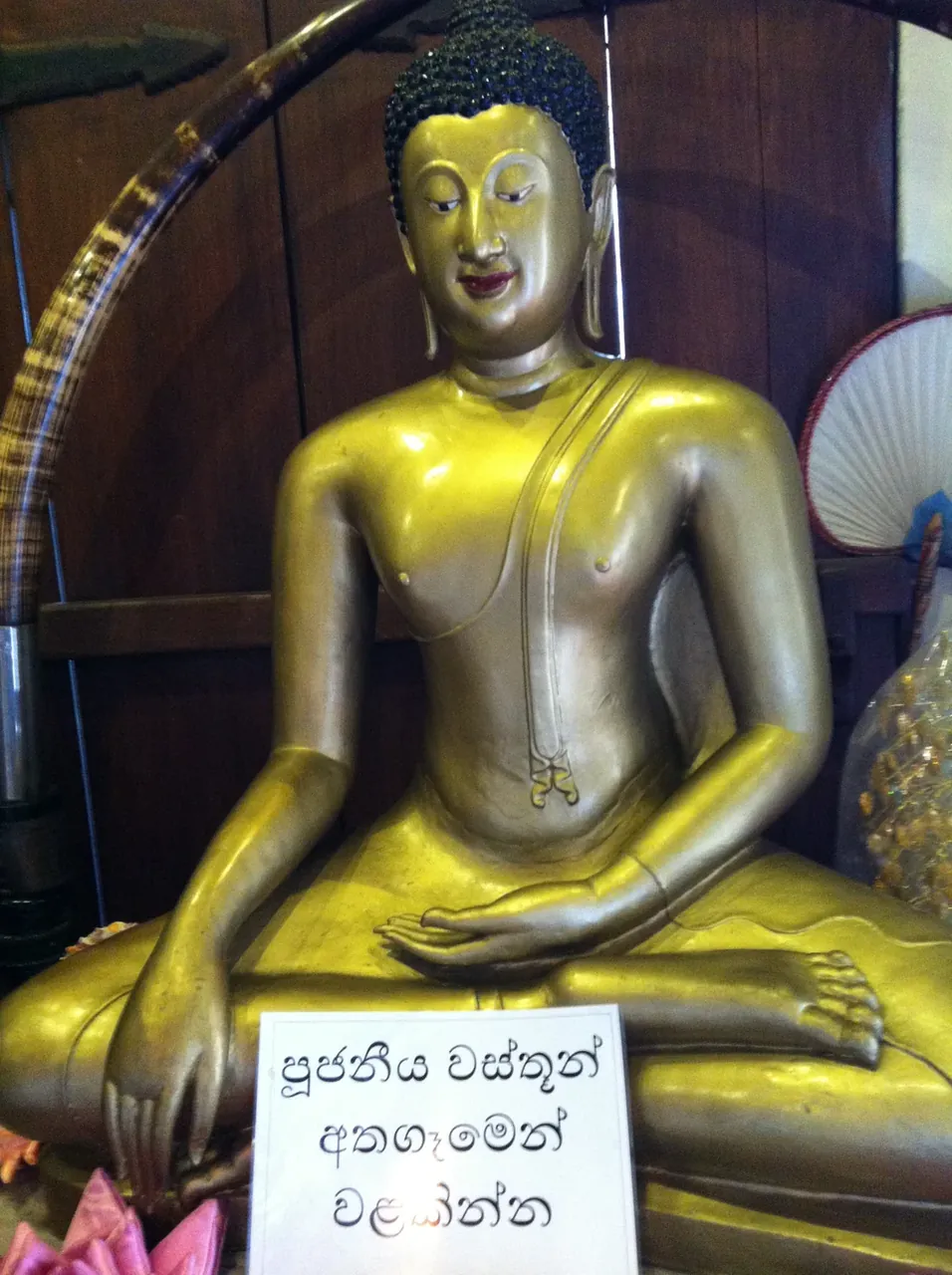
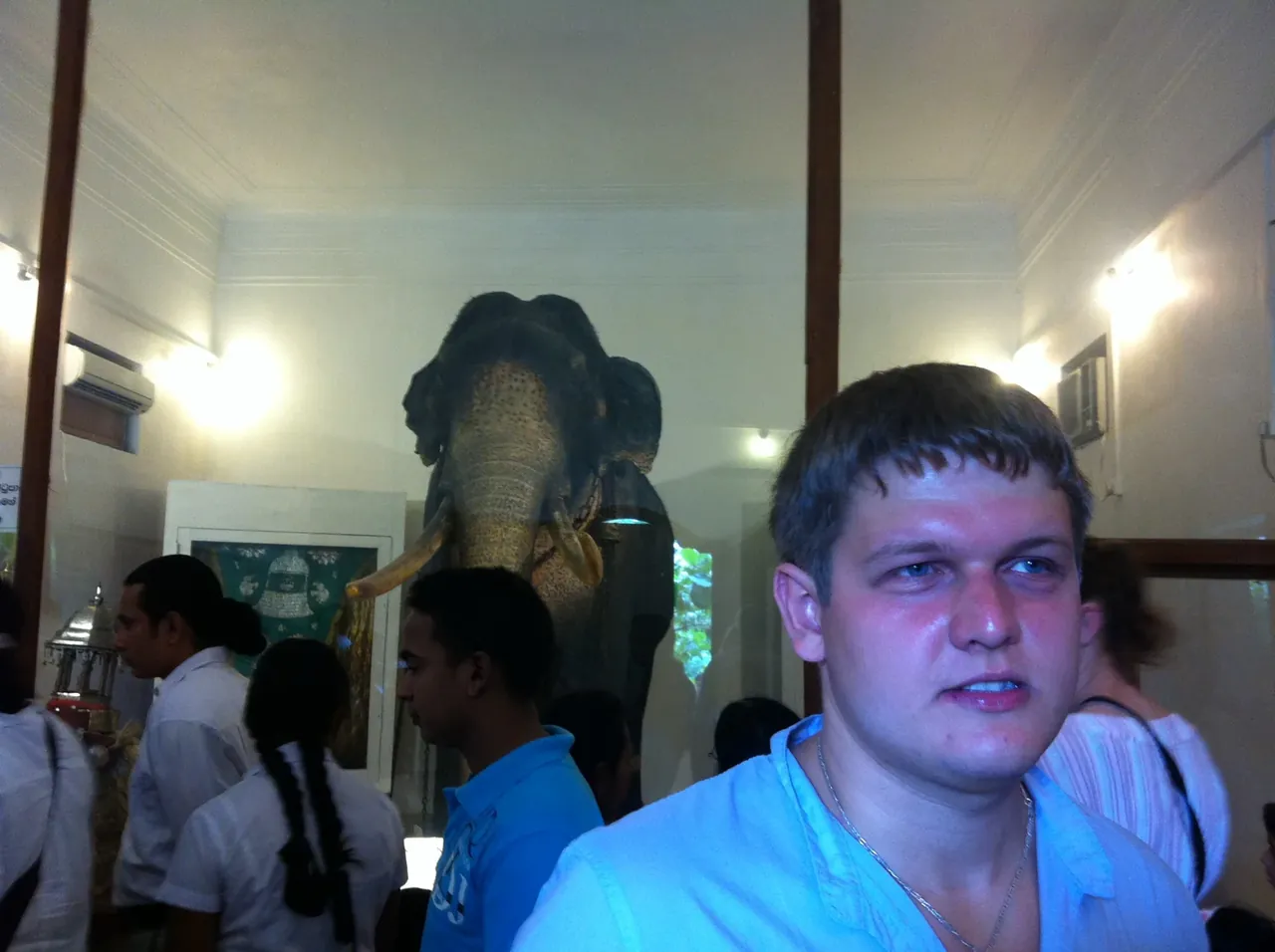
Nearby, monkeys sit among scattered pink petals. That same day, we also visit a war cemetery: neat rows of pale headstones, a green lawn, palm trees, a white cross.
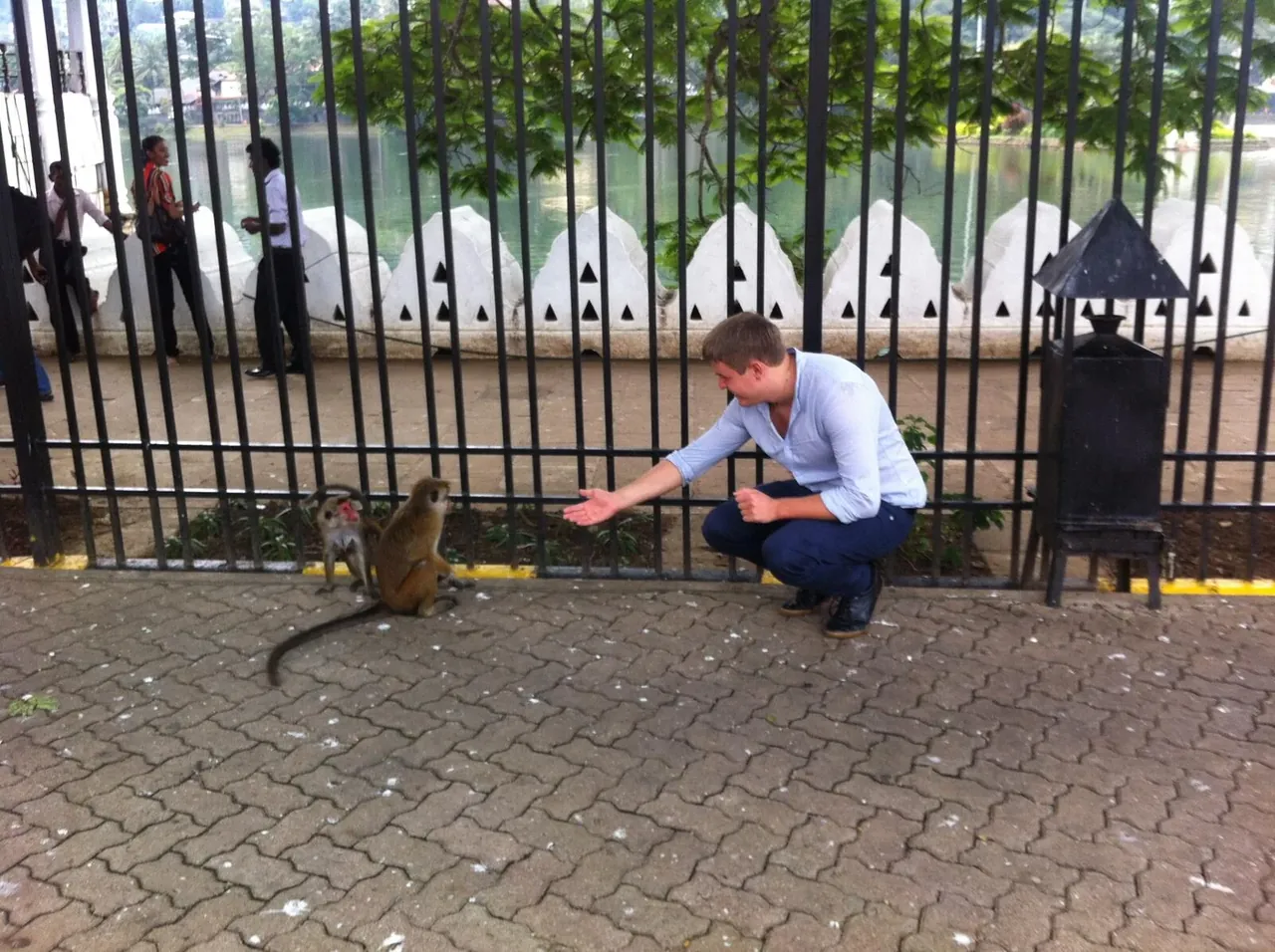
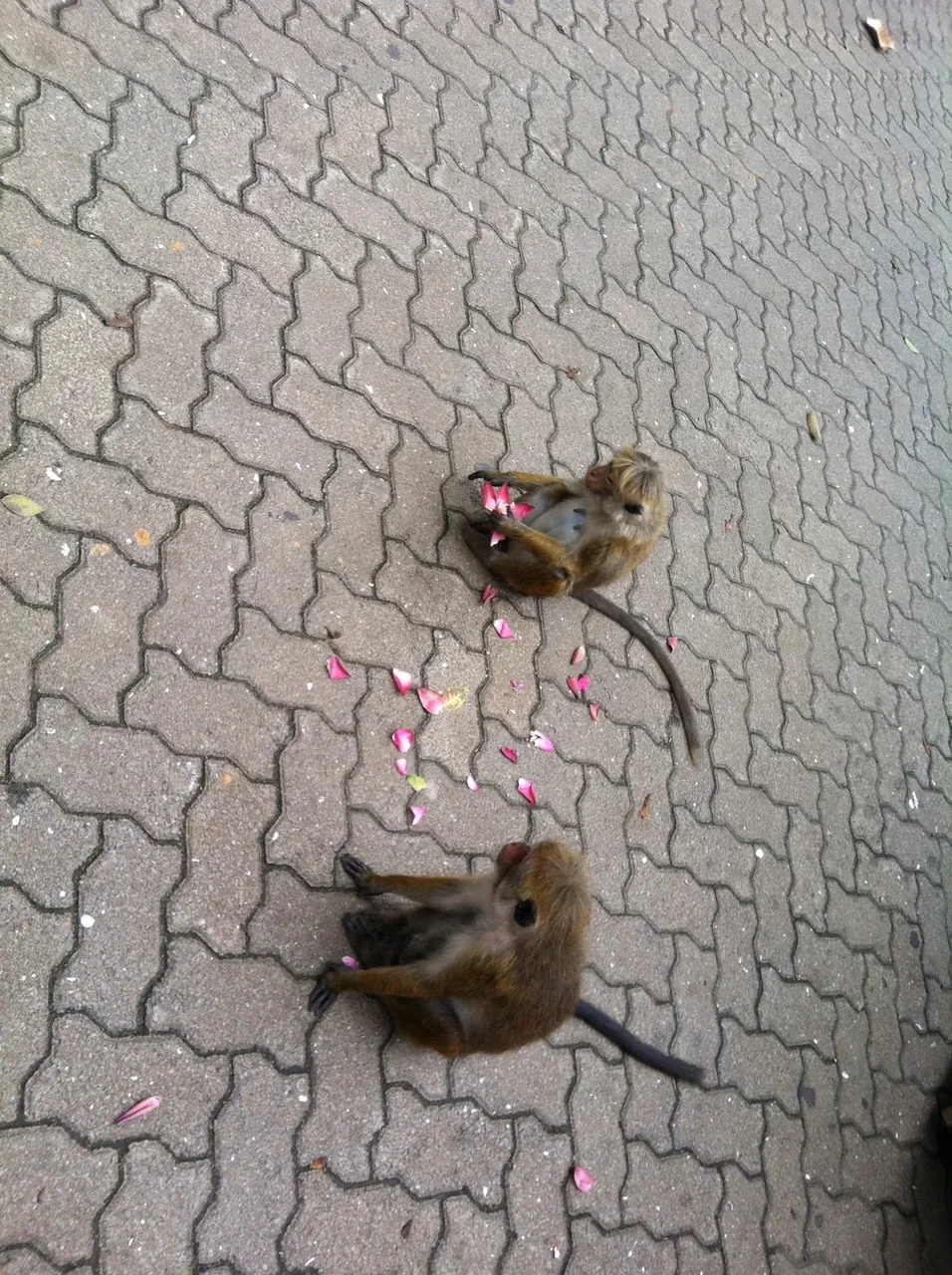
The evening photos from November 11 are completely different: dancers and musicians onstage, bright costumes, headdresses. In Kandy, the lake, the temple, the cemetery and a performance all find themselves side by side. Beachside Sri Lanka turns out to be only part of the island.
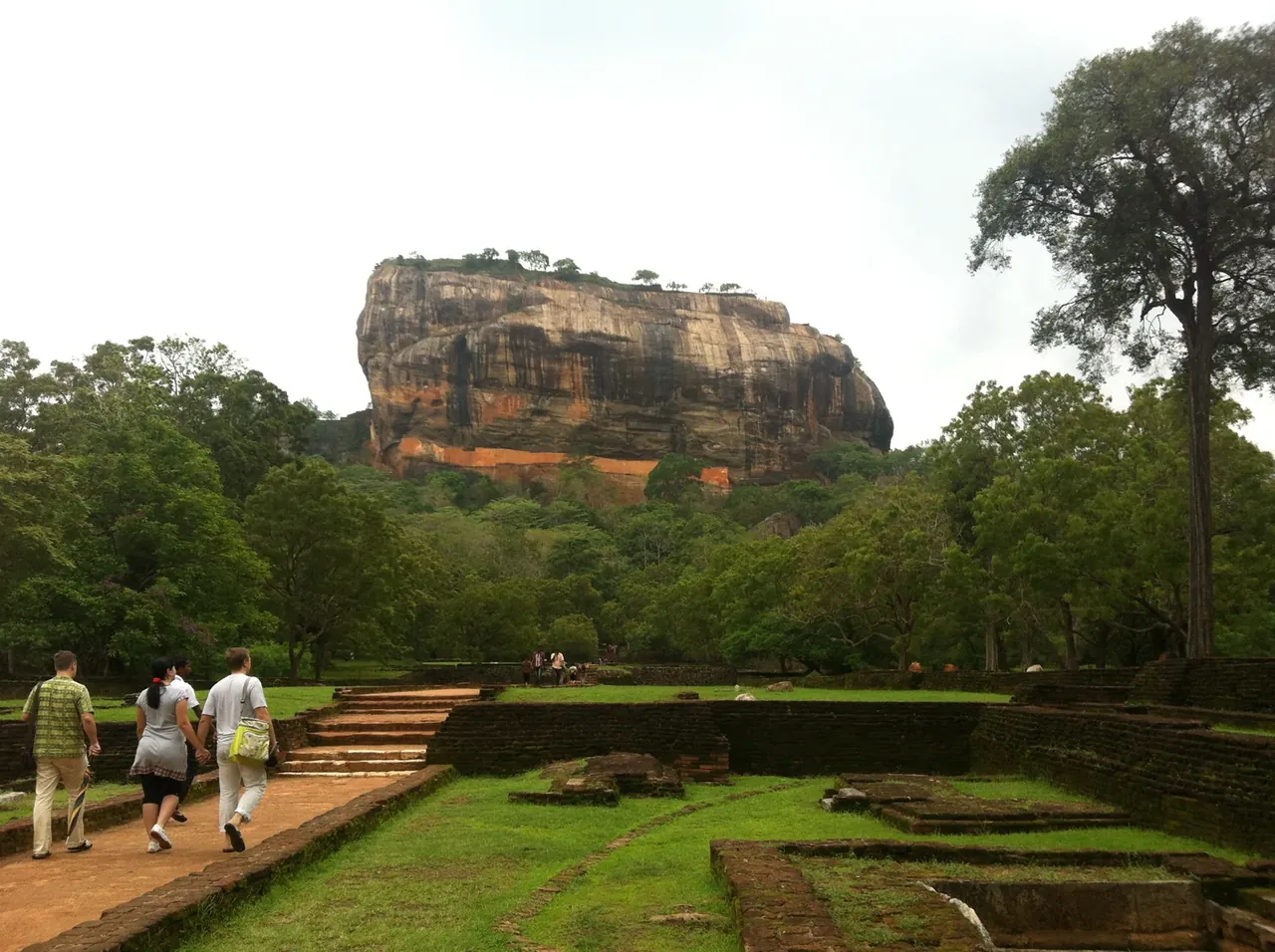
On November 13, we go to Sigiriya, the famous Lion's Rock. An enormous rock in the middle of all that greenery. Looking up from below, you already have a rough idea of what your legs are about to do.
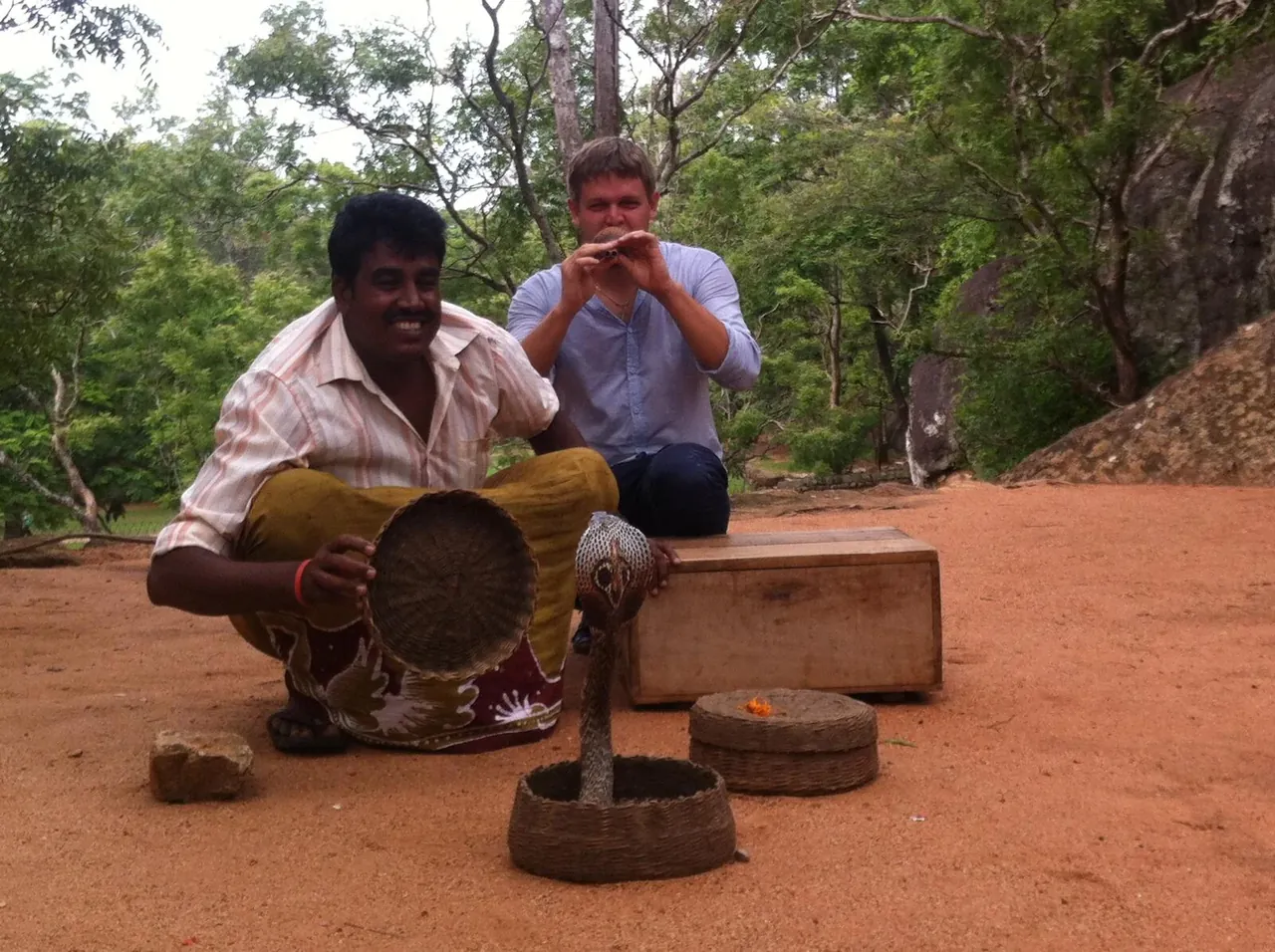
But before the climb, we stop by a snake charmer. A basket, a cobra, a flute — the whole scene you know from pictures, right in front of us.
We watch, take photos, and then I sit down with the flute myself. As if I am a snake charmer too. It looks convincing in the photo; I am not planning a career change just yet.
We leave a tip, have a bite to eat and head for the rock.
This is a natural granite rock rising about 180 metres above the surrounding landscape. It remained standing above the plain while the rocks around it eroded away. In the late fifth century, King Kassapa I established his capital here, with buildings on the slopes and a palace on top. On Sigiriya — UNESCO; on the rock's origins — NASA.
The king clearly picked the right spot for the view. Easy access for guests does not seem to have been much of a concern.
We climb some stairs. Then more stairs. And more. With every turn, the view gets more beautiful: greenery below, valleys beyond, all that Sri Lankan space around us.
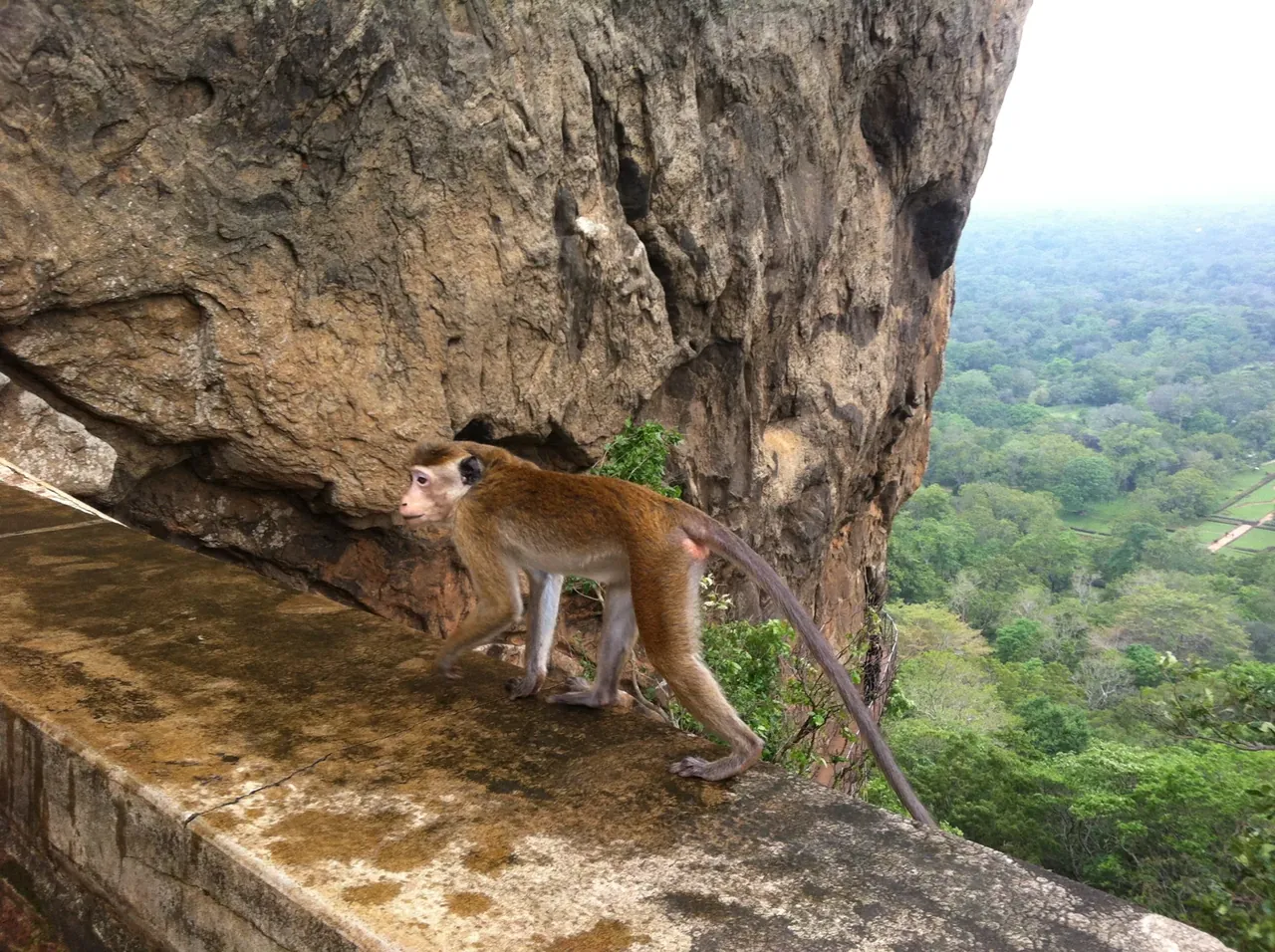
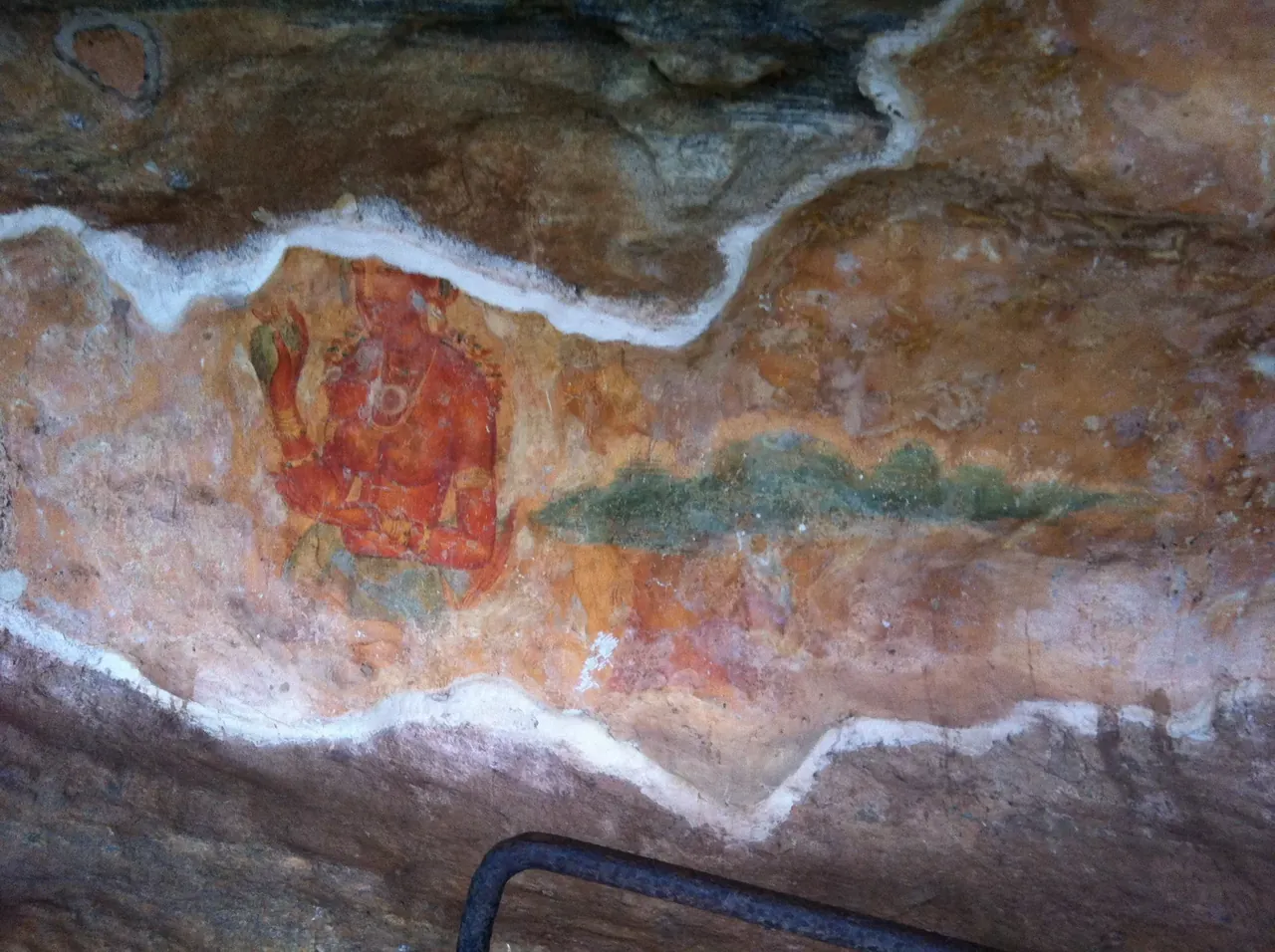
The entrance once passed through an enormous lion built from brick and plaster. That is where the rock gets its name. At the top, ruins remain. At Sigiriya, I look at an old pool, stones, traces of how everything was once arranged. Nobody piled up the rock itself: people made use of a natural height and built their own world on it.
It is interesting to imagine all that work. But right now, what impresses me most is what you can see from the top.
Valleys, trees, greenery in every direction. A magical view. It is a long climb, but the reward is fair: the higher you go, the more you want to stop and look around.
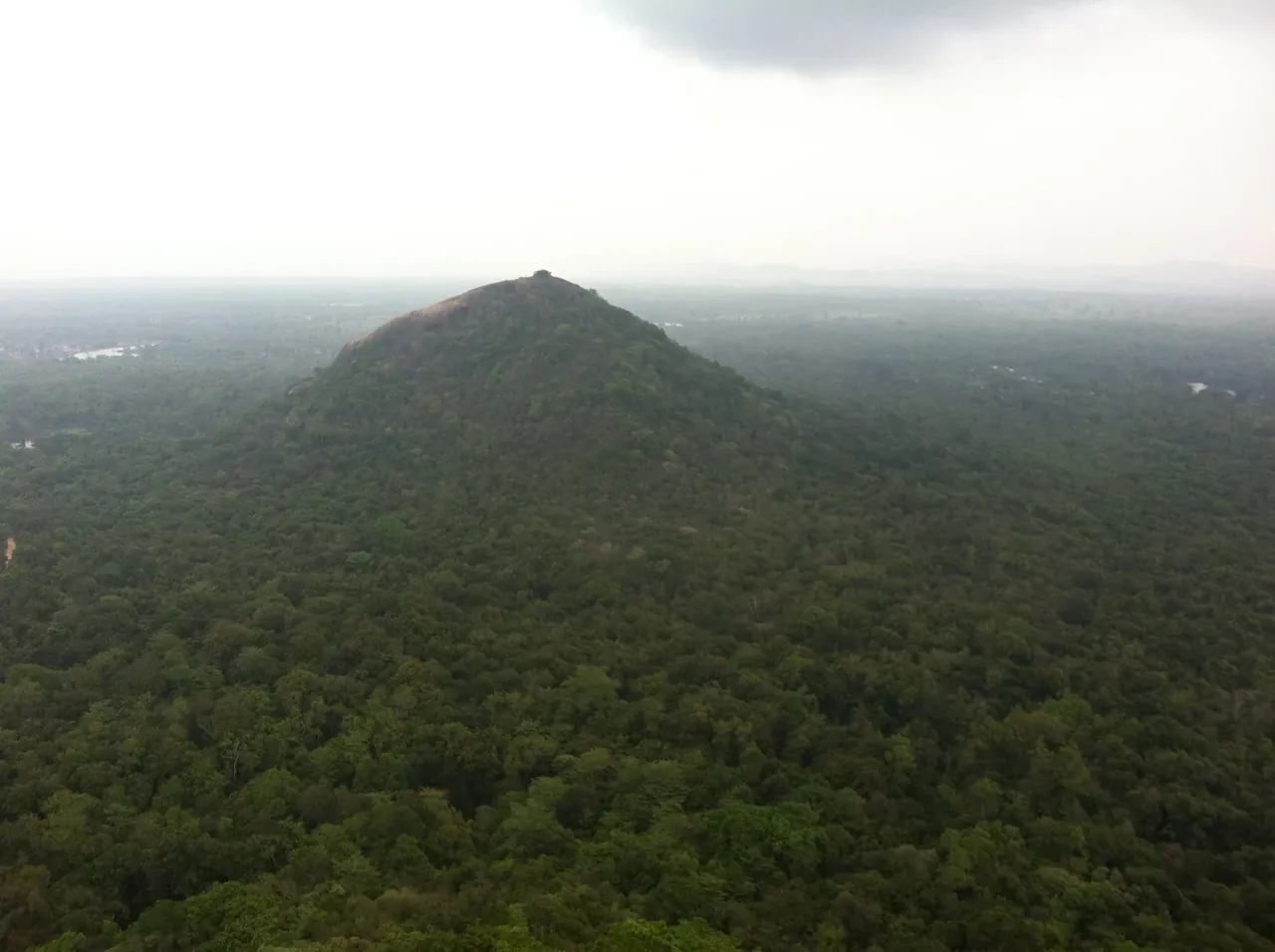
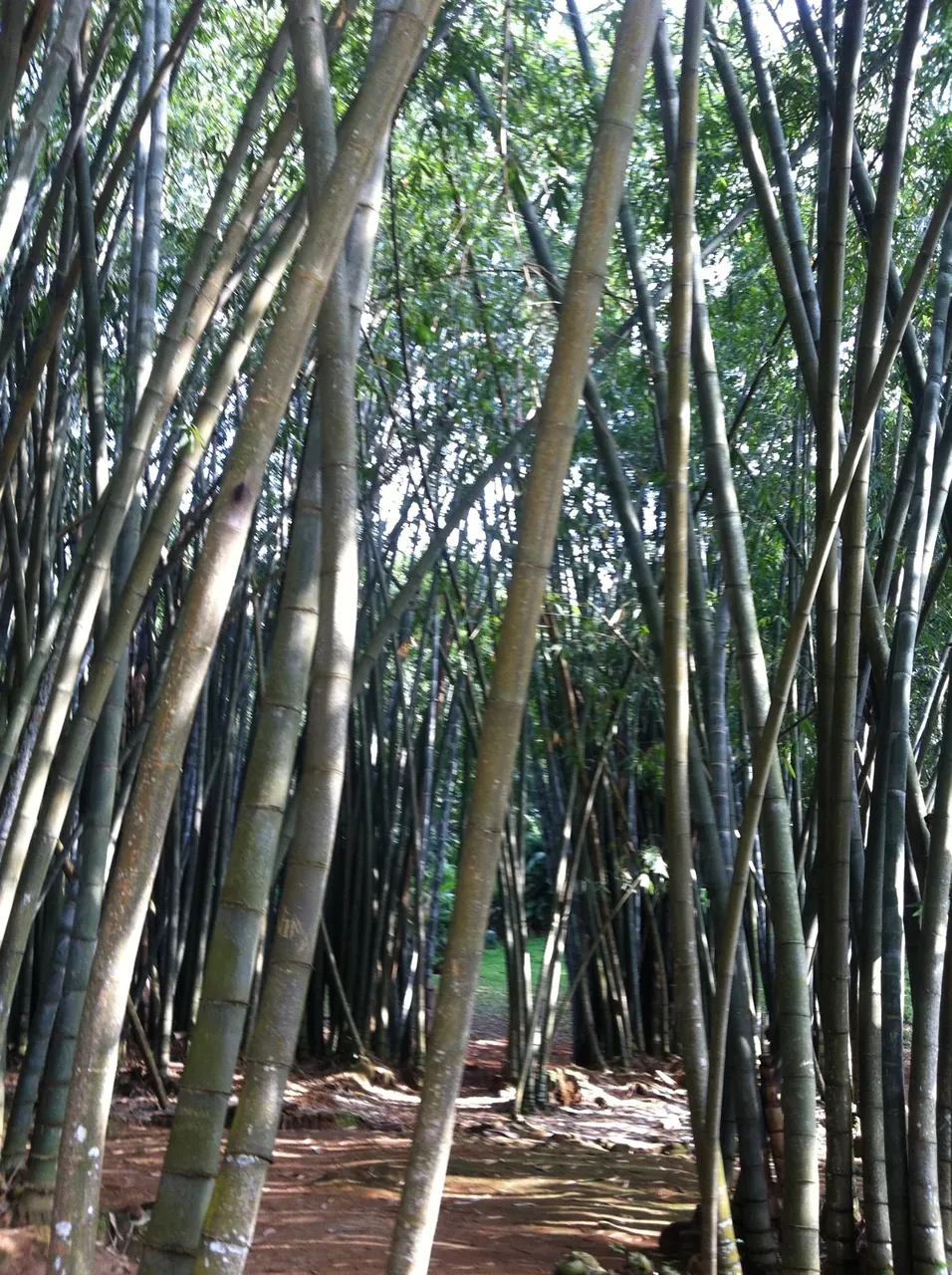
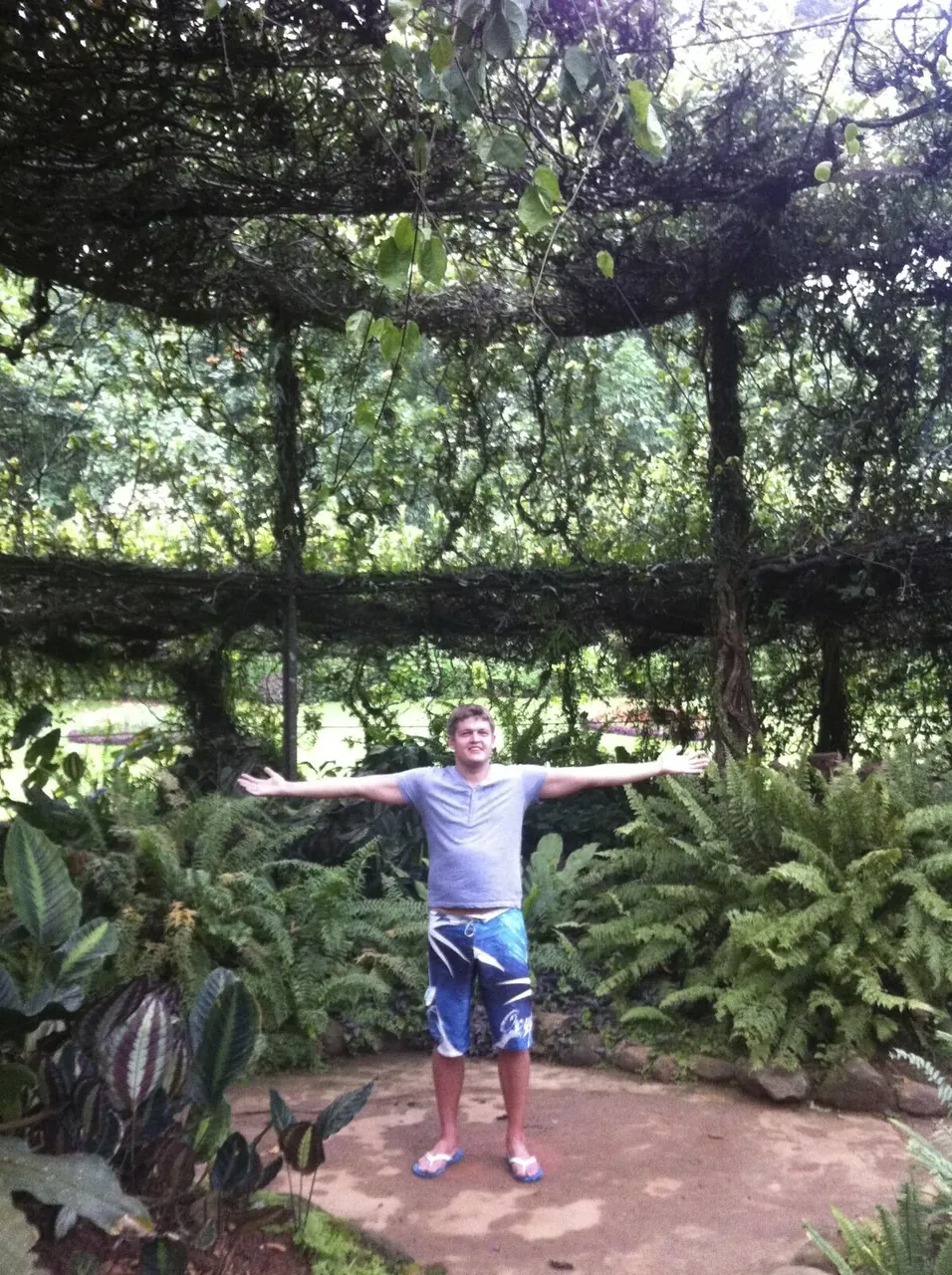
From above, the island looks entirely green. Up close, that greenery comes in very different scales: on November 14, we stand among huge stands of bamboo in the botanical garden, the stems stretching upwards. The tea-covered slopes are interesting for another reason: this is where something you normally only see in a packet back home actually grows.
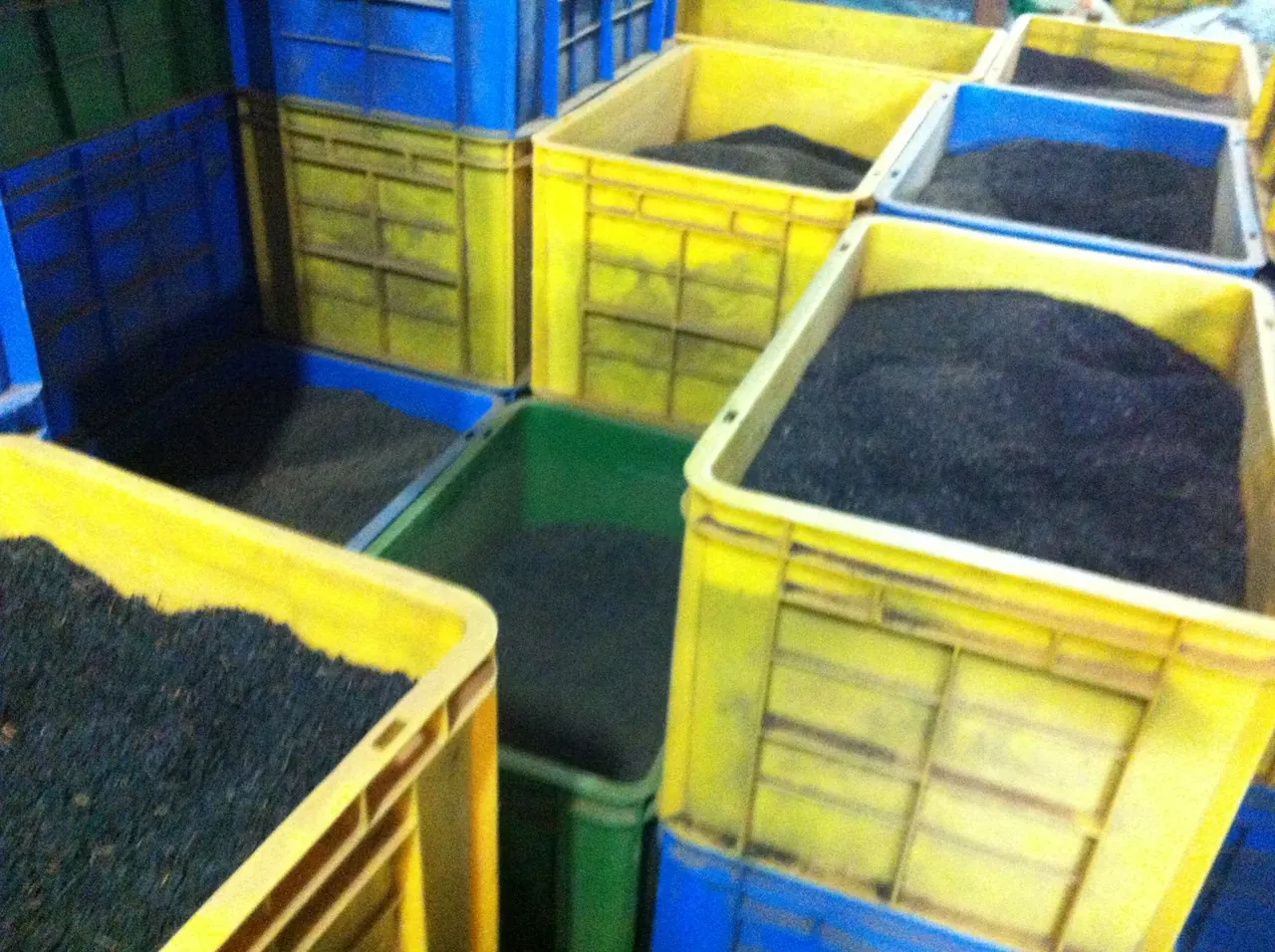
Ceylon tea seems to be familiar to everyone back home. But this is the first time I have seen it growing. At the factory, we watch it being sorted; on the plantations, we see the plants themselves and the green slopes. It is interesting to follow its journey towards that familiar form.
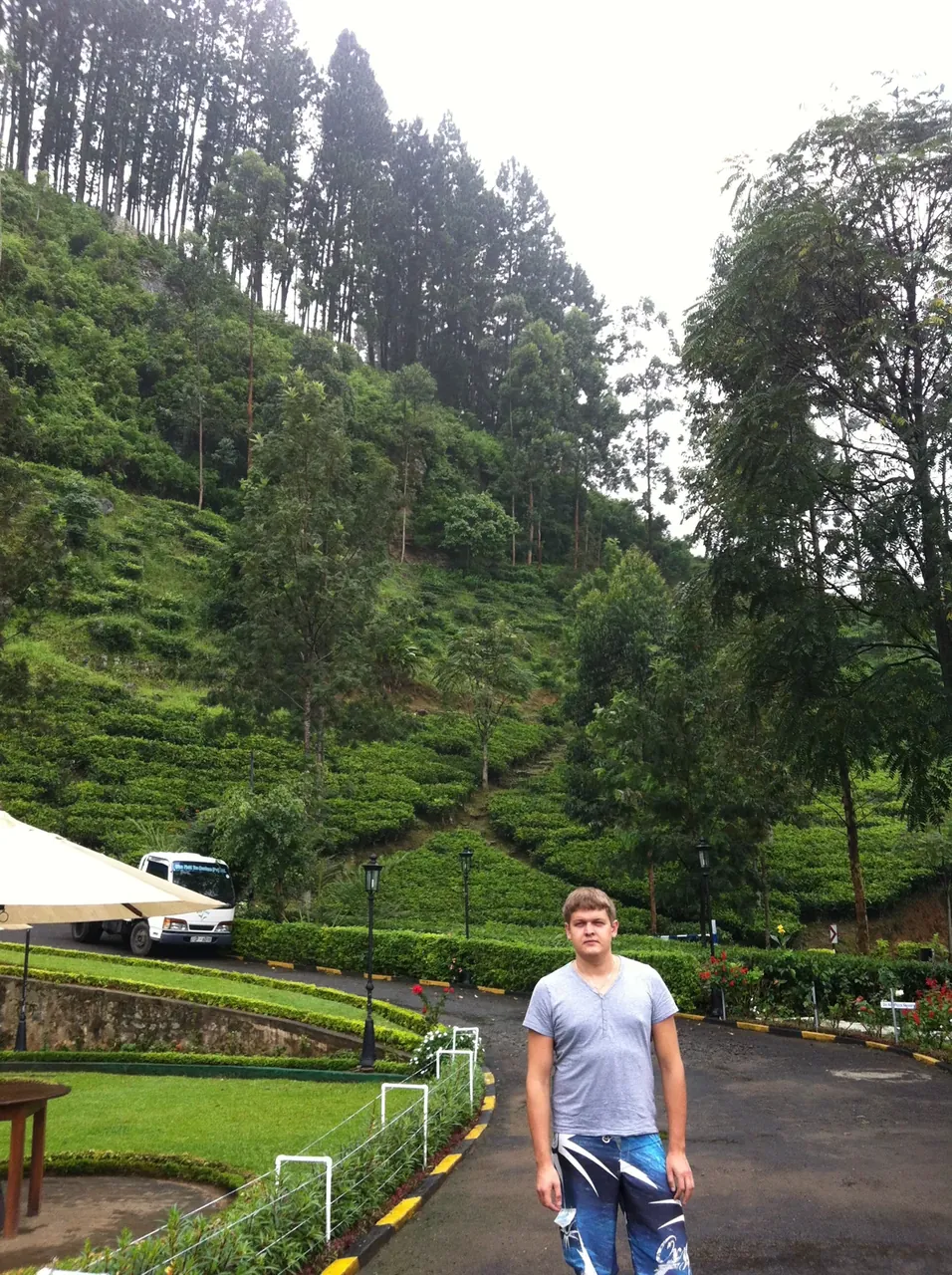
On November 15, we are surrounded by plantations and thick fog. Nearby, the plants are easy to see; farther away, the slope gradually disappears into white. I stand on a path amid all this greenery, and we take photos. Beautiful. Tea, it turns out, has a rather nice place to live.
Yala and the Ocean: Feeling Like an Explorer
In Yala, the greenery makes you look more closely: someone might be hiding in it. On November 16, we go on my very first safari.
A jeep, wildlife all around, and you are peering out, trying to spot something interesting. Something moves in the bushes — you are already looking that way. An animal up ahead — you take a closer look. A lovely feeling of being an explorer wakes up: you want to find, to notice, to discover something for yourself.
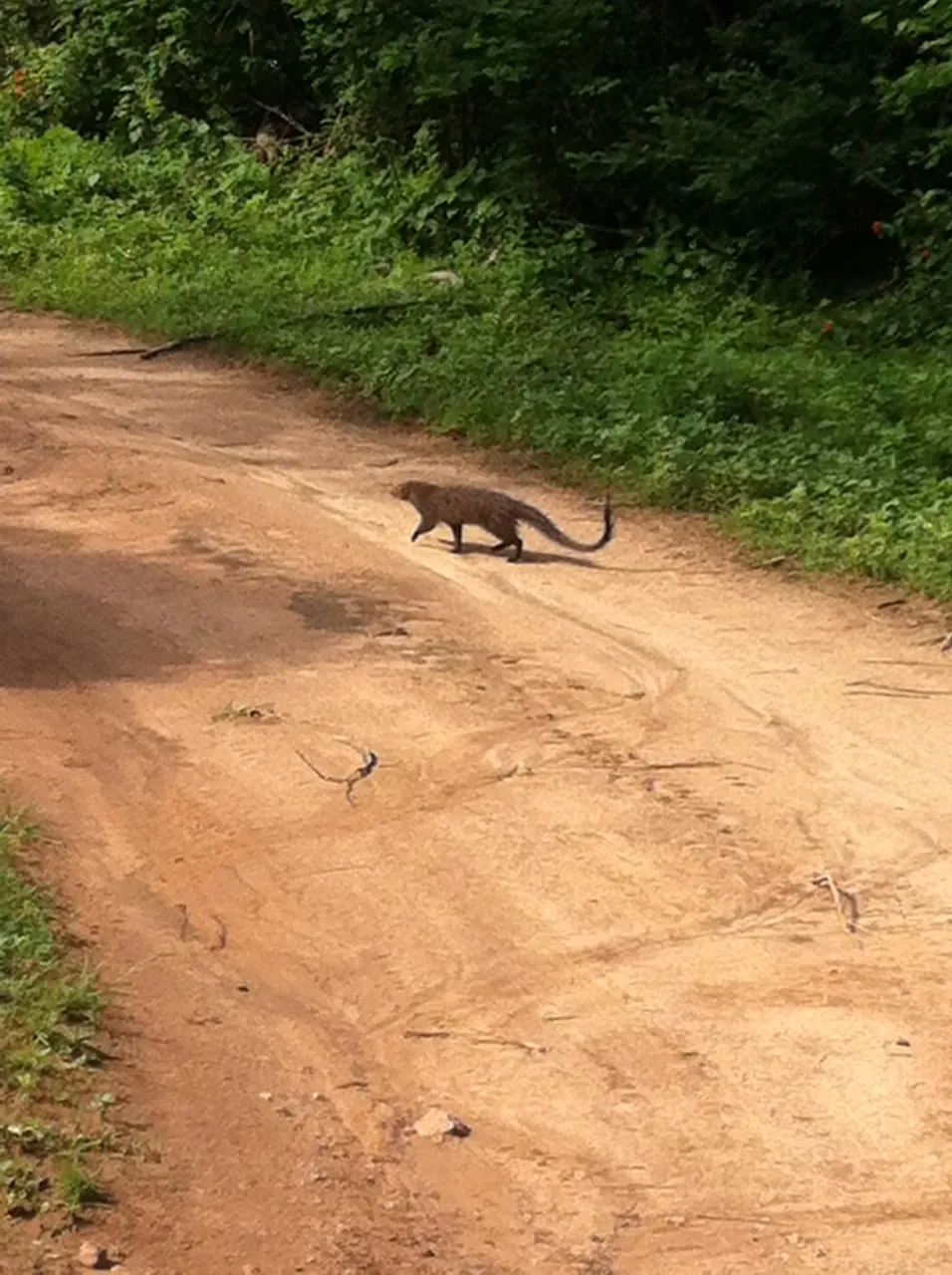
We see birds, small animals, elephants. Some immediately remind me of Rikki-Tikki-Tavi. I watch them from the jeep: every encounter adds something to the experience.
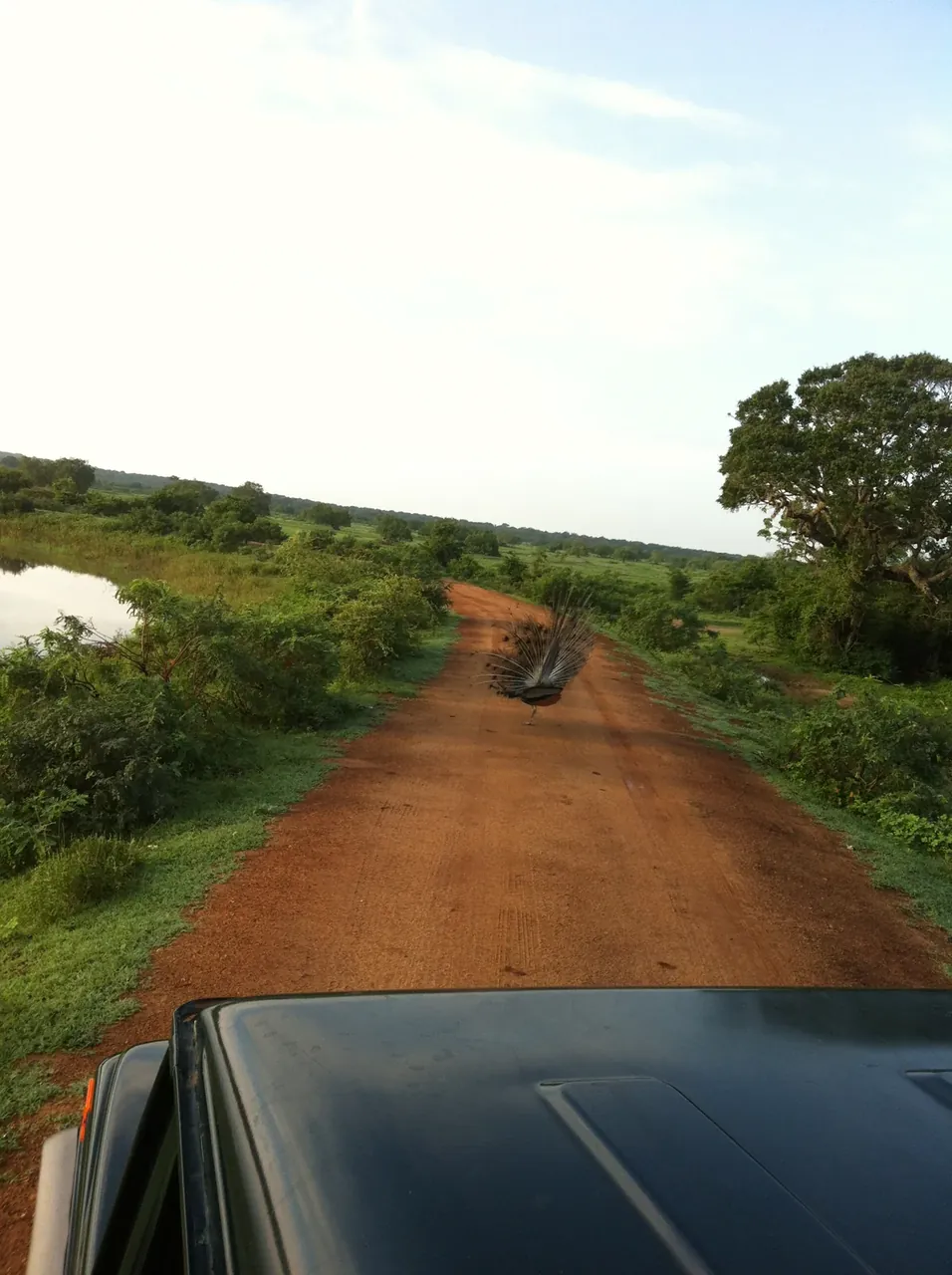
The strongest impression is the valley with the elephants.
Greenery, old trees, water. Look one way — an elephant. The other way — another elephant. They wander around, come for a drink, and there are other animals nearby too. We stop and watch for about twenty minutes.
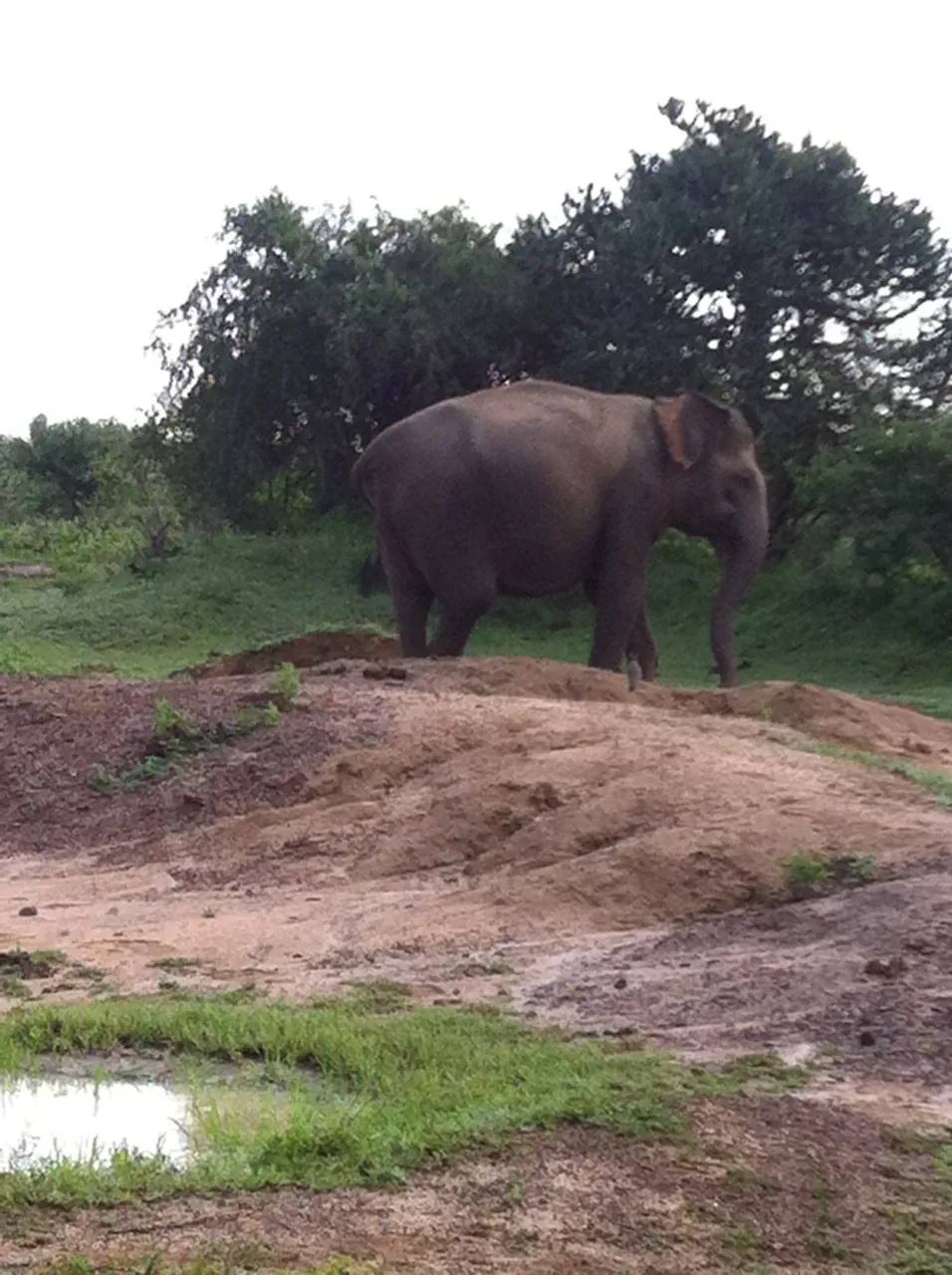
And I have absolutely no desire to hurry on.
There is water nearby, trees on the opposite bank, flowering branches by the water. But the main thing here is not even a single beautiful scene. This whole valley is alive in front of you: elephants moving, someone approaching the water, you noticing something new. Standing in the jeep, you see it all so close.
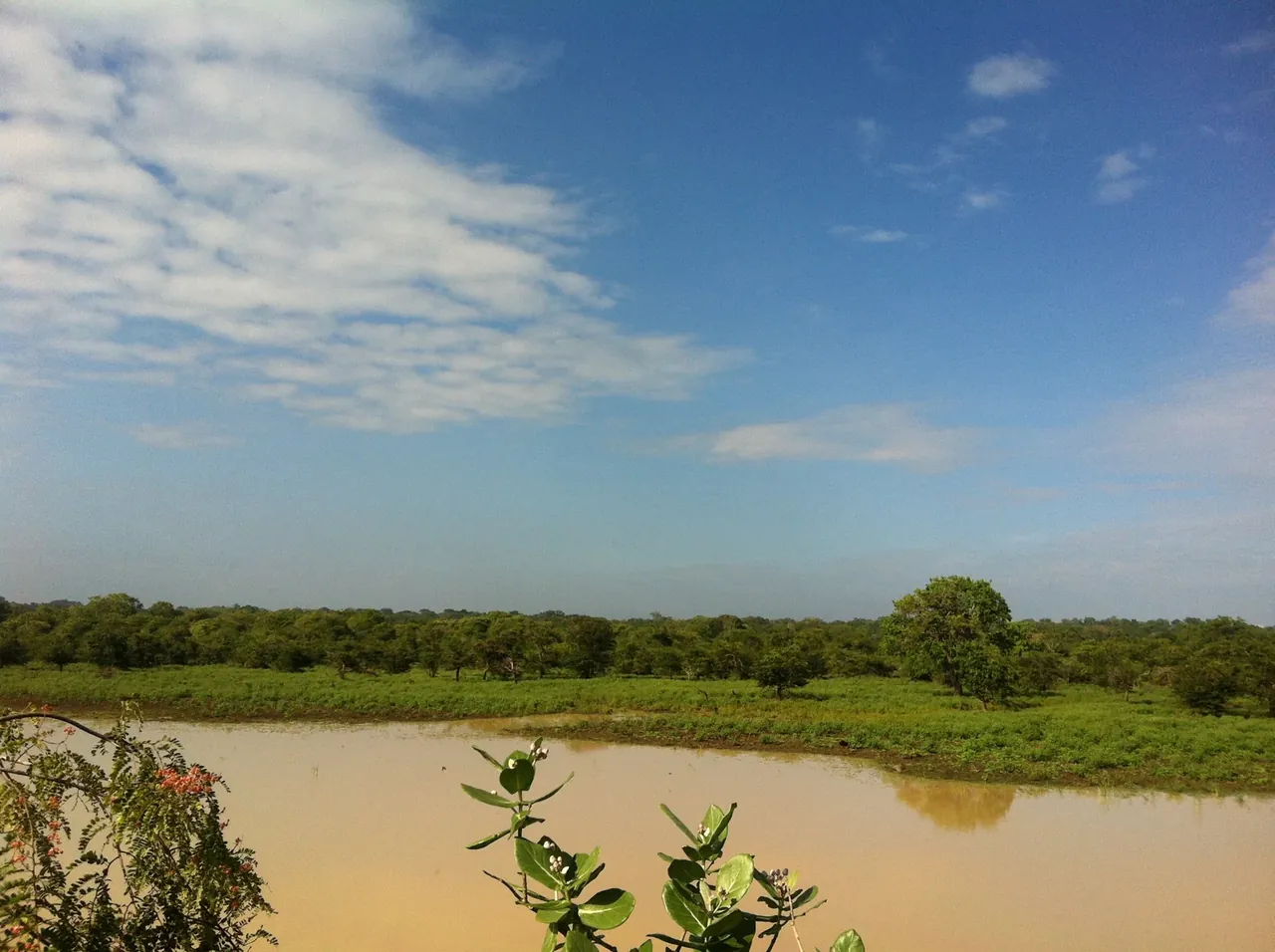
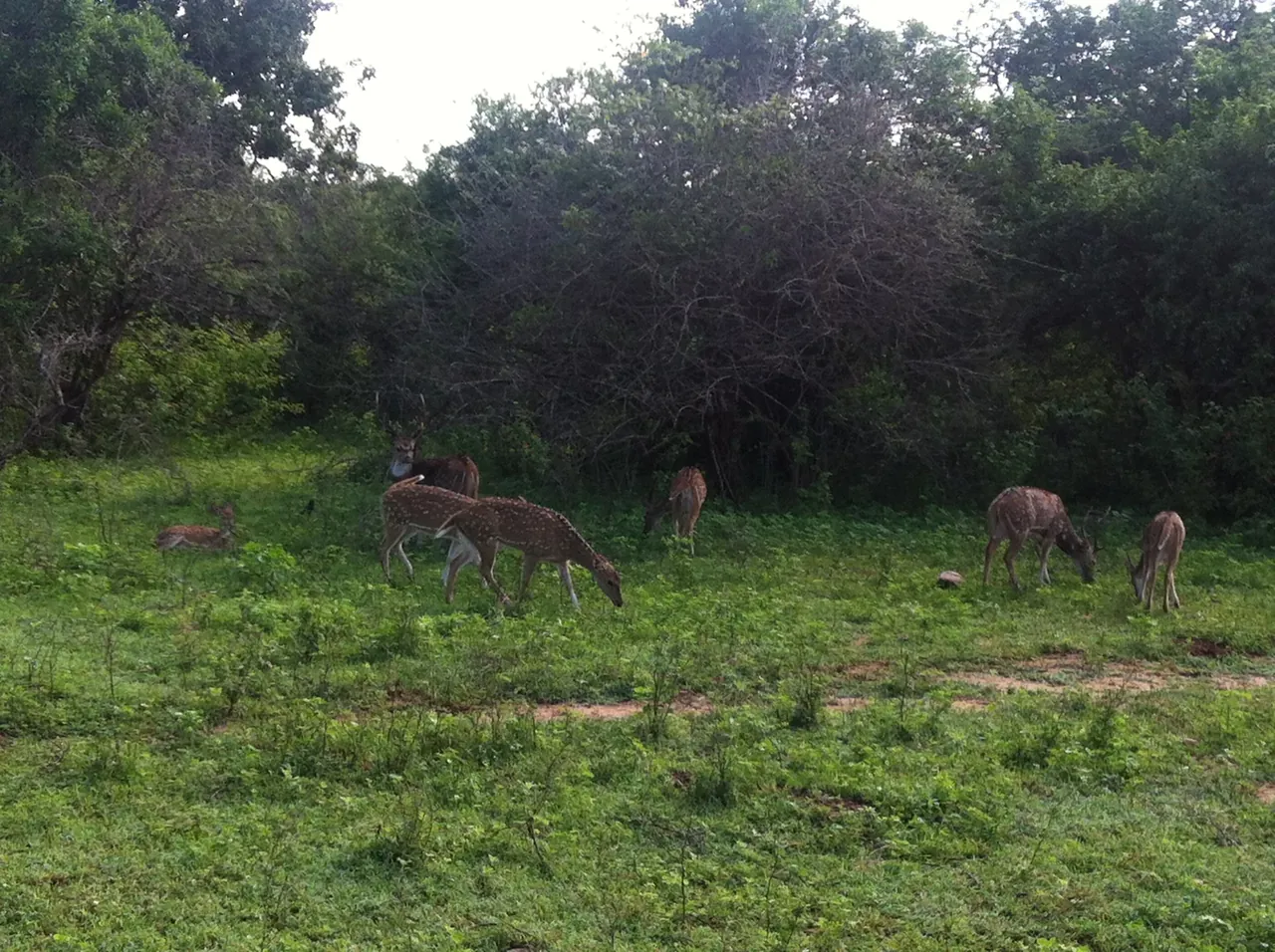
An elephant in the jungle, an elephant in the river, an elephant in a museum display case — there have already been plenty on this trip. But this is a completely different kind of joy: finding them in the wild, watching them go about their own business.
Yala becomes one of the best experiences of Sri Lanka.
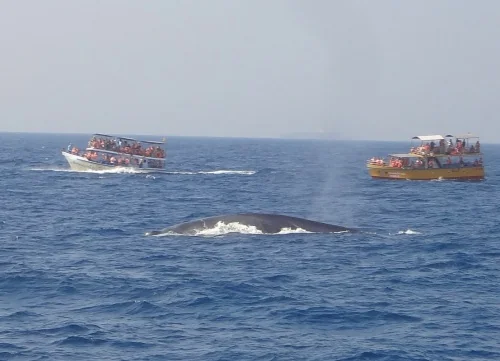
Our ocean adventure has that same excitement. We set off from Matara on a boat to look for a whale. Only here, instead of bushes, there is open water, and it is the horizon you have to scan.
We search for a long time. Then, somewhere on the horizon, we spot a spout — that breath that tells you there is a whale out there. Not close enough to get a good look: for now, we are getting acquainted from a very long distance.
What stays with me most is the adventure itself: the journey, the search, the feeling that somewhere out there you can find such an enormous living creature. And there it really is. Far away, but that does not make it any less of a whale.
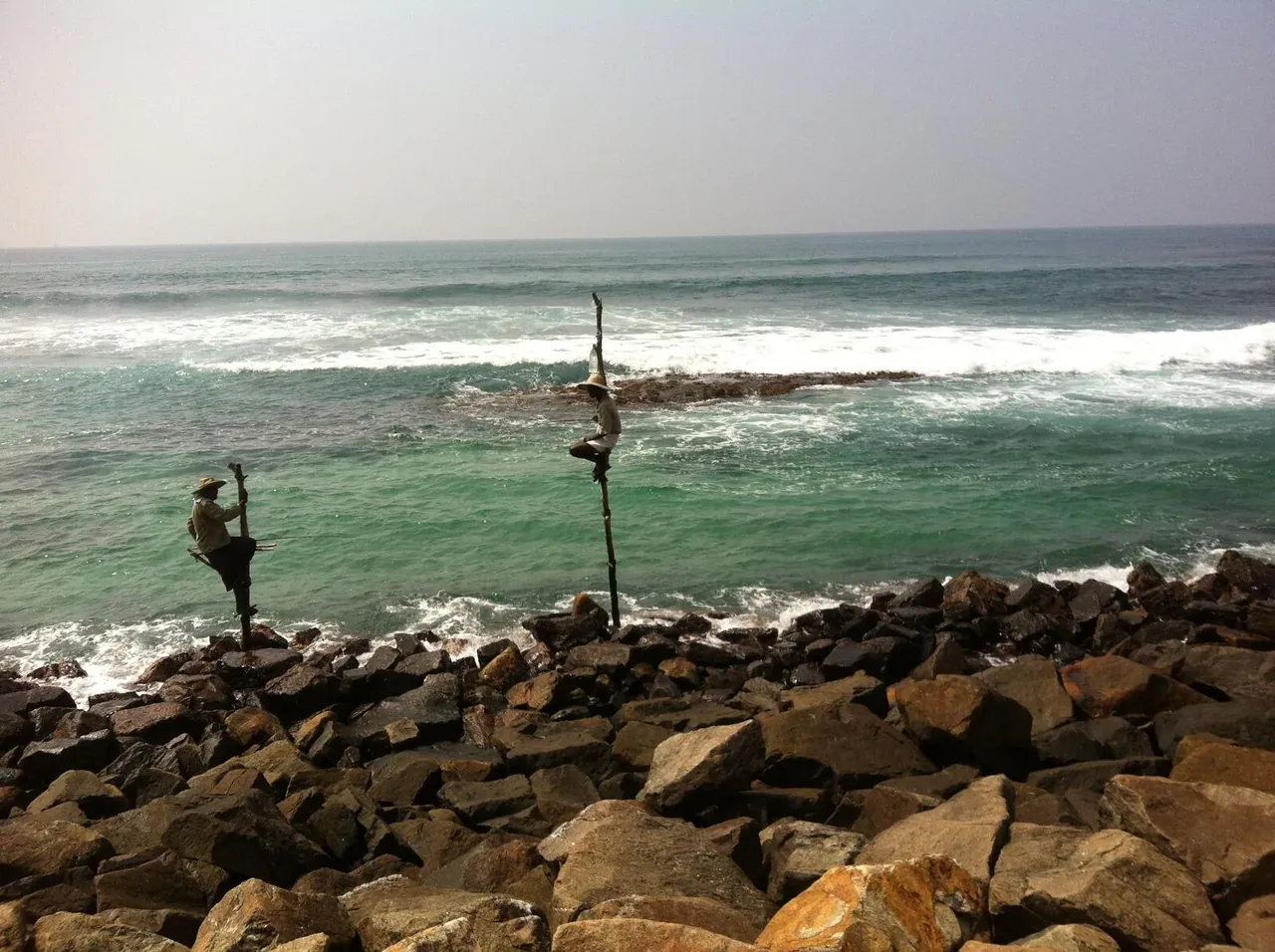
We also head south for a completely different local sight — fishermen sitting on poles above the water. We make a special trip to see them: they are quite an attraction here. We look, take photos, and they catch fish. At least, to me, it looks as if they really are catching something.
Bentota: You Can Just Keep Walking
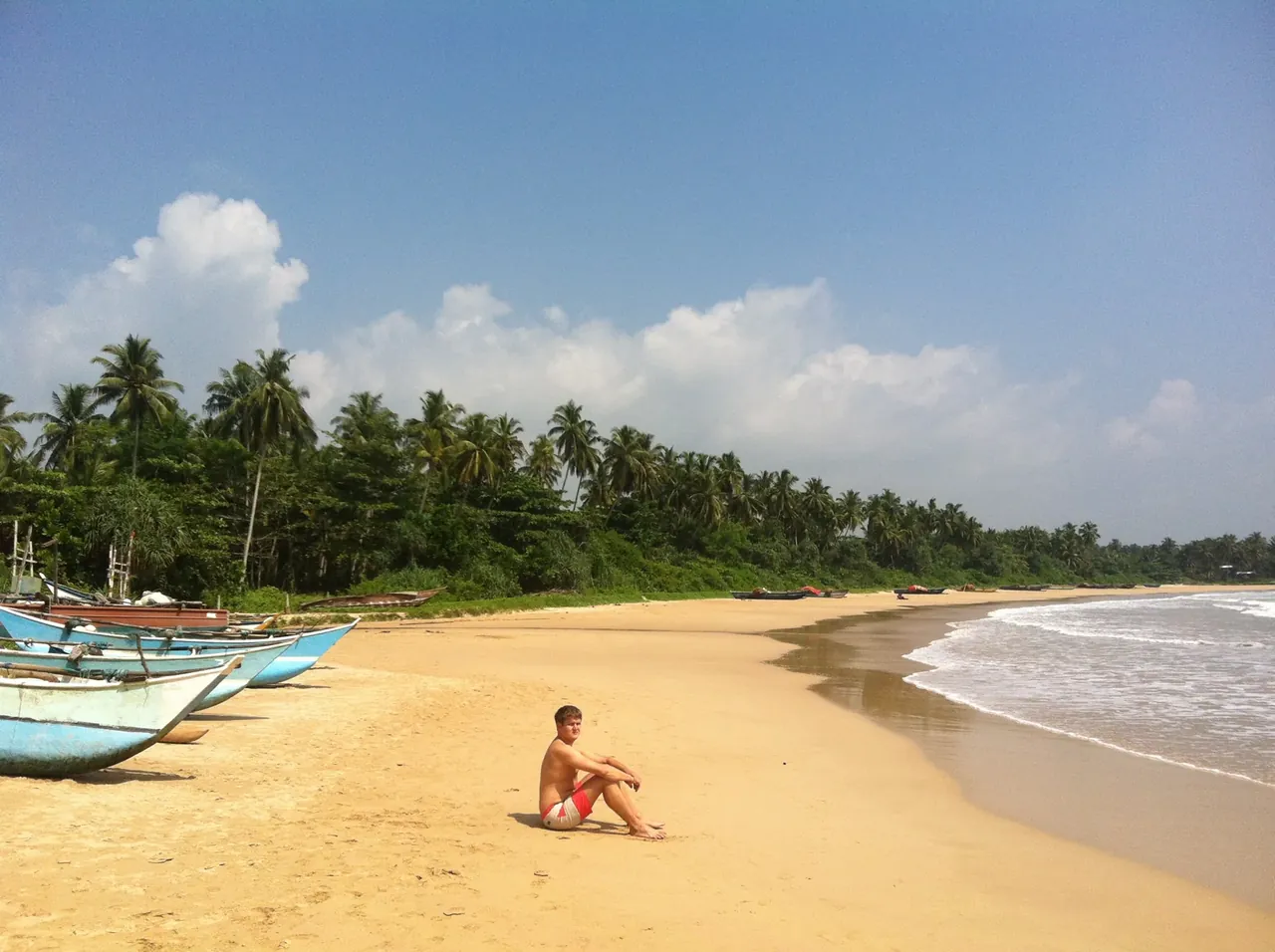
The coast offers a different rhythm too. You do not have to keep scanning for a whale or looking for a new experience. We spend a few days in Bentota, and here an ordinary walk is quite enough for me. To me, this is one of the most beautiful beaches imaginable.
You walk along the line where the waves meet the shore. Ankle-deep water comes in, then retreats. Clean yellow sand under your feet. Look ahead — beach. Look back — more beach. There is so much of it in both directions that it feels as if you could walk forever.
No special programme needed. Here is the water, here is the sand, here I am walking. I am perfectly happy with that.
Fishermen and boats on the shore; along the coast, palm trees, a wide stretch of sand, people by the surf. You look, take photos and walk along that line where the water meets the beach again.
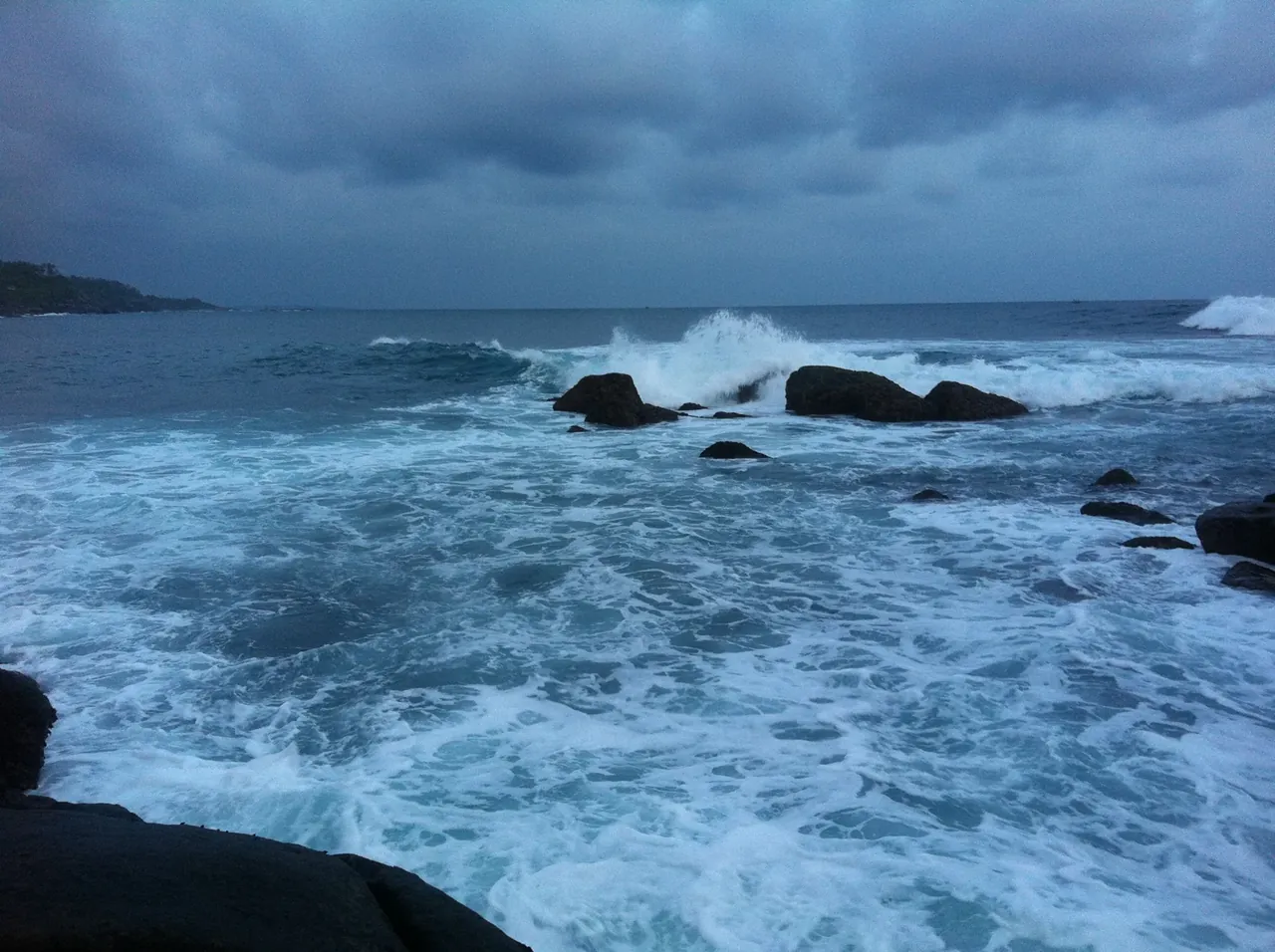
On November 24, there are dark rocks and surf in front of me. A wave breaks, the water turns white with foam, and the next one is already coming in behind it. No boats or people in this picture. Just the ocean, with nothing that needs adding.
Over this trip, the ocean has changed for me. It was a view outside the window, a place to swim, a space where we searched for a whale. And my PADI Open Water Diver certification bears the date November 14. Behind that date lies more than theory on the beach.
There were plenty of practical sessions. First, the pool: swimming, scuba diving, getting to grips with the equipment. That is where I discovered that admiring diving from the shore is much easier than calmly doing all the exercises underwater.
What I remember most is passing over the thing you breathe through — the regulator. We also took off our masks and learned to clear the water out of them. In words, ordinary items on the syllabus. Underwater, for some reason, they make a much stronger impression.
Then came the open-water tests. Swim, do the exercises, show what you have learned. I passed everything and got my diving licence. Such a great feeling: the usual directions of travel had gained another dimension.
I have always liked ‘The Cousteau Odyssey’. Watching him explore the depths, moving through that underwater world. And now I have the chance to glimpse a little of it myself. Not just through a screen anymore.
In Yala, I loved looking out for animals and discovering something new; near Matara, searching for a whale. Now there is an underwater space for that kind of exploration too. I would take that course all over again. Especially with the same beach canteen.
But right now, I can just stand by the ocean, watch the waves and be in no hurry to go anywhere.
The keys from home have had a trip too, of course. Next time, they can stay at home. Better take the diving licence :)
NOVEMBER 2012 · TRAVEL NOTES
Sri Lanka, Step by Step
From green hills to the ocean.
The line connects dated episodes rather than reproducing the actual route. Intermediate stops may be missing. Points mark places or representative photos, not an exact track. Coastlines: Natural Earth, 1:50 million; maps are not for navigation.
- 01 · November 10–11Kandy and Pinnawala
Photos tie these days to the Pinnawala and Kandy area. The order of travel on November 10 has not been established.
- 02 · November 13Sigiriya
The rock and the climb. Date based on the photo archive.
- 03 · November 14Garden near Kandy
Dated photos from the garden confirm a return to the Kandy area.
- 04 · November 15Tea hills
The exact stop and route have not been established.
- 05 · November 16Yala
Safari day, based on dated photographs.
- 06 · November 18–24South coast
Several days by the ocean. This is a region, not one exact stop.
Outside the Dated Sequence
- November 9 · trainThere are photos of the train ride, but the stations and route are unknown. We therefore do not place the train on the line.
- Colombo → HikkaduwaThe start of the trip is based on the author’s memories; no exact dates are added here.
- Bentota · MataraPlaces mentioned by the author; exact dates and their position in the sequence have not yet been established.
Arrival and the End of the Trip
Arrival in Colombo is based on the author’s memory; the article mentions a connection in Dubai. The plane symbol indicates arrival, not an airport or an exact flight route. At the end of the trip, we return to Colombo and fly out of Sri Lanka — confirmed by the author. The flight date, destination and any connections have not been established here. The arrow indicates departure from Colombo, not an exact flight route or airport location.