Tijuana: An Evening Across the Border
January 25, 2014
After a walk around San Diego, I had the evening free. I could get some work done. I could go out to eat. I could just stay in. Or what if I went to Mexico right now? I already had a U.S. visa and hadn’t applied for a separate Mexican one for this trip. It took about thirty seconds to figure out I wasn’t staying in. Another half hour or so and there I was, next to a sign that said To Mexico.
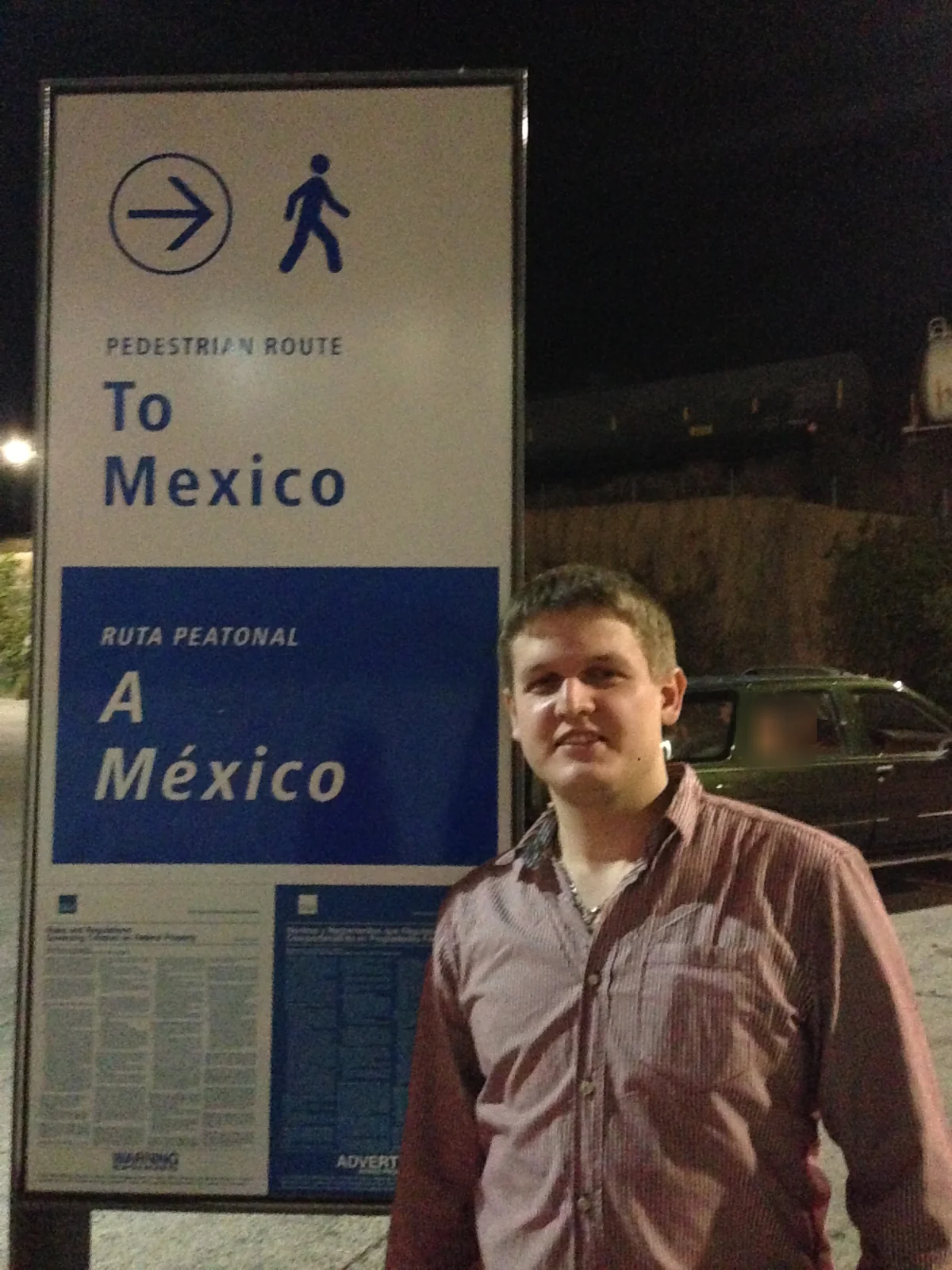
This is why I love these slightly ridiculous, unplanned adventures. I hadn’t woken up that morning intending to go to Mexico. I hadn’t made a list of things to do there. One more option for the evening had come up out of nowhere, and I liked it better than all the sensible ones.
The Way Home. Just Not Mine.
The pedestrian passage was packed, and we moved slowly. As I went along, I imagined what an ordinary day might look like for someone here. You wake up in Tijuana, get to the border, put in a day’s work in San Diego. Now you’re crossing back because dinner and your own bed are waiting at home. In the morning, you do it all again. I got to choose where to go for fun that day. For someone else, the same line was just part of the commute home.
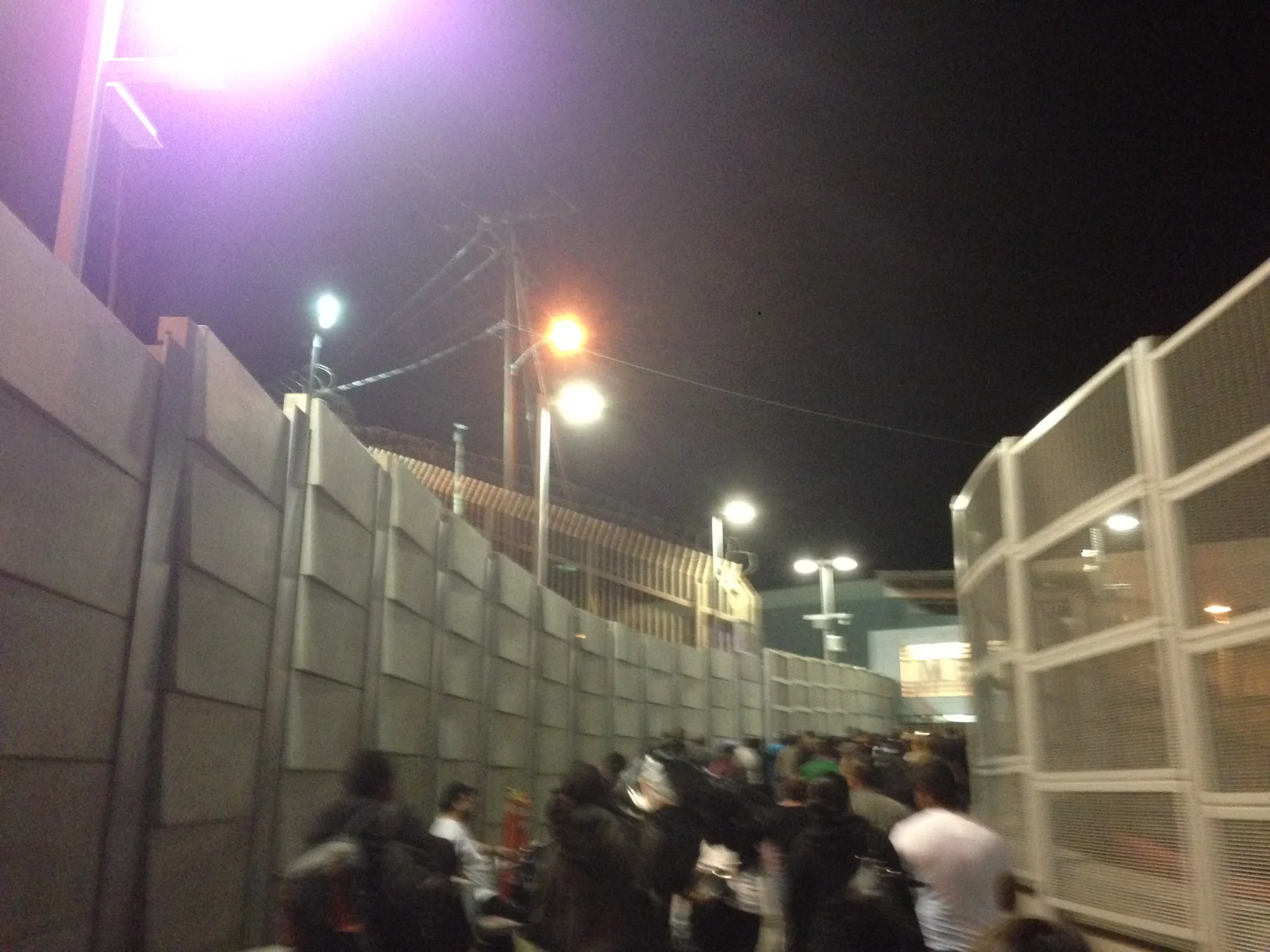
This crossing has mattered to both cities for a long time. Tijuana dates its founding to 1889, when a land agreement formalized plans for a settlement called Zaragoza on a local ranch. Now you can just walk from one city to the other. For people who work on the other side, it’s a way to make a living without moving away from home. Being next door to California also mattered to people who made their money trafficking drugs. There was a huge American market on the other side.
In the nineties, the Arellano Félix family built one of Mexico’s most powerful drug trafficking organizations here. It was known as the Tijuana cartel. Controlling this stretch of the border meant big money, and different groups fought over it. U.S. prosecutors’ records tell a story of kidnappings, killings, and bribery. Benjamín Arellano Félix ran the organization, and his brother Eduardo was in charge of its finances. Last August, a federal court in San Diego sentenced Eduardo to fifteen years for laundering drug proceeds. The same San Diego where earlier today I was deciding whether to work or go out to eat.
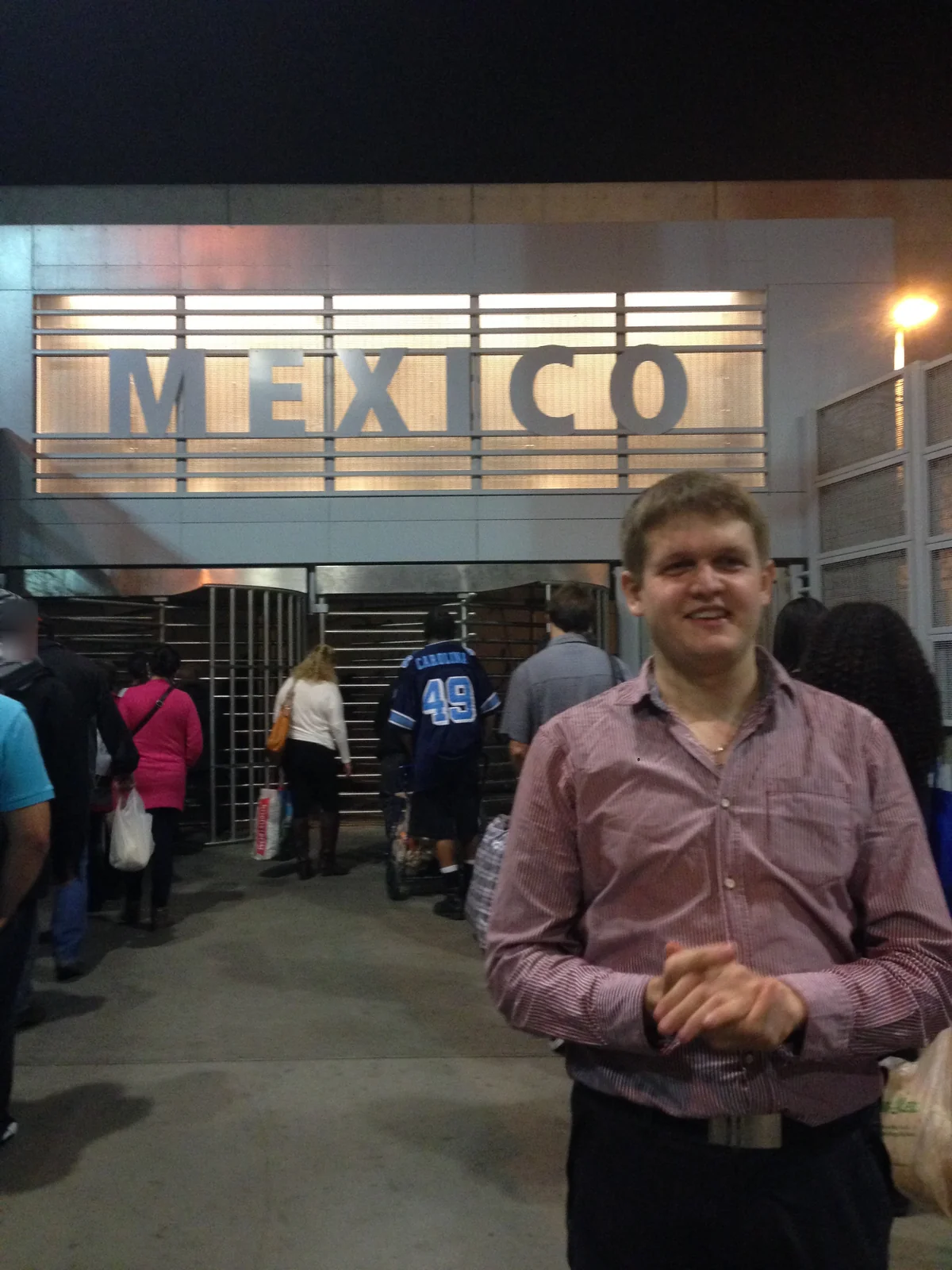
Standing at a border with that kind of history told me nothing about the people I was walking with. But I was already carrying Tijuana’s reputation in my head as I went in. For me, that big MEXICO sign over the passage marked the moment my evening in San Diego ended and a different one began. I didn’t know what to expect from it yet.
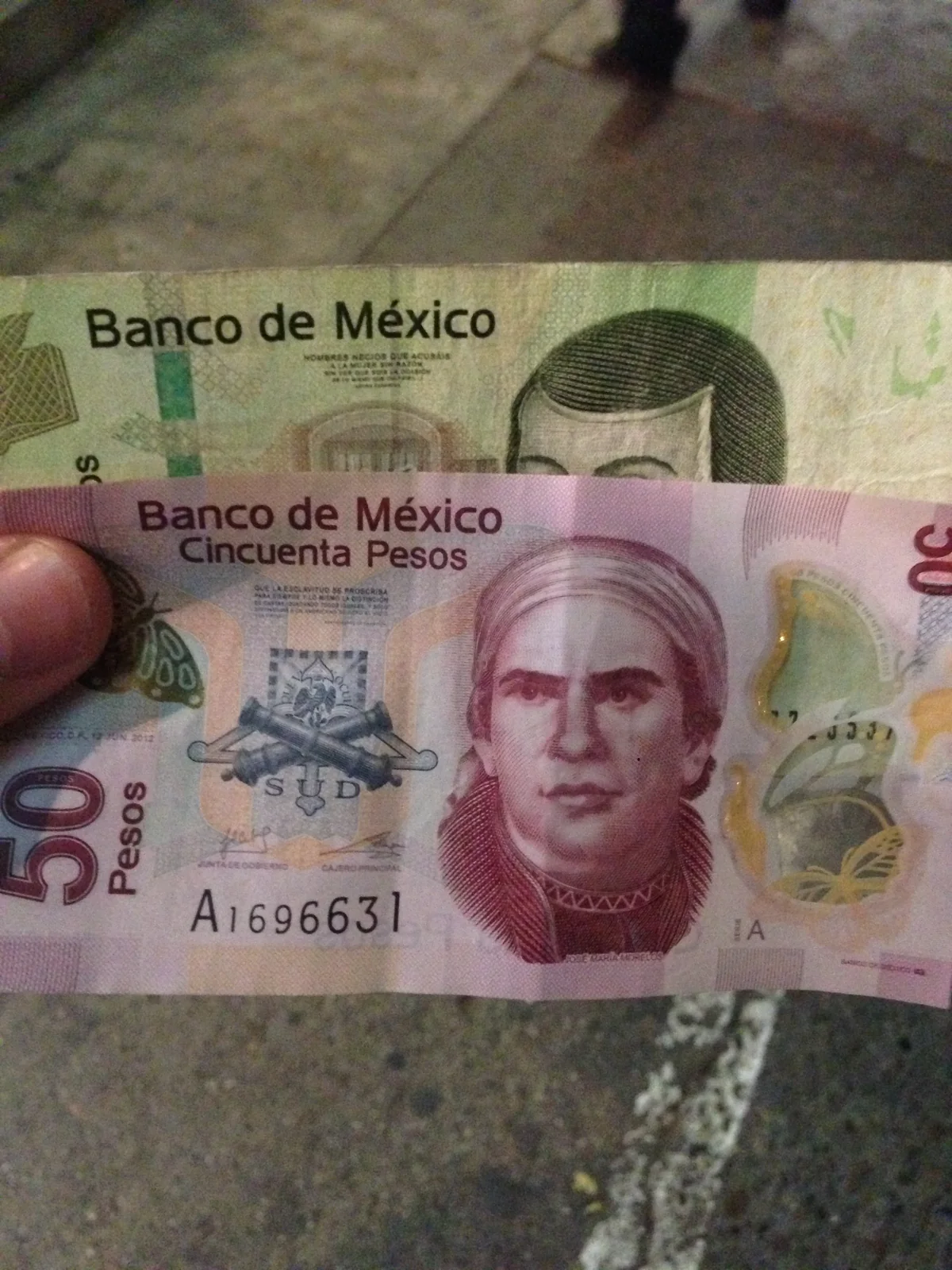
I changed my dollars for pesos after I crossed. For a while, the story of the border came down to a much nicer question: what could I get to eat with this money?
I Came for Tacos. I Didn’t Order Cilantro.
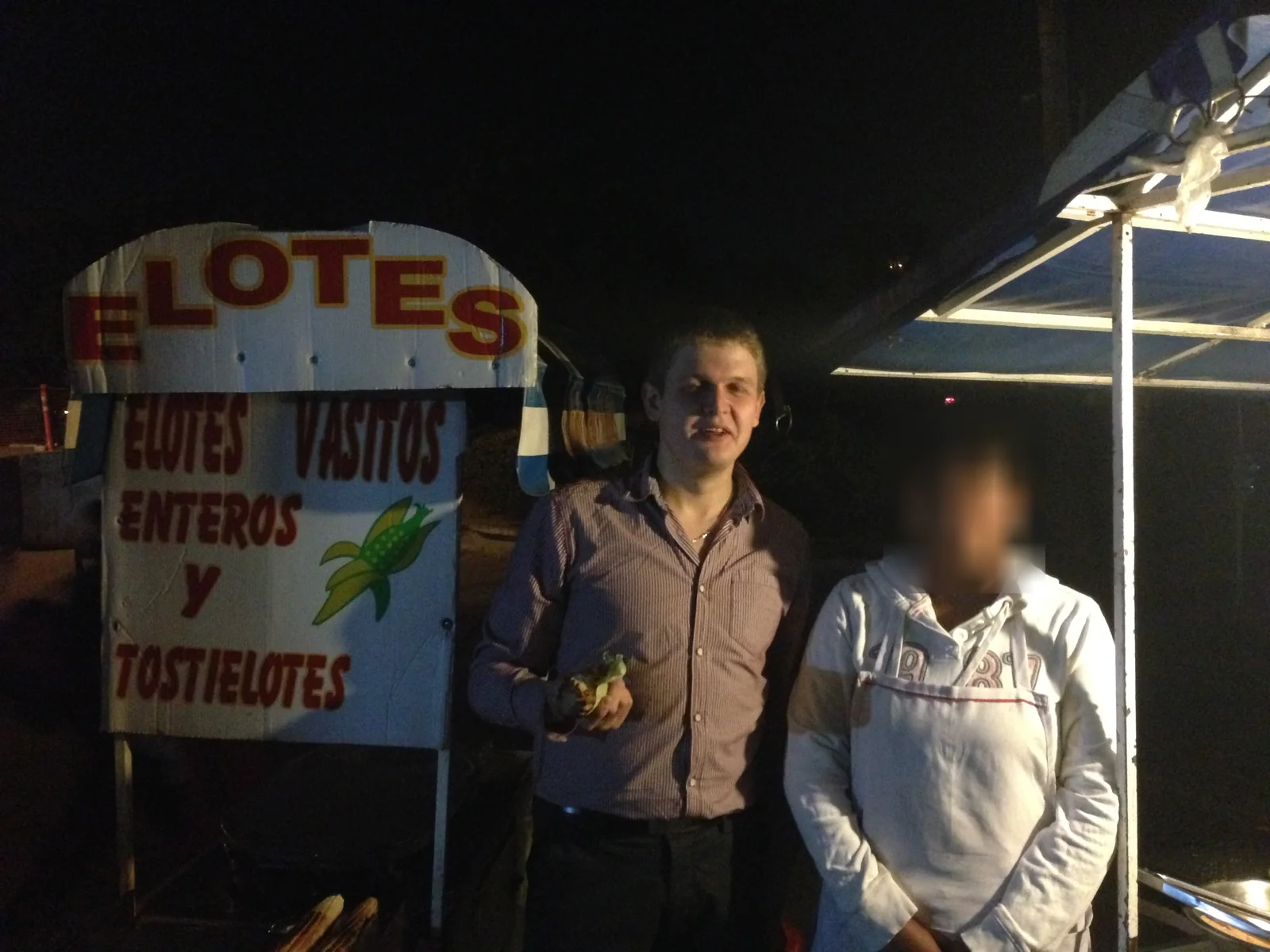
On the way, I passed a stand with a sign that said ELOTES. Corn. But go to Mexico and not try tacos? That’s like going to Ukraine and not trying borscht. Things like that were pretty much why I’d crossed the border in the first place.
I sit down in this little place, and there’s a bowl of whole radishes on the table. In Ukraine, you sit down and there’s salt and pepper. Here you grab a radish and crunch away while they make your food. No slices, no salad. A whole radish. Fresh, a little peppery, and actually pretty good with tacos. Clearly, nobody around me thought this was anything special. Meanwhile, I’d just walked into another country and there I was, marveling at a bowl of radishes.
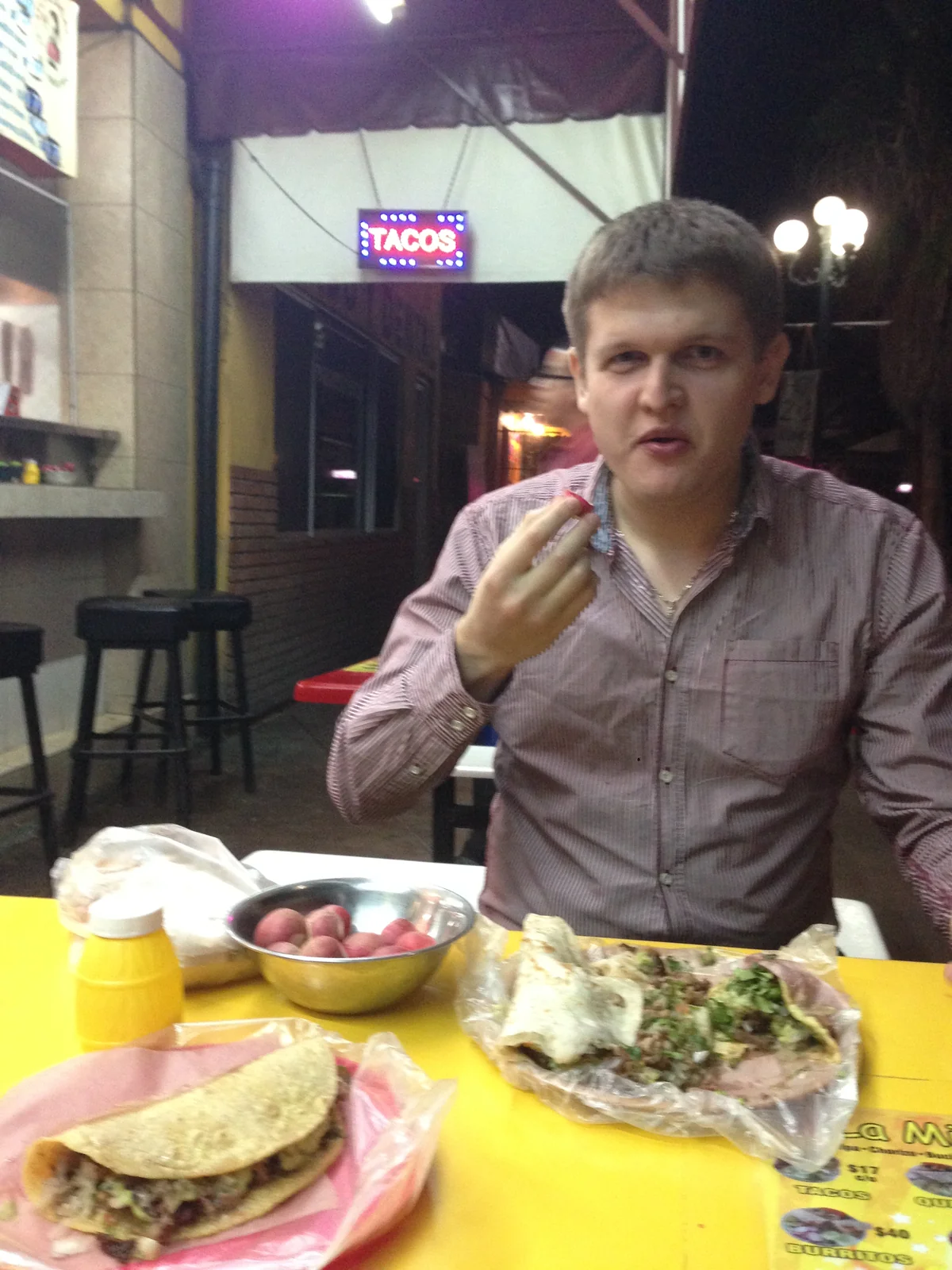
The woman who made my food was really warm and kept urging me to eat. You could tell she was happy to have tourists stop by. The taco was delicious, the kind of food you’d make at home. I had a few bites and left almost all of it. There was a lot of cilantro in there, and cilantro and I go way back.
As a kid, I’d climb three or four meters up a cherry tree. You hang on to a branch with one hand and eat cherry after cherry with the other. Once I bit into a bug along with the cherry. I didn’t swallow it, but by then the damage was done. Cherry plus bug: that’s what cilantro tastes like to me. All these years later, one bite still does it. A woman makes me a lovely Mexican taco in Tijuana, and there I am, right back up my cherry tree.
I felt good at that table. I sat there crunching on radishes, amazed that something so familiar could turn into a story I’d want to tell. I’d thought the strangest part of my evening would be the fact that I’d walked to Mexico.
A Sombrero So I Wouldn’t Stand Out
After tacos, I still felt like walking around, maybe stopping at a restaurant or a nightclub. But out on the street I didn’t feel as at ease as I had at the table. I saw men in cowboy hats, denim vests, and leather jackets. It looked to me like some had pistols under their clothes and were looking us over. I don’t know who they were or whether I saw what I thought I saw. What I do remember is what I did and didn’t do: on some streets, just taking out my phone made me nervous.
Suddenly a nightclub didn’t sound like such a great idea. What are two gringos supposed to do in there? Never mind that we weren’t even gringos.
I did go into a souvenir shop, though. I tried on a blue-and-gold mask like the ones in lucha libre, Mexican wrestling. You can’t see my face under it. You can see the mask from a mile away.
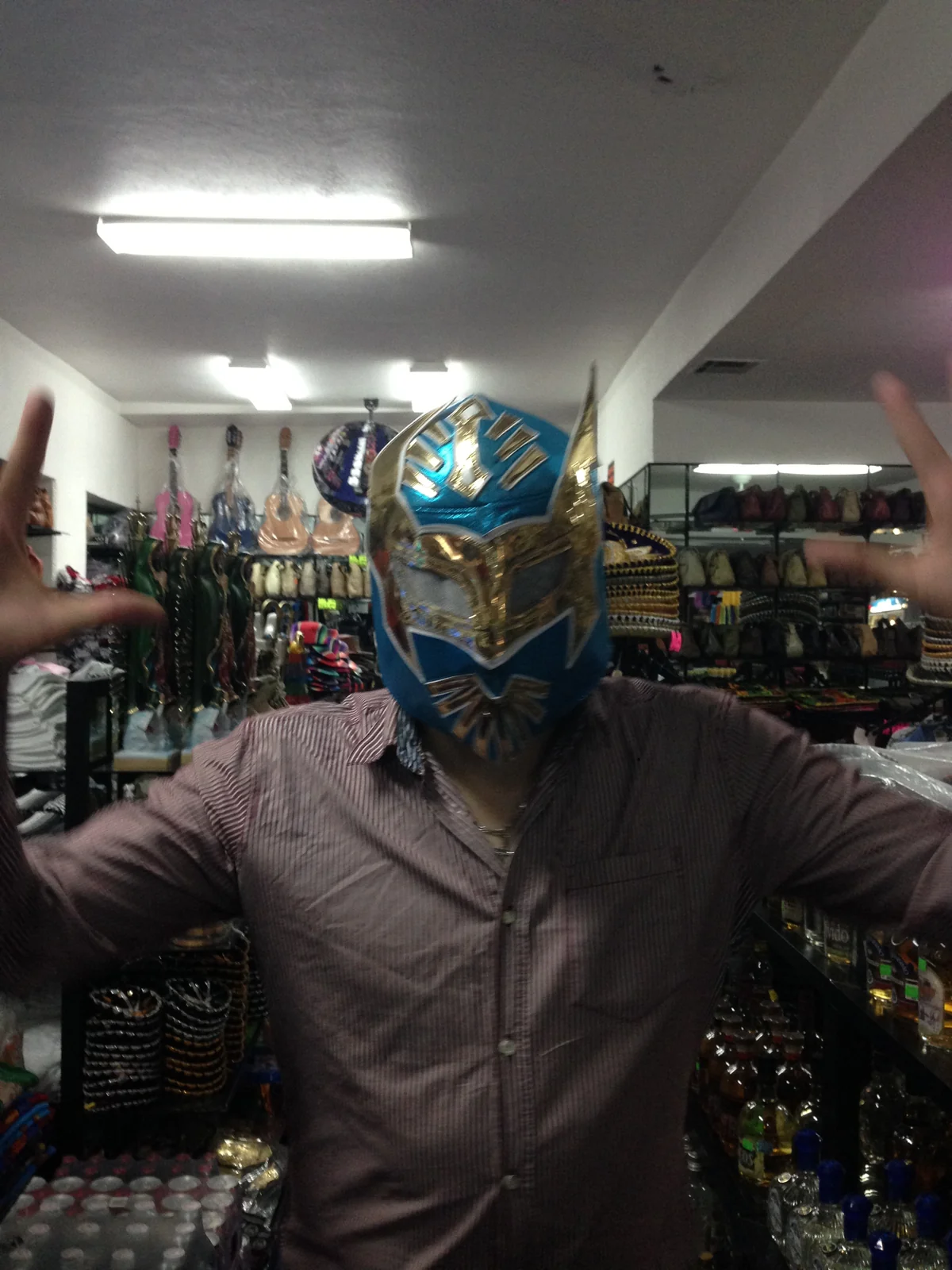
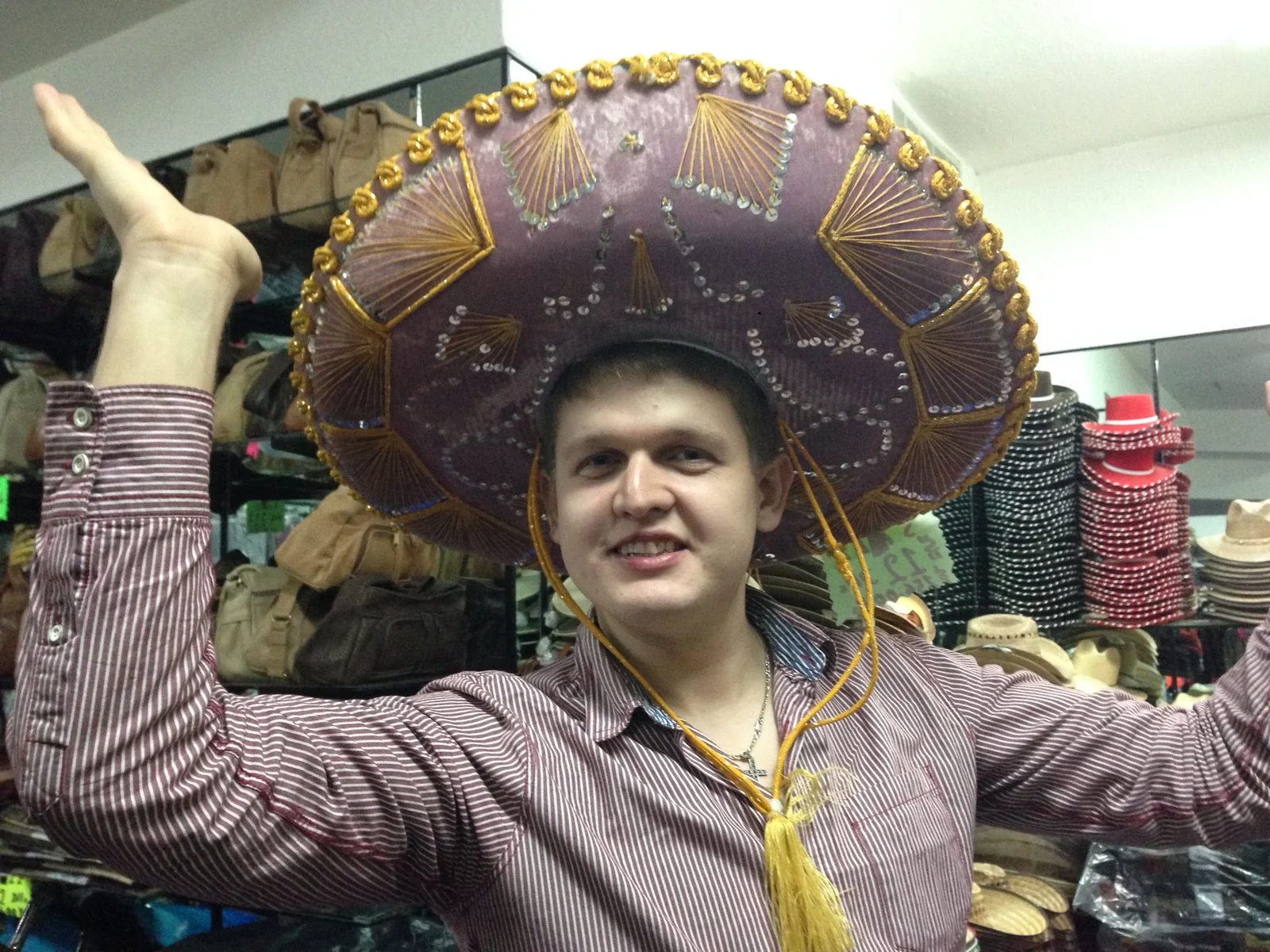
And if you’re going to pass for a local without drawing attention, obviously you put on a purple-and-gold sombrero. That’s how good I am at blending in.
I kept passing pharmacies. At the Farmacia DrugStore, the names of medications were right there in the window, legible from the sidewalk. I’d heard all kinds of stories about what people came down from San Diego to buy. It gave me the impression you might be able to get things they weren’t legally allowed to sell. I didn’t check. All the sign proved was that there were a lot of big letters on it, and I was already looking at them differently from how I would at home.
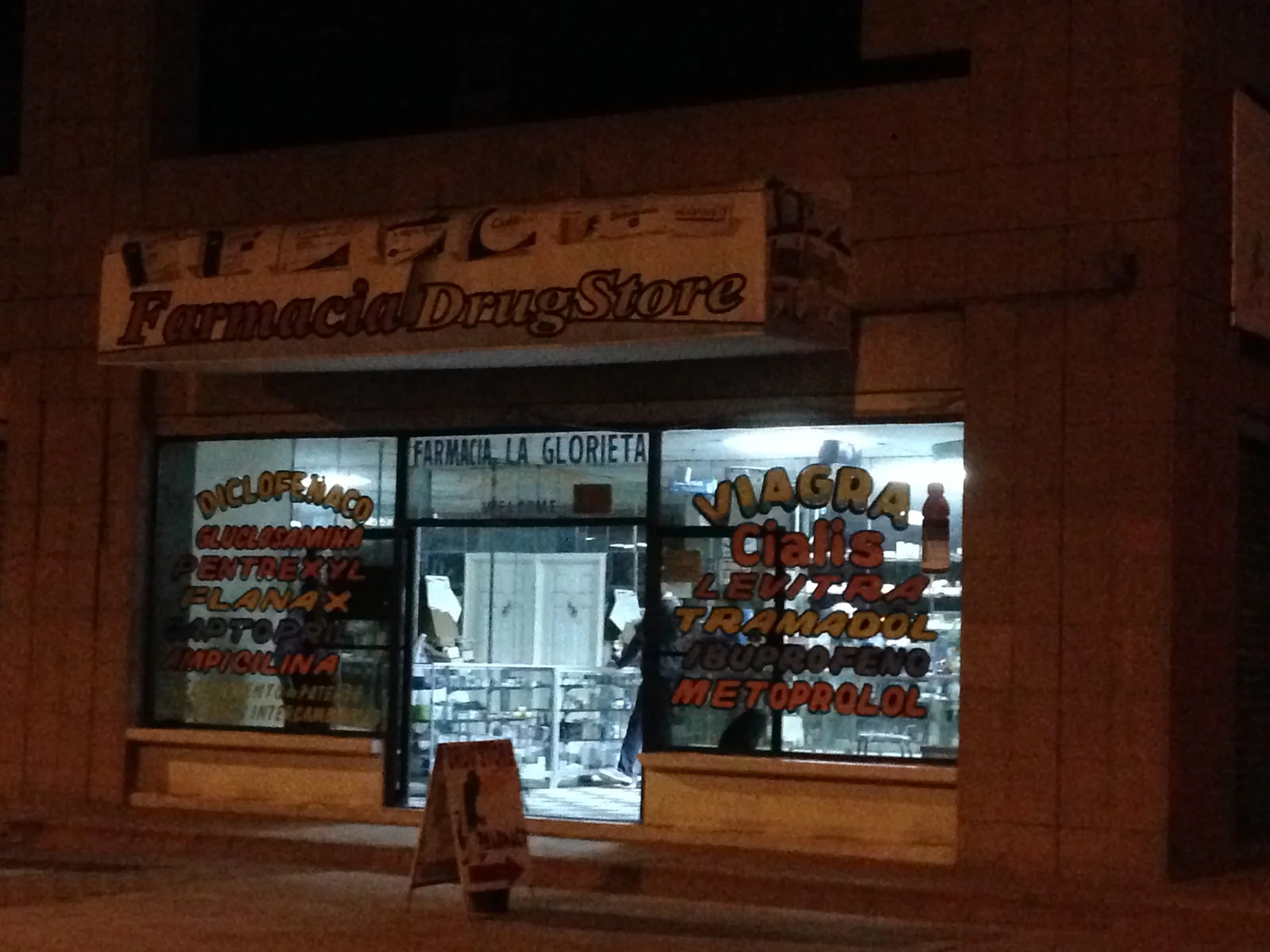
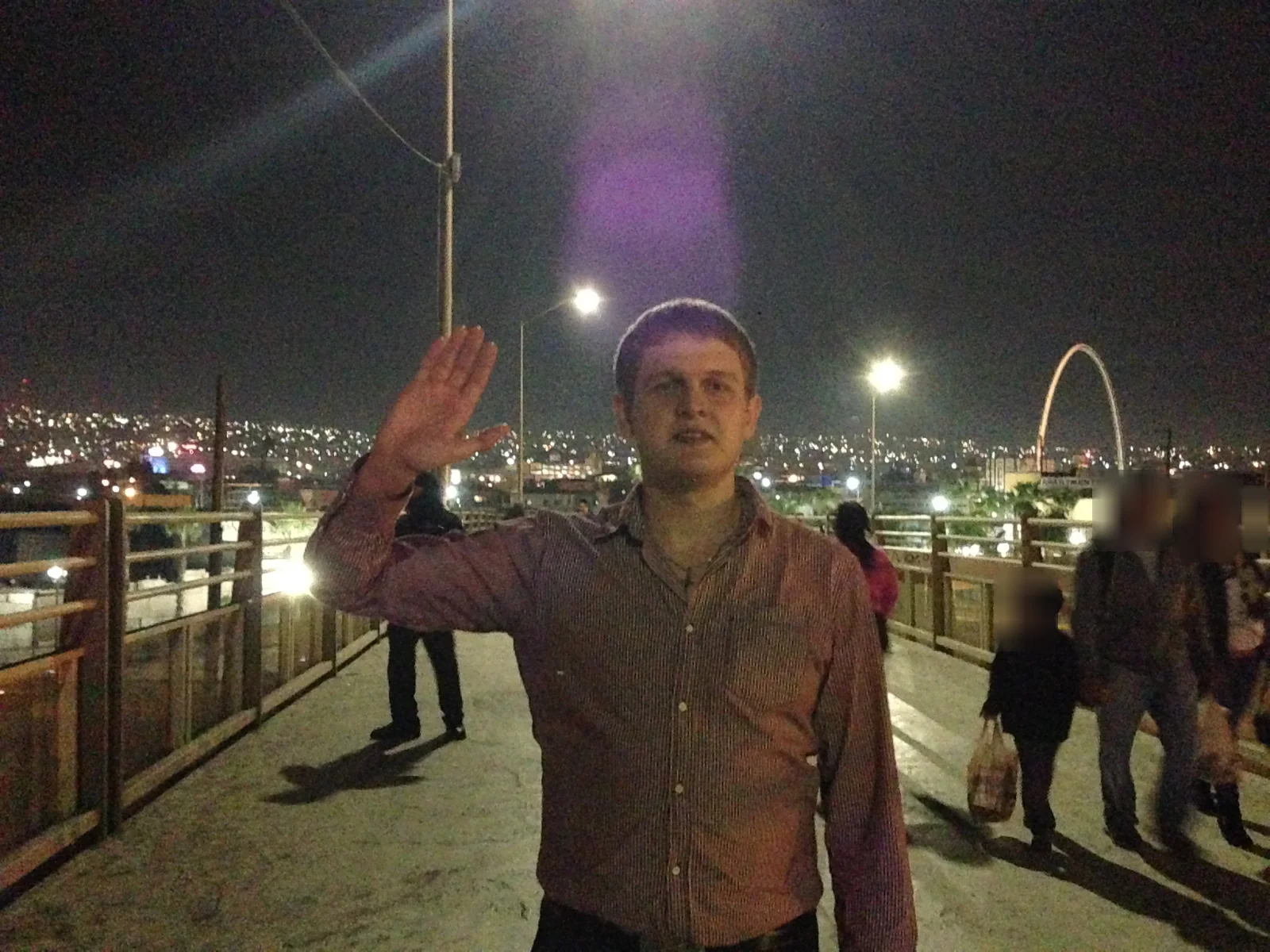
I waved from a footbridge: goodbye, Mexico. A little early, since there were still more Mexican signs up ahead. But by then I really was starting to want to go back.
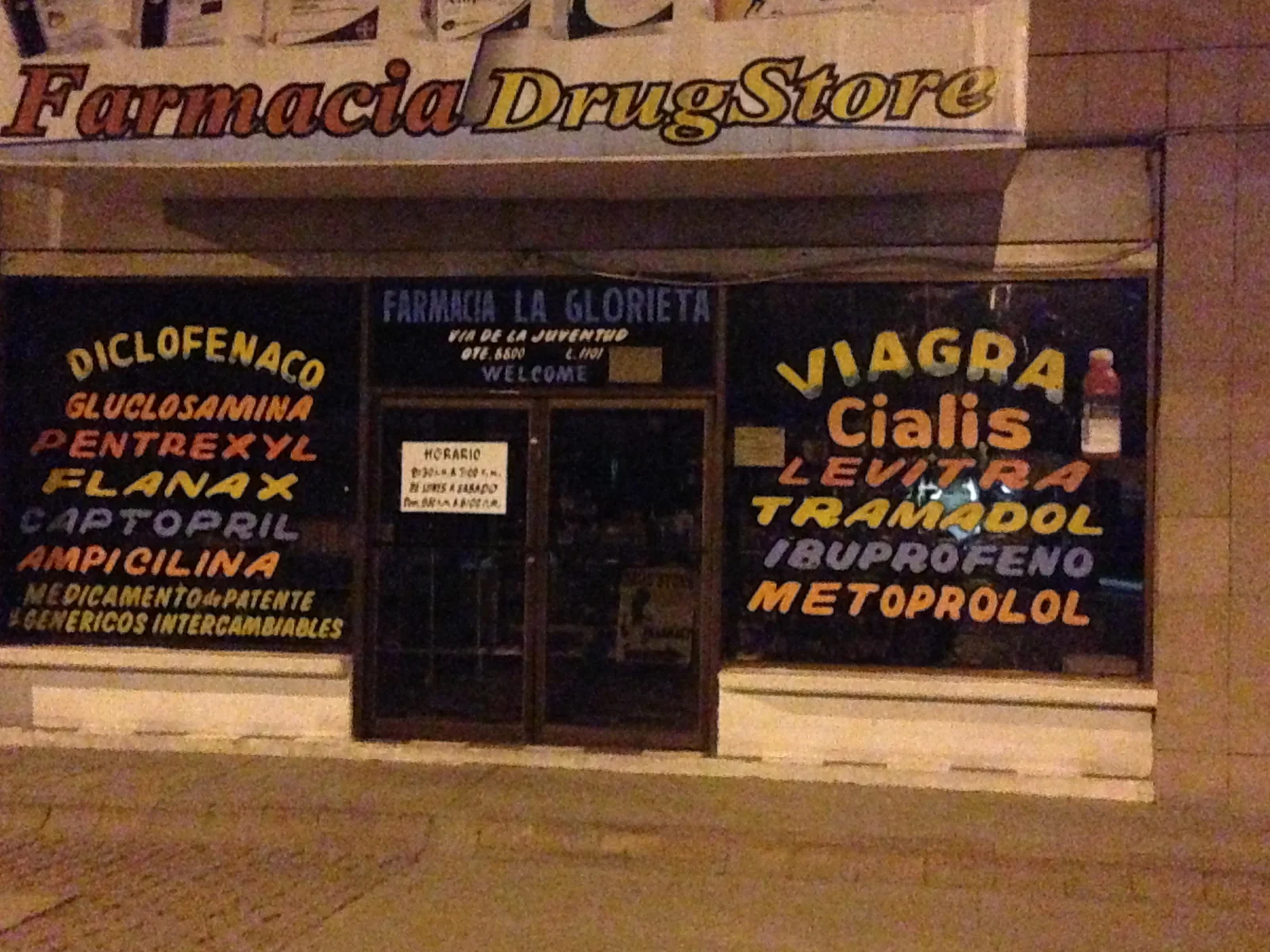
One storefront said La Glorieta, with medication names written right across the front. At the table with the radishes, I’d just been curious about how things worked here. By now I was reading even a pharmacy window through the stories I’d brought into town with me.
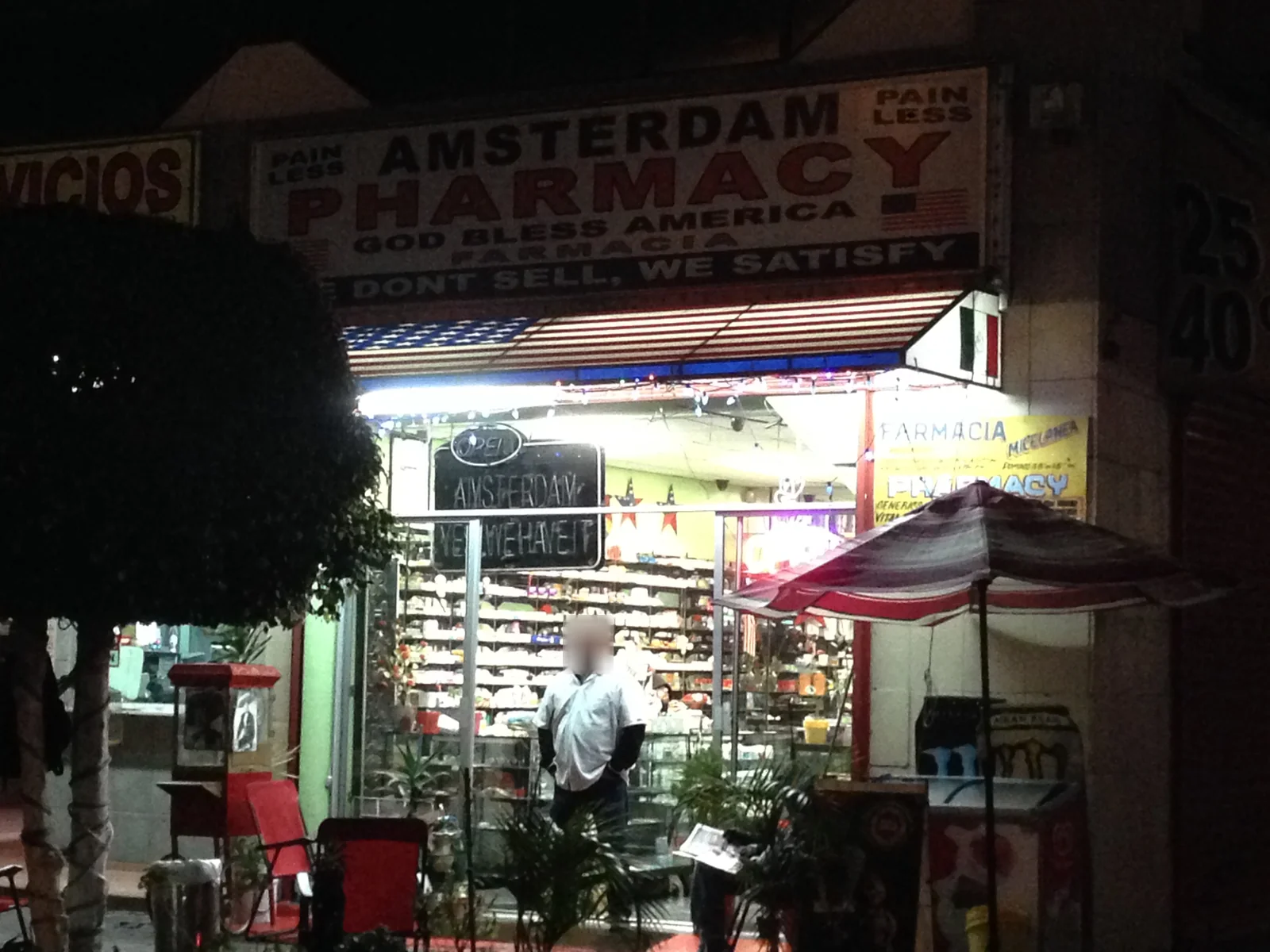
Then another one, Amsterdam Pharmacy. I walked past. At the border I’d wanted to keep going and see where the evening took me. Now I was thinking more about how to get back.
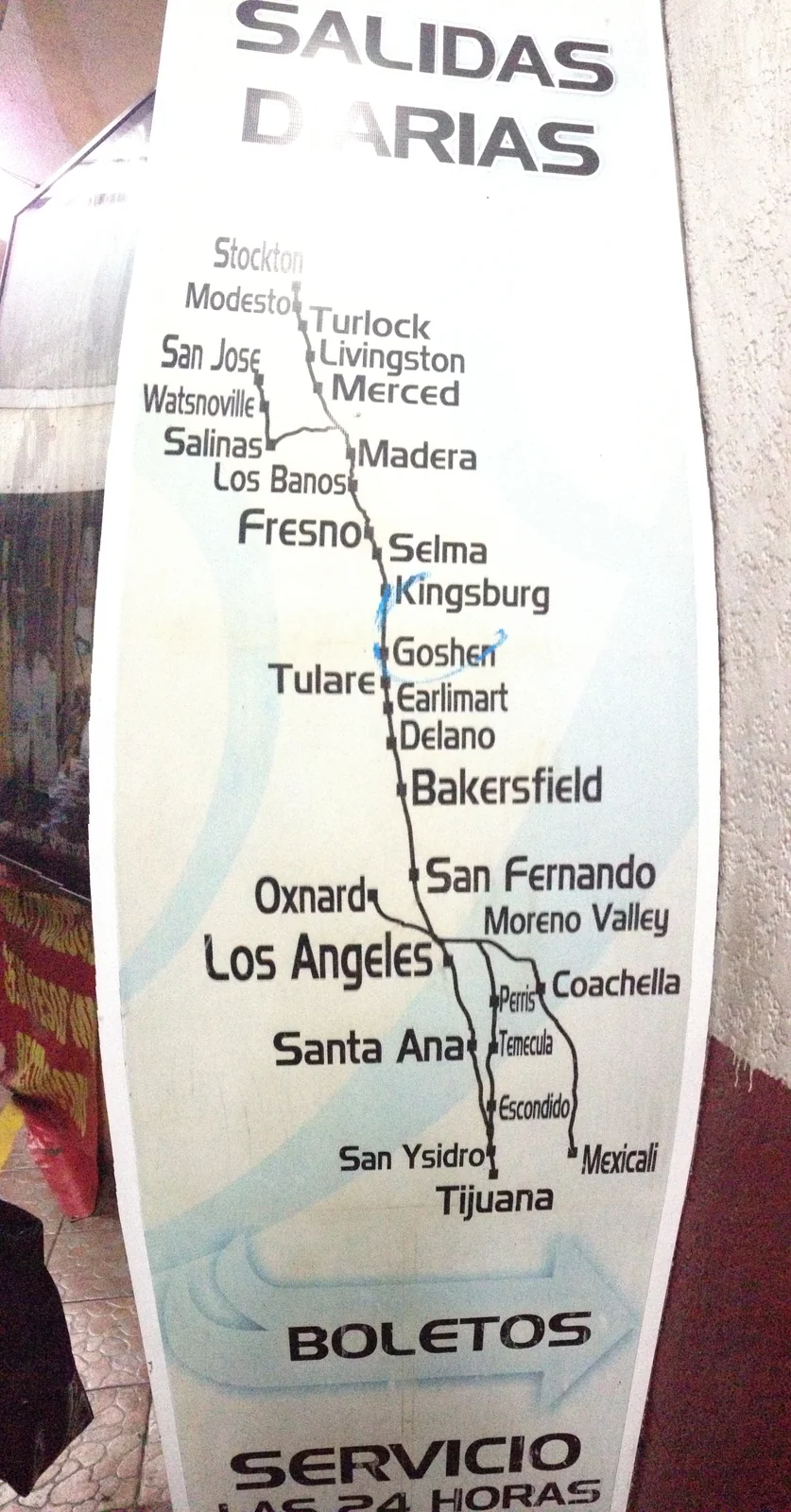
There was a different sort of sign in another window: “Tickets,” “Daily Departures,” and a map of routes on both sides of the border. Daily. That word takes me back to the people in line. I could go for an evening and head back as soon as it stopped being fun. Someone else crosses regularly because work is over there and home is over here. That’s not an adventure you can call off whenever you feel like it.
Fifty Meters
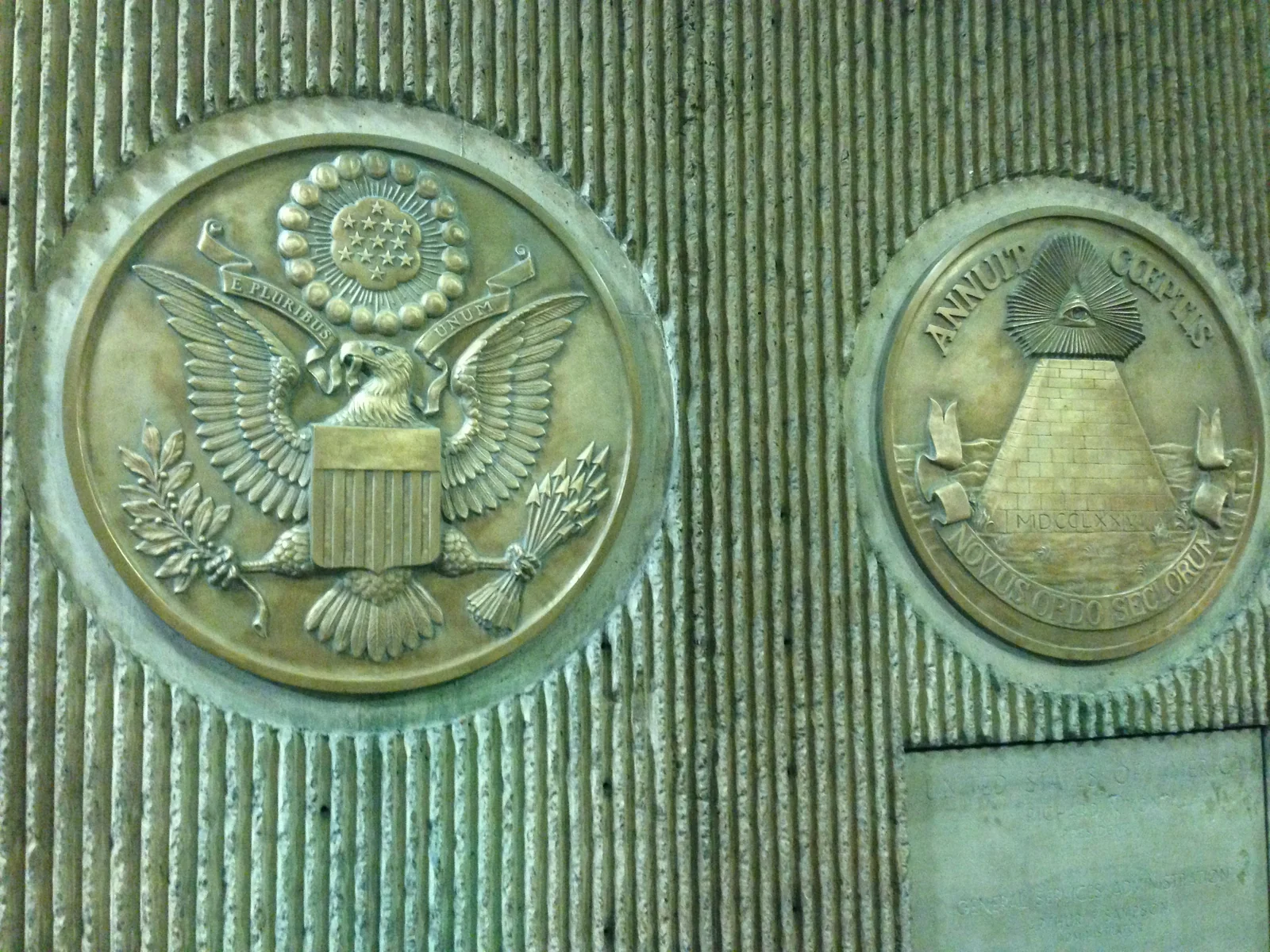
I went back to San Diego that same evening. On the way back I saw both sides of the Great Seal of the United States on a wall: the eagle and the pyramid with an eye. Those two “American logos” made me happier than just about anything else I saw all evening. Saying “I survived” would be a bit dramatic. Nothing terrible happened to me. But I could finally breathe out.
I hadn’t become a different person in those few hours. What was on my mind had changed, though. That afternoon by the water in San Diego, I’d taken out my camera to shoot a trial video for my course, thinking about what else I wanted to make. That evening, on some streets in Tijuana, I figured I’d better leave my phone in my pocket. Then I was back in San Diego, with the familiar roads and the trolleys, and I was no longer thinking about where to look or how to stay out of anybody’s way. I wanted to dream things up again, make things, try things.
At the crossing, it feels like there are maybe fifty meters between these places. From the little I got to see, the differences in how well off people looked, what things cost, and how safe I felt were huge. Even the taco: at a guess, I’d have paid close to five times as much for the same one in San Diego. I didn’t go comparing price tags. It was the contrast that got me. The cities are next door to each other, yet what feels normal in one isn’t something you can take for granted in the other.
If I lived somewhere I sometimes didn’t even want to take out my phone, how much attention would I have left for the things I wanted to create? In a single evening I hadn’t even had time to get used to the place, and I could already feel my plans getting smaller. Somewhere I feel at ease, I want to make things, get better at what I do, and feel free to be myself. It matters what people around you think is normal, what they expect from life, and what possibilities they see. You can have the same abilities and live somewhere it’s much harder to put them to use and be happy with your life. My one evening doesn’t prove anything about Tijuana as a whole. But I felt firsthand how much of your attention a place can claim before you’ve even started on what matters to you.
I don’t think hard conditions make people weak. Some remarkably strong people come out of them, including people who go on to lead others. But if you only look at them, you miss the people who paid a heavy price in those same conditions and didn’t make it through. That evening, I had the option of simply going back. I could see the eagle on the wall and feel that, once again, I could think about more than just getting down the next street.