
Vilnius: One Country, Two Republics
Lithuania · August 2014
I got into Lithuania after a few hours in line at the border. The cars were moving so slowly we had time for a walk and a run. A rare traffic jam where you actually get fitter.
Then we finally made it across, and right away it felt easier to breathe. I don’t know how much of that was Lithuania and how much was the relief of finally moving again. But the feeling stuck with me in Vilnius. A few times that day I caught myself thinking: oh, so you can do it like that, too.
The Street Where I Recognized Kyiv
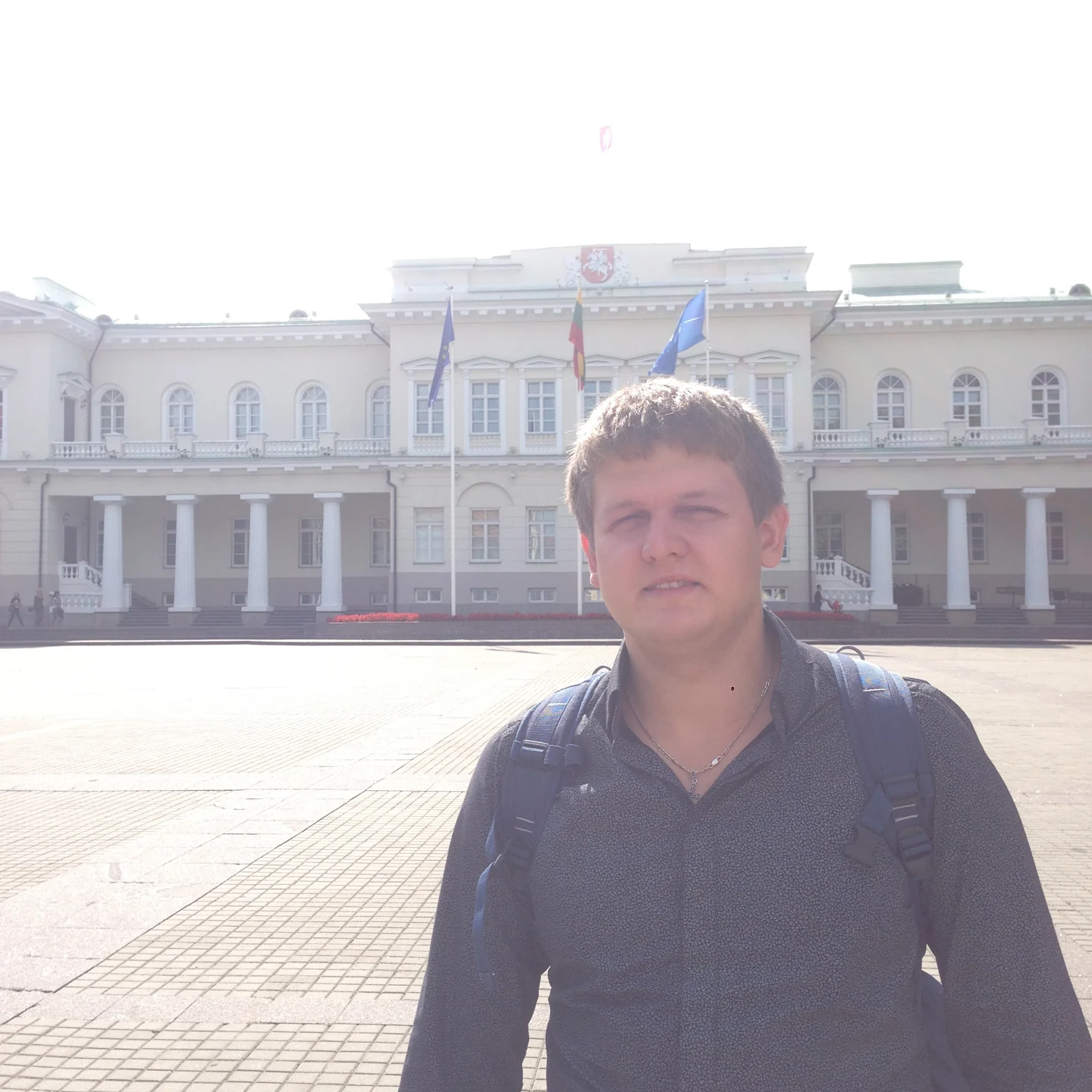
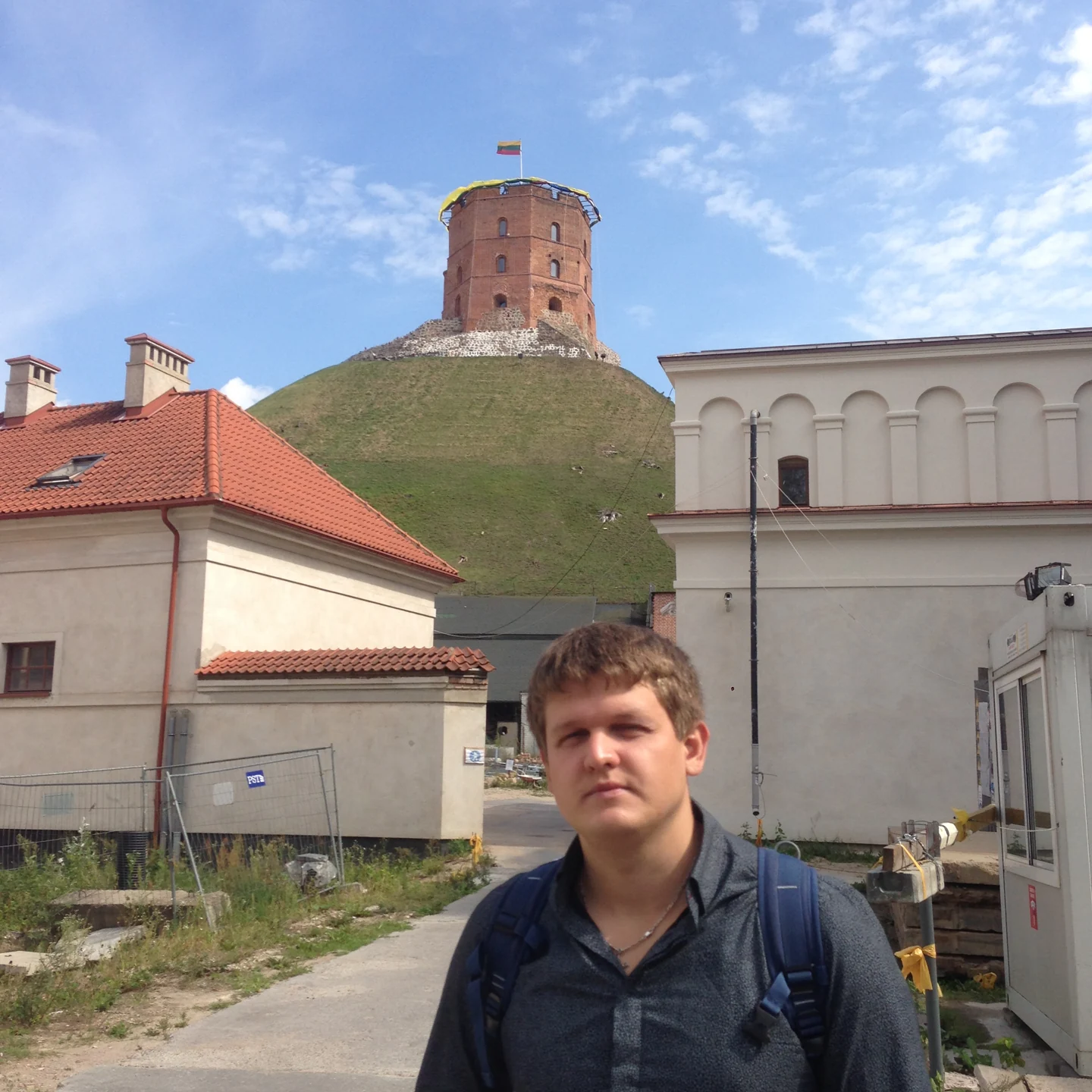
By the Presidential Palace, I’m still just walking around, taking in the city. Cathedral Square isn’t far. You walk between buildings and suddenly there’s room for everything, as if someone pushed the city apart just far enough to fit the cathedral in the frame. There are columns on one side, a bell tower standing on its own on the other, and up behind them the red brick of Gediminas Tower.
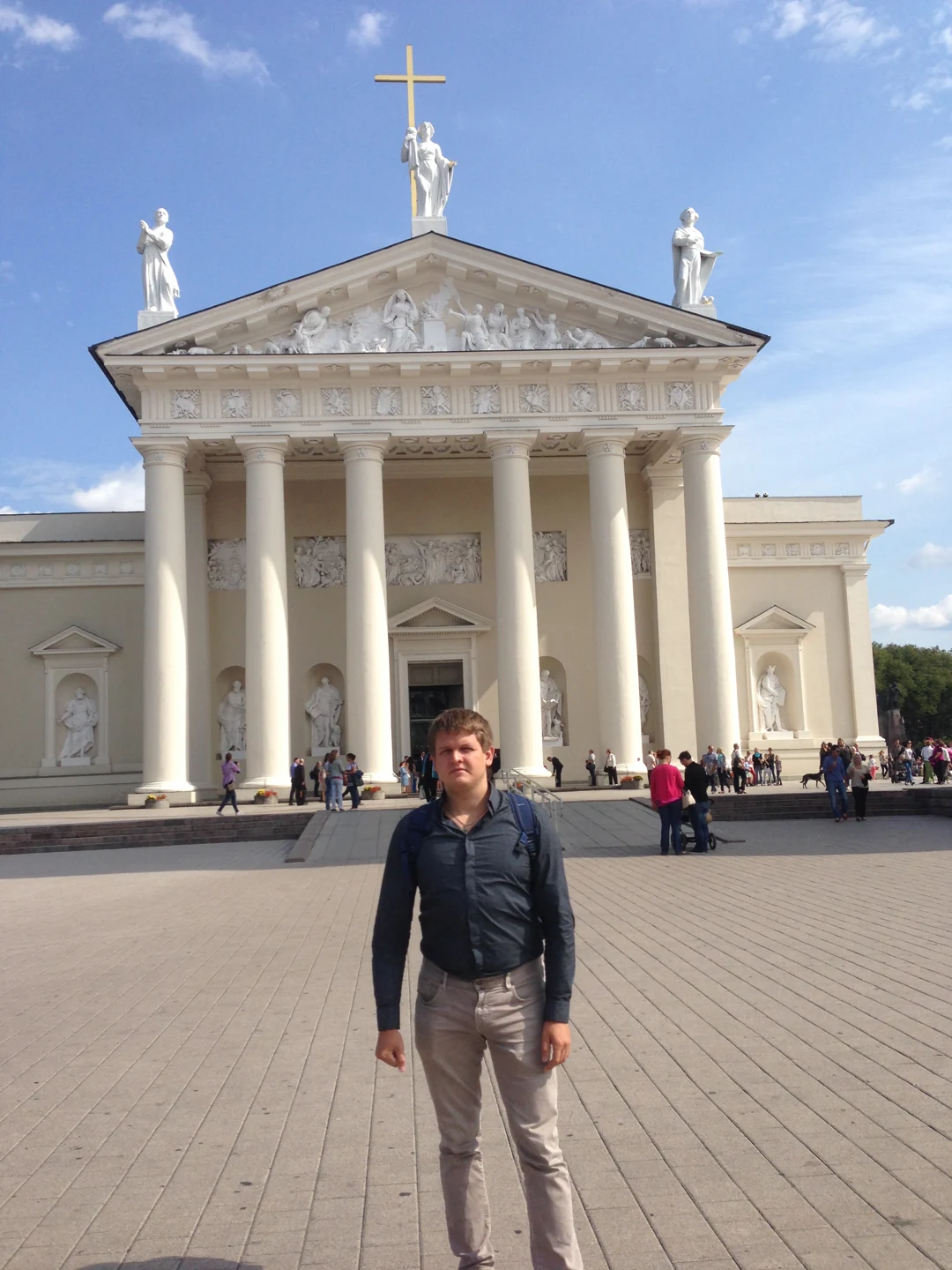
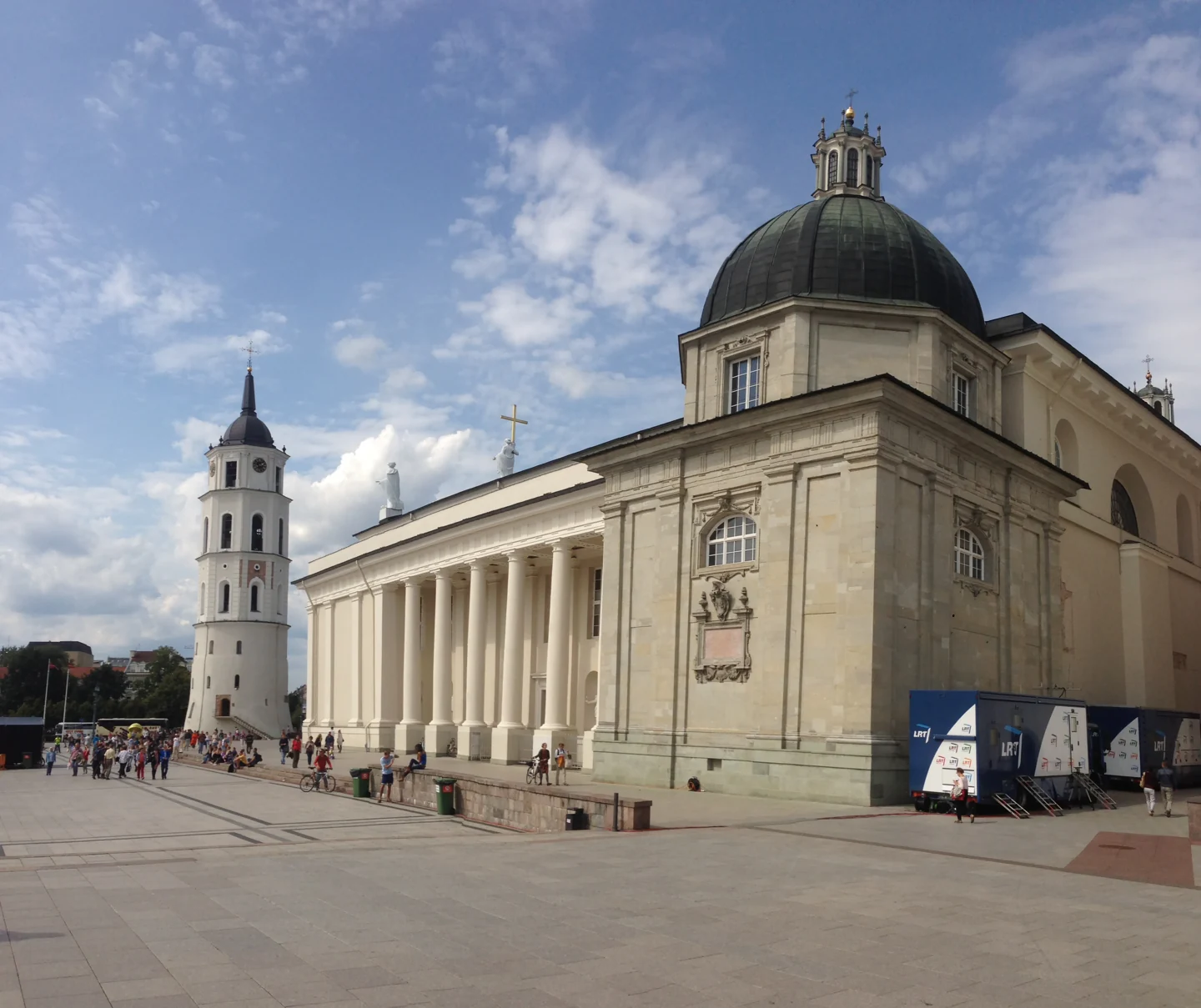
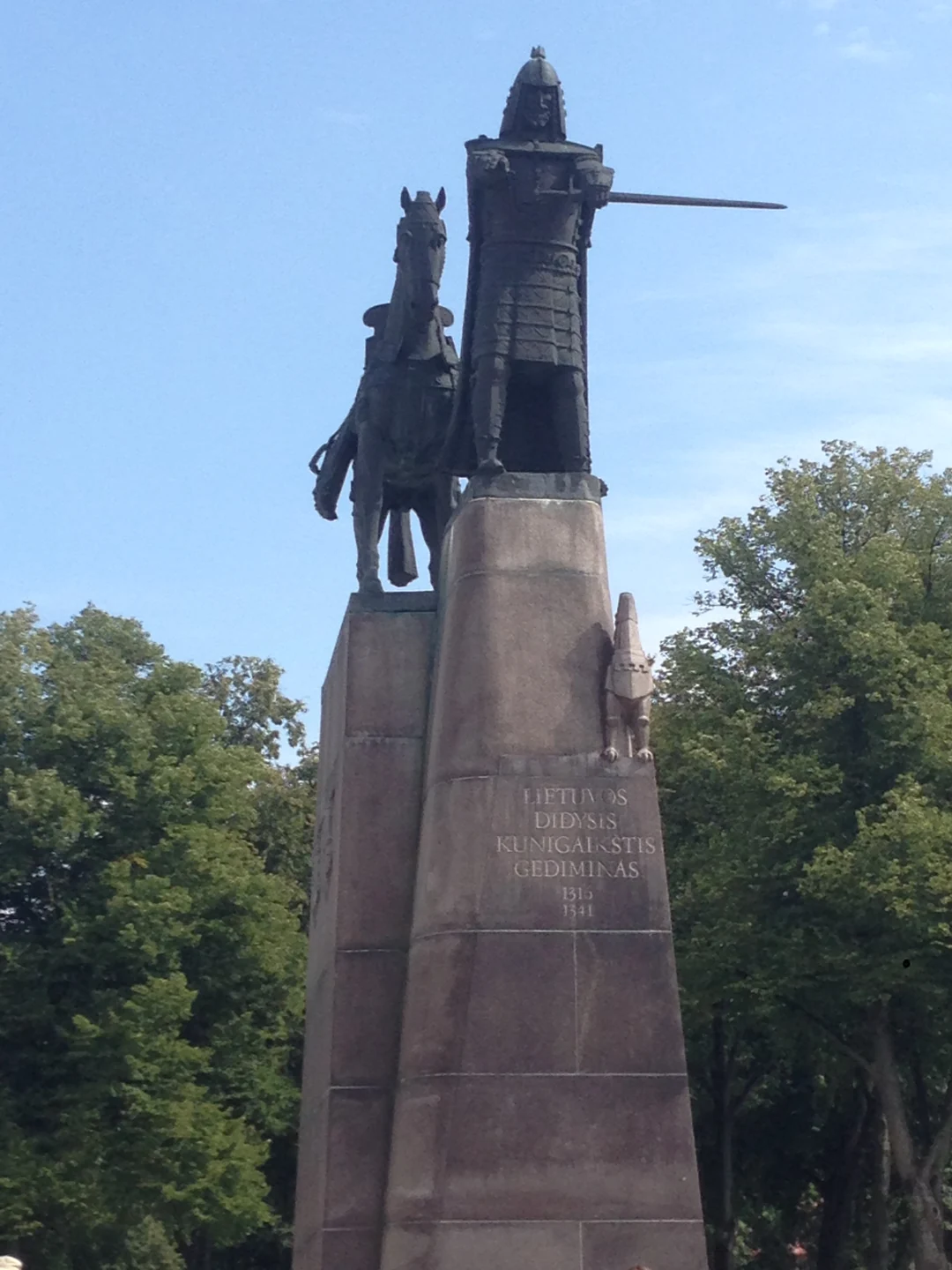
Gediminas himself is down in the square, with a horse and an Iron Wolf. According to the legend, the duke dreamed of a wolf howling so loudly you could hear it well beyond the hills. The interpretation went something like this: build a city here and the world will hear about it. Gediminas apparently decided not to leave the entire marketing plan to the wolf. In 1323 he sent out letters inviting merchants and craftspeople to come. One of those letters gives us the earliest known written mention of Vilnius.
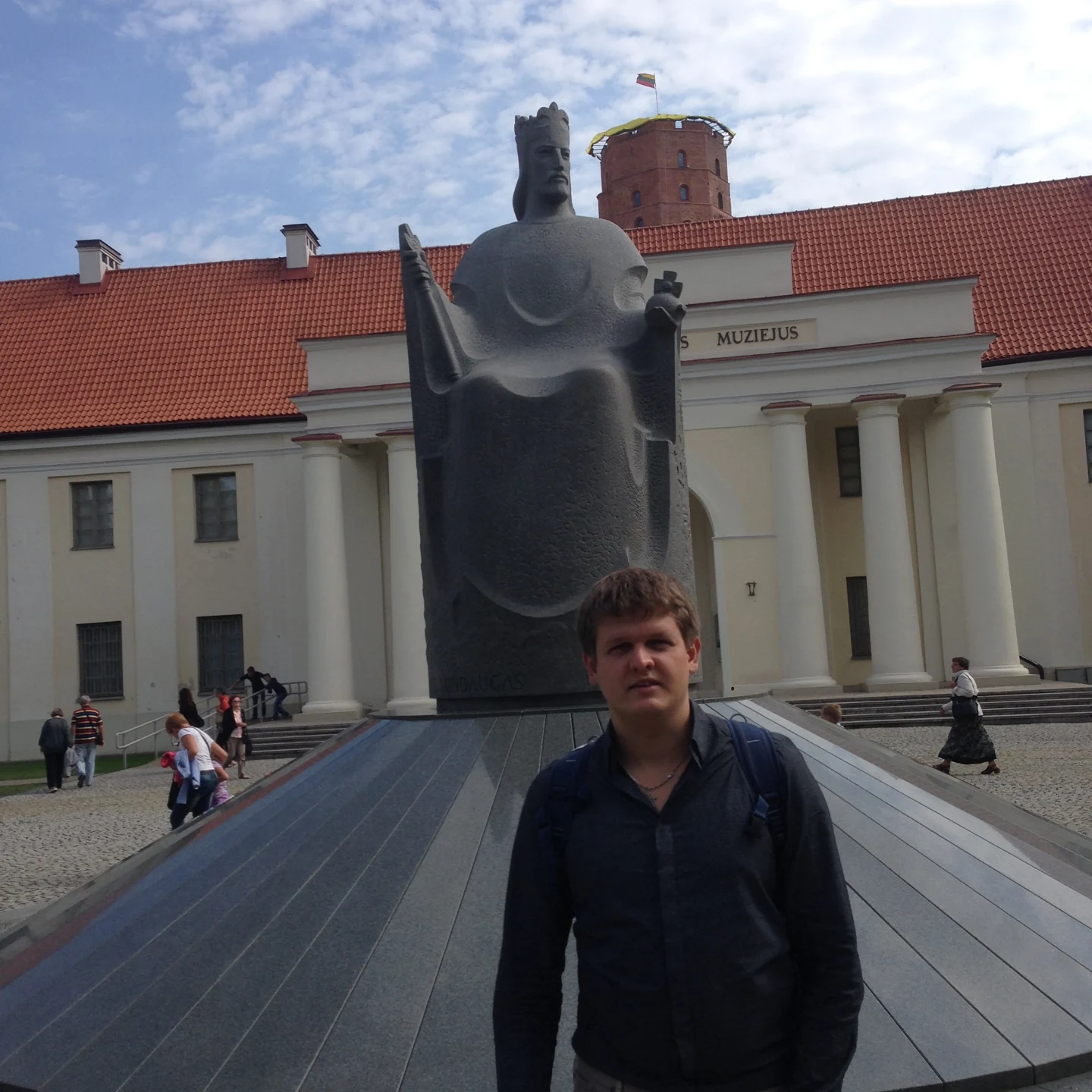
Outside the National Museum I get a photo with a different ruler, Mindaugas. He brought the Lithuanian lands together and became their king in 1253. A century later, under Gediminas’s son Algirdas, Kyiv became part of the Grand Duchy of Lithuania. I’m walking around somebody else’s city, and for the second time I’ve bumped into a bit of my own history.
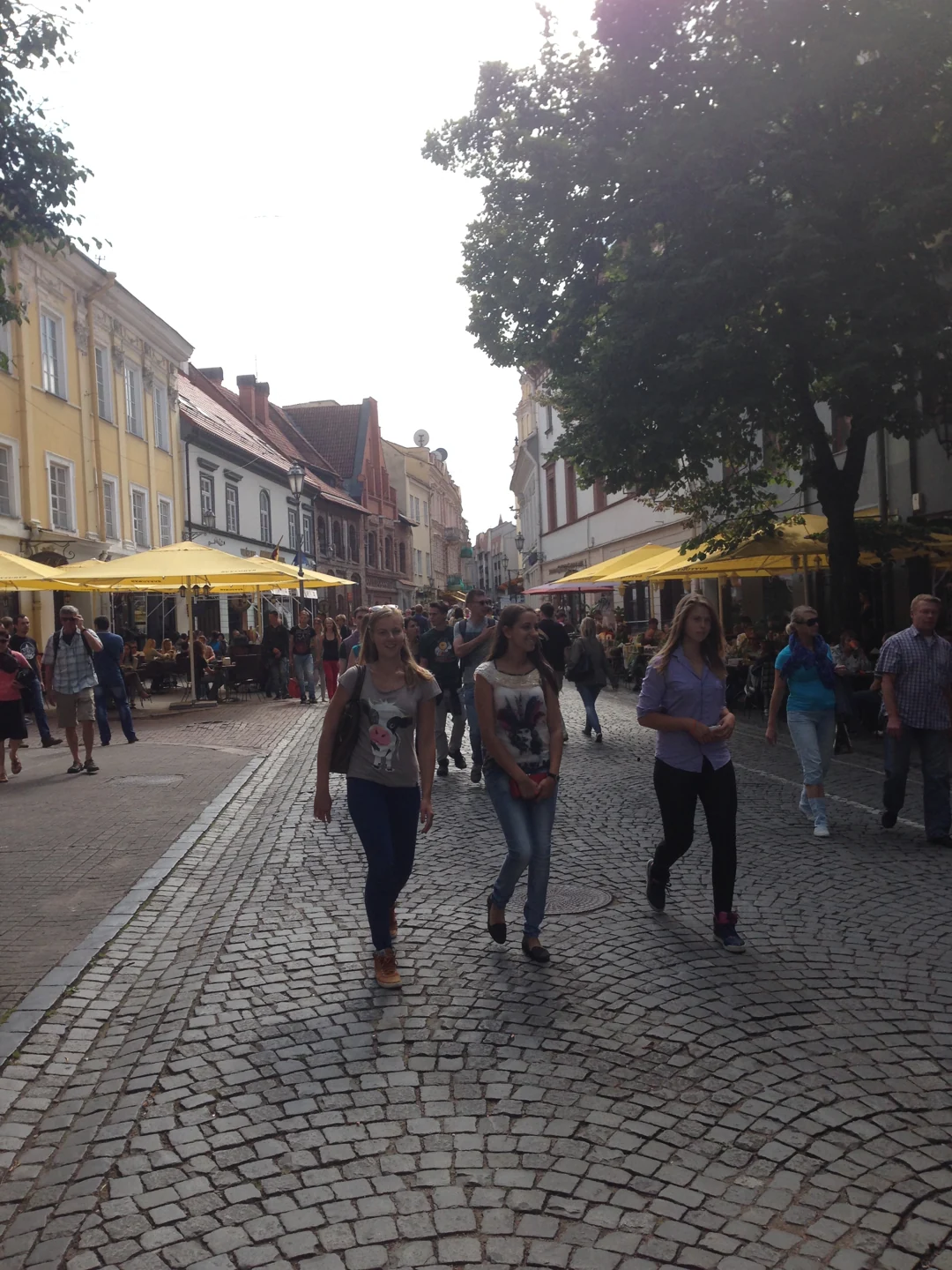
Then I turn onto Pilies Street and get the same feeling without the history lesson. Low buildings, people out for a walk, the kind of street you want to take even if you’ve got nowhere to be. It reminds me a little of Podil in Kyiv. A little of Lviv, too. It’s a funny feeling: you’ve come all this way to see something new, and on the other end of the trip you recognize a bit of home.
A Line of People Holding Hands
I’m in Vilnius on August 23. Exactly twenty-five years earlier, on that same day, nearly two million people joined hands. One end of the human chain was here, by Gediminas Tower. From here it ran through Riga all the way to Tallinn. Stand underneath that tower, look at the people around you, and try to picture them all taking each other’s hands. Round the next corner the chain keeps going. And round the one after that.
The Baltic Way was a protest against Soviet occupation. Lithuania saw independence as something to take back, not something Moscow might one day give it. In 1990 the Lithuanian act said exactly that: it was restoring an independent state. And on the day I was walking around Vilnius, Ukrainians in Kyiv joined Lithuanians, Latvians and Estonians in a symbolic chain of solidarity. I was in their capital, they were in mine. In both places there was a good reason to remember that day.
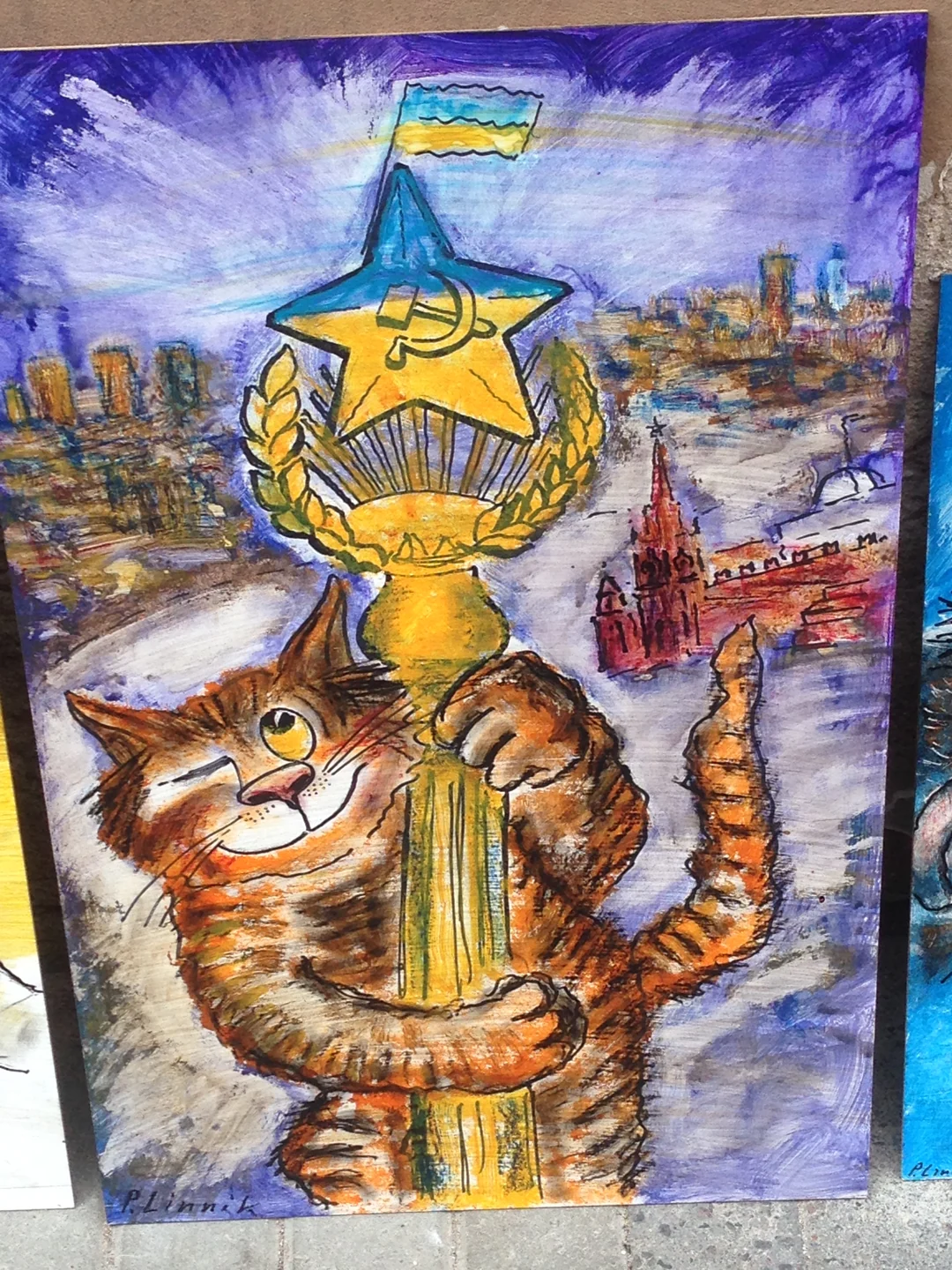
A little further along I come across some cartoons with cats. That’s where I find the question of Ukraine’s future put in rather different language from the official documents.
On one picture there’s a smiling Olympic-style bear. It says “Welcome.” There’s a gas pipe next to him and an assault rifle in his paws. The heading reads “Taiga Union.” They’d really thought through the welcome. Especially the part where they explain what happens if you’d rather not come.
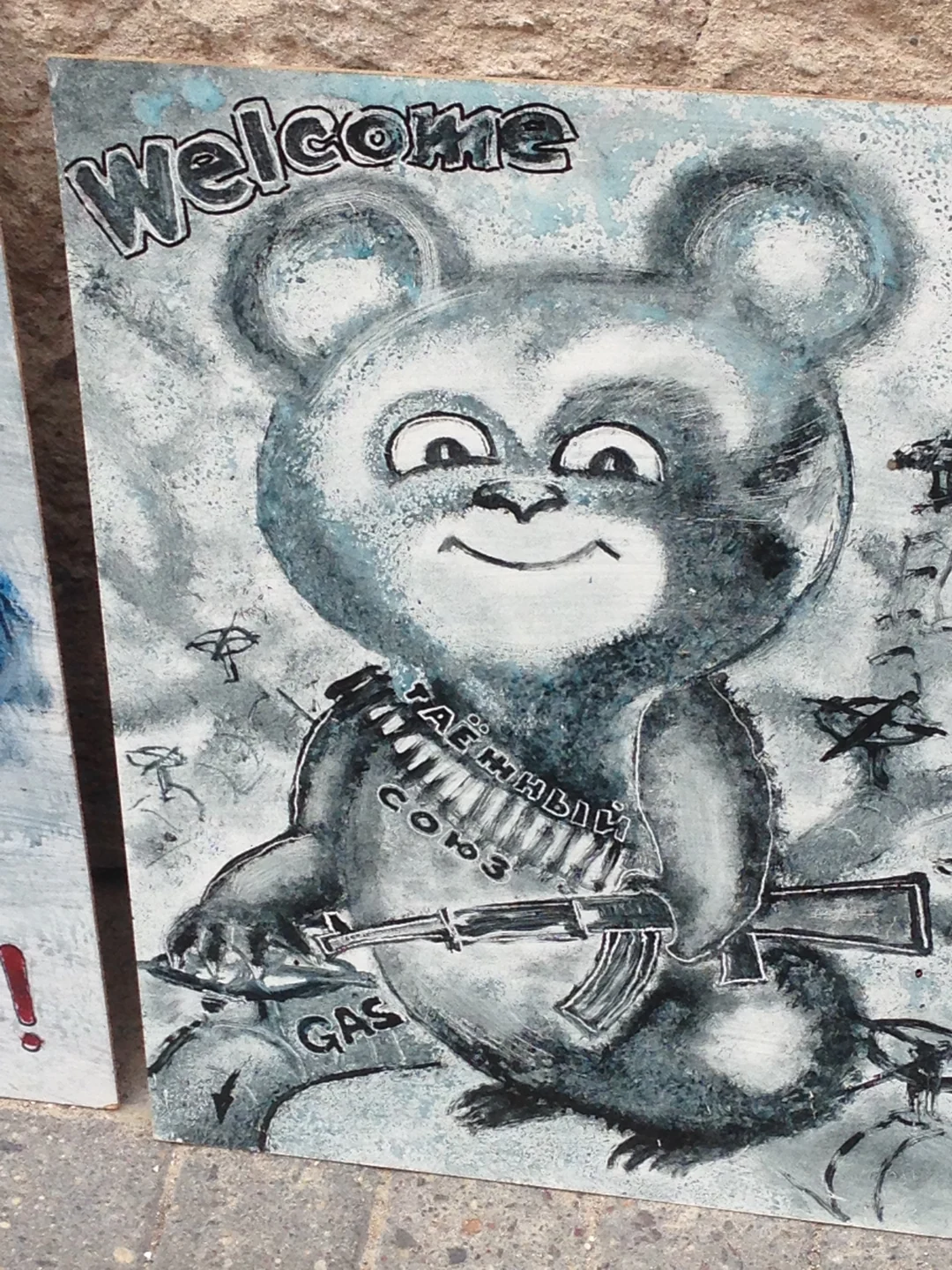
The joke was about the Russian-led bloc that Ukraine never joined. And Vilnius was a fitting place to see it. This was where Ukraine was expected to sign its association agreement with the European Union the previous autumn. The Ukrainian government halted preparations, and people took to the Maidan. By this summer Ukraine had signed the agreement. Looking at that picture, I thought about one simple thing I liked about choosing Europe: being able to choose which way to go in the first place.
Next to the bear there’s a cat with a Ukrainian flag on a Soviet star. Three days before my visit a Ukrainian flag really did appear on the spire of a Stalin-era skyscraper in Moscow, and the top half of the star was painted blue. A Ukrainian climber known as Mustang Wanted publicly claimed he’d done it. On the cartoon, the cat takes all the credit. And honestly, a cat climbing a Moscow high-rise with our flag probably explains the mood that August faster than any newspaper column.
The Next Republic Is Across the Bridge
After all that, I cross the bridge over the Vilnia. There’s a sign on the other side: “Republic of Užupis.” We spent hours getting through the Lithuanian border. I made it into the next republic on foot, and nobody needed my passport.
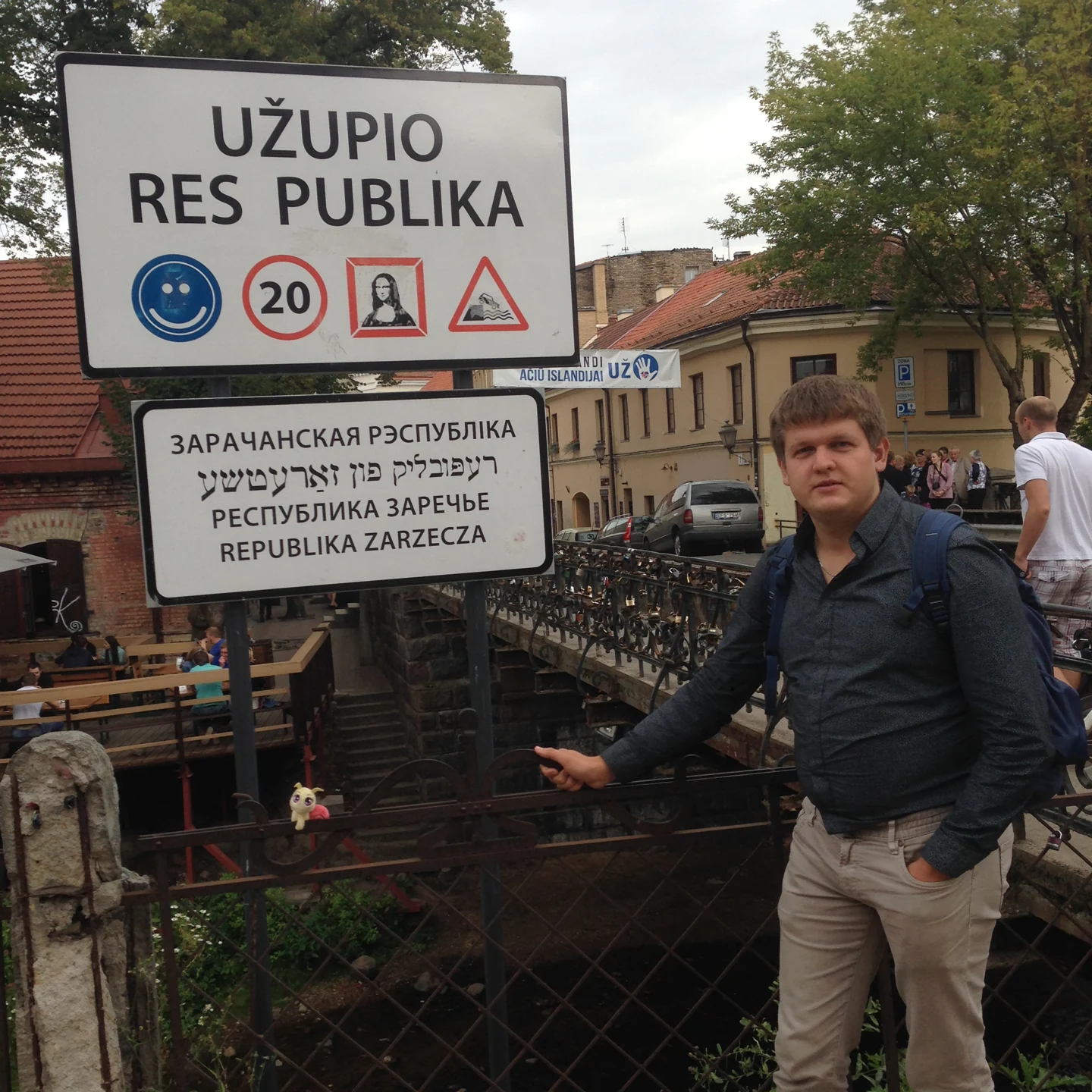
Užupis means “across the river.” It’s a Vilnius neighborhood that local artists and their neighbors declared a republic in the late nineties. They did it on April Fools’ Day, just so nobody would confuse them with people who can’t take a joke. Romas Lileikis, a poet and filmmaker, became the symbolic president. He and Tomas Čepaitis wrote a constitution. Nobody was leaving Vilnius, and Lithuanian law still applies here. But the neighbors decided what kind of place they wanted to live in and didn’t wait for someone else to make it for them.
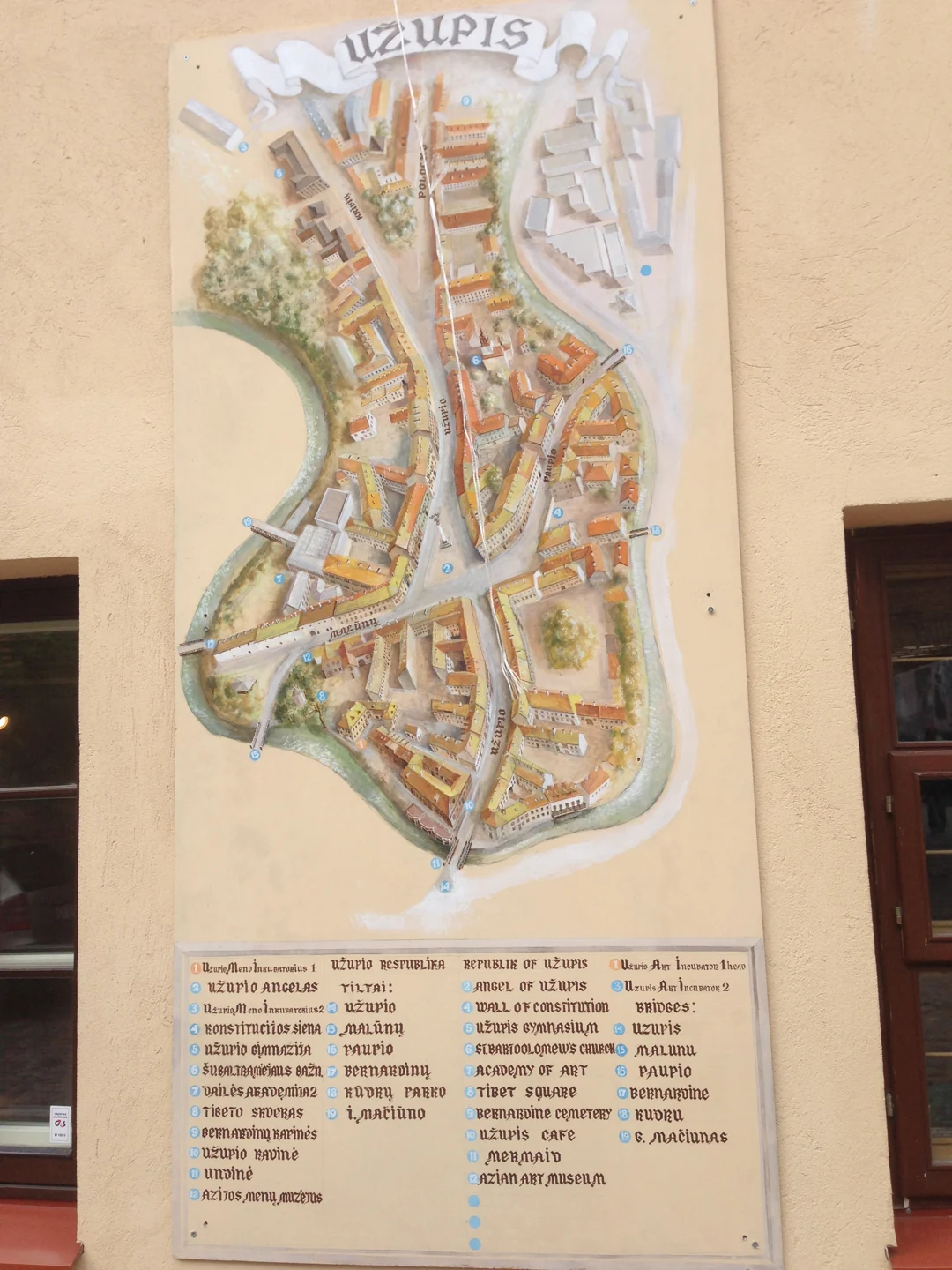
They have their own hand-painted map. There are bridges, a church, the Constitution Wall, and somewhere in between, an angel and a mermaid. I like a map like that. You’re figuring out which street to take and, as a little aside, it tells you to try not to miss the mermaid.
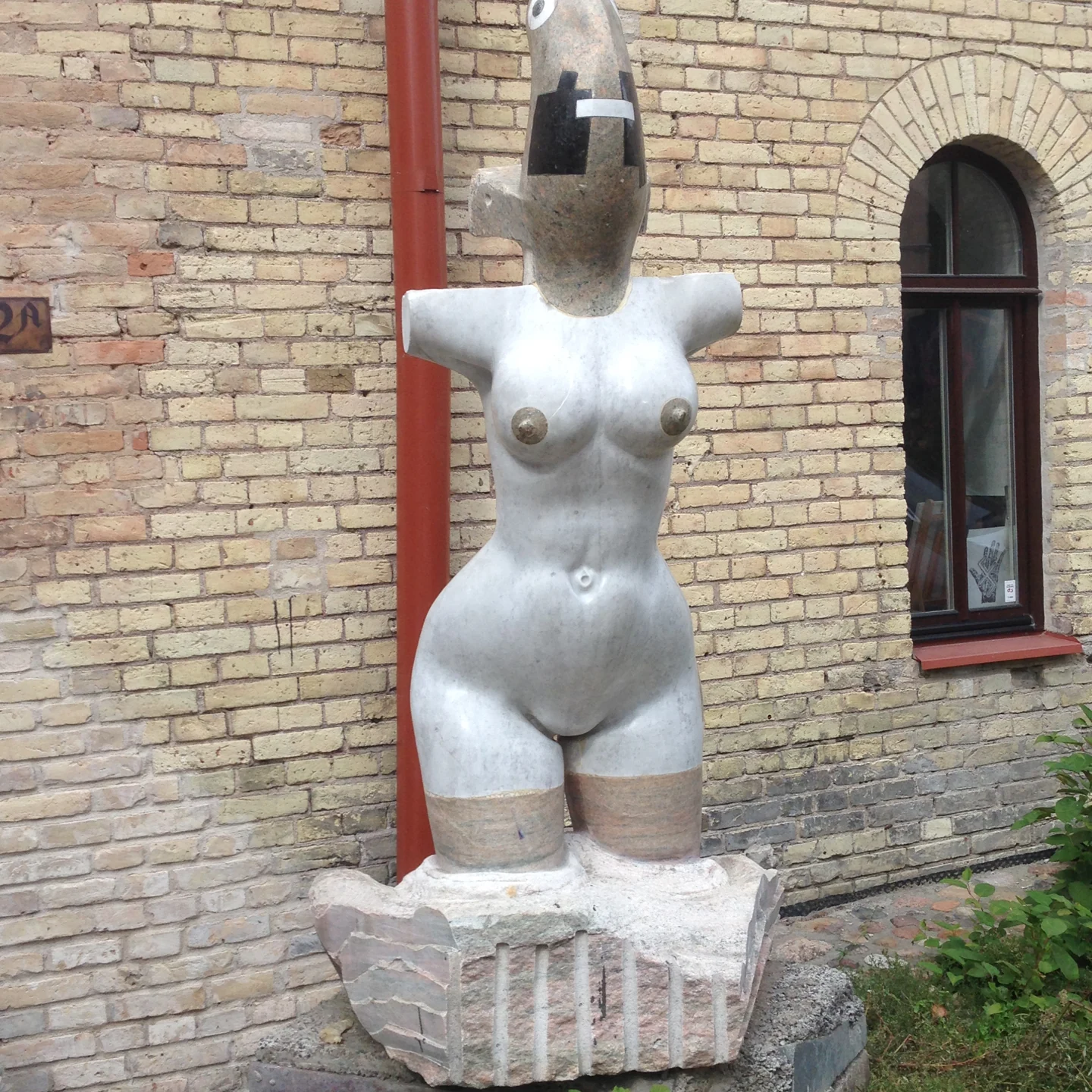
But what I like most is the stuff the map can’t prepare you for. An ordinary brick wall, a drainpipe, and next to it a stone woman with a bird’s head and one big eye. A few steps away by the river there’s Jesus with a backpack. Just Jesus. Just a backpack. I look at him and think: there you go, another one of us on the road. Across the river there’s a white cathedral and below it red kayaks on the water. One turn of the head and you’re looking at a completely different scene.
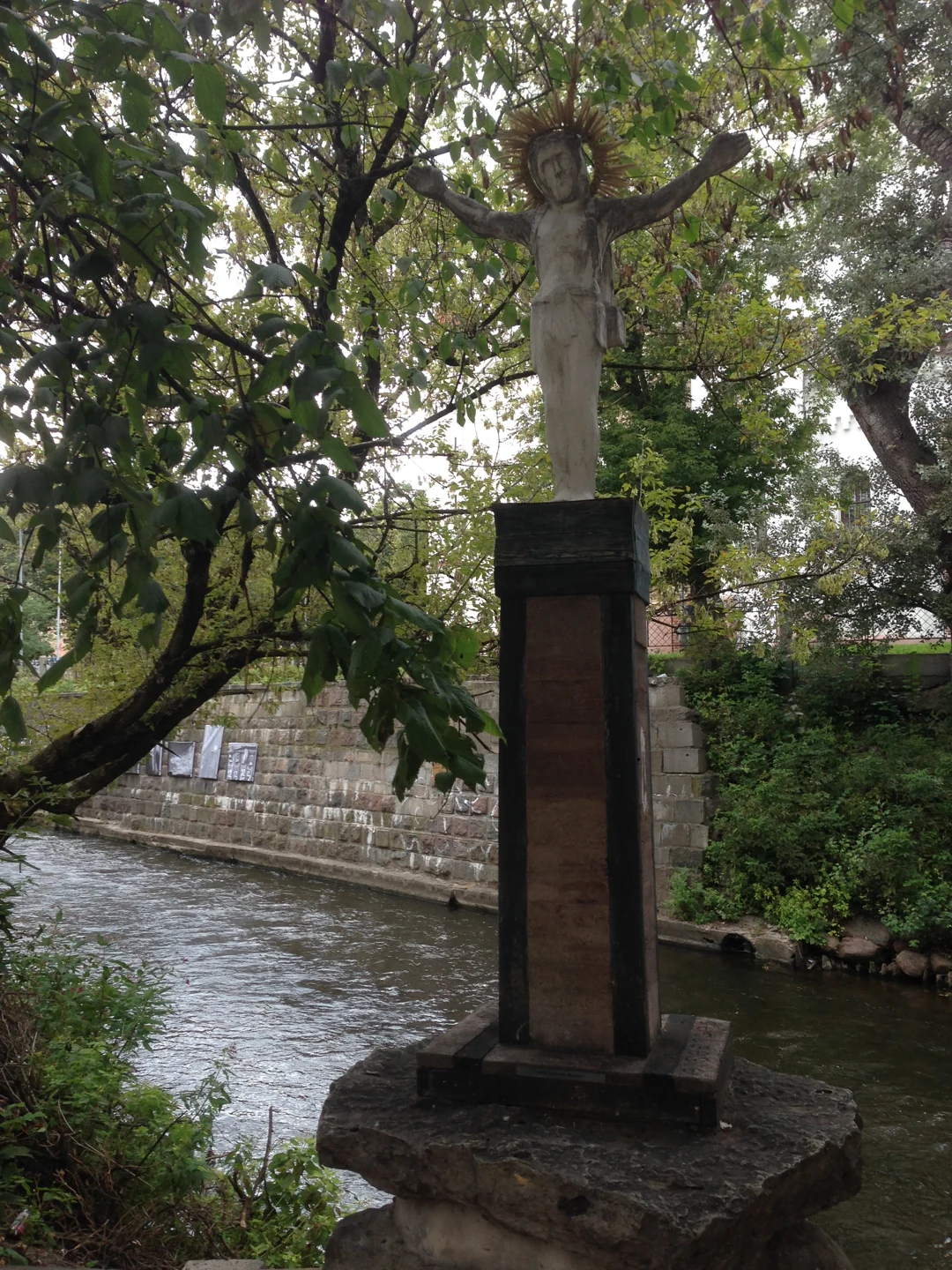
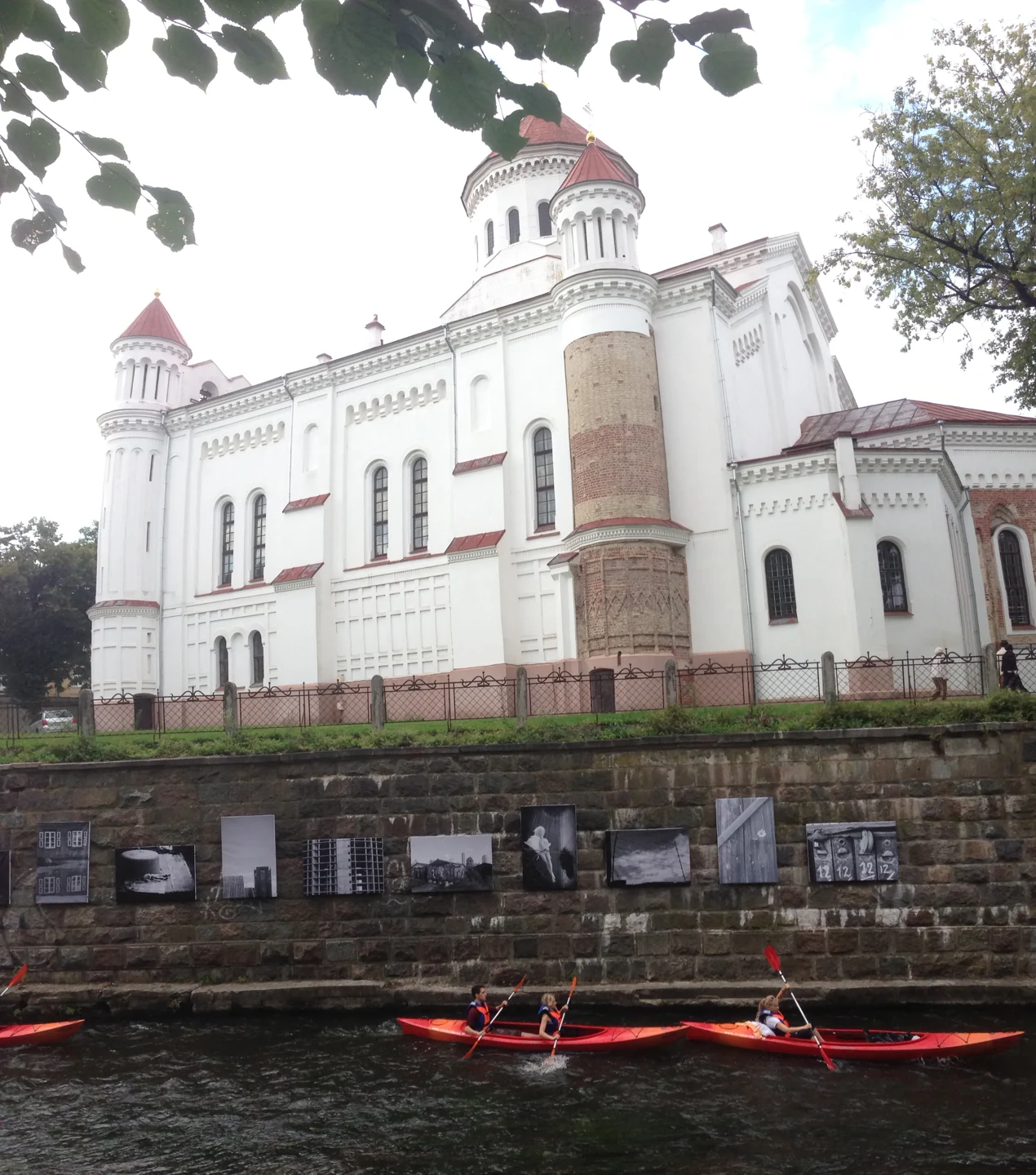
That’s what reminds me most of Landscape Alley in Kyiv. You’re just walking through town, not looking for a museum, and the city suddenly shows you it has a sense of humor. Užupis, to be fair, takes it a step further. They’ve written down what they think a person ought to have the right to do.
Cats, Hot Water, and the Right to Be Wrong
On Paupio Street, the constitution hangs on mirrored plaques in different languages. I stop at the Ukrainian one. I’m taking a picture of the right to make a mistake, and in the reflection I can see exactly who’s going to need it. Nicely done.
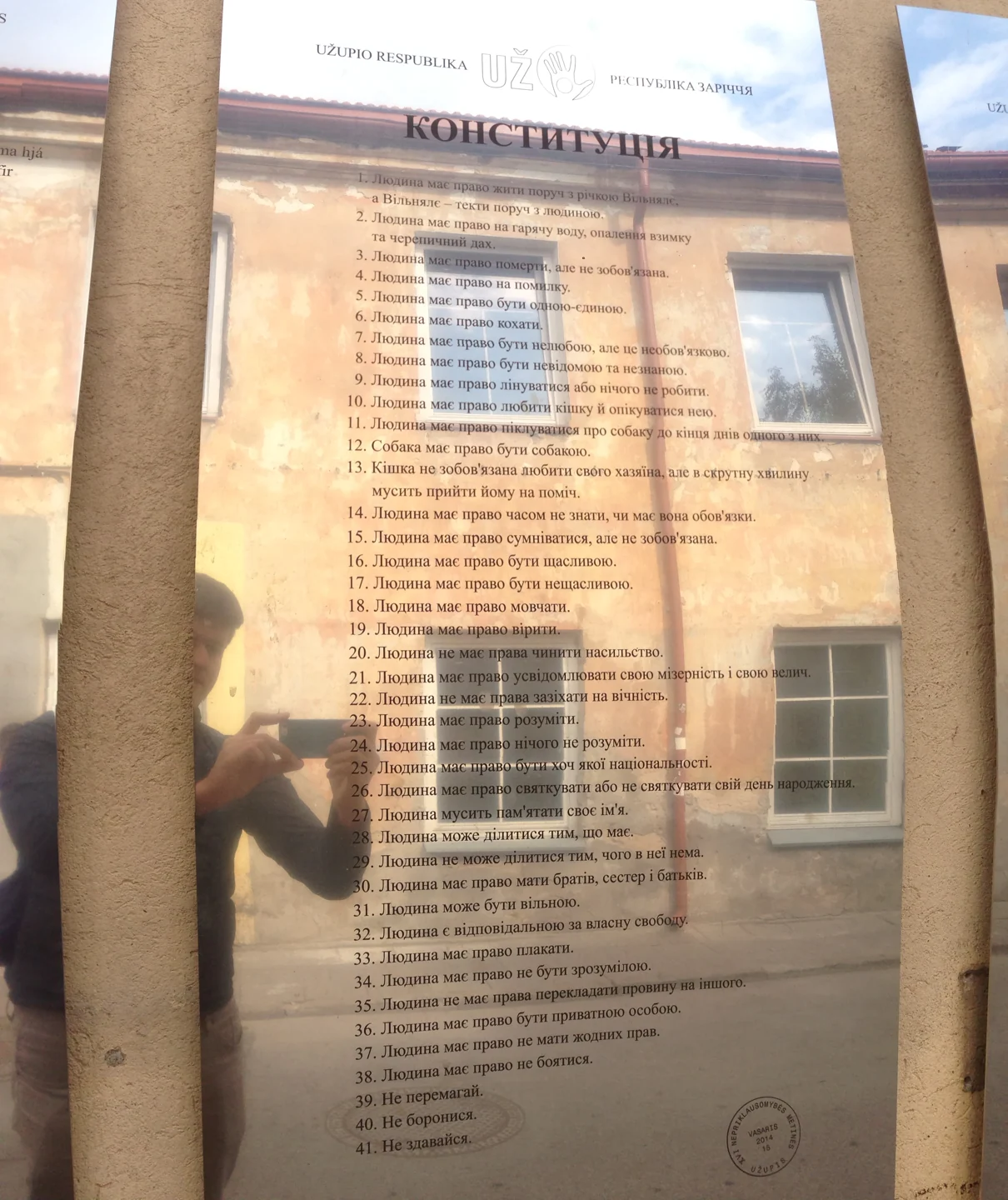
The first article gives people the right to live by the river, and the river the right to flow by people. I’m happy for the river. Finally, someone got its paperwork sorted. But seriously, I like that the river isn’t just a thing people get to use. It gets a say in the arrangement.
The second article covers hot water, heating in winter, and a tiled roof. A minute ago you were thinking about the rights of rivers, and now somebody is quite reasonably asking whether the radiators will work in January. I’d have a chat with that constitutional committee.
Article four gives you the right to make mistakes. Article twenty-four goes further: you have the right to understand nothing at all. A very handy combination for traveling. First you have the right not to know where you’re going. Then, when you get to the wrong place, you have the right to call it part of the itinerary.
The cat got a separate deal. A cat doesn’t have to love its owner, but it does have to help in a tight spot. A pretty good contract for the cat: no compulsory displays of affection, just show up if things get serious. Anyone who’s lived with a cat knows that the question of who owns whom is still open to appeal.
Closer to the end, there’s article thirty-two: you’re responsible for your own freedom. That’s the one I’d stop on. First they let you make mistakes, understand nothing and not demand love from the cat. Then they say: right, the rest is up to you. I don’t know that you could put it much more plainly.
On to Riga
At one point on the walk I caught myself wondering: if Ukraine had had the room to take a different path, maybe it could feel that easy to breathe at home, too. That's something I like about traveling. You see how differently people go about living, and little by little you work out what you want for yourself.
Then it was on to Riga. I walked out of Užupis the same way I walked in, with all my documents. But if there’s one thing I’d bring home from this republic, it’s the right to make a mistake. And if it’s not too much to ask, working heat in winter.