
Washington: An American Rome and Three Branches of Government
January 2014
From Philadelphia to the Capital
I took the bus from Philadelphia to Washington via Baltimore. The buses looked like their main job was to appear in old American movies. There were hot dogs at our stop in Baltimore, and some mix-up with the luggage. Maybe it was the payment, maybe it was the bag itself. I remember being just about ready to take it on board and sit on it. I did like Baltimore through the window, though. Not a bad introduction to a city, squeezed in between a hot dog and a bag.
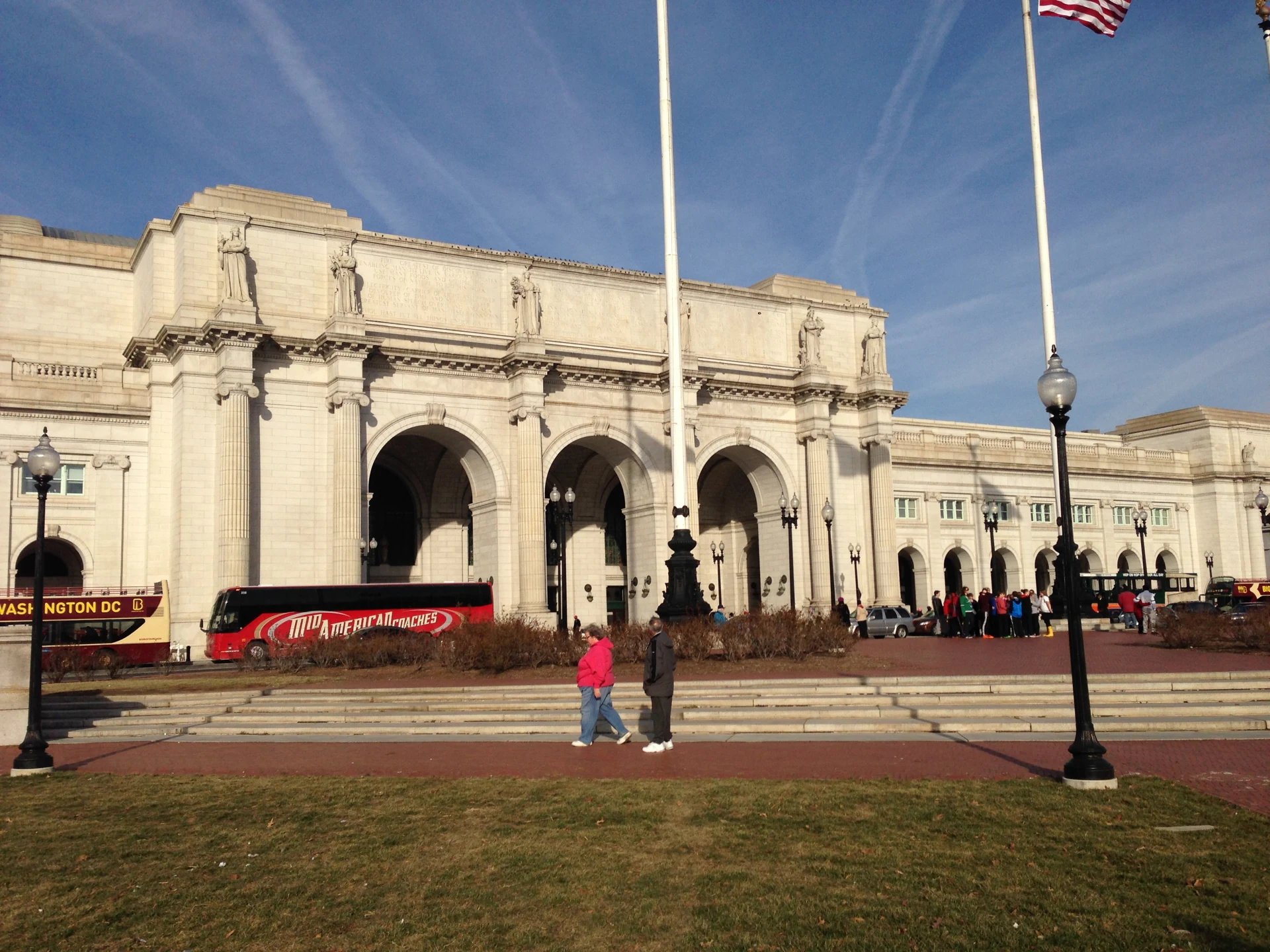
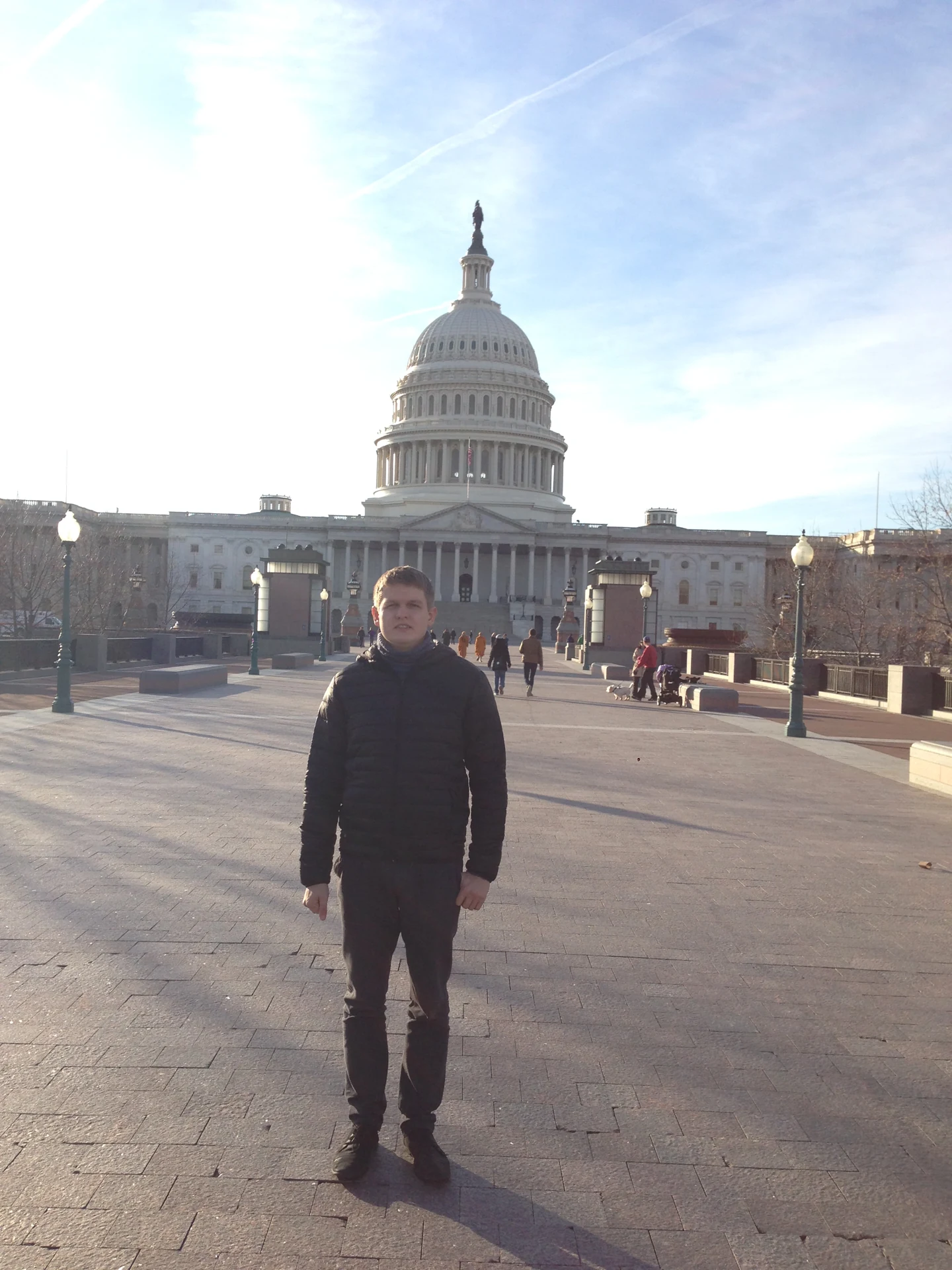
It didn't take long to get from the Union Station area to the Capitol. I couldn't tell you how I got there. What I do remember is the anticipation: I was about to see the capital of the world. And after New York and Philadelphia, my first thought was: how come it's so small? At least the government district I walked around was surprisingly compact. It felt like they'd gathered all the bureaucrats in one place so they could stew in their own juices and run the country while they were at it.
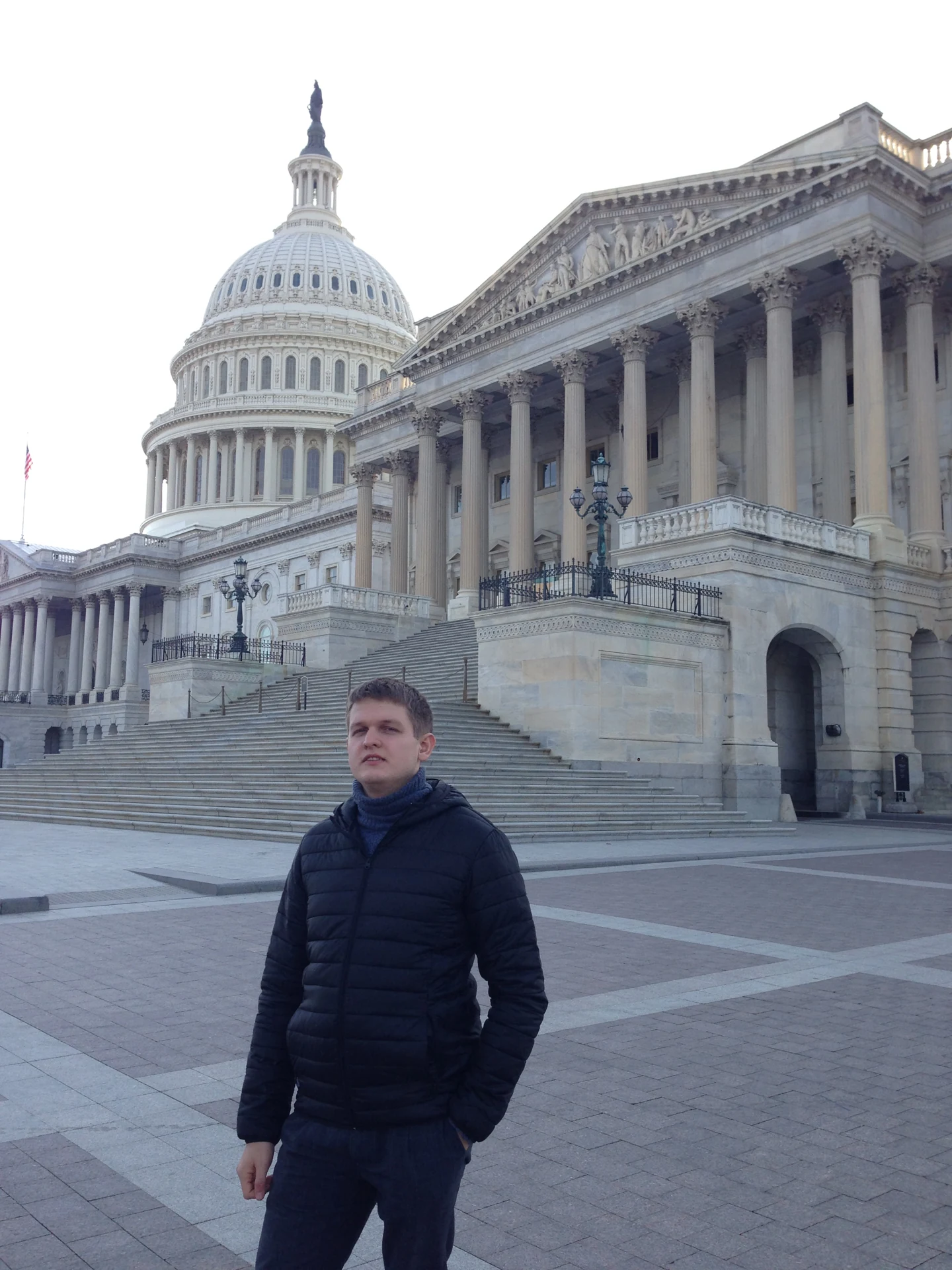
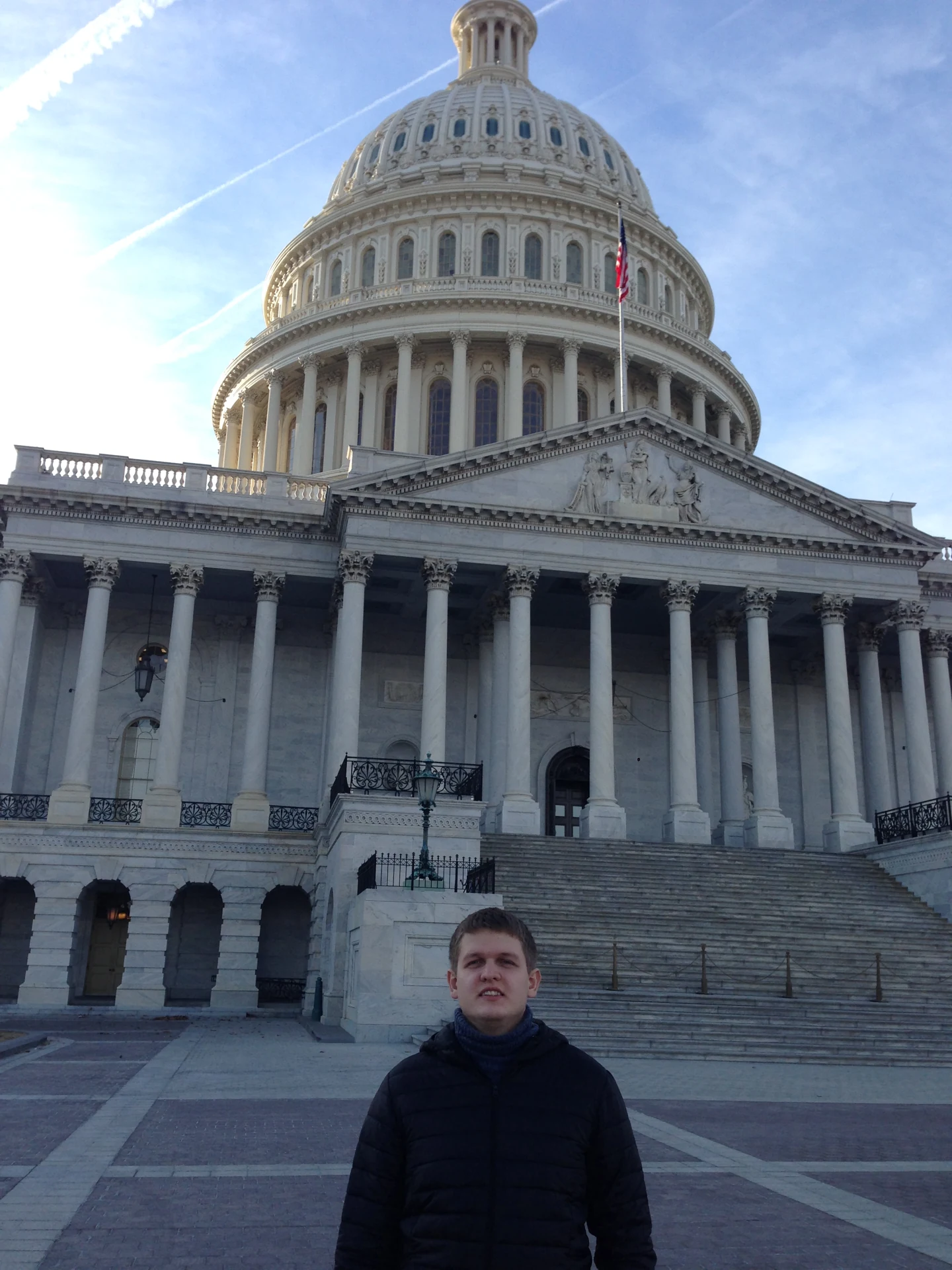
Then you walk up to the Capitol, tilt your head back, and forget all about “small.” This was where Washington felt like an American Rome to me. Columns, steps, a dome. The building makes its point without saying a word: this is where the power is. You can cover the district on foot, but some of the decisions made here are felt on the other side of the world. That's the contrast that got me.
The Capitol and the Court Across the Street
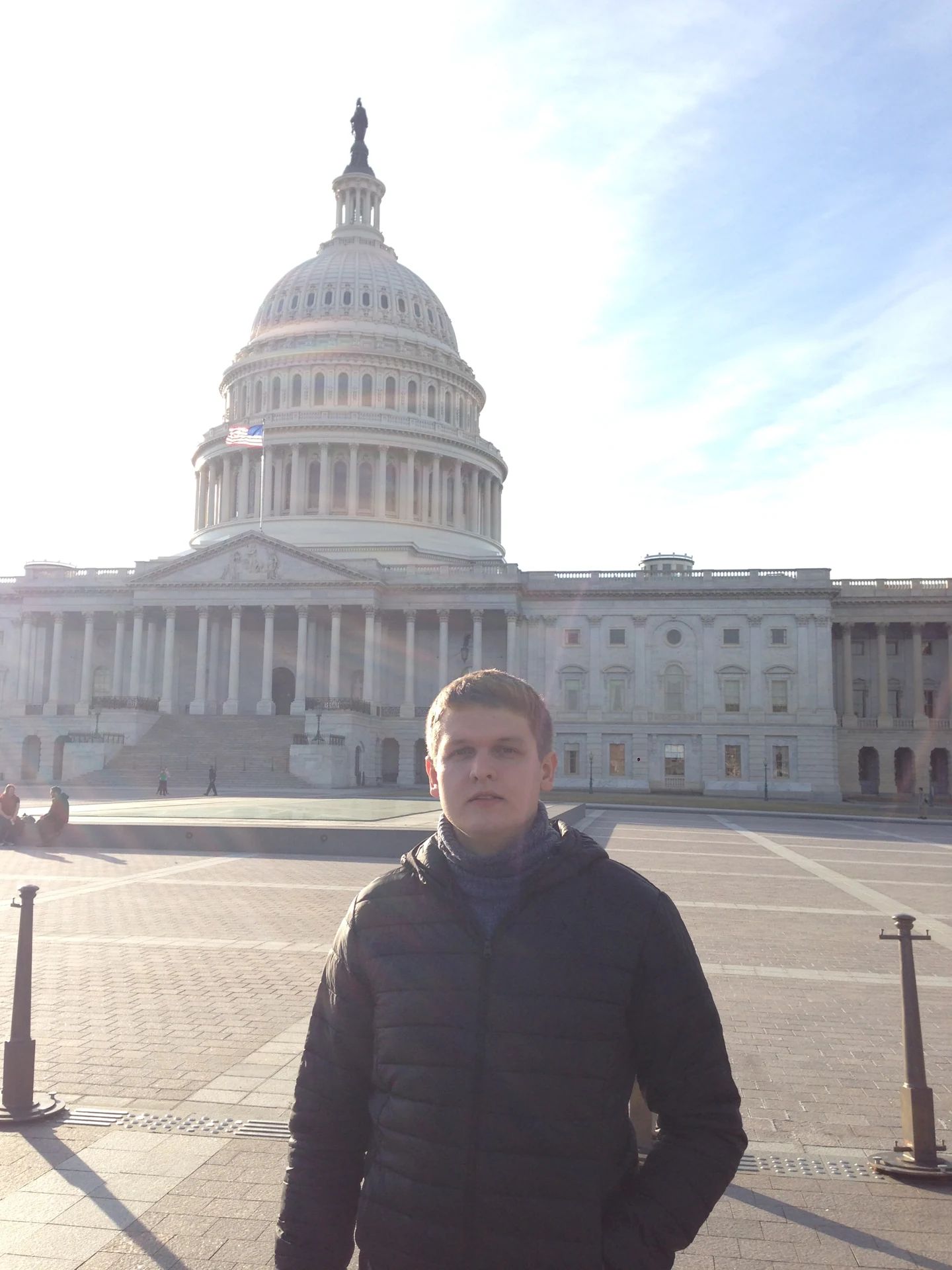
The Capitol is home to Congress: the Senate and the House of Representatives. They debate and pass federal laws here. The cornerstone was laid in 1793, and Congress first met in the building in 1800. And I'm not the only one who sees Rome in it: the rotunda under the dome was designed to evoke the Pantheon. I wanted to see inside the Capitol, but the building was already doing a pretty good job from the plaza. You stand there looking up, and it feels like the building has taken you on the whole tour itself.
The Supreme Court is across the street. More columns, a broad flight of steps, a flag.
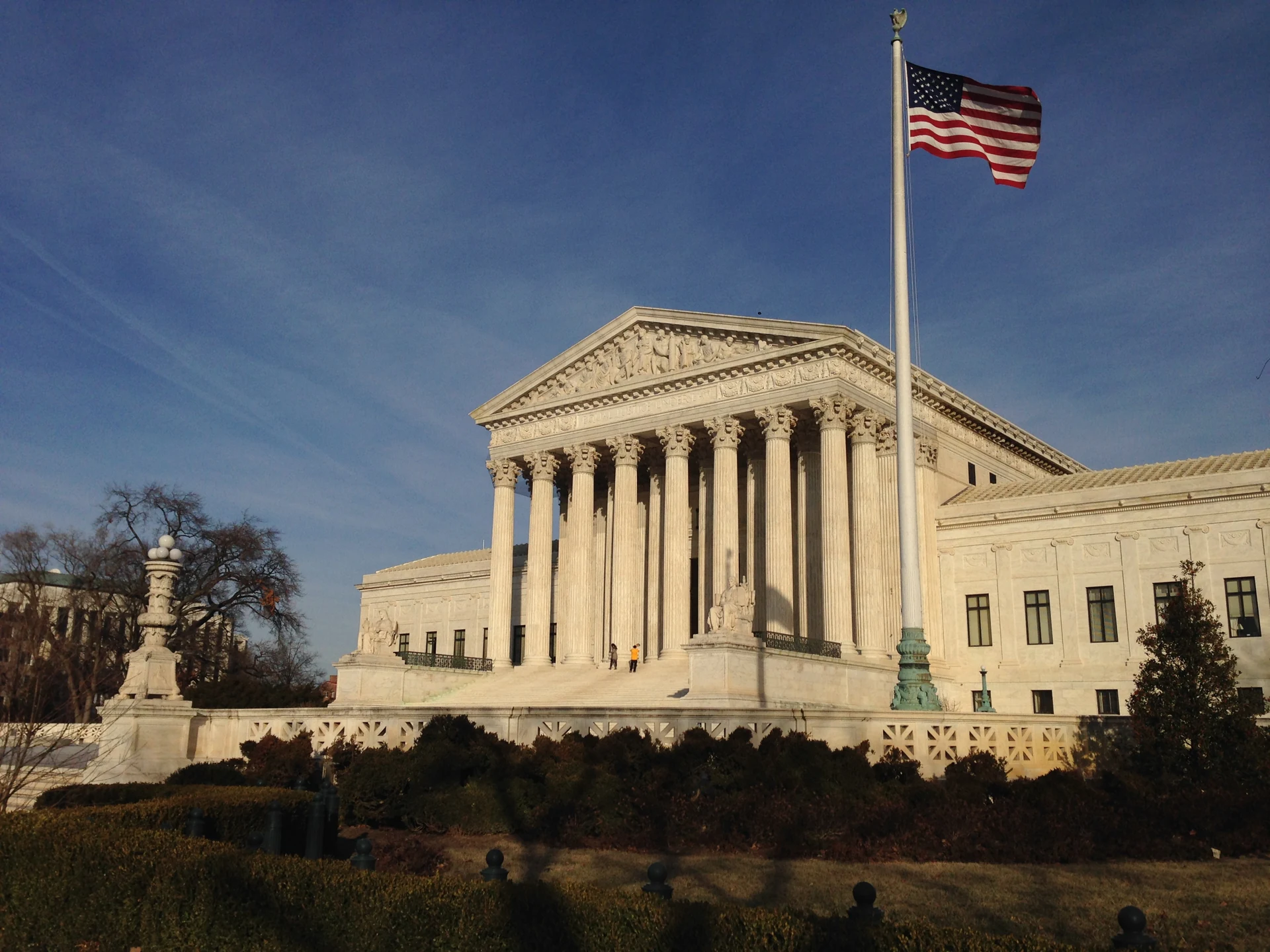
I sat down on those steps. Here's where the tour gets interesting: Congress can pass a law, but whether it squares with the Constitution can end up in court. The Supreme Court takes up those questions in actual cases. Nobody automatically carries every new law across the street for the justices to sign off on. Standing there, though, you'd think they could.
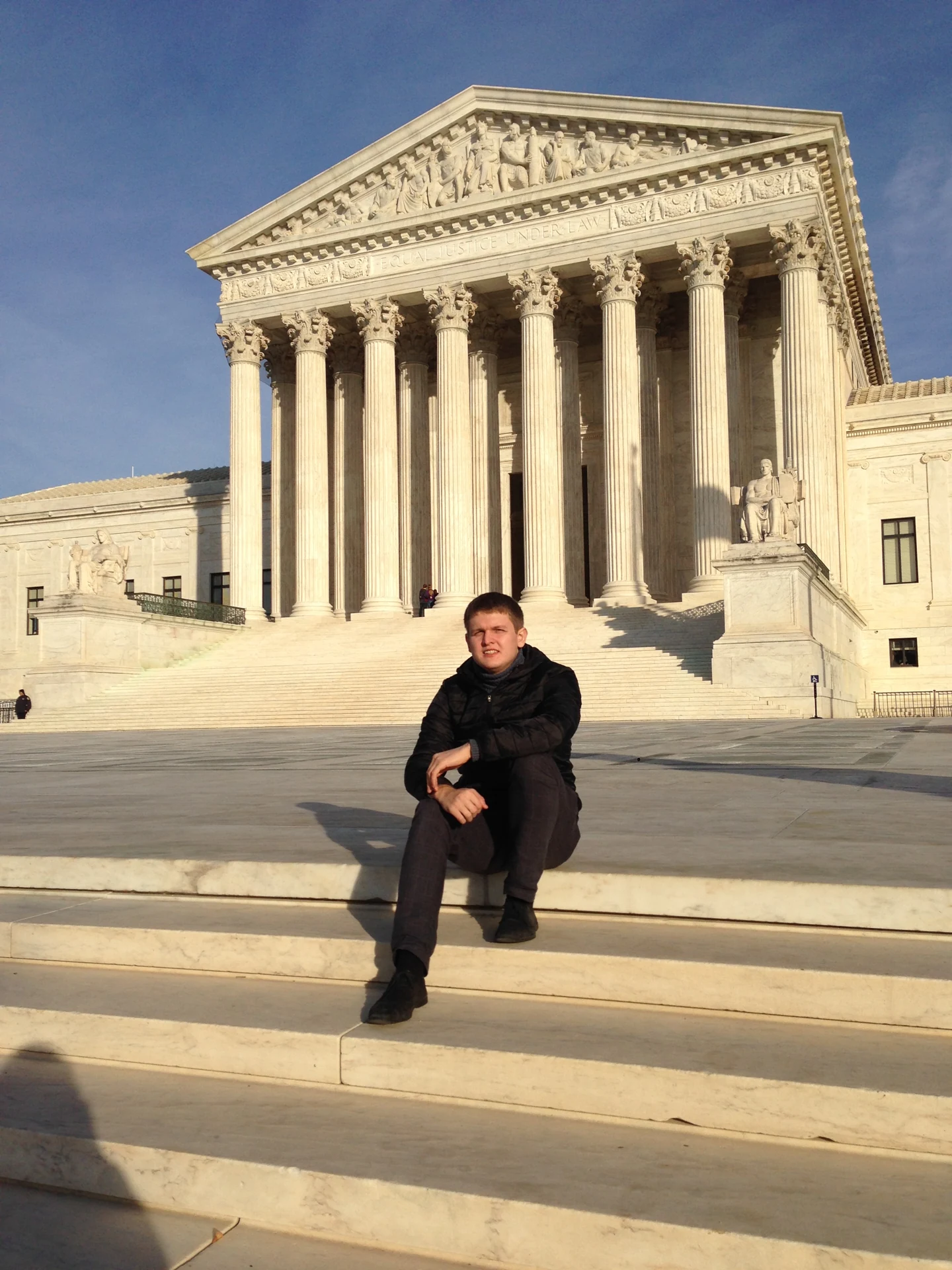
The third branch is here in the capital, too. The president's administration works out of the White House, and the president and federal agencies are responsible for carrying out the laws. Rather than leave it at “here are three nice buildings,” take one law whose effects you could already see in practice this January.
One Law, Three Branches
Americans call the health insurance reform Obamacare. Congress passed the law in 2010, and Barack Obama signed it. The next job was to turn the words into something people could actually use. The executive branch set up a marketplace where people could compare and choose insurance plans. Coverage under those new plans could start as early as January 1, 2014. So now it's about more than politics. It's about what insurance a person can actually sign up for.
Between Obama's signature and the start of coverage, the Supreme Court had its say. In 2012, the Court upheld the payment for going without insurance because it could be treated as a tax. But it didn't let the federal government take away all of a state's existing Medicaid funding if the state declined to expand the program. One law, three different jobs: Congress wrote the rules, the executive branch put them into practice, and the Court drew the line. Once you know that, those two buildings across the street from each other look a little different.
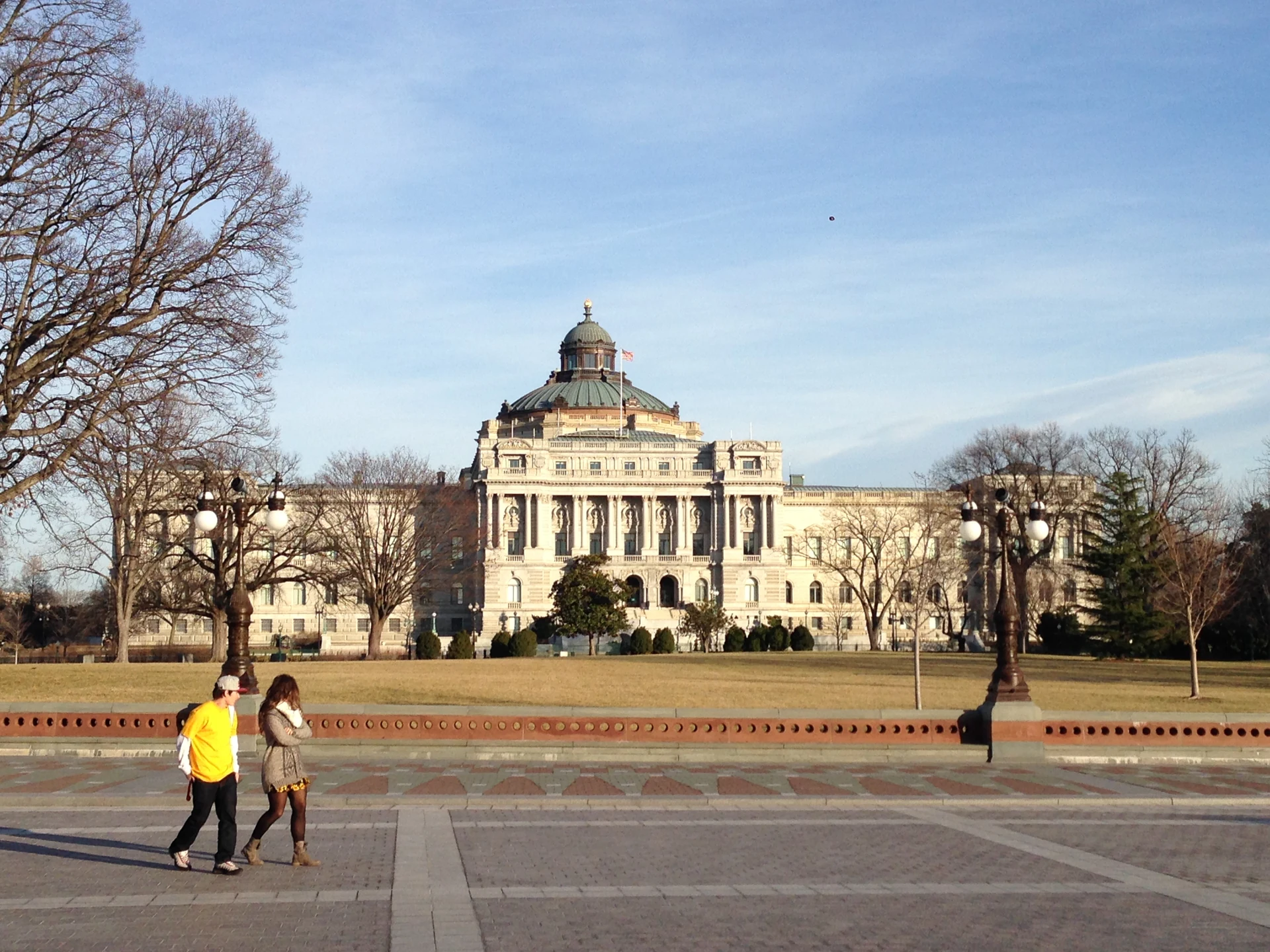
Across from the Capitol is the Thomas Jefferson Building, the historic home of the Library of Congress.
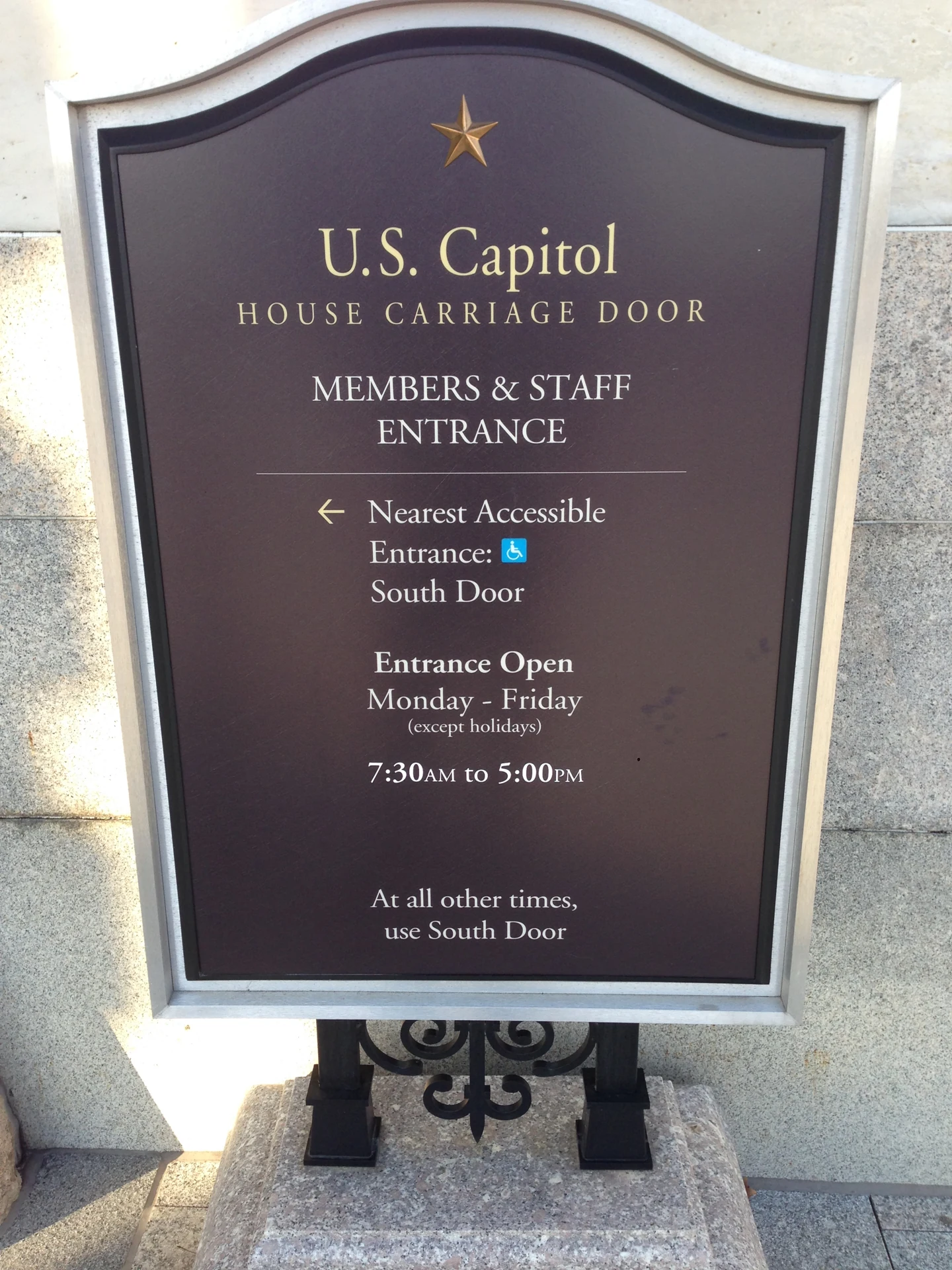
At the Capitol itself, one entrance caught my attention: House Carriage Door. It sounds like a carriage is about to pull up, but the sign gave a more practical explanation: entrance for House members and staff. The carriage was in the name only.
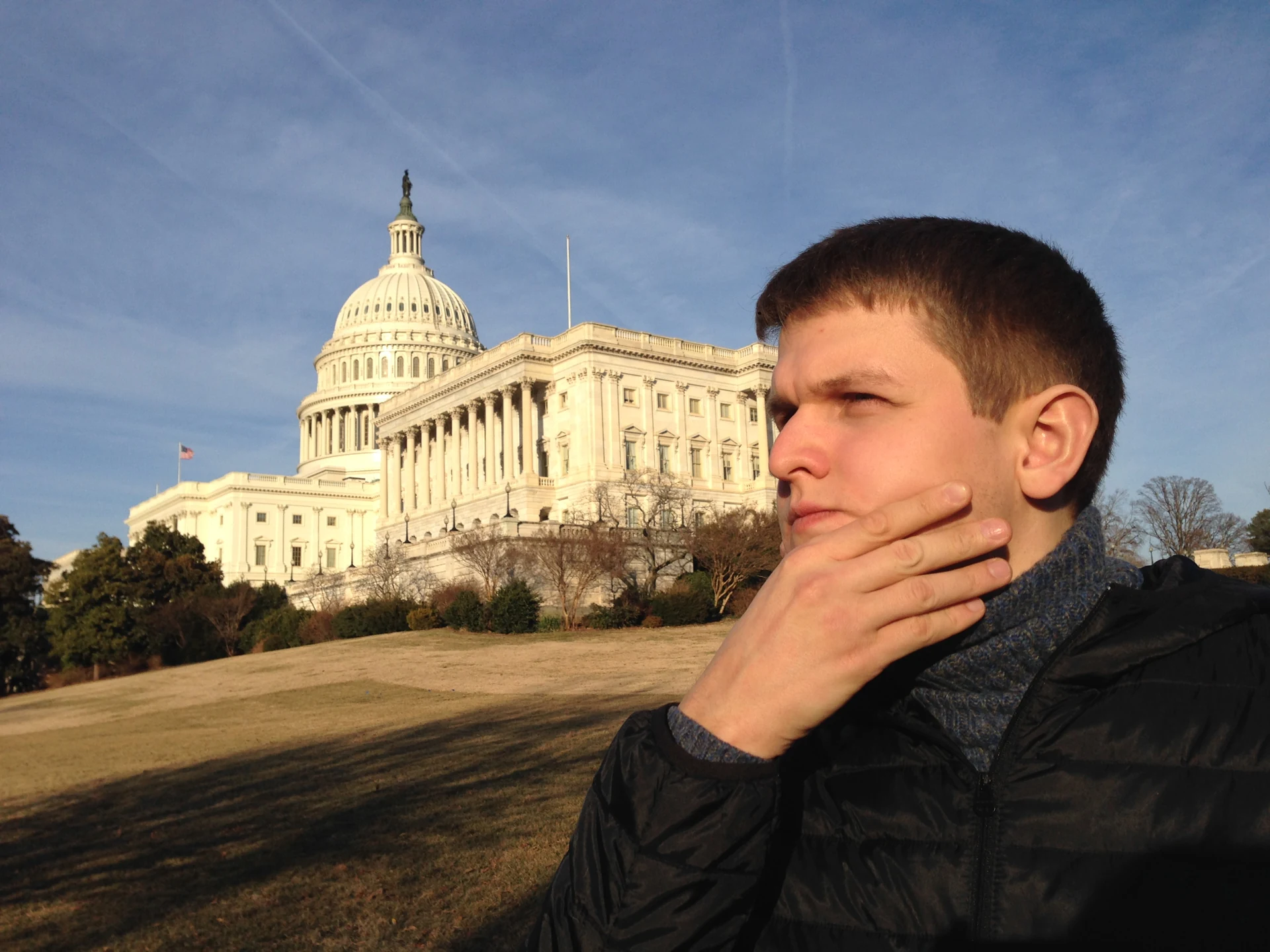
The building catches the sun on its south side, and the dome steals the show again. It's easy to linger there, even with so much else nearby.
From the Pool to the Obelisk
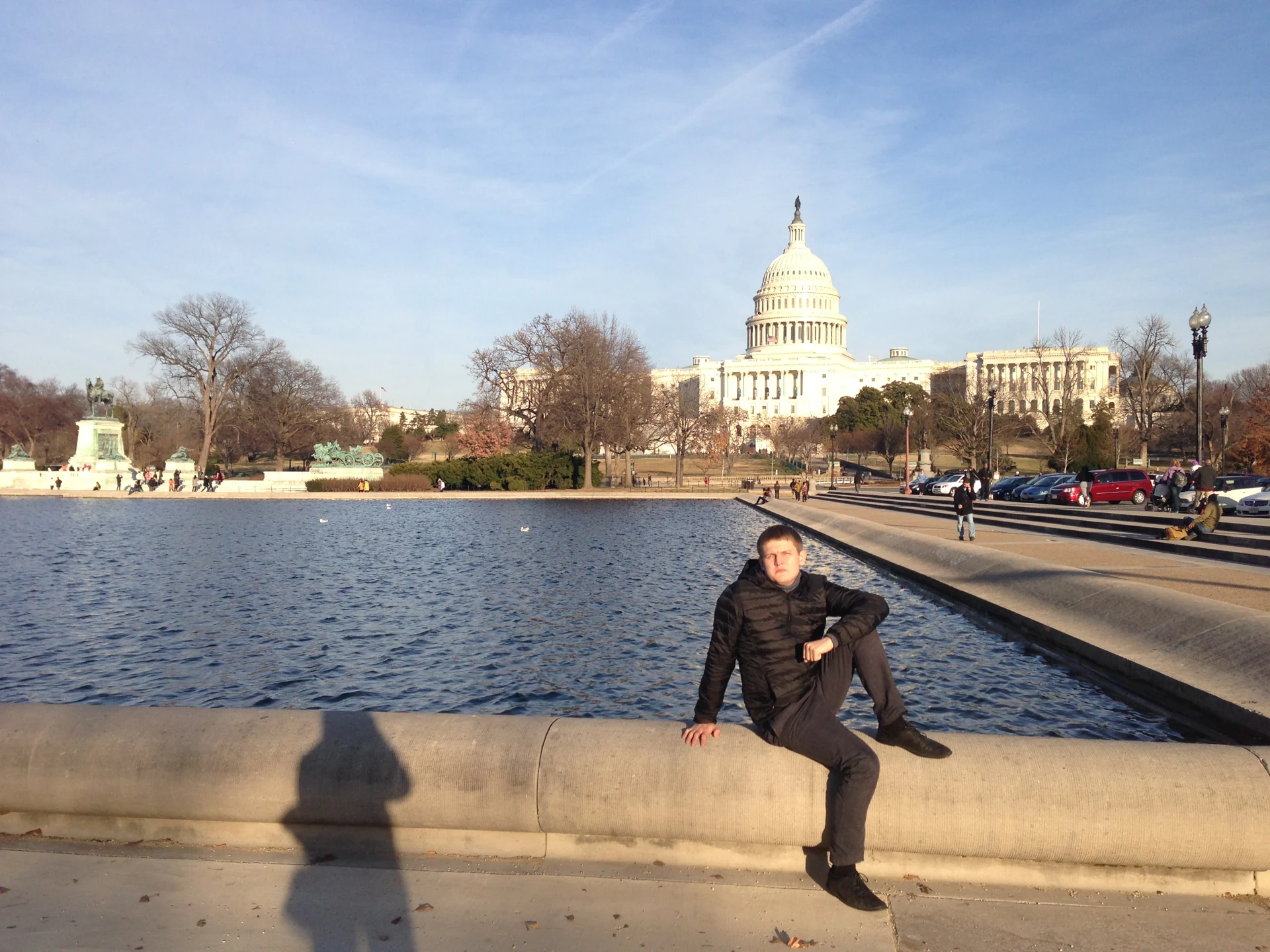
From the Capitol I walked down to the water and sat on the edge. There's one reflecting pool here, right below the Capitol, and another at the opposite end of the National Mall, by the Lincoln Memorial. The Capitol dome is behind me; straight ahead, the long stretch of the Mall draws your eye toward a white obelisk.
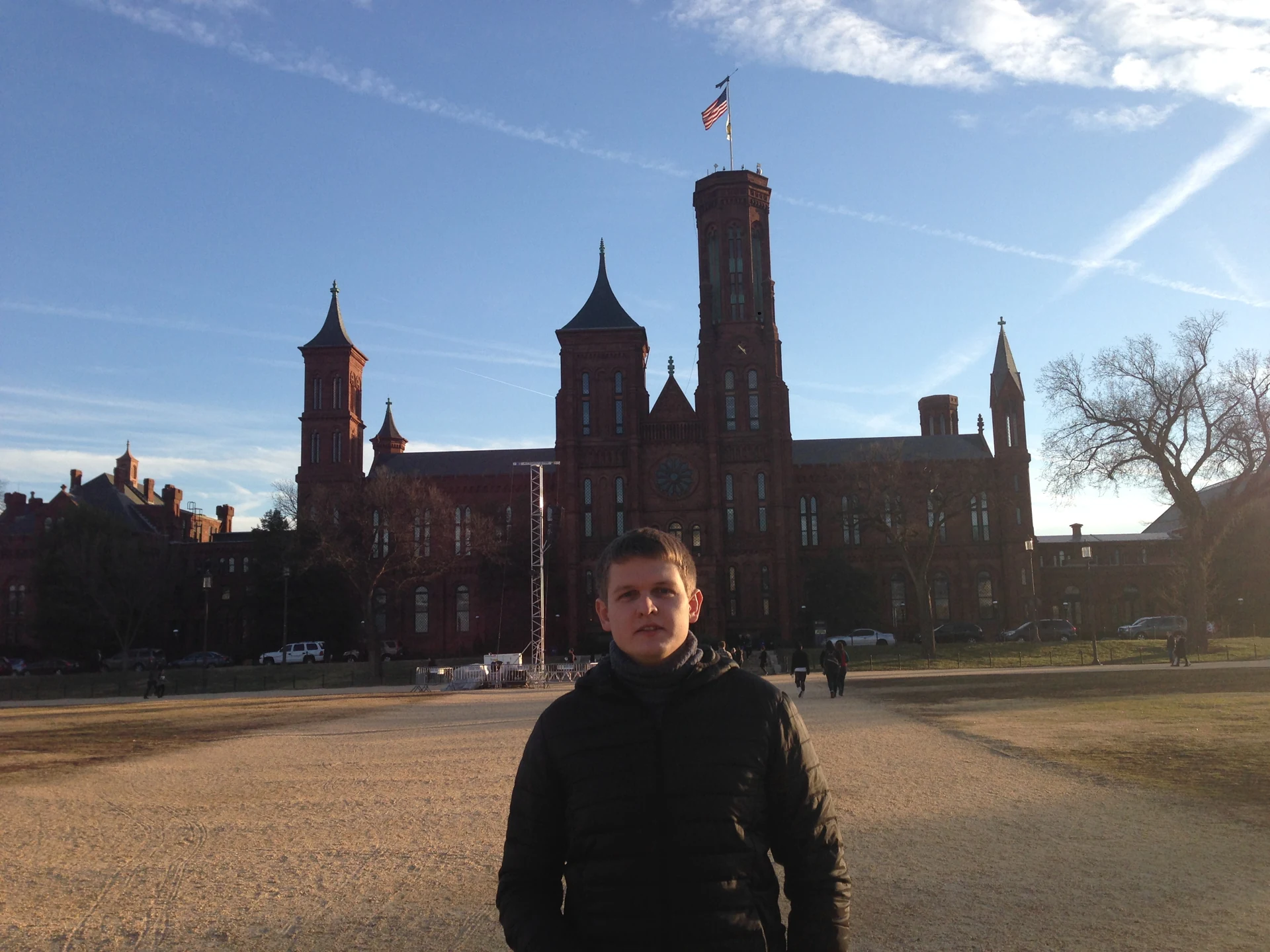
The red Smithsonian Castle stood out along the Mall. In the middle of all those white columns, suddenly there's a building with towers, as if somebody had brought it in from a different trip. It was the Smithsonian Institution's first home. The institution grew out of a bequest from James Smithson, a British scientist who never set foot in the United States. I was already here and wanted to get to the Air and Space Museum, too. I don't think I made it. Smithson managed to do more for these museums without even crossing the ocean.
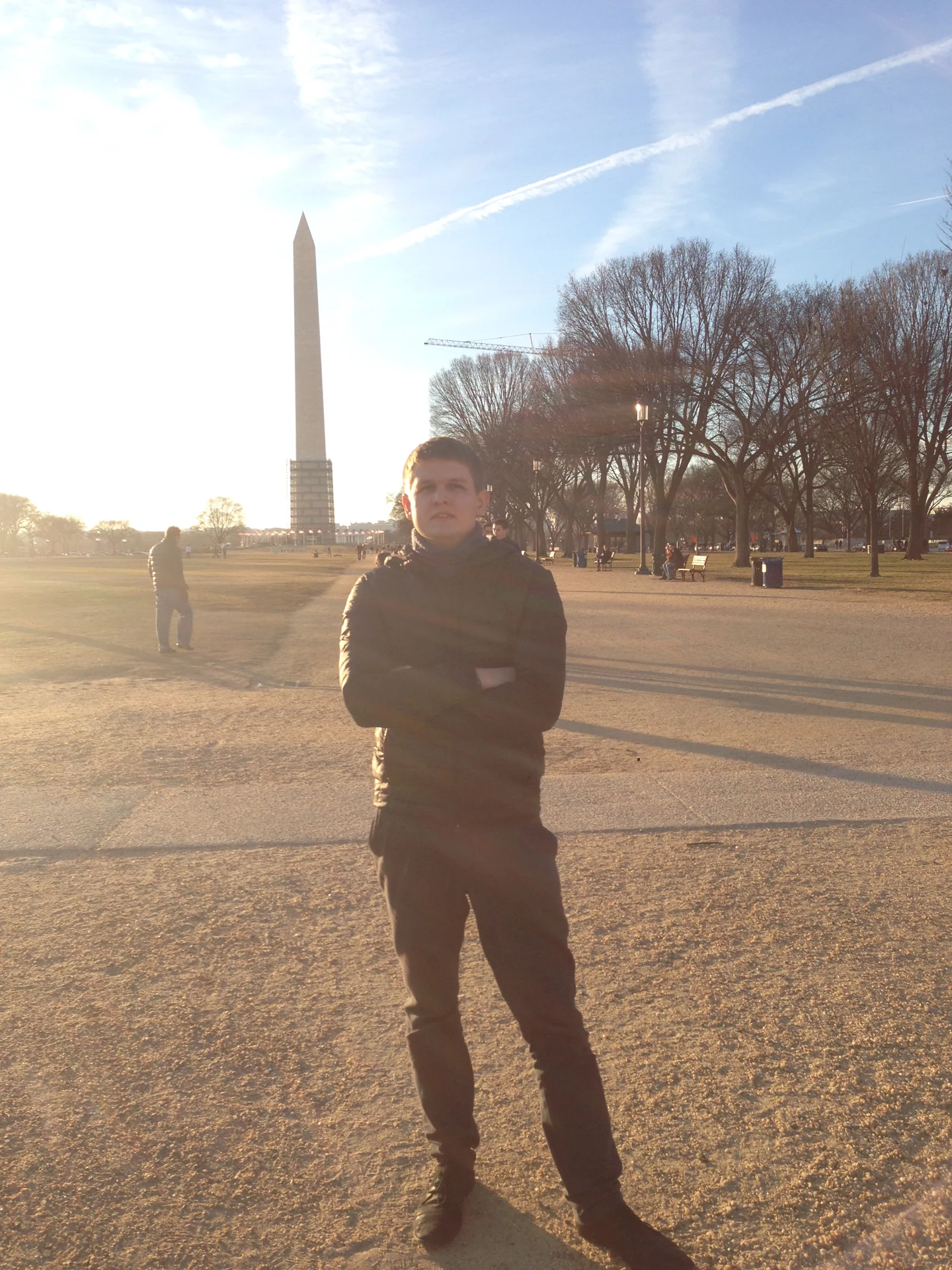
You can see the Washington Monument's obelisk from far down the Mall. I walked closer, and then I could make out the scaffolding near its base.
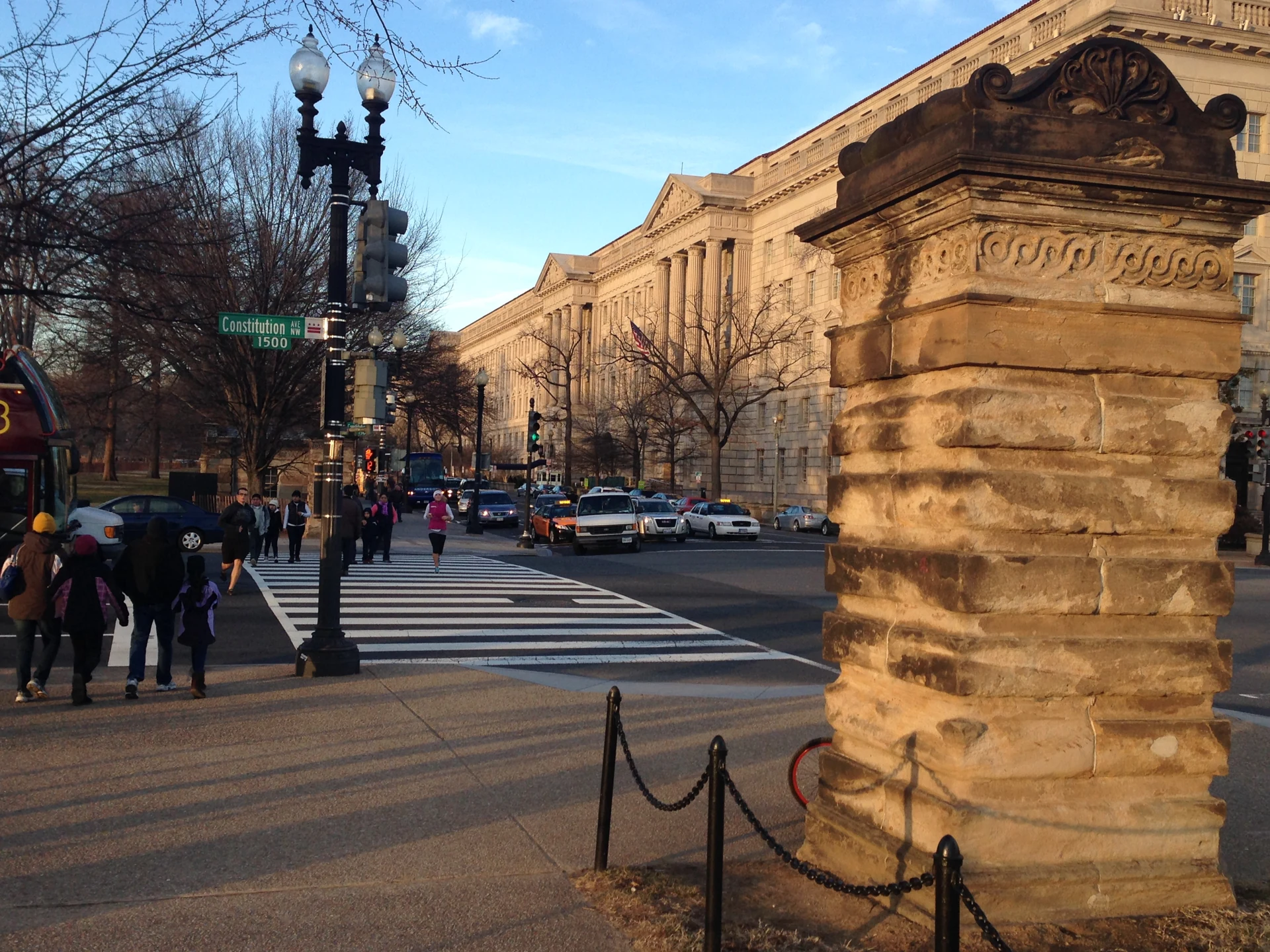
At the corner of 15th Street and Constitution Avenue, an old stone post caught my eye. It turns out it was part of the fence that used to surround the Capitol. These posts were made back in the 1820s, to a design by Charles Bulfinch, and later moved here. I'd walked away from the Capitol, and a piece of it had found me again.
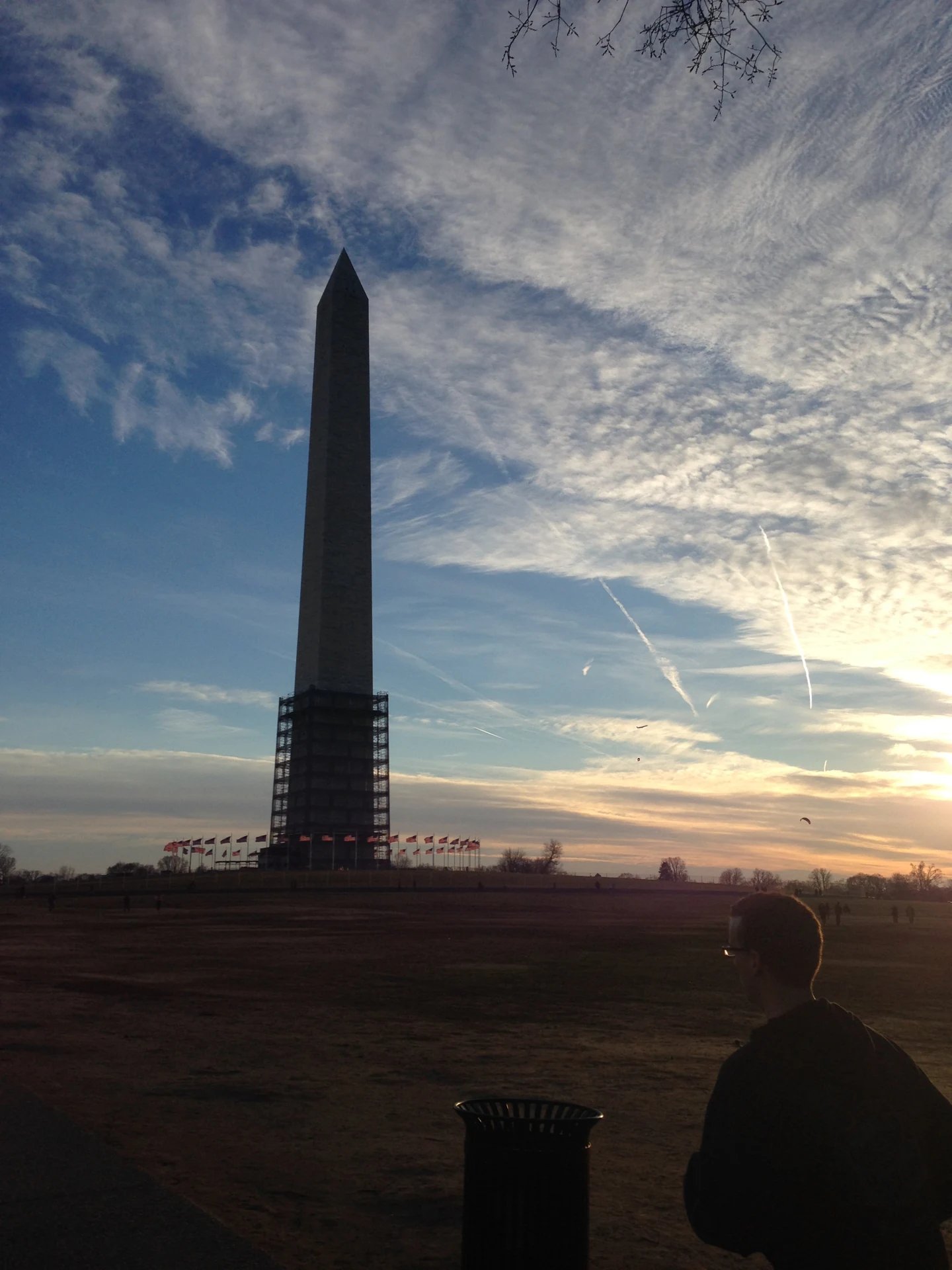
It was getting late. I looked back toward the obelisk from that corner: scaffolding at the bottom, nothing but sky above.
Who Borrows on Behalf of the Country?
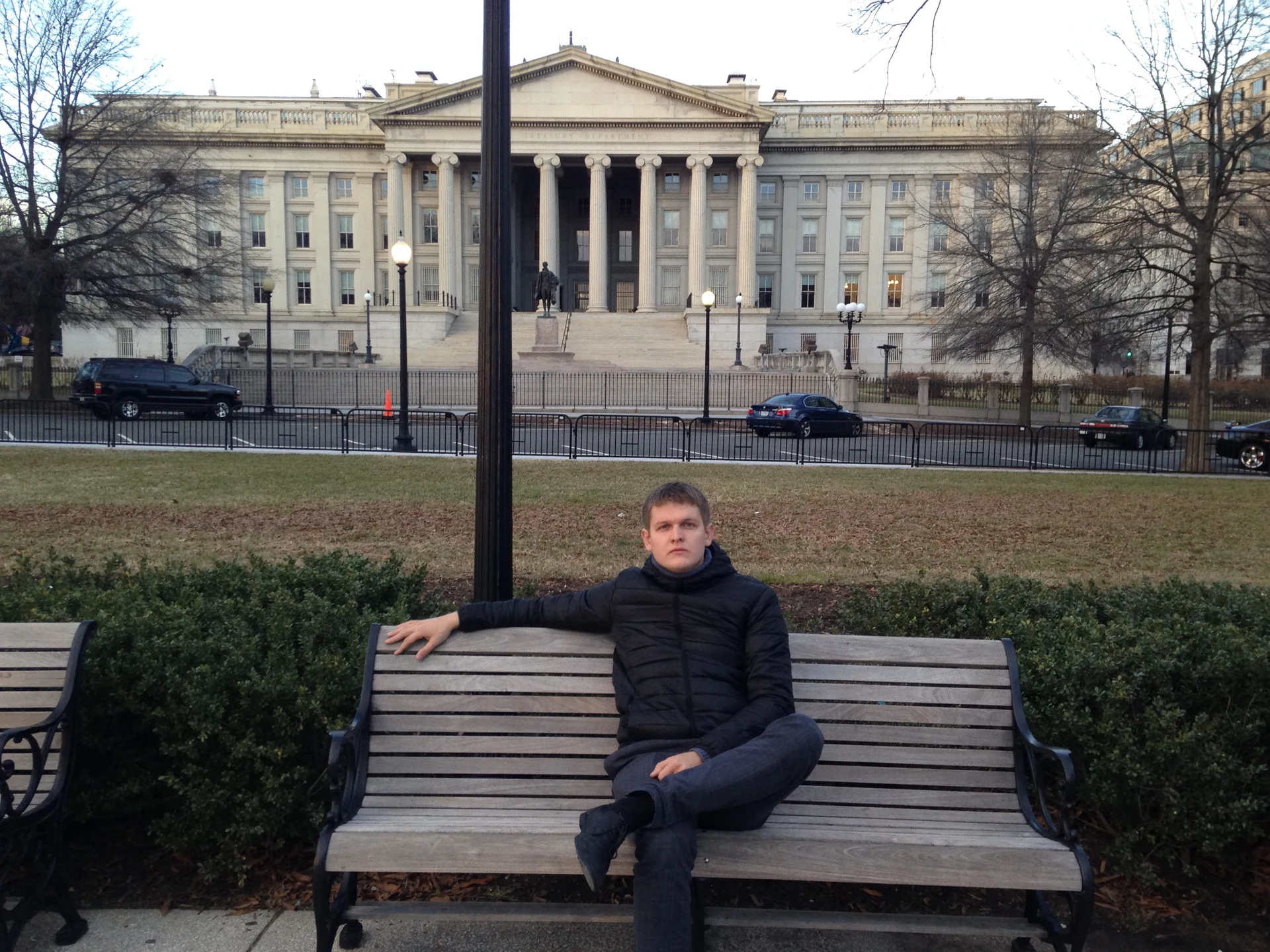
Not far from the White House, I sat down on a bench across from the U.S. Treasury Department. And now the tour finally gets to my kind of thing.
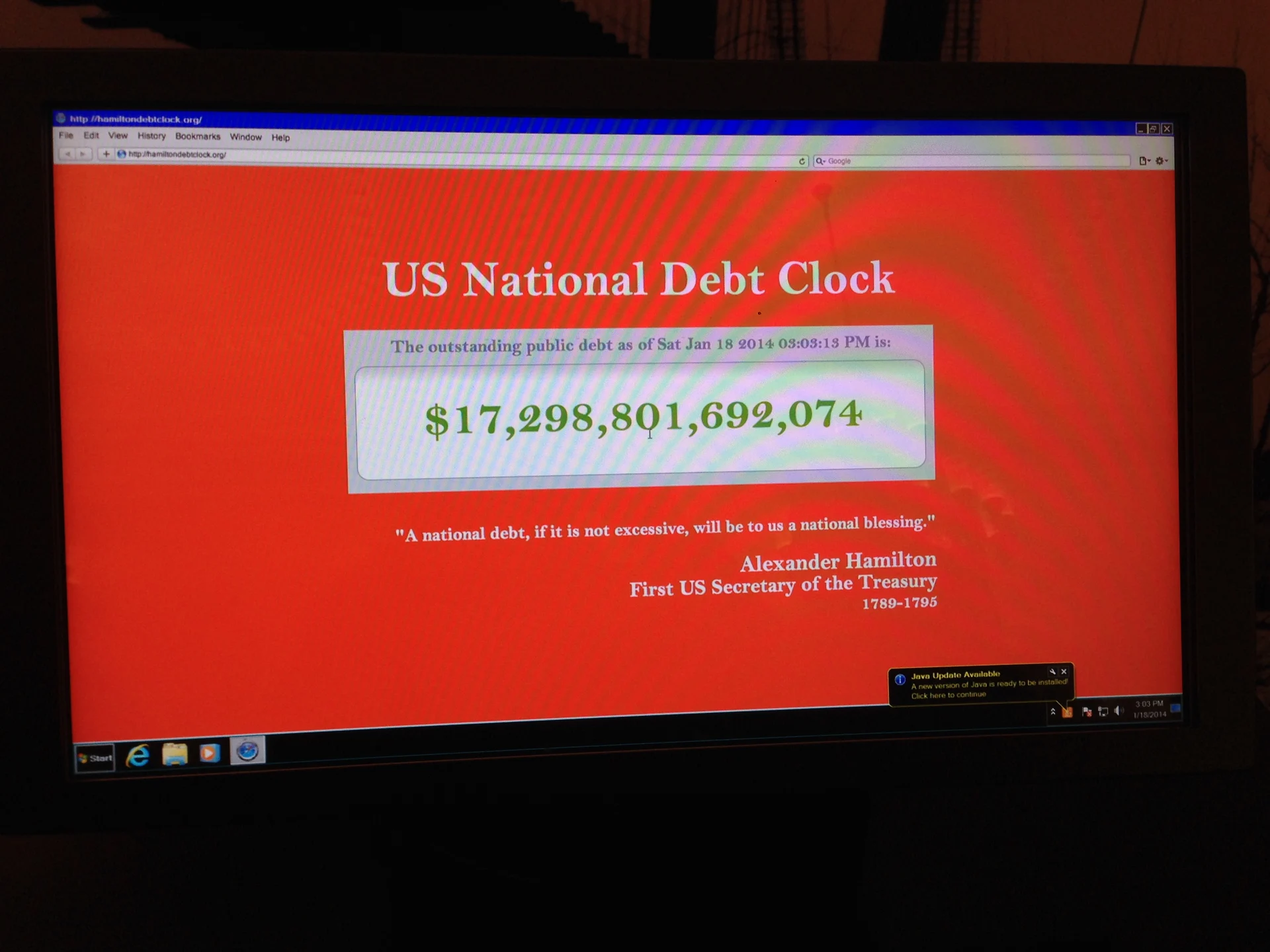
At the finance museum in New York I'd seen the national debt clock. It was the kind of number that makes you want to count the zeros again. Here, the interesting question is how that number gets so big in the first place.
Here's the basic idea: Congress decides what the government can spend money on and what taxes it collects. When revenue falls short, the Treasury goes to the market and sells debt securities. An investor hands over money and gets a security and the right to be paid in return. The government uses the proceeds to pay its bills, so the money ends up with whoever the government is paying. The bond, meanwhile, can pass from one investor to the next. The Treasury decides how long to borrow for and what securities to sell. At auction, the market shows what terms it's willing to lend on. Yields on ordinary U.S. Treasuries then serve as a benchmark for other borrowing costs.
The first temptation, of course, is to say, “Oh, so this is where they print the dollars.” But issuing bonds and printing banknotes are two different things. The Treasury raises money that's already out there and uses it to pay the government's bills. The Federal Reserve handles monetary policy separately. And the banknotes are printed by a dedicated Treasury bureau, not by the people in the building across from my bench.
A few days after my walk, a good example came along of the kinds of decisions they make here. The Treasury announced its first issue of two-year floating-rate notes, worth fifteen billion dollars. They went up for auction for the first time at the end of January. The idea is simple: the interest rate on one of these notes has two parts. One moves with the rate on a short-term, thirteen-week Treasury bill. The other is a spread set at the first auction that stays fixed after that. So behind one big number on a debt clock are a whole bunch of decisions: how long to borrow for, what interest rate to promise, and who'll actually take the deal.
Sunset and Snow
The sun went down by the Lincoln Memorial. I walked around through the park and watched the water and the ducks. In daylight, Washington was busy convincing me that the fate of the country, and sometimes the world, was decided here. By evening, in that same city, I could just walk through a park and be happy there was a sunset and there were ducks. I like that ending to the walk better than one more grand facade.
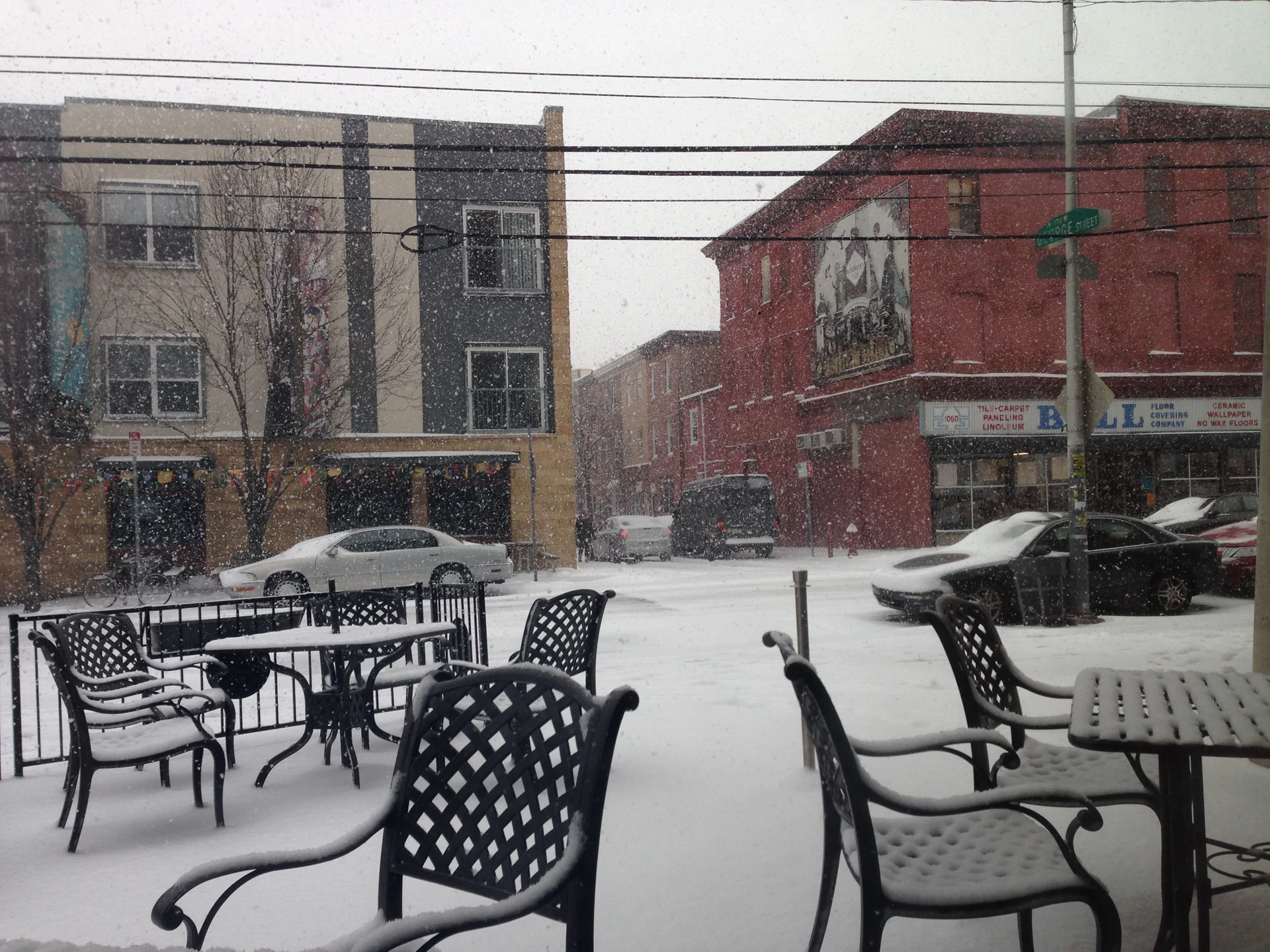
As I remember it, I took the bus back to Philadelphia, and it started snowing on the way. By January 21, the patio was already buried in snow.
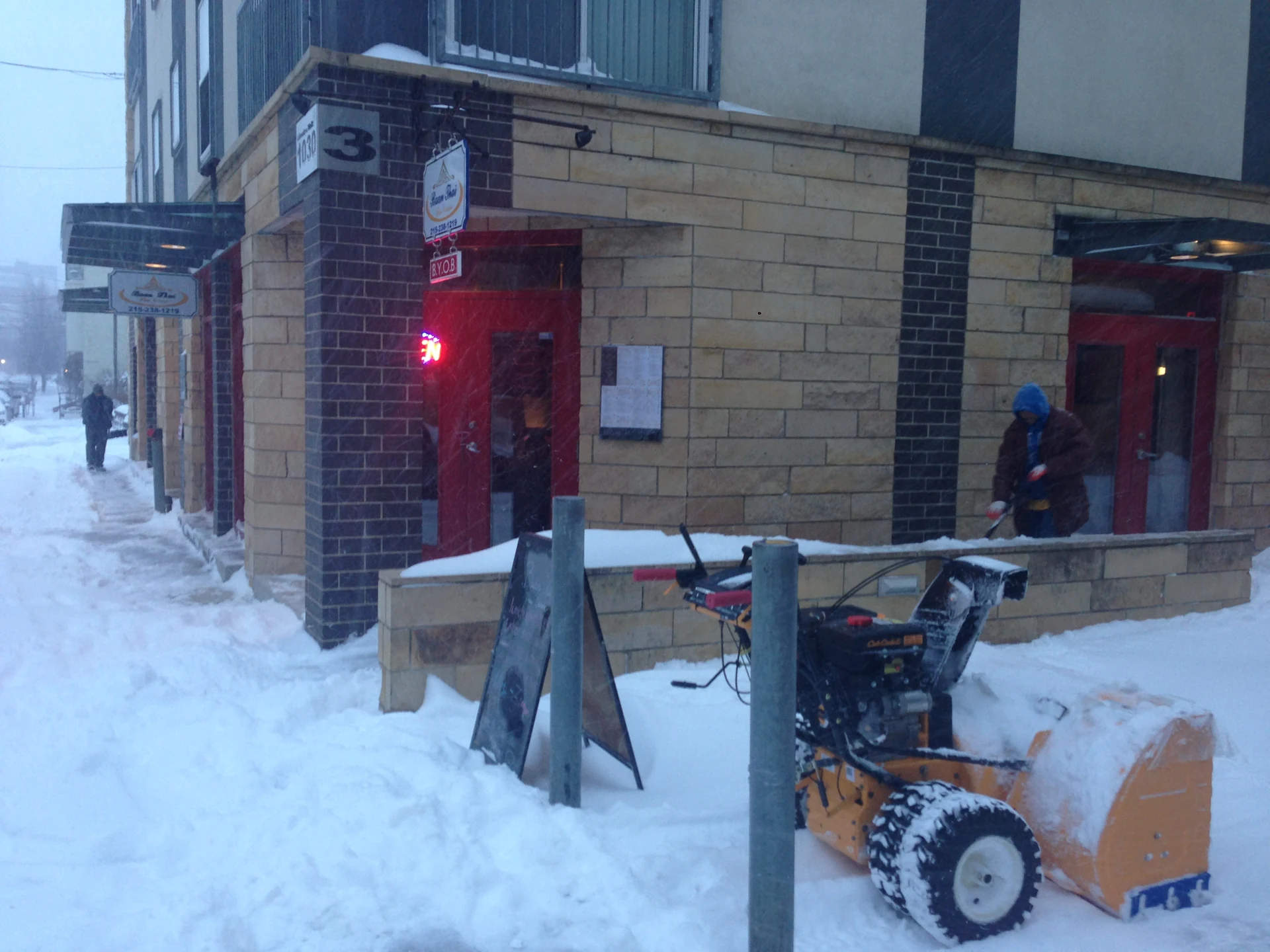
By evening, snow-clearing equipment was already out on the street.
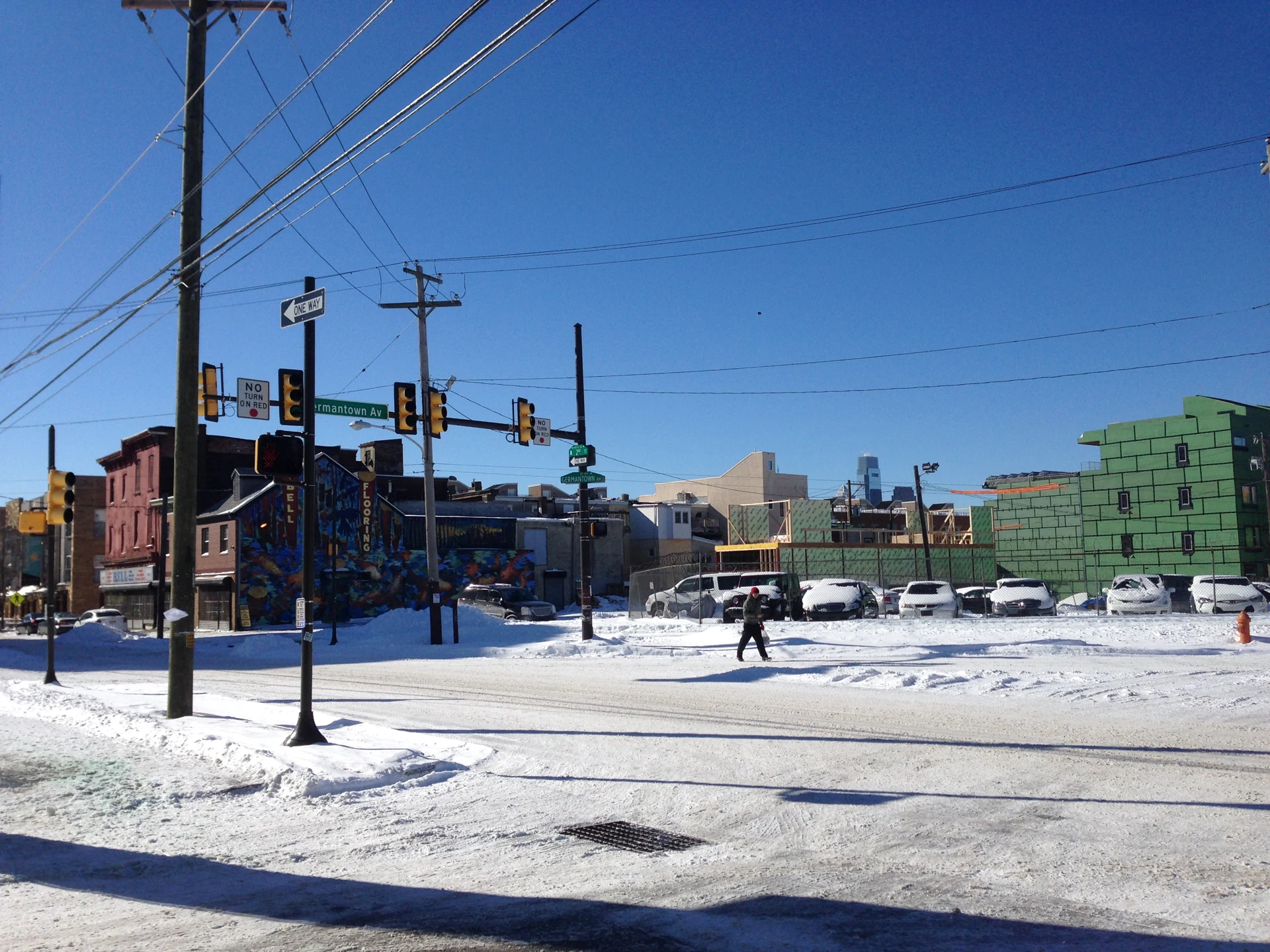
On the morning of January 22, the city was still white, and I had a ticket from Philadelphia to San Diego via Atlanta.
I didn't buy the ticket to escape winter. The Traffic & Conversion Summit in San Diego was already on my calendar. It just made for a good cut: snow in Philadelphia, then the other side of America and fifteen degrees Celsius. But that's another story.