Tallinn: A Day in the Middle Ages and a Pickle I Had to Catch
Estonia · August 2014
Of all the things I saw in Tallinn, for some reason it’s the fork I remember best. Nothing silver, nothing out of a museum. Just a regular fork for fishing a pickle out of an enormous barrel. Before I got to that particular quest, though, I’d already walked under a medieval gate, dressed up as a sailor, and wound up on the deck of a patrol boat. Not bad for a day when all I meant to do was go for a walk.
Through the Viru Gate
Of all the Baltic capitals we visited on that trip, Tallinn struck me as the most European and the most tech-savvy. And yet it didn’t feel entirely foreign. Ukrainians and Estonians share a piece of history, and sometimes even the jokes we grew up with need no translation. If somebody talks slowly, for instance, you ask them, “What are you, Estonian?” Then you get here and find people are already signing documents digitally and voting online. Maybe they weren’t the slow ones. Maybe we were a little late retiring the joke.
But the first thing I wanted a closer look at in Tallinn had absolutely nothing to do with computers.
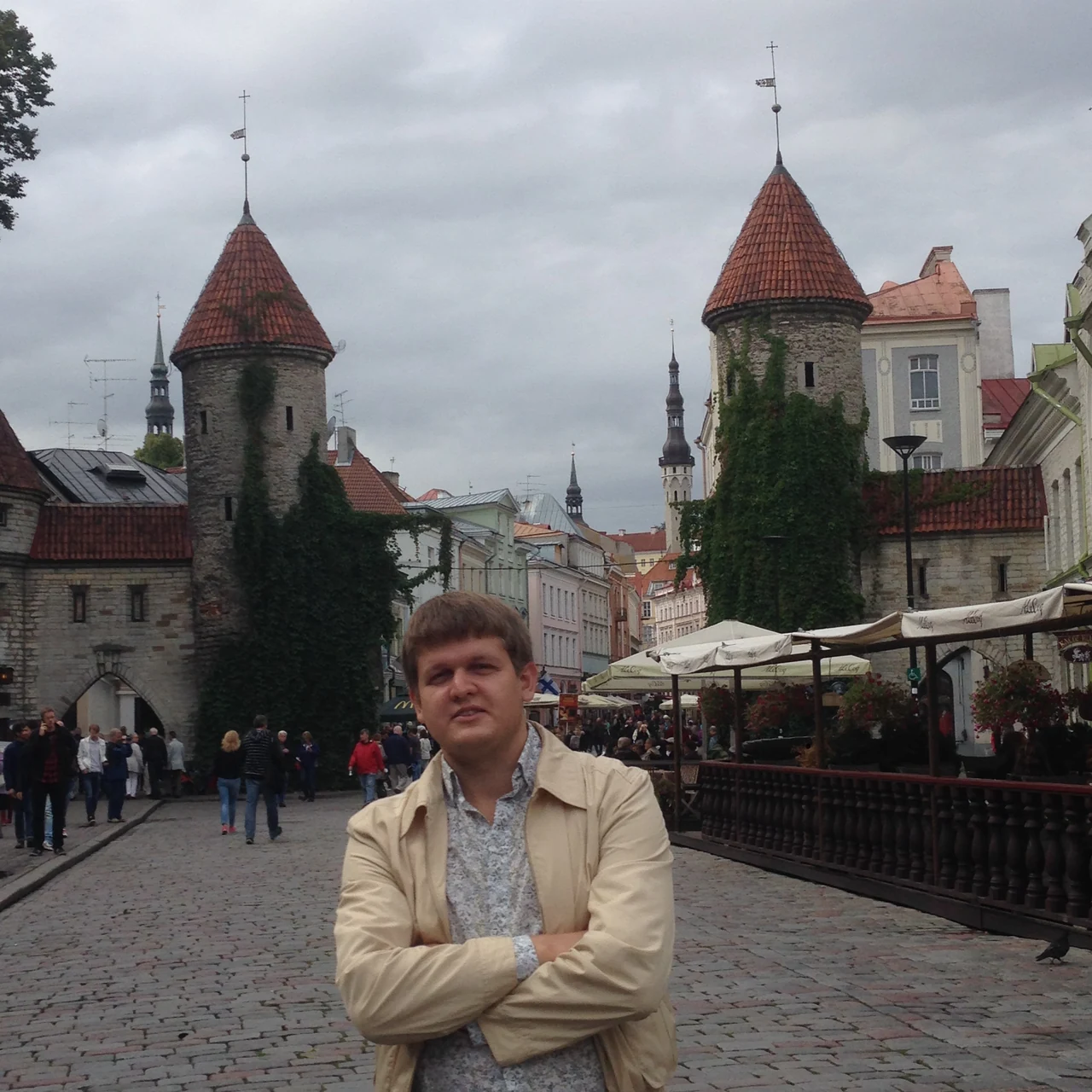
I entered the Old Town through the Viru Gate. Two stone towers with red roofs, and the moment you’re past them, it feels like somebody’s sent you five hundred years back.
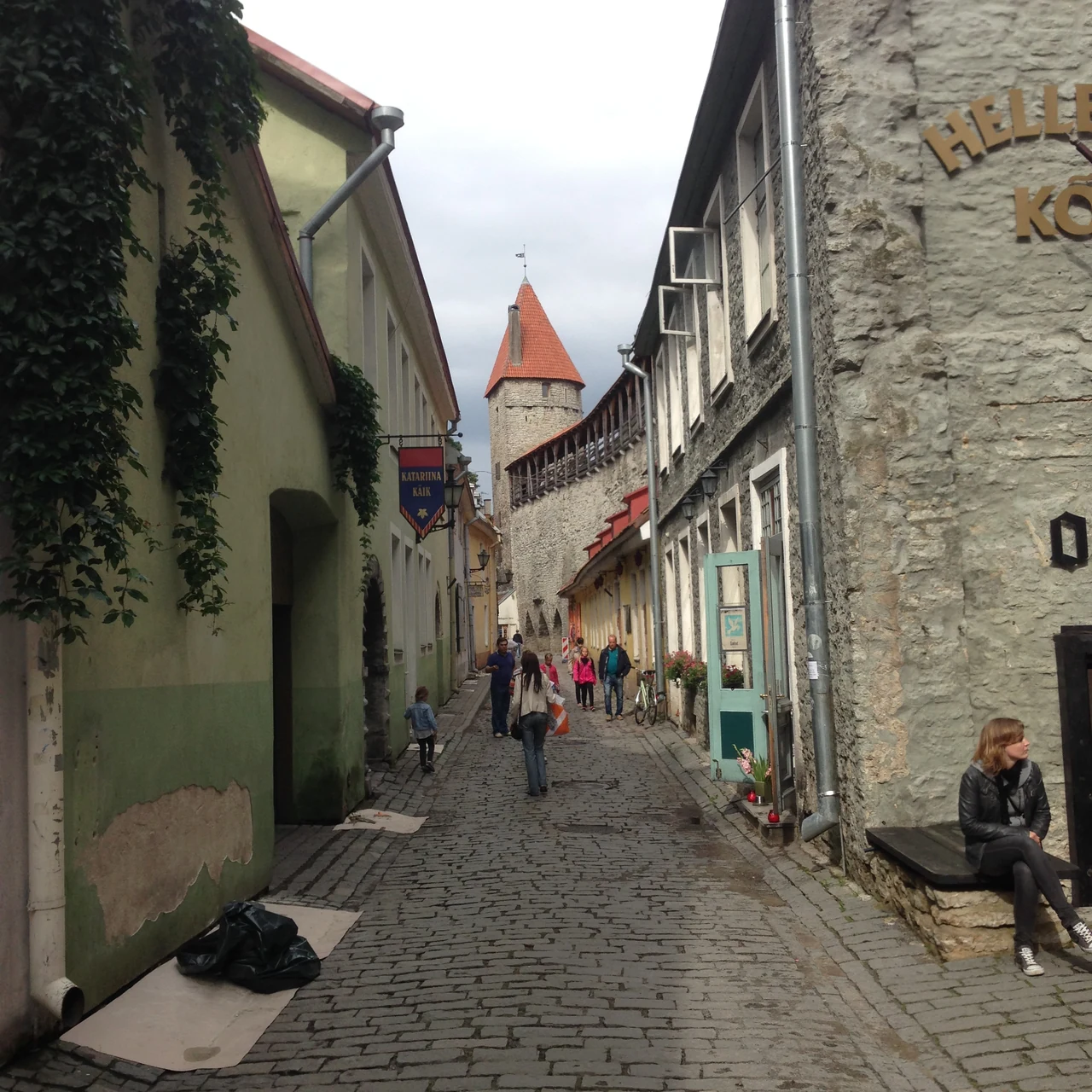
By Hellemann Tower you walk along the wall, with greenery hanging from the buildings. This isn’t a stretch of wall out on the edge of town that you make a special trip to see. You just turn a corner and spend a while walking beside it, like everybody else.
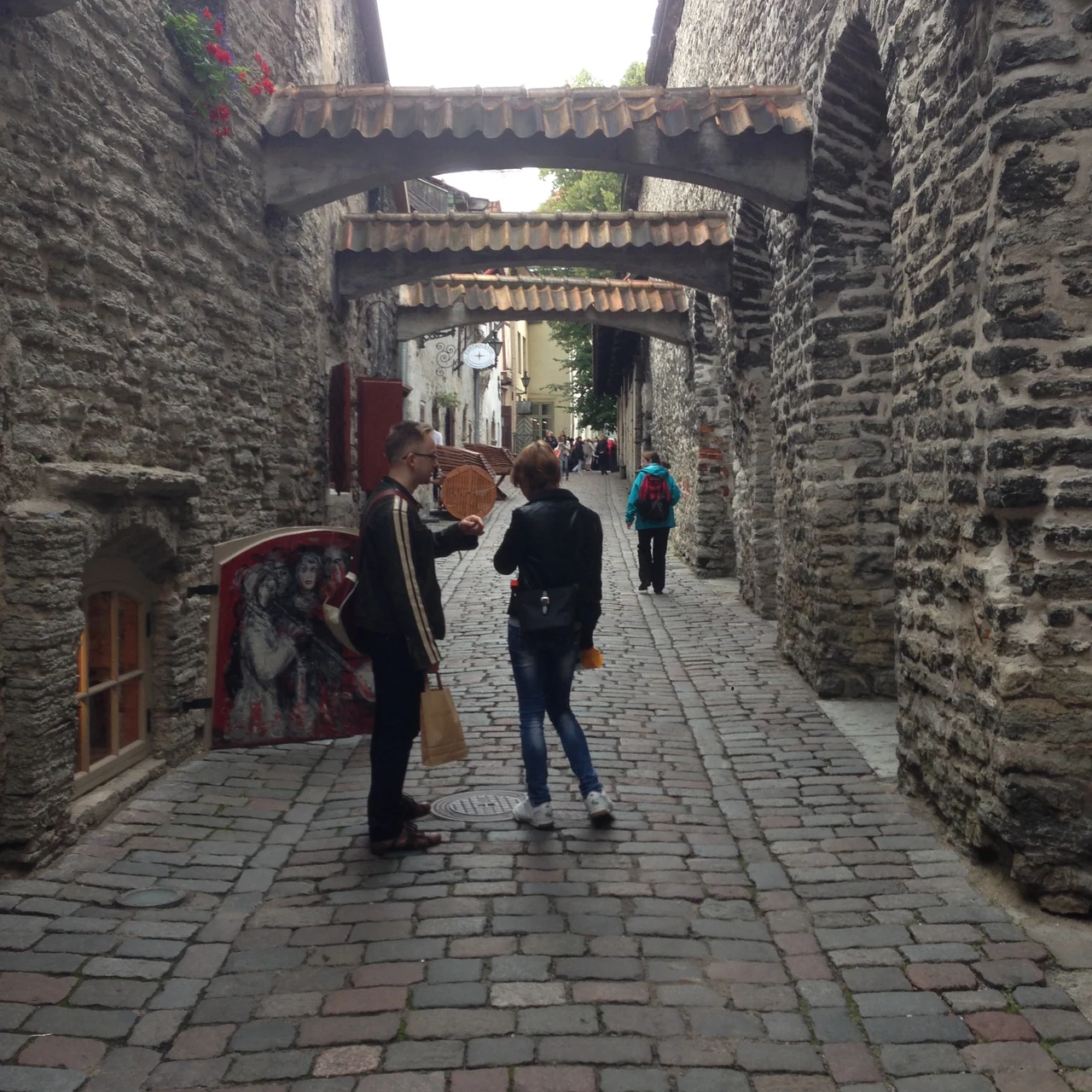
A little farther on, stone arches hang over the cobbles of St. Catherine’s Passage. It looks like a witcher could step out at any moment. Though going by the width of that passage, if one did turn up, one of us would have to flatten ourselves against the wall to get past.
There really is a story about an order of knights behind these walls, by the way, just not as straightforward as it looks in the movies. In thirteen forty-six, the Danish king sold northern Estonia, Tallinn included, to the Teutonic Order. The following year its Livonian branch took over. The people in charge up on Toompea Hill changed, while down below, the merchants and the town council kept doing business. Picture it: the castle and the rulers up top, a port making money from trade between the West and Novgorod down below. Tallinn belonged to the Hanseatic League, and its merchants had a rule: goods moving through town couldn’t simply go past them. You had to deal with the locals. As somebody who likes to know where the money comes from, I can see right away why they could afford all those stone houses. A good spot on the map helps, of course. It helps even more when you can send somebody an invoice for being in a good spot on the map.
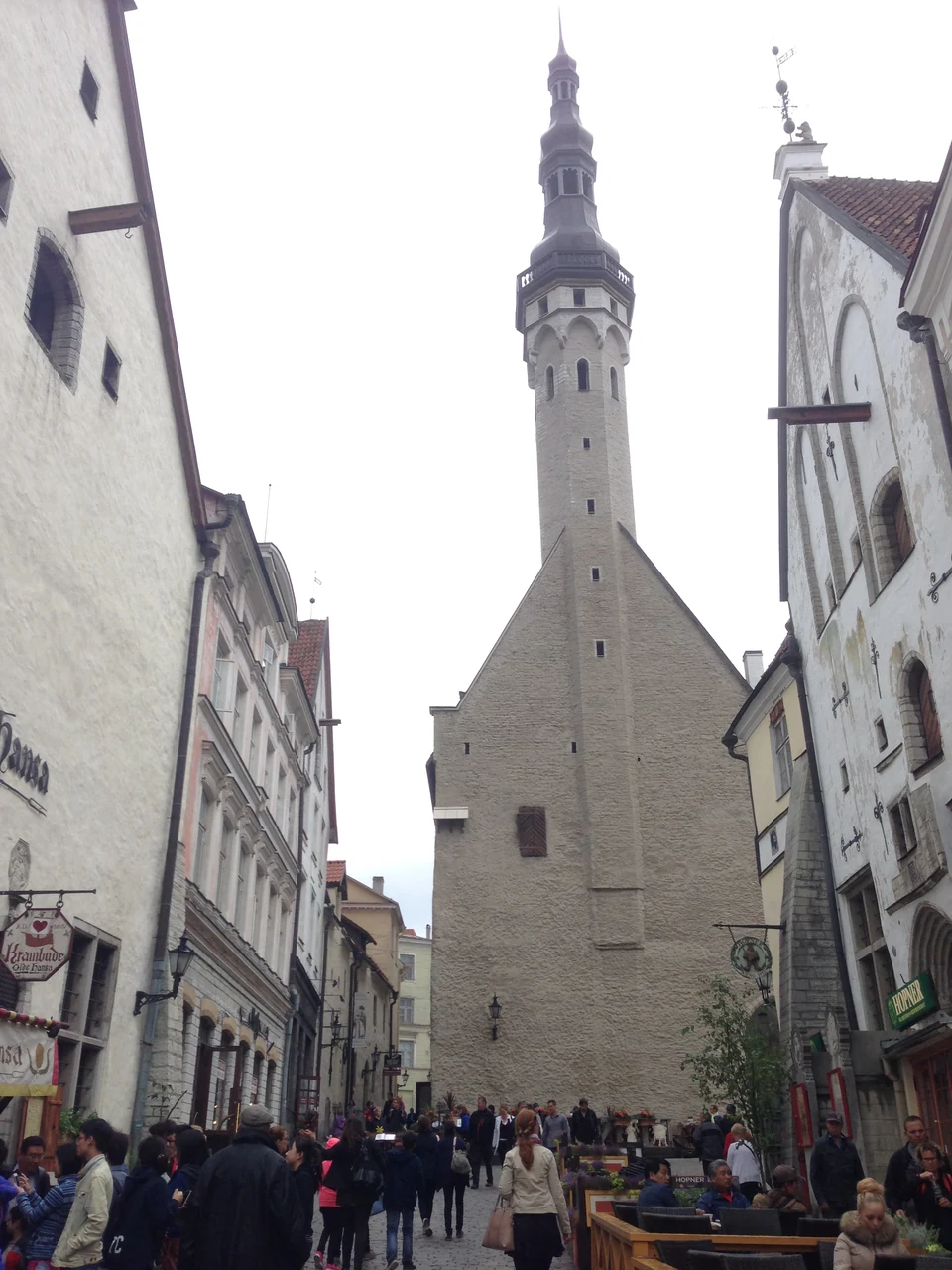
Walking toward Town Hall Square, you see that same Gothic Town Hall take shape ahead of you. It got its familiar outline in the early fifteenth century. So my guess about five hundred years ago wasn’t just my imagination. There’s been a weathervane in the form of a watchman on that spire since the sixteenth century. They call him Old Thomas. Not the same Thomas all the way through: the original didn’t survive everything, and there’s a replacement up there now. The tower still does a useful job, though. People once watched from up there for fires or unwanted arrivals. Now you can use it to figure out which way the square is.
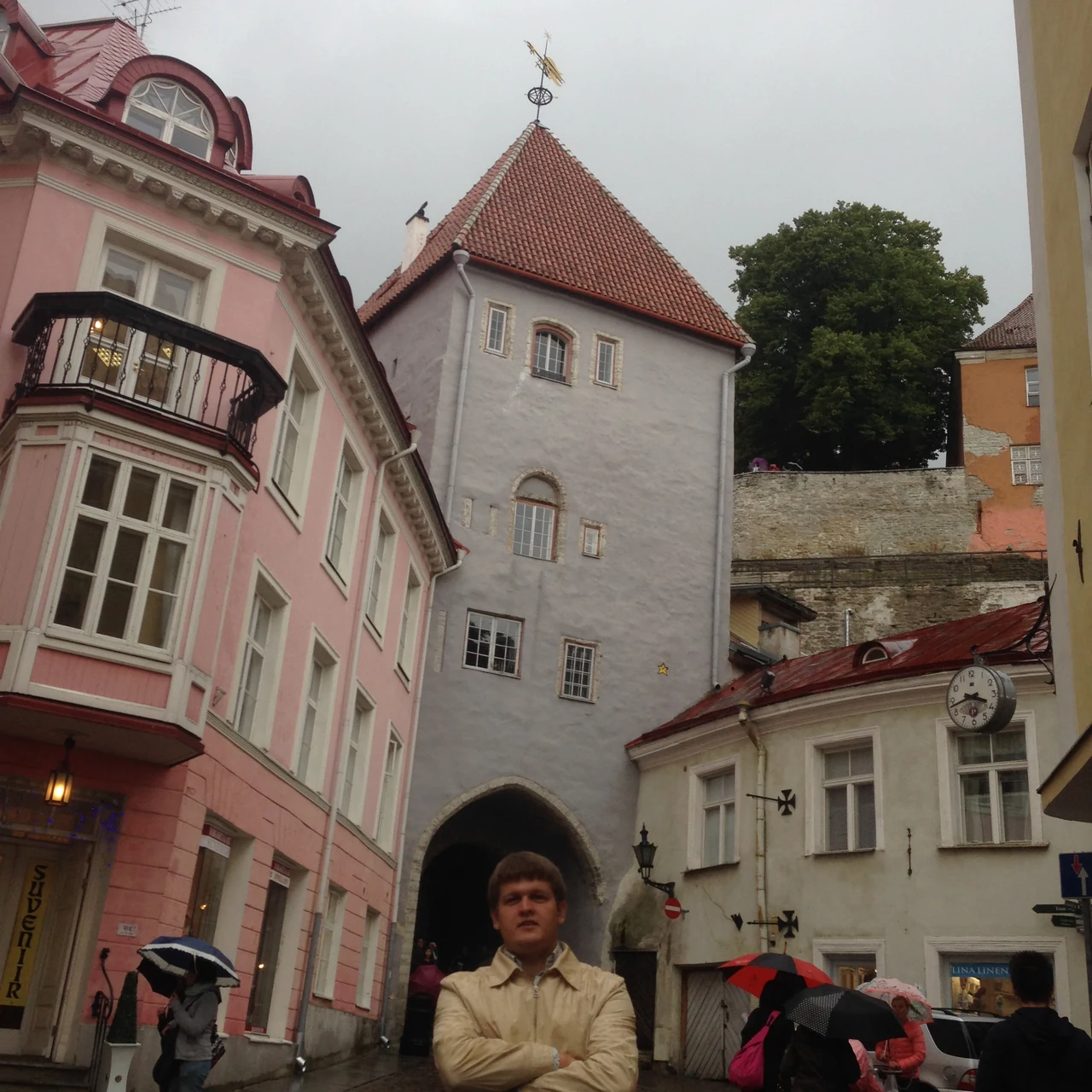
By a pink corner building there’s another gate called the Long Leg. You can go through it and climb from the merchants’ town to Toompea. A few minutes on foot, but in medieval Tallinn those were two different worlds. Another way up from the lower town is called the Short Leg. Those names sound less like directions and more like a report on how somebody felt after the climb. Still, a year later I wouldn’t mistake either of them for another Main Street.
What I liked about the Old Town was that I didn’t need a scale model to picture it. To understand why the city needed those gates, just walk under one. To see how people still live here, you don’t have to go far either: those same narrow streets, and between the stone buildings there are shop signs, flowerpots, and tables. No wonder it felt familiar and nothing like home at the same time.
From Knight to Sailor
On the way to the harbor, stone facades gave way to the wooden houses of Kalamaja. That’s old Tallinn too, just without the knights. It grew up by the water, with fishermen first and factory workers later. A little farther on, the wooden houses give way to seaplane hangars. These days they house the Seaplane Harbour maritime museum.
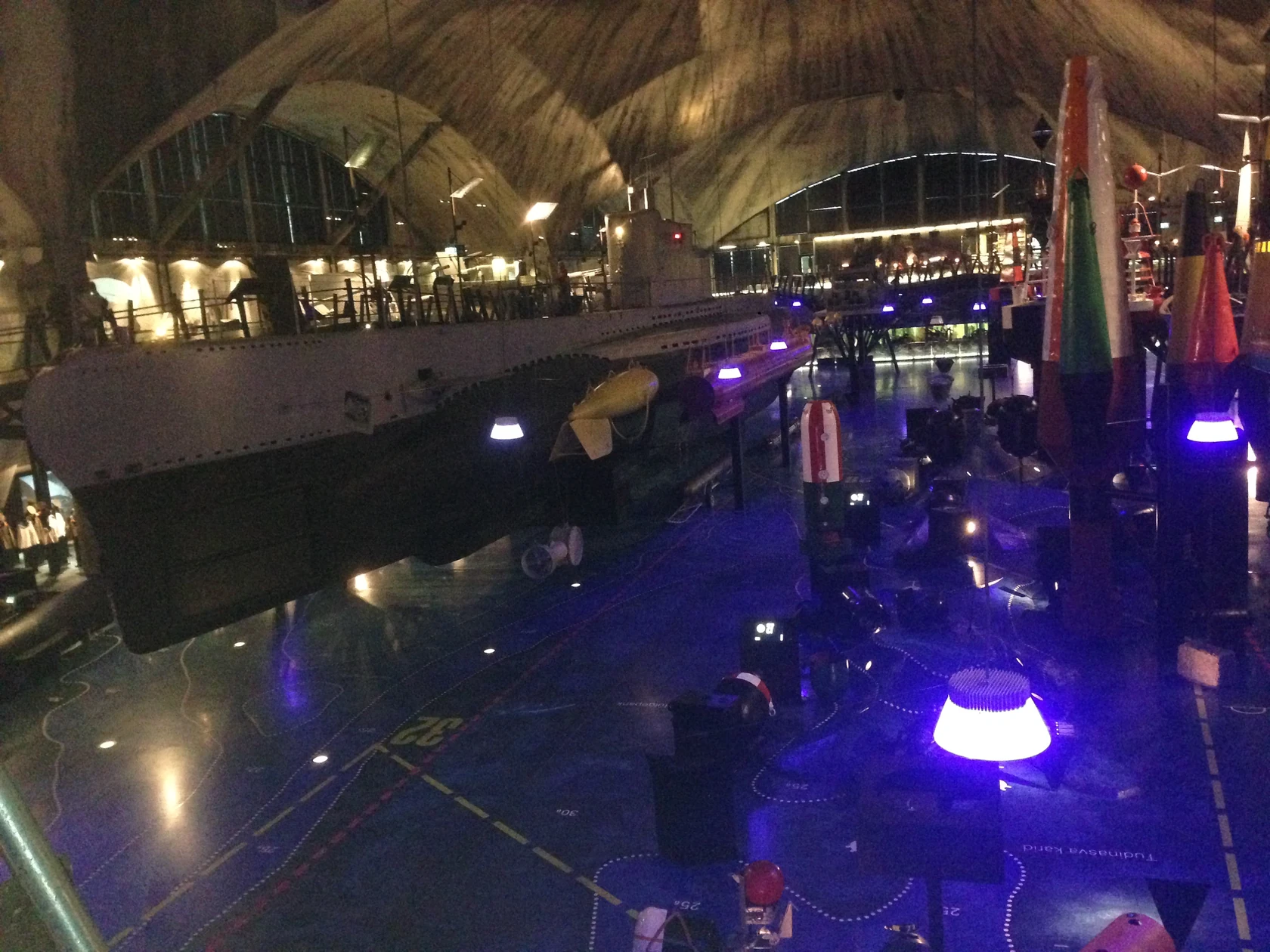
Under one of the hangar roofs sits an actual submarine, the Lembit, built in Britain for Estonia. One of the things I liked about this museum is that they don’t just tell you about a vessel. First you stand next to it. Then you understand how big it is.
I tried on a white sailor’s top with a blue collar. A few hours earlier I’d been walking under medieval gates. Now I looked as if I’d turned up for duty. From knight to sailor in a day. Luckily, nobody gave me a navigation exam.

On the quay, you really get a sense of how big a ship is when it’s out of the water. Stand by the stern and the whole hull towers over you, including the part you’d normally never see.
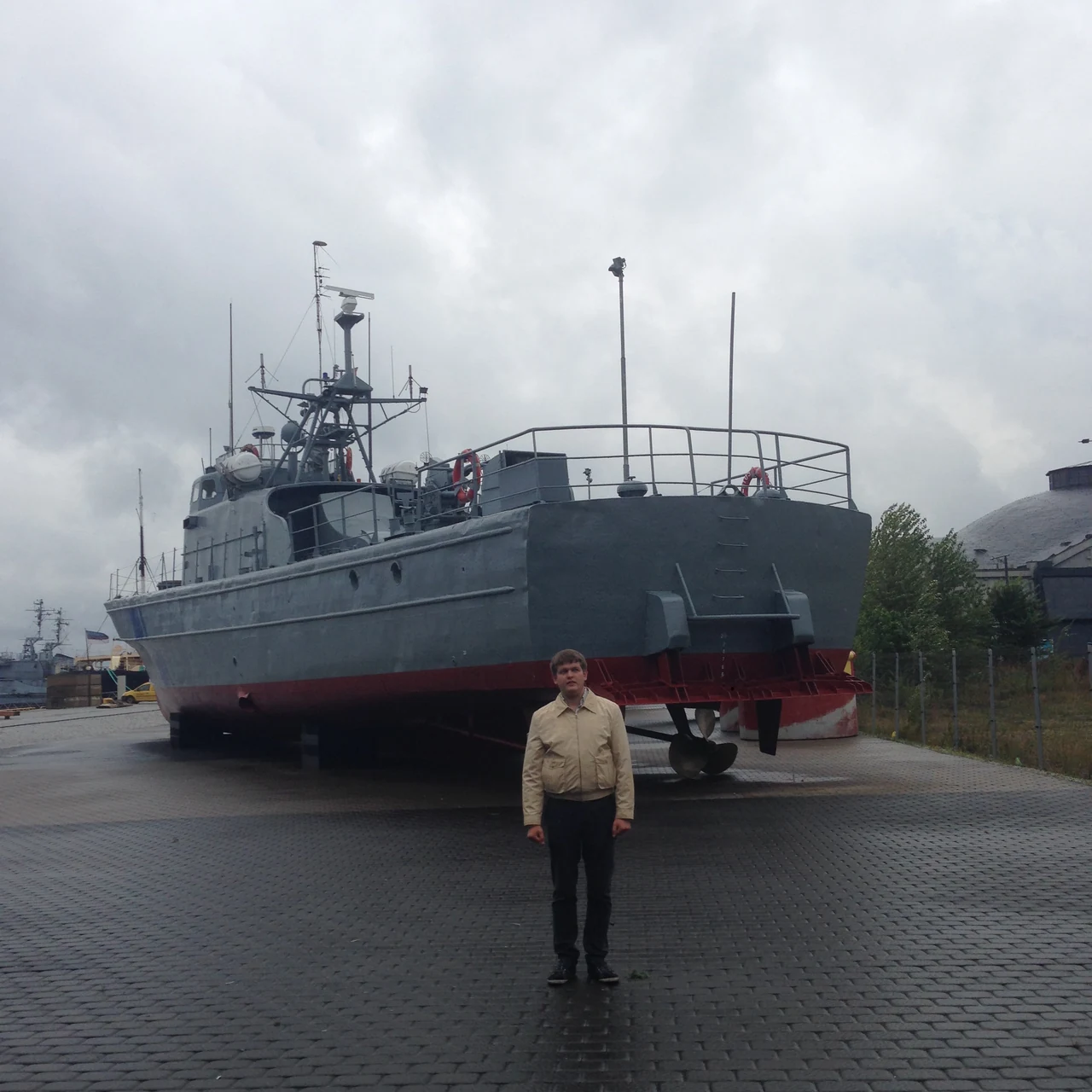
I went aboard the patrol boat Torm. There’s a twin gun mount on the deck, and at that point you don’t need the sailor’s top to feel as if you’ve stepped into another story. The boat was built in Bergen for the Norwegian navy before serving with the Estonian border guard.
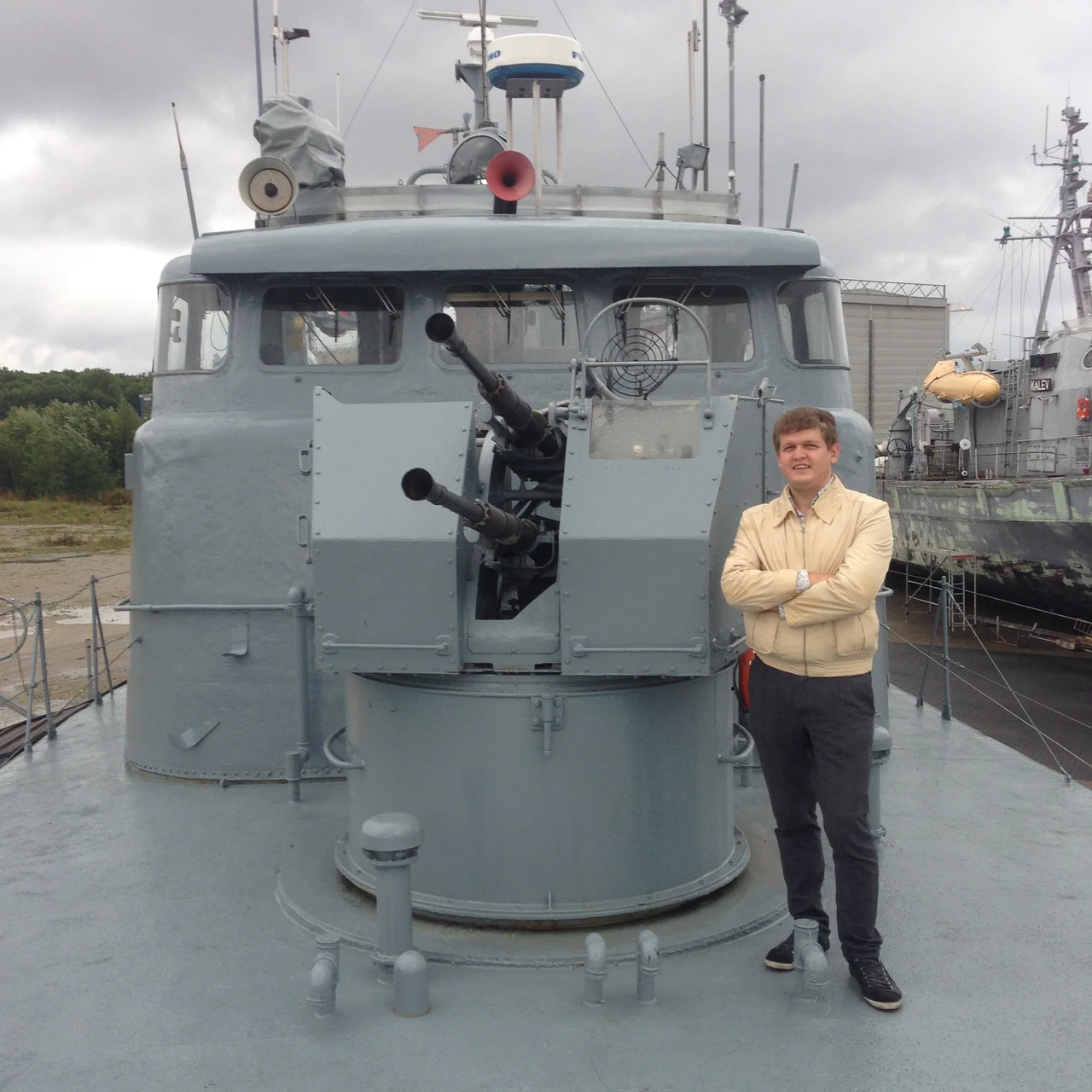
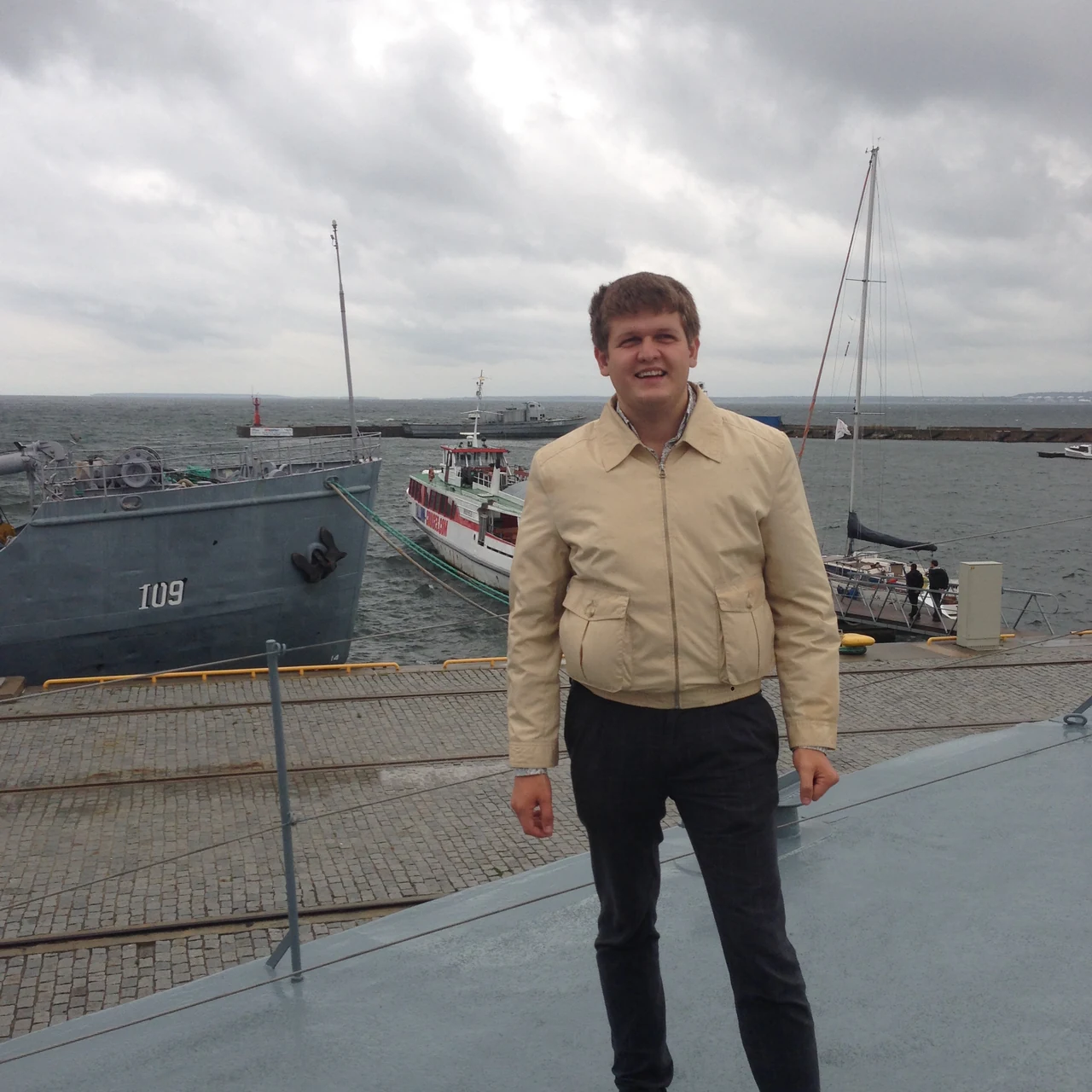
Then you turn back to the water and there’s another former border guard ship nearby, the Valvas. In the Old Town I’d spent all my time looking at towers. Down by the water it made more sense why a city had grown here in the first place. For Tallinn, the sea was always a road. The ships had stories to match: one came from Norway, the other crossed the Atlantic before ending up in Estonia. Once you start looking at a map to see where they came from, you can’t help noticing where you could sail from here yourself. Down by the sea there was no wall up ahead telling you the walk was over. As it turned out, this was a thoroughly unhelpful thought for somebody who’d planned to stay a few more days.
Back to Town Hall Square
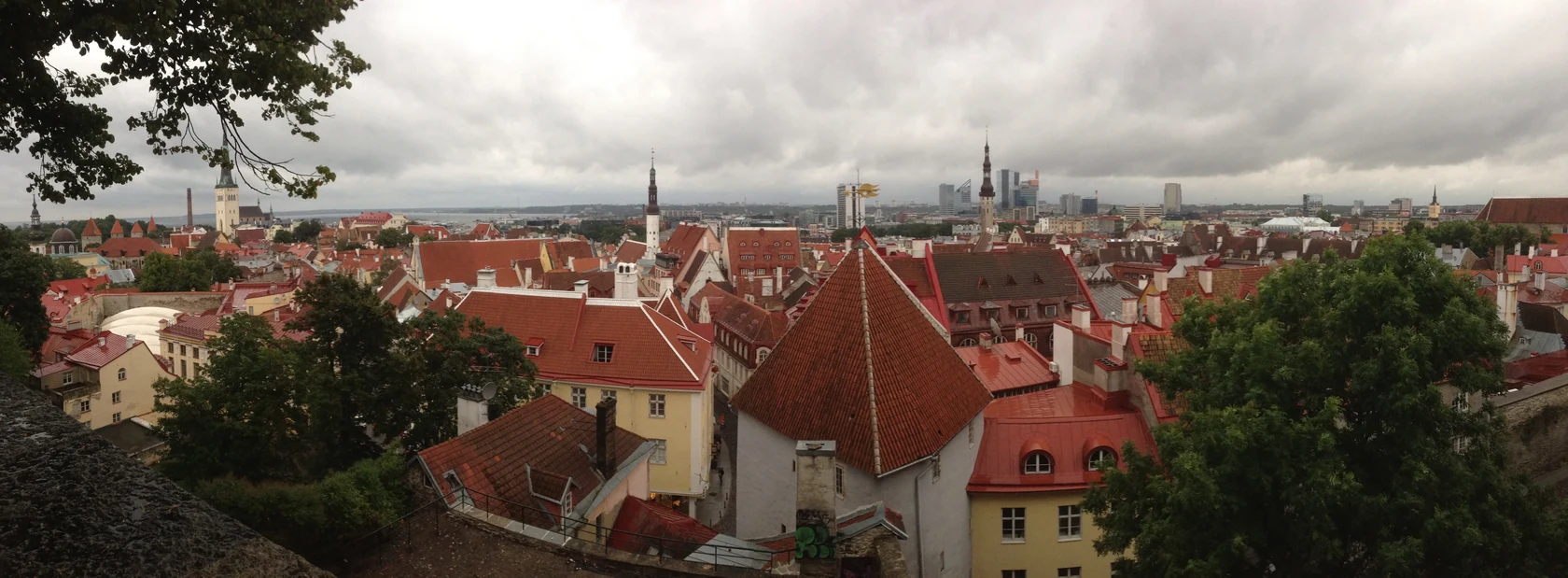
After the harbor I went back up to Toompea. From the Patkuli lookout you can see the towers’ red roofs, the spire of St. Olaf’s Church, and the bay behind them. From up here the separate streets, gates, and turns I’d been taking all day finally came together as one city. I especially liked that I could see the walls and the sea at once. A little while ago I’d been standing next to a ship; now it was somewhere in that harbor beyond the roofs. By the way, there are a hundred and fifty-seven steps to the lookout from below. I like that you can get a view like that just by walking. You stand up there and suddenly every tower you’d looked at on its own has a place. The city stops looking like a collection of pretty facades.
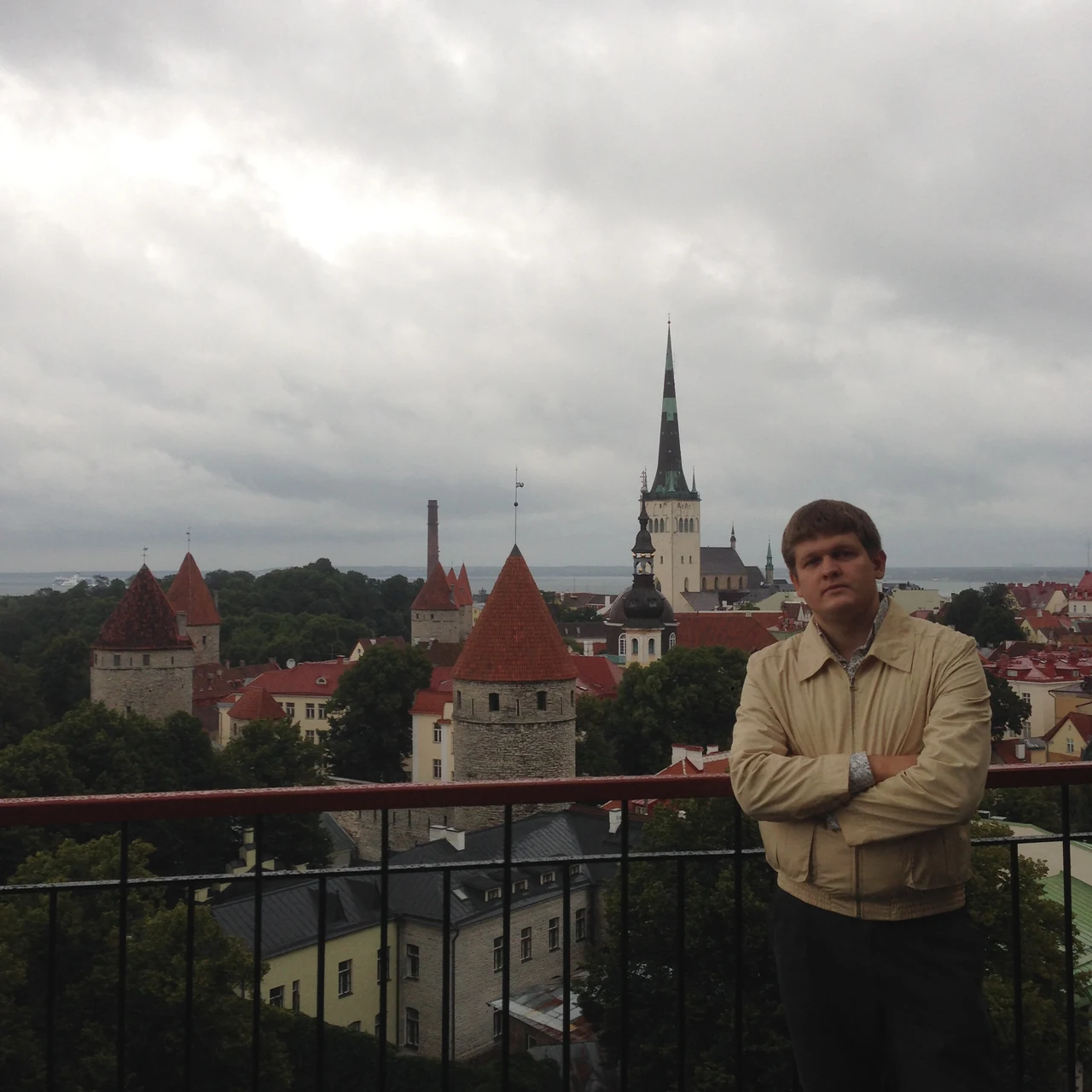
From another lookout on Toompea, Kohtuotsa, you can see modern towers beyond the old red roofs. I think that’s the quickest way to explain what got me about Tallinn. During the day you walk under a gate and drop into the fifteenth century. In the evening, you just look past the rooftops and remember you never left the twenty-first.
Before heading back to Town Hall Square, I passed the Maiden Tower. There’s a stone wall on one side, greenery on the other, and it’s beginning to get dark.
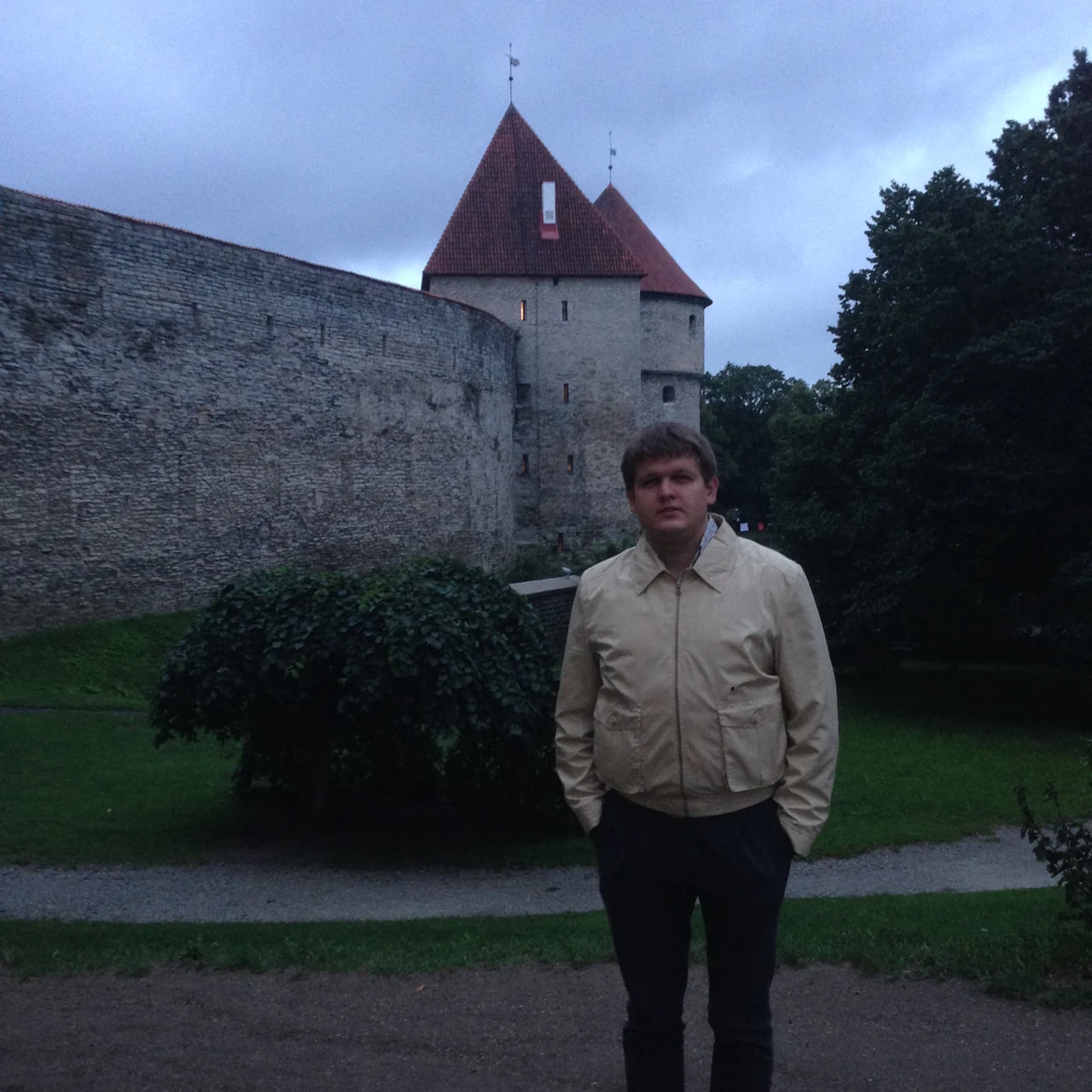
On the square, evening feels different. The sky is blue, the cobbles are wet, the outdoor tables are lit up, and you can see all that light again under your feet.
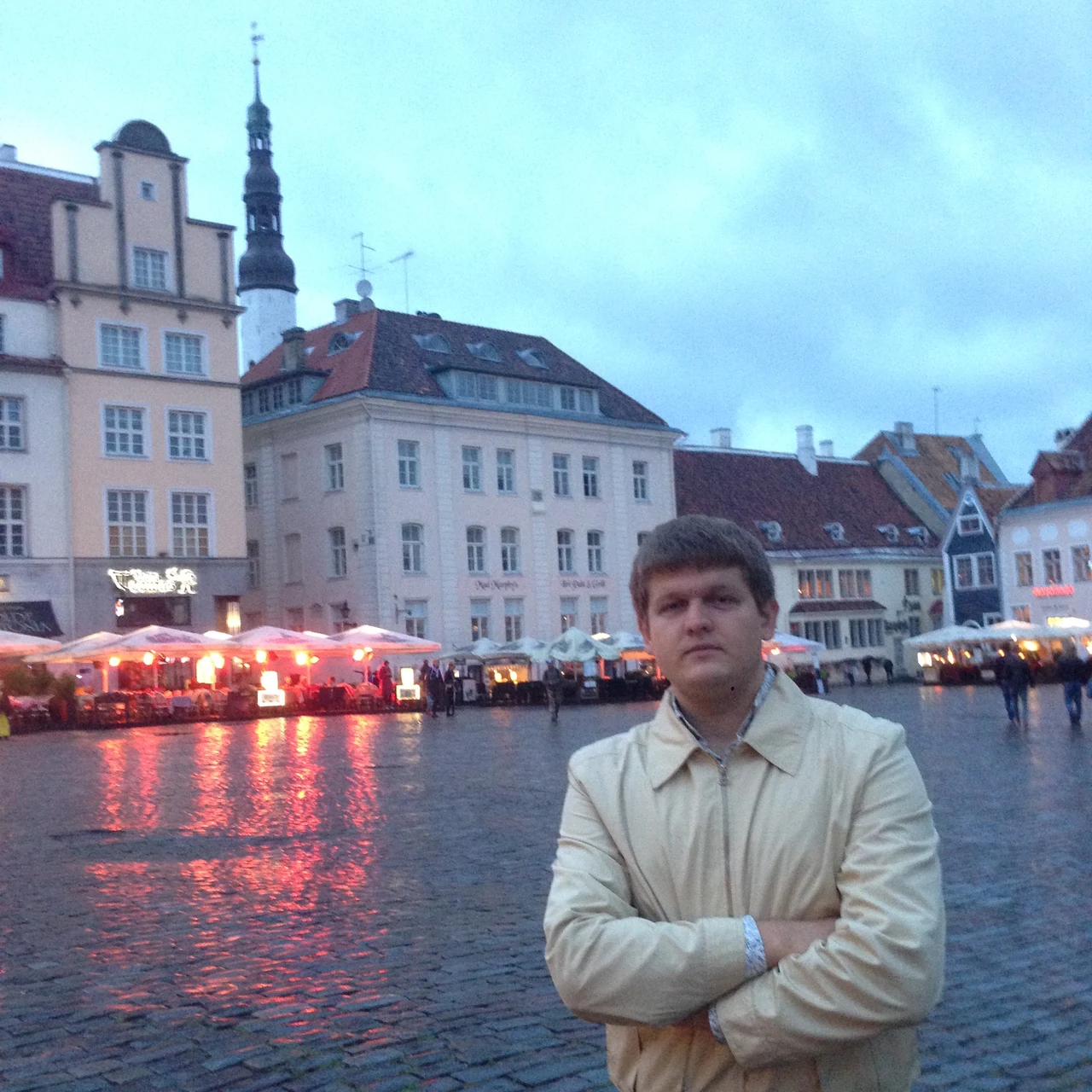
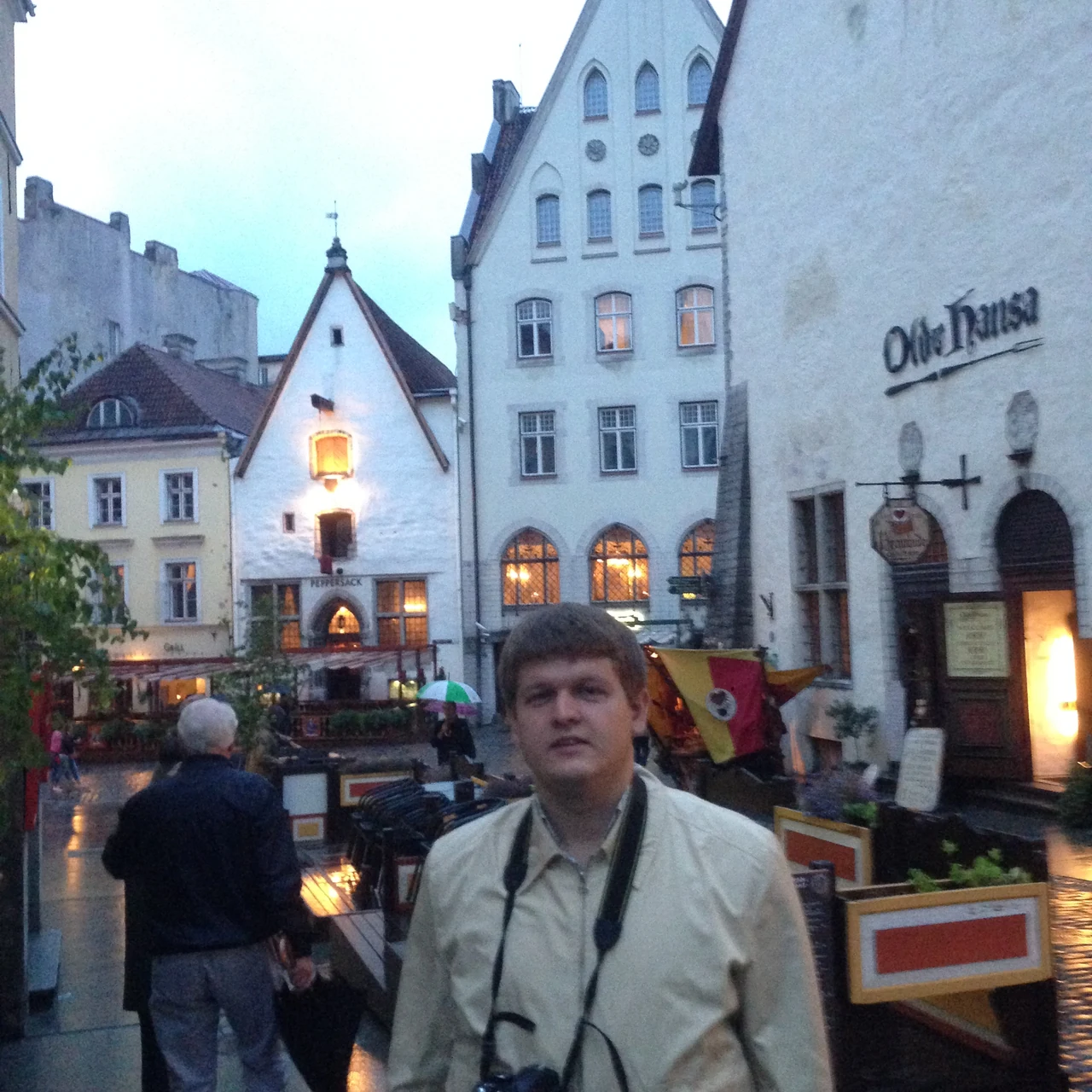
By the Old Market, where Olde Hansa is, it’s easy to imagine how the city had dinner a few hundred years ago. It’s the sort of place where you want someone behind those doors to ladle soup into bowls and call everybody to the table. In a city where your walk takes you past towers and stone passageways, a tavern like that doesn’t feel like a set put up for tourists. It belongs there. Olde Hansa plays on the age of the Hanseatic merchants, and once you’ve walked their streets, it’s not some vague notion of the old days anymore. During the day you imagine people trading and doing deals. In the evening you look at the same buildings and wonder about something a lot more practical: what did everybody eat when they got off work?
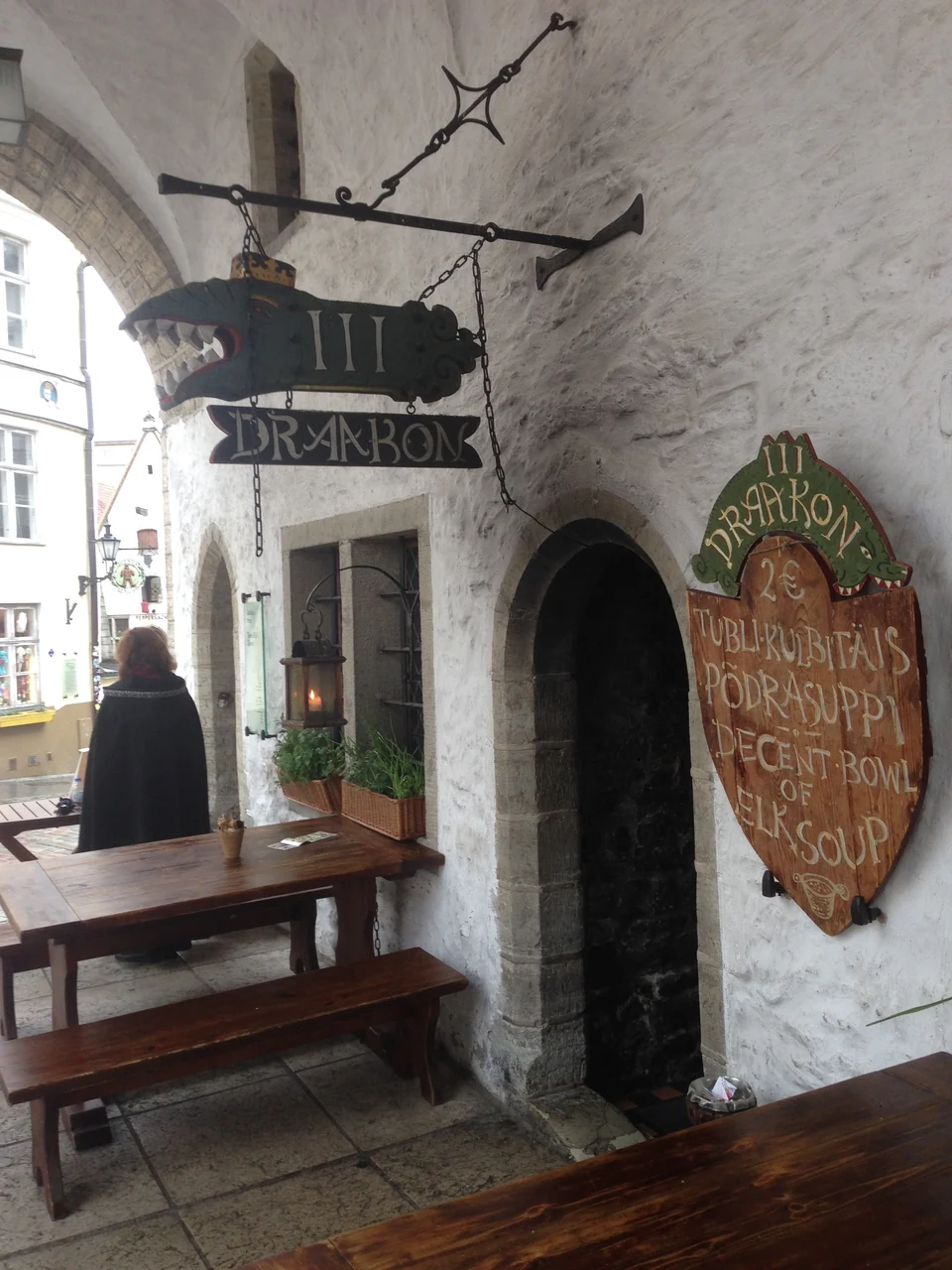
There’s another tavern under the Town Hall arcade, the Third Dragon. Their board was offering a bowl of moose soup for two euros. The kind of price you read twice. Two euros for the whole bowl?
I ate well in Tallinn. But if you asked me to pick one thing I remember from a restaurant that day, it would be the barrel. A huge barrel full of pickles, and just one piece of fishing gear: a fork. You want a pickle? Go catch it yourself. I liked that idea. In a country where you could already vote online, you still had to fish out your pickle by hand. Good thing, too. If they’d just brought it on a plate, I probably wouldn’t be telling you about it.
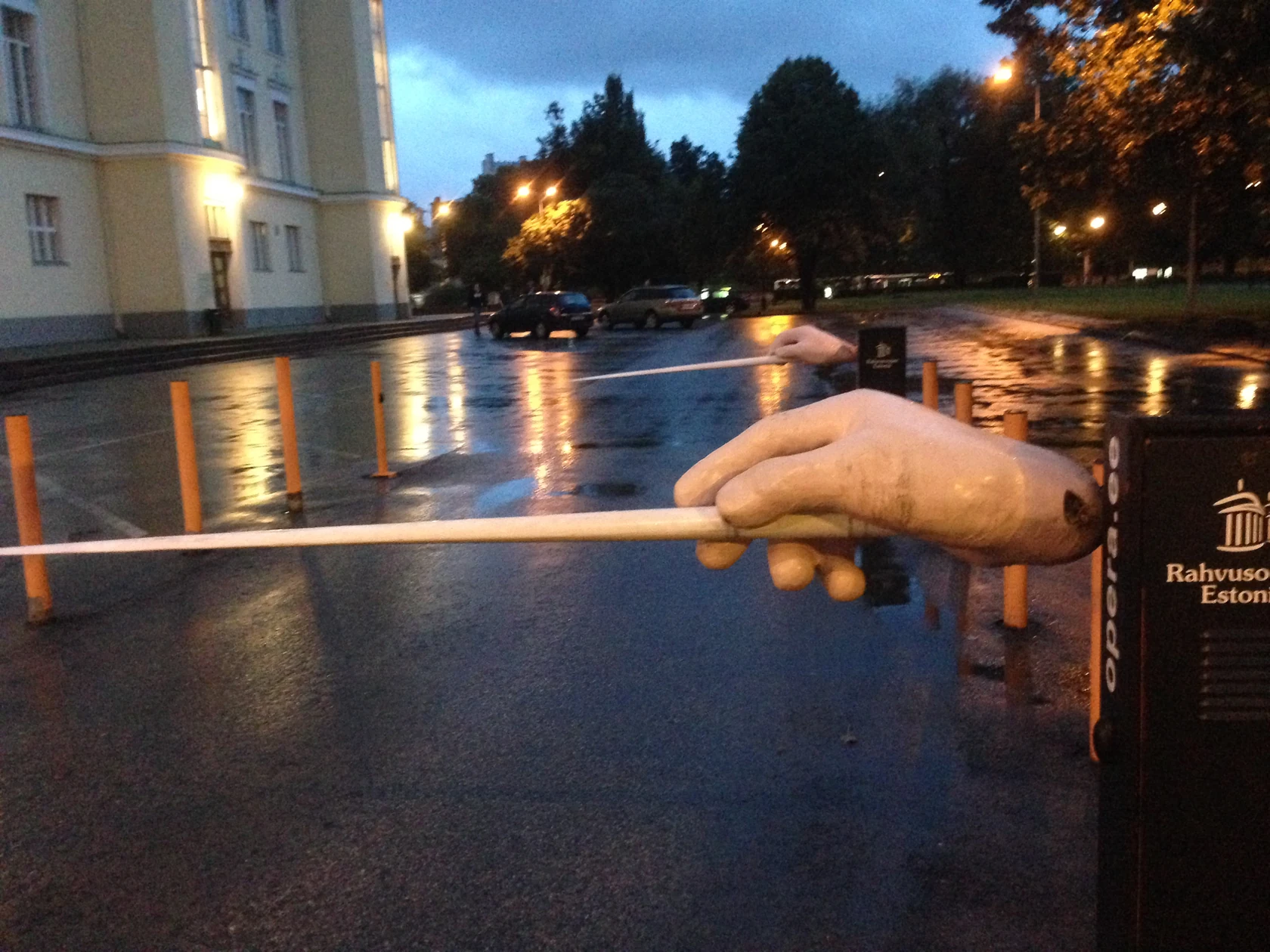
There’s another Tallinn joke nobody has to make up. At the National Opera, the parking barrier that lets a car through is a hand holding a conductor’s baton. The baton goes up, you drive. Probably the shortest performance you can catch at the opera.
The plan, by the way, was to stay in Tallinn a few more days. Then at some point one of us had a thought: why not take the ferry to Helsinki? Took us about five minutes to decide. I remember looking for somebody with a car so we could drive onto the ferry and back off it. Why we needed to do it that way, I don’t remember anymore. But I remember the change of plans. One moment we were going to spend more time in Estonia; the next day we were on our way to Helsinki. I think I spent longer choosing a pickle.
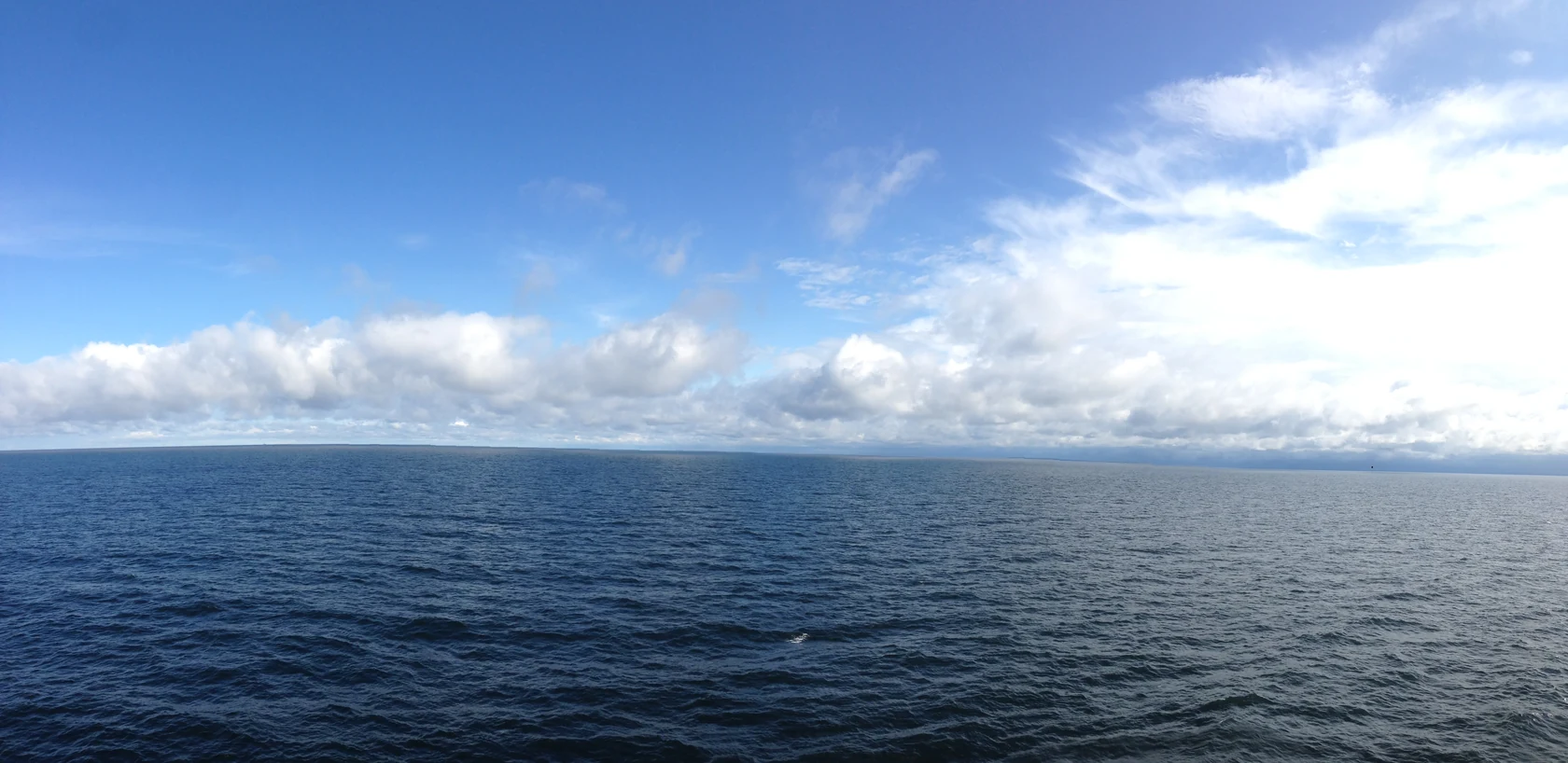
And then you’re on the ferry looking out over the Gulf of Finland. After the towers, the harbor, and that pickle, this trip has a new address. Next stop: Helsinki.