Riga: A Horse on the Drums
Latvia · August 2014
We got to Riga from Vilnius after ten at night. The next day we went out for a walk, and that’s when I realized I had a bit of a problem: I’d seen a little too much of Europe.
After Rome, Milan, and Austria, I’d still stop to look at a beautiful building. Just not every beautiful building. Of course the cities are different, but after a few trips in a row, you start to recognize the itinerary: here’s the old town, here’s the square, here’s another spire. At first I was even a little bored in Riga. Then I saw a drummer in a horse mask.
From the Canal to the Horse
But we haven’t got to the horse yet. One of our first stops was Bastion Park.
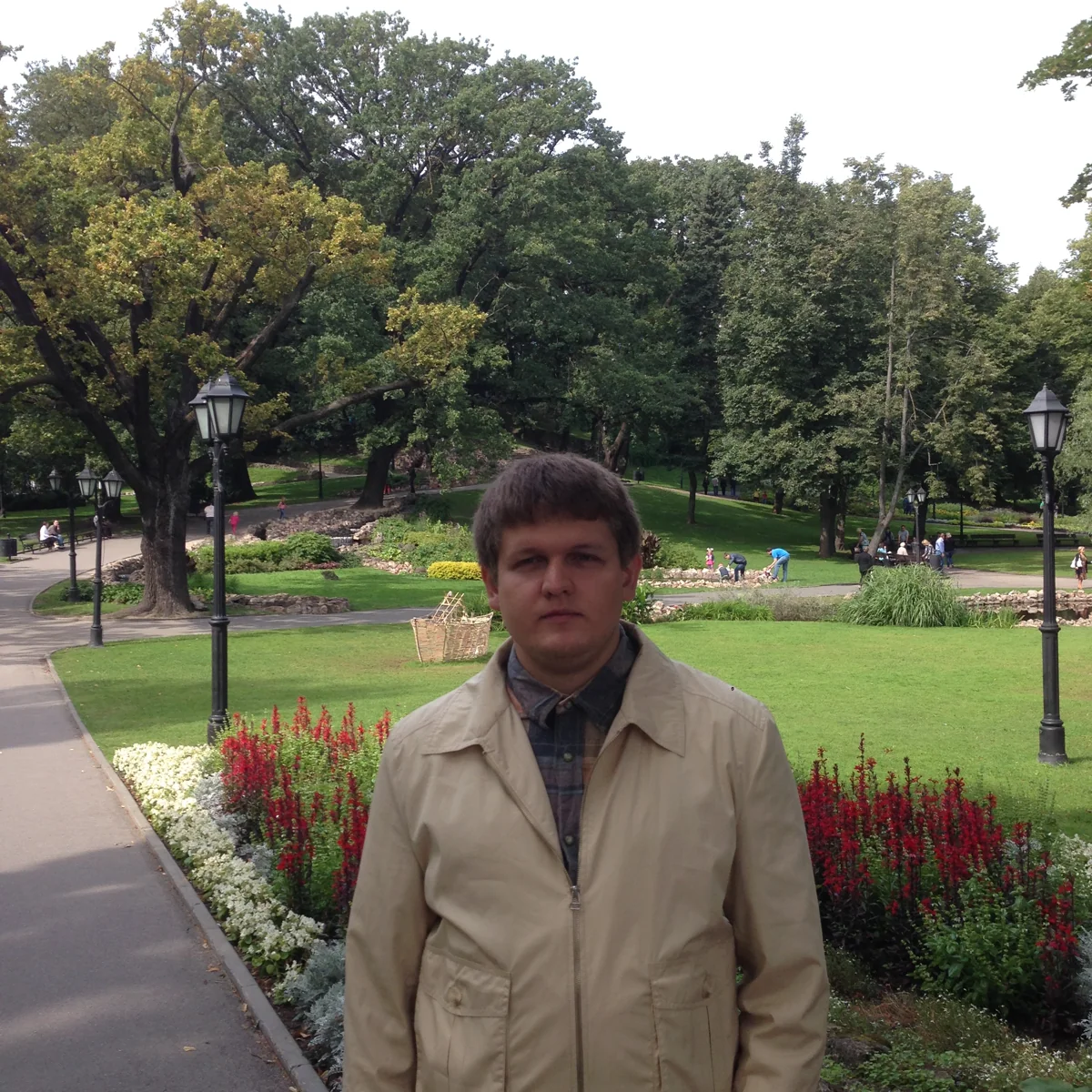
In the city canal, a fountain shoots straight up out of the water, and a sightseeing boat glides past it.
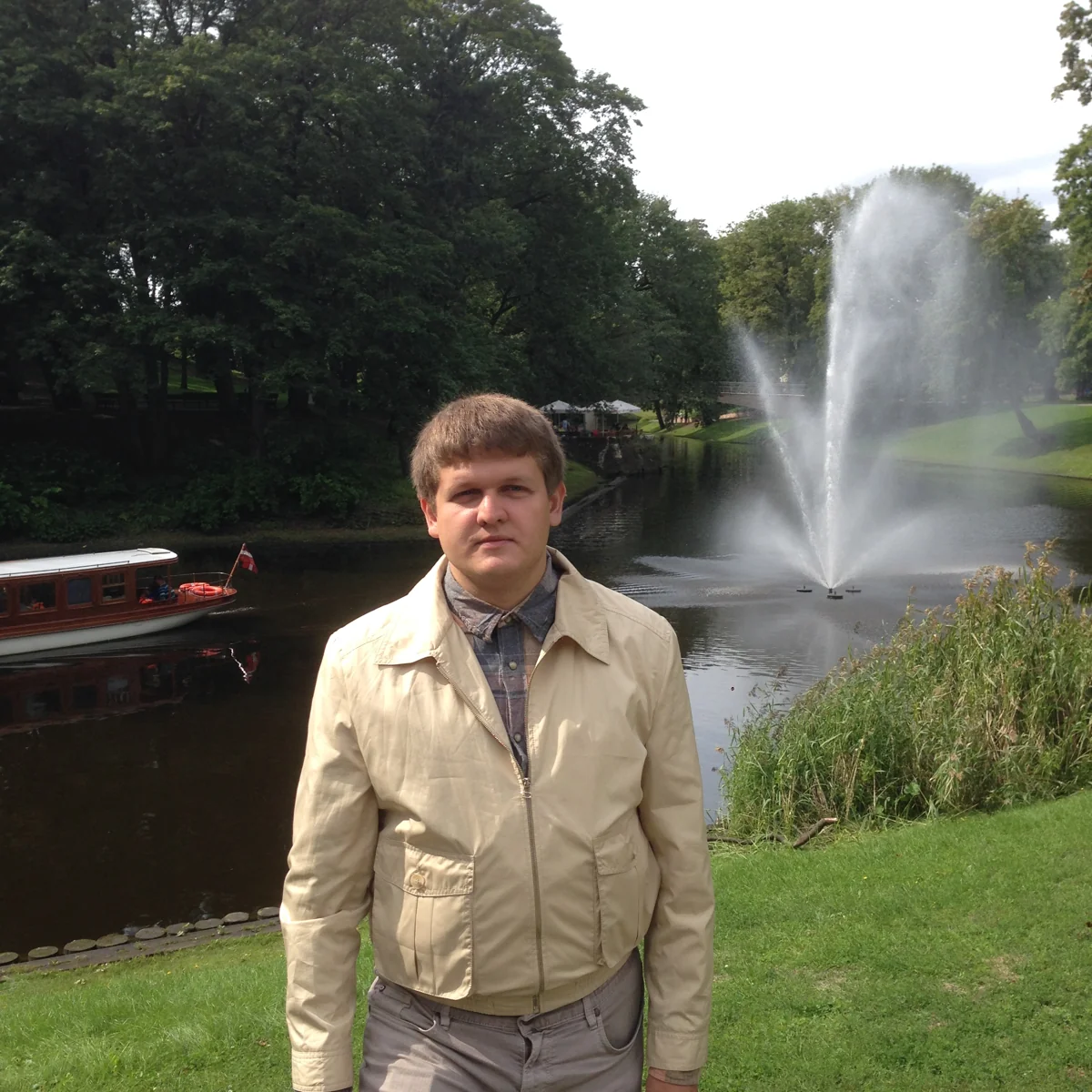
A few minutes’ walk away stands the Freedom Monument. It was unveiled in nineteen thirty-five and paid for with public donations. It’s easy to mistake the three stars held by the woman at the top for the three Baltic countries. They actually stand for three of Latvia’s historic regions: Kurzeme, Vidzeme, and Latgale.
There’s another connection with Vilnius here. The Baltic Way, a human chain, stretched from Vilnius to Tallinn through Riga. The day before our walk, they’d marked its twenty-fifth anniversary at the monument. When we walked across the square, an honor guard stood beside it.
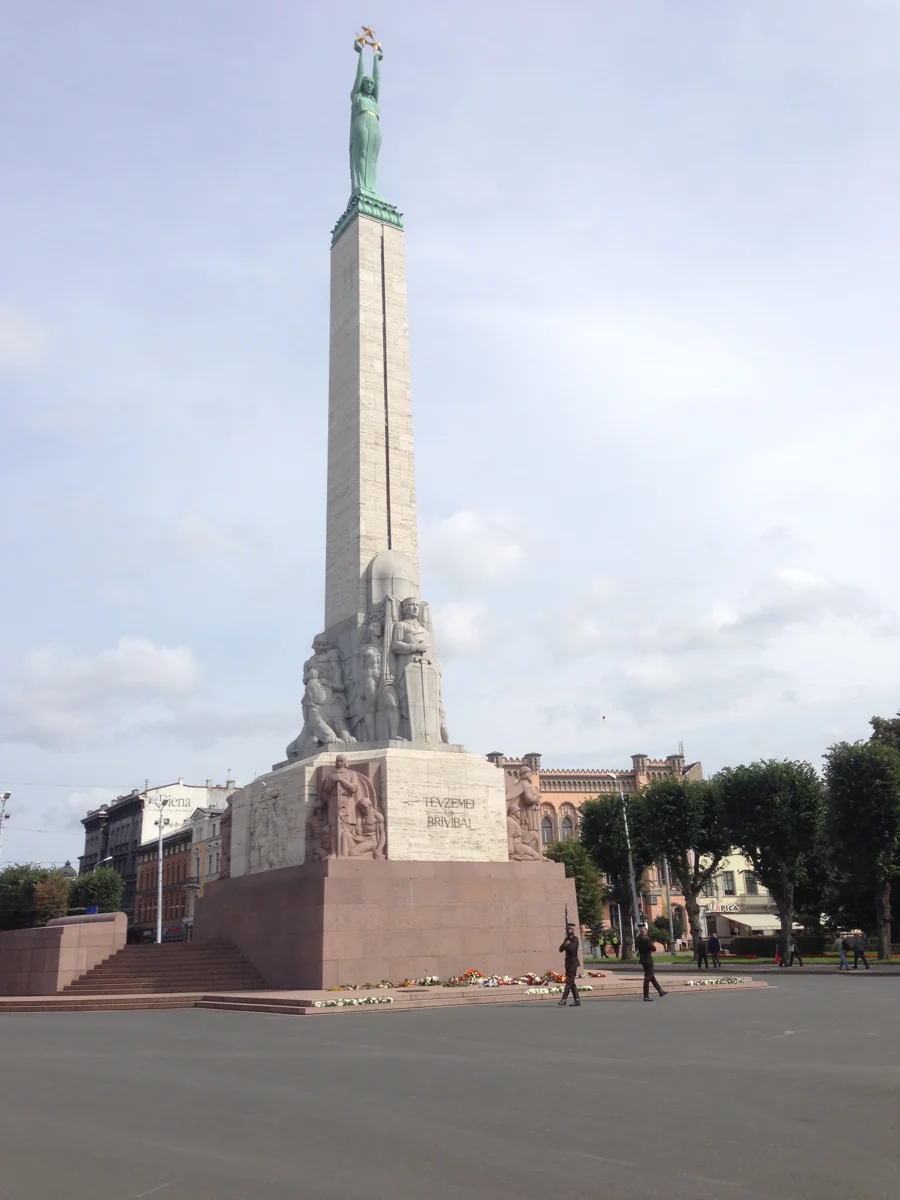
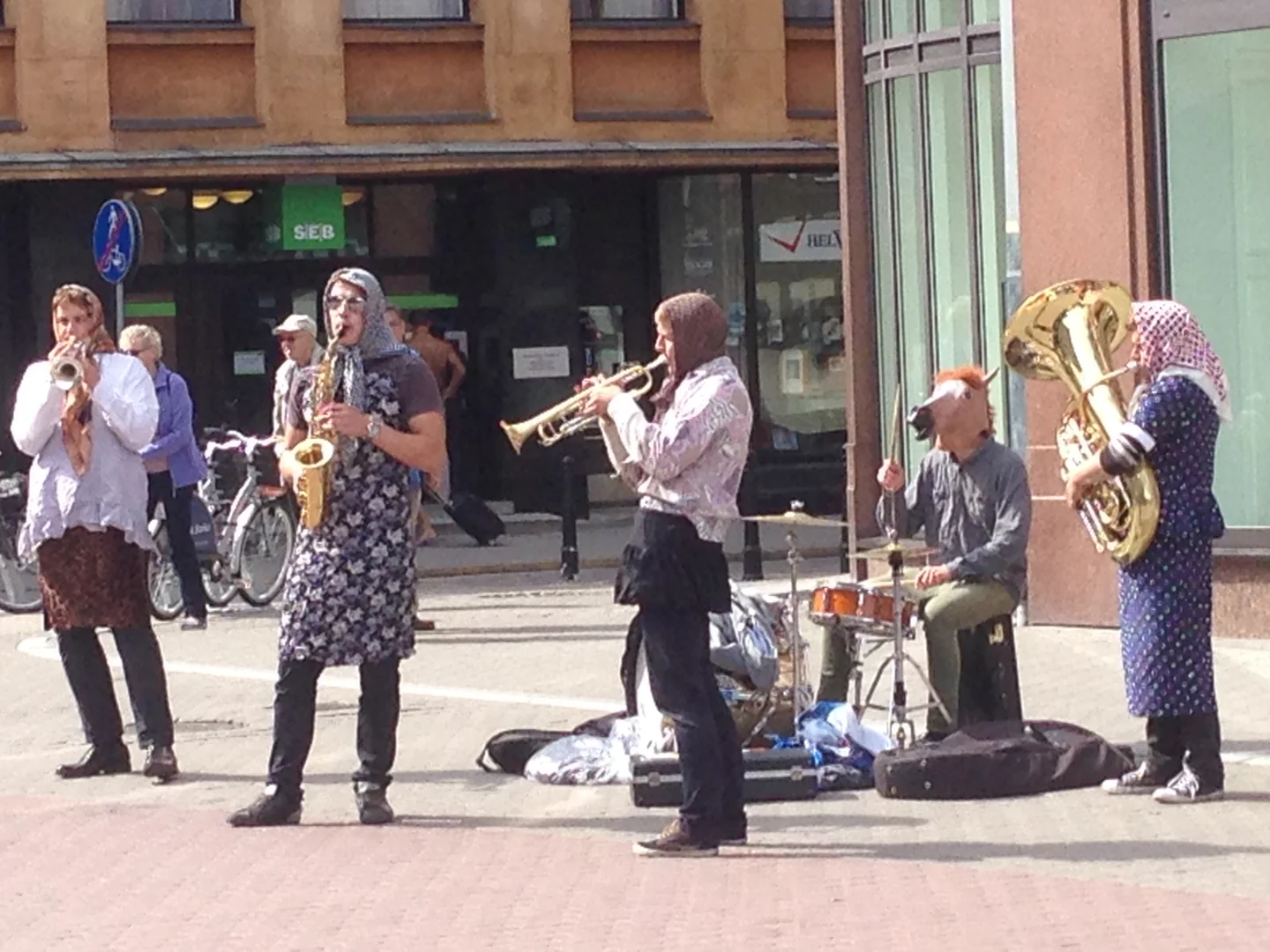
A few minutes later we came across some street musicians. A few wore headscarves and dresses, like grandmas all dressed up for a party. Except these grandmas had wind instruments, and there was a horse on the drums. As far as I remember, they played Nirvana, Linkin Park, and a few other things along those lines. At first the costumes get all your attention. Then you just stand there and listen, because they’re really good. I didn’t see that coming in Riga.
London and Bern around the Corner
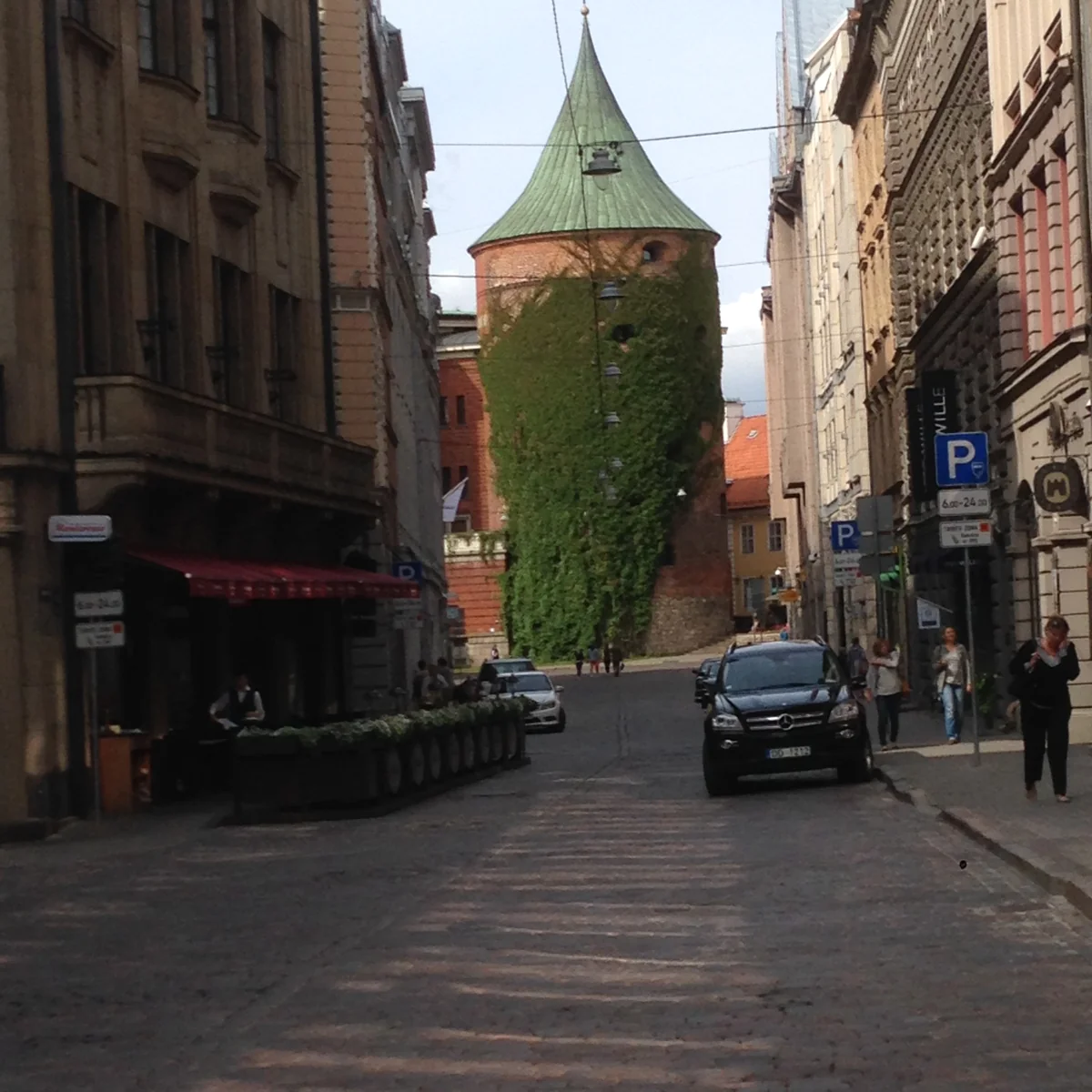
At the far end of Vaļņu Street stands the round Powder Tower. The ivy has nearly swallowed it, but the bricks and the green roof are still holding their own. The tower is a remnant of the medieval fortifications and now houses the Latvian War Museum. Vilnius has a history as the capital of the Grand Duchy. Riga grew up as a trading town on the Daugava and became a Hanseatic port. The city dates its history to twelve oh one, and the independent Republic of Latvia wasn’t proclaimed until nineteen eighteen. Riga was part of the Polish-Lithuanian Commonwealth for a time, but that doesn’t make medieval Livonia Lithuania. Latvians and Lithuanians are neighbors, and their languages are related. They aren’t one people with two names.
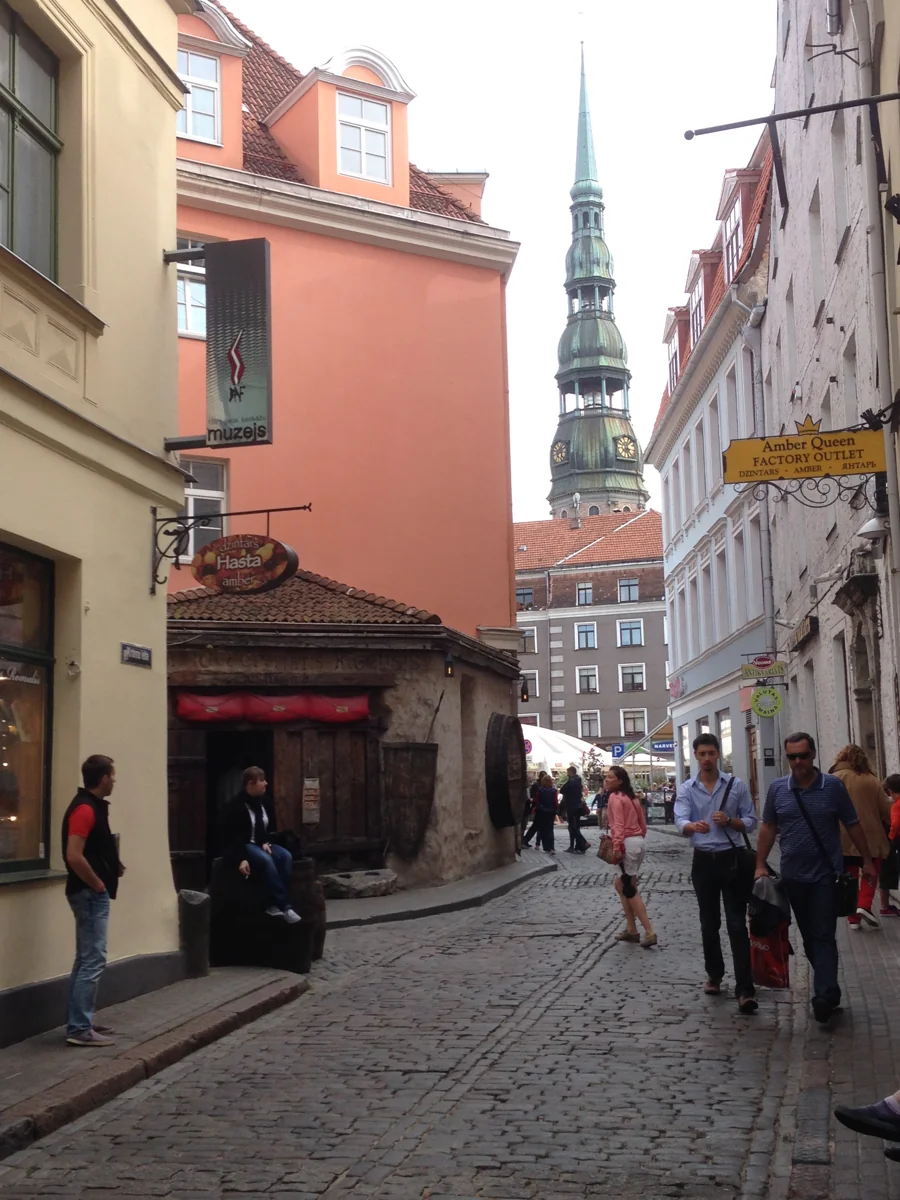
The courtyards in Old Riga caught my attention too. You walk through them trying to remember: did they film Sherlock Holmes here, or Seventeen Moments of Spring? Turns out they filmed both. Jauniela played both London’s Baker Street and Bern’s Blumenstrasse, where Professor Pleischner walked. Number twenty-two became two twenty-one B Baker Street in the Holmes film.
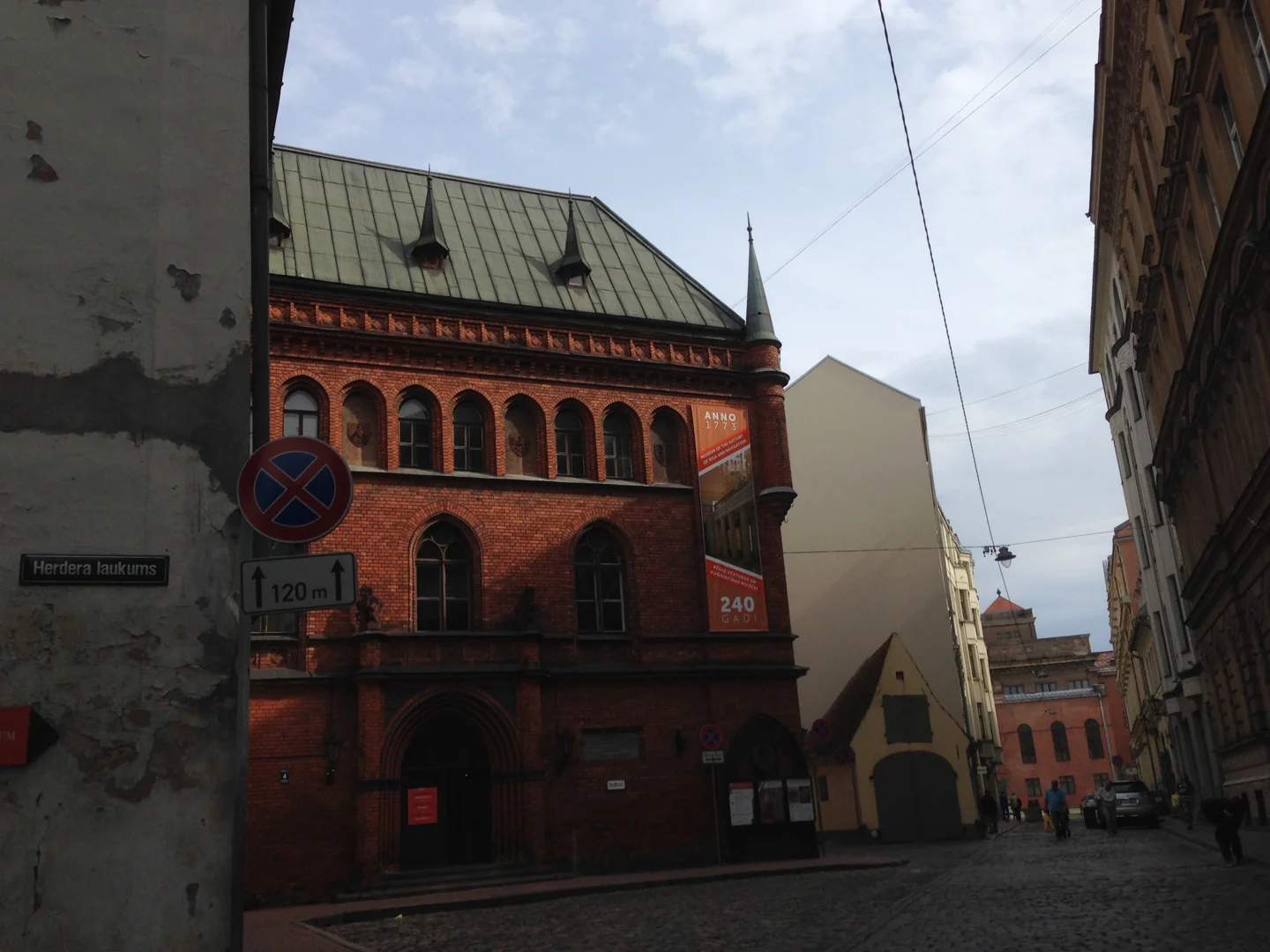
We also passed through Herder Square, which appeared in Pleischner’s story too. So in a single walk I’d been between London and Bern, and I hadn’t even left Riga.
Making a Deal with a Donkey
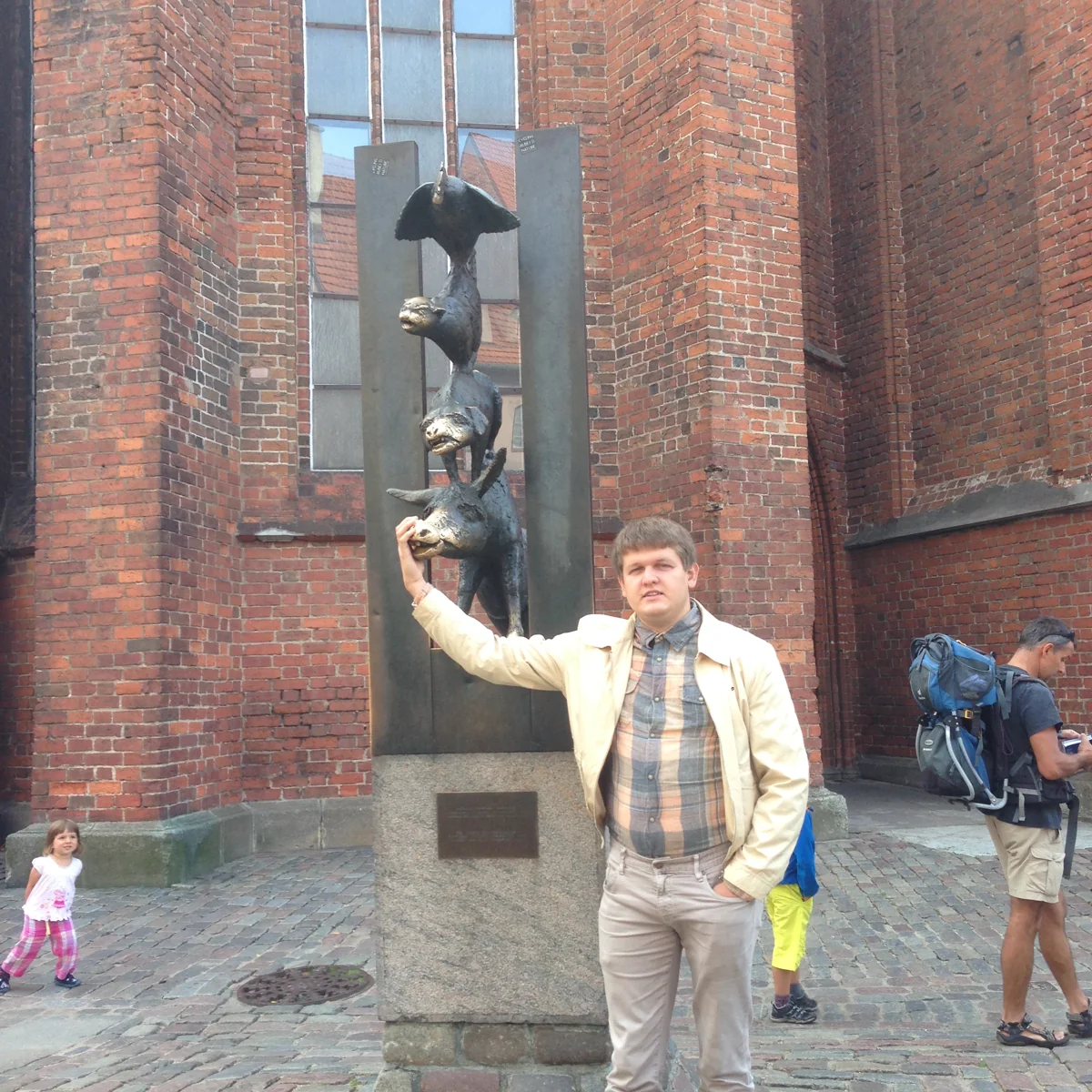
By Saint Peter’s Church we found another band. This lot was quiet, being made of bronze: a donkey, a dog, a cat, and a rooster. Bremen gave them to its sister city, Riga. In the Brothers Grimm fairy tale, they peer through a window at the robbers. In Riga they’re peering through the Iron Curtain. I grabbed the donkey by the nose. It’s supposed to bring good luck. Well, if it’s that easy, why not give it a go?
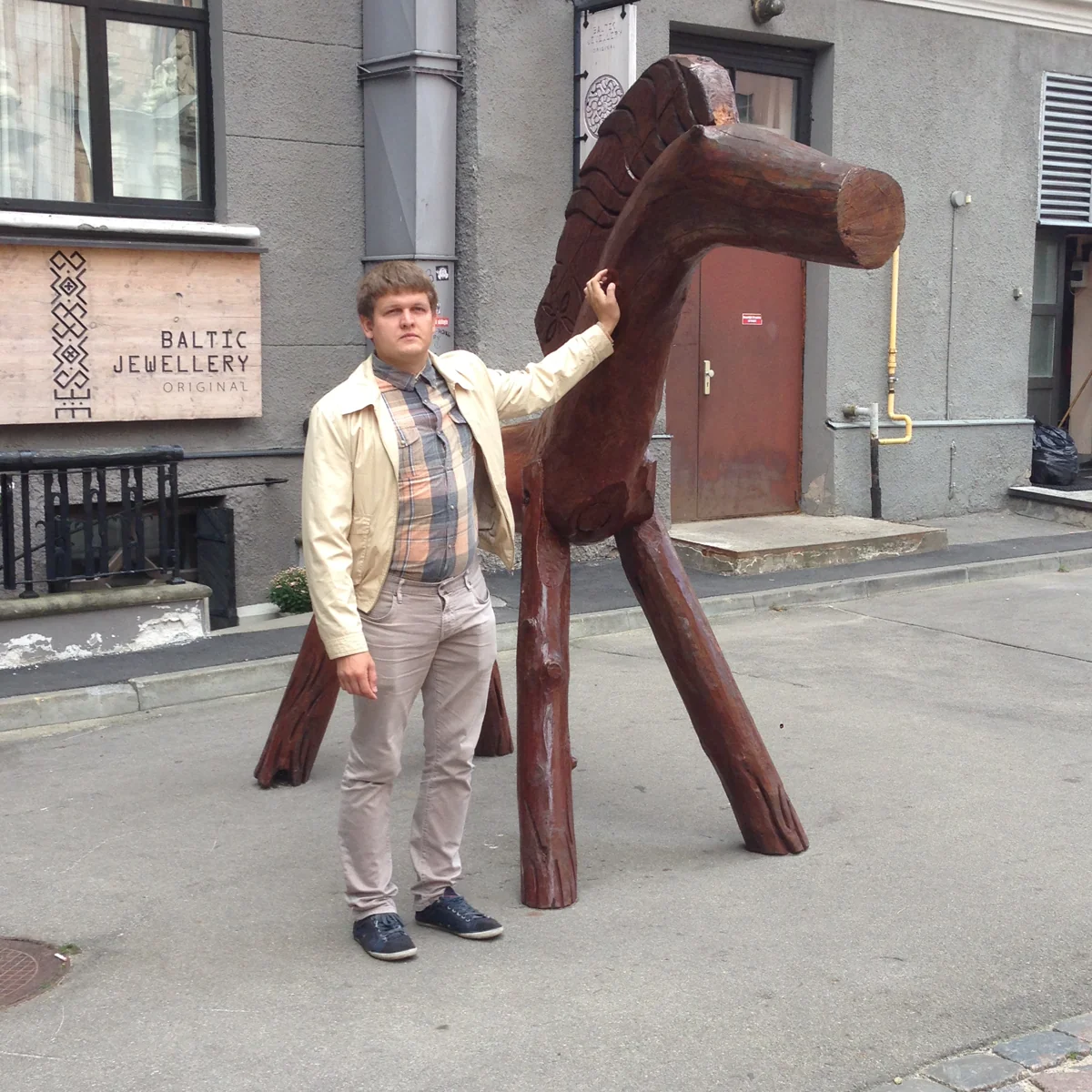
Nearby there was a wooden horse outside a shop selling Baltic jewelry. After the drummer and the Bremen Town Musicians, I was pretty much done being surprised by animals in the middle of the city.
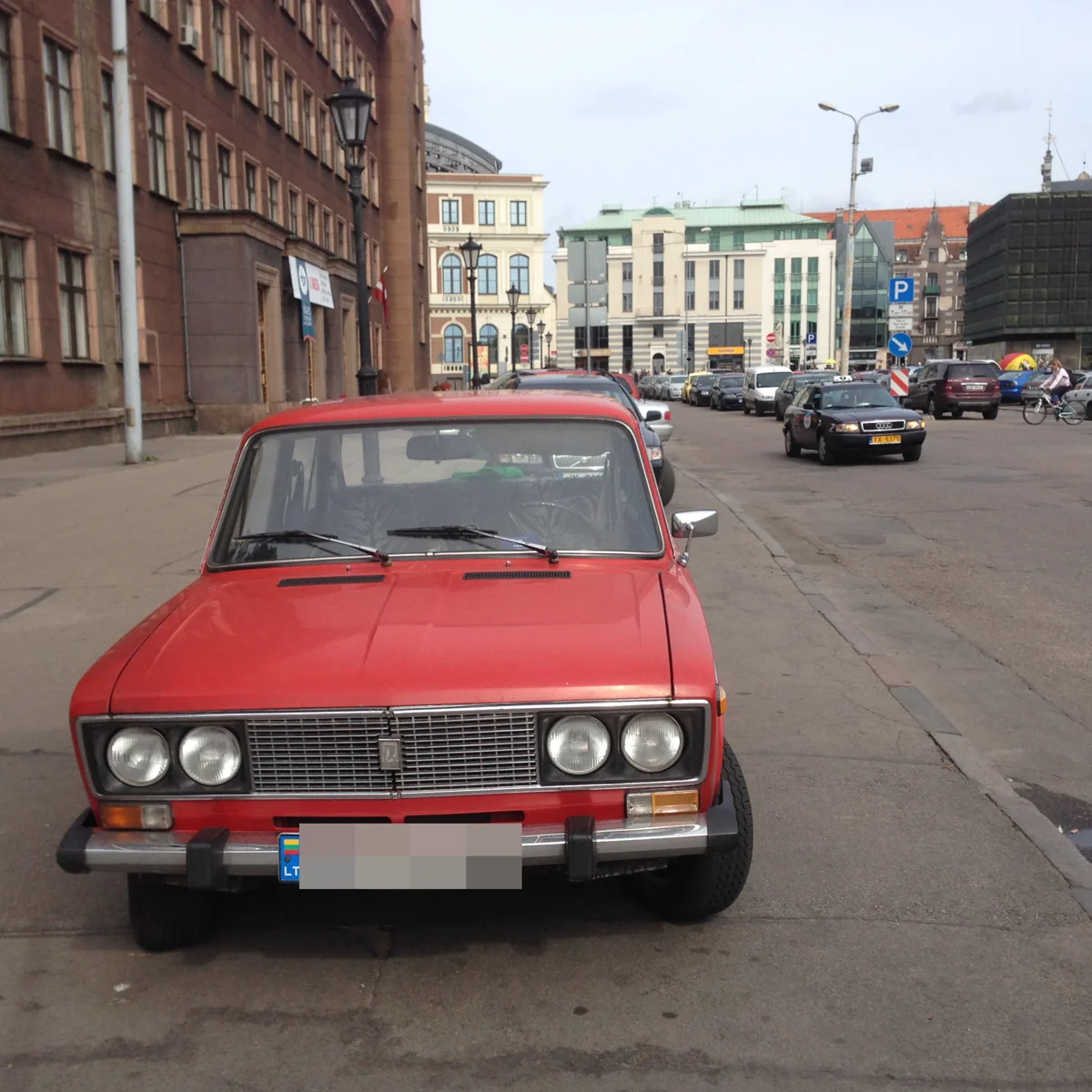
Two things unexpectedly took me right back home. The first was a red Zhiguli that looked like a Six. Here I was in a completely different country, and there was the same car we had back home. With a Lithuanian plate, no less.
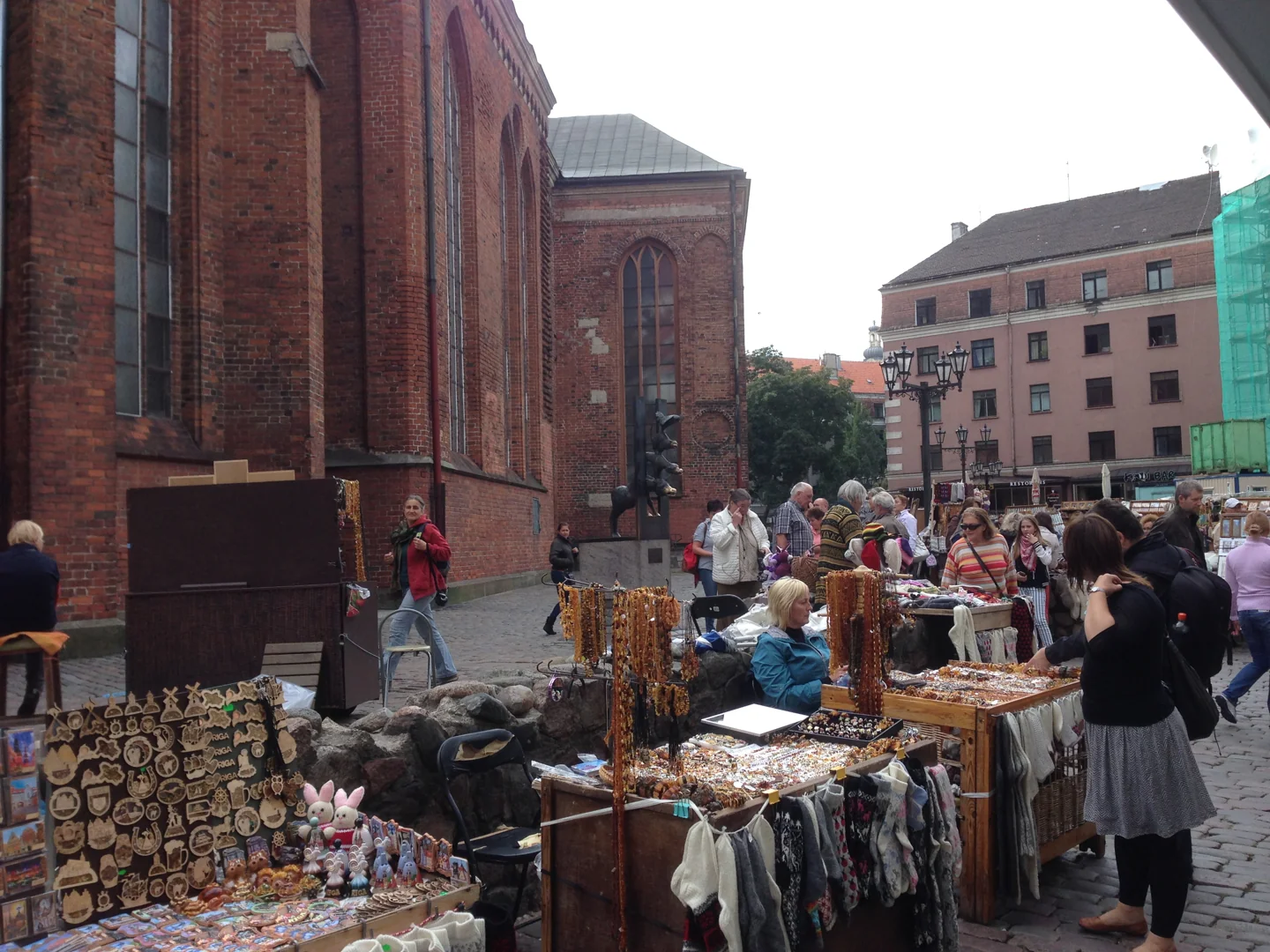
The second time was by the souvenir stalls: cobblestones, people looking at jewelry, red brick behind the rows of stalls. It made me think of Podil and Andriivskyi Descent.
On one side of Town Hall Square, everyone’s sitting and chatting out on the terraces. Turn the other way and there’s the House of the Blackheads, with the kind of façade that makes you want to stop.
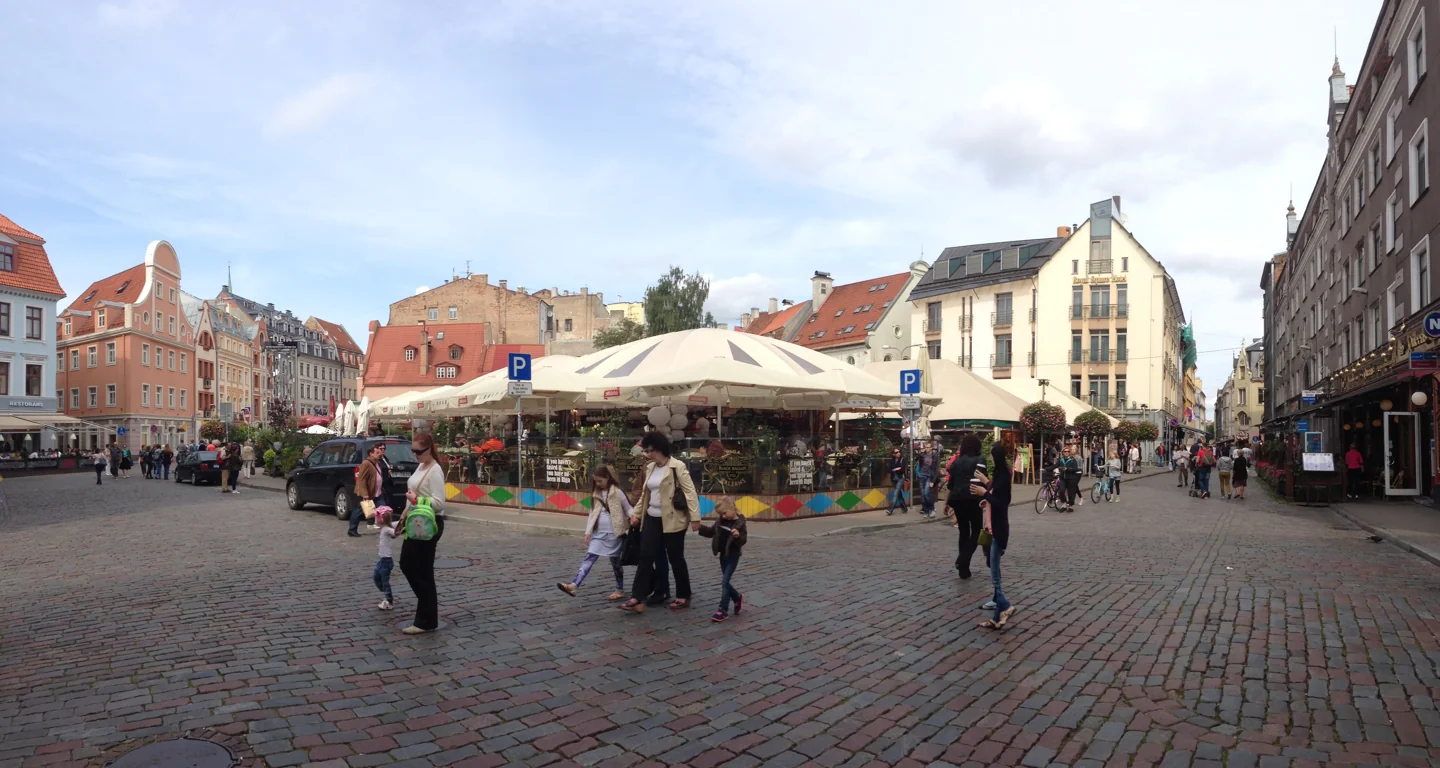
By then, I’d stopped thinking I was bored.
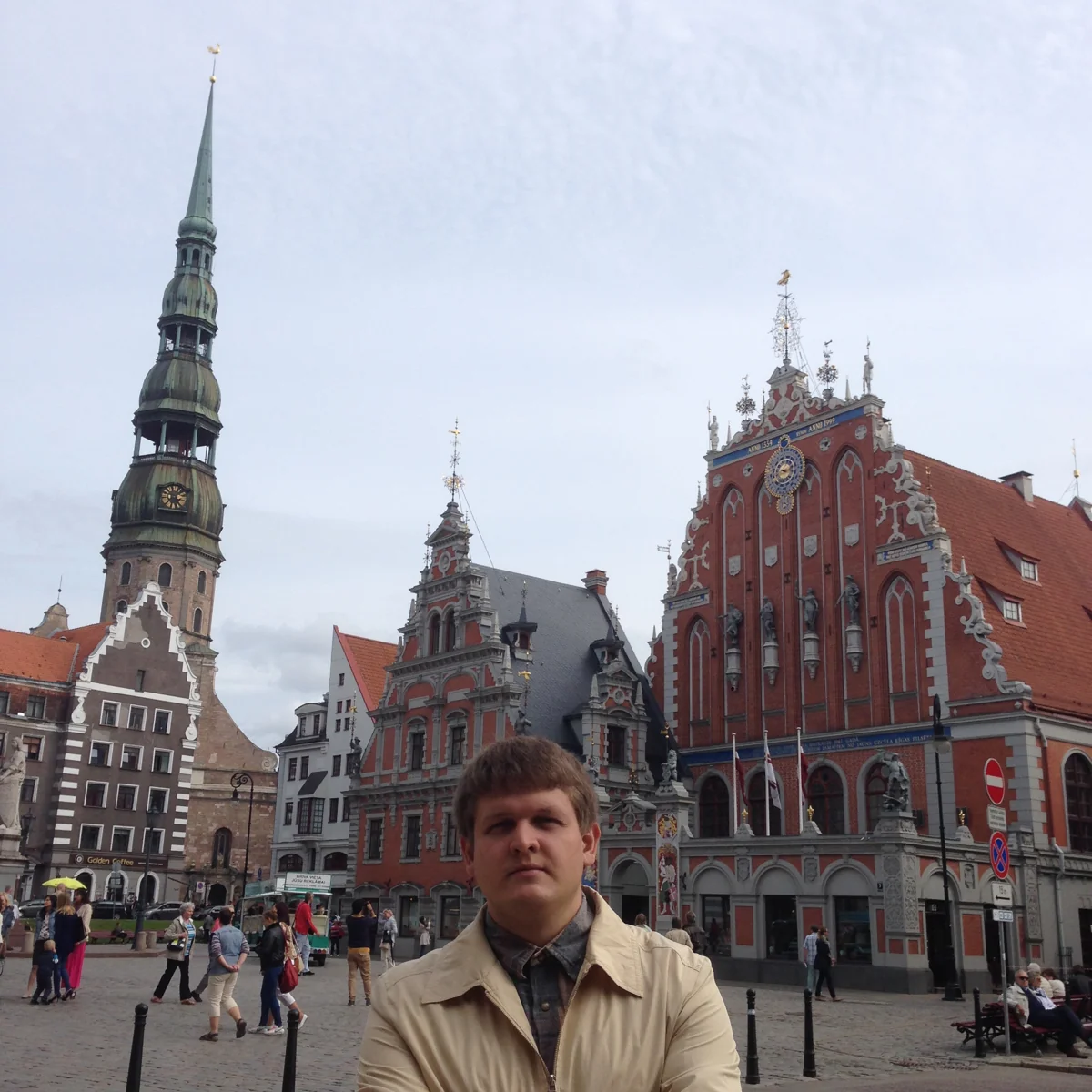
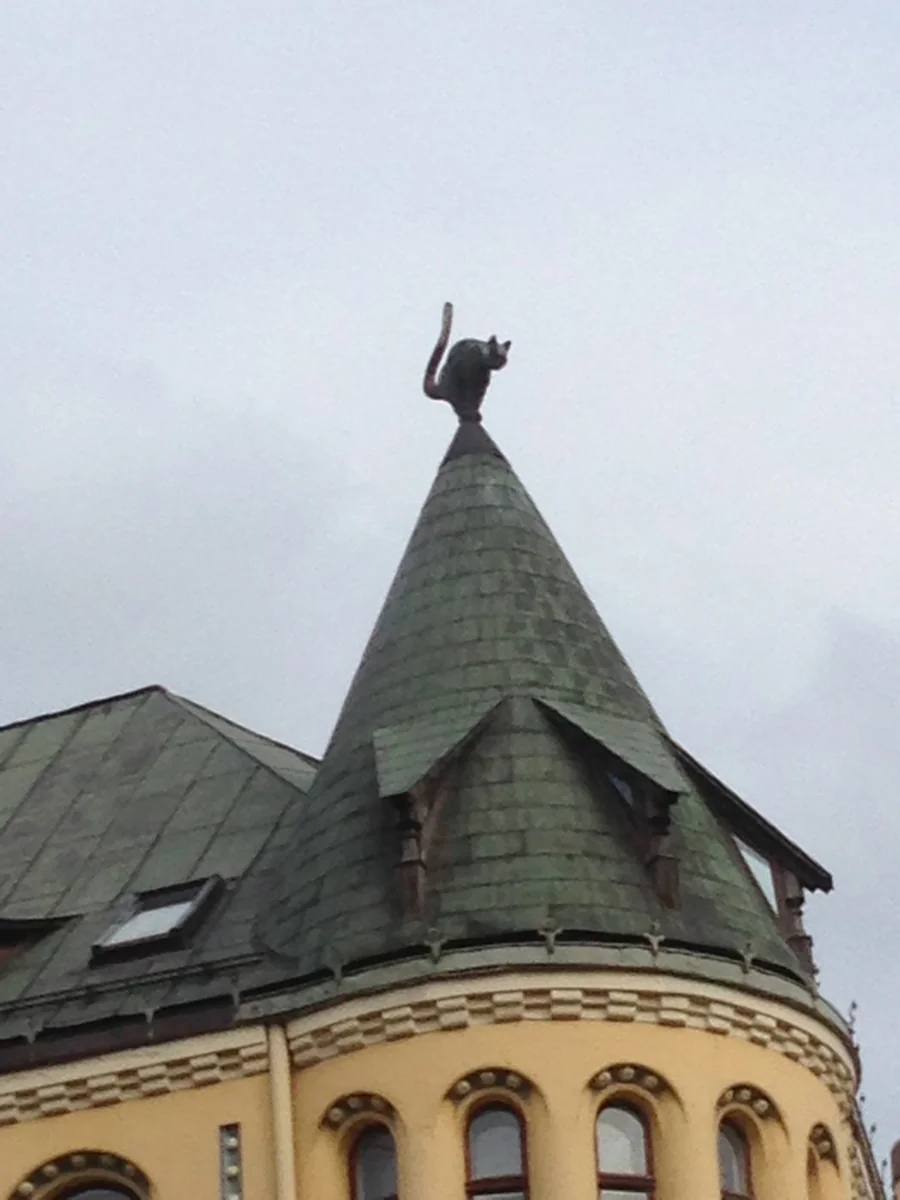
Then I looked up and spotted a cat on a spire. The Cat House has two of them. Legend has it that the owner was turned down by the Great Guild, so he put the cats up with their tails facing the guild’s building. They were turned around later. But as a way of letting the guild know what he thought, it worked: people are still talking about those tails.
A Latvian Western and My First Look at the Baltic
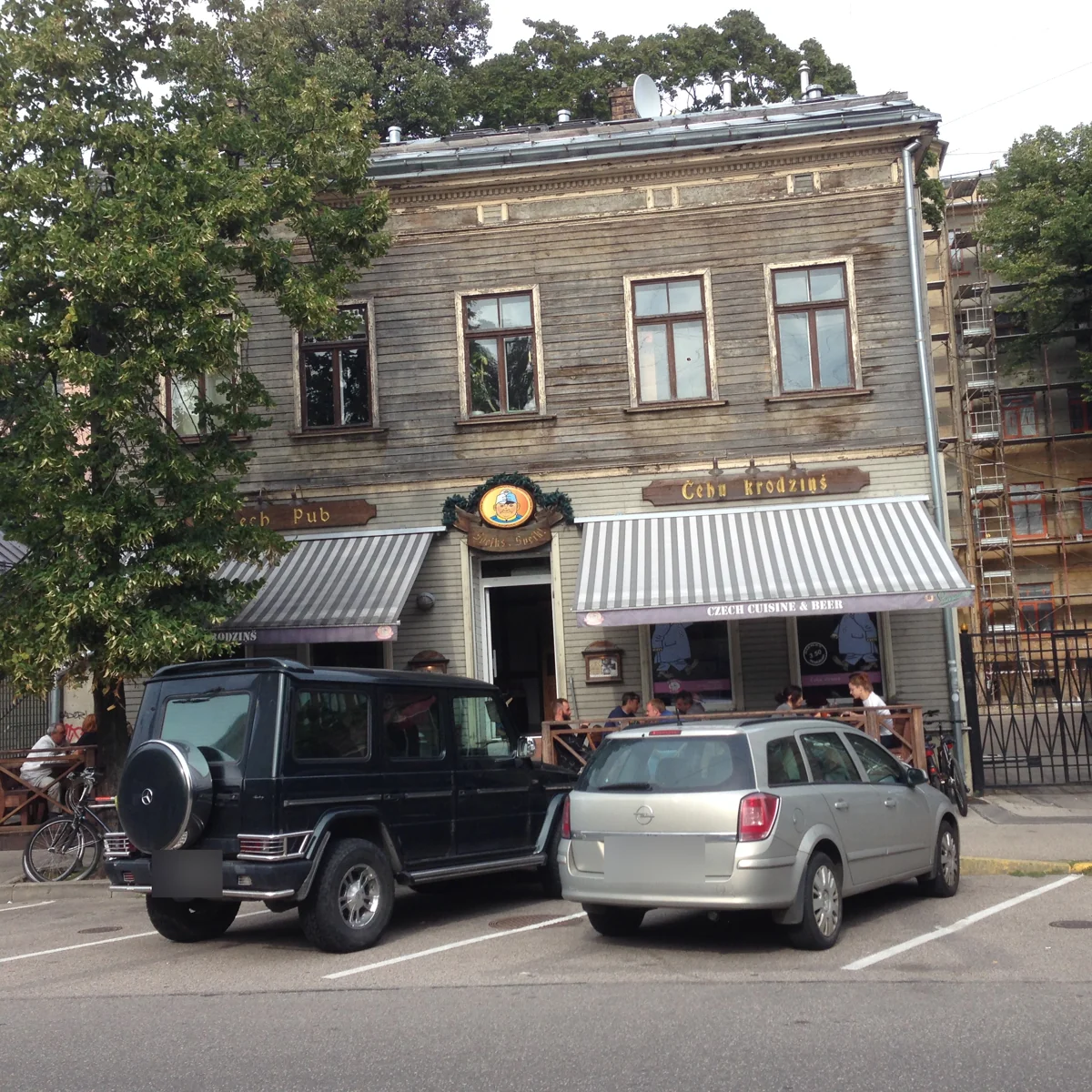
On Stabu Street there were wooden houses that looked to me like a Wild West film set. Right in the middle of the capital, seriously. The old wooden buildings of Riga’s former suburbs even get their own mention in the UNESCO description. What made me laugh most, though, was the black G-Wagen parked right beside one of those houses. Every cowboy has his horse. Latvian cowboys have their G-Wagens.
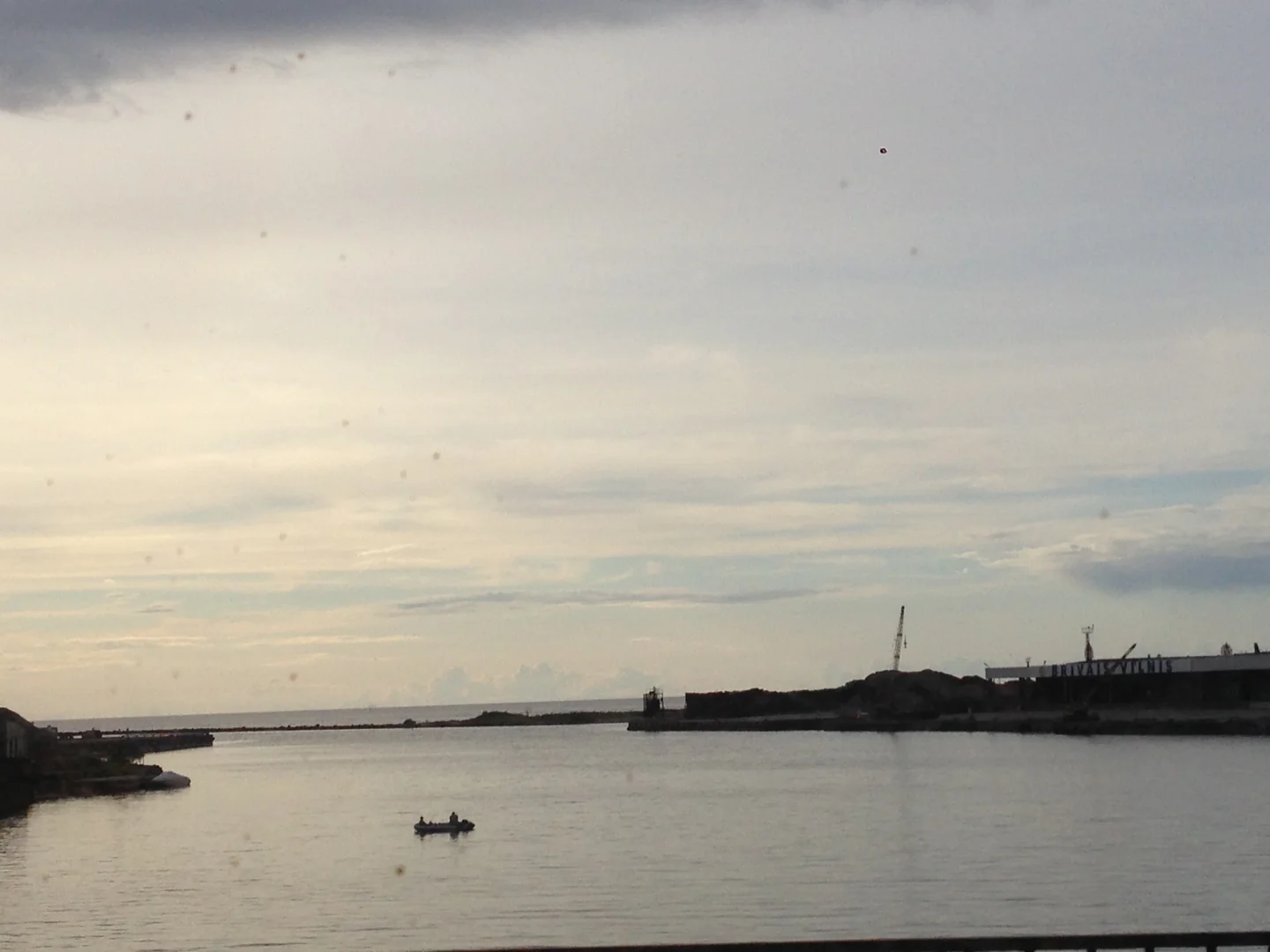
That evening we drove farther north. I’d heard so much about the Baltic Sea, and there it finally was. Not at a beach: in Salacgrīva, where the Salaca River flows into the Gulf of Riga. You stand by the bridge, with the port and a little boat in front of you, and out beyond the breakwater there’s the Baltic Sea. We just got in the car, went a little farther, and there I was, finally seeing it with my own eyes.